

Tankless water heater installation cost ranges
The total cost of a tankless water heater with installation typically ranges between $2,400 and $5,400, though homeowners can pay as little as $1,600 or as much as $10,500.
Much of this price variation depends on the home’s existing infrastructure, including whether a tankless installation is already supported or if a full conversion is needed.
Compare tankless water heater installation costs by complexity:
| Installation service | Typical all-in cost | What it includes | Typical scenario |
|---|---|---|---|
| Basic replacement | $2,800 to $3,200 | Swapping an existing tankless water heater for a similar unit with the same fuel type | The home already has a tankless heater and no major upgrades are needed |
| Moderate retrofit | $3,900 to $6,000 | Replacing a traditional tank water heater with a tankless model of the same fuel type | A standard upgrade to tankless with few or no structural changes |
| Electric installation and upgrade | $4,500 to $8,000 | Installing an electric tankless water heater, including possible electrical panel upgrades | Installing an electric tankless heater in a home that may require upgrades |
| Full conversion | $6,000 to $10,500 | Converting to a new fuel type and making major infrastructure changes, such as installing new gas lines | A home upgrading from an electric tank water heater to a gas tankless system |
| High-efficiency gas upgrade | $4,500 to $8,500 | Upgrading venting and gas supply for higher-capacity systems | Homes with high hot water usage requiring a higher-performance unit |
Retrofit vs. full conversion installations
Installation costs for tankless water heaters vary depending on how much work is needed. Replacements typically fall into one of three categories:
- Basic replacements tend to cost the least. In these scenarios, a home’s infrastructure supports tankless installation with minimal modifications. This typically looks like replacing an existing tankless unit with a new model.
- Moderate retrofits fall in the mid-range price category. These projects can require some venting or gas line work but not a complete system overhaul. It often includes upgrading from a tank heater to a tankless heater with the same fuel type (gas or electric).
- Full conversions are the most expensive projects. In this scenario, the home needs major infrastructure upgrades to accommodate the new tankless water heater. These projects can include relocating the water heater, upgrading the home’s electrical capacity for electric units or installing new gas lines.
Tankless installation cost factors and upgrades
Installation and labor often cost just as much, if not more, than the water heater unit itself. The cost of installation is largely dependent on the complexity of the project, including necessary upgrades and modifications.
Note that the following cost ranges are based on national averages, and labor rates can vary by region.
Gas line and meter sizing requirements
Installing a gas tankless water heater can involve upgrading to a larger gas line and meter. That’s because tankless units warm water on demand, requiring greater bursts of gas to fuel the heating process compared to traditional tank models. This higher demand can also mean needing an upgraded gas meter to properly control and monitor gas flow.
These expenses can add between $500 and $2,000 to your overall project cost.
Venting and combustion air modifications
Gas tankless water heaters require proper ventilation systems that expel exhaust. The cost for these accommodations usually runs between $300 and $1,500. The required length of the vent run and the water heater’s distance from an exterior wall largely impact the project price and complexity.
Electrical panel and wiring upgrades
When running, electric tankless water heaters draw a lot of energy. If your home does not have the existing capacity to accommodate this additional usage, your contractor will need to upgrade your main electrical panel with new, dedicated wiring and circuits. This can cost between $1,000 and $3,000.
Condensate drain and neutralizer
High efficiency tankless water heaters can produce an acidic condensate that should be properly neutralized to prevent drain damage and drained. Installing this mechanism can cost between $200 and $500.
Permits, inspections and code fixes
Your contractor will typically obtain the necessary permits, including relevant plumbing, gas and electrical permissions, before the project begins. You may also be required to undergo a final inspection to ensure your system is running safely and meets all local codes. These extra costs usually run between $50 and $500 but vary by municipality.
Gas vs. electric tankless installation cost
Gas-powered tankless water heaters typically cost more to install than electrical tankless water heaters. That’s because, unlike electric models, they often require new venting and gas line sizing.
While generally cheaper overall, the cost of installing an electric tankless water heater often depends on whether the home needs electrical panel upgrades to accommodate the unit’s high power demand.
| Gas tankless | Electric tankless | |
|---|---|---|
| Labor cost range | $750 to $1,300 | $650 to $950 |
| Cost drivers/upgrades | Venting, gas line upgrades | Electrical panel upgrades |
| Installation complexity | High | Moderate to high (depending on panel condition) |
| Best for | Larger homes with gas service | Smaller or all-electric homes |
Gas vs. electric tankless water heater: cost effectiveness
The cost effectiveness of a gas vs. an electric tankless water heater mainly depends on your home’s existing infrastructure and hot water usage.
According to the U.S. Department of Energy, “gas-fired tankless water heaters produce higher flow rates than electric ones.” They also support greater temperature rises, making them ideal for homes where multiple appliances run at once. A gas water heater can also make more sense if your home has existing natural gas service and compatible gas lines and venting.
On the other hand, electric tankless systems are typically smaller and easier to install. Because they draw a lot of power that not every home has the existing capacity for, smaller households with lower water usage overall benefit more from this type of water heater. Additionally, if you live in an area with high electricity prices, this could mean higher utility bills compared to gas units.
Considerations when going tank to tankless
If you’re converting your traditional tank water heater to a tankless system, there are several factors to consider beyond the unit itself, all of which can impact the final cost of the installation project.
Using existing water connections
When upgrading from a tank to a tankless water heater, you can usually use the existing water connections, but some modifications might be necessary.
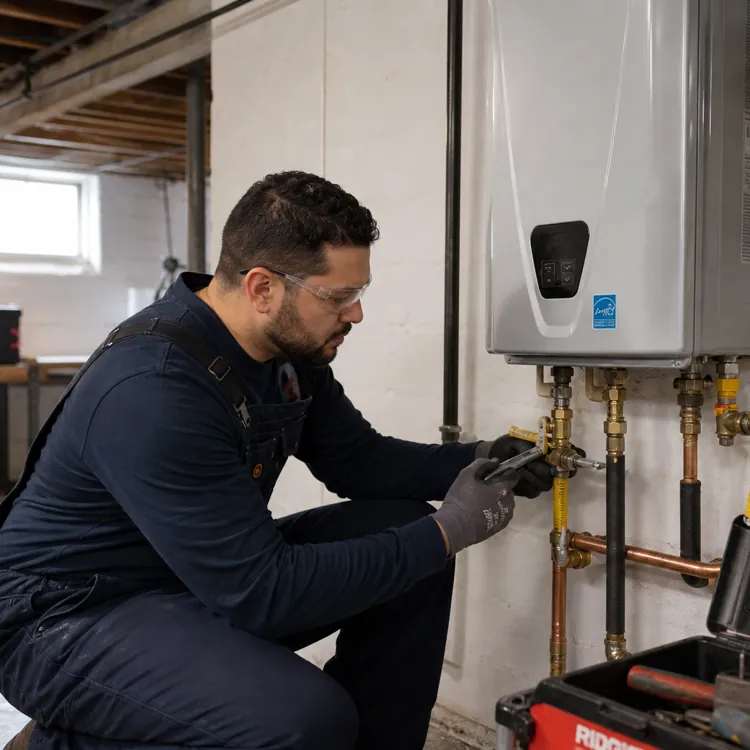
Because tankless water heaters are wall-mounted, the water connection location might change during the installation. This can mean extending or rerouting the home’s copper or plastic water lines to accommodate the new layout.
A professional may also need to upgrade older components that could be worn out, such as shutoff and isolation valves.
Location changes and access issues
Tankless water heaters are smaller than traditional units, which can mean more flexibility in where they can be installed. That said, the unit still needs proper ventilation (for gas models), utility connections and service clearance.
In older homes or homes with compact utility layouts, a contractor may need to relocate the system or reconfigure the area to meet code requirements, which can drive up labor costs.
Old tank removal and disposal
Before installing the new water heater, contractors must first remove the old unit. This typically requires turning off the water supply and draining the tank before disconnecting it. Professionals will then properly dispose of the appliance. Fees for this process typically run between $100 and $300.
Venting route and exterior wall
Unlike standard tank systems, gas-powered tankless water heaters need powered venting to safely channel exhaust from the unit. In some cases, this can require installing new vent lines, going through exterior walls or rerouting ductwork. This can also mean changing the location of the unit in order to accommodate venting requirements.



FAQ
Is it worth converting to a tankless water heater?
It can be. Unlike standard water heaters, tankless models offer endless hot water on-demand. They are also more energy efficient and last longer than conventional models.
What is the downside of a tankless water heater?
Tankless water heaters have a higher upfront cost compared to standard water heaters. Additionally, tankless water heaters require regular flushing to remove mineral scale.
How long does it take to install a tankless water heater?
It usually takes a professional between four and eight hours to install a tankless water heater.
Do tankless water heaters require special electrical service?
Installing an electric tankless water heater can require upgrading the home’s electrical panel. The water heater may need dedicated circuits and multiple breakers to accommodate its high energy demand.
Article sources
ConsumerAffairs writers primarily rely on government data, industry experts and original research from other reputable publications to inform their work. Specific sources for this article include:
- Pacific Northwest National Laboratory, "Gas-Fired Tankless Water Heaters." Accessed May 13, 2026.
- United States Environmental Protection Agency, "Household Appliances and Demolition." Accessed May 13, 2026.
- United States Department of Energy, "Tankless or Demand-Type Water Heaters." Accessed May 13, 2026.