

Key insights
Verify the contractor’s license, insurance, experience and warranty coverage before hiring.
Jump to insightAsk for an itemized estimate that includes labor, materials, delivery, permits and possible added costs.
Jump to insightConfirm the measurement process, lead time, installation schedule and any preparation required before work begins.
Jump to insightAvoid contractors that use pressure tactics, provide vague estimates or demand full payment upfront.
Jump to insightQuestions about contractor qualifications
When choosing a window installer, a good place to start is by asking about the contractor’s experience, past work and credentials. Here are a few things you can ask:
- Are you licensed in my state? Make sure the contractor’s license is active. Ask for a copy of the license number, then verify it using your state’s contractor license lookup tool.
- Do you hold general liability and workers’ compensation insurance? All companies doing work on your home should hold both. Your window installer should be willing to share the insurance binders with you.
- Do you have references I can contact? Ask for past client references, and then contact them. Ask what they thought of the overall process, including the installation timeline, the level of customer service they received and how happy they were with the quality of the work.
- Do you complete the work or subcontract? Neither is exclusively better, so optimize for what you want. Smaller companies that handle everything themselves tend to deliver better customer service, while larger companies that subcontract can sometimes provide better affordability, a wider range of brands or longer warranty coverage.
- Do you conduct background checks on your technicians? Ask about their employee vetting process. A reliable company will usually conduct background checks, which gives you greater peace of mind.
- How many years of experience do you have? It’s usually best to work with contractors who have at least five years of experience. More experience is generally preferable and may lead to better installation quality and long-term results.
- Do you have experience with this type of installation? Most standard replacement windows follow similar installation principles. However, ask about relevant experience if your project involves skylights, oversized or unusually shaped windows, structural changes or other complications.
- Do you provide a labor warranty for your work? A labor or workmanship warranty can cover problems caused by poor installation, such as air or water leaks. Coverage often lasts one to 10 years.
- What window brands do you work with, and what warranties do they offer? Manufacturer warranties can range from a few years to limited lifetime coverage, depending on the brand and product line. Coverage periods may also differ for the glass, frame, hardware and other components, so ask for the full warranty terms.
» COMPARE: Top-ranked window companies
Questions about window replacement costs
The cost of window replacement varies widely, so you should discuss pricing to avoid surprises.
- Do you charge for initial measurements and estimates? Most window installers offer free estimates, though some charge for measurements. A fee isn’t necessarily a red flag, but free quotes make it easier to compare contractors without added costs.
- What will be included in your estimate? Ask for a written breakdown of materials, labor, permits, cleanup, trim work, delivery and old-window disposal.
- Will your estimate be itemized? An itemized estimate makes it easier to compare contractors and identify unusually high material or labor costs. The estimate should list the window brand, specifications and applicable National Fenestration Rating Council ratings.
- Are there any fees that won’t appear on my quote but could show up later? If your contractor finds hidden water damage, structural damage, pest damage or another issue, the final cost may increase after work begins. Make sure the contract explains how unexpected repairs or added costs will be handled.
- What are my payment options? Most installers will accept payment via cash and credit card. You can also inquire about in-house and third-party financing.
- What are the payment terms? Make sure you understand whether you’ll owe a deposit and when additional costs become due throughout the process. The standard arrangement is half upfront as a deposit and half when the job is done.
- Will you be delivering the windows, or will there be a separate delivery fee? Ask whether the installer will deliver the windows and whether delivery is included in the quoted price. Some contractors may charge an additional fee or require you to arrange delivery yourself.
Potential window replacement add-on costs
Some costs may not appear in the base estimate. Ask whether the following items are included before signing a contract:
| Cost item | What to know |
|---|---|
| Permits | Permits may be required for new openings or resized windows and typically cost between $100 and $400. |
| Delivery | Some contractors include delivery in the estimate, while others charge separately. |
| Cleanup and disposal | Ask whether debris removal and old-window disposal are included. Disposal may cost $50 to $100 more. |
| Hidden damage | Water, pest or structural damage can increase the final cost after work begins. |
| Extended warranties | Optional labor or material coverage may add to the total price. |
Questions to ask about window installation
Once you’ve chosen a contractor to install your windows, you can ask some additional questions about their timelines and processes to get a better idea of what to expect.
- Who takes the measurements? Most contractors measure the windows themselves to ensure the order is accurate and the windows fit properly.
- What is the manufacturing and delivery lead time? Standard windows may take several weeks to arrive, while custom windows often take longer.
- What does the installation process look like? Having this information upfront can help avoid surprises.
- How long will the installation take? Knowing the timeline can help you plan for time off work and make arrangements for children or pets.
- Will I be responsible for anything throughout the process? You may be asked to remove curtains or blinds and move furniture away from the installation area.
- What measures will you take to protect my home during the installation? Safety equipment, tarps, drop cloths, shoe covers and other protective gear can prevent damage to your floors, walls and other parts of your home.
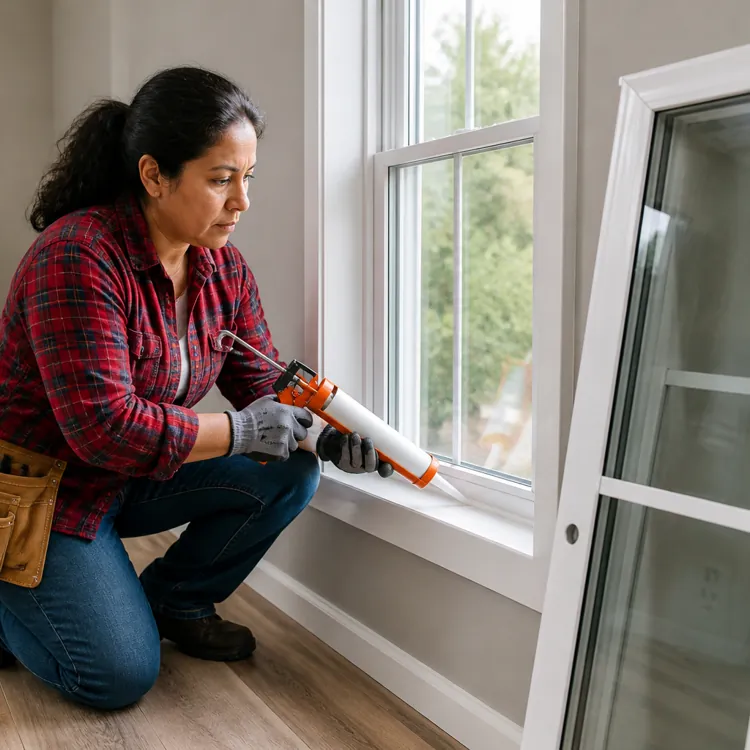
- What type of insulation and caulk will you use? Make sure your contractor uses high-quality caulk and spray foam insulation to properly seal your window.
- Do I need permits? Ask whether your installer will obtain any required permits, schedule final inspections and close them out after the work is complete.
Red flags when hiring window installers
There are some red flags you can look out for when interviewing and hiring window installers. These don’t always suggest that a company is up to no good, but they can help avoid less reliable contractors.
- Provides an estimate without an in-person inspection: No reliable window contractor, regardless of years of experience, will offer a quote without a visual inspection of your home.
- Uses high-pressure sales tactics: Be cautious of companies that refuse to provide an estimate unless all decision-makers are present, demand a same-day decision or use aggressive door-to-door sales tactics. Choose another contractor if you feel pressured to sign a contract.
- Refuses to provide license or insurance information: Any reliable contractor will be willing and able to provide license and insurance verification upon request. Avoid companies that try to forgo providing the information or make you feel bad for asking.
- Won’t provide a written estimate or contract: Always get everything in writing, including the estimate, contract and warranty information. Never hire a provider who works on handshake deals or verbal agreements.
- Requires full payment: Steer clear of companies that require full payment upfront. The industry standard for window replacement is a 50% deposit, with the remainder due upon job completion.
- Doesn’t have references or portfolio examples: A contractor who can’t provide references or examples of recent work may simply be new to the industry — or they may be trying to hide poor performance or customer service.
- Charges fees for estimates or measurements: Free estimates are the industry standard. Companies that charge for estimates and measurements aren’t necessarily scamming you, but it’s best to go with a provider who does the initial bidding for free.
- Provides vague or nonitemized estimates: You don’t need to look for brand and quantity of auxiliary materials, like caulk, but make sure the basics of your installation are broken down line by line.
- Offers unusually low bids: Always get at least three estimates and avoid any that come in suspiciously below the average. These contractors are more likely to use low-quality materials or cut corners during the installation.
- Communicates poorly: Poor customer service rarely improves with time. Choose a company that is present and honest from the get-go for the best experience.
FAQ
What is the average cost to replace 12 windows in a home?
The average cost to replace 12 windows in a home is between $7,200 and $24,000, based on a per-window cost of $600 to $2,000. Pricing will depend heavily on the type and size of the window you’re replacing, as well as the frame and glass materials.
What are the top three window brands?
At the time of publication, ConsumerAffairs’ top three window brands are Renewal by Andersen, Champion Windows and Pella. Renewal by Andersen is our overall top pick, Champion Windows stands out for its limited lifetime warranty and Pella offers extensive customization options.
How long does window replacement take?
Most contractors can replace one window in one to two hours. Second-story windows and skylights may take longer. Resizing the opening can extend the timeline considerably because it requires structural work.
Are permits required for window replacement?
Window replacement usually doesn’t require a permit unless you’re resizing the opening or installing a window where there wasn’t one before. The contractor should obtain and close out any required permits, though you’ll be responsible for the fees.
Article sources
ConsumerAffairs writers primarily rely on government data, industry experts and original research from other reputable publications to inform their work. Specific sources for this article include:
- ASP Windows and Doors, “How Long Is a Typical Window Warranty?” Accessed July 23, 2026.