

How to choose an HVAC contractor
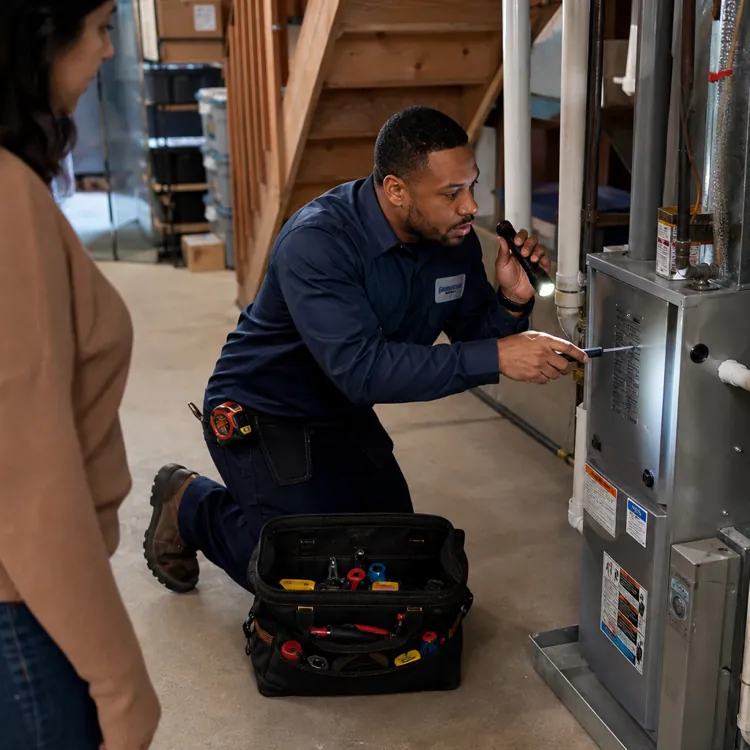
Choosing an HVAC contractor primarily involves vetting local professionals to ensure they’re properly licensed and insured, as well as confirming they have experience with your specific type of HVAC system. You can follow the steps below to help ensure you get a reliable technician.
1. Confirm licensing, insurance and certifications
First and foremost, you should confirm that the HVAC contractor you’re considering is licensed in your state, as work without proper licensing is illegal and can void your homeowner’s insurance policy. Check your Department of State’s website for a contractor license look-up tool, or use ENERGY STAR’s contractor search tool to find licensed experts in your area.
Some states require an HVAC-specific license, while others just require a general contractor’s license. You can confirm which to search for on the Department of State’s website as well.
You also want to make sure your contractor holds EPA Section 608 certification, which is federally mandated for any HVAC tech handling refrigerant. You don’t need to worry about this certification if you need service on a furnace or boiler, but you should verify certification for central AC systems, heat pumps and mini-splits. Ask your contractor to confirm certification.
While you’re speaking with your professional, ask about insurance. Reliable HVAC companies will have general liability insurance as well as workers’ compensation insurance. You can request proof of insurance, which your pro will usually have in the form of insurance binders.
2. Check reviews, referrals and references
Next, you’ll want to verify that the technician has shown evidence of being reliable and trustworthy in the past. You can start by speaking with whoever referred you if you got direct referrals. Ask about the quality of service, the turnaround time, how the contractor left the job site and what the overall customer experience was like.
If you didn’t get a referral, read through reviews online, or ask your contractor for references and speak with the past customers directly. Try to get a sense of how satisfied customers generally are and how the installation or repair held up over time.
Try to narrow down your shortlist of professionals to three or four, and continue the process only with those.
3. Expect a home evaluation and sizing
The first thing a reliable technician should do when installing equipment in your home is determine what type of HVAC system you need and how big of a system suits your property. Ideally, your pro should perform a Manual J calculation, which includes an assessment of the following, among other things:
- The square footage of your home
- The ceiling height in your living areas
- Your home’s age
- The quality of your insulation, windows and doors
- The type and quality of the roof and siding on your home
- The climate in your area
Installing a properly-sized HVAC system will help maximize the lifespan of your equipment, ensure indoor comfort and boost efficiency to reduce heating and cooling costs.
4. Compare itemized bids and warranties
Next, get formal estimates from each company you’re considering. Ask the pros to itemize their bids so you can compare them apples-to-apples. Ask about any recommendations a contractor makes that don’t match the other estimates.
Estimates should include a note about any warranty you get for the labor and/or materials. Material warranties come from the manufacturer, but you can still compare contractors based on the brands they recommend and the coverage they come with. You can also check for labor warranties, which are a good sign that a pro will stand behind their work.
5. Review contract terms and payment schedule
There are other terms you should review to get a fair comparison between the estimates you get:
- Look for details about permits and necessary inspections
- Confirm that you can see itemized pricing
- Verify that your payment method and payment schedule are clearly spelled out
- Confirm that the estimate includes an expected timeline for project completion
6. Verify emergency service availability
HVAC systems help keep your home at a safe and comfortable temperature, so if you need a replacement or repair in the dead of winter or in the peak summer temperatures, confirm that your tech can expedite the work. Be ready to arrange for alternative housing if you can’t find a contractor who can get the work done when you need it.
7. Ask about maintenance plans and ongoing support
Finally, ask your HVAC contractor about work in the future. It’s convenient to have the same tech who installed your heating and cooling system service it in the future, and some will offer discounts on ongoing maintenance plans if they also handle the installation.
Most HVAC techs tackle installations and repairs, but double-check to see if yours will provide repair services in the future. If not, ask for a referral for a company that will.
HVAC contractor red flags to avoid
Unfortunately, not all HVAC techs are equally reliable and experienced, and there are some companies that can cause more harm than good. There’s no way to guarantee that you’re hiring a trustworthy contractor, but looking out for the following red flags can help improve your chances.
- No inspection or poor evaluation: Companies that don’t physically inspect your home and offer estimates over the phone are a major red flag. Proper HVAC sizing and evaluation requires a thorough on-site evaluation.
- Poor evaluation: Avoid professionals who don’t evaluate your home and instead base your system size recommendations on what you already have or on square footage alone.
- High-pressure sales tactics: Technicians who try to pressure you into hiring them or who offer deals and specials that end soon are more likely to be working for disreputable companies.
- Underbidding: Estimates that come in much lower than others usually suggest that the contractor will use substandard equipment, tack on hidden costs once the work starts or perform unlicensed work. This is why it’s important to get three bids to compare.
- Lack of licensing, certification or insurance: Always avoid companies that aren’t licensed in your state, don’t hold EPA certification for refrigerants or don’t have general liability and workers’ comp insurance. You could end up with illegal work in your home, which can cause issues with homeowner’s insurance and home warranty coverage for your HVAC system.
- Vague estimates: Make sure you hire a pro whose estimate is clear, thorough and itemized to avoid overpaying or getting service you didn’t want or need.
- Poor communication: Companies that are slow to respond or aren’t clear when answering questions usually indicate that you’ll have trouble with more serious issues down the line.
- Payment in full before work begins: HVAC pros should never demand payment in full upfront for HVAC replacements or installations, and those who do aren’t reputable. Most will split payments in half, with 50% due upfront and 50% due upon project completion. However, upfront payment for smaller HVAC repairs is normal.
- Lack of a physical address: Avoid companies that don’t have a physical address that you can verify. Professionals who also have an online presence are usually best, although some reputable local companies may not have a big online footprint.
- Pattern of negative reviews: Finally, check online reviews across multiple sites. All companies are bound to have some negative reviews, so read through them and look for patterns of issues rather than just relying on aggregate review scores.
HVAC contractor estimate checklist
Once you have a few estimates from different local contractors, you should compare them side-by-side. You can start by comparing based on the total cost to find any outliers, but make sure you also consider the following.
- Equipment specifics: Look to make sure your estimate includes specific information about the equipment your pro will install. It should at least include model numbers for each component, and it will ideally list efficiency ratings and unit size as well.
- Load calculation documentation: Your pro should have performed a load calculation to verify what size system you need, and the best installers will offer documentation showing everything they considered when sizing your equipment.
- Information on permits and inspections: Most municipalities require permits for major changes to mechanicals, including your HVAC system. Check to see if permit fees are included in your total or if you’ll have to pay them separately, and make sure your tech will pull permits and schedule the necessary inspections to keep your project legal.
- Notes about pricing and payments: Make sure you understand everything included in the total, make sure the payment method is correct if it’s listed and verify that the payment schedule, if there is one, suits your budget and payment timeline.
- The scope of work: The estimate should include a detailed scope of work that explains everything your contractor plans on carrying out in your home. Double-check that you’re getting all of the services you want and none that you don’t. Look for add-ons, like those involving ductwork, electrical upgrades and any other services you want to include.
- Timeline of work: Your contract should include an expected timeline for the completion of the work. Verify that it meets your expectations, and check whether any possible delays are noted or if your pro needs to wait on delivery of your equipment.
- Itemized list of equipment and services: Companies that are fully transparent will include a clear breakdown of all of the components and labor included in your estimate. You’ll be able to see what percentage of your HVAC installation costs or repair costs are going toward equipment and what percentage is going toward labor.
- Warranty information: Check your contract for information on equipment and labor warranties. In most cases, contractors will just pass the manufacturer’s warranties onto you, but you should still check for a labor warranty.
| What to look for | Questions to ask | |
|---|---|---|
| Equipment details | Brands and model numbers | What efficiency rating is my equipment? |
| Load calculation | Documentation supporting system capacity | Do I need an electrical system upgrade to support the new system? |
| Ductwork scope | Mention of ductwork repairs or inspections | Can you confirm I don’t need additional repairs or sealing? |
| Permits | Itemized permit fees | Will you handle pulling permits and scheduling necessary inspections? |
| Labor | Itemized labor costs | Is this a flat rate or based on an expected number of hours? Can this change? |
| Start date | Listed start date and possible variance | If you have to push the start date, will the completion timeline extend, too? |
| Warranty | Manufacturer’s warranty and labor warranty | What’s the process like if I run into an issue within the warranty timeframe? |
| Total cost | All-in pricing | Are there any potential fees we could run into above and beyond this number? |
FAQ
What is the $5,000 rule for HVAC?
The $5,000 rule for HVAC is a rule of thumb that helps determine if you should repair or replace your HVAC system when you run into a problem. You take the age of your system in years and multiply that by the expected repair cost. If the total is over $5,000, the rule suggests that a replacement would be more worthwhile.
Should I get multiple HVAC quotes?
Yes, you should always get multiple HVAC quotes so you can compare to find the best value for your money. Having at least three estimates also helps identify lowball prices that could suggest low-quality equipment or labor.
Are HVAC quotes negotiable?
HVAC quotes can be negotiable, but it depends on the contractor. Some HVAC companies may be willing to come down a bit on labor costs to match other bids, especially for larger jobs.
What is the best month to buy an HVAC system?
The best time of year to purchase and install an HVAC system is early spring or early fall. HVAC contractors are usually busiest in the summer and winter, when heating and AC systems are most likely to fail, and when breakdowns can create emergency situations. As such, they’re usually busiest during these peak seasons, and demand can drive labor costs higher.
Article sources
ConsumerAffairs writers primarily rely on government data, industry experts and original research from other reputable publications to inform their work. Specific sources for this article include:
- United States Environmental Protection Agency, "Section 608 Technician Certification Requirements." Accessed May 8, 2026.
- U.S. Department of Energy, Office of Energy Efficiency and Renewable Energy, Building Technologies Program, Building America, "Strategy Guideline: Accurate Heating and Cooling Load Calculations." Accessed May 8, 2026.
- ENERGY STAR, "Licensed Professionals with experience near you." Accessed May 8, 2026.