

Home warranty coverage for clogged drains
Home warranties usually cover most, but not all, types of drain clogs. Standard plans tend to cover clogs inside and underneath a home, but don’t protect plumbing past a certain distance from the main structure. However, many providers offer coverage for exterior sewer and water lines as policy add-ons.
Home warranty coverage information for typical drain clog issues is outlined below.
Sink clog
- Coverage: Standard
- Common exclusions: Clogs from misuse/foreign objects, grease buildup, pre-existing blockages
- Average coverage limit: Included under plumbing stoppage coverage; typically $500 to $1,500 per item cap
Shower or tub clog
- Coverage: Standard
- Common exclusions: Hair/soap buildup from neglect, pre-existing conditions, improper installation
- Average coverage limit: Included under plumbing stoppage coverage; typically $500 to $1,500 per item cap
Toilet stoppage
- Coverage: Standard
- Common exclusions: Non-flushable items causing blockage, tree root intrusion, misuse
- Average coverage limit: Included under plumbing stoppage coverage; typically $500 to $1,500 per item cap
Main line stoppage
- Coverage: Standard (often limited by distance)
- Common exclusions: Non-flushable items causing blockage, tree root intrusion, misuse
- Average coverage limit: Included under plumbing stoppage coverage; typically $500 to $1,500 per item cap
Interior sewer line stoppage
- Coverage: Standard
- Common exclusions: Tree root damage, collapsed/damaged line, pre-existing conditions, improper prior repairs
- Average coverage limit: Typically capped around $500 to $1,500; access costs may have their own sub-limit
Exterior sewer line stoppage
- Coverage: Add-on item
- Common exclusions: Tree root damage, excavation/access costs, pre-existing conditions, lines beyond the foundation
- Average coverage limit: Varies by add-on; often $1,000 to $4,000 depending on provider and the option you select
Covered causes of drain problems
Home protection plans cover clogs and other damages to drains and plumbing that occur due to normal wear and tear.
Covered drain issues include:
- Sink, tub and shower drain clogs caused by soap residue, hair or mineral buildup
- Toilet clogs from normal use
- Corroded interior drain pipes
- Deteriorated seals between pipes and other joint leaks
- Interior drain line stoppages
- Blocked P-traps from normal use
» MORE: Best home warranty companies
Common exclusions for clogged drains
While home warranties cover a wide range of clogs and other drain problems, some issues and causes of damage are not covered.
Don’t assume every clog is covered. Check your contract for specific exclusions first.
Home service contracts typically feature exclusions for drain issues such as:
- Clogs caused by flushed wet wipes, paper towels and other non-flushable items
- Blockages caused by grease or food scraps discarded in drains
- Tree roots that have broken through pipes and sewer lines
- Clogs in sewer lines located more than 100 feet from a home*
- Septic tank issues*
- Failures caused by neglect
- Collapsed or broken sewer lines
- Excavation services or other costs related to accessing issues
- Clogs caused by foreign objects like toys
* Coverage for these issues may be available as add-on items from some home warranty providers
Why some drain problems aren’t covered
There are a few reasons why home warranty providers don’t cover certain drain issues. Most drain coverage exclusions fall into one of four categories.
Lack of maintenance
Home warranty contracts usually require policyholders to perform routine maintenance to covered systems. Under this condition, providers can deny claims for issues that could have been prevented by regular upkeep. For example, doing an inspection of your sewer lines every few years might reveal tree root growth that could reach and damage pipes.
Therefore, many companies won’t cover damages to plumbing caused by overgrown roots since the loss was avoidable.
Non-covered systems
Even though equipment like septic tanks, sump pumps and well pumps are part of your home’s water system, home warranty contracts often don’t cover them. Providers consider them separate from standard residential plumbing infrastructure like drains and interior pipes.
Many companies sell add-on coverage for equipment and systems that aren’t covered by standard plans.
Additional services
In some cases, technicians may need to do additional work to be able to reach clogs and other problems. Home warranty plans only protect appliances and systems and don’t usually cover the cost of access services like sewer line excavation, even when the provider is required to fix a problem that is covered.
Misuse
Another reason companies deny drain and plumbing claims is damage from improper use. If, for example, you create a clog in your main line by flushing wet wipes down the toilet or pouring cooking oil down the sink, that problem is considered your fault and not normal wear and tear.
As a result, your home warranty provider would likely deny any claims you made related to the issue if it finds evidence of misuse.
Drain cleanout access and coverage
A cleanout is a capped pipe installed on your property that gives technicians access to a drain or sewer line.
Home warranty providers typically require you to have an easily accessible cleanout to cover plumbing issues because working on water lines without one is difficult and often requires additional work. Technicians must also be able to locate your cleanouts without special equipment.
How inaccessible cleanouts affect drain coverage
If your home does not have a cleanout service that your warranty provider can easily find and use, you may have to pay out of pocket for the work needed to make it accessible. Providers consider it the homeowner’s responsibility to know where cleanouts are and ensure they can be reached easily.
Some plans allow for a concrete cutting service to make it possible for technicians to reach pipes or install a new cleanout. However, home warranties don’t typically cover the cost of installing cleanouts. Plans also aren’t likely to cover camera inspections and other services related to locating cleanouts and other infrastructure — many of which can be expensive.
Filing a claim for clogged drains
It’s important to address drain clogs and other plumbing problems as soon as you notice them. These issues can escalate quickly and cause significant water damage throughout your home.
To avoid further problems, you should file a claim with your home warranty provider and make a service call as quickly as possible.
How to file a drain clog claim
Follow the steps listed below to file a claim with your home warranty company about a stoppage.
1. Review your home warranty policy to make sure the issue is covered
If you have any doubt that your home warranty plan covers the problem with your drain or plumbing system, take a moment to review your contract. Check to see if the damaged component or the cause of that damage, such as a flushed necklace, is an exclusion.
Document the issue as much as possible, collecting photos, videos and notes as evidence.
2. Initiate a claim
The claims process varies between home warranty companies, but you can typically submit a claim over the phone by calling your provider’s claims or customer service department. Some companies also offer an online portal for filing claims or allow you to file through a mobile app.
You will need to describe the issue, including where it’s located and any symptoms you observe. In some cases, you may need to get pre-authorization before you can proceed.
3. Call a technician
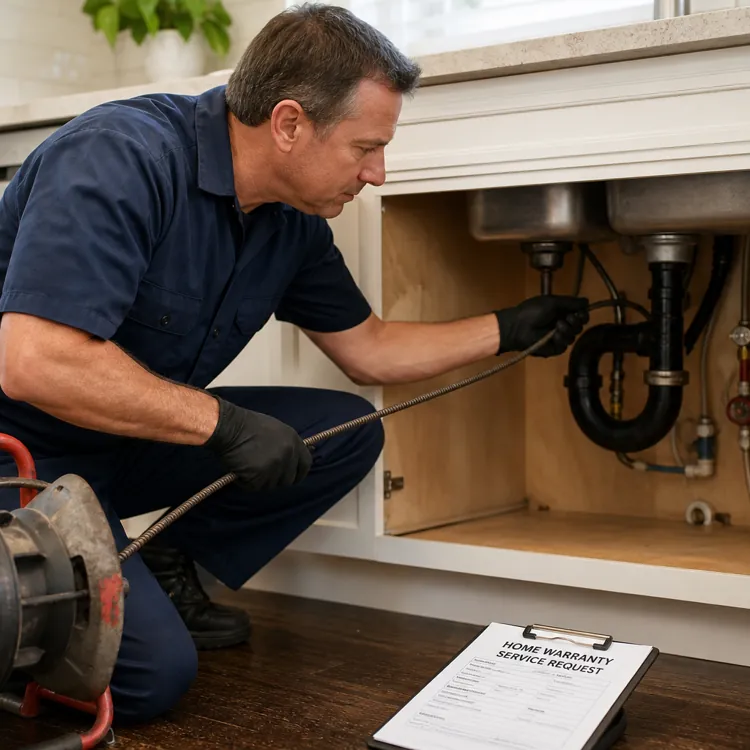
Some home warranty providers assign technicians to service calls while others require policyholders to contact them. If you are the one who has to make the call, you can ask your provider for technicians in your area or reach out to someone you already know.
Technicians dispatched by warranty providers typically arrive within 24 to 48 hours.
4. Pay the service fee
Your home warranty contract assigns a service fee for all covered services. This varies between providers and sometimes between services, but usually ranges from $50 to $125. You will need to pay this upfront to your provider or directly to the technician when they arrive.
5. Get a diagnosis
The first thing the technician will do when they get to your home is try to diagnose the issue. They will look for the root cause of the problem and note whether damages appear to be from normal wear and tear or from misuse, neglect or other excluded causes. After completing their diagnosis, they will deliver their findings to your provider.
6. Wait for approval
Your provider will look over the information they receive from the technician and decide whether to approve or deny the claim. If your claim meets all the necessary criteria, the agent will approve the claim and contact the technician to authorize repairs.
7. Finalize the claim
Once the technician has completed the repair work, your home warranty provider will pay them directly up to the coverage limit listed in your contract. If the cost of repair services exceeds your coverage limit, you will be responsible for the remainder of the bill.
What to do if your drain clog claim is denied
If you feel that your home warranty provider denied your claim unfairly, you have the right to appeal. Mistakes happen, and agents may sometimes overlook details that would affect their decision. In most cases, you need to contact the company again to begin the appeal process.
Here are a few tips for disputing home warranty claim denials:
- Ask for specific reasons why your provider denied your claim.
- Gather as much photo and video evidence to support your claim as you can.
- Ask your technician for notes that could help your appeal.
- Find language in your service contract that supports your case.
- Gather maintenance records that demonstrate due diligence on your part.
- Be patient and courteous with representatives as they work through the process.
FAQ
Does home warranty cover sewer line clogs?
Yes, home warranties cover some sewer line clogs, but with several notable exclusions. Protection plans typically don’t cover exterior sewer lines located more than 100 feet from the home or preventable clogs caused by neglect or misuse.
Does home warranty cover plumbing leaks?
Yes, a home warranty covers many types of plumbing leaks, but not all of them. Home warranty contracts generally cover leaks in plumbing located inside and close to the main structure, except those caused by a lack of maintenance or improper usage.
Are drain clogs caused by roots covered?
No, drain clogs caused by roots are not usually covered by home warranty policies. Root damage to sewer and water lines is considered to be the result of neglected maintenance and therefore excluded from coverage.
What is a red flag on a home warranty?
A major red flag on a home warranty is low coverage limits that don’t sufficiently cover the average cost of repair and replacements for systems and appliances. Another notable red flag is a provider that has consistent patterns of complaints about unexpected or unreasonable claim denials or issues with customer service.
Article sources
ConsumerAffairs writers primarily rely on government data, industry experts and original research from other reputable publications to inform their work. Specific sources for this article include:
- Seattle Public Utilities, "What to Flush." Accessed Aug. 13, 2026.
- United States Department of Agriculture Forest Service, Research and Development, "Tree root intrusion in sewer systems: A review of extent and costs." Accessed Aug. 13, 2026.
- City of Garland, "Frequently Asked Questions." Accessed Aug. 13, 2026.
- Federal Trade Commission, "So what’s the deal with ‘home warranties’?" Accessed Aug. 13, 2026.