4.7
285 reviews
- Step-in height
- 2 inches
- Financing
- In-house and third-party financing available
- Warranty
- Limited lifetime on defects, shell and other components


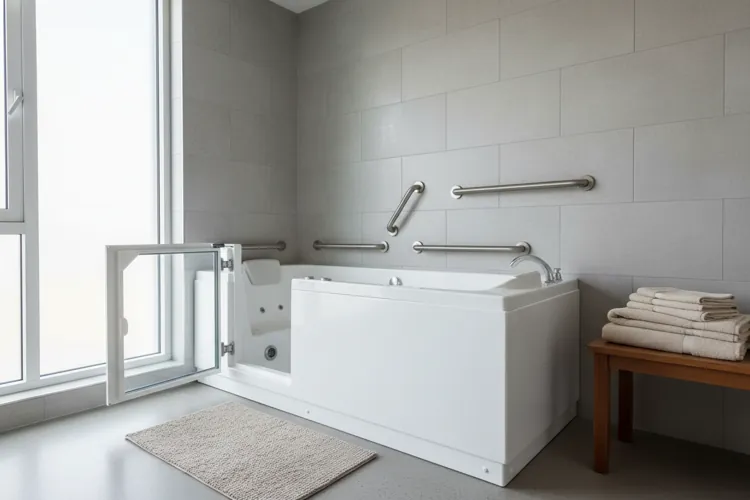
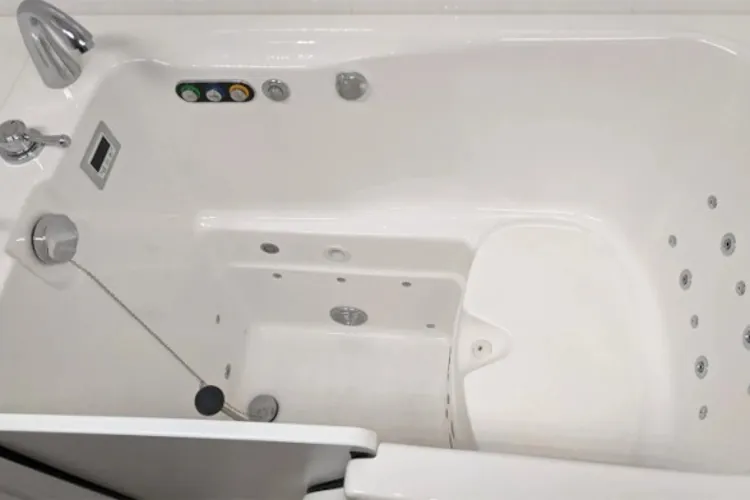
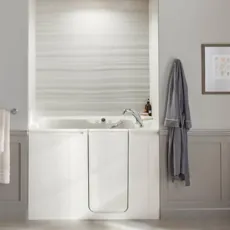
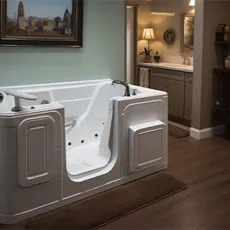
Walk-in bathtubs are similar to regular tubs, but they have seats and doors that allow you to enter and exit without stepping over a wall. Two-person walk-in tubs, also called companion tubs, are slightly larger, providing space for more than one person. These tubs are ideal for older adults who want to have more room for bathing, couples who enjoy bathing together and people with limited mobility who need assistance cleaning themselves.
| Company | Customer rating | Our pick for | Step-in height | Number of jets (air and hydro) | Pro installation | |
|---|---|---|---|---|---|---|
 Boca Walk-In Tubs | Learn More | 4.7 | Best overall | 2 inches | 18 air jets; 10 hydrojets |  |
 Ella's Bubbles | Get Started | 4.4 | Affordability | 3.75 inches | 24 to 40 | |
| Boca | Ella’s Bubbles | |
|---|---|---|
| Model | Two Seater | Big4Two |
| Step-in height | 2 inches | 3 ¾ inches |
| Number of jets | 18 air jets; 10 hydrojets | 18 seat jets (9 on each seat), 4 foot jets |
| Pro installation | In-house | Requires a qualified installer |
| Warranty | Lifetime | Lifetime limited |

When shopping for a two-person walk-in bathtub, the most important thing to look for is a reputable company (in terms of the manufacturer/seller and the installer). Try to stay with reputable manufacturers with a history of quality products and customer service. Make sure to read reviews, talk to friends or family for recommendations, and, if possible, visit showrooms to try before you buy.
“Some of the features to hold out for in a two-person walk-in tub are wide doors, faucet features, wands, chromotherapy, heated seats, heated backs, air jets, heated jets, micro jets, audio speakers, ease of use, wall grab bars, enclosure options, rainfall showerheads, purging systems, heating safety features and aromatherapy options,” Brandon Walker, a superintendent at ASAP Restoration in the Phoenix area, told ConsumerAffairs.
It’s also important to keep in mind that putting in a two-person walk-in tub generally requires professional installation, so you may need to do some remodeling. Take the time to research and vet installation companies. Be honest about your health needs and financial concerns, because companies may have options you didn’t know about.
Here are some other important factors to consider when deciding on which two-person walk-in tub is best for you.
» LEARN MORE: Questions to ask a walk-in tub company
Walk-in bathtubs can be expensive, and two-person tubs can be even more so. Basic two-seater walk-in tubs start at around $8,000 as of publishing. Adding on popular features like hydrojets or quick-drain options will quickly drive up the price.
It’s essential to consider the cost of both the basin and the installation. You could be looking at a cost of $6,500 plus just for the installation, Walker said in an email. Here’s how he breaks down that installation cost.
| Installation job | Cost |
|---|---|
| Plumbing | $1,500-$3,000 |
| Electrical work | $500-$1,000 |
| Reconstruction | $2,500+ |
More expensive tubs do not usually cost more to install than cheaper ones. However, you can expect to pay more for installation if you need more extensive work done in your bathroom.
If you choose to buy a tub and have it installed yourself, models that feature hydrotherapy average $8,000 to $12,000, while special models like bariatric or combination (air and water) walk-in tubs start closer to $10,000 and can cost up to $20,000 or more as of publishing.
Ella’s two-seat walk-in tub options are listed between $8,300 for the smaller tubs and $13,500 for the bigger, more luxury tubs as of publishing. Those prices do not include installation costs or the cost of accessories such as shower glass screens.
Meanwhile, Boca two-person walk-in tubs range from $15,000 to $25,000, including installation, Dominic Telymonde, vice president of sales for Boca Walk-in Tubs, told us.
» LEARN MORE: Boca vs. Ella’s Bubbles
While they may be pricey, two-person walk-in tubs are an excellent option for older adults and people with limited mobility who need assistance bathing safely and comfortably. A two-person walk-in bathtub is also a great option for someone who just wants to bathe with their partner and/or socialize while bathing.
The cons are that they can take longer to fill than a traditional bathtub, could require a whole house hot water heater upgrade, have longer drain and fill times and can be quite pricey — even more so if you have to have extensive bathroom renovations in order to install them.
» READ MORE: Pros and cons of walk-in tubs
Walk-in bathtubs are not the only option if safety is your main concern. “Bathtub lifts are vastly more affordable,” Walker said. And they require less invasive construction, if any at all. They also “keep the original feel and look of the bathroom as is.”
“For those with mobility issues, it might be a good idea to take a look into this as an option prior to getting contractor estimates for a total bathroom redux.”
Some other alternatives to walk-in tubs include:
» RELATED: What is the cost of in-home care?
The typical lifespan of a walk-in tub can range from 10 to 20 years, depending on the quality of materials, usage and maintenance. High-quality walk-in tubs can last a lifetime with proper maintenance. Regular cleaning and servicing can help extend the life of your tub.
For a two-person walk-in tub, you will likely need a water heater with a capacity of at least 50 gallons or more, depending on the tub’s depth and size. Larger two-person tubs may require a water heater closer to 80 gallons. Some models include in-line heating systems to reduce strain on your home’s water heater.
Two-person walk-in tubs are generally larger than standard tubs, typically measuring at least 67 inches long, 28 inches tall and 34 inches wide. It’s essential to measure your bathroom space and consult with an installer to ensure a proper fit.
No, Medicare generally does not cover the cost of walk-in tubs, as they are considered luxury items rather than medical necessities. However, some insurance plans or Medicaid programs may offer assistance if the tub is deemed medically necessary. It’s best to check with your provider for specifics.