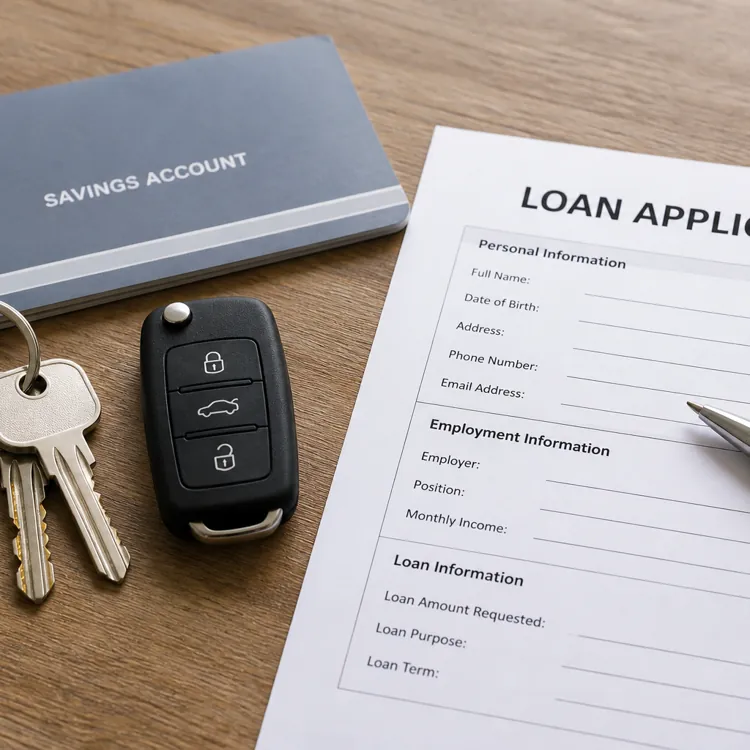



Secured personal loans are loans backed by collateral. This means to secure the loan, you must offer the lender an asset like money deposited in a bank account, a vehicle or your house. While secured personal loans are often easier to get than unsecured loans, the lender can seize your collateral if you don’t repay your loan.
To make our top choices, our research team evaluated 31 personal loan lenders and narrowed them down to those that offer secured loans. We selected four lenders based on factors that are important to borrowers, including minimum required credit scores, repayment terms, maximum loan amounts, annual percentage rates (APRs) and fees.
Our picks may be Authorized Partners that compensate us. This does not affect our recommendations or evaluations but may affect the order in which companies appear.
- Our pick for low loan amounts: OneMain Financial
- Our pick for high loan amounts: Figure
- Our pick for bad credit: Upgrade
- Our pick for debt consolidation: Best Egg
| Company | Customer rating | Loan amounts | Term lengths | Minimum credit score | |
|---|---|---|---|---|---|
 OneMain Financial | Compare Offers | 1.3 | $1,500 to $30,000 | 2 to 5 years | |
 Figure | Visit Site | No ratingView profile | $15,000 - $400,000 | 5, 10, 15 or 30 years | 640 or 680 |
 Upgrade | Compare Offers | 4.7 | $1,000 to $50,000 | 2 to 7 years | Not disclosed |
 Best Egg | Compare Offers | 4.1 | $2,000 to $50,000 | 3 to 5 years | 640 |
Compare our top 4 secured personal loan picks
OneMain Financial

- Loan amounts
- $1,500 to $30,000
- Term lengths
- 2 to 5 years
- Minimum credit score
- -
Figure

- Loan amounts
- $15,000 - $400,000
- Term lengths
- 5, 10, 15 or 30 years
- Minimum credit score
- 640 or 680
Upgrade

- Loan amounts
- $1,000 to $50,000
- Term lengths
- 2 to 7 years
- Minimum credit score
- Not disclosed
Best Egg

- Loan amounts
- $2,000 to $50,000
- Term lengths
- 3 to 5 years
- Minimum credit score
- 640
What is a secured personal loan?
A secured personal loan is a type of installment loan that’s backed by collateral, such as a car, house or money held in a bank account. It works just like an unsecured personal loan, but if you don’t repay the loan as agreed, the creditor can take the collateral that secures the loan to repay some or all of what you owe.
You can use secured personal loans for nearly any purpose, like consolidating high-interest debt, repairing or improving your home, paying household or medical bills or covering large expenditures such as weddings.
Some lenders let you use secured personal loan funds for any purpose; others restrict you from using the funds for things like paying for higher education or investing.
Just like unsecured personal loans, you’ll typically repay a secured personal loan in equal installments of principal and interest. The interest rate is commonly fixed for the entire loan term, but some lenders also offer variable rates.
Depending on your lender, you may be able to repay the loan as quickly as you want with no fee. However, some lenders will charge a prepayment penalty if you pay the loan back in full before the scheduled end of its term. No matter what type of loan you choose, carefully read the loan documents so you understand the terms before you go through with it.
» MORE: What is a secured loan
Examples of secured personal loans
Secured personal loans primarily vary by the type of collateral you’re pledging to your lender. Collateral with a longer life span will typically have a longer maximum repayment term than collateral with a shorter life span (e.g., houses versus cars). For this reason, secured personal loans are usually distinguished by the type of collateral that secures them.
Some common examples of secured personal loans include:
CD-secured loan
This type of secured personal loan is backed by cash you hold in a certificate of deposit (CD) account. The loan rate is typically set at a percentage above the CD rate, and the loan’s term typically matches the CD’s maturity date. You’ll repay the loan in fixed installments during the loan’s term.
Auto-secured loan
If you can’t qualify for an unsecured personal loan or you want to get a better interest rate, you may be able to pledge your automobile as collateral. With this loan, the lender can take your car if you don’t pay as agreed.
Home equity loan
A home equity loan allows you to borrow against your home’s equity in one lump sum. Your home serves as collateral, and you usually repay a home equity loan in equal installments over time.
Home equity line of credit
A HELOC also allows you to borrow against the equity you’ve built up in your home. During the HELOC’s draw period, you can borrow and repay the funds as much as you want. At the end of the draw period, you’ll typically repay the balance in installments over 10 to 20 years.
When considering a secured loan, it’s important for consumers “to understand they are pledging collateral as a security interest and risk losing the asset should they default on the loan,” warned Josh Miller, the head of consumer acquisition, marketing and product development for KeyBank.
Even so, since secured personal loans are backed by collateral, they typically have better rates, and the qualification requirements are easier to meet than the requirements for unsecured personal loans, adds Miller. They can be good for people with “blemishes on their credit” or who are simply trying to build their credit.
Keep in mind: You must have collateral to use secured personal loans, like cash in a bank account, a car you own or equity in your home. If you don’t have assets to offer as collateral, secured personal loans won’t work for you.
» LEARN MORE: 4 best low-interest personal loans
Secured personal loan rates, terms & fees
Secured personal loans tend to offer lower interest rates and more flexible terms than unsecured loans because they are backed by collateral. However, rates, terms and fees can vary widely depending on the lender and the type of collateral used.
On average, interest rates for secured personal loans range from 5% to 15%, with CD- and savings-secured loans usually on the lower end of the spectrum. Repayment terms typically fall between 12 and 84 months, though loans secured by real estate can stretch as long as 15 to 30 years. Loans backed by CDs or vehicles tend to have shorter terms, often one to five years.
In addition to interest, borrowers may encounter a variety of fees. Common charges include origination fees, which can range from 1% to 8% of the loan amount, and application fees, usually flat fees between $25 and $50. If you use property as collateral, your lender might require an appraisal, which often costs $300 to $500. Lenders may also impose late payment fees—typically $25 to $40 or a percentage of the missed payment—and some charge prepayment penalties, particularly if the loan uses precomputed interest.
Because these fees can add up quickly, it’s important to review loan offers closely and compare total borrowing costs, not just the interest rate.
Eligibility and requirements for secured personal loans
To qualify for a secured personal loan, borrowers must typically meet certain credit and income standards, as well as provide acceptable collateral. While secured loans are generally easier to obtain than unsecured ones, lenders still evaluate your credit history, income stability and debt-to-income ratio to assess risk. Collateral requirements vary by lender but often include vehicles, savings accounts, certificates of deposit or home equity. The value of the collateral usually determines how much you can borrow.
Many lenders also require proof of ownership and documentation related to the asset being pledged. For example, if you're using a car as collateral, you’ll need to provide a title free of liens. If you’re securing the loan with home equity, a property appraisal and title search might be required. Some lenders also impose minimum collateral values, and the asset must be easily accessible or liquidatable in the event of default. In some cases, especially for lower credit borrowers, a co-signer may still be required to improve your chances of approval or get better terms.
Secured loans to avoid
While secured loans can be a good alternative to other types of financing, they’re not always the best option. You should avoid secured loans that offer very short repayment terms (e.g., measured in days versus months or years) and carry very high interest rates, such as vehicle title loans. When interest rates and fees are really high, it’s easy to get stuck in a cycle of borrowing that’s difficult to escape.
If you’re strapped for cash and need quick funding, it might be tempting to look to secured options like title loans or even pawn shops. However, think carefully before pursuing these arrangements, as you will certainly lose your collateral if you don’t repay the loan as agreed.
» MORE: 11 payday loan alternatives
Pros and cons of secured personal loans
If you’re debating between getting a secured personal loan and an unsecured personal loan, there are several pros and cons to consider.
Pros
- Qualification standards are easier for secured loans.
- Secured loans have lower APRs.
- Secured loans may have longer repayment terms.
Cons
- You must have assets to pledge as collateral for a secured loan.
- Funding may take longer to receive than with an unsecured loan.
- With a secured loan, you risk losing your collateral if you don’t repay the loan as agreed.
If you don’t want to use collateral to get a loan or you only need money for a short period of time, an unsecured loan might be better than a secured loan, explains Brian Samelko, a senior product manager at PNC Bank.
With an unsecured loan, a lender doesn’t have to protect its security interest in your assets, so unsecured loans “typically have faster approval times and less required paperwork than secured loans,” said Samelko.
» MORE: Pros and cons of personal loans
How to choose a secured personal loan
Some factors to consider when shopping for the best secured loan are:
- Accepted collateral: Common examples of collateral that a lender might accept include money in CDs or savings accounts, your home’s equity or even your car.
- Loan amount: You may be able to borrow much more with a secured loan than an unsecured loan since you’re pledging collateral, but this depends on the collateral you have to offer.
- Fees: For a secured loan, a lender might charge application, origination, prepayment and appraisal fees.
- APR: A loan’s APR includes both interest and fees, so it’s very useful for comparing loan offers between lenders.
- Terms: Your repayment term often depends on the type of collateral you offer, as the term is connected to the asset’s life span. For example, a CD-secured loan will often have a term that matches when the CD matures. Conversely, you may get a 60-month term if you pledge your car as collateral or up to 30 years if you pledge your home.
- Funding speed: While unsecured loans are often funded much faster than secured loans, some secured lenders also offer very fast funding.
Carefully compare offers between lenders and pay attention to the fine print. Remember that even if the interest rate is lower, your total borrowing costs might be higher depending on the fees you’re charged and the repayment term length.
While longer repayment terms may result in a lower monthly payment, you’ll pay more interest over the life of the loan. You can reduce your total borrowing costs by choosing the shortest term you can afford.
Secured loans vs unsecured loans
The main difference between a secured and unsecured loan is that a secured loan requires you to put up collateral that the lender can take if you don’t repay the loan. An unsecured loan does not require collateral. Here’s an overview of the differences.
| Secured Loan | Unsecured Loan |
|---|---|
| Easier to qualify for | Harder to qualify for |
| Lower rates | Higher rates |
| Higher borrowing limits | Lower borrowing limits |
| Longer repayment times | Shorter repayment times |
| Requires collateral | Might require a co-signer |
| Restrictions on what you can use it for | No restrictions on what you can use it for |
Secured personal loan alternatives
If a secured loan isn’t right for your needs, some alternatives include:
- Unsecured loans: These are often faster to get than secured loans but harder to qualify for. And unsecured loan rates are usually higher. However, some lenders allow a co-signer, which may result in better rates.
- Credit cards: If you can’t qualify for an unsecured credit card, there are secured options. With a secured credit card, you’ll usually pledge cash as collateral. This can be a great way to build credit.
- Personal lines of credit: These work similarly to credit cards, except you may not be able to access the money at a point-of-sale location. Rather, you’ll usually request a draw from your line of credit, and the cash will be deposited into your bank account. Personal lines of credit can be secured or unsecured.
When thinking about the type of financing that’s right for you, consider how you plan to use the funds and how quickly you can pay the money back.
Installment loans are best if you want to borrow a single lump sum and fully repay the money in equal payments over time. Credit cards and lines of credit are better if you want to borrow and repay the money multiple times.
Whatever you choose, make sure you put together a plan for how you’ll pay off the money you borrow. With a credit card or line of credit, interest costs can quickly add up if you aren’t disciplined about making payments above the minimum and repaying your total balance quickly. Personal loans often offer lower interest rates than credit cards, and their predictable payment schedules may allow you to pay less overall.
FAQ
Does a secured loan hurt your credit?
Secured loans can both help and hurt your credit. Most lenders will do a hard credit check before your loan is finalized, which may result in a temporary decrease in your credit score. However, the loan may help gradually improve your credit score if you make on-time payments.
Are secured loans easier to get?
Secured loans are often easier to qualify for than unsecured personal loans. That’s because the lender can use pledged assets as collateral to repay some or all of the money you borrowed if you default on a secured loan.
How long does it take to get approved for a secured loan?
The time it takes to get approved for a secured loan depends on the lender you select. Many lenders will preapprove you in minutes based on a preliminary review of your credit, income and collateral details. Final approval may take hours, days or months, depending on the type of collateral you pledge. For example, you may get same-day approval for a CD-secured loan, whereas it might take several weeks to get final approval for a loan secured by your home.
What credit score is needed for a secured personal loan?
There’s no universally applicable minimum credit score for a secured personal loan. However, lenders that offer secured loans to borrowers with bad or fair credit may require credit scores of 560 to 660 or better, whereas lenders that prefer borrowers with good credit may require credit scores of at least 670 or so.
Some lenders don’t set a minimum credit score requirement and instead evaluate your loan application based on factors like your credit history, your level of existing debt and your income.
Can you pay off a secured loan early?
You can usually pay off a secured loan early, but you might have to pay a fee to do so. Also, if your lender uses precomputed interest rather than simple interest, you’ll be required to pay the total interest you would have owed if you kept the loan for its entire term, even if you pay it off early.
Where can I get a secured personal loan?
You can get secured personal loans from banks, credit unions and online lenders. Some lenders allow you to specifically apply for a secured personal loan. Others have a general personal loan application and will offer you a secured or unsecured option based on your qualifications or needs.
Methodology
To make our top picks for our list of the best secured personal loans, we collected 24 individual data points from 31 well-known lenders. We then compared them based on various loan features, including:
- Repayment terms: We looked at the loan repayment options, giving preference to those lenders that offer a broader range of terms.
- APRs: We gave more consideration to lenders that offer loans with lower starting APRs.
- Loan amounts: Similar to repayment terms, we favored lenders that offer a wide range of loan amounts.
- Minimum credit scores: Preference was given to lenders that work with borrowers with low credit scores, as well as lenders that evaluate loan applications based on a wide range of factors and not just credit scores.
- Fees: We considered loan fees such as origination, late payment and prepayment fees and gave greater consideration to lenders that charge relatively few fees.
The amount of time it takes for a lender to disburse funds and a lender’s permitted uses of its loan funds were also considered in our evaluations. But the lenders we researched were comparable across the board on those features, so these were not deciding factors for our picks.
Since customer feedback is a critical indicator when evaluating companies, this was an important consideration when selecting our top picks. However, for those companies on our list with no ratings on ConsumerAffairs, there were other variables that made them stand out as good options for debt relief, and we factored those into our decisions.
Article sources
ConsumerAffairs writers primarily rely on government data, industry experts and original research from other reputable publications to inform their work.
- Federal Reserve, "Consumer Credit - G.19." Accessed May 10, 2023.
- Consumer Financial Protection Bureau, "What's the difference between a simple interest rate and precomputed interest on an auto loan?" Accessed May 10, 2023.