


Key Insights
Lenders usually require a credit score of at least 580 and a DTI below 40% to qualify for a personal loan.
Jump to insightPreapproval lets you compare loan offers without hurting your credit score.
Jump to insightLoan costs vary based on the interest rate, term length and lender fees.
Jump to insightUsing a personal loan to consolidate debt only works if you avoid running up credit card balances again.
Jump to insightUnderstanding personal loan eligibility
To be eligible for a personal loan, lenders will normally examine your credit score, DTI and income. Keep in mind that specific requirements can vary depending on the loan type.
- Credit score: You’ll generally need a credit score of at least 580. Your payment history is 35% of your credit score, so having a history of on-time payments will help you get approved for a new loan.
- Debt-to-income ratio (DTI): Lenders normally require a DTI of under 40%. That means that no more than 40% of your gross income is being used to make the minimum payments on your debt. A DTI over 40% might mean you're overextended and could struggle to make payments on a new loan.
- Regular income: You’ll need to demonstrate a current regular income to show that you are able to repay the loan. Common ways to verify income include pay stubs, W-2 documents and tax returns.
Secured loans vs. unsecured loans
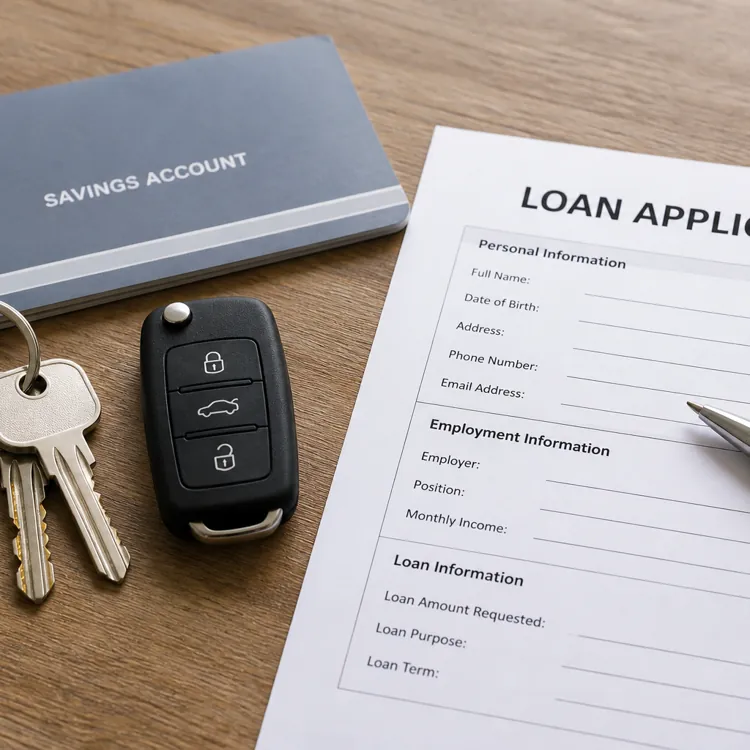
If you’re having trouble qualifying for the loan, you may be asked to put up collateral. This could be a savings account, a car title, an investment account or another item of value. Collateral secures the loan, and if you default, the lender has the right to seize the asset and sell it to recover its losses. Getting a cosigner can also increase your odds of approval.
Secured and unsecured loans are the most common loan options. The primary difference between them is whether the lender requires you to put up collateral. The following table outlines the main ways these types of loans differ.
| Secured loan | Unsecured loan | |
|---|---|---|
| Collateral | Collateral required | Collateral not required |
| Interest rates | Normally lower | Normally higher |
| Qualification | Easier to qualify because collateral lowers the risk | Harder to qualify because the lender takes on more risk |
If you take out a secured loan, you may get better terms, but you also run the risk of losing any assets used as collateral if you default on the loan. Unsecured loans normally have higher interest rates and may have stricter approval requirements, but they also frequently offer higher borrowing limits and longer repayment terms.
» MORE: The difference between personal loans and personal lines of credit
The personal loan application process
If you’re interested in getting a personal loan, the first step is to check your credit score. You should also evaluate your budget to determine how much you can afford and decide whether a secured or unsecured loan makes more sense.
Once you’ve established these basics, you can compare offers with multiple lenders, review the terms and apply for the loan.
» MORE: How to Get an RV Loan
Check your credit
Start the loan application process by checking your credit score for free. The higher your credit score, the more likely you are to get approved. With a high score, you’ll also be eligible for higher loan amounts and better terms.
If your credit isn't as high as you would like, pull a full credit report and see if there are any errors you can dispute. You can also improve your chances by paying off existing debts to lower your DTI ratio.
Having a low credit score doesn’t necessarily mean you won’t get approved. You might still qualify for a loan with bad credit if you add collateral or a cosigner with good credit. Collateral could be something like cash, a car or your home.
Additionally, some lenders offer loans to individuals with low, little or no credit, often without requiring compensating factors such as collateral or a cosigner. Lenders like these consider your entire financial situation rather than just your credit score. Some might even use alternative data to approve you, like rent payments, cellphone bills or employment history.
Gather your documents
To make the application process smoother, it can help to gather your documents ahead of time. That way, you won't have delays when you’re ready to apply.
For most loan applications, you’ll likely need the following documents:
| Category | Commonly required documents |
|---|---|
| Personal identification | Driver’s license, Social Security card, date of birth |
| Contact information | Email address, phone number, physical address, utility bills (to verify address) |
| Employment and income | Employer name, employment status, work phone number, gross monthly income, recent pay stubs, W-2s or tax returns |
| Loan details | Loan amount, loan purpose, desired term |
| Housing and debt information | Monthly mortgage or rent payment, payoff info for existing accounts (if consolidating debt) |
Get preapproved
Many lenders will allow you to get preapproved for a personal loan with no credit score impact. This makes it easy to shop for the best possible rates and terms by comparing your options.
During preapproval, you’ll fill out the application, but you won't have to submit documentation. Most lenders will conduct a soft credit check, which won't impact your credit score.
The lender will then provide you with preliminary terms so you can compare them with offers from other lenders. Note that these offers are based on the information you provided, so be as accurate as possible when filling out the forms. The information will be verified if you decide to move forward.
Once you decide to proceed, they’ll confirm the details by pulling a hard credit check, and you’ll receive your official loan offer.
Review your loan offers
If you get preapproved by several lenders, you'll have the opportunity to compare the offers. You'll want to make note of the following:
- Loan amount: Ensure that you are being offered the amount you applied for. It's possible that you could be approved for a lower amount than you originally asked for.
- Repayment term: This is how long you have to pay off the loan. While terms commonly range from 12 to 60 months, they could be as few as six months. A secured loan could have a term of 84 months or longer.
While longer repayment terms will have lower payments, keep in mind that you’ll pay more in total interest. Generally, you’ll want to choose the shortest term you can afford to save on interest costs over time.
- Minimum payment: Make note of the required minimum payment and ensure that it fits in your budget. If the payment is too large, you can ask about extending the term, which will lower the payment. If you can comfortably afford more, you may want to shorten the term since that will result in lower overall costs.
- Interest rate: The rate you qualify for will vary depending on what’s happening in the economy, the type of loan you get and your credit score. A lower rate will result in lower payments and a lower overall cost of the loan.
- Fees and APR: Some lenders charge application or origination fees to cover the costs of making the loan. The loan’s APR (annual percentage rate) takes into account these fees and the loan’s interest rate. Also, check if there’s a prepayment penalty — a fee for paying off your loan early.
Apply
Once you've chosen a loan you'd like to receive, it's time to apply officially. If you've been preapproved, you'll likely just have to upload your documents for review, and the lender will complete a hard credit check to verify your credit.
From there, you’ll be presented with loan documents to review. Double-check the terms as they may have changed from the preapproval offer.
If you are happy with the term, sign the documents to complete the application and receive your funds.
Once you accept the terms, you can typically expect to receive your funds within five business days. Depending on your lender, you may have access to your funds the same day.
Advantages of applying online
Applying for a personal loan online is often faster, easier and more transparent than applying in person. You can upload documents on your own time, compare rates from multiple lenders and avoid the hassle of appointments or travel.
Online lenders also tend to specialize in personal loans, which means faster approval and funding compared to traditional banks or credit unions.
Liam Hunt, director of research at IncomeInsider.org, said: “Prequalification can happen in minutes online, but actual approval tends to take between one and five business days. Once approved, it's common to see funding deposited within a day or two. … In my experience, online lenders handle these processes much faster than traditional banks.”
Another benefit of applying online is the ability to shop around. Since online lenders don't have agents, they tend to put all the information about their loans online. You can take your time and read up on the loan terms and policies. This allows you to find the loan that fits you best instead of the loan your local bank happens to offer.
» COMPARE: Top-ranked online lenders
Types of lenders for personal loans
Understanding where to get a personal loan can help you secure the best terms available. The most common lenders offering personal loans are banks, credit unions and online lenders. The following table shows the pros and cons of working with each type of lender.
| Lender type | Pros | Cons |
|---|---|---|
| Banks | Larger loan amount and more flexible repayment terms | Stricter credit score requirements and higher maximum interest rates |
| Credit unions | Lower loan fees and borrowing rates | Membership is required and they often have more limited loan options |
| Online lenders | Fast application process and quicker access to funds | Online-only process without any in-person assistance |
Depending on your situation, you may be able to get a personal loan from family or friends, although this can cause a strain on personal relationships. Use your own discretion when considering whether you’re comfortable getting a personal loan from family members or friends.
Comparing personal loan rates and terms
When comparing different loans, you'll want to pay attention to the interest rate, the term length and the fees.
Interest rate
This is the percentage the lender charges you to borrow money. A lower rate means you'll pay less interest over the life of the loan. But don’t just look at the rate; some lenders offer low rates but charge high fees that increase the total cost.
You'll also want to notice if the interest rate is fixed or variable. Fixed interest rates remain the same for the life of the loan, leading to a stable monthly payment. Variable rates fluctuate with the market and could go up or down over time. This can lead to an unpredictable minimum payment.
Term length
The term of the loan shows how long it will take to pay off the loan if you only make minimum payments. Longer terms allow more time for interest to accrue, so the loan will cost more over time. However, longer terms also have lower minimum payments. So you'll want to choose a loan that has the shortest term that you can comfortably afford.
Fees
Sometimes lenders will offer a low interest rate but then charge high fees to compensate. Pay attention to origination fees, prepayment fees or any other fees that the lender may charge.
Using a personal loan effectively
One of the most significant benefits of personal loans is that you can use them for nearly any purpose. Debt consolidation is a common use, but you can also use a personal loan to cover a large expense, such as a medical procedure or a home improvement project.
However, keep in mind that other types of loans often have lower interest rates. For example, a car loan is usually better for buying a car, and a home equity loan might be a better fit for a home improvement project.
Using a personal loan to consolidate high-interest-rate debt can lower your total monthly payment and potentially even your average interest rate. It can also improve your credit by improving your credit utilization and DTI ratios.
However, make sure you don’t continue to use your now-paid-off credit cards. Doing so could land you in even more debt than you were before and actually make your financial situation worse instead of improving it.
Avoiding common pitfalls
Before getting a personal loan, it’s important to understand how to protect your finances and identity while navigating the loan industry. There are a couple of common pitfalls that should be avoided when you’re taking out a personal loan.
Not paying attention to origination fees
Origination fees can be between 1% and 10% of the loan. The fee comes out of the loan proceeds, so if you take a loan for $1,000 with a 5% origination fee, you'll actually only receive $950. This may take you by surprise if you’re expecting the full amount.
Borrowing more than necessary
Borrowing more than you need puts you further into debt. You'll pay interest on this additional debt, and your minimum payment will be higher, further tightening your monthly budget.
Don't borrow more than you need just because you qualify for a larger amount, and never use personal loans for discretionary spending like shopping or vacations.”
“Don’t borrow more than you need just because you qualify for a larger amount, and never use personal loans for discretionary spending like shopping or vacations,” Hunt told us. While vacation loans can make sense in special cases — like travel for a family emergency or a once-in-a-lifetime trip — most come with high rates and long terms that make them a poor financial choice. “High interest rates make these debts very costly, often to the point that they aren’t financially sensible,” said Hunt.
Using credit cards after debt consolidation
Using a personal loan to pay off high-interest-rate credit cards could be a smart financial move, but not if you keep using your cards. If having available credit on your credit cards is too tempting, you’ll end up with more debt than you started with.
Spotting scams and predatory lenders
There are a number of red flags that indicate a potential lender is actually a personal loan scam. For starters, if someone makes contact with you online or over the phone offering a personal loan, you should proceed with extreme caution. A legitimate lender will typically not make initial contact with a potential borrower.
Other red flags to watch for include promises of guaranteed approval, requests for upfront payments or fees and pressure tactics.
Before giving away any financial or personal information, verify that the lender has an official and secure website and ask for company information (state licensing, contact information and a physical address). You should also research the lender and look for customer reviews, which can be a good indication of whether the lender is legitimate or not.
» MORE: 3 signs of personal loan scams
FAQ
What's the requirement to get a personal loan?
To qualify for a personal loan, you typically need a credit score of at least 580 and a debt-to-income ratio of under 40%.
How much would a $5,000 loan cost per month?
How much a $5,000 loan costs per month depends on the interest rate and the term of the loan. For example, a $5,000 loan at 9% for three years would cost $159 per month.
How quickly can I receive funds from a personal loan?
You can typically receive funds for a personal loan within five business days of applying. Once you sign the loan documents, you may receive your funds within 24 hours. The timeline will vary by lender.
What are the benefits of a personal loan over a credit card?
Personal loans often have lower interest rates and predictable monthly payments. Unlike credit cards, which usually have variable rates and changing balances, personal loans have fixed terms. That means your payment amount stays the same each month, which can make budgeting easier.
Article sources
ConsumerAffairs writers primarily rely on government data, industry experts and original research from other reputable publications to inform their work. Specific sources for this article include:
- USAGov, “How to get a government loan or grant.” Accessed May 20, 2026.
- Capital One, “What credit score do you need for a personal loan?” Accessed May 20, 2026.
- LendingClub, “What Is debt-to-income ratio? (+ how to improve it).” Accessed May 20, 2026.
- Wells Fargo, “Personal Loans Application Checklist.” Accessed May 20, 2026.
- Wells Fargo, “Personal loan rates.” Accessed May 20, 2026.
- Bank of America, “Unlock the possibilities using your home equity.” Accessed May 20, 2026.
- Bank of America, “Auto Loan Rates.” Accessed May 20, 2026.
- Equifax, “What Is a Debt Consolidation Loan? Does Debt Consolidation Hurt Your Credit?” Accessed May 20, 2026.