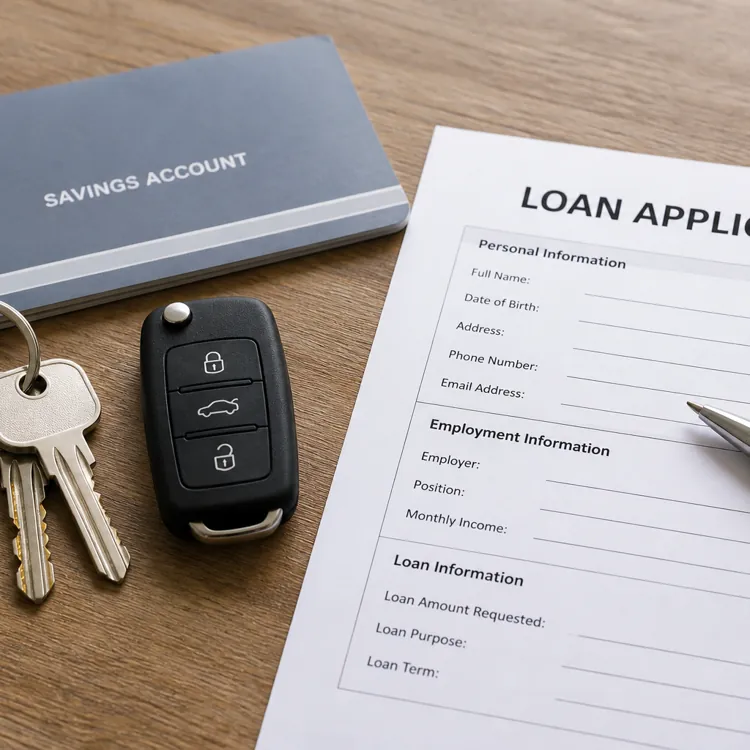


Our 4 picks for best personal loans for students
- Best overall: LightStream
- Best for students with a co-applicant: Upgrade
- Best for students with bad credit: NetCredit
- Best for students with decent credit: LendingPoint
Compare top personal loan lenders for students
| Company | Customer rating | Our pick for | Min. credit score | Loan amount range | Repayment terms | |
|---|---|---|---|---|---|---|
 LightStream | Get Started | 3.2 | 670 to 700 | $5,000 to $100,000 | 24 to 240 months | |
 Upgrade | Compare Offers | 4.7 | Not disclosed | $1,000 to $50,000 | 24 to 84 months | |
 NetCredit | Compare Offers | 4.8 | Not disclosed | $1,000 to $10,000 | 6 to 60 months | |
 LendingPoint | Learn More | No ratingView profile | 580 | $1,000 to $36,500 | 2 to 6 years |
LightStream

- Loan amounts
- $5,000 to $100,000
- Term lengths
- 2 to 20 years
- Minimum credit score
- 670 to 700
Partner Disclosures
NetCredit disclosures
This offer is representative of what may be available to you; you may see additional options or slightly different terms once you continue the application process on the NetCredit website. You may be asked to provide additional documents regarding your income, identity and bank account. All NetCredit loans and lines of credit are underwritten, approved and funded by either NetCredit or one of its lending partner banks. Visit https://netcredit.com/lending-partners for more information. All loans and lines of credit are serviced by NetCredit. For Lines of Credit, a 10% Cash Advance Fee will be deducted from the amount of each Cash Advance, and each billing period a Statement Balance Fee of $0 - $650 will apply based on your Cash Advance Balance. Each Billing Cycle, your Minimum Payment will include a portion of your Cash Advance Balance plus the Statement Balance Fee. The minimum Cash Advance varies by state. Please see Terms of Use, Rates & Terms and Borrower Agreements for all terms, conditions and requirements. KS residents: NetCredit Loan Services, LLC, License No. SL.0026603.
LightStream disclosures
Your loan terms, including APR, may differ based on loan purpose, amount, term length, and your credit profile. Excellent credit is required to qualify for lowest rates. Rate is quoted with AutoPay discount. AutoPay discount is only available prior to loan funding. Rates without AutoPay are 0.50% points higher. Subject to credit approval. Conditions and limitations apply. Advertised rates and terms are subject to change without notice. Payment example: Monthly payments for a $10,000 loan at 8.99% APR with a term of 5 years would result in 60 monthly payments of $207.54. Truist Bank is an Equal Housing Lender. © 2023 Truist Financial Corporation. Truist, LightStream, and the LightStream logo are service marks of Truist Financial Corporation. All other trademarks are the property of their respective owners. Lending services provided by Truist Bank.
Upgrade disclosures
Your loan terms are not guaranteed and are subject to our verification and review process. You may be asked to provide additional documents to enable us to verify your income and your identity. To be offered the lowest rates, you may be required to have some of your funds sent directly to pay off existing debt(s). This rate shown includes an Autopay APR reduction of 0.5%. Autopay enrollment is optional and by enrolling, your payments will be automatically deducted from your bank account. The APR includes the yearly interest rate and a loan origination fee, which is deducted from the loan proceeds. Late payments and other fees may increase the cost of your fixed rate loan. Please refer to Upgrade's Terms of Use and Borrower Agreement for terms, conditions and requirements. Upgrade is a financial technology company, not a bank. Personal loans are issued by Upgrade's bank partners: https://www.upgrade.com/bank-partners/. † After acceptance, your funds will be sent within one (1) business day of clearing necessary verifications. Funds availability is dependent upon your bank’s transaction processing time and may take up to 2 weeks if sent directly to third party creditors.
Upgrade

- Loan amounts
- $1,000 to $50,000
- Term lengths
- 2 to 7 years
- Minimum credit score
- Not disclosed
Partner Disclosures
NetCredit disclosures
This offer is representative of what may be available to you; you may see additional options or slightly different terms once you continue the application process on the NetCredit website. You may be asked to provide additional documents regarding your income, identity and bank account. All NetCredit loans and lines of credit are underwritten, approved and funded by either NetCredit or one of its lending partner banks. Visit https://netcredit.com/lending-partners for more information. All loans and lines of credit are serviced by NetCredit. For Lines of Credit, a 10% Cash Advance Fee will be deducted from the amount of each Cash Advance, and each billing period a Statement Balance Fee of $0 - $650 will apply based on your Cash Advance Balance. Each Billing Cycle, your Minimum Payment will include a portion of your Cash Advance Balance plus the Statement Balance Fee. The minimum Cash Advance varies by state. Please see Terms of Use, Rates & Terms and Borrower Agreements for all terms, conditions and requirements. KS residents: NetCredit Loan Services, LLC, License No. SL.0026603.
LightStream disclosures
Your loan terms, including APR, may differ based on loan purpose, amount, term length, and your credit profile. Excellent credit is required to qualify for lowest rates. Rate is quoted with AutoPay discount. AutoPay discount is only available prior to loan funding. Rates without AutoPay are 0.50% points higher. Subject to credit approval. Conditions and limitations apply. Advertised rates and terms are subject to change without notice. Payment example: Monthly payments for a $10,000 loan at 8.99% APR with a term of 5 years would result in 60 monthly payments of $207.54. Truist Bank is an Equal Housing Lender. © 2023 Truist Financial Corporation. Truist, LightStream, and the LightStream logo are service marks of Truist Financial Corporation. All other trademarks are the property of their respective owners. Lending services provided by Truist Bank.
Upgrade disclosures
Your loan terms are not guaranteed and are subject to our verification and review process. You may be asked to provide additional documents to enable us to verify your income and your identity. To be offered the lowest rates, you may be required to have some of your funds sent directly to pay off existing debt(s). This rate shown includes an Autopay APR reduction of 0.5%. Autopay enrollment is optional and by enrolling, your payments will be automatically deducted from your bank account. The APR includes the yearly interest rate and a loan origination fee, which is deducted from the loan proceeds. Late payments and other fees may increase the cost of your fixed rate loan. Please refer to Upgrade's Terms of Use and Borrower Agreement for terms, conditions and requirements. Upgrade is a financial technology company, not a bank. Personal loans are issued by Upgrade's bank partners: https://www.upgrade.com/bank-partners/. † After acceptance, your funds will be sent within one (1) business day of clearing necessary verifications. Funds availability is dependent upon your bank’s transaction processing time and may take up to 2 weeks if sent directly to third party creditors.
NetCredit
- Loan amounts
- $1,000 to $10,000
- Term lengths
- 6 months to 5 years
- Minimum credit score
- Not disclosed
Partner Disclosures
NetCredit disclosures
This offer is representative of what may be available to you; you may see additional options or slightly different terms once you continue the application process on the NetCredit website. You may be asked to provide additional documents regarding your income, identity and bank account. All NetCredit loans and lines of credit are underwritten, approved and funded by either NetCredit or one of its lending partner banks. Visit https://netcredit.com/lending-partners for more information. All loans and lines of credit are serviced by NetCredit. For Lines of Credit, a 10% Cash Advance Fee will be deducted from the amount of each Cash Advance, and each billing period a Statement Balance Fee of $0 - $650 will apply based on your Cash Advance Balance. Each Billing Cycle, your Minimum Payment will include a portion of your Cash Advance Balance plus the Statement Balance Fee. The minimum Cash Advance varies by state. Please see Terms of Use, Rates & Terms and Borrower Agreements for all terms, conditions and requirements. KS residents: NetCredit Loan Services, LLC, License No. SL.0026603.
LightStream disclosures
Your loan terms, including APR, may differ based on loan purpose, amount, term length, and your credit profile. Excellent credit is required to qualify for lowest rates. Rate is quoted with AutoPay discount. AutoPay discount is only available prior to loan funding. Rates without AutoPay are 0.50% points higher. Subject to credit approval. Conditions and limitations apply. Advertised rates and terms are subject to change without notice. Payment example: Monthly payments for a $10,000 loan at 8.99% APR with a term of 5 years would result in 60 monthly payments of $207.54. Truist Bank is an Equal Housing Lender. © 2023 Truist Financial Corporation. Truist, LightStream, and the LightStream logo are service marks of Truist Financial Corporation. All other trademarks are the property of their respective owners. Lending services provided by Truist Bank.
Upgrade disclosures
Your loan terms are not guaranteed and are subject to our verification and review process. You may be asked to provide additional documents to enable us to verify your income and your identity. To be offered the lowest rates, you may be required to have some of your funds sent directly to pay off existing debt(s). This rate shown includes an Autopay APR reduction of 0.5%. Autopay enrollment is optional and by enrolling, your payments will be automatically deducted from your bank account. The APR includes the yearly interest rate and a loan origination fee, which is deducted from the loan proceeds. Late payments and other fees may increase the cost of your fixed rate loan. Please refer to Upgrade's Terms of Use and Borrower Agreement for terms, conditions and requirements. Upgrade is a financial technology company, not a bank. Personal loans are issued by Upgrade's bank partners: https://www.upgrade.com/bank-partners/. † After acceptance, your funds will be sent within one (1) business day of clearing necessary verifications. Funds availability is dependent upon your bank’s transaction processing time and may take up to 2 weeks if sent directly to third party creditors.
LendingPoint

- Loan amounts
- $1,000 to $36,500
- Term lengths
- 2 to 6 years
- Minimum credit score
- 580
Personal loans for students buyers guide
College costs continue rising while financial aid packages often fall short of covering all student expenses. Between tuition, housing, textbooks and unexpected costs, many students find themselves searching for funding sources beyond federal aid and family support.
Personal loans can bridge financial gaps with immediate funding for expenses that student loans won’t cover. But they often have higher interest rates and require you to start making payments right away. Understanding when these loans make sense can help you make smarter borrowing decisions.
Key insights
No-fee personal loans help you avoid origination and application fees, but watch for higher interest rates.
Jump to insightInternational students may need a qualified U.S. co-signer or must meet strict visa and enrollment requirements.
Jump to insightA co-signer with strong credit can improve your approval odds and unlock better rates, though both parties share responsibility for repayment.
Jump to insightNo-fee personal loans for students
Traditional personal loans often charge origination fees ranging from 1% to 10% of the loan amount, plus application fees that can cost $15 to $50 upfront. These costs add up quickly when money is already tight as a college student.
Personal loans cover expenses that student loans won't.
Fortunately, LightStream, Citi and some credit unions offer personal loans with no origination or application fees.
“The main benefit of choosing a personal loan without these fees is you receive the full amount, instead of (using) some of it to cover fees,” Brian Samelko, vice president of personal lending at PNC Bank, explained.
But don't choose a lender just because it has no fees. Interest rates might be higher to make up for those waived fees, and you’ll miss out on student loan protections such as deferment options. Samelko recommended picking a well-known, reliable lender with excellent customer service.
Pro tip
Michele Lee, marketing and business development manager at Credit Union of Denver, warned that using a personal loan primarily for school expenses legally classifies it as a private student loan. “This triggers additional regulatory requirements under the Truth in Lending Act and Regulation Z,” she cautioned.
Personal loans for international students
International students encounter unique obstacles when applying for personal loans in the U.S. “(Most lenders) require a U.S. credit history and Social Security number,” Lee said. Without these, you’ll find limited options among mainstream personal loan providers. However, lenders such as PNC Bank and some credit unions offer programs for international students.
Your eligibility depends on several key factors that lenders use to assess risk. “Generally, (you’ll need) a valid student visa (F-1, J-1 or other qualifying status), proof of enrollment and sometimes, a U.S.-based co-signer with a strong credit profile,” Samelko explained. Your school, degree program, visa status and financial background all influence approval decisions.
Did you know?
When international students qualify for personal loans, they typically receive similar terms to domestic borrowers. However, rates may be higher due to limited U.S. credit history. Shop around with three to five lenders, as some specialize in working with international students and may offer more competitive terms.
» COMPARE: Best personal loan companies
Personal loans with a co-signer
“A co-signer with good credit can boost the chances of approval and help (you) qualify for lower interest rates or better terms,” Samelko highlighted. A co-signer with strong credit backs up your ability to repay the loan. This reduces the lender's risk.
Benefits of a co-signer
Cosigned personal loans come with several benefits for the primary borrower:
- Higher approval odds: Lenders consider the co-signer’s creditworthiness alongside yours.
- Lower interest rates: Better credit profiles may unlock more favorable rates.
- Larger loan amounts: Combined income and credit may qualify you for higher limits.
- Faster approval: Strong co-signer credentials can speed up the underwriting process.
Potential disadvantages of a co-signer
Before moving forward, know that cosigning creates shared financial responsibility. “If the student (defaults on) payments, it could damage both the credit of the student and the co-signer,” Samelko warned. This risk affects both credit scores equally.
Several lenders cater to students needing co-signers, including Upgrade and some credit unions. Many will let you remove the co-signer after making on-time payments for a set period (requirements vary by lender). This gives your family peace of mind and helps you build credit on your own.
FAQ
Can I get a personal loan if I am a student?
Yes, you can get a personal loan as a student by meeting lenders’ credit and income standards. Many lenders approve students with steady part-time jobs or those who add a co-signer with good credit.
Is it better to get a student loan or a personal loan?
It depends. Student loans are good for education expenses, while personal loans work well for non-education-related costs (e.g., moving expenses, emergency repairs). Unlike student loans, though, personal loans often require immediate payments and charge higher interest rates.
How do personal loans differ from student loans?
Personal loans require credit checks and immediate repayment, while federal student loans don’t need credit checks. Student loans differ by allowing deferred payments during school and offering forgiveness programs. You can expect personal loan rates to range from 6% to 36%, while the federal student loan rate for undergraduates in 2024 to 2025 is 6.53%.
Why might a student choose a personal loan over a student loan?
Students might choose a personal loan for expenses that student loans can’t cover, such as debt consolidation, healthcare or moving supplies.
Methodology
To select our top four personal loans for students, we looked for lenders with features that are beneficial for students. We used a weighted scoring system based on a number of factors, including:
- Minimum and maximum loan amounts
- Maximum term lengths
- Origination fees
- Funding time
- Minimum and maximum APRs
- Credit score requirements
- Whether a co-applicant is allowed
Each company was scored using a formula that weighted these factors. The highest scorer earned the “Our pick for” title. If one company topped multiple categories, we named the next-highest scorer in some cases to highlight more options.
Article sources
ConsumerAffairs writers primarily rely on government data, industry experts and original research from other reputable publications to inform their work. Specific sources for this article include:
- PenFed Credit Union, “Can a student take out a personal loan?” Accessed June 29, 2025.
- Washington University of Science and Technology, “Are student loans available to international students in the U.S.?” Accessed June 29, 2025.
- Federal Student Aid, “Federal Versus Private Loans.” Accessed June 29, 2025.
- National Council on Aging (NCOA), “What is a personal loan and how does it work?” Accessed June 29, 2025.
- Student Debt Smarter, “What to do if your college financing falls short.” Accessed June 29, 2025.
- State Science & Technology Institute (SSTI), “Why is the cost of college rising so fast?” Accessed June 28, 2025.