
|
CONSUMER NEWS RECALLS COMPLAINT FORM SCAM ALERTS |
| Small Claims Guide | Class Actions | Lemon Law | FAQ | Resources | Newsletters | Spanish | |
![]() |
Seniors' Fear of Falling Keeps Life Alert FlushFormer U.S. Surgeon General cashes in on seniors' fears |
|||||
|
By Joseph S. Enoch September 4, 2007
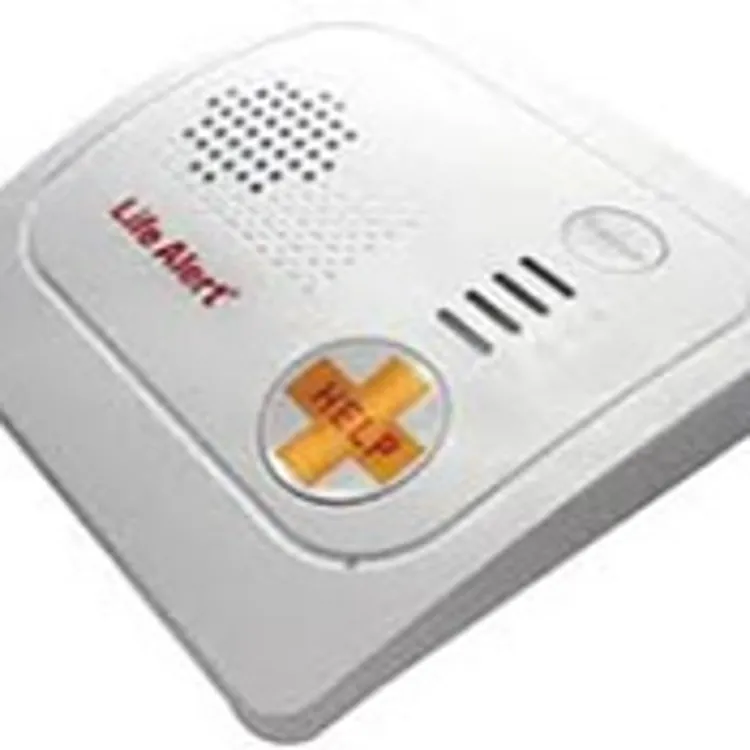
Fourteen years later, consumers say not much has changed. They complain about misleading sales people, high prices and contracts that continue even after the patient has died. "My mother purchased the Life Alert System at a cost of almost $400.00 for the system and a rate of $59.95 per month. My mother was put in the hospital two days after the system was installed and then was sent to a nursing home facility permanently," Tammy of Hollywood, Ala., complained. When last we heard from Tammy, she was still trying to close the account and get her money back. California chargesThe 1993 lawsuit accused Life Alert of seven California civil code violations. The company and its president and chief executive officer, Isaac Shepher, agreed to pay a total of $1,350,000. The California Department of Justice suit accused the company of 21 deceptive advertising and sales practices. According to Deputy Attorney General for Consumer Protection Herschel Elkins, who worked on that case, many district attorneys throughout the state had received so many complaints that the attorney general decided it should be a statewide ruling. “The essence of the complaint that we had back in 1993 was a substantial amount of problems connected with the lengthy sales -- sometimes four, five six hours in someone’s home and all sorts of misrepresentations,” Elkins said. The stricter sales, advertising and pricing terms dictated by that judgment expired in 2003. Elkins said the California Department of Justice did not renew the 10-year injunction because there were few complaints. However, the nearly 70 complaints readers have filed with ConsumerAffairs.com since 2002 reveal a continued trend of high prices, high-pressure sales tactics and harsh contract terms. Prices may varyIn one of the settlement terms, Life Alert agreed to provide a price list to customers. But on the company’s website and two brochures ConsumerAffairs.com obtained, there is no listed price and, according to complaints, the actual prices charged vary by hundreds of dollars. Consumers say they have paid as much as $500 for a startup fee and $65 per month, or as little as $150 for the startup and $40 per month. J.K. Mueller of Beverly Hills, Calif. said that a salesperson lowered her mother’s startup fee by $100 after her mother said $300 was too much. How it worksThe Life Alert service is relatively straightforward. It enables its customers to call for help using an electronic pendant. The call goes to a Life Alert call center. From there, Life Alert personnel place a call to local agencies. There is nothing technologically unique about Life Alert, and there are numerous other companies that offer similar service on better terms. (See "Alternatives to Life Alert"). The Senior Emergency Alert System (SEAS) in San Diego, Calif. is a nonprofit organization that uses identical technology, from the same manufacturer, yet charges about 90% less than Life Alert, Todd Matsumoto, SEAS program director said. SEAS charges $50 for an installation fee, $35 per month, with no contract and has actual paramedics who work in the call center located within San Diego, Matsumoto said. Many of those fees are waived or decreased for senior citizens on fixed incomes. “Most pay $5 to $15 per month,” Matsumoto said. The program is self-sufficient and actually makes money, which is invested into other senior services, Matsumoto said. When consumers sign up with SEAS someone from the program goes to the individual’s home, installs it, teaches them how to use it and even calls them about once a month to make sure they’re OK if they don’t call in on their own. Box by mailLife Alert mails customers a box with the equipment and never contacts the customer after the sale has been made. “These things just come in the mail and a lot of people don’t know how to install them,” Matsumoto said. Andrea of Rowley, Mass. wrote that she requested Life Alert install the system for her mother-in-law. They obliged, but then just sent the box. “Consequently, the system did not work when my mother-in-law fell, broke her pelvis and had to drag herself across the room to call for help,” Andrea wrote. Despite the $150 to $500 startup fee, Matsumoto estimated Life Alert pays less than $100 per unit, which the user must return at the end of their contract. The majority of the ConsumerAffairs.com complaints are in regard to Life Alert’s sales tactics and contract terms. While consumers say Life Alert’s salespeople push them into signing up for the service, many also say they are never told they are signing a three-year contract. Lee of Houston, Texas tried to cancel her mother’s account after a representative berated her elderly mother over the phone. It was at that point she discovered her mother had signed a three-year agreement. “Apparently they, (Life Alert), cloak this three-year term/requirement in the 'fine print,’ hoping that poor elderly seniors won't notice it,” Lee wrote. Phyllis Mueller of West Hollywood, Calif. told ConsumerAffairs.com that after she read about the three-year contract and other questionable terms in the fine print, she immediately returned the Life Alert package. Desperate callsMatsumoto said he gets desperate phone calls from Life Alert customers struggling to make payments. “We get calls on a regular basis – about once per month,” Matsumoto said. “We get a lot of their clients who are paying $65 per month. They’d like to switch to us, but they’re bound to that contract.” Many consumers say they are told by salespeople that the contract is voided should the individual die or be admitted to a full-time nursing facility. However, many consumers have found it nearly impossible to stop the payments in those instances. “I got the system for my mother when she was alone,” Ronnie of Jackson, N.J. wrote. “Two years later she became stricken with dementia and now resides in a nursing home. I was now told that I would have to pay $300 to disconnect the service as I have to pay off the contract. When I first got the service I recall being told that in case of death or institutionalization the service would be terminated without consequences.” “(A Life Alert salesman) talked us into it, but never told us that we were in a three-year contract,” John of Toms River, N.J. wrote. “It was supposed to be for my ailing wife, only she passed away nine weeks later. … I called back to cancel the service and was then told I was responsible for paying for three years.” Death forgives all obligationsJoan Lisante, a Washington, D.C. area attorney, said relatives are not responsible for paying the debts of the deceased. “A contract is an agreement between two parties,” Lisante wrote in an e-mail. “When one of the parties dies, there are no longer two parties and -- therefore -- no contract. It is absurd to argue that a company can continue to provide service -- especially a medical alarm service -- to a dead person. By definition, a dead person no longer requires any services, medical or otherwise.” Aside from not including any prices, the company’s advertising tactics feed on the fears of elderly and lonely people. “Many nights when you’re home alone and are scared by every strange noise, don’t you feel helpless?” one TV ad found on Life Alert’s website states. Koop cashes inTo lure elderly customers, Life Alert pays former U.S. Surgeon General C. Everett Koop, to endorse the product. Koop, who held his position of public trust during the Reagan administration, achieved near-celebrity status, especially with the baby boomer voters of the 1980s, with his anti-tobacco stance. He has been cashing in on the fame he achieved at taxpayers' expense ever since. “Thanks to Life Alert, you can live alone without ever being alone,” Koop said in a Life Alert commercial. “And that’s why I wear one.” Koop did not respond to two e-mails from ConsumerAffairs.com. Luxury in EncinoConsumerAffairs.com visited Life Alert’s luxurious headquarters in Encino, Calif. – located on Ventura Boulevard. Olga Vlassova, the company’s marketing executive would not come out of her office, but agreed to talk on the phone. She said she spoke with the company’s president and was informed that it is against company policy to have reporters in the building. When ConsumerAffairs.com offered to have the interview outside the building, she refused. Alternative servicesExperts advise that senior citizens in need of a service similar to Life Alert’s should ask their doctor or local hospital if there is a local nonprofit service similar to SEAS. If not, Matsumoto said there are reputable companies that can be found locally and on the Internet. “If you do shopping around, you can find nice companies out there with comparable services – usually around $35 per month, no long term contract and no penalties,” Matsumoto said. Mueller, who is afraid to try any service similar to Life Alert, said she carries a cell phone with her everywhere she goes so she can call if she needs help. Gareth Lacy, a California Department of Justice spokesman said he cannot comment on whether the attorney general is investigating Life Alert again. He did say the department would be “very interested” to hear from any California residents who have complaints about Life Alert -- at ag.ca.gov/cbi/contact.php. Consumers in other states are encouraged to contact their attorney general and also to file a complaint with ConsumerAffairs.com, which makes reader complaints available to attorneys general and other law enforcement agencies on request. Next: Alternatives to Life Alert Report Your Experience
|
|||||
Back to the top | |
||||||
Considering bankruptcy? Talk to a local bankruptcy lawyer right away! Fill out this form or call (877) 678-2689.
|
Home |
Rogues Gallery |
Good Guys |
Complaint Form |
News |
Recalls |
Search |
Site Map |
FAQ |
|
Terms of Use Your use of this site constitutes acceptance of the Terms of Use
Copyright © 2003-2008 ConsumerAffairs.com Inc. All Rights Reserved. ConsumerAffairs.org free e-mail provided by Everyone.net |