

What are 60- and 72-cell solar panels?
Slightly different but designed to perform the same function, 60- and 72-cell solar panels are two types of photovoltaic (PV) hardware used to generate solar electricity.
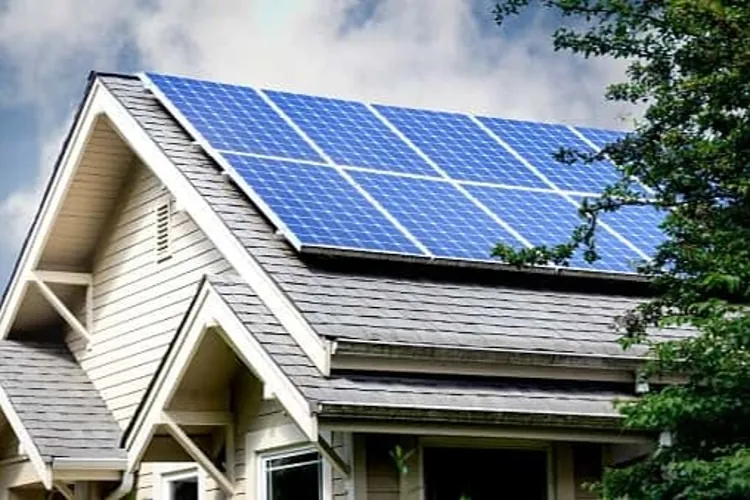
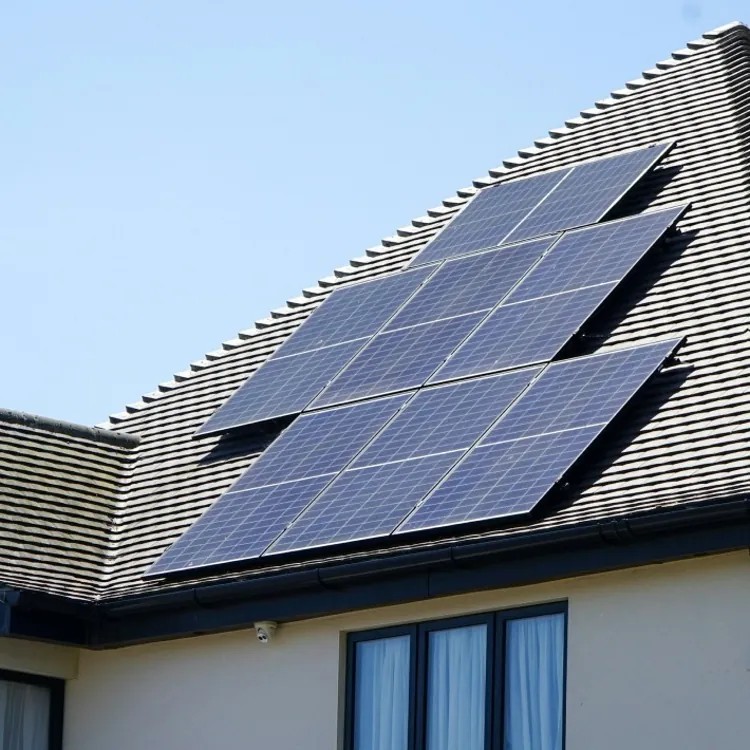
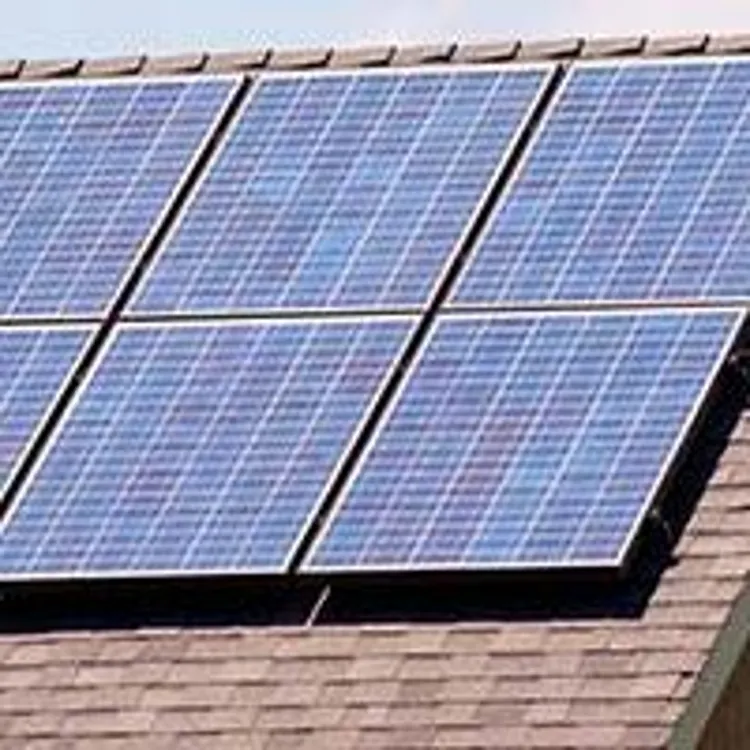
To understand exactly what 60- and 72-cell solar panels are, you first need to grasp the concept of the solar cell itself. Solar cells, also known as PV cells, are the individual squares or rectangles beneath the glass of a solar panel, usually arranged in a grid pattern. They contain the electricity-conducting materials that enable solar panels to function.
As you may assume, a 60-cell solar panel contains 60 solar cells, while a 72-cell panel has 72 solar cells. Typically, 60-cell solar panels lay their cells out in a 6-by-10 grid, while 72-cell solar panels use a 6-by-12 grid.
» LEARN: How do solar panels work?
How do 60- and 72-cell solar panels differ?
Besides the obvious difference in cell count, 60-cell and 72-cell solar panels are also slightly different in both size and preferred applications.
Size
72-cell solar panels are physically larger than 60-cell solar panels because the increased cell count takes up more space on a roof- or ground-mounted array.
72-cell panels are bigger — that’s why you’ll see them more on solar farms and commercial buildings, rather than homes.”
“Sixty-cell and 72-cell solar panels do the same thing, but 72-cell panels are bigger — that’s why you’ll see them more on solar farms and commercial buildings, rather than homes where there is less space to work with,” explained Daniel Greenwald, a sales professional for electrical equipment with Viega, a manufacturing and distributing company.
So even though there aren’t significant differences in the function or relative value of 60- and 72-cell solar panels, their size difference may play an important factor in your installation. If you have plenty of usable installation space, either technology will do. However, if your roof or yard space is limited, 60-cell solar panels may be able to fit more easily in smaller areas.
Energy production
With 12 extra solar cells, 72-cell solar panels can also generate more total energy than 60-cell solar panels when all other variables are the same. For example, if a solar cell is rated at 5 watts (W), a 60-cell panel would have a total wattage of 300 W (60 cells x 5 W), and a 72-cell solar panel would have a total wattage of 360 W (72 cells x 5 W).
Cost
In general, 72-cell solar panels are also slightly more expensive than 60-cell solar panels due to the increased materials required for manufacturing and assembly. Considering the added wattage capacity, however, the price you pay for 60-cell and 72-cell panels is usually about the same on a cost-per-watt basis.
60- vs. 72-cell solar panel specs at a glance
Here’s how the two panel types compare on key metrics. (All measurements are approximate.)
| Spec | 60-cell solar panels | 72-cell solar panels |
|---|---|---|
| Typical dimensions | 65 in. by 39 in. (5.4 ft. by 3.25 ft.) | 77 in. by 39 in. (6.5 ft. by 3.25 ft.) |
| Weight | 40 to 50 lbs | 50 to 70 lbs |
| Wattage range | 250 to 350 W | 350 to 450+ W |
| Efficiency | 15% to 20% | 18% to 22% |
| Power density | 150 to 200 W/m² | 180 to 230 W/m² |
| Best use case | Residential rooftops, tighter layouts | Commercial systems, large open spaces |
60-cell solar panel pros and cons
As the most compact product of its kind, 60-cell solar panels work best for residential applications, recreational vehicles (RVs) and other installations where space may be limited.
However, with fewer photovoltaic cells in each panel, 60-cell solar panels are also more limited in their overall output potential. When designing your system, this may mean that you’ll need more panels to reach your desired system capacity than in an installation that uses 72-cell equipment.
Pros
- Requires less installation space per panel
- Lighter than 72-cell panels
Cons
- Less wattage and power output potential
- You may need more panels
72-cell solar panel pros and cons
Generally, 72-cell solar panels can produce more solar energy per panel than their 60-cell counterparts, so you may be able to purchase fewer 72-cell solar panels to achieve the same total system capacity.
However, keep in mind that they require more installation space, which can sometimes make them more difficult to fit on the roof of a home, garage or other compact areas.
Pros
- More wattage and power output potential
- Same result as 60-cell with fewer panels
Cons
- Harder to fit into tight installation spaces
- Heavier than 60-cell panels
- May require structural support
What do 60-cell and 72-cell solar panels cost?
The cost of going solar relies on more than just your solar panels — consider inverter and battery costs, too.
Given all of the different types of solar panels on the market, it’s difficult to provide different average prices for 60-cell and 72-cell solar panels. In general, however, you can expect to pay between $200 and $500 for each panel (regardless of cell count) before the costs of shipping, labor and other installation expenses.
While individual prices for 60-cell and 72-cell solar panels may differ, when all else is equal, the cost per watt is roughly similar regardless of which you pick. Most solar panels cost between $2 and $3 per watt as of publication.
What are 120- and 144-half-cell solar panels?
Half-cut solar panels use cells that are physically split in half, which helps reduce electrical resistance and improve performance. In a traditional panel, the current flows through full-size cells, but cutting those cells in half lowers the current in each cell, reducing heat loss and slightly boosting efficiency.
You’ll often see this reflected in panel labeling:
- 120 half cells = 60 full cells
- 144 half cells = 72 full cells
Despite the higher cell count, these panels are essentially upgraded versions of standard 60- and 72-cell designs, not entirely different formats.
Advantages of half-cut panels
One of the biggest advantages of half-cut technology is better performance in partial shading. These panels are usually designed so the top and bottom halves can work more independently, with built-in components that help electricity flow around any underperforming sections.
That means if part of the panel is shaded from a tree, chimney or debris, the rest of the panel can continue producing power more efficiently than a traditional design.
Half-cut panels also tend to run slightly cooler, which can improve long-term performance and durability.
» MORE: Types of solar panels
How to choose between 60- and 72-cell solar panels
In general, it’s good to be intentional about your choice of solar panel, but cell count isn’t the most crucial factor. Here are some things to consider when choosing between panels with different cell counts.
- Consider your power needs: Verify that the panels are efficient enough to generate the power you need.
- Assess your space: Ensure your system will physically fit in your desired installation space. Thanks to their smaller size, 60-cell solar panels offer more placement flexibility than 72-cell panels. But if you're planning a ground-mounted installation or have ample roof space, larger panels won’t pose an issue.
- Leave it to the pros: Most professional residential solar installers generally prefer 60-cell solar panels for home installations. But as long as a system can be installed on your property to generate enough renewable electricity, they’ll usually choose the equipment that is readily available.
- Explore other options: If you’re doing your own solar installation, you’ll find a myriad of other options on the market, including 96-cell solar panels and panels with half-cut cells. Choose the option that works for your budget and power needs.
» DISCOVER: Best solar energy companies
FAQ
Are more cells better in a solar panel?
While having more cells usually means a larger panel that can produce more power, it doesn’t necessarily mean a better solar panel. The right choice depends on your roof space and layout. Smaller 60-cell panels are often easier to fit on residential roofs, while larger 72-cell panels can be more efficient in wide-open spaces where size isn’t a constraint.
How much power does a 72-cell solar panel produce?
Most 72-cell solar panels produce around 350 to 450 watts per panel, with some newer models producing more. The exact output depends on the panel’s efficiency and manufacturer. Real-world conditions, like sunlight and temperature, will also affect energy production.
Why are 60-cell panels more common for homes?
Sixty-cell panels are more common for residential solar systems because they’re smaller and lighter, making them easier to install on roofs. They’re also more flexible for fitting around vents, chimneys and irregular roof shapes.
Do 72-cell panels require special installation?
Because 72-cell panels are large and heavy, they sometimes require special installation. Typically, this looks like additional planning and, in some cases, extra structural support. That’s why they’re more commonly used in commercial or ground-mounted systems as opposed to residential ones.
Article sources
ConsumerAffairs writers primarily rely on government data, industry experts and original research from other reputable publications to inform their work. Specific sources for this article include:
- Solar Tech Online, "Solar Panel Size and Dimensions: Complete Guide for 2025." Accessed March 24, 2026.
- Freedom Solar, "Solar Panel Size Guide." Accessed March 24, 2026.
- EnergySage, "How Big Are Solar Panels? Solar Panel Size and Weight." Accessed March 24, 2026.
- ReNu Solar and Roofing, "60 Cell vs. 72 Cell Solar Panels." Accessed March 24, 2026.
- SolarReviews, "Complete Guide to Solar Panel Size." Accessed March 24, 2026.
- EnergySage, "60 Cell vs. 72 Cell Solar Panels: Which Is Right for You?" Accessed March 24, 2026.