
President Trump is expected to meet with major U.S. refiners as his administration seeks immediate steps to lower gasoline prices.
The White House has accused refiners of benefiting from unusually strong profits while drivers pay more than $4 a gallon.
Refiners are already operating close to full capacity, limiting how quickly presidential pressure can produce relief at the pump.
President Trump is increasing pressure on U.S. oil refiners to produce more fuel and help bring down gasoline prices, but renewed fighting with Iran could make that goal harder to achieve.
Trump is expected to meet with executives from several large refining companies, including Marathon Petroleum, Valero Energy, Chevron, PBF Energy, and Delek U.S. Holdings. The White House is seeking “concrete, near-term steps” that the industry can take to expand fuel supplies.
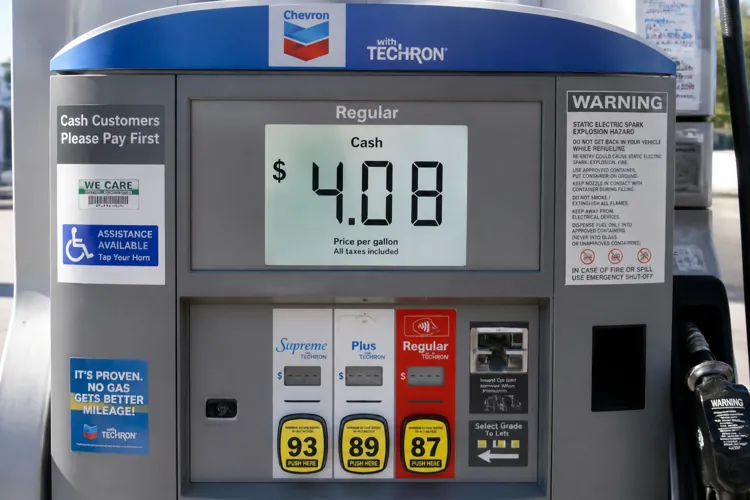
The meeting comes as the national average price of regular gasoline stands at about $4.08 a gallon, according to AAA. That is nearly 90 cents more than a year ago.
Prices vary widely across the country. Regular gasoline averages about $5.69 a gallon in California and $5.32 in Washington, while drivers in Texas and several Southeastern states are generally paying less than $3.75.
Trump has repeatedly accused refiners of profiting from the run-up in fuel prices and has called for an investigation into whether companies are taking advantage of disruptions caused by the conflict with Iran.
The administration is also urging refiners to use some of their recent earnings to increase production and reduce prices. Marathon Petroleum, Phillips 66, and Valero reportedly earned a combined $12.6 billion during the second quarter as refining margins increased.
Refiners have little room to produce more
The central challenge for Trump is that American refineries are already operating close to their practical limits.
Oil producers extract crude from the ground, but refiners turn that crude into gasoline, diesel, and jet fuel. When refinery capacity is tight, gasoline prices can rise even if enough crude oil is available.
The White House says U.S. refineries are operating at nearly full capacity. The latest Energy Information Administration (EIA) report also shows that the refining system is running at high levels.
That means refiners may be able to make smaller operational adjustments, delay maintenance, or shift production toward gasoline. But they cannot quickly add a large amount of new capacity.
Building or substantially expanding a refinery can take years and cost billions of dollars.
Companies may also be reluctant to make those investments because gasoline demand is expected to face long-term pressure from more fuel-efficient vehicles and electric cars.
Several U.S. refineries have closed or been converted to produce renewable fuels in recent years, leaving the country with less spare capacity when hurricanes, equipment failures, or international conflicts disrupt supplies.
Refiners have their own requests
Industry executives are expected to use the White House meeting to ask for changes in federal policy.
One concern is the Renewable Fuel Standard, which requires refiners to blend biofuels into the nation’s fuel supply or purchase credits from other companies. Smaller refiners have argued that the requirements add to their costs.
Companies may also ask the administration to relax provisions of the Jones Act, which generally requires goods transported between U.S. ports to travel on American-built, American-owned, and American-crewed vessels.
The limited supply of qualifying ships can make it more expensive to move fuel from Gulf Coast refineries to markets on the East and West coasts.
The administration is separately working to increase the amount of Venezuelan crude reaching U.S. refineries. Many Gulf Coast plants were designed to process the heavy oil produced by Venezuela, making those supplies especially useful.
Crude oil remains the biggest factor
Even if refiners increase production, crude oil prices will continue to have the greatest influence on what consumers pay at the pump. Crude generally accounts for more than half the retail price of gasoline.
Oil prices rose again Monday after renewed military exchanges between the United States and Iran raised concerns about shipments through the Strait of Hormuz. About one-fifth of the world’s petroleum liquids pass through the strategic waterway.
Brent crude climbed above $90 a barrel after the latest escalation. If oil prices remain at that level—or rise further—any savings produced by refinery adjustments could be overwhelmed by higher crude costs.
There is some seasonal hope for drivers. Gasoline demand normally declines after Labor Day, and stations begin switching to less expensive winter-grade fuel. Those changes often push prices lower during the fall.
But the usual seasonal decline is not guaranteed this year. The direction of pump prices will depend heavily on the Iran conflict, global oil supplies, and whether U.S. refineries can continue operating without major disruptions.