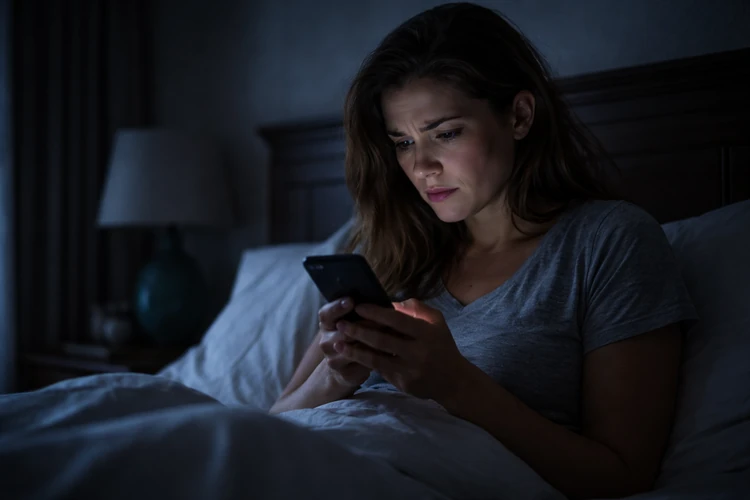

A recent survey found that nearly half of U.S. adults have used a sleep tracker, and many are changing their habits based on the data.
The rise of “sleepmaxxing” is pushing people to optimize sleep with routines, products, and tech.
However, the findings emphasize that worrying too much about sleep may actually be causing people to lose it.
If it feels like everyone is suddenly talking about sleep — tracking it, improving it, even optimizing it — you’re not imagining it.
A new survey from the American Academy of Sleep Medicine (AASM) shows that sleep has become a major focus for many Americans, fueled by wearable devices, apps, and social media trends.
According to the survey, 48% of adults have used a sleep tracking tool, like a smartwatch or mobile app, to monitor how well they rest each night. That’s a notable jump from 35% just a couple of years ago.
This growing interest has helped spark a trend known as “sleepmaxxing,” where people experiment with different strategies — from strict bedtime routines to new products — in an effort to get the best sleep possible. And for many, it’s not just curiosity: more than half of those who track their sleep say they’ve changed their behavior based on what they’ve learned.
“We’re seeing a significant shift in how Americans approach sleep health, and it’s encouraging that so many people are investing time and energy into understanding their sleep habits,” AASM spokesperson and member of the Emerging Technology Committee, Dr. Shalini Paruthi, said in a news release.
“Sleep trackers help people recognize that adequate duration of sleep and quality sleep are just as important as nutrition and exercise for overall health.”
The survey
The findings come from an online survey commissioned by the AASM and conducted by Atomik Research. The survey included 2,007 adults across the United States and was carried out over several days in June 2025.
Researchers designed the survey to better understand how Americans are using sleep technology, how it’s influencing their habits, and whether it’s shaping attitudes toward sleep overall. The results have a margin of error of plus or minus 2 percentage points, with a 95% confidence level — meaning the findings offer a reliable snapshot of broader trends.
The survey also explored differences among groups, including how men and women engage with sleep tracking and related products, as well as how much people are spending on sleep-focused tools.
When tracking sleep starts to hurt sleep
While the data shows that many people are becoming more engaged with their sleep health, it also points to a potential downside.
The survey found that 76% of adults have lost sleep due to worries about sleep problems — a phenomenon sometimes referred to as “sleep anxiety” or “orthosomnia.”
In other words, the very tools and habits designed to improve sleep may, in some cases, be doing the opposite. Constantly checking sleep scores, chasing “perfect” metrics, or feeling pressure to follow the latest advice can create stress that makes it harder to relax at bedtime.
That doesn’t mean sleep tracking is inherently bad. But the survey suggests there’s a balance to strike: paying attention to sleep can be helpful — as long as it doesn’t turn into something that keeps you awake.
“Sleep trackers can be valuable tools for raising awareness about sleep health and motivating positive changes in sleep habits,” said Dr. Paruthi. “However, it’s important that tracking enhances sleep and doesn’t cause more stress about it. If you find yourself lying awake worrying about your sleep duration or quality, it may be time to step back and consult with a health care professional about your concerns.”
Recommendations for tracking sleep
If you want to have a healthy relationship with tracking sleep – and sleep better overall – the AASM shared its top tips:
You want to establish an accurate baseline, so wear your sleep tracker consistently.
Not all metrics are important! Pay particular attention to sleep duration, consistent bedtime and wake times, and awakenings in the night.
Don’t change everything at once. Tweak one thing in your routine to see what works.
Be mindful about checking data. The AASM recommends not obsessing over the results and only checking in the morning — never at night.