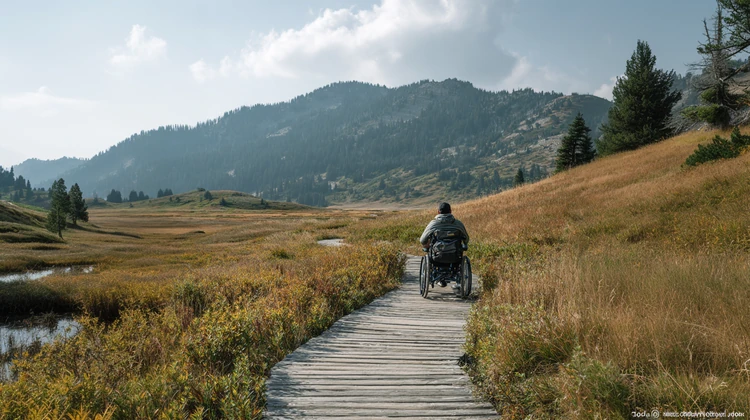

Free lifetime park access: Eligible travelers with permanent disabilities can get free entry to more than 2,000 federal recreation sites.
You may still qualify: The biggest takeaway is you do not need to be “100% disabled” to get the pass.
Big summer savings: National Park entrance fees can run $30–$35 per vehicle, making the pass especially valuable for summer road trips.
For many Americans living with a disability, visiting a national park already comes with extra planning, accessibility concerns, and travel costs.
What many people do not realize is that there’s actually a free lifetime pass available that can remove one major expense entirely.
It’s called the America the Beautiful Access Pass, and it gives eligible travelers with permanent disabilities free access to more than 2,000 federal recreation sites across the country, including national parks, forests, wildlife refuges, and other public lands managed by federal agencies.
And unlike some government programs, qualifying is much broader than many people think.
At many locations, the pass covers:
- Entrance fees
- Day-use fees
- Standard amenity fees
Depending on the park or recreation site, the savings can add up quickly, especially for families who travel frequently. For example, entrance fees at some major national parks can easily run $30 to $35 per vehicle per visit. For travelers who enjoy multiple road trips each year, the pass could easily save hundreds of dollars over time.
The disability requirement is broader than many people realize
One of the biggest misconceptions is that someone must be considered “100% disabled” to qualify.
That’s absolutely not the case.
According to the National Park Service, the pass is available to individuals with a permanent disability that “severely limits one or more major life activities.”
That can include:
- Mobility limitations
- Visual impairments
- Hearing impairments
- Cognitive disabilities
- Chronic medical conditions
- Other permanent disabilities
The government specifically notes that applicants do not need to be fully disabled to qualify. That’s important because many Americans incorrectly assume they would not qualify and never even apply.
What documentation you need
To get the Access Pass, applicants need:
- A valid photo ID
- Documentation of permanent disability
That documentation can come from one of the following:
- A physician
- The Veterans Administration
- Social Security Disability Income (SSDI)
- Supplemental Security Income (SSI)
- Certain state agencies
One of the easiest routes for many people is using existing federal disability paperwork they already have.
The easiest way to get the pass
The National Park Service actually recommends getting the pass in-person when possible, and passes are now available at more than 1,000 federal recreation sites nationwide.
They cite potential mailing delays and processing fees as the reason.
But in-person pickup is probably not possible for most, so you have two other options:
- Order a physical pass online
- Download a digital pass through Recreation.gov
If you prefer the idea of storing your pass directly on your phone, the digital option is the best way to go.
Parks are more accommodating than ever
National parks have expanded accessibility features significantly over the years, making the Access Pass something that people with a disability can actually use.
Park upgrades include:
- Accessible trails
- Shuttle accommodations
- Audio guides
- Accessible campsites
- Beach wheelchairs at select locations
- ADA-compliant visitor centers
Of course, accessibility still varies widely by park, terrain, and season, which is why planning ahead remains important.
Smart tips before visiting
Before traveling, experts recommend:
- Checking the park’s accessibility page online
- Calling visitor centers directly with specific mobility questions
- Verifying shuttle accessibility
- Looking up trail difficulty ratings
- Asking about seasonal closures
Many parks now provide detailed accessibility guides online that go far beyond basic ADA information.
Pro tip: Summer is peak season at many national parks, which means accessible parking and lodging can fill up quickly. Booking earlier than you think you need to is often the smartest move.