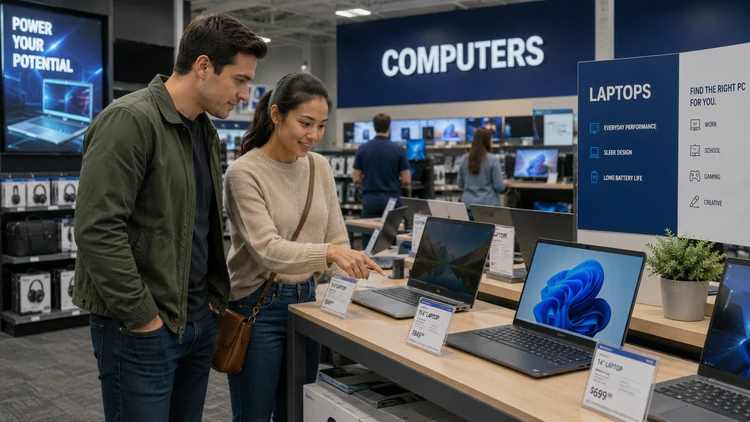

Artificial intelligence is increasing demand for memory chips, processors, and other components used in both AI data centers and consumer PCs.
Analysts and manufacturers warn laptop and desktop prices could rise between 10% and 40% over the next two years as shortages worsen.
Budget computers may be hit hardest, with some low-cost models disappearing entirely as manufacturers prioritize higher-margin devices.
Artificial intelligence may soon make buying a personal computer significantly more expensive, as the global rush to build AI infrastructure strains supplies of the same chips and memory used in everyday laptops and desktops.
Industry analysts say soaring demand from AI data centers is creating shortages of DRAM memory, NAND flash storage, and advanced processors, pushing up costs throughout the PC supply chain. Major computer makers — including Dell, Lenovo, and HP — have already warned customers about higher prices and tightening inventories.
The trend marks a dramatic reversal from decades of falling computer prices, when improvements in manufacturing steadily made PCs cheaper and more powerful each year. Analysts quoted by CBS News said the cost of “computers, software, and accessories” has recently risen at the fastest sustained pace in decades.
Enormous computing appetite
At the center of the problem is AI’s enormous appetite for computing power. Companies including Microsoft, Google, Meta, and Amazon are spending billions of dollars building massive AI data centers packed with specialized processors and high-speed memory. Those systems require many of the same components used in consumer electronics.
Manufacturers have increasingly shifted production toward lucrative AI hardware, leaving fewer chips available for traditional consumer products. According to reports from Tom’s Hardware and The Guardian, memory makers such as Samsung, Micron, and SK Hynix are prioritizing high-bandwidth memory used in AI servers instead of lower-cost memory for consumer devices.
Research firms cited by PCWorld said some PC makers are preparing for price increases of 15% to 20%, while other analysts predict mainstream laptop prices could climb as much as 40% if shortages intensify.
Budget computers may see the sharpest rise
Budget computers appear especially vulnerable. The Guardian reported that laptops selling for under $500 could become increasingly rare, because rising memory and storage costs leave manufacturers with little profit margin.
Some companies have already begun adjusting product lineups. Apple recently discontinued its lowest-priced Mac mini after memory costs surged, raising the entry price for the product by $200.
The shortages are also reshaping the broader PC market. Motherboard manufacturers, including Asus and MSI, are reportedly facing steep sales declines as consumers postpone upgrades amid higher prices and limited component availability.
Economists say AI’s influence extends beyond computers themselves. Goldman Sachs recently identified AI-driven hardware demand as one of several new inflationary pressures affecting consumers, alongside rising electricity use from energy-hungry data centers and higher prices for AI-enabled software services.
Industry experts believe the pressure may continue for years. Several reports project that memory shortages could persist through 2027 as semiconductor manufacturers race to expand production capacity.
For consumers, the result could mean paying substantially more for new PCs, while getting fewer upgrades in storage and memory than in previous years. Analysts say buyers may increasingly turn to refurbished machines or delay replacing older systems as the AI boom reshapes the economics of personal computing.