2021 Student Loan Lawsuits and Challenges

Article Image

Biden extends suspension of student loan repayments until May 1

Consumers who are still repaying their college loans received some welcome news on Wednesday. In a press statement, President Biden announced that his administration is extending a pause on student loan repayments until May 1, 2022. The move adds 90 days to the previous deadline of February 1, 2022. 

Biden said he is extending the deadline due to the looming threat of the COVID-19 pandemic, which has intensified in recent weeks due to the emergence of the Omicron variant.

“We know that millions of student loan borrowers are still coping with the impacts of the pandemic and need some more time before resuming payments,” he said.

Borrowers urged to plan for repayments to resume

Biden also cited improvements to the economy and jobs market in his announcement, stating that the U.S. has added 6 million jobs this year and recorded the fewest Americans filing for unemployment in over 50 years. 

However, a rising number of COVID-19 cases could threaten the economy and cause that progress to reverse. Biden said student loan borrowers who are affected by the extension of the student loan repayment pause should do all they can to prepare for their payments to resume next year. 

“As we are taking this action, I’m asking all student loan borrowers to do their part as well: take full advantage of the Department of Education’s resources to help you prepare for payments to resume; look at options to lower your payments through income-based repayment plans; explore public service loan forgiveness; and make sure you are vaccinated and boosted when eligible,” he said. 

Article Image

Proposed legislation could make student loans fully tax-deductible

If Sen. Rand Paul (R-KY) gets his wish, student loans could soon be fully tax-deductible. Paul says he plans to introduce the Tax Free Education Act, legislation that could change the face of student loan programs forever if passed.

In comments made to WDRB-TV in Louisville, Ky., Paul said his five-prong approach would include the following:

  • Make education expenses 100% deductible

  • Enable students to deduct the cost of their education from their income tax

  • Include student loans as “education expenses”

  • Apply to all colleges and technical schools

  • Apply to the cost of K-12 education

The rising cost of education is important to Paul. Less than two years ago, he introduced the Higher Education Loan Payment and Enhanced Retirement (HELPER) Act, a pro-taxpayer plan that he said would help Americans pay off their student loan debt more quickly and easily, plus give them an added opportunity to save more money for retirement.

"Making college tax deductible, I think, would help a lot of families," Paul said. "A lot of families are struggling. College tuition has doubled over the last decade. Loan payments are going up. I meet people in their 30s still trying to pay back their loans."

Student loans: a can of worms

We’re now in the fourth year of a prolonged battle over student loans, dating back to 2017 when a coalition of states pushed Trump Education Department appointee Betsy DeVos to take action on 25,000 loan forgiveness applications filed by students who were left stranded when for-profit schools like Corinthian Colleges collapsed.

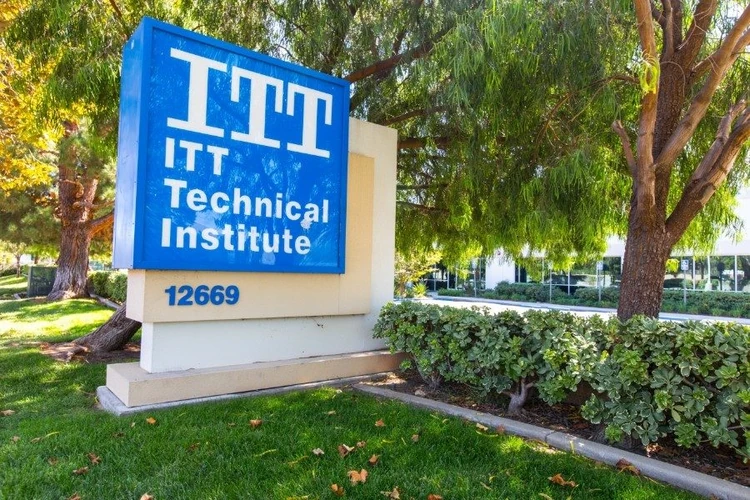
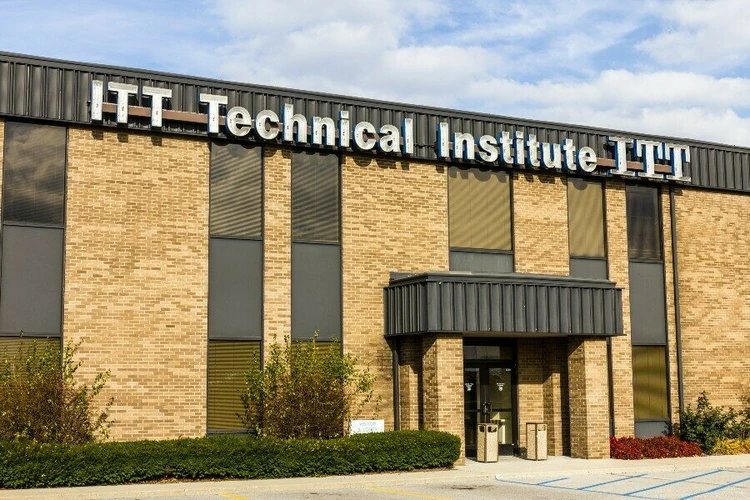
After DeVos left that can of worms on her desk for her successor, the new Biden-appointed Education Secretary Dr. Miguel Cardona quickly forgave more than a billion dollars coming from 72,000 eligible claims from student borrowers -- the majority of whom attended Corinthian Colleges and ITT Technical Institute.

That’s a nice start, but there’s still work to do. According to the Education Data Initiative’s deep dive into the situation, there’s still a lot to shore up -- including addressing the variety of loan forgiveness programs that have different qualifications, forgiveness amounts, and qualifications. 

Unfortunately, the process of making improvements has been painfully slow. In the last two years, the number of denied claims has more than quadrupled, and as many as 43% of applications have not yet been processed.

What about the for-profit schools still in business?

Another item on Cardona and Paul’s checklist might be to help students who have loans from for-profit institutions that are still in business. As an example, ConsumerAffairs reviewer Marnie from Massachusetts pegged Capella University for the problems she’s been fighting. 

“Terrible! They took $82K from me without even knowing about it with student loans so they could profit! I am getting a lawyer against Capella AND Nelnet. If you think after 15 years I am going to pay all of YOUR FRAUDULENT money back when I wasn't even able to graduate after seeing my bill, you're nuts,” Marnie wrote.

Another frustrated for-profit college student loan borrower -- Melissa of Maryland -- says she’s still trying to sort things out with Strayer University. She accused the institution of taking her money but then changing the name of the program she completed.

“Called the dean to advise. Was told he would get it straight. Received a email advising the program was switched to Business ADMIN. from HR. I took out student loans to receive a degree in HR not Business. I could have went to another school and Received the degree I wanted. Now stuck with over 50k in student loans with no job in HR,” she wrote.
Article Image

Many banks are easing loan standards, survey finds

It’s a good time for consumers to look for a loan. As competition in the finance sector increases, new survey findings suggest that many banks are swimming in cash and lowering the bar on lending standards.

For loans to homeowners, banks eased standards across most categories of residential real estate (RRE) loans and reported stronger demand for most types of RRE loans over the second quarter. The Federal Reserve's July 2021 Senior Loan Officer Opinion Survey on Bank Lending Practices Banks shows that banks also eased standards and reported stronger demand across other major consumer loan categories like credit card loans and auto loans.

The impact on residential real estate lending

Digging deeper into what that means for the consumer, the survey findings suggest that banks have lightened up on their lending standards for most mortgage loan categories and for revolving home equity lines of credit (HELOCs)

“The two exceptions were for government-sponsored enterprise (GSE)-eligible mortgages—for which standards were basically unchanged on net—and for subprime mortgages, which few banks reported as originating,” Fed officials said.

The Federal Reserve says “jumbo loans” -- a stricter type of loan when a regular mortgage isn’t enough -- felt a particularly strong easing of standards. 

And on consumer lending?

Over the second quarter of 2021, a “significant net share” of banks (greater than 20 and less than 50%) reportedly softened their stance on credit card loans. At the same time, a moderate number of banks (greater than 10% and less than or equal to 20%) lessened standards for auto loans and for other consumer loans. A significant number of banks also increased credit limits on credit card accounts.

At the end of the day, analysts say it’s not a historic, earth-shattering event. It's merely banks easing their loan standards closer to where they were in pre-pandemic 2019. Nonetheless, consumers will no doubt appreciate the increased leniency.

“Clearly this is a sign of confidence in the U.S. economy,” especially in the aftermath of last year's recession," wrote Bank of America analysts in a research note.

Article Image

Department of Education erases student loans for former ITT Tech students

It’s a drop in the bucket of the $1.6 trillion in outstanding student loan debt, but students who borrowed money to attend the now-defunct ITT Technical Institute got some relief on Friday. 

The U.S. Department of Education said those who attended the school but never received a degree are getting their remaining student debt forgiven.

After a new review of the issues that led to ITT Tech closing its doors, the agency announced that it will make $1.1 billion in closed school discharges available to an additional 115,000 borrowers -- 43% who are believed to be in default. The only stipulation those borrowers have to face is that they did not complete their degree or credential and left ITT Tech on or after March 31, 2008. 

Friday’s action brings the total amount of loan discharges approved by the Department since January 2021 to $9.5 billion -- a welcome relief to more than 563,000 student loan borrowers.

"For years, ITT hid its true financial state from borrowers while luring many of them into taking out private loans with misleading and unaffordable terms that may have caused borrowers to leave school," said U.S. Secretary of Education Miguel Cardona. 

"Today's action continues the Department's efforts to improve and use its targeted loan relief authorities to deliver meaningful help to student borrowers. At the same time, the continued cost of addressing the wrongdoing of ITT and other predatory institutions yet again highlights the need for stronger and faster accountability throughout the federal financial aid system."

Steps former ITT Tech students need to take

According to Education Department regulations, former ITT Tech students who have outstanding student loans need to know the following:

  • They are eligible for loan relief if they attended an ITT-owned institution that shut down between November 1, 2013, and July 1, 2020.

  • If they meet the above requirement and did not enroll in another institution within three years of their school closing down, they will receive an automatic loan release.

  • Borrowers who enrolled elsewhere but did not complete their program of study may still be eligible for a discharge, but they will need to submit an application.

Borrowers can access the closed school discharge application by contacting their servicer or visiting StudentAid gov/closedschoolform and returning a completed application to their servicer.

The Department will begin processing discharges in September 2021, and borrowers will start receiving automatic discharges soon thereafter.

Article Image

Education Department to eliminate $5.8 billion in student loans for disabled borrowers

The U.S. Education Department has announced that it will begin automatically canceling the student loans of more 323,000 severely disabled borrowers. 

In a statement on Thursday, the agency said it will start discharging the debt of borrowers who are unable to maintain gainful employment due to a permanent physical or psychological medical impairment. The action will take effect starting in September.

"Today's action removes a major barrier that prevented far too many borrowers with disabilities from receiving the total and permanent disability discharges they are entitled to under the law," said U.S. Secretary of Education Miguel Cardona. "From day one, I've stressed that the Department of Education is a service agency. We serve students, educators, and families across the country to ensure that educational opportunity is available to all.” 

Burdensome rules

The action is being carried out through the Total and Permanent Disability (TPD) discharge program. While the move is intended to help many struggling borrowers, critics have argued that potential beneficiaries may face challenges in submitting a formal application. Some may even be unaware that they qualify. 

“We've heard loud and clear from borrowers with disabilities and advocates about the need for this change and we are excited to follow through on it,” Cardona said. “This change reduces red tape with the aim of making processes as simple as possible for borrowers who need support."

More than $5.8 billion in debt will be wiped out as a result of the move, the Education Department said. The changes introduced today will go into effect starting in September, and all of the loans are expected to be discharged by the end of the year.

Article Image

Biden administration erases $500 million in debt owed by defrauded ITT Tech students

The Biden administration has announced that it’s erasing $500 million in student loan debt for 18,000 former ITT Tech students. 

ITT Tech was shut down in 2017 after the government revoked its federal funding and decided that the for-profit institution had cheated students out of money. The Department of Education said Wednesday that the school misled students about how much they could expect to earn after graduating, as well as how their credits would transfer to other schools.

Education Secretary Miguel Cardona said the action comes with a promise that the Department will continue to stand up for students who were misled by their schools. 

"Our action today will give thousands of borrowers a fresh start and the relief they deserve," Cardona said in a statement. "Many of these borrowers have waited a long time for relief, and we need to work swiftly to render decisions for those whose claims are still pending."

Entitled to relief

In March, the Department of Education announced that it would cancel $1 billion in student loan debt for about 73,000 defrauded students of Corinthian Colleges and ITT Technical Institute. 

An official said a review of Betsy DeVos’s guidelines dealing with student loan relief did not grant an “appropriate level of relief to borrowers” and added that there was “clear evidence” that they had been taken advantage of.

“It has been more than four years since the Department of Education first concluded that these students had been cheated by their institutions and were deserving of full debt relief,” Education Department Chairman Robert C. “Bobby” Scott (D-VA) said. “Unfortunately, instead of simply processing loan forgiveness claims, the previous administration refused to accept the findings of its own staff and suspended action on behalf of these defrauded borrowers.”

Article Image

Sen. Bernie Sanders introduces bill to provide free college to U.S. students

As the Biden administration considers whether it can legally cancel student loan debt, Sen. Bernie Sanders (I-Vt.) is upping the ante by proposing a tax on Wall Street investors to provide free college education.

Sanders has introduced the College For All bill in the Senate. Rep. Pramila Jayapal (D-Wash) has sponsored the same measure in the House. The bill, if enacted into law, would pay tuition for all students attending community colleges and public trade schools. It would eliminate tuition at four-year public colleges and universities, but only for students from families earning less than $125,000 a year. It would also provide the same support for public and private historically minority colleges and universities. 

The U.S. government would provide 75% of the funding, with states providing the rest. The federal government would raise money for the program by placing a tax on Wall Street transactions.

Sanders previously proposed a tax on Wall Street to pay for public education. Under that proposal, the tax on stock trades would be 0.5%, the levy on bond trades would be 0.1%, and the fee to the government on derivative transactions would be 0.005%. A summary of the bill suggests that would raise nearly $2.5 trillion.

There would likely be strong opposition to those numbers from various quarters, making it difficult to get the measure through a narrowly divided Senate.

Here’s who would pay

During the pandemic, millions of people began trading stocks using platforms like Robinhood and sharing ideas on Reddit. Along with hedge funds, they would take a hit. So would union pension funds, not to mention university endowment funds. Nearly all are invested on Wall Street.

“In the wealthiest country in the history of the world, a higher education should be a right for all, not a privilege for the few,” Sanders said in defending his proposal. “If we are going to have the kind of standard of living that the American people deserve, we need to have the best-educated workforce in the world.”

President Biden has yet to back a proposal for paying off student loan debt. During his campaign, he said he would support forgiving up to $10,000 in loans. The administration is now investigating whether the president has the legal authority to pay off $50,000 in loans per student.

Article Image

New forgiveness stance will cancel $1 billion in student loans

In a follow-up to the Biden administration’s announcement that it will give full debt relief to students defrauded by private, for-profit colleges, the U.S. Department of Education (DOE) has released the specifics of how the program will work.

First off, the program will replace the student loan relief program established during the Trump administration under former DOE Secretary Betsy DeVos. After completing a comprehensive review of that methodology, the Biden-era DOE concluded that DeVos’ version did not result in an appropriate relief determination.

Officials say this is just a beginning -- a first step in addressing borrower defense claims as well as the underlying regulations. They say they will be pursuing additional actions, including re-regulation of student loans, in the future.

In its place, the “new” DOE under Secretary Dr. Miguel Cardona will be employing what it calls a “streamlined approach for granting full relief under the regulations to borrower defense claims approved to date.” The agency believes this change will help approximately 72,000 borrowers who will receive $1 billion in loan cancellation.

Who this applies to

The forgiveness program employs the “borrower defense to repayment" and is for borrowers who a) seek cancellation of their William D. Ford Direct Loan; and, b) have “claims approved to date that their institution engaged in certain misconduct.” 

Among the 72,000 eligible claims, a DOE spokesperson told ConsumerAffairs that the vast majority of these borrowers attended Corinthian Colleges. A smaller subset attended ITT Technical Institute.

The new loan forgiveness program also includes borrowers with previously approved claims that received less than a full loan dismissal. Full relief under the regulations of the new program will include:

  • 100 percent discharge of borrowers’ related federal student loans;

  • Reimbursement of any amounts paid on the loans, where appropriate under the regulations;

  • Requests to credit bureaus to remove any related negative credit reporting; and 

  • Reinstatement of federal student aid eligibility, if applicable.

Changes to the claims process

The DOE will begin applying this new approach effective immediately. Affected borrowers should receive notices over the next several weeks with loan dismissals following after that. 

An agency spokesperson told ConsumerAffairs that it is not changing the process of adjudicating claims. A thorough review will still be conducted to determine whether there is sufficient evidence of misconduct to merit a valid claim. 

What is changing, however, is what happens once a claim is recommended for approval.  Previously, the DOE would calculate the share of a borrower’s loan balance that would be cancelled under the partial relief methodology. That will not happen under the new process. As things stand now, claims that were approved for partial relief will now be granted full relief.

Updated information for borrowers, applications for Borrower Defense, and application management is all available at StudentAid.gov/borrower-defense.

Article Image

FTC shuts down payday lending scheme

The Federal Trade Commission (FTC) has moved to ban the operators of a massive payday lending scheme that overcharged consumers millions of dollars. 

The agency said the operators of the scheme used deceptive marketing tactics to dupe consumers into thinking that their loans would be repaid in a fixed number of payments. Instead, the company continued to pull money from consumers’ bank accounts “long after the loans’ original principal amount and stated repayment cost had been repaid,” according to the complaint. 

The FTC said the company continued to draw money from consumers’ accounts until they “completely closed their bank accounts or found some other way to cut off payments.” 

Consumer debts cleared

The scheme was carried out under a number of different names, including Harvest Moon Financial, Gentle Breeze Online, and Green Stream Lending. Under the settlement, debts owed to the operators of the scheme will be wiped from the books. 

“These defendants hoodwinked people in financial need by charging much more than promised for payday loans,” Daniel Kaufman, acting director of the FTC’s Bureau of Consumer Protection, said in a statement. “We expect payday lenders to not only honor the terms of their deal but also to refrain from making a never-ending series of unexpected withdrawals from customers’ bank accounts, as these companies did.” 

“Any consumer loan made by the company before it was temporarily shut down as part of the case will be considered to be paid in full if the original amount of the loan and one finance charge have been paid,” the statement continued. 

The FTC said the defendants will be required to turn over all corporate assets and almost all domestic personal assets, as well as a number of vehicles. Those assets will be relinquished to a receiver, which will liquidate the business and provide all proceeds to the FTC.

Article Image

President Biden extends student loan payment pause by eight months

President Joe Biden has instructed the Department of Education to extend federal student loan payment deferrals until October. 

The order adds an additional eight months onto a payment pause made possible under a bill passed by Congress at the start of the COVID-19 pandemic. Student loan payments were originally slated to resume as normal at the end of this month. 

Now, borrowers paying off federal loans won’t have to make payments until October 1; however they are allowed to continue making payments if they want to. 

On the campaign trail, President Biden called for wiping out $10,000 in student debt per borrower. He’s expected to push for it again in an economic relief bill likely to be proposed in February. 

Biden has appointed Rohit Chopra, the former student loan ombudsman for the Consumer Financial Protection Bureau (CFPB), to be the CFPB’s executive director. Ashley Harrington, senior counsel at the Center for Responsible Lending, said she believes having Chopra at the helm will likely have positive effects for student loan borrowers. 

“Commissioner Chopra has long fought for financial markets that are fair for consumers, including student loan borrowers,” Harrington said. “We are encouraged that the CFPB will now return to its mission of protecting people’s finances, which has heightened significance in this economic downturn, and which includes a strong fair lending program.