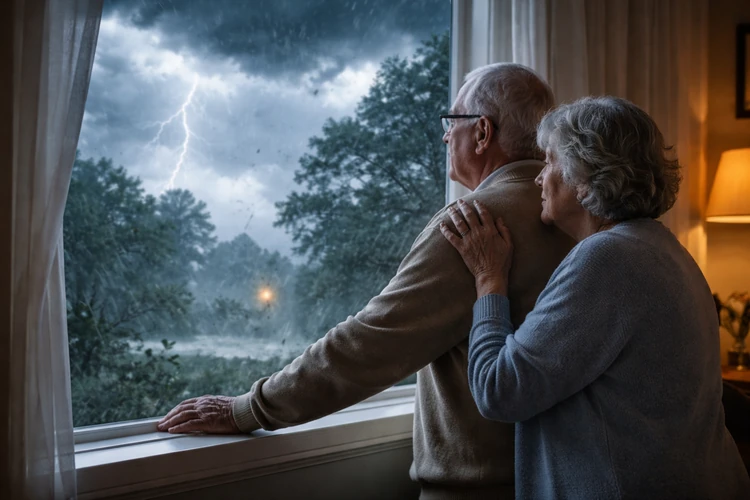

A recent study found that severe weather exposure was linked to a higher risk of death for older adults in the year following a storm.
Additionally, older adults with chronic conditions faced the greatest increases in health and mortality risks.
Researchers identified disparities that emerged, with higher risks observed among Black and Hispanic populations.
When a major storm hits, the immediate dangers — flooding, power outages, and injuries — tend to get the most attention. But new research suggests the health impacts don’t stop when the storm clouds clear.
A study from the University of Michigan found that severe weather can have lasting consequences for older adults, particularly those already managing health issues.
“These findings add to the evidence that disasters don’t just cause short-term disruptions. They expose and magnify the underlying fragilities in our health systems,” lead author Sue Anne Bell, U-M associate professor of nursing, said in a news release.
“For older adults who rely on regular and consistent access to health care, even a temporary disruption to needed care can have lasting consequences.”
The study
To better understand these longer-term risks, researchers conducted a retrospective cohort study using Medicare claims data from nearly 1.8 million adults aged 65 and older in Texas and Louisiana.
The team focused on individuals who experienced Hurricane Harvey in 2017, using detailed weather data to measure exposure to severe rainfall over a four-day period. They then tracked mortality outcomes for up to one year after the storm.
Researchers also examined how risk varied across different groups. They looked at older adults with chronic conditions that require ongoing care — such as Alzheimer’s disease, diabetes, and chronic kidney disease — as well as sociodemographic factors like age and race.
To account for other variables that might influence outcomes, the study used statistical modeling to adjust for differences between individuals and isolate the relationship between storm exposure and mortality risk.
What the researchers found
The results showed a measurable increase in risk: older adults exposed to high levels of rainfall during Hurricane Harvey had about a 3% higher chance of dying within the following year compared to those with less exposure.
However, that risk wasn’t evenly distributed. People with chronic conditions that require consistent medical care saw higher increases in mortality, suggesting that disruptions — like missed treatments or limited access to providers — may play a role.
In fact, those with Alzheimer’s and related dementia had the highest risk of death (5%) in the aftermath of the storm. Those with chronic kidney disease and diabetes each represented a 4% higher risk of death.
The study also identified disparities across racial and ethnic groups. Mortality risk was higher among Black older adults and even more elevated among Hispanic and Latino populations following severe weather exposure.
Overall, the findings point to a broader takeaway: the health impacts of severe weather can extend far beyond the initial event, especially for people who depend on stable, ongoing care.