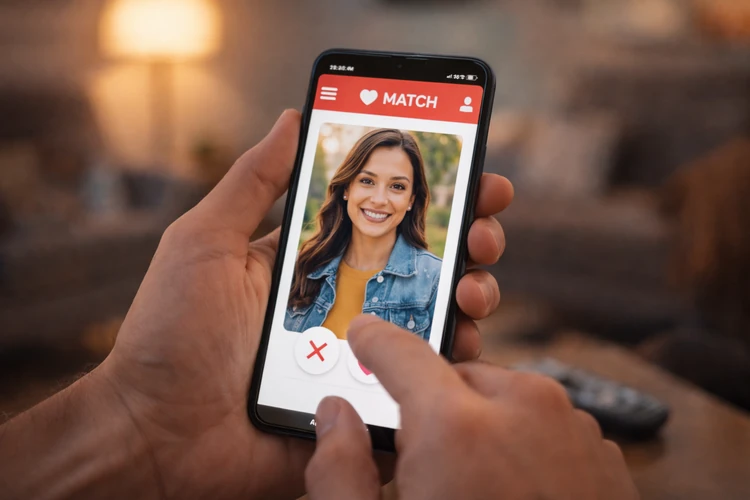

Romance scams are surging ahead of Valentine’s Day, with hundreds of thousands of malicious links and fake dating app downloads blocked in just the past month.
Scammers often build trust before asking for money, using polished photos, vague backstories, AI bots, and urgent financial “emergencies” as red flags.
Anyone can be targeted, but younger adults report the most exposure, while men — particularly ages 35 to 44 — are more likely to report losing money, including higher-dollar losses.
If you’re planning to swipe right this Valentine’s season, you’re not alone — and unfortunately, neither are the scammers.
New data from McAfee shows that romance scams are ramping up fast, with hundreds of thousands of malicious links and fake dating app downloads blocked in just the last month.
ConsumerAffairs spoke with Sandra Glading, online safety expert at McAfee, to get the ins and outs of the latest romance scams and how consumers can ensure they stay safe this Valentine’s Day.
Know the signs
Glading explained that what makes romance scams so hard to spot is that they often present very naturally, which makes it harder to know that something is wrong.
“One major warning sign is when a profile or story feels manufactured,” she said. “If a photo looks overly polished, the backstory feels vague, or the details don’t hold up when you ask basic follow-up questions, that’s a reason to slow down and verify.
“Another red flag is resistance to real-world confirmation. Scammers often avoid phone calls or live video chats, or they’ll make excuses about broken cameras, overseas work, or poor service. The longer someone avoids showing up as a real person, the more cautious you should be.”
One of the most common red flags to look out for: a shift in conversation to money.
“The request may come as an emergency, travel issue, medical bill, or even an ‘investment opportunity,’” Glading said. “Once money enters the conversation, especially via gift cards, wire transfers, payment apps, or cryptocurrency, that’s a serious red flag.”
Take your time
Whether you’re talking to a potential romantic partner on a dating app or social media platform, there are ways to avoid falling victim to these experienced scammers. Glading shared her best tips for consumers:
Slow down and give yourself time to think. Romance scams often succeed because scammers create a sense of urgency and prey on strong emotions. If someone you’ve just met online is escalating quickly, whether emotionally or financially, that’s your cue to pause.
Be cautious. Especially when it comes sharing personal information early, and always remember that genuine relationships don’t generally require financial assistance. Any request involving gift cards, wire transfers, payment apps, or cryptocurrency should be treated as a serious red flag.
Look beyond the surface. If a photo looks overly polished or a story doesn’t quite add up, ask follow-up questions. Do a reverse image search. See if details stay consistent over time. Scammers rely on people not verifying.
Consider using protection built for how scams work today. Tools like McAfee’s Scam Detector can help flag suspicious messages, links, and financial requests across text, email, and social or messaging platforms, adding an extra layer of protection before a scam has a chance to escalate.
Everyone is vulnerable
Glading says that scammers don’t discriminate when it comes to scam targets.
“Anyone can be targeted by a romance scam, but vulnerability shows up in different ways,” she explained. “Younger adults report the most frequent exposure. Two in five adults ages 18-24 say they encounter potential romance scams at least weekly, compared with just 1 in 20 adults age 65+.”
An important distinction: When it comes to financial loss, the pattern shifts. Men are more likely than women to report losing money — 21% of men compared with 10% of women. Higher-dollar losses also cluster among men ages 35 to 44, and in McAfee’s research, losses above $5,000 were reported only by men.
“There’s also an emotional dimension to vulnerability,’ Glading said. “People who are open to forming connections online, including with AI bots, may be more susceptible to romance scams once trust is established.
“The key takeaway is that romance scams aren’t confined to one age group or demographic. Scammers follow attention and emotion, and they tailor their tactics accordingly.”