Job Market Trends

The 'Work and Employment Updates' living topic explores various dimensions and trends in the job market. It includes insights on part-time and flexible job opportunities for seniors, analysis of unemployment rates and job creation statistics, the impact of economic events on employment, and innovative technologies in job searching and hiring processes. Additionally, it covers significant legal cases affecting employment practices and regulatory changes impacting workers' rights.

Latest

Where today's job seekers have the best chance of getting hired

The May Employment Report offers a clear roadmap

Featured Finance News photo

The U.S. economy added 172,000 jobs in May, more than double economists’ expectations, while unemployment held steady at 4.3%.

Leisure and hospitality, healthcare, and government were the biggest sources of new jobs, making them the strongest targets for job seekers.

Financial activities, information, and parts of retail continued to shed jobs, signaling a tougher market for white-collar applicants.

The labor market delivered a pleasant surprise for job seekers in May.

Emplo...

Read Article
Featured Finance News photo
2025
2024
2023
2022
Article Image

U.S. economy adds 528,000 jobs despite inflation fears

People who are worried that the economy is headed into a recession have received some encouraging news. The Labor Department reports that the U.S. economy added 528,000 jobs in July, dropping the unemployment rate to 3.5%. Normally in a recession, the economy sheds jobs.

According to the government report, job growth was widespread across the economy. The sectors of leisure and hospitality, professional and business services, and health care saw the biggest gains. Government economists say the employment picture has now returned to the way it was just before the start of the COVID-19 pandemic.

The number of long-term unemployed – those out of work for 27 weeks or more – decreased by 269,000 in July to 1.1 million, which was what it was just before the start of the pandemic. The long-term unemployed accounted for 18.9% of those who were out of work in July. 

The labor force participation rate, at 62.1%, and the employment-population ratio, at 60.0%, were little changed over the month. Both measures remain below their February 2020, levels.

Restaurants were finally able to staff up

Leisure and hospitality added 96,000 jobs in July, as growth continued in food services and drinking places. However, employers in this sector continue to struggle to find workers. Employment in leisure and hospitality is below its February 2020, level by 1.2 million, or 7.1%.

There was also a lot of hiring last month in the professional and business services sector, which added 89,000 jobs. The new hires were widespread within the industry, including gains in the management of companies and enterprises, architectural and engineering services, management and technical consulting services, and scientific research and development services. Employment in this sector is 986,000 higher than in February 2020.

After struggling to fill open slots in early 2022, the health care sector saw strong job growth, adding 70,000 jobs in July. Job gains occurred in ambulatory health care services, hospitals, and nursing and residential care facilities. However, jobs in health care remain below their pre-pandemic levels.

The Fed is likely to keep raising rates

While the numbers are good news for people looking for jobs, the Federal Reserve may look at it differently. Its policy of raising a key interest rate is aimed at slowing the economy to tamp down inflation.

The July jobs report suggests that the economy isn’t slowing that much, meaning the Fed is unlikely to take its foot off the brake anytime soon. As for inflation, the government will shed some light on that problem when it issues the Consumer Price Index (CPI) for July last week.

The CPI, a measure of inflation, was increasing at a 9% annual rate in June, the highest increase rate since 1982.

Article Image

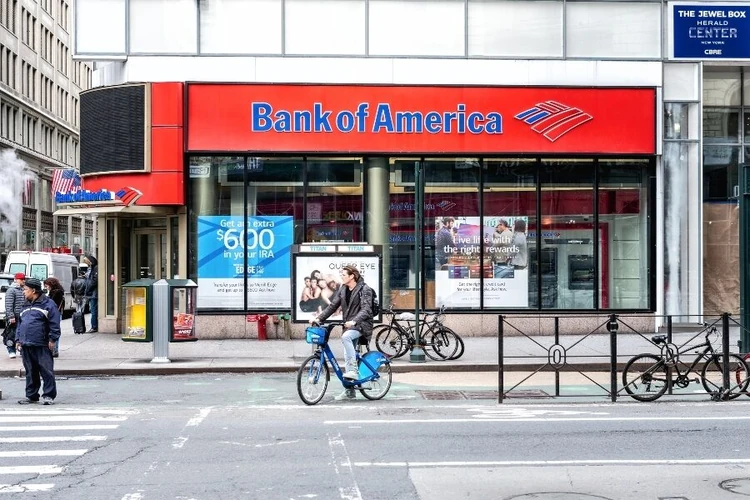
Government regulators fine Bank of America $225 million

Two federal regulatory agencies have fined Bank of America a total of $225 million over claims that the bank’s distribution of unemployment benefits during the pandemic harmed consumers. Officials said affected consumers will receive restitution.

The Office of the Comptroller of the Currency (OCC) levied a $125 million civil fine against the bank for alleged law violations and “unsafe or unsound practices.” The Consumer Financial Protection Bureau (CFPB) took similar action for the same reason, fining the bank $100 million.

"Stepped back"

The agencies say about a dozen states contracted with Bank of America to distribute unemployment and other benefits on pre-paid money cards during the early days of the pandemic. The regulators charge that Bank of America’s fraud detection system automatically froze many cards, even though there was no fraud. 

As a result, the agencies say millions of Americans were unable to access those funds when they were needed to meet everyday expenses.

“Taxpayers relied on banks to distribute needed funds to families and small businesses to rescue the economy from collapse when the pandemic hit,” said CFPB Director Rohit Chopra. “Bank of America failed to live up to its legal obligations. And when it got overwhelmed, instead of stepping up, it stepped back.”

Acting Comptroller of the Currency Michael Hsu said the bank failed consumers at a critical time by freezing the funds to which they were rightfully entitled.

“Banks must pay attention to the financial health of their customers and conduct their activities in accordance with all consumer protection laws,” Hsu said. “When they don’t, we will act accordingly.”

Bank of America pushes back

Bank of America strongly objected to the government’s action. Company officials said the bank supported the states to provide for the distribution of more than $250 billion to more than 14 million Americans and had to deal with “unprecedented” levels of fraud connected with pandemic relief programs.

"In addition, we provided assistance to millions more by deferring mortgage, credit card and other payments," the company said in a statement.

The amount of money affected consumers will receive is not yet clear. The OCC order requires Bank of America to provide remediation to consumers whose access to unemployment benefits was denied or delayed.

The CFPB says Bank of America must pay back the money that it withheld because of the faulty fraud filter. The bank must also provide each affected consumer with a lump sum consequential harm payment that will be "determined through a methodology of financial harm consumers suffered due to the time their accounts remained frozen or blocked."

Article Image

A majority of consumers live paycheck to paycheck, report finds

If you find yourself living paycheck to paycheck, then you’re in good company. A new report from LendingClub shows that 61% of the population spends most of its money between paydays.

In 2021, the number of people struggling to make ends meet rose 7% from June to December, a period in which enhanced unemployment benefits ended. Challenges were also present on the upper end of the pay scale. Researchers found that 42% of U.S. consumers earning more than $100,000 annually now live paycheck to paycheck as well, an increase of three percentage points from May 2021.

People earning less than $50,000 faced the biggest financial challenges last year, with 77% of that group living paycheck to paycheck. In many cases, debt is a major reason.

Rita, of Tularosa, N.M., found herself deep in debt before she got help from Freedom Debt Relief.

“I used to worry about making it from paycheck to paycheck,” Rita wrote in a ConsumerAffairs review. “Now, I'm able to afford groceries again, and not make one meal stretch into three meals.”

Especially hard on millennials

The LendingClub report found that millennials, many raising young families, are the most likely demographic to be juggling finances. However, the biggest increase in the share of consumers living paycheck to paycheck is seen among baby boomers and seniors.

In December 2021, 54% of baby boomers and seniors were living paycheck to paycheck, up from 40% in May.

In addition to debt, being overextended on monthly bills is a major reason why many people are living paycheck to paycheck. The report found that consumers who can manage their bills are able to regularly add to savings, while others are not.

With no savings, paying for an emergency expense usually puts paycheck to paycheck households in debt. At 59%, Generation Z consumers who live paycheck to paycheck and have issues paying their bills are the most likely to be unable to afford a $400 emergency expense, the report found. 

Article Image

Job openings continued to outpace unemployed workers in December

If you’re looking for a job right now, you just might be in the minority. New data from the Labor Department shows that there were 4.6 million more job openings in December than people seeking to fill them.

There were fewer people quitting jobs at the end of the year, but employers increased their search for workers as the economy continued to bounce back from early lows during the pandemic. There were 10.9 million job openings on the last business day of December, the government reported.

In December, the number of hires decreased to 6.3 million, a decline of 330,000. The hiring rate was little changed at 4.2%.

The situation has apparently been building for several months. In August, Tyler, of Cedar Park, Texas, told us that he has seen the difference when using Ziprecruiter to find employees.

“Last year I had 50 job openings posted and in 5 days got over 350 applicants,” he wrote in a ConsumerAffairs review. “The same jobs posted for the same time period this year and I have 37 applicants, 1/10th of what they did last year. Eighteen of the ads have been viewed by no one!”

Tyler’s review suggested the fault lay with Ziprecruiter. However, in light of millions of people quitting jobs and not seeking new ones, there may be other reasons for his lack of response.

More jobs, fewer applicants

As businesses fight for fewer and fewer people looking for work, job security is increasing. The Labor Department report shows that layoffs and firings plunged to 1.17 million, a nearly 11% decline from November. It’s a decline of nearly 36% from December 2020, a record low.

“Given the trouble that businesses are having in finding and attracting new hires, employers are hanging onto the workers they’ve got,” Sinem Buber, the lead economist at ZipRecruiter, told CNBC.

The only good news for businesses appeared to be a slowdown in the “Great Resignation” in December. The number of people turning in their resignation declined by 161,000 to 4.3 million.

Even so, millions of jobs remained unfilled. Job openings increased in several industries, with the largest increases at hotels and restaurants that were seeking a combined 133,000 new employees.