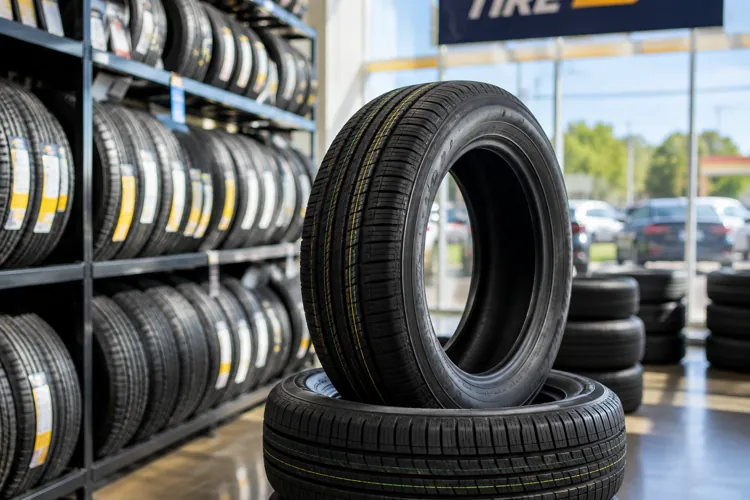

California is setting new efficiency standards for replacement tires, with the first requirements taking effect in 2029.
Drivers nationwide could eventually feel the impact as tire manufacturers adjust their product lines for California's huge auto market.
Current tires aren't becoming illegal, so shoppers should still compare price, tread life, performance, and warranties.
If you don't live in California, you might look at the state's new tire rules and think, “Whatever, not my problem.”
But you may want to keep an eye on this one.
California just became the first state to adopt energy-efficiency standards for replacement tires. In other words, the tires you buy after the factory set wears out.
The rules were approved by the California Energy Commission this week and begin phasing in during 2029, with tougher requirements coming later.
And despite some alarming headlines, California isn't banning aftermarket tires altogether.
Instead, it's setting limits on something called "rolling resistance," which is how much energy a tire requires as it rolls down the road. The lower the rolling resistance, the better the gas mileage. This also extends to an increased driving range in EVs.
Here's why drivers outside California should care.
California could change the tires everyone gets
The regulation technically applies to replacement tires sold in California, not tires sold nationwide. A whopping 70% of tires currently sold in California would not qualify under the new regulation. No small number.
California is a massive automotive market, accounting for roughly one out of every nine registered vehicles in the country. That creates an interesting question for tire manufacturers: Is it worth producing and distributing one group of tires for California and another for everyone else?
It’s safe to assume that some tire manufacturers will choose to redesign tire lines or expand their more efficient tire lines. This means consumers around the country could eventually see some of the same tires California requires.
California could also become a test case for other states considering similar standards. For now, however, this is a California-only rule and not a nationwide tire mandate.
Your favorite tire isn't necessarily disappearing
One of the scarier claims circulating is that California is effectively "banning" a huge percentage of today's replacement tires.
That’s absolutely not the case. Instead, the regulation determines what retailers can sell once the requirements take effect; it doesn't suddenly make tires already on your vehicle illegal.
There are also exemptions for certain specialty products, including some off-road, competition, and winter/snow tires.
That means nobody is coming to confiscate the tires on your 4x4 pickup anytime soon.
Could tires get more expensive?
Possibly, and this is where the debate gets interesting.
The California Energy Commission estimates that compliant tires will cost a little more upfront but argues drivers will recover that money through lower fuel or electricity use. Its analysis estimates a gasoline-vehicle driver could save about $179 over the typical four-year life of a set of tires.
Some tire manufacturers and industry groups aren't convinced. They've warned the rules could increase prices, reduce consumer choice, and create enforcement problems, particularly involving imported tires.
So don't assume "more efficient" automatically means "cheaper." Consumers will still want to compare prices, the expected tread life, the warranty, and fuel savings before buying.
Pro tip: Ask about price matching after you buy. Some tire shops will refund the difference if the same tire goes on sale shortly after your purchase. Save your receipt and keep an eye on prices for the next few weeks.
Don't buy tires early because of this
If your tires need replacing now, this rule shouldn't change your shopping plans.
The first requirements aren't scheduled to begin until 2029, giving tire companies and retailers years to adjust their products and inventories.
Pro tip: Given this news, when shopping for tires, don't focus only on fuel efficiency. Be sure to compare treadwear warranties, wet weather performance, road noise, and the total installation price. A tire that saves a little gasoline isn't necessarily the better deal if it wears out significantly sooner.
What drivers outside California should watch
The most important development may not be what happens at California tire shops in 2029. It's what tire manufacturers do beforehand.
It stands to reason that if manufacturers decide it's simpler — and cheaper — to make more of their tire lines comply with California's standards, drivers from Oregon to Florida could eventually find their tire choices changing even though their own states never passed the rule.
And then if other states follow California's lead with similar rules, that pressure would only increase.
So whether you fall into the camp that sees this as government overreach, or smart consumer policy, the impact will almost surely extend beyond California.
Pro tip: When tire shopping, get the out-the-door price on a new set. Online tire prices often exclude mounting, balancing, disposal fees, valve stems, or TPMS service. Ask for the total installation cost for all four tires before comparing deals.
The consumer takeaway
You don't need to panic and start stockpiling tires.
California hasn't outlawed aftermarket tires, and the new requirements don't start taking effect for several years.
But the rule is worth watching even if you live 2,000 miles away. California is essentially creating America's first large-scale experiment with minimum efficiency standards for replacement tires.