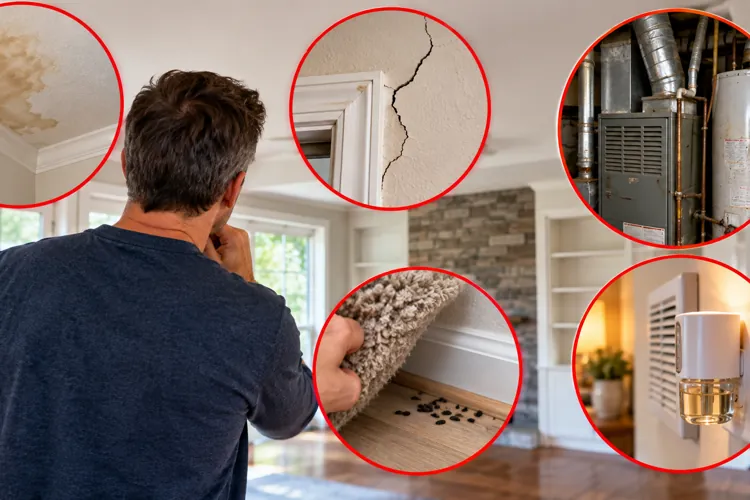

Look beyond the staging: Fresh paint, candles, and air fresheners can make a house look and smell great — but they can also make problems harder to notice.
Some warning signs are surprisingly easy to spot: Water stains, certain cracks, aging equipment. and pest evidence deserve a closer look.
Spotting a red flag doesn't mean you should walk away: Take a photo, ask questions, and make sure your home inspector investigates it before you buy.
It's easy to fall for a house with a beautiful kitchen, freshly painted walls, and perfectly staged furniture.
But while you're imagining where the couch will go, you could be walking right past clues that the house may need thousands of dollars in repairs.
A recent Boston.com report asked real estate and home-inspection experts what buyers should watch for during a showing. Their advice is to not just look at the countertops and floor plan, but to look for clues that could point to water, structural, pest, or other expensive problems.
Here are five red flags worth watching for and what to do if you spot one.
1. Water stains — or suspiciously fresh paint
Start by looking up.
Boston.com notes that water stains on ceilings and walls can point to a roof, plumbing, or HVAC leak. But also pay attention to areas that appear to have been recently repainted, particularly if it's just one section of a ceiling.
If you see fresh paint on a ceiling, don’t automatically assume they’re hiding damage. Think of it simply as a reason to ask what was painted and why.
What to do: Take a picture of anything suspicious, ask whether there has been a previous lea, and specifically ask your inspector to investigate the area.
2. Cracks that look different from ordinary settling
A small crack doesn't automatically mean a house has foundation problems.
But home inspector Alex Steinberg told Boston.com that cracks deserve more attention when they're wide — roughly 1/8 to 1/4 inch or more — horizontal, or located around doors and windows.
What to do: Don't try to diagnose a foundation yourself. Photograph concerning cracks and show them to your home inspector, who may recommend evaluation by a structural engineer.
3. A house that smells suspiciously good
A home filled with candles, plug-in air fresheners, or other strong fragrances may simply have a seller trying to create a pleasant showing.
But Boston.com notes that strong fragrances can also make it harder for buyers to notice odors from mold, pets, or other problems.
What to do: Open closets and spend some time in the basement, bathrooms, and other areas away from the staged living spaces. If you notice a musty or unusual odor, ask about it and flag it for your inspector.
4. Major systems that look old
You don't need to know how to inspect a furnace to notice that it looks ancient.
The recommendation here is to pay attention to major systems and components such as the roof, HVAC system, water heater, plumbing, and electrical panel. Just because it might be old, doesn’t mean the equipment is defective, but it could mean you're buying a house that will soon need an expensive replacement.
What to do: Ask the age of the roof, HVAC system, and water heater and request documentation showing when they were installed, repaired, or serviced.
5. Signs you're not the only one living there
Look inside cabinets, underneath sinks, and along basement walls for droppings, gnaw marks, or other evidence of rodents or insects.
Boston.com's experts also recommend checking wood for signs of termite damage and paying attention to areas where pests could be getting into the house.
What to do: If you see evidence of pests, photograph it and ask that it be specifically investigated before you buy.
A red flag isn't necessarily a deal breaker
The point isn't to conduct your own home inspection. It's to notice potential problems before you become emotionally committed to the house.
If something looks wrong during a showing, photograph it, ask the seller or agent about it, and request documentation for previous repairs. Then give your questions and photos to your home inspector.
A beautiful house can still come with an ugly repair bill.
So, during that first walkthrough, don't just ask yourself whether you love the house. Start figuring out what the house could cost you after you own it.