2018 Net Neutrality

Article Image

Net neutrality battle to move to the courts in 2019

Not enough votes were gathered in the House of Representatives by the end of the year to use the “legal loophole” that would make it possible to undo the Federal Communication Commission’s decision to repeal net neutrality rules, so the legal battle is headed to the court of appeals.

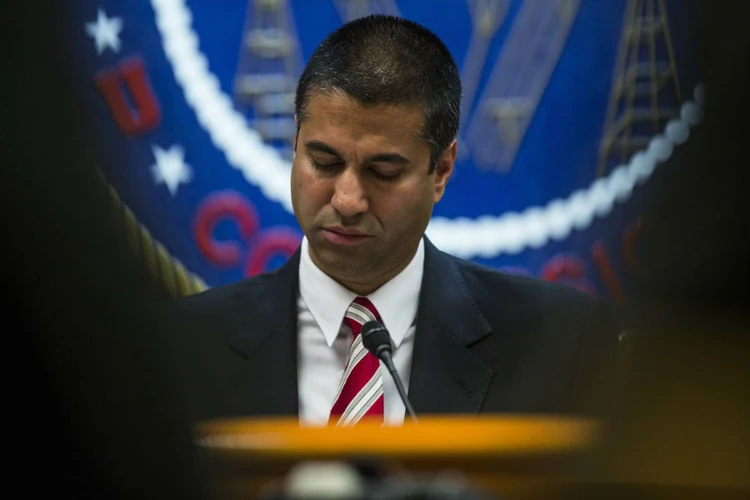
The FCC, led by Republican chairman Ajit Pai, voted in December 2017 to roll back the Obama-era rules that would require all internet traffic to be treated the same. The rules were officially repealed in June of this year.

Since then, lawmakers in several states, including California, have voted to reinstate net neutrality protections at a state level. However, the Justice Department filed a lawsuit against the state of California in September charging that the state’s new net neutrality rules law place “unlawful burdens” on the federal government's efforts to deregulate the internet.

Moving to appeals court

Now, CNET reports that Democrats were unable to garner enough votes to use the Congressional Review Act as a way to undo the FCC's decision to wipe net neutrality rules from the books.

“Attorneys general from 22 states, along with several activist groups and tech companies like Mozilla, have filed suit, accusing the FCC of arbitrarily rolling back the rules and overstepping its authority to ban states from passing their own protections,” CNET reports.

“The heated legal battle could eventually end up at the Supreme Court, where all eyes will be on the newly appointed Justice Brett Kavanaugh, who questioned the FCC's authority to adopt the original net neutrality protections,” according to the tech website.

Matt Schettenhelm, a legal analyst with Bloomberg Intelligence, said he expects the next phase of the legal battle over net neutrality to “be mostly about waiting for litigation." Oral arguments are scheduled to begin on February 1 at the Federal Court of Appeals for the DC Circuit.

Article Image

Feds launch investigation into fake net neutrality comments

The Justice Department has launched an investigation into the fake comments that were submitted to the Federal Communications Commission (FCC) in the runup to the agency’s controversial net neutrality vote.  

The Justice Department is looking into whether the fraudulent comments, which potentially number in the millions, constitute a crime based on the fact that millions of people’s identities were posted on the FCC’s website without their permission.

BuzzFeed News reported over the weekend that two organizations that had previously received subpoenas regarding a separate New York attorney general’s office investigation confirmed that they had received new subpoenas from the FBI.

“The reports are the first that federal investigators are taking in interest in the case, which was already subject to an investigation previously announced by the New York Attorney General’s office,” BuzzFeed reported. “Both organizations had previously been subpoenaed by New York and said the scope of those subpoenas were similar.”

Fake net neutrality comments

Over 22 million comments were filed to the FCC’s digital comment system ahead of its vote to ultimately roll back Obama-era net neutrality rules. Since then, researchers have analyzed how many of the comments were actually unique and in favor of rolling back the regulations.

A study conducted earlier this year found that 99.7 percent of unique comments (meaning those that weren’t made through campaigns that filed fake comments using the names of real people) were in favor of keeping net neutrality protections.

The FCC maintained for several months that its comment system was the target of a cyberattack, preventing consumers from utilizing the website to voice their opinion on the proposed net neutrality decision. Chairman Ajit Pai later admitted that the so-called cyberattack never took place.

Pai said recently that about 500,000 of the comments were linked to Russian email addresses. However, he has refused to release the data logs because he says the information must be kept private in order to help prevent cyber attacks.

Releasing the data logs would also violate the privacy interests of Americans who commented on the net neutrality repeal, he said.

Commissioner Jessica Rosenworcel, the agency’s only Democratic chairperson, argued that the regulator is trying to "hide" behind Freedom of Information Act exemptions.

Article Image

About half of U.S. consumers lack access to broadband

Although the Federal Communications Commission (FCC) has said it’s working on closing the digital divide, new research finds that almost half of the U.S. population doesn’t use broadband service.

Researchers from Microsoft determined that 162.8 million people don't use broadband service. Of that figure, 19 million live in rural areas. The new findings were delivered on Tuesday at a company event by Microsoft’s President Brad Smith.

Previous estimates by the FCC put the figure of U.S. consumers lacking access to broadband internet at about 24.7 million. The new findings show that the disparities in internet access are most dramatic between rural and urban areas.

Expanding access

Microsoft says it’s aiming to shrink the digital divide by expanding its Rural Airband Initiative. The company hopes to reach 3 million people by July 4, 2022, which is more than the 2 million goal it announced in 2017.

"Without a proper broadband connection, these communities can’t start or run a modern business, access telemedicine, take an online class, digitally transform their farm, or research a school project online," Smith wrote in a blog post.

He cited numbers from the U.S. Bureau of Labor Statistics showing that the highest unemployment rates are often found in regions with the lowest broadband availability.

“By this time next year, we will expand our Airband Initiative to reach 25 states,” Smith said. “In these states we will both pursue Airband infrastructure projects and expand the work we are doing to offer skills training in rural communities. We will also continue to advocate for public policies to accelerate the investment in TV white spaces technologies that are needed.”

Microsoft is also pushing for larger broadband subsidies from the FCC and Department of Agriculture.

Underestimating availability

Some advocates and policymakers say the FCC overestimates how many consumers have access to broadband, partially due to the fact that the agency relies on surveys that don’t paint a complete picture of broadband availability.

Microsoft said its recent research provides a more accurate representation of broadband use, which Smith said indicates that “the problem is bigger than we thought it was.”

Article Image

FCC Chairman says there was Russian interference in net neutrality comments

Federal Communications Commission (FCC) Chairman Ajit Pai said it’s a “fact” that there was Russian interference in the public comments filed ahead of the net neutrality decision last year. Pai said a “half-million comments” were submitted from Russian email addresses.

Pai’s claims, made via a memorandum this week, were issued in response to a lawsuit brought by the New York Times. A few weeks ago, the Times requested access to the IP addresses and server logs of those who submitted comments during the agency’s net neutrality docket.

In obtaining the records, the newspaper said it hoped to “shed light to the extent to which Russian nationals and agents of the Russian government have interfered with the agency notice-and-comment process about a topic of extensive public interest.”

Withholding server logs

During the time the FCC was seeking public comments ahead of the controversial vote to roll back net neutrality rules, the agency reportedly received more than 23 million comments. In October, a study found that 99.7 percent of unique comments filed on the FCC’s website ahead of the vote were in favor of keeping net neutrality protections.

Pai said this week that the FCC chose not to release the records because the information must be kept private in order to help prevent cyber attacks. Releasing the data logs would also violate the privacy interests of Americans who commented on the net neutrality repeal, he said.

The same memorandum also included a statement of a different tone from Jessica Rosenworcel, the Commission’s only Democrat, who said, “something here is rotten— and it’s time for the FCC to come clean.”

Earlier this year, Rosenworcel said in an op-ed for the Washington Post that the agency “logged about half a million comments sent from Russian email addresses. It received nearly 8 million comments from email domains associated with FakeMailGenerator.com with almost identical wording.”

The Commission’s decision not to release the data logs comes a few months after the agency admitted that it lied about a so-called cyberattack on its comment system ahead of its ultimate repeal of net neutrality rules in December of 2017.

Prior to the admission, the agency had told the media on numerous occasions that the comment system had been targeted by hackers, preventing consumers from voicing their opinion on the vote.

“We look forward to challenging in court the FCC’s refusal to provide this information, which the public is entitled to have,” a spokesperson for the New York Times told Gizmodo.

Article Image

AT&T CEO calls for net neutrality legislation

AT&T chairman and CEO Randall Stephenson has called on a politically-divided Congress to pass legislation supporting net neutrality, arguing that certain basic principles should be made into law to protect consumers.

“I get fatigued every time the President changes, the head of the FCC changes, and regulations swing from left to right,” Stephenson said Monday at The Wall Street Journal D.Live conference in Laguna Beach, California.

"I'd love to see legislation, not regulation,” he said, noting that companies should not be able to block certain types of content or throttle users. Stephenson said consumers should also be able to connect any device to the internet without interference and know how their data is being used.

Restoring net neutrality

The FCC’s Obama-era net neutrality rules required all internet traffic to be treated the same. Under the Trump Administration, the agency rolled back those regulations.

In September, California’s Senate voted to restore the 2015 open-Internet rules. The following month, the Justice Department sued the state seeking to prevent the law from taking effect, saying states can’t regulate the internet.

Stephenson joked that Congress actually implementing his proposed net neutrality legislation would be a long shot, as the lawmakers “can’t agree on the freezing temperature of water.” Still, he argued that there should be "legislation around customer data protection."

"We've got a mess coming at us, literally states independently going out and designing their own privacy regulation," Stephenson said. "How do you do business in a world where you have 50 different regulations and rules around privacy?"

“What would be at total disaster for the innovation we see in Silicon Valley is to pick our head up and have 50 different sets of rules across the U.S.,” Stephenson said.

Article Image

Supreme Court declines to consider challenge to decision upholding net neutrality rules

The Supreme Court decided on Monday that it will not consider a series of challenges from telecom companies to Obama-era net neutrality rules designed to bar internet service providers from manipulating loading speeds for specific websites or apps.

The ruling is significant because it allows a previous ruling upholding the constitutionality of the regulations to stand, which may be used as a precedent in the future by another administration.

For proponents of net neutrality, Monday’s Supreme Court decision represents a victory. It means that the D.C. Circuit court’s 2016 decision to uphold “both the FCC's classification of broadband as a telecommunications service, and its rules prohibiting broadband providers from blocking or degrading Internet content, remains in place," senior counsel John Bergmayer of consumer advocacy group Public Knowledge said.

"Much of the current FCC’s argument [against net neutrality] depends on ignoring or contradicting the DC Circuit’s earlier findings, but now that these are firmly established as binding law, the Pai FCC’s case is on even weaker ground than before," Bergmayer said.

Two justices recused themselves

Two conservative justices -- Chief Justice John Roberts and Justice Brett Kavanaugh -- "took no part in the consideration or decision of these petitions," the court announced.

Amy Howe of SCOTUSBlog explained that Kavanaugh was “expected to recuse himself from voting on the petitions because he had participated in the cases while on the D.C. Circuit, and he did. But Chief Justice John Roberts also recused himself – presumably (although there is no way to know for sure) because he owns stock in one of the companies challenging the rules."

By a 4-3 ruling, the Supreme Court denied petitions brought by AT&T and broadband lobby groups NCTA, CTIA, USTelecom, and the American Cable Association.

The Trump administration overturned net neutrality regulations last year. They have not been in effect since June.

Jessica Rosenworcel, the Federal Communication Commission’s only Democratic Commissioner, noted that the FCC had argued that because the Trump-era FCC had repealed the 2015 rules, the 2016 decision was moot and should be wiped from the books.

“It wasn't enough for this @FCC to roll back #NetNeutrality. It actually petitioned the Supreme Court to erase history and wipe out an earlier court decision upholding open internet policies. But today the Supreme Court refused to do so,” Rosenworcel tweeted.

“Let's call this interesting,” she added.

Article Image

California net neutrality law put on hold

The January 1, 2019 start date for California's net neutrality law has been put on hold. The state has agreed to delay its implementation until a lawsuit against the Federal Communications Commission (FCC) is settled.

The law, passed by the California legislature in September, requires internet service providers (ISP) to abide by rules codified by the FCC during the Obama administration. Those rules required all internet traffic to be treated the same.

The FCC under the Trump administration overturned those rules last December, essentially allowing providers to favor their own content over the content of their competitors. California and a handful of other states took steps to restore net neutrality within their borders, meaning large ISPs like Comcast and Verizon would have to observe net neutrality or lose their customers in those states.

Multiple lawsuits

The whole issue has resulted in multiple lawsuits. The Justice Department is suing to block states from implementing their own net neutrality laws, arguing states lack the authority to countermand federal policy.

But the lawsuit delaying California's net neutrality law is one filed by net neutrality supporters. Technology companies and attorneys general from 22 states are suing the FCC, arguing the agency lacked the authority when it voted to overturn net neutrality.

The crux of their argument is this: internet traffic travels over a "common carrier," and under law, a common carrier must treat all traffic the same. The FCC counters that, today, broadband traffic travels over networks built by the ISPs. It is an argument that has largely broken down along partisan lines, with Democrats favoring net neutrality and Republicans opposing it.

No firm timetable

The lawsuit challenging the FCC is now in the U.S. Court of Appeals in Washington, DC but there is no firm timetable for rendering a decision. A ruling against the FCC would eliminate the need for the California law but the Trump administration could always appeal to the U.S. Supreme Court, delaying the law even more.

California Attorney General Xavier Becerra says every step his office is taking has one aim -- the restoration of net neutrality in California.

California state Senator Scott Wiener, who authored the legislation, expresses confidence the court will uphold the state's right to establish net neutrality within its borders, calling the policy vital to protecting access to the internet.

Article Image

New York steps up probe into net neutrality comments

New York Attorney General Barbara Underwood is expanding her investigation into reports that many of the Federal Communications Commission (FCC) net neutrality comments – both for and against – were fake.

The investigation was begun by former New York Attorney General Eric Schneiderman, who charged last December that as many as 2 million comments sent to the FCC on the topic were not from individual consumers, but produced in mass by interest groups.

At the time, Schneiderman said his investigators had found New York, Florida, Texas, and California had each produced more than 100,000 comments purporting to be from real Americans. Since then, the number of allegedly faked comments has skyrocketed.

This week, Underwood's office sent out subpoenas to nearly a dozen industry and advocacy groups seeking any information they might have about the estimated 22 million letters that hit the FCC's inbox, arguing either for against net neutrality.

The FCC voted in mid-December to roll back the net neutrality policy, put in place by the Obama administration in 2015.

Red flags

The New York investigation determined that many of the net neutrality comments used temporary or duplicate email addresses, an easy red flag to spot. It was also highly suspicious, investigators say, that the text of many of the messages was identical.

Earlier this month, researchers at Stanford University analyzed all of the comments submitted to the FCC regarding net neutrality and identified 800,000 that were genuine. Of those, the researchers said more than 99 percent advocated keeping the policy in place.

Congressional Democrats have also pushed for investigations into the large number of comments submitted to the FCC and whether any of them actually mattered. Earlier this year 24 Democrats on the House Energy and Commerce Committee sent a letter to FCC Chairman Ajit Pai asking questions about how the agency dealt with the comments.

Partisan issue

Perhaps no issue divides Republicans and Democrats as much as net neutrality. Democrats support the principle the principle that the internet is a "common carrier" and cannot discriminate against content by favoring one type over another through price or speed.

Though net neutrality was only adopted as a regulation in 2015, they say the standard had been followed from the beginning, since early internet traffic traveled over telephone lines.

Republicans generally counter that internet traffic today travels over broadband networks created by telecommunications companies that are not public utilities.

The issue comes to a head in less than three months when California's net neutrality law is scheduled to take effect. The Trump administration is challenging it in court, arguing that it would cause “irreparable harm” to the U.S. if it were allowed to stand.

Article Image

Stanford researchers say vast majority of FCC comments favored net neutrality

A new report from Stanford University has found that, after weeding out millions of fake comments, 99.7 percent of unique comments filed on the FCC’s website ahead of the agency’s vote against it in December 2017 were in favor of keeping net neutrality protections.

Some of the fake comments left amongst the 22 million public comments filed in total were made through “sophisticated campaigns that filed fake comments using the names of real people -- including journalists, Senators, and dead people,” Ryan Singel, a Media and Strategy Fellow at Stanford Law School’s Center for Internet and Society, wrote in a blog post Monday.

“With the fog of fraud and spam lifted from the comment corpus, lawmakers and their staff, journalists, interested citizens and policymakers can use these reports to better understand what Americans actually said about the repeal of net neutrality protections and why 800,000 Americans went further than just signing a petition for a redress of grievances by actually putting their concerns in their own words,” Singel said.

Phony comments

The report noted that not all non-unique comments filed via organized campaigns were fake, since many commenters used form letters to voice their support for net neutrality. However, Singel and his colleagues said, “due to the large amount of noise created by fake comments, it remains very difficult to locate the real signals in the non-unique comments.”

For the analysis, the researchers used machine learning models to identify more than 800,000 unique comments filed from April 2017 to October 27. A closer look at these comments showed that these commenters were overwhelmingly against rolling back net neutrality protections.

The report authors found that 99.7 percent of the sampled comments supported keeping the protections of the 2015 Open Internet Order.

In terms of political leanings, the report found that “while there were more comments on average from House districts represented by Democrats, a substantial number of unique comments were filed in Republican districts.” The average number of comments in all districts was 1,489, with an average of 1,202 in Republican-held districts

The report authors also found that unique commenters had a clear understanding of the issue in question, contrary to assertions from lawmakers. Many commenters referenced the issue of whether the FCC classifies broadband providers under Title I or Title II of the Communications Act.

The report follows an admission from the FCC that it lied about a DDoS attack that temporarily took down its comment section in the lead-up to the historic decision, which prevented some consumers from expressing their support of net neutrality regulations.

A judge recently ruled that the FCC must publicly release records related to the fake comments.

Article Image

Broadband groups sue California over net neutrality

Lobbying organizations for the telecommunications industry and cable TV have joined forces to sue California over its newly enacted net neutrality law.

The suit follows similar litigation filed by the U.S. Justice Department this week, charging the law runs counter to federal policy. The industry suit filed in the Eastern District of California makes the same argument.

The Federal Communications Commission (FCC) reversed an Obama administration policy that required all internet traffic to be treated the same. That meant internet service providers (ISP) could not charge more for websites that used more bandwidth or couldn't favor one company's content over another.

Under the new federal policy, ISPs are free to impose additional charges on high bandwidth traffic or eliminate data charges when customers view its content. California lawmakers responded by passing a law requiring ISPs serving California consumers to abide by the previous net neutrality rules.

Joining forces with the feds

USTelecom, CTIA, NCTA, and ACA -- the industry lobbying groups -- have joined the U.S. government is seeking to block the California law from going into effect January 1.

“The nation’s broadband providers are the innovation engine of America’s digital economy and remain committed to an open internet for consumers," the groups said in a statement. "We oppose California’s action to regulate internet access because it threatens to negatively affect services for millions of consumers and harm new investment and economic growth."

The suit makes the same argument as the government litigation. It says Republican and Democratic administrations have embraced the notion that when states make rules that are the opposite of a federal law, they are preempted by federal law.

Exceptions

There are exceptions, however. Several states have legalized the possession and use of marijuana, which is still prohibited under federal law. These state laws have not been challenged in court.

Both the government and industry suits challenge the California law, saying it would be too complicated to offer internet service if providers have to follow different rules in different states.

Until the early 2000s, the principle of net neutrality prevailed because internet service was provided over telephone lines. Telecom services were determined to be common carriers, who are required to treat all customers the same.

Once broadband emerged and internet traffic began to move over cable, fiber, and airwaves, ISPs argued the old rules no longer applied. In 2015, the FCC formally declared that the internet was a public utility, requiring equal treatment of all traffic. The FCC reversed that policy in December 2017.

Article Image

Feds sue California over net neutrality law

The Justice Department has filed a lawsuit against the state of California, charging that its newly enacted net neutrality law places “unlawful burdens” on the federal government's efforts to deregulate the internet.

The suit was filed within hours of California Gov. Jerry Brown signing the net neutrality bill into law.

California’s net neutrality law cleared both houses of the legislature by wide margins. The law reimposes the standard enacted by the Federal Communications Commission (FCC) under the Obama administration in 2015. It requires all internet service providers to treat all internet traffic the same.

For example, under the previous national policy, overturned by the Trump administration last December, networks could not charge more to companies offering video streaming services. They also could not slow down a service like Netflix while providing faster speeds to their own streaming services.

California State Senator Scott Wiener spearheaded the drive to reimpose net neutrality in the state and said the final product constituted “the strongest net neutrality standards in the nation."

The Justice Department suit takes a different view, saying the California law attempts to regulate the internet, which is now contrary to federal law.

FCC supports the suit

“I’m pleased the Department of Justice has filed this suit,” said FCC Chairman Ajit Pai, who led FCC efforts to overturn the federal net neutrality policy. “The Internet is inherently an interstate information service. As such, only the federal government can set policy in this area. And the U.S. Court of Appeals for the Eighth Circuit recently reaffirmed that state regulation of information services is preempted by federal law.”

Pai makes the claim that net neutrality, as envisioned by the California law, hurts consumers. He says that under the law, large ISPs like Verizon and AT&T would be prohibited from offering some free data plans he says allow consumers to stream video and music, exempt from any data limits.

“They have proven enormously popular in the marketplace, especially among lower-income Americans,” Pai said. “But notwithstanding the consumer benefits, this state law bans them.”

But supporters of net neutrality argue they are the ones defending a free and open internet. Without it, they say corporations will decide what you can see online and how fast you can see it.

The argument probably won't be settled anytime soon, and when it is it will probably be the Supreme Court that settles it.

Article Image

FCC Commissioner Ajit Pai says California's net neutrality proposal endangers U.S. consumers

At the beginning of this month, California’s Senate passed SB 822 -- a net neutrality bill that state senators have deemed the “gold standard” of state-level protections. Governor Jerry Brown has until the end of this month to sign the bill into law.

In the interim, Federal Communications Commission (FCC) Chairman Ajit Pai called the state’s new policy “illegal” and said it “poses a risk to the rest of the country.”

However, California Senator and author of the net neutrality bill Scott Wiener said that the new initiatives are “necessary and legal because Chairman Pai abdicated his responsibility to ensure an open internet,” according to a press release.

“Unlike Pai’s FCC, California isn’t run by the big telecom companies,” Wiener added. “Pai can take whatever potshots at California he wants. The reality is that California is the world’s innovation capital, and like the crony capitalism promoted by the Trump administration, California understands exactly what it takes to foster an open innovation economy with a level playing field.”

What the bill does

Under SB 822, internet service providers (ISPs) are prohibited from blocking or throttling lawful traffic. It also doesn’t allow websites to be charged for access to an ISP’s subscribers or for fast lanes to those subscribers.

The bill also prevents companies like AT&T (which is an ISP and a content provider) from not counting the content and the websites they own against subscribers’ data caps. Moreover, the proposed bill bans ISPs from getting around these protections at the point where data enters their networks and then charging access fees to reach ISP customers.

To Pai, the bill is allowing “government control of the internet.” He went on to call California’s bill “a radical, anti-consumer internet regulation bill that would impose restrictions even more burdensome than those adopted by the FCC in 2015.”

Pai said under SB 822, Californians will be prevented from “buying many free-data plans” that “allow consumers to stream video, music, and the like exempt from any data limits.”

However, Senator Wiener sees it differently. He believes the law would ensure “that we as individuals get to decide where we go on the internet, rather than having internet service providers decide for us.”

He added that “big telecom companies and cable companies can’t force us to get our information only from favored websites.”

Wiener also mentioned Pai’s failure to address Verizon’s recent throttling of Santa Clara County firefighters’ wireless network during the fires in California. The firefighters were unable to provide emergency services because Verizon throttled the network until the fire department agreed to upgrade to a more expensive plan.

Wiener said that Pai's lack of action on the matter speaks volumes and stymies his criticims of California's proposed rules.

Article Image

California’s Senate passes net neutrality bill

On Friday, California's Senate approved the “gold standard” of state-level net neutrality protections. The measure, called SB 822, passed by a 27-12 vote after having been passed Thursday by the State Assembly by a similarly large margin.

"We passed the strongest net neutrality standards in the nation," San Francisco Democrat Scott Wiener, who co-wrote the bill, said in a statement.

Gov. Jerry Brown, a Democrat, has until the end of September to sign the bill. If enacted, California would become the fourth state to create a net neutrality law since the FCC scrapped net neutrality regulations last year. The bill in California is widely considered to equip consumers with the most stringent protections.

"This is about a level playing field and an Internet where we as individuals get to decide where we go on the Internet instead of being told by Internet service providers, or manipulated by Internet service providers, into going where they want us to go," Wiener said.

What the bill does

The bill prohibits internet service providers (ISPs) from blocking or throttling lawful traffic. It also bars the practice of charging websites for access to an ISP’s subscribers or for fast lanes to those subscribers.

SB 822 also prevents ISPs from getting around these protections at the point where data enters their networks and from charging access fees to reach ISP customers. Additionally, the bill prevents companies like AT&T (which is both an ISP and a content provider) from not counting the content and websites they own against subscribers’ data caps.

“When Donald Trump’s F.C.C. decided to take a wrecking ball to net neutrality protections, we knew that California had to step in to ensure our residents have access to a free and open internet,” Wiener said in a statement.

The Electronic Frontier Foundation, an advocacy group that supports online privacy, called the bill’s advancement "a victory that can be replicated." Weiner expressed similar sentiments, noting that he hopes California’s potential new net neutrality rules can be rolled out at a national level.

Article Image

Robocall campaign aims to derail California's net neutrality efforts

California is considering regulations to impose its own version of net neutrality, but a robocall campaign is underway to negate that effort.

Supporters of California's proposed net neutrality rules report instances of senior citizens receiving robocalls claiming the state's proposal to enact its own net neutrality rules will result in higher mobile phone bills and slower internet speeds.

According to consumer groups in the state and net neutrality supporters in the legislature, the robocalls offer no evidence that net neutrality will have any kind of negative impact on consumers. They say the state's proposed regulations mirror the national regulations that were on the books until the Federal Communications Commission (FCC) rolled them back in December.

'Misinformation campaign'

“We’re now dealing with a straight-up misinformation campaign on our #NetNeutrality bill, #SB822: industry robo-calls to seniors falsely telling them that protecting net neutrality will increase their phone bills by $30,” State Senator Scott Wiener said in a tweet. “Scaring seniors with lies about their financial security? Gross.”

The consumer groups say the robocalls being made to California seniors are coming from a group called the Civil Justice Association of California and the Congress of California Seniors. The whole project, consumer groups charge, is being bankrolled by AT&T and Verizon.

However, both AT&T and Verizon deny any connection to efforts to block California's efforts to impose net neutrality rules and both say they have nothing to do with the phone calls California seniors are receiving.

Status of the bill

After initially gutting many of the protections in California's net neutrality bill, a key legislative committee restored provisions of the measure to require internet service providers to treat all internet traffic the same.

Wiener, the author of the legislation, ultimately reached an agreement with Communications Committee Chairman Miguel Santiago to restore the bill to its stronger form and bring it back for a vote. The bill cleared the committee with all key protections intact.

Though it won committee approval, the measure to restore net neutrality in California has yet to be brought up for a floor vote. Sponsors say they think they are close to a vote and expect strong opposition from large telecom and cable companies.

Article Image

California’s net neutrality bill is moving ahead to the Assembly

On Wednesday, a California state net neutrality bill that would provide the toughest set of net neutrality protections in the nation was approved by a key legislative committee.

SB 822 was approved 9-3 by the state Assembly’s Communications and Conveyance Committee, with all nine votes in favor of the bill coming from Democrats. Next week, the bill will advance to the Assembly floor for a final vote.

The bill was passed by the state Senate in May. Then in June, it was gutted by the same committee that voted to pass it on Wednesday under pressure from broadband providers like AT&T.

The bill’s author, Sen. Scott Wiener (D-San Francisco), ultimately reached an agreement with Communications Committee Chairman Miguel Santiago (D-Los Angeles) to restore the bill to its stronger form and bring it back for a vote. The bill was approved with “all key protections intact,” Wiener said in a statement.

"Today's committee action sending SB 822 to the floor is a big step forward, but we continue to face a huge fight, as the big telecom and cable companies will stop at nothing to kill the bill," Wiener said.

"Yet, we have momentum and the support of a broad and diverse coalition that understands the importance of a free and open internet for everyone. I look forward to working with our supporters and everyday Californians to get this vital piece of legislation to the governor's desk."

“Gold standard” for state-level net neutrality protections

SB 822 prohibits internet service providers (ISPs) from blocking or throttling lawful traffic. It also bars the practice of charging websites for access to an ISP’s subscribers or for fast lanes to those subscribers.

Additionally, the bill prevents ISPs from getting around these protections at the point where data enters their networks and from charging access fees to reach ISP customers. The bill also prevents companies like AT&T (which is both an ISP and a content provider) from not counting the content and websites they own against subscribers’ data caps.

Opponents of the bill include AT&T, Verizon, Comcast, chambers of commerce, and others. Its supporters include former FCC Chairman Tom Wheeler, California State Attorney General Xavier Becerra, advocacy groups, and others.

Article Image

Twenty-two states ask appeals court to reinstate net neutrality rules

Late last night, 22 state attorneys general filed a brief asking the appeals court to reinstate the net neutrality rules that were founded under the Obama administration. President Trump’s administration has effectively worked to overturn those regulations, and the group is trying to prevent individual states from creating their own regulations.

The attorneys general argued that the decision made in January by the Federal Communications Commission (FCC) was not well thought out and will eventually “cause [inevitable harms] to consumers, public safety, and existing regulatory schemes.” The senders also assert that the commission “entirely ignored many of these issues” when the decision was made.

The group is primarily concerned about consumers’ public safety, as it is one of the agency’s main tenets.

Additionally, the attorneys general wrote that the FCC deliberately disregarded clear evidence that proved internet providers aren’t as honest as they claim to be when consumers are concerned. Despite “substantial record evidence showing that [broadband] providers have abused...and will abuse their gatekeeper roles in ways that harm consumers and threaten public safety,” the FCC accepted industry promises.

Abdicating responsibility to consumers

The brief was led by New York Attorney General Barbara Underwood, who was joined by attorneys general from California, Connecticut, Delaware, Hawaii, Illinois, Iowa, Kentucky, Maine, Maryland, Massachusetts, Minnesota, Mississippi, New Jersey, New Mexico, North Carolina, Oregon, Pennsylvania, Rhode Island, Vermont, Virginia, Washington, and the District of Columbia.

The regulators’ arguments supplement an ongoing lawsuit against the FCC, and they are joined by several other groups including: Mozilla, Vimeo, Etsy, Free Press, and the National Hispanic Media Coalition, among others. These groups filed a separate brief last night, in which they called the FCC’s actions “a wholesale abdication of its statutory responsibilities.”

With the lawsuit, the states are hoping to overturn the 2017 decision by ruling it “arbitrary and capricious.” Doing so would indicate that the FCC didn’t consider the full extent of consequences this decision would have. Federal agencies are given clearance to make decisions -- so long as they are within legal authority -- but the agencies must be able to justify all such decisions. With regards to net neutrality, the FCC must prove the decision to eliminate the regulations was done properly.

Push to reinstate net neutrality

The main goal of the lawsuit is to reinstate net neutrality. However, should the courts not grant that request, the states are looking to instate their own net neutrality regulations and have the court do away with part of the FCC’s order that bans states from having their own rules.

Despite members of Congress, state officials, tech companies, and advocacy groups fighting to keep net neutrality, it was officially overturned in June. Though the Senate voted in May to keep net neutrality, the vote was mostly symbolic and the final decision had to be voted through the Republican majority House of Representatives.

Article Image

FCC chief tells Congress he knew DDoS claim was false

The somewhat strange claim that the Federal Communications Commission (FCC) was hit by a denial of service attack (DDoS), when it really wasn't, just got a little more strange.

FCC Chairman Ajit Pai says he knew the claim was false for more than six months, but was unable to speak out because an internal investigation was underway.

Originally, the FCC cited the alleged DDoS attack as the reason that many comments filed in relation to the FCC's rollback of net neutrality rules could not be recorded.

But last week the FCC Inspector General issued an extraordinary report finding that the agency lied about the attack that temporarily prevented net neutrality supporters from filing comments opposing Pai's plan to kill net neutrality rules.

The report concluded that the false claims were made primarily by former chief information officer David Bray, and Bray's false statements were sent to Congress in attachments to letters that Pai wrote to lawmakers.

Why he had to stay silent

At a Senate hearing this week, Pai told lawmakers he wanted to set the record straight, but couldn't.

"On January 23 of 2018, I was informed by my chief of staff, who had been informed by the Office of Inspector General, that they had suspicions that the former chief information officer's statements to us and to Congress were inaccurate," Pai told the committee. "The OIG then requested, because they had referred this matter for potential criminal prosecution to the Department of Justice, 'do not say anything to anyone.'"

Pai said the OIG's report cleared him of any wrongdoing because it found that the FCC's false statements were made by the CIO rather than by his office. Pai told the committee that he wanted to tell Congress earlier but was prevented in doing so by the OIG's request for secrecy.

The FCC rolled back the Obama-era net neutrality rules in December, though a few states have taken steps to enact their own internet protections.

Article Image

Lawmakers want to know when Ajit Pai knew FCC’s cyberattack claim was false

A group of House democrats want to know when FCC Chairman Ajit Pai knew that the agency’s claims of a DDoS attack were false.

Last week, the FCC’s Office of Inspector General released a report that found no evidence to support the claims of DDoS attacks in May of 2017.

The agency had previously blamed multiple DDoS attacks for temporarily taking down a comment section of its website following a segment of Last Week Tonight, in which comedian John Oliver asked viewers to submit comments to the FCC and speak out in support of net neutrality.

However, viewers were unable to voice their opinion on the proposed rollback of net neutrality because the comment submission section wasn’t available at the time.

Now that it has come to light that the agency’s claims of a DDoS attack were false, a handful of Democratic lawmakers want to know when Pai became aware that there was no DDoS attack and why the agency didn’t correct its public statements alleging a DDoS attack before now.

Misrepresented facts

“We want to know when you and your staff first learned that the information the Commission shared about the alleged cyberattack was false,” Democratic lawmakers wrote in a letter to Pai.

"It is troubling that you allowed the public myth created by the FCC to persist and your misrepresentations to remain uncorrected for over a year,” they wrote. The letter was signed by Representatives Frank Pallone Jr. (NJ), Mike Doyle (PA), Jerry McNerney (CA) and Debbie Dingell (MI).

The results of the investigation concluded that FCC officials deliberately misrepresented facts in responses to Congressional inquiries.

"Given the significant media, public and Congressional attention this alleged cyberattack received for over a year, it is hard to believe that the release of the IG's report was the first time that you and your staff realized that no cyberattack occurred," wrote the lawmakers.

"Such ignorance would signify a dereliction of your duty as the head of the FCC, particularly due to the severity of the allegations and the blatant lack of evidence."

The Democratic lawmakers have asked Pai for complete written responses to their questions by August 28. Pai is also scheduled to appear before a Senate Commerce, Science and Transportation Committee oversight hearing on Thursday where he is expected to face questions about the results of the investigation.

Article Image

FCC admits it lied about DDoS attack that took down comment section

The Federal Communications Commission (FCC) has admitted that it lied about being the target of a DDoS attack that temporarily took down a comment section of its website, preventing consumers from voicing their opinion on the proposed rollback of net neutrality rules.

On Monday, investigators revealed that there is no evidence to support the claims of DDoS attacks in May of last year. The probe was carried out after lawmakers and journalists pushed the FCC to share evidence of the alleged cyberattacks.

In response to the results of the investigation by the Government Accountability Office, FCC Chairman Ajit Pai released a statement admitting that there was no DDoS attack. In it, Pai blamed the spread of false information on employees hired by the Obama administration.

Pai blames former CIO

Pai contended that because he "inherited... a culture" from "the prior Administration,” he isn’t to blame for the spread of inaccurate information.

“I am deeply disappointed that the FCC's former Chief Information Officer [David Bray], who was hired by the prior Administration and is no longer with the Commission, provided inaccurate information about this incident to me, my office, Congress, and the American people. This is completely unacceptable,” Pai wrote.

“I'm also disappointed that some working under the former CIO apparently either disagreed with the information that he was presenting or had questions about it, yet didn't feel comfortable communicating their concerns to me or my office,” he added.

As ConsumerAffairs previously reported, the FCC has repeatedly faced accusations that it concocted this story of the DDoS attack. The agency had also tried to bolster its narrative by suggesting that this wasn’t the first attack to occur; it said a similar attack had occured in 2014 under former FCC chairman Tom Wheeler.

‘This happened on his watch’

Fight for the Future, a consumer advocacy group focused on digital rights, issued the following statement on Monday in response to Pai’s statement:

“Under Ajit Pai’s leadership, the FCC sabotaged its own public comment process. From ignoring millions of fraudulent comments using stolen names and addresses to outright lies about DDoS attacks that never happened, the agency recklessly abdicated its responsibility to maintain a functional way for the public to be heard,” the group wrote.

“Pai attempts to blame his staff, but this happened on his watch, and he repeatedly obstructed attempts by lawmakers and the press to get answers. The repeal of net neutrality was not only unpopular, it was illegitimate. Congress must act now to pass the CRA resolution to reverse this decision and restore basic protections for Internet freedom.”

Article Image

Republican House member supports restoring net neutrality

The first Republican House member has joined Democrats to support a rollback of the Federal Communications Commission's (FCC) dismantling of net neutrality.

Rep. Mike Coffman (R-Colo.) has said he will support a measure to use the Congressional Review Act to overturn an FCC vote last December to change the policy, formalized in 2015 under the Obama administration.

In an op-ed piece, Coffman notes that the policy of barring internet service providers (ISP) from favoring one type of content over another was a longstanding practice before it was codified as official policy, and that it has Republican roots, from the George W. Bush administration.

“The Republican-controlled FCC unanimously adopted much of FCC Chairman Michael Powell’s 'four Internet freedoms,'” Coffman writes. “These four items broadly supported competition and the freedom of consumers to access all lawful online content.”

Coffman said the FCC under Obama took steps in 2010 and 2015 to “further solidify these net neutrality principles.” The FCC action under the Trump administration, he says, was a complete reversal.

At the same time, the Colorado Republican has introduced legislation that contains many of the net neutrality protections contained in the 2015 FCC regulation.

Lonely voice

At the moment, Coffman may be a lonely voice within his party, as most Republican lawmakers have not supported net neutrality. But among advocacy groups hoping to overturn the FCC's most recent action, Coffman's defection is a hopeful sign.

“The dam is breaking, as it should,” said Faiz Shakir, national political director of the American Civil Liberties Union. “Rep. Coffman’s support to undo FCC Chairman Ajit Pai’s repeal of net neutrality shows that public pressure is continuing to build on this issue and cannot be ignored this November.”

Shakir and others note that net neutrality has been observed from the beginning of the internet. Because internet connections used telephone lines, the same principles regulating telephone companies were applied to the internet.

Common carriers

Because they are deemed “common carriers,” telephone companies are required to treat all traffic the same. The FCC's 2015 regulation essentially classified the internet as a common carrier as well, applying those same restrictions.

Opponents of net neutrality point out that very little internet traffic moves over telephone lines these days and that companies investing in wireless and cable infrastructure should be free to control their networks.

Earlier this year, the Senate approved a Congressional Review Act measure to overturn the FCC's abolition of net neutrality. Even supporters acknowledge the challenges of getting the provision through the House, where Republicans hold a comfortable majority.

Article Image

California lawmakers restore tougher net neutrality provisions

California's tough net neutrality bill, stripped of much of its enforcement powers by a legislative committee, is tough once again.

The bill's author, State Senator Scott Weiner, says the General Assembly's Communications Committee has restored most of the original provisions, which were written to mirror the national policy put in place under the Obama Administration.

The Federal Communications Commission (FCC), under President Trump, began the process of repealing the national policy last December.

“After Donald Trump’s FCC obliterated net neutrality, we stepped in to protect California residents and businesses and to ensure an open internet,” Wiener said. “For months, we have worked with a broad coalition to pass strong and enforceable net neutrality protections. As internet service providers and media companies like AT&T and Time Warner consolidate, net neutrality is more important than ever."

Committee gutted the bill

Net neutrality supporters were outraged two weeks ago when the chairman of a key legislative committee amended the bill. At the time, Weiner said the watered down measure allowed for massive loopholes sought by major telecommunications companies.

For example, the amended bill would have allowed internet service providers (ISP) to charge websites a fee for consumers to access it. The amended bill also allowed ISPs to classify some content as "privileged," meaning it would not count against a consumer's allotted data, while other content would.

Critics were also unhappy that the amended bill would allow ISPs to throttle entire classes of applications. For example, providers could slow all online gaming or all online voice calls.

It prompted Weiner to call the amended version a "fake net neutrality bill." But after working with the chairman of the committee and other key lawmakers, Weiner says everyone has agreed to a version that closely resembles the original bill and reflects the FCC policy under the Obama administration.

States that pass strict net neutrality rules could pose a problem for ISPs and large telecom companies, which will have to abide by different sets of rules in different states.

What the bill does

Weiner said the revised net neutrality bill will prohibit the blocking of websites, the speeding up or slowing down of websites or whole classes of applications such as video, and the practice of charging websites for access to an ISP’s subscribers or for fast lanes to those subscribers.

The bill also bars ISPs from circumventing these protections at the point where data enters their networks, and from charging access fees to reach ISP customers.

It would also prevent companies like AT&T, which is both an ISP and a content provider, from not counting the content and websites they own against subscribers’ data caps.

Weiner said he is confident the revised package of net neutrality measures has the votes needed for passage. The California legislature has until August 31 to vote on it.

Article Image

California lawmakers gut state’s net neutrality bill

A Democratic state lawmaker from California “eviscerated” the text of a bill that would have equipped consumers in the Golden State with the nation’s toughest set of state-level net neutrality protections, according to Sen. Scott Wiener.

Late Tuesday night, Michael Santiago -- an assemblyman from Los Angeles and chair of the Communications and Conveyance committee -- amended bill SB 822 to allow for loopholes that supposedly benefit the telecommunications industry.

Members of California’s Communications and Conveyance Committee forced a vote on the amendments before the hearing on Wednesday officially began. The amendments passed 8 - 2.

"It is, with the amendments, a fake net neutrality bill," said Sen. Scott Wiener from San Francisco, who authored the original bill.

The move comes two weeks after the Federal Communications Commission (FCC) voted to eliminate net neutrality rules. The amendments represent a significant blow to Democratic lawmakers who had hoped that California’s strong net neutrality protections would serve as the “gold standard” to replace the rules that the FCC rolled back.

Loopholes that undermine consumer choice

Santiago’s edits would allow ISPs to charge any website a fee for consumers to be able to access it. The amendments also allow for privileged content, meaning some content would eat up cellular data while others wouldn’t.

Privileged content would likely be created by the network’s parent company. This would mean, for example, that Comcast could make it free for consumers to go to NBC’s website while making them use their data to get news from another site.

The amendments would also allow ISPs to throttle entire classes of applications. For example, providers could throttle all online gaming or all online voice calls.

Financial ties to AT&T

AT&T is Assemblyman Santiago’s fifth-largest campaign donor, according to advocacy group Fight for the Future. However, Santiago maintains that his changes to the bill were not influenced by his financial ties to the telecommunications industry.

“This is the legislative process at work,” Santiago said in a statement. “Any suggestions of actions taken today somehow being otherwise motivated are irresponsible at best and insulting beyond that.”

Despite his claims, Santiago’s amendments have sparked allegations of corruption from critics.

“CA - All it took was $29K to buy #NetNeutrality protections away from you,” tweeted Reddit co-founder Alexis Ohanian.

“The weakening of California’s #NetNeutrality bill shows what the forces we are facing are capable of. Every state deserves gold standard rules. That’s why the House of Reps should pass my CRA resolution immediately to reinstate net neutrality nationally,” said Senator Ed Markey (D - Mass.).

Article Image

FCC officially repeals net neutrality rules

Net neutrality rules established under the Obama era were officially repealed today following a vote last month by the Republican-led Federal Communications Commission (FCC). The decision comes despite efforts by members of Congress, state officials, tech companies, and advocacy groups who have fought to reverse the agency’s decision for months.

Net neutrality was designed to prevent internet providers from blocking, speeding up, or slowing down access to specific online services. To do away with it, the FCC’s order had to be approved by the Office of Budget and Management.

Upon receiving the order last month, FCC Chairman Ajit Pai noted that removing net neutrality would be the end of burdensome internet regulations.

“Now, on June 11, these unnecessary and harmful internet regulations will be repealed and the bipartisan, light-touch approach that served the online world well for nearly 20 years will be restored,” Pai said in a statement at the time.

“June 11 is significant because it will be the first time in the over 15 year battle over net neutrality that the FCC will have essentially no role in preserving an open internet and overseeing the broadband market,” said Gigi Sohn, a counselor to former FCC chairman Tom Wheeler. “Those ‘fast lanes’ will put those who won’t or cannot pay in the slow lane, making the internet a lot like cable TV.”

Legislators fight back

Despite the decision on net neutrality, government officials are continuing the fight in hopes of repealing the decision.

Last month, the Senate voted 52-47 in favor of keeping net neutrality, but the vote was mostly symbolic, as the final decision had to be passed through the Republican majority House of Representatives.

Late last week, Senators were sending letters to House Speaker Paul Ryan in the hopes of pushing him to schedule a vote on the issue. Advocacy groups are calling for “mass online actions” to bring the issue further into the public eye and hopefully pressure Congress to act.

“It’s an uphill fight,” said Chris Lewis, VP of Public Knowledge, a tech advocacy group that has been urging the House to take action.

Individual states have also started taking action against the repeal of net neutrality. More than 20 states have filed lawsuits to stop the repeal, and a number of states have pushed legislation to enforce net neutrality within its borders. The California Senate announced at the end of last month that it is working to enforce stricter net neutrality laws than what federal regulations require.

However, according to the FCC, states don’t have the power to make their own policies.

“It’s patently illegal for the states to make their own internet policy,” said Roslyn Layton, a visiting scholar at the American Enterprise Institute who served on President Trump’s transition team for the FCC.

What to expect moving forward

Though today marks the end of net neutrality as consumers have known it, supporters of the repeal are adamant that the changes won’t come immediately.

“Nothing will change the next day,” said Kevin Werbach, an associate professor of legal studies at Wharton and former FCC advisor. “Companies are not going to take any major action to change their policies until it’s resolved.”

The fate of net neutrality is likely to last throughout the remainder of the year, if not longer based on the push for legislation.

“We’ll see what happens after the [midterm] election,” Lewis said.

Article Image

Senate Democrats urge Paul Ryan to hold net neutrality vote

With net neutrality rules slated to come to an end on Monday, Senate Democrats are urging House Speaker Paul Ryan to schedule a vote on the Congressional Review Act (CRA) that could preserve existing net neutrality rules.

In the letter, all 49 Senate Democrats called on Ryan to allow the House to vote on the bill.

"The rules that this resolution would restore were enacted by the FCC in 2015 to prevent broadband providers from blocking, slowing down, prioritizing, or otherwise unfairly discriminating against Internet traffic that flows across their networks," the letter said.

"Without these protections, broadband providers can decide what content gets through to consumers at what speeds and could use this power to discriminate against their competitors or other content."

Senate voted to save net neutrality

Last month, the Senate voted to overturn the FCC’s net neutrality ruling by a vote of 52 to 47. However, the vote in favor of the CRA was mostly symbolic. Both the House, which is comprised of a Republican majority, and President Donald Trump need to sign off on the CRA in order for it to take effect.

House Democrats will need the support of at least 25 Republicans in order to force a vote and pass the resolution. If passed, President Trump would need to provide final executive approval, which isn’t likely since he has said that he agrees with the FCC’s policy.

Although it may be a long shot, Democrats are still fighting.

"More than 170 representatives have already indicated their support for the same resolution in the House," advocacy group Demand Progress said. "Two hundred and eighteen signatures are needed in order to force the [Congressional Review Act] resolution to the floor, increasingly within reach following the bipartisan vote in the Senate."

Protecting the average consumer

Proponents of net neutrality have called the FCC’s decision “disastrous” for its potential impact on the average consumer and middle-class family.

“The internet should be kept free and open like our highways, accessible and affordable to every American, regardless of ability to pay,” Senator Chuck Schumer (D-NY) said. “The repeal of net neutrality is not only a blow to the average consumer, but it is a blow to public schools, rural Americans, communities of color and small businesses.”

Senate Democrats expressed similar sentiments in their letter, which was sent on Thursday.

"It is incumbent on the House of Representatives to listen to the voices of consumers, including the millions of Americans who supported the FCC's 2015 net neutrality order, and keep the internet free and open for all," the letter said.

"It is essential that you take this step to protect middle-class families, consumers, farmers, communities of color, entrepreneur, and all who rely on the free and open internet.”

Article Image

FCC accused of lying about DDoS attack that took down its comment system

The Federal Communications Commission (FCC) is facing more accusations that it lied about being the target of a distributed denial-of-service (DDoS) attack that temporarily took down a comment section of its website, preventing people from voicing their opinion on net neutrality.

Last year, on May 7, comedian John Oliver asked viewers to submit comments to the FCC and speak out in support of net neutrality. However, the comment submission section wasn’t available at the time the program aired.

The FCC said it was because its system was hit by “multiple external distributed-denial-of-service (DDoS)” attacks due to an overwhelming amount of site traffic. Its claim was investigated by the US Government Accountability Office (GAO), but no solid evidence or documentation to support the claim has been released.

Accused of misleading the media

This week, a report by Gizmodo revealed how David Bray -- the FCC’s chief information officer between 2013 and June 2017 who was responsible for maintaining the comment system -- pushed the narrative that the comments section was taken down due to a cyberattack.

The report was based on redacted emails received through the Freedom of Information Act (FOIA) by American Oversight. It suggests that Bray tried to push the cyberattack narrative with claims that the public comment system had been the target of a similar attack in 2014. Bray even said former FCC chairman Tom Wheeler didn’t reveal this attack publicly “out of concerns of copycats.”

Coincidentally, both the 2014 and 2017 comment system outages occured right after Oliver used his HBO show to call on viewers to submit comments to the FCC in favor of saving net neutrality rules.

No evidence to support DDoS claim

According to Gizmodo, internal emails revealed that the “FCC conducted a quiet campaign to bolster its cyberattack story.”

“Internal emails reviewed by Gizmodo lay bare the agency’s efforts to counter rife speculation that senior officials manufactured a cyberattack, allegedly to explain away technical problems plaguing the FCC’s comment system amid its high-profile collection of public comments on a controversial and since-passed proposal to overturn federal net neutrality rules,” the report said.

“The FCC has been unwilling or unable to produce any evidence an attack occurred -- not to the reporters who’ve requested and even sued over it, and not to U.S. lawmakers who’ve demanded to see it. Instead, the agency conducted a quiet campaign to bolster its cyberattack story with the aid of friendly and easily duped reporters, by spreading word of an earlier cyberattack that never happened.”

Researchers doubt DDoS attack

Cybersecurity experts have expressed skepticism over the FCC’s claim that it was the target of a DDoS attack after Oliver’s program aired in May of last year.

“There don’t appear to be any indications of a DDoS attack in the sensors we use to monitor for such things,” John Bambenek, a threat intelligence manager at Fidelis Cybersecurity, said at the time. “It appears the issue with the FCC is less of a DDoS attack, traditionally defined, and more of an issue of crowdsourcing comments generated by John Oliver and Reddit.”

“There was no observed dark web chatter about such a DDoS before or after the event and no botnets that I’m monitoring received any commands ordering a DDoS on the FCC’s site,” said Jake Williams, CEO of cybersecurity firm Rendition InfoSec.

“This is a smoking gun”

Evan Greer, the deputy director of Fight for the Future, a consumer advocacy group focused on digital rights, described the emails as “a smoking gun.”

“The FCC lied to reporters, and to Congress, in order to obscure the fact that they utterly failed to maintain a legitimate public comment process, as they are legally required to do, in their net neutrality repeal proceeding. Overseeing the FCC is Congress’ job,” Greer wrote.

“Voters from across the political spectrum overwhelmingly oppose the gutting of net neutrality,” Greer continued. “No one wants their cable company controlling what they can see and do on the internet. Inaction is unacceptable. Any member of Congress who remains silent and fails to sign the discharge petition should prepare to face the Internet’s wrath come election time.”

Article Image

California Senate votes for stricter net neutrality rules

On Wednesday, the California Senate voted to enforce net neutrality rules that are stricter than what is required by federal regulations.

The new laws would replace the ones that the Federal Communications Commission (FCC) voted to overturn at the end of 2017. Despite passing through the Senate on a 23-12 vote, the law will now go to the State Assembly before making its way to the governor. As it stands now, it looks like the law will pass, as both the State Assembly and Governor are Democrats.

Under the proposed bill, California’s regulations would mirror the current countrywide bans on blocking, throttling, and paid prioritization that were implemented in 2015 by the FCC. However, as the state aims to impose stronger state-level net neutrality regulations following attempts from the FCC’s Republican leaders to eliminate federal rules, the bill would also ban zero-rating arrangements that allow internet providers to charge online services for data cap exemptions.

“When Donald Trump’s FCC took a wrecking ball to the Obama-era net neutrality protections, we said we step in to make sure that California residents would be protected from having their Internet access manipulated,” said bill sponsor Scott Wiener (D-San Francisco). “I want to thank the enormous grassroots coalition that is fighting tooth and nail to help pass [this bill] and protect a free and open Internet.”

AT&T fights back

AT&T and the lobby group that represents Comcast, Charter, Cox, and other cable companies haven’t held back in voicing their adverse opinions on the bill to lawmakers.

Both AT&T and the California Cable & Telecommunications Association (CCTA) have distributed documents analyzing California’s proposed bill and highlighting the ways it is too strict when compared to federal regulations. The documents emphasize that Wiener’s bill goes far beyond the FCC regulations, and the groups also argue that the FCC’s 2015 regulations are more comprehensive when it comes to defining all relevant terms and clearing up any potential confusion with consumers.

From Wiener’s standpoint, these lobbyists are “trying to create the inaccurate impression among legislators that the bill deviates significantly from the 2015 FCC order.”

“You can’t go and get federal net neutrality protections repealed and then be surprised and indignant and complain that states are stepping in to protect consumers and the economy,” he said.

However, AT&T stands by its critical stance.

“Recognizing that there may be instances in which paid prioritization is beneficial, the FCC waives the ban if the petitioner demonstrated the practice would provide some significant public interest benefit and would not harm the open nature of the Internet,” the company wrote.

Looking back and looking ahead

Net neutrality has garnered much attention in the press lately, as the FCC repealed the Obama-era policy last December. However, by mid-May, Democratic senators overturned the FCC’s Restoring Internet Freedom Order by a vote of 52-47 under the Congressional Review Act (CRA).

While the action is set to go into effect on June 11, the vote was more symbolic than anything else. The GOP controls the majority of the House of Representatives, and while it doesn’t intend to take similar action, Democrats need to get at least 25 Republicans on their side. From there, President Trump makes the final executive order, which doesn’t look favorable for Democrats -- or consumers -- as he agrees with the FCC’s proposed policy.

“A vote against this resolution will be a vote to protect large corporations and special interests, leaving the American public to pay the price,” said Senate Minority Leader Chuck Schumer.

Should net neutrality be voted down again, it could be disastrous for consumers. Critics of the FCC’s new regulations worry that the public could pay more for slower and less consistent internet service.

“The repeal of net neutrality is not only a blow to the average consumer, but it is a blow to our public schools, rural Americans, communities of color, and small businesses,” Schumer said. “The Internet should be kept free and and open like our highways, accessible and affordable to every American, regardless of ability to pay.”

Article Image

Senate approves rollback of FCC’s net neutrality ruling

By a vote of 52 to 47, senators voted to overturn the Federal Communication Commission’s Restoring Internet Freedom Order. The FCC repealed the Obama-era net neutrality policy last December.

On Wednesday, all 49 Democrats voted in favor of restoring the consumer-friendly rule, as well as Republican Senators Susan Collins, of Maine; John Kennedy, of Louisiana; and Lisa Murkowski, of Alaska.

Democrats used a tool called the Congressional Review Act (CRA) to reverse the ruling. The CRA allows Congress to review and potentially reverse recent decisions made by federal agencies.

"Today is a monumental day," said Sen. Edward Markey, D-Mass., during debate over the resolution. "Today we show the American people who sides with them, and who sides with the powerful special interests and corporate donors who are thriving under this administration."

Long road ahead

The action represented a blow to the FCC’s new rule, which is set to go into effect June 11. However, the vote was mostly symbolic. Net neutrality still faces a long, uphill battle toward restoration.   

The House -- which is comprised of a large GOP majority -- doesn’t intend to take similar action. Democrats will need at least 25 Republicans to join them in the House. After that, President Trump would need to give final executive approval, which he is unlikely to provide since he has said that he agrees with the FCC’s policy.

Democrats say they’re planning to carry the fight to salvage the concept that internet service providers (ISP) must treat all content the same into the 2018 midterms. Senate Minority Leader Chuck Schumer believes the vote will energize Democratic voters in the midterm elections and help the party capture seats currently held by Republicans.

“A vote against this resolution will be a vote to protect large corporations and special interests, leaving the American public to pay the price,” Schumer said.

‘Disastrous’ for the average consumer

Critics of the FCC’s net neutrality rules, which have been in place since 2015, say they’re worried about consumers being forced to pay more for slower or less consistent service. FCC Chairman Ajit Pai, part of the Republican majority, has called the rule "heavy-handed" and unnecessary.

Those fighting to restore net neutrality have called the FCC’s decision to repeal the policy “disastrous” for its potential impact on the average consumer and middle-class family.

“The internet should be kept free and open like our highways, accessible and affordable to every American, regardless of ability to pay,” Schumer said.

“The repeal of net neutrality is not only a blow to the average consumer, but it is a blow to public schools, rural Americans, communities of color and small businesses. A vote against this resolution will be a vote to protect large corporations and special interests, leaving the American public to pay the price.”

Article Image

Senate likely to vote Wednesday to restore net neutrality

Democrats say they have the votes to force a vote in the Senate on Wednesday for a measure to restore net neutrality, which is being eliminated by the Federal Communications Commission (FCC).

Senate Minority Leader Chuck Schumer says all 49 Democratic caucus members will vote for the measure, along with Sen. Susan Collins (R-Me.). Because Sen. John McCain (R-Ariz.) is ill and will not be present to vote, Schumer believes the measure will pass 50-49.

“The repeal of net neutrality is not only a blow to the average consumer, but it is a blow to public schools, rural Americans, communities of color and small businesses,” Schumer said.

Vote mostly symbolic

Though the Senate is likely to vote to restore net neutrality, that may be as far as it goes. The House, with a large GOP majority, is unlikely to bring the measure up for a vote. Should the measure somehow make it to President Trump's desk, he's unlikely to sign it since he is on the record as agreeing with the FCC's action.

But Schumer says the Senate vote will not be a wasted effort. He believes the issue will energize Democratic voters in the midterm elections and help the party capture seats currently held by Republicans.

“A vote against this resolution will be a vote to protect large corporations and special interests, leaving the American public to pay the price,” Schumer said.

“There is nowhere to hide, and there are no excuses. You are either for a free and open internet or you are not,” said Sen. Brian Schatz of Hawaii, Ranking Democrat on the Senate Subcommittee on Communications, Technology, Innovation, and the Internet. “This bill will get every member of the Senate on the record as either supporting or opposing net neutrality.”

Repeal is a long process

In December, the FCC voted to overturn a regulation put in place in 2015, codifying net neutrality as official policy. The policy said internet service providers (ISP) had to treat all content the same. It couldn't favor one type over another or charge some content providers more than others.

The FCC's new regulation, effectively eliminating net neutrality as the internet's governing policy, has still not taken effect, providing Democrats this narrow opening. The FCC cannot finalize its new rule until it submits it to the Office of Management and Budget for formal approval.

Next, the FCC is also required to provide a timeline for the new policy to go into effect. That process may be complicated by Washington and several other states, which have drawn up their own net neutrality laws.

Article Image

Democrats hope to force a Senate vote on net neutrality

They admit it's a longshot, but supporters of net neutrality think there's a chance to salvage the concept that internet service providers (ISP) must treat all content the same.

Reuters reports Senate Democrats have secured 50 votes to subject the Federal Communications Commission (FCC) rollback of net neutrality to the Congressional Review Act, which gives Congress a chance or overturn executive branch regulations.

With the prolonged absence of Sen. John McCain (R-Ariz.) due to illness, Democrats now think they would prevail on a 50-49 vote.

Democrats are joined by a handful of large technology companies -- such as Amazon, Facebook, Google, and Etsy -- that are urging their users to lobby lawmakers. Users are getting a special message from these sites today when they log in, asking that they call their local representatives.

Narrow window of opportunity

Net neutrality supporters say a window of opportunity still exists because the FCC has not moved to finalize its new rule that overturns the old rule. It must submit its new rule to the Office of Management and Budget for formal approval.

Next, the FCC is required to provide a timeline for the changes to take effect. Complicating matters is a move by Washington, and several other states, to draw up their own net neutrality laws.

Late last month, Fortune reported that some FCC critics suspect the agency is dragging its feet in order to draw up its own net neutrality rules that would favor large ISPs. A revised federal neutrality rule could then arguably supersede rules passed at the state level.

Victory in the Senate next week might not be enough, however. Backers of the original policy would also have to win in the GOP-controlled House, then persuade President Trump to sign it.

That's why tech companies are urging users to pressure House members in an effort to convince GOP lawmakers that saving net neutrality might be a very good survival strategy for the fall's midterm elections.

Article Image

Websites plan to go 'red' to bring back net neutrality

Thousands of websites on May 9 will go “red” in an effort to reinstate net neutrality laws. Etsy, Tumblr, NetFlix, and OkCupid are among the sites that have joined the “go red” campaign sponsored by BattleForTheNet.

Organizers behind the campaign say that on May 9, a “red alert” or a red plug-in will appear before users can access a participating site’s homepage. The notice will urge users to contact their lawmaker on the day that Congress is scheduled to vote on a measure that could bring back net neutrality.

The Federal Communications Commission last year voted 3-2 to gut net neutrality rules that digital rights and consumer advocates said had allowed for a free and open internet. The effects of the reversal have not yet been implemented or seen because the FCC is still rewriting the regulations.

Lawmakers and advocates are now racing against the FCC to undo last year’s vote. Under The Congressional Review Act, Congress can strike down any new rule with a majority vote, and some lawmakers are hoping that they can use that authority on May 9 to reinstate net neutrality.

“The FCC voted to kill net neutrality and let ISPs like Comcast and Verizon ruin the Internet with throttling, censorship, and new fees,” BattleForTheNet says.

Article Image

Say goodbye to net neutrality as you know it

Consumers can pretty much kiss net neutrality goodbye. The Obama-era "Open Internet Order" ended Monday and the "Restoring Internet Freedom Order" took over.

Federal Communications Commission chairman Ajit Pai originally introduced the Restoring Internet Freedom Order in December, and it passed by a single vote of the FCC’s commissioners. Congress tried to overturn the order but came up short.

Net neutrality levied heavy regulations on internet service providers (ISP) by requiring them to treat all internet traffic the same. It prevented ISPs from charging more for access to certain content or stifling the speed at which content was delivered.

"In place of that heavy-handed framework, the FCC is returning to the traditional light-touch framework that was in place until 2015," wrote the FCC in a press release. "Moreover, the FCC today also adopted robust transparency requirements that will empower consumers as well as facilitate effective government oversight of broadband providers’ conduct."

Who wins and who loses?

For an ISP, the repeal of net neutrality is like winning the lottery. With the new law in place, these companies have the authority to decide what content consumers can access, plus reap the financial rewards of that control.

For the consumer, it’s a different story. Net neutrality ensured a level playing field where everyone had access to the same internet services and experiences. Now, given the fact that there’s only one major broadband provider is more than half of the United States, those sole providers can dictate what a consumer pays, the content they can get, and the speed at which they get it.

There’s no way to foretell the future, but the FCC has shown that its viewpoint on the internet can shift from one administration to another.

"Net neutrality was essential for our economy; it was essential to preserve freedom and openness, both for economic reasons and free speech reasons," said Julius Genachowski, FCC commissioner in the Obama administration.

All is not lost

There appears to be a few ISPs riding into this battle wearing a white hat. Take Comcast for example. David L. Cohen, Comcast’s Senior Executive Vice President, went on record saying that this change is not the end of net neutrality.

“Despite repeated distortions and biased information, as well as misguided, inaccurate attacks from detractors, our Internet service is not going to change. Comcast customers will continue to enjoy all of the benefits of an open Internet today, tomorrow, and in the future. Period," he said.

States and communities can still have a say in this matter, too. New York governor Andrew Cuomo took a stand for the little guy and signed an executive order stating that "the Internet is an essential service that should be available to all New Yorkers." With that order, Cuomo banned New York State's government from entering into any agreement with an ISP unless that ISP agreed to the fundamentals of net neutrality.

Several other governors -- including Washington, Montana, Vermont, New Jersey, and Hawaii -- have also signed executive orders to preserve net neutrality rules and an additional 30+ states have proposed legislation that would keep those rules in place.

On top of those efforts, there are 22 state attorneys general who’ve come together to block the FCC’s rollback of net neutrality.

At the grassroots level, the activist group Fight for the Future has nearly 25,000 signatures in a petition asking legislators to defend net neutrality and "protect the free and open Internet for generations to come."

Article Image

California bill seeks to impose strong net neutrality protections

A prospective net neutrality bill in the California state legislature would ban payments for the type of data cap exemptions that carriers like AT&T and Verizon have imposed on its internet customers.

The state’s lawmakers are taking an aggressive stance for the sake of consumers and staring down the Trump administration’s recent rollback of the free and open internet -- one that users have known since 2015 when the Federal Communications Commission (FCC) ruled in favor of net neutrality and the law went into effect.

When the FCC originally created its principles of “network neutrality,” the agency said the move was meant to “preserve the vibrant and competitive free market that presently exists for the Internet” and “to promote the continued development of the Internet."

The FCC’s move at the time piggybacked Congress’ feeling that the internet had educational and informational importance and that it represented “a forum for a true diversity of political discourse, unique opportunities for cultural development, and myriad avenues for intellectual activity."

Lawmakers also said that net neutrality played “an important role in the economy, as an engine for productivity growth and cost savings."

California has consumers’ backs

The California bill (SB 822) -- introduced by state senator Scott Wiener -- is even more comprehensive than the original protections. Wiener’s proposal “prohibits any practice that hinders or manipulates consumer access to the Internet to favor certain types of content, services, or devices over others.”

In no uncertain terms, Wiener’s bill says it would prevent “blocking or speeding up or slowing down of favored data, paid prioritization, charging services (whether businesses, nonprofits, government agencies, advocacy organizations, etc.) access fees to reach certain consumers, and economic discrimination practices that distort consumer choice.”

“An open Internet is essential to maintaining our democracy, growing our economy, protecting consumers, and preserving critical health, safety, and energy services,” Senator Wiener said in a blog post on Wednesday.

“Late last year, when the FCC made the disastrous decision to repeal net neutrality, I announced I would pursue legislation to protect net neutrality in California,” Wiener said. “Over the last two months, I’ve been working with civil rights and privacy advocates, public policy experts and lawyers, former state and federal commissioners, and business leaders to craft the strongest and most comprehensive set of net neutrality protections in the country.”

Zero-rating and how it affects the internet user

Specifically targeted in the bill is something called “zero-rating,” a method of providing internet access without any costs under certain conditions, such as by only permitting access to certain websites or by subsidizing a company’s internet service with advertising.

For example, an internet provider might choose to “zero-rate” its own services in order to gain a competitive advantage. A case-in-point was what Comcast did with its “Stream TV” on-demand video service. If a customer watched shows via that service, it wasn’t counted towards Comcast’s data caps, but content from competitors like Netflix did.

Other programs like T-Mobile's BingeOn and Music Freedom allowed users to stream unlimited amounts of audio and video from select services, although it slowed down a user’s video connection if they used BingeOn. While there was no built-in ban on zero-rating, the fact that the provider offered a way to opt-out prevented it from violating the no-throttling rule. When a customer opted-out, the audio/video would stream at full quality, but it would count against the user’s data cap.

Zero-rating has been a thorn in the side of Congress, the consumer, and thousands of small ISPs for a while, and it is thought to be one of the sticking points in the Comcast-AT&T merger. In the situation of small ISPs that were bringing broadband to underserved rural areas, the argument was that since those providers didn’t own the content, it lacked the muscle to negotiate fair, reasonable, and non-discriminatory access to content.

Senator Wiener’s California-directed proposal comes less than a week after a federal judicial panel decided to give the Federal Communications Commission’s (FCC) repeal of net neutrality an appeals hearing. 

Last week, Washington became the first state to pass a net neutrality law, one identical in scope to the proposed California law.

Article Image

Washington state passes law restoring net neutrality

Washington, home to tech giants Amazon and Microsoft, is the first state to pass a net neutrality law, negating the federal government's rollback of that internet-guiding policy.

In 2015, the Federal Communications Commission (FCC) formalized a long-standing policy with rules against blocking legal content, throttling traffic, and using paid prioritization for some traffic. In December, the FCC reversed these net neutrality rules and last month published its new order in the Federal Register.

Washington’s new law, House Bill 2282, reinstates those net neutrality rules at the state level and protects citizens in the state from manipulated broadband speeds and measures that would limit certain types of content.

First in the nation

“Washington will be the first state in the nation to preserve the open internet,” Washington Gov. Jay Inslee said during a bill signing ceremony. “We’ve seen the power of an open internet. It allows a student in Washington to connect with researchers all around the world — or a small business to compete in the global marketplace. It’s allowed the free flow of information and ideas in one of the greatest demonstrations of free speech in our history.”

The law means that national internet service providers (ISP) may have to have one set of operating policies for Washington and another for the other states in which they operate. If other states follow Washington's lead, ISPs in those states would also operate under different rules.

“Internet service providers cannot be allowed to substitute their money-motivated judgment on how you spend your time online," said Sarah Bird, CEO of Seattle-based search engine optimization company Moz. "Our internet economy is the envy of the world. Washington lawmakers are helping make sure that remains true.”

National efforts continue

Washington's action comes amid national efforts to overturn the FCC's new order. Those efforts are following both legislative and judicial paths.

With the publishing of the FCC's order in the Federal Register late last month, Congress has 60 days in which to pass a resolution of disapproval that would reverse the FCC action. Supporters are a single vote short in the Senate but have more ground to make up in the House.

Opponents of the FCC action are also suing the agency and asking the courts to reverse the order. Consumer advocates, joined by major technology companies, are challenging the legality of the FCC's action.

In the latest suit, the plaintiffs argue that the Administrative Procedure Act bars federal agencies from “arbitrary and capricious” changes to existing policy and rules.

In late February, 23 state attorneys general filed suit in federal court to restore net neutrality as a national policy. That raises the possibility that at least a few of the states might take action, just as Washington did, to restore the policy within their boundaries.

Article Image

FCC’s reversal of net neutrality rules to be published on Thursday

On Thursday, the FCC is expected to publish its December order overturning net neutrality rules, sources told Reuters.

The official publication of the measure in the Federal Register will mark the start of a 60-day window of time that Congress has to vote on whether to overturn the decision to scrap net neutrality rules.

Once published, state attorneys general and advocacy groups will also be able to sue in a bid to block the order from taking effect.

In December, the FCC voted 3 to 2 to overturn net neutrality laws, which stop internet service providers (ISPs) from speeding up or slowing down internet traffic or charging more for certain content.

One vote short

U.S. Senate Democrats said in January that 50 senators have backed a Congressional Review Act (CRA) resolution to preserve the rules -- one vote short of the 51 the measure needs to pass the Senate.

In an effort to get the support of one more Republican, net neutrality activists and tech companies are planning an online protest next week called Operation: #OneMoreVote, which aims to reverse the FCC's repeal of net neutrality by convincing lawmakers to sign onto the CRA.

But even if Democrats win a majority in the Senate, a repeal would also require wading through GOP resistance in the House of Representatives, and President Trump would still need to sign it into law.

Rolling back Obama-era net neutrality rules would mark a victory for ISPs like AT&T, Comcast, and Verizon since it would give them control over how consumers connect to online content.

The December FCC order will be made public on Wednesday and formally published on Thursday, according to Reuters.

Article Image

Lawmakers press FCC for answers on net neutrality comments

Congressional supporters of net neutrality continue to press the Federal Communications Commission (FCC) to explain its decision to roll back the long-standing rule governing the internet.

In a letter to FCC Chairman Ajit Pai, the 24 Democrats on the House Energy and Commerce Committee raised a number of pointed questions about how the record number of public comments on net neutrality were handled, and whether any of them were even considered.

The FCC received more than 24 million public comments on its plan to overturn the principle that the internet is a "common carrier" and cannot discriminate against content by favoring one type over another through price or speed.

Net neutrality was formally adopted as a regulation in 2015, but the standard had been followed from the beginning, since early internet traffic traveled over telephone lines.

Fraudulent comments

The lawmakers point out that some of the comments have been identified as fraudulent, using made up names. Some, they say, came from Russian email addresses.

"The Commission has a responsibility under the Administrative Procedure Act to review and fully respond to significant comments filed in the record," the lawmakers wrote. "When taking any agency action, the FCC bears the burden that its analysis is supported by the record, and that it has fully engaged with the American public."

To that end, the members of Congress want to know how the FCC reviewed and processed the huge number of comments. Noting that the agency said it disregarded comments that were "devoid of substance," the letter asks how that determination was made.

Noting that FCC Commissioner Mignon Clyburn, a net neutrality supporter, has said no comments from consumers were included in the final Order, the letter asks why not. It also asks why the FCC has refused to work with New York Attorney General Eric Schneiderman's investigation of the fraudulent use of consumers' identities.

The letter even points out that some of the House members signing the letter filed net neutrality comments and asks why none of the points they raised were addressed in the final Order.

Lobbying Congress

Meanwhile, net neutrality supporters are pushing Congress to take the initiative to restore the regulation. They've launched #OneMoreVote, an internet-wide day of action on Feb. 27.

They're urging supporters to lobby lawmakers on that day, hoping to secure one additional vote in the Senate to pass a Resolution of Disapproval of the FCC order.

“The FCC was wrong to repeal the Net Neutrality protections. Everyone knows that, which is why we’ve seen incredible momentum behind the national movement to restore fundamental rights to internet users,” said Free Press Action Fund Campaign Director Candace Clement.

Article Image

Net neutrality backers see chance to restore the rule

Democrats in the Senate say they are just one vote short of being able to overturn the Federal Communication Commission's (FCC) rollback of net neutrality last month.

The FCC voted to remove the Obama Administration's designation of the internet as a common carrier public utility. That 2015 finding required internet service providers (ISP) to treat all internet traffic the same, formally establishing the principle of net neutrality.

Since then, a number of organizations and companies have announced plans to sue the FCC in an effort to have its action overturned. But it turns out net neutrality supporters may have a simpler and faster path.

Under federal law, Congress has 60 days to pass a resolution of disapproval to overturn a government agency regulation. In the Senate, the resolution cannot be filibustered, meaning it requires only a simple majority in both chambers to pass.

One vote short in the Senate

Senate Democrats say a proposed resolution of disapproval of the FCC action now has the support of 50 lawmakers and needs just one more vote to pass.

“It’s no surprise that more Washington lawmakers are listening at last to the strong, bipartisan backing for Net Neutrality," said Free Press Action Fund Policy Director Matt Wood, in a statement emailed to ConsumerAffairs. "These lawmakers have been hearing from constituents on the left and right who are united against the Trump FCC’s attack on the open internet."

The resolution would also have to pass the House, where Republicans -- who have generally been unenthusiastic about Net Neutrality -- have a larger majority. But Wood says Net Neutrality has increasingly become a bipartisan issue, with a number of Republican lawmakers and their constituents supporting it.

"The consensus is resonating in the Senate, which keeps hitting new milestones like this one, and in the House of Representatives, where people in favor of rejecting the FCC’s December decision have lit up phone lines," Wood said.

One million calls to Congress

Wood said constituents have already logged more than one million calls to Congressional offices to voice support for net neutrality. Wood says lawmakers in both parties pay attention to things like that.

“Regardless of party affiliation, all members of Congress should stand with those who’ve elected them and restore the 2015 protections that give internet users control over their online choices,” he said.

Countdown has not yet started

The 60-day countdown clock has not yet started. It begins when the FCC delivers its final rules, something that isn't expected to happen for several weeks.

As for the task of persuading enough Republicans in the House to join Democrats to overturn the FCC action, Sen. Edward Markey (D-Mass.), author of the Senate resolution, believes the political tide is running in net neutrality's favor.

"There is a tsunami of Congressional and grassroots support to overturn the FCC’s partisan and misguided decision on net neutrality,” Markey said. "Republicans now have a clear choice -- be on the right side of history and stand with the American people who support a free and open internet, or hold hands with the special interests who want to control the internet for their own profit."

In pushing the repeal of Net Neutrality, FCC Chairman Ajit Pai said the rule amounts to needless regulation. Pai says it's unfair to hold ISPs to a higher standard than websites such as Facebook.

Article Image

Tech giants join legal fight to restore net neutrality

The Internet Association, whose members include some of the nation's largest technology companies, has announced its intention to join a lawsuit aimed at restoring net neutrality.

In December, the Federal Communications Commission (FCC) overturned a 2015 rule that established internet service providers (ISP) as common carriers, requiring them to treat all internet traffic equally.

Free Press and other consumer groups are preparing a lawsuit against the FCC in an effort to overturn its December action. Internet Association President & CEO Michael Beckerman said tech companies are joining the suit because they have a big stake in the future of the internet.

'Defies the will of the majority'

“The final version of Chairman Pai’s rule, as expected, dismantles popular net neutrality protections for consumers," Beckerman said in a statement. "This rule defies the will of a bipartisan majority of Americans and fails to preserve a free and open internet."

Internet Association members include Alphabet (Google), Amazon, and Netflix. Etsy, also a member, said in a statement that it intends to challenge the FCC ruling in a separate lawsuit.

The Internet Association said it will pursue a legal remedy, though it would prefer a legislative solution. Barbara Cherry, a communications law expert and Indiana University professor, says both avenues are viable.

"Because this was done by FCC order and rules, there is the potential that Congress could exercise its authority under the Congressional Review Act by passing a resolution to repeal what the FCC did,” Cherry told ConsumerAffairs in a December interview. “It's filibuster-proof and doesn't require a signature of the President."

However, Republicans currently control Congress and are generally less supportive of net neutrality than Democrats, making it unlikely that they’ll act.

'Seriously and significantly flawed'

Cherry says the legal avenue may hold more promise of success, at least in the short term. That's because she sees several flaws in the legal reasoning behind the FCC order.

"When you look at the notice of proposed rulemaking, the underlying opening of the proceeding had misrepresentation of history, law, and the engineering involved with these networks," she said. "It's seriously and significantly flawed."

If groups challenging the FCC are successful in court, she says the FCC could appeal the ruling all the way to the U.S. Supreme Court.

"So I think there's a very good chance of reversing this on appeal, but that just kicks it back to the FCC again," she said. "The only party that can settle this in the long run is Congress."