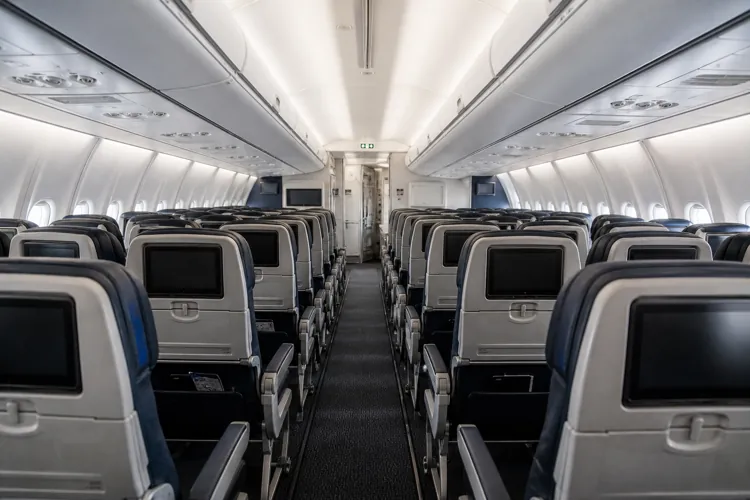

American Airlines plans to install seatback entertainment screens at every seat across its narrowbody fleet, including 4K displays, Bluetooth audio, and USB-C charging.
The airline is also expanding premium seating, with premium and Main Cabin Extra seats expected to grow from about 25% of narrowbody seats today to roughly 40% in the coming years.
New Airbus and Boeing aircraft will begin arriving with the screens in 2028, while existing planes will be retrofitted, with the fleet-wide installation expected to be finished early next decade.
American Airlines passengers will soon have another option for passing the time in the air: watching movies and TV directly from the seat in front of them.
The airline announced a major overhaul of its narrowbody fleet that will put seatback entertainment screens at every seat, while also substantially increasing the number of premium and extra-legroom seats available to travelers.
The investment represents a notable shift for American, which has relied heavily on passengers streaming entertainment to their own phones, tablets, and laptops on many domestic flights.
“We’re making one of the most significant investments in the onboard experience in our history,” American Airlines Chief Customer Officer Heather Garboden said in announcing the changes.
What travelers can expect from the new screens
American said its next-generation entertainment system will include some of the largest seatback displays available on narrowbody aircraft in North America. The screens will support 4K video and offer movies, television, music, and games.
Passengers will also be able to pair their own wireless headphones and earbuds with the screens using Bluetooth. Additionally, USB-C fast-charging ports will be available at every seat.
American also plans to make the entertainment system more personalized, including recommendations for movies and shows, as well as enhanced interactive flight maps with destination information and real-time details about the flight.
The airline already has seatback screens on more than 140 long-haul aircraft. Starting in 2028, all newly delivered Airbus and Boeing aircraft will come with the new displays, while American will retrofit aircraft already in its narrowbody fleet. The carrier expects the fleet-wide installation to be completed by early next decade.
American is adding more premium seats, too
The screens aren't the only significant cabin change.
American said premium seating currently accounts for about 25% of the seats on its narrowbody departures. It plans to increase that figure to approximately 40% in the coming years through aircraft retrofits and new deliveries.
The airline is already adding an additional row of First Class seats to its Airbus A319 and A320 aircraft. Its future Boeing 737 MAX 10 aircraft are slated to have 24 First Class seats, while American also plans to reconfigure its A321neo fleet with additional First Class seating.
Most of the narrowbody fleet will also receive additional Main Cabin Extra seats, which offer more legroom along with benefits such as earlier boarding and dedicated overhead-bin space.
Cabins will receive other updates including redesigned seats, additional storage, and enhanced lighting.
Part of a larger overhaul of the flying experience
The upgrades are part of a broader effort by American to improve its onboard product and compete for travelers willing to pay more for premium experiences.
The carrier previously announced plans to install SpaceX's Starlink internet service on more than 500 narrowbody aircraft beginning in the first quarter of 2027. Starlink is designed to support bandwidth-heavy activities including streaming, gaming, and video calls.
American is also investing in new and expanded Admirals Club and Flagship lounges, upgrading food and beverage offerings, and introducing digital tools intended to make booking, baggage tracking, and other parts of a trip easier.
For passengers, the combined upgrades could make American's domestic flights look considerably different over the next several years. Instead of choosing between using a personal device or going without a screen, every passenger would eventually have built-in entertainment — along with faster connectivity and more opportunities to pay for additional space.