2022 Airlines and Airports

Article Image

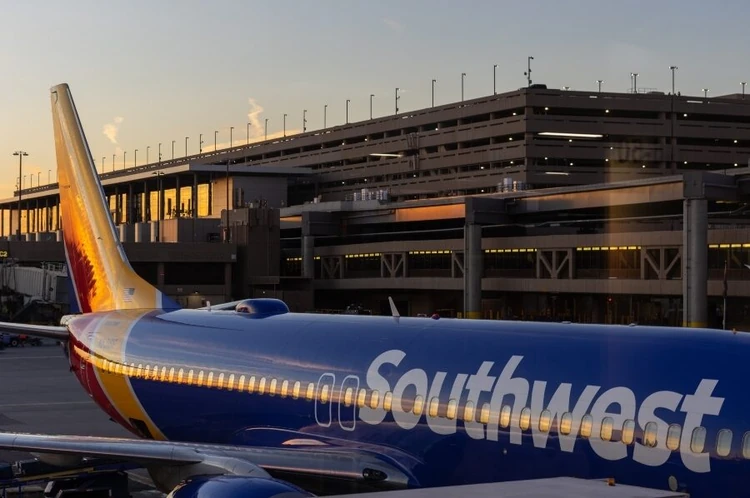
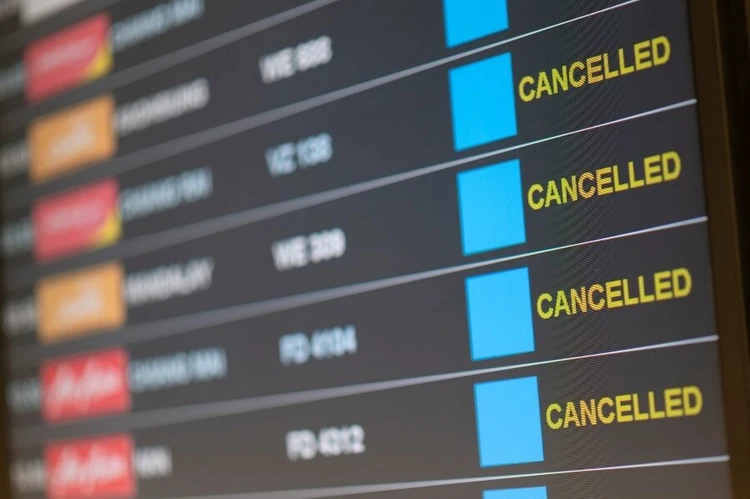
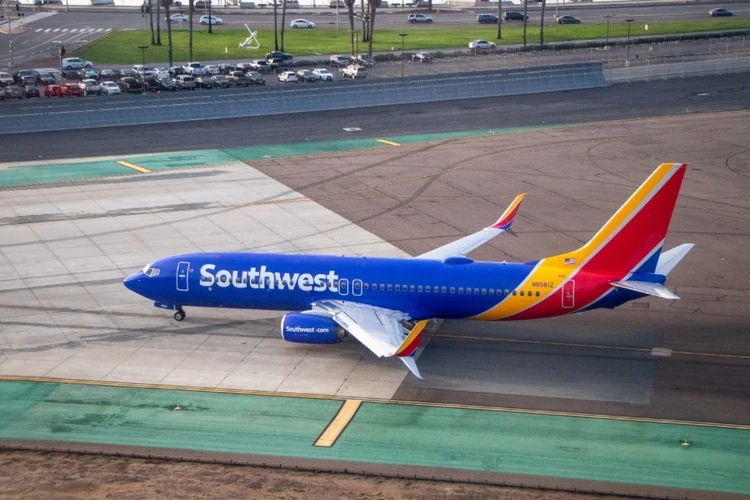
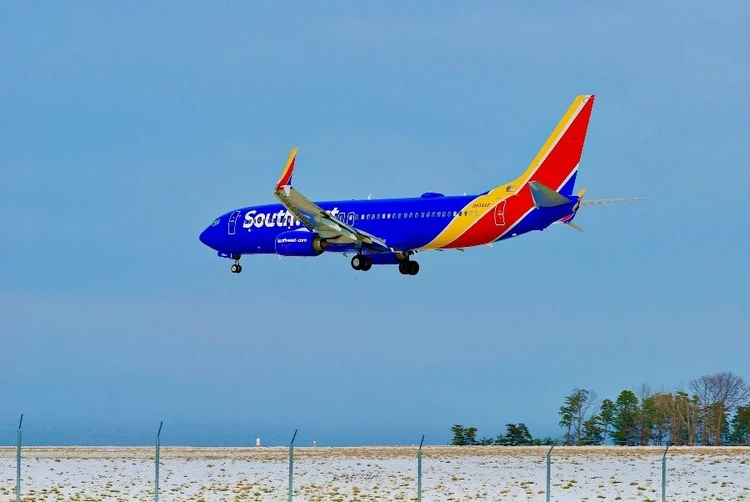
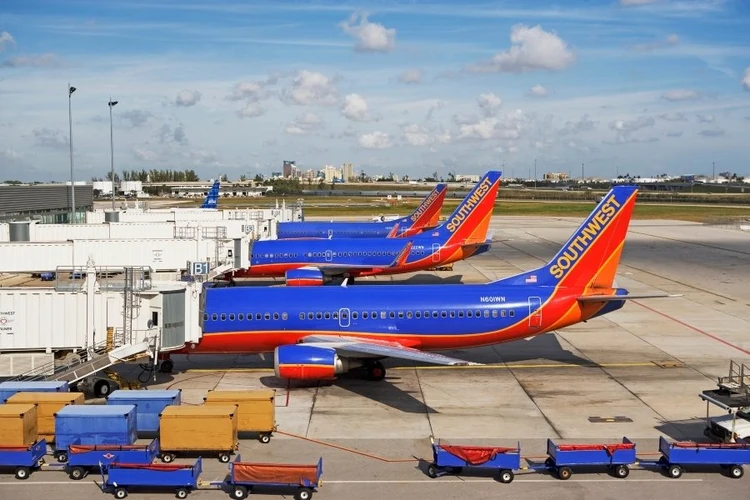
Southwest Airlines cancels thousands of flights, leaving travelers in the lurch

“I have been a satisfied Southwest customer for years until experiencing the utter chaos that was Southwest over the holiday weekend,” Rhonda, of Fair Oaks, Calif., wrote in a ConsumerAffairs review when her flight was canceled with little notice.

Rhonda told us Southwest waited until the very last minute to notify travelers that their flights were being taken off the board, causing a domino effect of stranded passengers and unattended piles of luggage she said had been “heaved” all around the airport.

“I feel traumatized by the whole experience and I will definitely think twice about flying again!” she said.

But she’s not alone, nor will she be over the next few days. On Tuesday, Southwest canceled 2,570 flights according to FlightAware and has already canceled another 2,477 for Wednesday, and 917 on Thursday.

What to do

So, what is Rhonda to do? In an email to ConsumerAffairs, a Southwest spokesperson said that “when a carrier-controlled delay is a factor, …we already do other-airline rebooking when Southwest is not an option.”

Unfortunately for many fliers, Southwest flies out of secondary airports where it’s the only airline, leaving no other airline to easily put stranded passengers. In situations like that, a passenger would endure the hassle of taking a cab across town like they would have to in Dallas to go from Love Field where Southwest is the only airline to DFW that all the other major carriers serve. 

But if you take a look at the weather forecast, things could get worse. Southwest has already said that its short-term plans are to operate a third of its schedule “for the next several days,” hopefully to get some breathing room. However, without a complete reset of the carrier’s dominoes, it’s tempting fate if the New Year’s surge creates another round of chaos as travelers try to return home Sunday and Monday.

Hogwash, says a consumer watchdog

In response, U.S. PIRG Consumer Watchdog Teresa Murray said: "Unreliable airline travel has been an ongoing nightmare for more than two and a half years and now caused anguish for so many families looking forward to gathering for the first time since 2019 before the pandemic started. The tales of passengers who spent the holiday weekend sleeping on the floor at an airport are heartbreaking.”

“While the awful weather isn’t anyone’s fault, the way travelers were treated and accommodated – or not – sits squarely on the shoulders of most of the airlines,” Murray said in a statement to ConsumerAffairs.

Among the stranded? How to get help.

In a statement, Southwest said it would offer affected passengers either a refund or a voucher with no expiration date. Murray emphasized that passengers should not take their rights lightly nor should they take the first thing an airline offers them.

“If they choose to accept a credit or voucher, it’s important to understand how they work at each of the 10 largest domestic airlines,” she said.

What exactly are your rights if your flight is canceled? The U.S. Department of Transportation spells it out this way:

  • If your flight is canceled, most airlines will rebook you for free on their next flight to your destination as long as the flight has available seats.
  • If your flight is canceled and you choose to cancel your trip as a result, you are entitled to a refund for the unused transportation – even for non-refundable tickets.  You are also entitled to a refund for any bag fee that you paid, and any extras you may have purchased, such as a seat assignment.  
  •  If the airline offers you a voucher for future travel instead of a refund, you should ask the airline about any restrictions that may apply, such as blackout and expiration dates, advanced booking requirements, and limits on number of seats.

The second point is important. You do not have to accept the alternative travel and if you cancel your plans you are due a refund -- not a voucher for future travel, but a refund.

The DOT recently issued a strong rebuke and large fine for Frontier Airlines on that very point.

And if all else fails, filing a complaint with the DOT has been known to get an airline’s attention.
Article Image

The air travel experience was less bad in September

Just ahead of the holiday travel crush, things seemed to be getting better for airline travelers. But the latest Air Travel Consumer Report shows there's still a long way to go.

According to the Transportation Department, consumer complaints about everything from on-time peformance to lost baggage fell 15.6% from August to September – the latest month for which there are data.

At the same time, though, complaints are more than 380% above pre-pandemic levels.

Arrivals and Departures

Getting where you're going on time showed improvement in September, with carriers reporting an on-time arrival rate of 82.1%, compared with 75.6% in August. However, the rate in the pre-pandemic month of September 2019 was 84.1%.

Airlines posting the best on-time rates were Delta, United and Alaska. The lowest were JetBlue, Frontier and Allegiant.

Probably among the most irritating experiences a traveler has is sitting on the runway waiting to depart.

In September 2022, there were 13 tarmac delays of more than three hours on domestic flights, a big improvement over the 72 reported in August. There was just one delay of more than four hours on international flights, versus five tarmac delays reported in August.

Where's my suitcase?

Carriers handled 37 million bags in September with a mishandled baggage rate of 0.48%. That's a lower rate than a month earlier and on par with the pre-pandemic September 2019 rate of 0.47%.

The mishandled baggage rate for the third quarter was 0.61%, slightly higher than in the July – September period of 20019, befor the pandemic hit.

Other areas covered by the report include bumping oversales, treatment of disabled passengers and discrimnation, which may be found here.

Article Image

Guns, long lines, unwrapped gifts? Are you prepared for the changes going through TSA checkpoints?

If you’re flying somewhere over the holidays, the Transportation Security Administration (TSA) says you should be prepared for changes going through security. And, you should be prepared for more fellow travelers than you’ve seen since before the pandemic.

“We are prepared for the increased volume and expect to meet our wait time standards of 30 minutes or less in standard lanes and 10 minutes or less in TSA PreCheck lanes. However, there may be some situations where the capacity of a checkpoint is exceeded,” said TSA Administrator David Pekoske. 

ConsumerAffairs went through the TSA’s laundry list of suggestions and found some things that travelers might not be aware of.

Flying on Thursday, Dec. 22 or Friday, Dec. 30

If you’re going anywhere on Dec. 22 or Dec. 30, get to the airport early and be prepared for crowds. Those days may be among the most hectic of the holidays. Plenty of patience may be required. 

Trying to get a gun through security could cost you dearly

Travelers and firearms have become a major pain point for the TSA. This year, TSA officers intercepted a record 6,301 firearms – more than 88% of those were loaded. Passengers who attempt to bring a firearm through a checkpoint can expect to receive a fine up to $15,000, plus they’ll lose eligibility for TSA PreCheck, and local law enforcement will be called in.

In addition to firearms, there are other items not permitted at the checkpoint. These include explosives, flammables, knives, razors and replica weapons. To see if an item is prohibited, check the TSA website under “What Can I Bring?” 

But, if you baked a cake for Aunt Annie, you can bring that along. As always, passengers may bring solid foods such as cakes and other baked goods through the TSA checkpoint.

Make sure gifts are unwrapped

You’ve already wrapped the gifts you’re taking? Sorry. TSA says you might have to unwrap those – especially ones with lids – so they can inspect those items if they’re curious about the contents. Instead, the agency prefers travelers place their unwrapped gifts in their checked bags as opposed to carry-ons.

Is your ID 'acceptable'?

ID requirements have changed a bit, as have how to show your ID. At many airport checkpoints, a security officer may ask you to insert your physical ID into one of the agency’s new Credential Authentication Technology units. 

There’s a special new perk for people who live in Arizona, Colorado, and Maryland when it comes to showing their IDs. They can use their Apple mobile device to store their ID in Apple Wallet and use their mobile device in certain TSA PreCheck lanes at participating airports.

Ask for help – in advance

If you’re traveling with someone who is disabled or has a particular medical condition, you should contact the TSA Cares helpline at 855-787-2227 at least 72 hours prior to travel. TSA Cares can help with any questions about screening procedures, help you find out what to expect at the security checkpoint, and even arrange for assistance at the checkpoint for travelers with specific needs.

Since most of us have taken to texting, the TSA has, too. If you have questions that you want quickly answered, you can get assistance in real time by submitting your questions and comments to @AskTSA on Twitter, Facebook Messenger and via text message using any mobile device to “AskTSA” (275-872). 

As a word of caution – when ConsumerAffairs tried out the text option, we found out that you need to use simple, short phrases such as “damaged passport.” Asking a question got us nowhere and you’re likely to experience the same

Article Image

How early do you need to get to the airport for holiday travel? A new survey breaks it down

During the holidays, many consumers flock to airports around the country to celebrate with their friends and family. However, this time of year usually means more crowds at TSA security checkpoints, more stress, and more uncertainty about making it to the airport on time. 

To help give holiday travelers some insight into when to get to the airport, Upgraded Points conducted a survey to determine when consumers should arrive at the airport to ensure they don’t miss their flights. The survey covers 50 airports across the U.S. and even features a list of the top 15 airports in the country where arriving early is imperative. 

“Preplanning is always key to a smooth travel experience,” said Alex Miller, founder of Upgraded Points. “But as we all know, things happen when it comes to travel – especially around the holidays. By knowing which airports are busier and why you can pre-plan for any delays and ensure your timing sets you up for success.” 

Time is of the essence in these 15 airports

Fifty of the largest airports across the country were included in this study, and they were ranked based on 15 criteria: number of enplanements, number of passengers, airport size, average TSA wait time, number of terminals, number of gates, number of airport employees (per square mile), number of airport lounges (per square mile), number of restaurants/bars (per square mile), number of shops (per square mile), number of parking lots/decks, percentage of on-time departures, percentage of delayed departures, car traffic volume, and car traffic index. 

Each factor was given a weighted score, and airports with the highest scores were those where travelers needed to arrive earlier. The survey ultimately narrowed down the top 15 airports where arriving early was critical:  

  • O’Hare International Airport (Chicago, IL)

  • Los Angeles International Airport (Los Angeles, CA)

  • John F. Kennedy International Airport (Queens, NY)

  • George Bush Intercontinental Airport (Houston, TX) 

  • Dallas/Fort Worth International Airport (Dallas/Fort Worth, TX)

  • Miami International Airport (Miami, FL)

  • San Francisco International Airport (San Francisco, CA) 

  • Charlotte Douglas International Airport (Charlotte, NC) 

  • Philadelphia International Airport (Philadelphia, PA)

  • Newark Liberty International Airport (Newark, NJ)

  • Seattle-Tacoma International Airport (Seattle, WA)

  • Orlando International Airport (Orlando, FL) 

  • Boston Logan International Airport (Boston, MA) 

  • Hartsfield-Jackson Atlanta International Airport (Atlanta, GA) 

  • Denver International Airport (Denver, CO)

Based on the survey, Chicago’s O’Hare is the most important airport to get to early. The results recommend travelers get there three hours and four minutes before their flights are scheduled to take off. On the other end of the spectrum is John Glenn Columbus International Airport, which requires travelers to get there just one hour before departure. 

What contributes to slowdowns? 

There are several factors that contribute to slowdowns in these major airports – and that put travelers in jeopardy of missing their flights. Everything from airport staff, TSA wait times, the total acreage of the airport, the number of gates in an airport, and even the number of restaurants or bars in an airport make it harder to be on time for a flight.

The survey showed that the number of employees in all of O’Hare International Airport is nearly 10% lower than the national average. On top of that, the airport has nearly 200 gates and welcomes tens of millions of passengers a year. 

Overall, to help ease some of the stress of traveling during the holidays, experts recommend giving yourself plenty of time at the airport – especially in some of the biggest, most populated areas. 

Article Image

Here are the airlines and airports that treat customers the best -- and worst

Ask anyone what the most important considerations are when they travel and they’ll tell you customer care. One bad experience with an airline could taint that company’s relationship with a person forever. 

To demonstrate which carriers cater to consumers with all their love and which ones don't, all one needs to do is look at air passenger rights experts AirHelp's 7th annual ranking of best service, fly on time, and treatment of passengers if and when problems occur.

To calculate the scores, AirHelp uses its own database of flight statistics, thousands of customer poll responses and its own experience in helping 1.3 million passengers around the world receive compensation following flight disruption.
The winners

While a few U.S. airlines fared well, international carriers and airports left most of their U.S. peers at the gate. Qatar Airways, United Airlines, Qantas, Etihad Airways, and South America’s LATAM Airlines were rated highest among carriers worldwide.

As far as airports are concerned, AirHelp found Tokyo Haneda International Airport, Recife/Guararapes-Gilberto Freyre International Airport in Brazil, and Tokyo Narita International Airport to be the best global airports for 2022. 

In addition to its second place finish worldwide, United Airlines was also ranked as number one in the U.S., followed by American, and Delta finishing 8th and 19th respectively. As for airports stateside, Houston George Bush Intercontinental Airport in Houston was the highest-scoring airport. 

When you break that down to individual metrics of claim handling, on-time performance, and customer satisfaction among domestic airlines, Delta ranked first in on-time performance; JetBlue came in number one in customer opinion and United earned the top spot in how effectively claims were handled.

And the losers

Overall among domestic airlines, Spirit, Frontier, and JetBlue came up as the losers in the overall AirHelp Score.

JetBlue took last place in on-time performance; Frontier in customer opinion and Spirit in the claims processive category. Newark Liberty Airport was ranked as the worst both at home and in the world. 

As for the holidays…

In a separate study, Forbes Advisor thought it would be interesting to find where the trouble spots for holiday travelers might be. For that study, researchers analyzed data from the Bureau of Transportation to determine which airports and airlines are the best and worst for holiday travel, specifically considering data from November through January for the 100 busiest airports and eight of the largest airlines. For them, the good and the bad look like this:

Worst airports for holiday travel: Westchester County Airport (HPN) earned the top spot on the list of worst airports for holiday travel, followed by Ted Stevens Anchorage International Airport (ANC) and McGhee Tyson Airport (TYS).

Best airports for holiday travel: Long Beach Airport (LGB) is the best airport for holiday travel, followed by Ellison Onizuka Kona International Airport at Keahole (KOA) and Norman Y. Mineta San Jose International Airport (SJC).

For those who are heading toward sunny California, you’re in luck, Forbes’ analysts said. Six of the top 10 best airports for holiday travel are located in California, including Long Beach Airport (LGB), Norman Y. Mineta San Jose International Airport (SJC), Sacramento International Airport (SMF), Oakland International Airport (OAK), Ontario International Airport (ONT) and Hollywood Burbank Airport (BUR).

Worst airline for holiday travel: JetBlue Airways

Best airline for holiday travel: Alaska Airlines 

Article Image

On hold forever when you call an airline? There may be a solution

“Your call is very important to us, but we are experiencing higher-than-normal call volumes.”

If you’ve tried to contact an airline in the past year, you might have that message and it's probably still ringing in your ears, not to mention that crick in your neck from staying on hold for what seem like days.

You’re not alone.

Joe of Hingham, Mass. told ConsumerAffairs in his review of American Airlines that he was on hold with customer service for four hours yesterday only to be told his problem could only be resolved at the airport. 

Cynthia of Northville, Mich. said she had the same experience with Southwest. “After one hr and 47 minutes on hold, I was told that nothing could be done,” but the Southwest representative offered to have someone call me back in “six to eight business days,” Cynthia said.

What can a customer do to get around impossible on-hold times?

"We are experiencing higher than normal call volumes” has become a broken record. But, in truth, it may just mean that "We are experiencing normal call volumes and we are understaffed" – a problem that Delta Air Lines CEO Ed Bastian admitted to last year. And one that he doesn’t like his airline to be associated with.

When Bastian came under fire about the matter during one of the carrier’s earnings calls, he said “Just email me, I’ll take care of it.” By the way, Delta’s email addresses are generally FirstName.LastName@delta.com.

But, what if the airline you’re dealing with doesn’t have someone in charge who boldly puts their email address out there as Bastian does, or you’re forced to use the airline’s app that also ends up as a dead end? Is there a real live human being left in the travel world who you can speak to? Travel expert Wendy Perrin says there is: Call the airline’s customer-service office in a different country.

“Major airlines have overseas locations where staffers speak English—in the U.K., Germany, Australia, Hong Kong, and Singapore, for example—and they are typically just as able to help you as their U.S.-based counterparts, as long as their office is open (not all call centers are open 24 hours) and not dealing with a snowstorm,” she said. Note: If you use your credit card with a customer service agent rep who’s based in another country, a foreign transaction fee may be tacked on.

“So if you need to speak with someone at American Airlines, try calling one of its worldwide phone numbers. To keep the cost of the call down, use WhatsApp, Skype, or Google Voice,” Perrin said.

ConsumerAffairs found that other airlines like United also post international, European, or Asian phone numbers online.

But, fair warning – Delta doesn’t offer that overseas-office option anymore. Airline expert Gary Leff, says there is a workaround though – dial 1-855-548-2505 when you have to travel within 48 hours.

“This is the number that’s printed on the airline’s red ‘Need Help?’ cards and on their ‘Need Help?’ signs at the airport,” he said.

“They’ll only assist with travel needs in the upcoming 48 hours, but it circumvents the waits.”

Let the other guy wait on hold for a change

Perrin credits Leff for turning her onto GetHuman.com – a site devoted to ID’ing customer service phone numbers for nearly every major company you can think of. 

“Its crown jewel is a free, automated callback service that gives you an estimate of the current hold duration, sits on hold for you, and calls you back and connects you when a representative answers. Just search the database for your airline to get started,” Perrin said.

Why not just hire someone to handle this hassle for you instead?

There’s an answer for everything, but is there someone somewhere you could hire to do all the customer service dirty work for you instead? Evidently. Perrin says that CrankyConcierge.com can possibly save the day for a traveler whose flight is canceled or delayed. Emergency help starts at $175. 

If a customer isn’t satisfied that it’s done everything it can to try and help – and the customer has done what they ask in their terms of service – “just ask for a refund of our service fees and you'll get it,” the company says on its site.

Article Image

Frontier Airlines ordered to pay $222 million in refunds and a $2.2 million penalty

Anyone who’s had a flight canceled or significantly changed in the last year or so is due a refund. The U.S. Department of Transportation (DOT) said it’s had enough of airlines not giving mistreated passengers their due, fining Frontier Airlines and five foreign carriers -- Air India, TAP Portugal, Aeromexico, El Al, Avianca -- $7.2 million in penalties and forcing those six to cough up $600 million in refunds to those scorned fliers.

When the DOT mandated that airlines must offer refunds over vouchers for canceled flights during COVID-19 outbreak, Frontier played the victim card and refused, taking the issue to court where a Federal judge let the company off the hook.

“When a flight gets canceled, passengers seeking refunds should be paid back promptly. Whenever that doesn’t happen, we will act to hold airlines accountable on behalf of American travelers and get passengers their money back,” said U.S. Transportation Secretary Pete Buttigieg. “A flight cancellation is frustrating enough, and you shouldn’t also have to haggle or wait months to get your refund.” 

With those fines, the department’s Office of Aviation Consumer Protection has assessed $8.1 million in civil penalties in 2022, the largest amount ever issued in a single year by that office. 

So, will this refund refusal stop now?

Under U.S. law, airlines and ticket agents are legally obligated to refund anyone holding a ticket if the airline cancels or significantly changes a flight to, from, and within the United States, if the passenger does not wish to accept the alternative offer, which is usually a voucher. The DOT says it is unlawful for an airline to refuse refunds and instead provide vouchers to such consumers.  

Locking down price transparency – especially for those fees airlines have for nearly everything – is the next major move consumers can expect from the DOT. 

Under a recently proposed rule, airlines and travel search websites, like Expedia and Travelocity, would have to make it clear as day upfront any fees charged to sit with your child, for changing or canceling your flight, and for checked or carry-on baggage. 

ConsumerAffairs reviewers have had as much of this fee business as they can take. In the last year, nearly 90 consumers have written concerns about Frontier Airlines and its refund policies, and another 30 plus about the same dissatisfaction with Orbitz.

“They have a policy that states they do not give refunds on flights booked within 7 days,” Jon of Los Angeles, wrote. “I booked through Orbitz and Orbitz did not notify me of this.”

It’s about time says consumer watchdog

“It’s great that the DOT is finally demanding some accountability, but  $600 million is a drop in the bucket. Airlines owe some $10 billion in refunds going back to the beginning of the pandemic,” U.S. PIRG Consumer Watchdog Teresa Murray said in response.

“Furthermore, only one U.S.-based airline is in this group. Domestic carriers accepted billions of dollars in taxpayer money to stay afloat during the early months of the pandemic. As travelers know all too well, the industry used the money to offer employees lucrative buyouts and retirement packages, leaving their operations understaffed." 

Article Image

Flying somewhere over the holidays? Are you ready for all the changes you could encounter?

If this holiday travel season traffic continues to grow in numbers like the rest of 2022 has, travelers who haven’t flown since the pandemic lifted should be ready for changes that they might not have seen before.

Here are some possible wrinkles and ideas that ConsumerAffairs found that may be worth considering. It may be worth printing this out and using it as a guide as you plan out your holiday air travel.

Flights might be packed to the gills. “Flights will all be full so if sitting together with family and friends is important, ensure you have seats reserved,” Sandra McLemore, travel TV host and industry expert told ConsumerAffairs, adding an extra warning that it's unlikely you'll be able to switch on the day of travel without asking another passenger.

AirlineRatings' Geoffrey Thomas said that if you want more comfort, seating-wise, consider buying an exit row. “It is an excellent investment and not only gives more comfort but reduces stress levels,” he said.

Drop off your luggage ahead of time. One of the little known tricks of the trade for seasoned travelers is that you actually check your luggage ahead of time!

“If you're able to do this it can help cut down the amount of time you need to spend in the airport, potentially avoiding some queues. Alternatively, if you can opt just for hand luggage you can reduce any wait times even further,” Laura Lindsay, Skyscanner’s trend and destination expert told ConsumerAffairs. 

For a complete list of airlines that offer this service, click here.

Prepare for delays

Pack a ton of patience for the airport. McLemore says travelers should arrive at the airport 2-3 hours earlier than normal if they don't have TSA and/or CLEAR* membership. Lines will be long, less experienced travelers and people with special needs will take longer to maneuver through the airport.”

*CLEAR is an airport security membership platform that helps passengers get through security faster at these U.S. airports.

Some U.S. airports will be especially busy over the Thanksgiving weekend – among them, Atlanta, Las Vegas, and Charlotte. Hopper offers a list of the 10 busiest airports and the 10 that suffer the most disruptions. You can find that here.

If you can, avoid checking luggage. In her opinion, McLemore thinks that a carry-on offers faster movement and less chance of your items going astray.

However, for those who need to check a bag or are concerned that they could lose or misplace something while traveling, ConsumerAffairs recently found something called PingTag, “lost and found” QR code stickers that can go on things like luggage so if a bag gets lost, anyone who finds it can scan the code and contact the owner.  

App up! Mary DeSpain, President at Destination CLEs told ConsumerAffairs that travelers should be sure to have their airline’s app downloaded. You’ll be able to use it for boarding, baggage tracking, getting immediate updates, etc.

Check-in online. “Checking in online can really save time on arrival at the airport. Online check-in is obligatory for some airlines, but even for airlines where it’s not, it’s usually an option,” Lindsay said.

“If you’ve already checked in online, you can completely avoid the first check-in queue at the airport, going straight to bag drop or security. You’ll also be able to choose your seats in advance, snagging some extra leg room or a window seat before the other passengers get the chance.”

Keep an eye on the sky

Watch for weather changes. Putting on her weathercaster hat, DeSpain added that if a traveler sees bad weather coming, they should call their airline immediately to see if they can make changes to their itinerary.

Travelers can check on whether their flight is on time or stuck somewhere else because of bad weather at FlightAware, ConsumerAffairs go-to site for flight snafus.

Check how long the lines are in advance. “You can always check the airport’s website for information on whether the security lines are longer than usual,” noted Mercedes Zach, a travel expert at ASAP Tickets. “To save time, check in online or at a self-service desk at the airport whenever possible.”

Thomas added that if you’re flying with a low-cost airline, you should consider buying priority check-in and boarding.

“Saves long queues which can be very stressful. At some airports, you can also buy security on departure and customs on arrival priority lanes,” he said. “Worth every cent!”

How to get through security faster. Zach also told ConsumerAffairs that some locations and airlines may still require masks or even proof of vaccination, so it’s smart to take that documentation with you just in case. 

Skyscanner’s Lindsay added to dress for success – in the security line! “You’ll likely have to take off your coat and belt before walking through the security screening, as well as some shoes, like boots or high heels. The more you prepare before passing through security, the faster the process will be,” she said.

Speaking of security checks, are you enrolled in TSA PreCheck?

Having TSA PreCheck can save a lot of time. In fact, during October 2022, 91% of PreCheck holders waited less than 5 minutes.

“We always encourage travelers to enroll in TSA PreCheck to facilitate a more seamless experience,” a spokesperson for Airlines for America told us.

Just so you know, PreCheck comes at a price, but TSA just discounted in-person enrollment and renewals to $78 and online for $70 for 5 years – so that needs to be considered if you don’t plan on flying frequently.

But, lucky you, one airline industry watcher has found seven ways around TSA Pre-Check fees, as well as Clear and Global Entry.

"Currently, there are nearly 50 cobranded airline, hotel, and other credit cards offering up to $100 in statement credit reimbursement for the application fees associated with Global Entry or TSA PreCheck," said ThePointsGuy's Caroline Tanner.

"This credit is typically available every four to five years, though you should check the terms for your specific card for the exact frequency."

Pack your own snacks

Bring some snacks if you want to save money. Airlines are still charging for seemingly everything short of going to the bathroom. Yes, water, coffee, tea, etc. are still free, but you’ll pay dearly if you want some snacks. If you want to save money, bring your own snacks.

The TSA allows travelers to bring everything from bread to yogurt onboard. Some items have to be under a certain size, but with a little advance planning, you could put together some to-go bags for everyone in your group.

Prepare for flights to be delayed or canceled. “Delays and cancellations are a fact of life any holiday season, but we could see more of them than usual this year as airlines adjust their schedules based on demand, and as they struggle to find qualified workers in some cases,” Scott Keyes, founder of Scott’s Cheap Flights told ConsumerAffairs.

“Remember, though, if the airline significantly alters your schedule, you can get a full refund or request that they accommodate you on another flight. It's easier for the larger airlines to do the latter, as they have interline agreements with other airlines,” Keyes added. 

One important thing to note, however, is the airlines that haven’t agreed to rebook a traveler on another airline with which it has an agreement at no additional cost when a cancellation or delay of a flight is “controllable" (maintenance or crew problems, cabin cleaning, baggage loading, and fueling).

According to the Department of Transportation's dashboard, Allegiant, Frontier, Southwest*, and Spirit have yet to agree to that rule and anyone flying on those airlines should be aware of what they can and can’t expect in a delay or cancellation. Airlines for America offers a comprehensive guide on the matter, as well. 

And, if you do get in a jam with a cancellation, there’s AirHelp, a fee-based service that can offer advice to travelers regarding cancellation and other rights.

Article Image

Customer satisfaction with airports has hit some turbulence, study finds

Once upon a time flying used to be fun and kind of glamorous, but the pandemic and the airlines' struggle for profitability sucked the life out of the experience. Even though COVID-19 seems like a fading vapor trail, air traveler satisfaction with North American airports can’t seem to get airborne again.

According to the J.D. Power 2022 North America Airport Satisfaction Study, overall satisfaction with airports is down 25 points this year as travelers encounter fewer flights, more crowded terminals, and skimpy food and beverage offerings.

“The combination of pent-up demand for air travel, the nationwide labor shortage, and steadily rising prices on everything from jet fuel to a bottle of water has created a scenario in which airports are extremely crowded and passengers are increasingly frustrated, and it is likely to continue through 2023,” said Michael Taylor, travel intelligence lead at J.D. Power. 

“In some ways, this is a return to normal as larger crowds at airports tend to make travelers more frazzled, but in cases where parking lots are over capacity, gates are standing room only and restaurants and bars are not even open to offer some reprieve, it is clear that increased capacity in airports can’t come soon enough.”

$27.85 for a beer?

The J.D. Power survey takers were the least happy with the inflationary prices they’ve encountered at airports. Nearly one-fourth (24%) of travelers say they did not make any food or beverage purchases at the airport because they were ridiculously expensive and, yes, $27.85 for a beer is a real thing. Food and drink prices at airports are up from 20% in 2021 and 23% in 2019, a far cry from what a traveler would term as reasonable.

Another major moan is that many airports don’t have enough parking spaces. The analysts said that issue is one of the prime reasons traveler satisfaction faltered this year. Satisfaction with surface parking lots declined 45 points from 2021, with 14% of travelers saying parking was more expensive than they expected, up from 12% in 2021 and 11% in 2019.

MSP is best 

Among the “mega” airports, Minneapolis-Saint Paul International Airport (MSP) ranks highest in passenger satisfaction with a score of 800. San Francisco International Airport (796) ranks second while Detroit Metropolitan Wayne County Airport (791) and John F. Kennedy International Airport (791) each rank third in a tie.

For the next size tier – “large” airports – the title goes to Tampa International Airport with a score of 846, followed by John Wayne Airport, Orange County (826), and Dallas Love Field (825).

Indianapolis International Airport ranks highest among medium-size airports with a score of 842. Pittsburgh International Airport (839) ranks second while Jacksonville International Airport and its Sunshine State neighbor, the Southwest Florida International Airport serving the Ft. Myers and southwest Florida areas (826), are tied for third place.

Calmer winds coming

Will things get better? Scott Keyes of ScottsCheapFlights says yes. He told ConsumerAffairs that as airlines get their post-COVID act together, airport chaos is calming down.

“This summer was the wild west of air travel. Mass amounts of cancellations and delays, lines that snaked out of the airport, and thousands of lost bags made air travel fraught with complications and annoyances,” he said.

“Thankfully, as the summer travel rush comes to an end, so has the worst of the chaos. For example, the flight cancellation rate over Memorial Day weekend was 2.2% while over the Labor Day holiday weekend it was just 0.6%.”

Keyes said that anyone traveling over the next month or so should still give themselves a little extra time at the airport, in addition to booking longer layovers, and traveling lighter or taking precautions to avoid a lost bag. Still, one’s chances of encountering major delays are less as fewer people are traveling.

Article Image

Flying somewhere soon? Airlines update commitments to passengers when flights are delayed or cancelled

If you’re one of the millions of Americans planning on traveling over Labor Day weekend, you need to ask yourself if you’re ready for anything that could go wrong – canceled flights, lost baggage, etc. And if you are worried, you’re not alone. A new survey from Insuranks found that 71% of those planning to travel this year are worried about those things, too.

In the good news department, there are two things that might give you hope: One, FlightAware lists relatively few cancellations or delays for U.S. based airlines or domestic airports. Two is that the Department of Transportation is full speed ahead on providing travelers a “dashboard” of what types of accommodations that airlines have committed to provide to customers in the event of a delay or cancellation – anything within an airline’s control, such as a mechanical issue. 

With the new dashboard, passengers who are stuck in Scranton or delayed in Des Moines can pull up the new widget and quickly find out what they can expect to happen. The new dashboard is also a good tool for people who are booking flights to see what carriers are offering when things go bad.

What airlines are the most committed and the least committed?

When you first look at the dashboard, the stark contrast between the green checkmarks and the red X’s speaks volumes. Among the U.S. five largest airlines, American, Delta, JetBlue, and United all had checkmarks in every category – every single one of the DOT’s 10 requested commitments, including rebooking passengers on the same airline at no additional cost and complimentary hotel accommodations for any passenger affected by an overnight cancellation.
The two things that the other member of the big five -- Southwest -- didn’t commit to were: rebooking passengers on another airline at no additional cost when a flight was “controllably” canceled or delayed. However, one of those X's apparently has a caveat. A Southwest spokesperson told ConsumerAffairs that it does offer other-airline rebooking when Southwest is not an option.

Other airlines where the red X’s marked the spot included Allegiant, which had yet to say “yes” to any of the DOT’s requested commitments; Frontier was uncommitted on six caveats; Spirit, uncommitted on four; and Hawaiian had an X on one commitment. 
To make sure it covered all the bases, the DOT’s dashboard also provides links to all U.S. airlines' current customer service plans.

Why do Allegiant and Frontier appear uncommitted?

ConsumerAffairs reached out to Allegiant and Frontier to get their side of the story on their red X’s.

Allegiant said it welcomes and supports the DOT’s efforts to give travelers a consumer-friendly platform that catalogs all the U.S. airlines’ policies in one place, but it said that in its current form, the dashboard does not accurately portray all that Allegiant does for its customers in the event of cancellations and schedule changes. An airline spokesperson told ConsumerAffairs that it was in the process of publishing the information from its contract of carriage and expects the dashboard to reflect that when it’s updated next week.  

So, until then, what?

“Allegiant has always gone above and beyond its Customer Service Plan in assisting and providing for its customers when they experience controllable travel disruptions,” the airline said in emailed comments.

What does that mean in layman’s terms? Allegiant’s spokesperson gave the example of when it cancels a flight for a controllable reason, the airline offers customers re-accommodation on other Allegiant flights, or refunds for the affected leg of their trip. 

“Depending on the circumstances and length of delay, we also issue vouchers to use for future travel, as well as extra cash compensation through Paynuver, our online payment distribution platform,” the spokesperson said.

“In many cases, we also provide reimbursement for hotel accommodations and ground transportation expenses incurred due to a controllable flight cancellation.”

Allegiant said that when it comes to a minimum one-hour delay, it will serve customers complimentary non-alcoholic beverages and snacks.

“If a delay stretches to four hours, we provide customers with a meal or meal vouchers. These are all established practices that Allegiant has long used to take care of our customers when a flight is unexpectedly disrupted,” the company said.

In response to the items the DOT listed Frontier uncommitted to, it too has policies in place to accommodate and assist passengers in the event of a travel disruption. As to exactly what a Frontier passenger can expect in the event of a controllable delay or cancellation, here’s what a company spokesperson told ConsumerAffairs: 

“Accommodation on the next available Frontier flight at no additional cost; one night of hotel accommodation if the next available Frontier flight necessitates a hotel overnight; meal vouchers for flight delays of three hours or more or cancellations that result in a rebooking on Frontier that results in a flight departure three hours or more from the originally scheduled flight; or alternatively, if a flight is canceled or delayed in excess of three hours, a full refund of the unused portion of the ticket.”

Article Image

Airfare deals are plentiful this fall, an industry watcher says

Fall flight fares are falling… fast (say that 10 times!). After a spike in airfare prices in the spring, the price to get from point A to point B might be the best it’s been in awhile.

Why is that important to know?

“Because if your sense of what flight prices should be hasn’t been updated since the spring, you’re at risk of overpaying for your next trip,” Scott Keyes at Scott’s Cheap Flights told ConsumerAffairs.

Keyes said that after airfares peaked in late May, airfare fell 3% in June, and 8% in July – the third largest fare drop on record. 

When ConsumerAffairs asked Keyes why fares are falling so quickly, he said that in the airline industry, there’s a rule of thumb about summer travel: flights after Labor Day are 50% cheaper than flights before Labor Day.

The logic there being that as schools resume, the number of travelers slides throughout August and then nosedives after Labor Day. 

“There are still plenty of expensive flights around, but far more cheap flights in the mix now, too,” he said. “In the past few weeks, we’ve seen roundtrip fares from various cities like $161 to Hawaii, $226 to Norway, and $366 to Lisbon—all nonstop. Don’t settle for expensive flights because you haven’t updated your priors on airfare.”

The Goldilocks Window

Keyes said that for people looking for a trip, a key element is what’s known in the airline industry as the “Goldilocks Window.” 

“Though there’s no set time or date that’s always cheapest to book, there’s still a period when cheap fares are most likely to pop up. I call these Goldilocks Windows,” Keyes said.

Examples? “For domestic flights, it’s normally one to three months before your travel dates. For international trips, it’s two to eight months prior. If your trip is during a peak travel period -- Christmas, summer, St. Patrick’s Day in Dublin -- add a couple of months to those windows.”

But if you’re hoping to take a September trip, Keyes said time is wasting because the Goldilocks Window is closing.

“Even if average fares fall further in next month’s inflation report -- as I expect they will! -- that won’t help because waiting means you’d be booking those dreaded, most-expensive type of tickets: last-minute,” he said.

Remember to rebook if fares drop so you can save more

This won’t work if you’re a dyed-in-the-wool non-refundable economy ticket buyer, but if you’re in any other refundable ticket class, Keyes said that if you see a better fare after you’ve already purchased your ticket, you can rebook the same flight and pocket the difference in flight credit.

“For example, I booked a domestic flight not long ago for $300. It was painful, but I had very little flexibility,” he said, adding the next strategic step is this: “A few weeks later, when fares for that flight dropped to $160, I canceled the ticket for $300 in travel credit, used that to repurchase the same flight, and wound up with the same ticket plus $140 in flight vouchers.

Article Image

American Airlines clarifies refund policy after canceling 31,000 flights

After American Airlines’ announcement that it is shaving 31,000 flights off its November schedule, travelers – especially those going somewhere for Thanksgiving – were likely wondering what that meant for them. And that’s a good question. 

To try and find out a little more of how those cuts will impact people holding reservations on American, ConsumerAffairs reached out to the airline to get some clear-cut, actionable information. To its credit, American has a very simple, and direct, answer. 

“Customers whose flights may have changed as a result of future schedule changes will be contacted directly with alternate travel options that get them to their destinations,” the company told ConsumerAffairs. “If a change doesn’t meet a customer’s needs, they can seek a full refund under our standard schedule change policy.”

A return to pre-COVID

Typically, U.S. airlines open their booking window around 330 days in advance. For American, it’s 331 days. But a lot can happen in that span that can throw everything off. 

A spokesperson for American told ConsumerAffairs that, just like its peers, it regularly makes adjustments to its future schedule so its schedule aligns as best as it can with customer demand and set up the types of airplanes it uses, the routes its customers want to fly, etc., so it can corral the resources it has available for the operating conditions it faces. 

In fact, while 31,000 flight cancellations was the headline that grabbed the most attention, American had earlier made adjustments to its September and October schedules. The airline says that travelers can expect schedule changes 100 days in advance, but for only as long as it takes to return to the way schedules were built pre-COVID in 2019.  

“But we still aren't where we need to be. And we have a lot of flying ahead of us still in the summer,” American’s CEO Robert Isom said in the company’s second-quarter earnings call.

“So, we're investing in our operation to ensure we meet our reliability goals and deliver for our customers. We're taking proactive steps to build an additional buffer into our schedule for the rest of the year. As I said a minute ago, we're sizing the airline for the resources we have available and the operating conditions we face, and we'll make other changes as needed.”

Article Image

American Airlines to cut 31,000 flights from its November schedule

American Airlines is trimming 31,000 flights out of its November schedule. According to both CNN and aviation analytics company Cirium, that accounts for 16% of the airlines’ total schedule. American couched the move as being "in line with our approach to network and schedule planning throughout the year."

Breaking down Cirium’s data, the two routes suffering the most cancellations are American’s Boston to Philadelphia route and Chicago O'Hare to Dallas-Fort Worth.

"Preliminary schedules are published 331 days in advance and then adjustments are made closer in based on the schedule we intend to operate," American told CNN in a statement. "We are now loading schedule adjustments approximately 100 days in advance, which is in line with how we adjusted our schedule in 2019 prior to the pandemic."

Do analysts expect more of this?

American Airlines isn’t the only U.S. carrier to have taken an ax to its schedule. Delta, Southwest, and United have all cut flights in the last few months, but a whopping 31,000 cancellations does seem a bit ominous. Should travelers worry? One analyst says his forecast for the airline industry is devoid of dark clouds that would pose any short-term threat.

“Operating challenges, particularly in Europe, the US and Canada, are causing the industry to operate less capacity than the level of passenger demand, supporting strong pricing,” Jonathan Root, Senior Vice President at Moody's Investors Service, told ConsumerAffairs.

Root pointed to staffing shortages as a key factor, not only with pilots and flight attendants but at airports and air traffic control operations. Root says that despite those issues, airlines are in good shape. However, there was one thing he pointed out that might not sit well with budget-conscious travelers.

“Operating less capacity than demand is allowing the airlines to raise ticket prices sufficiently to cover most if not all of their higher costs. We expect capacity to remain below demand even if the long wait times at certain airports this summer cause some travelers to skip additional trips in the near term,” Root said.

Article Image

DOT to allow disabled fliers to take their own wheelchairs on flights

Thanks to a new plan in the works by the Department of Transportation (DOT), it looks like wheelchair users might get the green light to bring their mobility devices onboard commercial airplanes. A recent feasibility study determined that there were no “formidable issues” preventing the installation of in-cabin wheelchair securement systems in airplanes.

 A DOT spokesperson said the only thing that requires additional testing is determining how a personal wheelchair would match up with the crashworthiness and other pertinent safety requirements of the Federal Aviation Administration (FAA). 

There are a considerable number of people who would be positively affected by this change. The recent Portrait of Travelers with Disabilities Mobility & Accessibility study found that among the 75% of respondents who had taken a leisure trip in the last 12 months, disabled travelers had taken an average of 3.4 trips during that time. That's higher than the average number of trips (3.0 trips) taken by nondisabled leisure travelers.

“No other form of transportation – trains, buses, boats – forces you to give up your mobility device when you board,”  U.S. Transportation Secretary Pete Buttigieg said. “The same ought to be true of airlines. So, in the months and years ahead, we plan to record a new rule that will allow passengers to stay in their personal wheelchairs when they fly. We know this won’t happen overnight, but it is a goal that we have to work to fulfill.”

Earlier this summer, the DOT launched other initiatives focused on disabled travelers. One of them is designed to modernize more than 900 transit stations across the country to make them fully accessible for passenger use; another would require single-aisle aircraft with at least 125 seats to have accessible toilets.

Article Image

Southwest Airlines says flight vouchers no longer have an expiration date

Southwest Airlines is saying goodbye to expiration dates on vouchers. In a first-of-its-kind policy shift, the Dallas-based airline says any unexpired Southwest flight credits will be good forever as of July 28, 2022. Vouchers created on or after that date will also be treated the same way.

“The more than 62,000 People at Southwest share a renewed pride in our unmatched access to flexibility that once again reshapes the landscape of Hospitality and value in the industry,” said Southwest Airlines CEO Bob Jordan. 

“Flight credits don’t expire aligns with the boldness of a philosophy to give our Customers definitive simplicity and ease in travel, just like Bags fly free, just like No change fees, just like Points don’t expire — they’re a first-in-our-industry combination of differentiators that only Southwest offers."

In reviewing the fine print of Southwest’s promise, ConsumerAffairs found little that travelers will have to worry about. The only minor note that travelers should be aware of is that flight credits for non-refundable fares will be issued as long as the reservation is canceled more than 10 minutes prior to the scheduled departure.

Airline officials also noted that while the credits are now good “forever,” a customer’s account will show an expiration date of 12/31/2040 until the company's systems are updated. 

Will other airlines follow suit?

Will Southwest’s move create a domino effect in the airline industry? It’s too early to tell, but recent moves made by other carriers suggest that it's a possibility.

When millions of Americans were forced to deal with canceled flights during the pandemic and were issued $10 billion in vouchers, most of those were only good for 12-24 months. That didn’t sit well with Senators Edward Markey (D-MA) and Richard Blumenthal (D-CT), nor members of the U.S. Senate Committee on Commerce, Science, and Transportation. The lawmakers thought that consumers needed more time to use the vouchers they were issued because of the volatility of flight schedules during the COVID-19 pandemic.

Among the other four largest airlines, Delta and United seem to be the only ones that reacted positively to regulators' concerns. Both carriers pushed the expiration date on vouchers to the end of 2023.

When ConsumerAffairs reviewed American’s policy, we found that the company is sticking to its guns on its eVouchers. Unless things change, American vouchers are valid for one year from the date of issue, “and we won’t reissue them past the expiration date,” the airline said.

Article Image

Spirit accepts JetBlue's merger proposal

Spirit Airlines has finally decided which of its two suitors it wants to partner up with. Early Thursday, the company’s board of directors announced that they have chosen JetBlue’s proposal as the winning pitch.

The companies have signed off on a definitive merger agreement that would create America's fifth-largest airline -- one that will now have a 10.2% market share of miles flown by passengers on domestic flights.

“We are excited to deliver this compelling combination that turbocharges our strategic growth, enabling JetBlue to bring our unique blend of low fares and exceptional service to more customers, on more routes,” said JetBlue CEO Robin Hayes.“Spirit and JetBlue will continue to advance our shared goal of disrupting the industry to bring down fares from the Big Four airlines."

Frontier had Spirit’s attention for a long time, and Spirit honored its original commitment to become part of Frontier’s family after JetBlue pursued a hostile bid and offered a higher price. But, as JetBlue said in an SEC filing, it was fearful that a successful Frontier-Spirit merger would prove to be a larger competitor that could possibly affect its competitiveness. 

Spirit had its reservations too. It may have given in to JetBlue’s advances sooner, but it was concerned that regulators wouldn’t sign off on a deal because of the issues JetBlue was already facing with the “northeast alliance” that it had created with American Airlines.

What this will mean for travelers

It’s too early to tell how all of this will shake out, but airline experts aren't necessarily buying Hayes' comment about industry-disrupting fares.

One issue that could lead to higher fares is JetBlue’s cost of converting Spirit’s jets to its existing configuration – a schematic that has 10-15% fewer revenue-producing seats. “There is no way JetBlue can deliver profitable operations on fewer total seats flying without raising the prices on those seats,” wrote PAXEX.AERO’s Seth Miller.

“[JetBlue] will have to operate the legacy Spirit fleet at fares higher than what Spirit charges today. Plus, with a lower fare competitor eliminated JetBlue likely can afford to raise fares beyond what it charges today.”

You also have to factor in what the big four airlines – American, Delta, United, and Southwest – might do in their reaction to any change in JetBlue-Spirit fares.

"Spirit and Frontier play a big role in the fare you pay, even if you never fly either one," Scott Keyes, founder of discounted fare-finding website Scott's Cheap Flights, told ConsumerAffairs. "When Delta announced the basic economy fare in 2012, they described it to investors as a 'Spirit-matching fare,' because their lunch was getting eaten by the budget carriers of the world. I'm not a fan of either merger, but I like the JetBlue option even less."

Article Image

Frontier Airlines makes its last play for Spirit Airlines merger

The Frontier-Spirit-JetBlue saga is not quite over yet. According to CNBC, Frontier Airlines has asked Spirit Airlines to delay a shareholder vote on their planned merger for just a little longer.

In a letter that Frontier CEO Barry Biffle sent to his peers at Spirit, he called his airline’s most recent upgraded cash-and-stock bid the “last, best and final” offer.

However, the real reason seems to be that Spirit’s stockholders aren’t fully buying into the Frontier purchase. “We still remain very far from obtaining approval from Spirit stockholders,” Biffle admitted in the letter.

Where will this all stop?

This merger saga has been packed with twists and turns. Spirit spurned JetBlue’s advances three times, but it decided last week that it would give new consideration to the larger carrier's proposal. Spirit's board pushed back a shareholder vote so that it could have one more round of talks with both airlines and take the temperature of its stockholders. For it's part, Frontier would like for all of this to come to a close too.

“As has been the case throughout this process, we remain committed to this transaction,” Biffle wrote in his letter to Spirit. “However, should the Spirit Board of Directors conclude that it would instead desire to pursue an alternative transaction with JetBlue, we would appreciate being advised of that determination.”

Biffle also reminded Spirit in his letter that a recent decision by the Department of Transportation that granted Spirit an additional 16 slots at Newark Liberty International Airport gave the airline a competitive advantage over JetBlue.

“The path to regulatory approval of a JetBlue-Spirit combination seems more impossible by the day,” he wrote.

Article Image

DOT officials tell airlines that younger children should always be seated next to parents

The U.S. Department of Transportation’s (DOT) Office of Aviation Consumer Protection (OACP) is advising U.S. airlines to do everything possible to ensure that children under the age of 14 are seated next to their parents at no additional charge.  

While the number of family seating complaints that the agency receives is relatively low compared to other types of complaints, officials believe that airlines are going too far when they charge travelers extra for child seating accommodations.

“Airlines should do everything that they can to ensure the ability of a young child (age 13 or younger) to be seated next to an accompanying adult (over age 13) family member or other accompanying adult, without charging fees for adjacent seating,” the Department stated. 

Expectations and "what if" scenarios

The DOT is giving airlines a little time to get their act together on this issue. Beginning November 8, 2022, the Department will be monitoring airlines to ensure that carrier policies and practices do not create a hurdle to a young child being seated next to an adult family member or accompanying adult. 

Parents traveling with children can also do some homework so that they know what their rights are regarding seating arrangements on flights. The DOT offers these two suggestions:

Understand your airline’s seating policies. Parents can get information about a specific airline’s family seating policies directly from the airline. ConsumerAffairs found that the U.S.’ four largest carriers -- Delta Air Lines, United Airlines, American Airlines, and Southwest Airlines -- all had that information on their websites. Consumers who need additional information can also contact the airline through its reservations system.

Book your ticket as early as possible. DOT officials say families should book their flights early to get the best chance of reserving seats next to each other. They note that children should be booked on the same reservation as adults because airlines generally regard all travelers as belonging to one party if they are on the same reservation record. That means they will assign seats with priority given to parents and children on the same reservation. 

For cases in which parents and children are booked on different reservations, the DOT recommends that parents contact their airline as soon as possible to ask if the entire party can be put on the same reservation record or, at a minimum, have their reservations cross-referenced in the booking notes.

Since Murphy’s Law doesn’t exclude airlines, parents need to be ready if something goes wrong and the family is not able to obtain seats together. In those situations, the Department advises parents to ask the airline how it can accommodate the family. Again, the earlier this request is made, the better. 

“Discuss with the airline your concerns about a child being seated alone,” the DOT advises. “Even if the airline is unable to seat the whole family together, they may be able to assure you that each child is seated next to an adult family member.”

The agency offers a list of contacts for consumers who might need to reach out to a specific airline. That list is available here.

Article Image

Spirit Airlines pauses Frontier merger deal to rethink JetBlue proposal

JetBlue’s countless proposals to bring Spirit Airlines into its fold appear to have finally sunk in. Spirit’s board of directors announced that it intends to reopen and immediately adjourn a Special Meeting of Stockholders relating to the proposed merger agreement with Frontier so that it can continue discussions with both Frontier and JetBlue. 

Spirit seems serious enough about its decision that it’s filed a solicitation/recommendation statement with the Securities and Exchange Commission (SEC). Spirit’s board intends to hold the Special Meeting on July 15. Needless to say, JetBlue felt encouraged by what Spirit had to say.

“[We] are hopeful they now recognize that Spirit shareholders have indicated their clear, overwhelming preference for an agreement with JetBlue,” the airline said in a statement. “We strongly recommend that Spirit shareholders continue to let the Spirit Board know they want to receive the superior value JetBlue has proposed, by voting AGAINST the Frontier transaction.”

Frontier takes its gloves off

Frontier has laid low while JetBlue sought to entice Spirit into merging with it instead, but the company recently denounced JetBlue for coloring the scenario in its favor.

“Over the last few weeks, JetBlue has proclaimed that Spirit management is hiding behind ‘false’ and ‘misleading’ antitrust concerns so as to deny JetBlue the right to take over—and erase from existence—the nation’s largest ultra-low cost carrier,” Frontier said in a press release.

“JetBlue is not telling you the truth. A Spirit acquisition by JetBlue would lead to a dead end—a fact that no amount of money, bluster, or misdirection will change. And the only value Spirit stockholders would be likely to receive from JetBlue’s proposal is the reverse termination fee, because JetBlue’s proposal lacks any realistic likelihood of obtaining regulatory approval.”

If Frontier’s perspective is true, travelers might not like what may come out of a JetBlue-Spirit merger.

“JetBlue admitted that it will permanently remove capacity from the market by retrofitting Spirit’s fleet to remove seats. Antitrust lawyers call that an ‘output restriction,’ and it is fatal to JetBlue’s bid. So are JetBlue’s admitted price increases. Less airline capacity means higher fares,” Frontier said. 

“JetBlue’s CEO, Robin Hayes, certainly knows that. He observed just a few days ago, ‘The average price of air fares will go up because there is [sic] less seats.’ That is exactly what JetBlue would do with Spirit’s fleet.”

Flight cancellations decrease following the holiday weekend

After a wild Fourth of July weekend that saw flight cancellations in the U.S. hitting 1,927 on Sunday, things seem to be slowing down but still a far cry from leaving travelers waiting on the tarmac for the next shoe to drop.

According to flight tracking site FlightAware, Monday’s cancellations showed 1,603 flights but that figure could change as the day progressed. From ConsumerAffairs’ experience with these situations, predicting what will happen on Wednesday or Thursday might be a little early, but there’s only 47 flights into, out of, or within the U.S. canceled for Wednesday and 10 for Thursday as of mid-morning Monday.

While a thousand-plus may seem like a significant number, when it’s compared to the total number of flights scheduled, it’s tiny percentage-wise. For example, American Airlines listed 47 canceled flights for Monday, but that only accounts for 1% of its scheduled departures. 

When that percentage climbs double digits, that's when the real fretting should begin. An example of that is for travelers who are flying overseas, particularly to Scandinavia. SAS Airlines – a carrier that serves New York, Miami, Boston, Chicago, San Francisco, and Los Angeles taking travelers to Oslo, Stockholm, and Copenhagen – filed for bankruptcy early Tuesday, forcing 78% (236) of its flights to be taken off the board. FlightAware already has SAS penciled in for another 31% (98) of its scheduled flights to be canceled on Wednesday. 

Get used to it

While it’s no fun for any traveler to play this game, it’s something we might have to contend with for a while. Kathleen Bangs, a former airline pilot now working for FlightAware, said that cancellations continue to be expected because of the staffing situation.

"Weather has always impacted aviation, but the weather so far this summer hasn't been any worse than normal," Bangs told CNN. "When we see severe weather, it is taking airlines longer to scramble and recover. They don't have the deep bench of pilots to call in. It really seems to be more of a systemwide staffing issue, trickling down to the FAA in terms of [the] air traffic control system." In SAS' case, the airline pinned its bankruptcy directly on the pilots.

The unfortunate consequence of the pilot shortage-driven cancellation flurry is that travelers sometimes find themselves put out – completely put out.

“United does not understand that they are not just flying planes, they are transporting PEOPLE. People is a word that United Airlines does not know,” wrote Edgar of Pittsburgh in a recent review he submitted to ConsumerAffairs.

Edgar said the thing that bugged him most about his United nightmare was that the airline waited until “the last minute” to let people know their flight was canceled. “It took me and my wife two hours standing in the check-in counter … until they could figure out what was happening. The United representative was unbelievably rude and unprofessional … laughing at us when we asked [for] a printed hotel confirmation, since we did not have internet access in our phones. It was a very humiliating situation.”

Article Image

Pilot shortage continues, forcing thousands of flights to be canceled over the holiday weekend

Airlines have been canceling flights all year long, and the prospects don’t look any better for the Fourth of July weekend. According to FlightAware, there were 1,948 flights canceled on Friday and another 705 on Saturday.

For many travelers, the Fourth of July weekend is the only time they’ll venture somewhere this summer. That, in and of itself, will be a major headache for the airlines, but the bigger issue airlines are facing is trying to find enough pilots to fly their planes. 

Airlines continue to struggle to replace the thousands of pilots who took buyouts when airlines responded to the COVID-19 pandemic two years ago. Without those pilots to depend on, airlines have little choice but to ground flights. The only thing that might resolve the issue is something that industry analysts are proposing – easing the requirements for pilot certification, including the rule requiring 1,500 hours of flight time before ever sitting in the pilot’s seat on a commercial aircraft.

If you’re flying on Delta, things might be better than on other airlines

If the fact that consumer complaints against airlines have risen 300% above pre-pandemic levels is any indication, anyone who’s flying somewhere this summer needs to be ready for the possibility of their flight being canceled or them being bumped from a flight – a move that, by the way, may sound egregious but is not illegal.

Some of that may depend on what airline you’re flying on. According to Department of Transportation data from April, Delta Air Lines sports the highest on-time arrival rates – 81.9%. The airline looks like it's prepared for the worst this weekend. FlightAware data shows that Delta has zero flights canceled for Saturday.

But Delta knows things can change quickly, and it has decided to be as proactive as possible to avoid creating headaches for holiday travelers by preemptively issuing travel waivers for flights between July 1 and July 4.

According to SimpleFlying, Delta Air Lines is “significantly” allowing its customers to change their flights for free and waive any resulting difference in fare for travel booked for July 1 - 4. It's also giving those fliers an opportunity to rebook their trips before or after potentially challenging weekend travel days.

“This unique waiver is being issued to give Delta customers greater flexibility to plan around busy travel times, weather forecasts and other variables without worrying about a potential cost to do so," the airline noted in a blog post. 

Waiver or not, even the most undaunted of travelers should be thinking ahead and considering their options.

"If you’re flying Delta — or any other airline — this weekend, it might be best to try and change to the first flight of the day, if possible, as those flights are the least likely to be delayed or canceled," Ethan Klapper wrote for The Points Guy. 

"Also, if you’re traveling ahead of a cruise or an important gathering, try and leave some additional buffer between your flight and wherever you’re headed," Klapper added.

Article Image

United Airlines close to new 'bar-raising' contract with pilots

United Airlines and its 14,000-strong pilots' union have a tentative deal in place that would bump up pilots’ pay by more than 14.5% in the next year and a half. The agreement makes United the first major U.S. airline to reach a deal since the start of the COVID-19 pandemic and likely establishes a new mark that its competitors will be asked to match.

The agreement has also added an incentive for pilots who are looking for work to knock on United’s door. There are plenty of pilot jobs for the industry to fill, with the shortage forcing some carriers to pull back on their flight schedules. A successful contract negotiation means there is less of a chance of there being canceled flights or fallout in the future.

“This agreement raises the bar for all airline pilots and leads the industry forward,” said Capt. Michael Hamilton, Chair of ALPA’s United pilot group. “Our ability to reach this agreement, and the current success of United Airlines, is driven by front-line United pilots who stayed unified and focused throughout negotiations despite the incredible challenges we faced during the largest disruption in the history of aviation.”

If ratified, the tentative agreement will reportedly generate an additional $1.3 billion of value for United pilots over the course of the two-year agreement.

What else is in the deal?

The two-year agreement also includes several attractive perks, including:

  • Eight weeks of paid maternity leave, a first for the carrier’s pilots and a definite plus for the 7% of United pilots who are women

  • “Enhanced” overtime compensation and “premium” pay

  • “Quality of life improvements” that are designed to give pilots more flexibility in their schedules

Approval by a majority of the voting membership is needed for ratification, and voting closes July 15, 2022.

Article Image

Summer airfares are soaring

If you haven’t booked your flight yet, your summer travel plans just got more expensive. The cost of commercial airline fares continued to rise last month, soaring 12.6% in May after increasing 18.6% in April.

While inflation is pushing up the cost of nearly everything, airfares face an economic “perfect storm.” After two years of the COVID-19 pandemic, millions of Americans are ready to travel again, so demand for airline tickets is higher than usual.

At the same time, airlines are facing a shortage of pilots. Many took early retirement at the start of the pandemic at the encouragement of their employers. COVID-19 also led to a reduction in training programs for new pilots.

And then there is the cost of fuel. Distillate prices have recently hit record highs, along with gasoline prices. An airline’s cost to fly from one city to another is significantly higher than six months ago.

But staff shortages may prove to be the biggest driver of high airfares because there will be fewer planes in the air this summer. Back in 2021, United fired about 1% of its workforce for not getting a COVID-19 vaccination.

Problem began pre-pandemic

The management consulting firm Oliver Wyman reports U.S. airlines were facing a growing pilot shortage in 2019, before the pandemic. It traces the problem to an aging workforce, barriers to entry and fewer pilots leaving the military – a significant source of new commercial pilots.

The problem was made worse by how airlines reacted to the pandemic. With a huge drop in business almost overnight, airlines canceled flights and encouraged older pilots to retire. United Airlines CEO Scott Kirby told analysts in April that he expects the pilot shortage could last for five years or more.

Now that people want to fly again, travel experts say there is more demand than supply, the classic ingredient for inflation. Willis Orlando, senior product operations specialist at Scott’s Cheap Flights, says demand is really what’s driving the current surge in airfares.

“The airlines are charging a premium right now for summer travel because they can, with demand through the roof,” Orlando told ConsumerAffairs. “But once demand levels out, as it does every autumn, prices should level out with it.”

In the meantime, Orlando says summer travelers should be as flexible as possible. For the best fares, he suggests traveling in the middle of the week and avoiding the most popular destinations.

Article Image

U.S. expected to end COVID-19 testing requirements for air travelers

The last hurdle for international travelers entering the United States is on the verge of being removed. CNN reports that the Biden White House is expected to announce sometime Friday that the U.S. Centers for Disease Control and Prevention (CDC) will lift its mandate that air travelers flying into the U.S. must test negative for COVID-19 before entering the country.

If all goes accordingly, the requirement will go into effect at 12:01 a.m. on Sunday, June 12.

CNN cited an anonymous CDC official who said the agency would continue to evaluate the situation every 90 days. If a new variant emerges and causes concern, the mandate could be reinstated at a later date.

Travel groups celebrate the move

Travel groups have been begging the White House to lift some COVID-19 test requirements for vaccinated passengers since February, and research backs up those pleas. A recent study from Harvard’s T.H. Chan School of Public Health concluded that being on an airplane is as safe – if not safer – than shopping at a grocery store or going to a restaurant.

Relief won’t just be felt by travelers; the travel industry stated that repealing pre-departure testing requirements could bring an additional 5.4 million visitors to the U.S. and an additional $9 billion in travel spending through the remainder of 2022.

“Today marks another huge step forward for the recovery of inbound air travel and the return of international travel to the United States,” U.S. Travel Association President and CEO Roger Dow said in a statement sent to ConsumerAffairs. “The Biden administration is to be commended for this action, which will welcome back visitors from around the world and accelerate the recovery of the U.S. travel industry.”

“International inbound travel is vitally important to businesses and workers across the country who have struggled to regain losses from this valuable sector. More than half of international travelers in a recent survey pointed to the pre-departure testing requirement as a major deterrent for inbound travel to the U.S.”​​

Article Image

JetBlue sends Spirit Airlines a third merger proposal

JetBlue has come knocking on Spirit Airlines' door again. On Monday, Spirit confirmed that JetBlue sent its third proposal to acquire every last outstanding share of Spirit's common stock that’s available, enabling Spirit to call off its other proposed merger with Frontier Airlines.

By this time, Spirit’s Board of Directors knows the drill. Because it has fiduciary duties to honor, the Board will work with its financial and legal advisors to appraise what JetBlue is pitching, then decide what its next step would be depending on what it considers to be the best interests of both the company and its stockholders. 

Enticing shareholders

In its latest effort, JetBlue sent a message to Spirit team members in a not-so-shy effort to curry some favor from within.

“We know this process may be unsettling, and we thought you might like to hear from us directly. We do not want all the conversation about a ‘hostile’ takeover to discourage you about your potential future with JetBlue should we reach an agreement with Spirit,” the letter said.

JetBlue went on to pitch all the perks it has laid on the table so far: higher pay, better benefits, retention incentives, and the fact that it’s never furloughed any crewmembers or been sent a WARN Act notice in its 22-year history. The furlough pitch might have some interest for Spirit employees since the airline went through a small furlough and got dangerously close to another in 2020.

“More than anything, we want you to know that we are genuinely excited about the opportunity to combine with Spirit. We have so much respect for Spirit Team Members and believe we can bring together the best of both airlines to create a new national low-fare carrier to go up against the Big Four,” JetBlue stated.

Until its board members change their minds, Spirit appears fully committed to its deal with Frontier and is out trying to muster some Yes votes of its own. On its special “VoteSpiritFrontier” website, the airline tells voters that "everyone wins" if they vote for the Frontier deal.

“Everyone wins. A vote FOR the merger is a vote FOR even more ultra-low fares to more places,” the airlines stated. “This is the right deal for Spirit and its shareholders.”

Article Image

Spirit Airlines' board of directors rejects JetBlue's hostile takeover effort

After huddling with outside legal and financial advisors, Spirit Airlines announced that its Board of Directors has unanimously decided to reject a hostile takeover effort recently taken by JetBlue.

The directors believe the JetBlue deal would face substantial regulatory hurdles, especially while the Northeast Alliance ("NEA") with American Airlines hangs in the balance. In their estimation, the potential deal is not superior to the merger Spirit has already agreed to with Frontier.

Just in case Spirit stockholders were leaning towards supporting the deal with JetBlue, the Spirit Board has written them a letter asking them not to. Instead, they're urging shareholders to vote for the merger agreement with Frontier. 

“In that scenario, a $1.83 per share reverse break-up fee will not come close to adequately compensating Spirit stockholders for the significant business disruption Spirit will face during what JetBlue acknowledges will be a protracted regulatory process,” wrote Mac Gardner, Chairman of the Board of Directors for Spirit Airlines.

JetBlue responds

As much as it seems like some Spirit officials would like JetBlue to just go away, the company is not giving up on its merger goal.

“It’s no surprise that Spirit shareholders are getting more of the same from the Spirit Board. The Spirit Board, driven by serious conflicts of interest, continues to ignore the best interests of its shareholders by distorting the facts to distract from their flawed process and protect their inferior deal with Frontier,” JetBlue said in a statement.

JetBlue added that the merger deal between Spirit and Frontier is also far from a slam dunk when it comes to regulatory approval. 

"Both deals are subject to regulatory review, and both deals have a similar risk profile. Frontier offers less value, more risk, and no regulatory commitments, despite a similar regulatory profile," JetBlue said in its response.

"We are confident that as we continue to share the facts directly with Spirit shareholders, they will be even more perplexed than they already are about why the conflicted Spirit Board has refused to negotiate with us in good faith. We believe that the Spirit shareholders will make their views known by voting against the Frontier offer and tendering their shares into our offer."

Article Image

FAA gives United Airlines green light to return Boeing 777 aircraft to service

United Airlines confirmed Tuesday that the Federal Aviation Administration (FAA) has given it permission to return 52 Boeing 777 aircraft to service. The planes had been grounded due to engine failure following a flight from Denver to Honolulu in February 2021.

The airline said it would take a measured approach in bringing the aircraft back into action to ensure that they are safe for the flying public. The carrier had previously pushed back returning the planes to service by an extra month.

The grounded 777s accounted for only about 10% of United’s capacity. The carrier typically uses 777s for longer and more traveled flights, such as Washington Dulles to Los Angeles and Chicago to San Francisco.

“Late last night, the FAA issued the final paperwork on our Pratt & Whitney-powered triple sevens,” Andrew Nocella, Chief Commercial Officer at United Airlines, said at a Bank of America industry conference.

Article Image

JetBlue attempts hostile takeover of Spirit Airlines

JetBlue doesn't appear to be taking "no" for an answer. After Spirit Airlines rejected JetBlue's recent offer to merge in favor of a deal with Frontier Airlines, the jilted company decided to ask Spirit shareholders for their support.

In both a letter to Spirit’s board of directors and a special website designed to convince Spirit’s board, JetBlue told Spirit that it has filed a “Vote No” proxy statement that urges Spirit shareholders to vote against “the inferior, high risk, and low-value Spirit/Frontier transaction at Spirit’s upcoming special meeting.”

How badly does JetBlue want Spirit as one of its own? How about a $200 million reverse break-up fee as an incentive? 

Didn’t get a fair shake

JetBlue CEO Robin Hayes rolled out everything he could to convince Spirit that it was going in the wrong direction.

“JetBlue offers more value – a significant premium in cash – more certainty, and more benefits for all stakeholders. Frontier offers less value, more risk, no divestiture commitments, and no reverse break-up fee, despite more overlap on non-stop routes and their own regulatory challenges," Hayes wrote in his letter.

The thing that apparently irritates Hayes the most is that Spirit didn’t give JetBlue a fair or equal chance.

“The Spirit Board … rejected our proposal … without asking us even a single question about it. The Spirit Board based its rejection on unsupportable claims that are easily refuted,” Hayes said.

ConsumerAffairs reached out to Spirit for a response to JetBlue’s latest move but did not immediately receive a response.

Article Image

Airline satisfaction falls as planes begin to refill

Airports are crowded once again, and the increase in Americans taking to the sky coincides with a sharp drop in airline customer satisfaction, according to the latest survey by J.D. Power.

After a year in which planes sometimes flew with half their seats empty, aircraft cabins are packed once again. That middle seat that was unoccupied for the better part of 2020 and 2021 has someone in it now.

Michael Taylor, travel intelligence lead at J.D. Power, says customer satisfaction with North American airlines was very high over the last couple of years, but that was mainly because there were fewer people flying.

“Fewer passengers meant more space on airplanes, less waiting in line, and more attention from flight attendants,” Taylor said. “But that business model was simply not sustainable.”

While passengers were fairly content the airlines were losing money. Now planes are full once again and passengers are having to contend with long lines at security checkpoints and crowded aircraft.

Twenty points lower than a year ago

The J.D. Power survey found that overall passenger satisfaction across all three segments – first/business, premium economy, and economy/basic economy – registered just 798 on a 1,000-point scale, more than 20 points lower than a year ago. Passenger satisfaction with cost, flight crews, and aircraft all declined in this year’s study.

The top-rated airlines in J.D. Power’s study are JetBlue Airways, Alaska Airlines, and Delta Air Lines. In the economy/basic economy class, Southwest Airlines ranks highest.

ConsumerAffairs reviewers, however, have a different point of view. Based on thousands of verified reviews over the last 12 months using our 5-star rating system, here’s how our reviewers rate the major airlines:

  • American 3.8-stars

  • Spirit 3.8-stars

  • United  3.7-stars

  • Delta  3.7-stars

  • Jet Blue 3.6-stars

  • Alaska 3.0-stars

  • Southwest 1.5-stars

‘Like losing an old friend’

The shocker is Southwest’s 1.5-star rating, which is driven largely by a significant number of 1-star reviews over the last 12 months. Tiffany, of Covina, Calif., describes herself as a longtime Southwest fan. However, she told us that she lost patience after the airline lost her luggage on two flights between December and April.

“Come on SW...live up to the standards you once set,” Tiffany wrote in a ConsumerAffairs review. “It is like losing an old friend.”

Another surprise in our ratings was Spirit Airlines' tie for first place. Stephanie, of Cresent City, Fla., posted a glowing review in January.

“Every time I fly with them they leave and land on time,” Stephanie wrote. “My last flight we were in seats all the way in the back with no window. They got our seats changed in an already full flight. They are always friendly. I’ve yet to have a problem with them. And their fares are always priced right.” 

Fares are rising because of skyrocketing jet fuel prices, and J.D. Power predicts that those increases could keep satisfaction levels low for a while. Even before the latest price spike, overall satisfaction with cost and fees declined in the premium economy segment by 66 points and by 21 points in the first/business class segment.

Article Image

Spirit Airlines rejects merger offer made by JetBlue

Back in February, Spirit Airlines announced that it would be merging with Frontier Airlines to create a larger, combined carrier. However, JetBlue recently made an offer for Spirit to break up that previous deal and merge with it instead.

Unfortunately for JetBlue, it seems that Spirit is staying with the deal it originally cut with Frontier Airlines. After consulting with outside financial and legal advisors, Spirit officials announced Monday that the company's board of directors unanimously determined that JetBlue’s “unsolicited proposal” did not constitute a 'Superior Proposal' as defined in Spirit's merger agreement with Frontier. 

“The Board continues to believe that the pending transaction with Frontier represents the best opportunity to maximize value and recommends that Spirit shareholders adopt the merger agreement with Frontier,” the announcement read. 

Potential legal issues

It wasn’t that becoming part of the JetBlue family didn’t have upside potential -- like "creating the most compelling national low-fare challenger to the U.S. major airlines" -- but changing partners in the middle of Spirit’s walk down the aisle with Frontier apparently raised legal concerns. 

“After a thorough review and extensive dialogue with JetBlue, the Board determined that the JetBlue proposal involves an unacceptable level of closing risk that would be assumed by Spirit stockholders,” said Mac Gardner, Chairman of Board of Directors for Spirit Airlines.

The board stated that the JetBlue-Spirit combination has a “low probability of receiving antitrust clearance so long as JetBlue's Northeast Alliance with American Airlines remains in existence.” 

The U.S. Department of Justice has sued to block that very alliance, alleging that it "will not only eliminate important competition in [Boston and New York City], but will also harm air travelers across the country by significantly diminishing JetBlue's incentive to compete with American elsewhere, further consolidating an already highly concentrated industry."

Article Image

FAA makes zero-tolerance policy against unruly passengers permanent

The Federal Aviation Administration (FAA) says it has seen enough bad behavior over the last couple of years that it’s going to make its Zero Tolerance policy against unruly passengers permanent. 

While the agency's Zero Tolerance policy has helped reduce incident rates by more than 60%, the FAA feels it still has a long way to go. Officials say they will issue a fine of up to $37,000 to anyone who crosses the policy's lines going forward. In the past, the FAA tried to deal with unruly passengers by issuing warning letters or requiring counseling, but those attempts apparently weren’t taken seriously and are no longer part of the FAA’s disciplining procedures. Previously, the maximum civil penalty per violation was $25,000. 

“Behaving dangerously on a plane will cost you; that’s a promise,” said Acting FAA Administrator Billy Nolen. “Unsafe behavior simply does not fly and keeping our Zero Tolerance policy will help us continue making progress to prevent and punish this behavior.” 

Unruly passengers might be looking at even tougher penalties soon. Legislation that could permanently ban a traveler from flying ever again was recently introduced in Congress.

What passengers shouldn't do

The FAA wants it made clear that there are certain lines under its updated policy that travelers should never cross. Here are two big points that travelers should keep in mind:

Travelers who interfere with the duties of a crewmember are violating federal law. By “interfering,” the agency means assault, intimidation, or threats made to anyone involved with the plane’s operation.

A $37,000 fine will be assessed for each violation. If a passenger crosses the line in several different ways, they could be hit with multiple fines.

If it had the power to do so, the FAA might have taken even tougher action. However, the agency only has civil authority to impose fines and does not have criminal prosecutorial authority.

Nonetheless, officials say they're trying to add in a little more sting. For one thing, the FAA is now working with the Transportation Safety Authority (TSA) to revoke TSA PreCheck for unruly passengers that it fines. As of Feb. 16, 2022, it had referred 80 unruly passenger cases to the FBI for criminal review. 

Some airlines revoke bans for mask violations

Despite the TSA fining 922 people for violating mask mandates and issuing 2,709 warnings between Feb. 2, 2021, and March 7, 2022, Delta Air Lines and United Airlines have decided that they will let some passengers banned for mask violations back on their flights.

"At Delta, nothing is more important than the safety and security of our customers and our people. With masks now optional, Delta will restore flight privileges for customers on the mask non-compliance no-fly list only after each case is reviewed and each customer demonstrates an understanding of their expected behavior when flying with us," the airline said in a statement.

As for United, it said it's taking things on a case-by-case basis.

"We will allow some customers who were previously banned for failing to comply with mask-related rules to fly United again -- after ensuring their commitment to follow all crewmember instructions on board," the airline said in a statement.

Article Image

American Airlines CEO vows reliability as massive peak travel season kicks off

American Airlines CEO Robert Isom says the airline is all ready to go for the 2022 summer travel season. In a meeting with pilots, Isom said travelers can count on American to manage the expected increase in passengers for both the summer and beyond.

The airline has had to deal with some bumps in recent months, including issues with fuel shortages, system-wide cancellations brought on by bad weather, and issues with pilots. However, Isom says that’s all in the past. 

“People really need to feel like they have control of their itineraries and we give them control by making sure they get to where they want to go on time. I just can’t be any more blunt about it than that,” Isom told pilots during a company town hall, according to CNBC. “Other airlines are really struggling.” 

Isom didn’t call any other airline out specifically, but he may be talking about JetBlue and Alaska Airlines. Earlier this month, both companies said they were pulling back on their normal flight schedules. For JetBlue, that cut was sizable – 8% to 10% at least through the end of May. The company is hoping to minimize the impact of seasonal weather interruptions and air traffic control disruptions going forward.

Airlines offer more to keep consumers happy

Airlines will need to be on top of their game in the coming months to satisfy the throngs of people who are returning to the skies. Many carriers are already taking extra steps like upgrading mileage programs or offering enticing fares to keep travelers happy.

Despite an extension of the face mask mandate, the Transportation Security Administration reports that it is already seeing more people going through security. Passenger screenings jumped to 2.3 million people this past Friday, up 57% from a year ago.

Article Image

Senate considers bill to ban unruly passengers from flying

A bill designed to protect airline crew members, security screening personnel, and passengers by banning abusive travelers from commercial aircraft flights has been introduced in the U.S. Senate.

Sen. Jack Reed (D-RI), the lawmaker behind the effort, said his Protection from Abusive Passengers Act is directed at “eliminating the rash of violence and abuse” travelers have been facing for more than two years.

Despite the Federal Aviation Administration (FAA) trying everything from fines to turning unruly passengers over to the FBI for criminal review, some flyers continue to disrupt flights with their behaviors. The FAA’s latest report on the situation shows that there have been 1,081 reports of unruly passengers so far this year.

"The goal of our bill is to send a clear signal that individuals who engage in serious abusive or violent behavior on an aircraft or at an airport security checkpoint will be banned from flying,” Reed said in introducing the bill. “Clearly, the existing regime of civil and criminal penalties has not been enough to deter the upsurge in cases. We need to send a signal that such types of behavior will not be tolerated.”

The bill is also being introduced in the House by Representatives Brian Fitzpatrick (R-PA) and Eric Swalwell (D-CA).

Flight attendants applaud proposal

If the legislation makes it to President Biden’s desk and gets his signature, it should give airline officials enough muscle to affect real change. If passed, the legislation would require the TSA to create and manage a program that would ban certain disruptive or violent passengers from ever stepping foot on a commercial airline. The bill would also permanently ban abusive passengers from participating in the TSA PreCheck or Customs' Global Entry programs.

Flight attendants – who have borne the brunt of much of the abuse – are cheerleading Reed’s efforts wholeheartedly. 

"It’s about time we take real action to keep Flight Attendants and passengers safe in the air. Senator Reed and Representative Swalwell are heroes for introducing the legislation to protect Flight Attendants and Passenger Service Agents,” said Sara Nelson, president of the Association of Flight Attendants-CWA, a group that represents nearly 50,000 Flight Attendants at 17 airlines. 

“Violence and disruptions put everyone at risk and disrupts the safety of flight," Nelson added. "That is never acceptable. We've been punched, kicked, spit on, and sexually assaulted. We urge members of Congress to co-sign this bill and pass this legislation without delay. Hold violent passengers accountable, protect aviation workers and improve aviation safety.”

Article Image

Alaska Airlines earns best frequent flyer program honors for 2022 in recent survey

With pandemic troubles continuing to subside, more people are venturing out and looking to travel. It's a fact that’s making everyone in the travel food chain – from amusement parks to airlines – excited about the prospects of 2022’s summer travel season.

But those prospects come loaded with questions when it comes to airlines. Which carriers offer the best fares, what frequent flyer programs are the best, and who do travelers consider the best airlines? To help travelers arrive at the best decisions for their budgets, WalletHub has released its 2022 report for one of those segments – frequent flyer programs.

The winners

WalletHub analysts ranked the 10 largest U.S. airlines based on 21 key metrics, ranging from the value of a point/mile to blackout dates for reward flights. Here are the points/miles programs that WalletHub scored the highest:

Best Frequent Flyer Program: Overall, the WalletHub researchers gave Alaska Airlines’ Mileage Plan the nod for the best frequent flyer program of 2022, beating last year’s winner -- United MileagePlus.

Best Bang for the Buck: When it comes to “value spent,” the analysts found that Hawaiian Airlines offers the most rewards value, at $24.78 per $100 spent. Alaska Airlines came in second, with $24.65 per $100 spent. Rounding out the top five in that category were Frontier Airlines ($14.67 per $100 spent), Delta Air Lines ($10.35), and United Airlines ($10.30).

Best Airline Credit Card: The JetBlue Plus Card is 2022’s best airline credit card, according to the WalletHub editors. Also ranked high on that list were co-branded credit cards from American, Delta, United, Southwest, and Alaska Airlines. Most of those also ranked high on ConsumerAffairs’ list of the Best Airline Credit Cards of 2022.

Should travelers try to shoot for elite status?

Travelers often wonder whether it's really worth it to try to reach an airline’s elite status level. When that question was posed to Charles R. Taylor, the John A. Murphy Professor of Marketing at the Villanova School of Business, he said the benefits are good – and plentiful. 

“While it can be difficult (and probably more difficult than it should be) in some programs to redeem free flights, consumers willing to be flexible in the time of the reward flights will generally come out okay. For elite flyers, the benefits of shorter check-in lines, free baggage, customer service hotlines, and occasional or frequent complimentary upgrades are very real,” Taylor commented.

“There is little question that most of the major carriers have skewed more benefits to those who are the most frequent flyers. While this has ruffled some feathers due to some benefits being rolled back for general members, it does make sense in the sense that the elite flyers spend considerably more on air travel than most every day flyers.”

Article Image

U.S. airlines ask Biden officials to drop mask mandate

U.S. airline officials are asking the White House to lift the federal mask mandate on airplanes, as well as the pre-departure testing requirement for international travelers flying back into the U.S.

In their collective opinion, chief executives and officials representing Delta, United, American, Airlines for America, and seven other U.S. airlines say discontinuing the mandate is warranted due to the falloff in COVID-19 cases in the U.S. They also say these actions are already happening in other consumer categories across the country. 

This is the second such effort to roll back the federal mask mandate in the last couple of weeks. Earlier this month, the U.S. Senate passed a resolution to end the mandate for travel after President Biden, the Transportation Safety Authority (TSA), and the Centers for Disease Control and Prevention (CDC) extended the mask mandate until mid-April.

Mandate doesn't fit the COVID-19 situation

The main ax the airlines have to grind with the White House is that the mandate is “no longer aligned with the realities of the current epidemiological environment.”

"During the global health crisis, U.S. airlines have supported and cooperated with the federal government's measures to slow the spread of COVID-19. We are encouraged by the current data and the lifting of COVID-19 restrictions from coast to coast, which indicate it is past time to eliminate COVID-era transportation policies," the group wrote in a letter to President Biden. 

The U.S. Travel Association also called on the Biden administration to drop the current protocol mandates, saying in a statement that the "public health benefits of these policies have now greatly diminished" and that the "economic consequences continue to grow."

The plea to end the federal mask mandate comes as Canada, the Netherlands, Thailand, and other countries have dropped pre-arrival testing. Aruba, Ireland, Iceland, and the United Kingdom have also removed pandemic-era travel restrictions completely.

Article Image

More destinations to allow vaccinated travelers to visit without prior COVID-19 tests

As the number of new COVID-19 cases continues to subside, travel is once again on the upswing. There are plenty of great airfare deals being offered, and several countries -- including the U.K., France, Ireland, and the Netherlands -- are officially ending or easing their COVID-19 restrictions. Travel groups are also asking the White House to loosen its testing requirements for flyers.

Although there has been some improvement, anxious travelers are still facing a tangled mess of where they can go and what the requirements are. In looking for a comprehensive list of where people can travel without having to worry about a lot of restrictions, ConsumerAffairs found all it needed from travel expert Wendy Perrin.

Wendy offers a full list of countries that are open to vaccinated travelers with no pre-trip COVID-19, including Denmark, Germany, and Spain. Consumers can view the full list here.

Other requirements may still apply

While some countries might have done away with pre-test requirements, that doesn’t mean they’ve lifted all restrictions. Some still require a traveler to be fully vaccinated or to have received one vaccine dose while also having recovered from COVID-19.

Some countries – like Peru – require either full vaccination or a PCR test issued up to 48 hours before boarding a flight. Others like Sweden have an either/or of their own, such as a full vaccination with the initial dose within the last 180 days, or a booster shot.

Before booking a flight, travelers are being urged to make sure they understand what each individual country requires for entry. It's also smart to check which countries the State Department has designated as "do not travel" destinations. A complete list of those countries is available here.

Travelers need test to come back to the U.S.

The U.S. hasn’t moved off of its requirement that returning American travelers must show proof of a negative test result taken within one day of travel.

The Centers for Disease Control and Prevention (CDC) offers a complete rundown of requirements and suggestions for international travelers. You can find that information here.

Article Image

Frontier and Spirit Airlines announce merger

Budget carriers Frontier Airlines and Spirit Airlines are merging into what officials hope will be America’s most competitive ultra-low fare airline.

The union brings with it some great upsides for travelers if all goes according to plan. In an announcement, the companies project that consumers will save a billion dollars annually and have more flights to small- and mid-sized cities. By the time the ink dries on the deal, the combined power will get Frontier/Spirit into 145 markets across the U.S., the Caribbean, and Latin America.

A name for the new combined entity is still up in the air. A Frontier spokesperson said a brand name won’t be determined “for some time. The new Frontier/Spirit combination should be formidable when it comes to fares -- especially at a time when they are expected to rise. 

“Competition between airlines is the single biggest determinant of how many airlines travelers will see on a given route. If the Frontier-Spirit merger (assuming it's approved by regulators) results in a consolidated airline that flies fewer routes, higher profits for the airline will mean more expensive fares for Americans,” Scott Keyes, Founder of Scott’s Cheap Flights, told ConsumerAffairs. 

“But if the new airline remains aggressive in its route network—as both airlines have historically been—and puts more international routes on the schedule, we could see cheaper flights across the board, even for consumers who never fly budget carriers. We've been living in the Golden Age of Cheap Flights since 2015, thanks in large part to budget airlines forcing full-service airlines to slash their fares. With today's news, the best case scenario for consumers is a stronger, larger budget airline that can compete even more with U.S. legacy carriers.”

More jobs and greener airlines

Combining forces will have some other positive upsides too. For one thing, the new company will add 10,000 direct jobs by 2026. It is also ordering 350 new energy-efficient Airbus A320neo jets that will supposedly make the new combined company the youngest and greenest airline.

“This combination is all about growth, opportunities and creating value for everyone – from our Guests to our Team Members to the flying public at large,” said Mac Gardner, Chairman of the Board of Spirit Airlines.

“We’re a perfect fit – our businesses share similar values, including our longstanding commitment to affordable travel. At the same time, we have complementary footprints and fleets, including one of the youngest and greenest fleets worldwide. Together, we will be even more competitive for our Guests and our Team Members, and we are confident we can deliver on the benefits of this combination to consumers.”

Article Image

Travel group asks White House to lift some COVID-19 test requirements for vaccinated passengers

Airlines for America (A4A), the industry trade organization representing United, Delta, American, and other major U.S. airlines, is spearheading a drive to have the requirement for pre-departure testing for vaccinated passengers traveling to the United States completely removed.

In its letter to Jeffrey Zients, the White House coronavirus response coordinator, A4A argued that a lower pervasiveness of COVID-19 cases in all 50 states, increased immunity, higher vaccination rates, and new treatments make some testing unnecessary.

“Removing the requirement will greatly support the recovery of travel and aviation in the United States and globally without increasing the spread of COVID-19 and its variants,” wrote the 29 groups behind the effort. 

What the group is asserting

To support its pitch, A4A pointed out several things:

We have to deal with the fact that COVID-19 has become a part of everyone’s lives. The group stated that attempts to control COVID-19’s importation via air travel under today’s circumstances are unlikely to change the fact that the pandemic is literally everywhere. “No new threatening variants appear to be imminent, but if they were, pre-departure testing could be easily reinstituted,” it stated.

The EU has already made a similar move. A4A's second contention is that the European Union has recommended that its countries remove intra-Europe COVID-19 travel restrictions, and the United Kingdom has announced the removal of COVID-19 pre-departure testing for vaccinated air travelers to enter the country. The group asked Zients to look at what the UK discovered when it faced the same situation.

“It concluded that the cost to both passengers and airlines of the testing mandate could no longer be justified as there was no evidence the regime protected the population from COVID,” the group's letter read.

The WHO agrees with A4A's position. While the White House probably favors studies and conclusions from the Centers for Disease Control and Prevention (CDC), the group suggested that officials look at what the World Health Organization (WHO) has to say about the situation.

“The WHO recommends that states consider a risk-based approach to the facilitation of international travel by lifting measures, such as testing and/or quarantine requirements, for individual travelers who are fully vaccinated, at least two weeks prior to traveling, with COVID-19 vaccines listed by the WHO for emergency use or approved by a stringent regulatory authority,” A4A stated.

Pre-departure testing is hurting international travel. “Surveys of air passengers indicate that pre-departure testing is a leading factor in the decision not to travel internationally,” the group claims. “People simply are unwilling to take the chance that they will be unable to return to the U.S. at the end of their business trip or vacation. As a result, international travel in 2021 was 75 percent below 2019 levels.”

“Till further notice” for international travelers

The group may not get a response anytime soon, so international travelers will have to continue proving that they are healthy before setting foot on a plane. The CDC’s basic requirements for international travel are that:

  • Travelers need to get a COVID-19 viral test (regardless of vaccination status or citizenship) no more than 1 day before they travel by air into the United States.
  • Travelers must show their negative result to the airline before they board their flight.
  • For travelers who recently recovered from COVID-19, they may instead travel with documentation of recovery from COVID-19 (i.e., a positive COVID-19 viral test result on a sample taken no more than 90 days before the flight’s departure from a foreign country and a letter from a licensed healthcare provider or a public health official stating that you were cleared to travel).

While test providers say the turnaround time for test results is a matter of hours, that promise may come with a precaution. Take CVS, for example. On its COVID-19 testing website, the company says rapid-result (PCR) results can be provided "within hours." However, it also hedges that statement by stating that high demand at labs "can lead to delays in turnaround times."

One ConsumerAffairs reviewer found out about that proviso personally. “BEWARE those who are considering CVS for their Covid test results for travel,” wrote Pooja from Enola, Penn. “I am so disappointed with CVS on Covid testing, better look for other options if you are traveling and a negative Covid test is a requirement for boarding the flight.”

Pooja said they gave CVS their swab on Saturday at noon and had mentioned that it was for travel purposes. They were assured that they would receive the test results by Monday afternoon for an evening flight. You can guess what came next.

“But [I] didn't receive the test results until midnight. I had to reschedule my international travel because of this delay of CVS and had to pay the fare difference.”

Article Image

Thousands of flights canceled as winter storm Landon treks across U.S.

As winter storm Landon begins its 2,000-mile journey from Texas through the Northeast, it’s causing thousands of flight cancellations for most of the major airlines.

On Thursday, FlightAware had logged over 5,000 cancellations within, into, or out of the U.S., a statistic that is likely to hold its own as Landon continues its trek over the weekend.

Carriers like Southwest and American are canceling more flights than others because many of their flights start in Texas. Carriers like Delta and Allegiant have fewer canceled flights because many of their flights start from Atlanta, where the temperature is currently in the 50s and appears to be out of the storm’s path. Many of Allegiant's flights are also below the storm line.

What you need to know if your flight is canceled

Ever since the pandemic entered our lives, the question of consumer rights when flights are canceled has become a hot topic. The Federal Aviation Administration (FAA) says there are certain things travelers need to know when a flight is delayed or canceled.

The agency notes that if a flight is “delayed," then a traveler is not entitled to money or other compensation from the airline.

“There are no federal laws requiring airlines to provide passengers with money or other compensation when their flights are delayed,” the FAA stated. “Each airline has its own policies about what it will do for delayed passengers.  If your flight is experiencing a long delay, ask airline staff if they will pay for meals or a hotel room. While some airlines offer these amenities to passengers, others do not provide any amenities to stranded passengers.”

If a flight is “significantly" delayed, then things start to change a bit. Unfortunately, the Department of Transportation has not put a time limit on how “significantly” is defined. However, the FAA says you may be entitled to a refund in some situations, including a refund for all optional fees associated with the purchase of your ticket (such as baggage fees, seat upgrades, etc.). 

As far as a complete flight “cancellation” goes, things are a bit better for travelers. Here are the things the FAA says you need to know if your flight is canceled:

  • Most airlines will rebook you for free on their next flight to your destination as long as that flight has seats available.

  • If your flight is canceled and you – not the airline – choose to cancel your trip as a result, you are entitled to a refund for the unused transportation – even for non-refundable tickets. You are also entitled to a refund for any bag fee that you paid and any extras you may have purchased, such as a seat assignment.  

  • Some airlines may prefer you to accept a voucher instead of a refund so that they can keep your money. If that happens and you accept the voucher, ask questions about any restrictions that may apply, such as blackout and expiration dates, advanced booking requirements, and limits on the number of seats.

  • What about putting you up in a hotel and giving you money for food or cab fare? The FAA says airlines are not required to provide these things when a flight is canceled. “If your flight is canceled, ask the airline staff if they will pay for meals or a hotel room. While some airlines offer these amenities to passengers, others do not provide any amenities to stranded passengers,” the FAA said.

  • Lastly, an airline “can” put you on another airline’s flight to where you’re going. It’s not a requirement, but if the airline prides itself on good customer service, it doesn’t hurt to politely ask the airline if it will transfer your ticket to another airline that has a flight with available seats. 

Article Image

Verizon and AT&T agree to delay 5G rollout to prevent flight cancellations and delays

There’s apparently been a deal cut regarding the chaos that AT&T and Verizon’s new 5G service would create on airplanes' instruments and guidance systems.

As the clock ticked precariously toward the launch of the 5G enhancement, the White House stepped in late Tuesday to referee the situation. It apparently was able to get the telecom companies to agree to delay 5G C-band deployment around key airports and help airlines avoid a rash of potentially canceled flights.

“This agreement will avoid potentially devastating disruptions to passenger travel, cargo operations, and our economic recovery, while allowing more than 90 percent of wireless tower deployment to occur as scheduled,” President Biden said in a statement.

“This agreement protects flight safety and allows aviation operations to continue without significant disruption and will bring more high-speed internet options to millions of Americans. Expanding 5G and promoting competition in internet service are critical priorities of mine, and tomorrow will be a massive step in the right direction.”

The 5G fuss

To some, this issue is a tempest in a teapot. Trade association CTIA – which represents the U.S. wireless communications -- claims that 5G C-band communications operate safely without causing harmful interference to aviation equipment. Putting some numbers to that assertion, it says that nearly 40 countries already use the service with no impact on aviation.

However, the Biden administration is playing it safe. The President said this pause will give the wireless carriers, airlines, and aviation equipment manufacturers an opportunity to work with the Department of Transportation on a safe way to make their 5G hopes a reality. He also stated that his team is already on the case and engaging with all parties.

“At my direction, they will continue to do so until we close the remaining gap and reach a permanent, workable solution around these key airports," Biden said.

Consumers can still get the new 5G service 

AT&T and Verizon may be standing down at the airport, but that doesn't mean consumers won't have access to new 5G services.

AT&T said that its new 5G+ is available in parts of 44 cities in the U.S. as well as in public and private venues like stadiums, arenas, school campuses, hospitals, and concert halls.

Wednesday morning, Verizon stepped aside from the aviation issue to also announce that its new 5G Ultra Wideband network will be available to 100 million more people this month in over 1,700 cities across the U.S.

Article Image

Airlines brace for cancellations and delays due to new 5G rollout taking place this week

Over the last few weeks, airlines have been forced to deal with cancellations brought on by pandemic-stricken workers and weather conditions. Now, they’re facing a completely different specter – one brought on by a new 5G service set to be launched this week by AT&T and Verizon.

Airlines first waved the red flag on the issue in December, moving AT&T and Verizon to agree to hold off on 5G deployment until January 20 to help prevent problems within the aviation industry. Now that the launch’s reset is nearing the eleventh hour, major U.S. airlines are doing all they can to bring about another pause.

On Monday, the chief executives of several major U.S. airlines – including American, Delta, Southwest, JetBlue, and United – publicly cautioned that the "vast majority of the traveling and shipping public will essentially be grounded" if the new 5G technology is permitted to begin.

United Airlines separately raised a concern that the issue could affect more than 15,000 of its flights, more than a million passengers, and knot up tons of cargo annually.

FAA agrees with airline officials

Those executives were speaking to the choir at the Federal Aviation Administration (FAA). The agency agreed that interference from the 5G rollout could possibly have an impact on flying in low-visibility situations, not to mention affect vital airplane instruments like altimeters. 

“This means that on a day like yesterday, more than 1,100 flights and 100,000 passengers would be subjected to cancellations, diversions or delays,” the agency warned. However, it tried to mollify the airlines by saying that it "will continue to ensure that the traveling public is safe as wireless companies deploy 5G.”

The agency said it continues to work with both the aviation industry and wireless companies to try to find a solution in which 5G-related flight delays and cancellations would be limited.

The impact could also impact deliveries

Shipping giants UPS and FedEx are standing shoulder-to-shoulder with their airline industry brethren on this issue.

"The ripple effects across both passenger and cargo operations, our workforce and the broader economy are simply incalculable,” the carriers said in a letter. “To be blunt, the nation’s commerce will grind to a halt.”

If Wednesday comes and there’s no resolution, consumers and businesses could also be affected. "Immediate intervention is needed to avoid significant operational disruption to air passengers, shippers, supply chain and delivery of needed medical supplies," UPS and FedEx officials concluded.

Article Image

Your flight was canceled. Are you entitled to a refund?

Since Christmas Eve, thousands of U.S. flights have been canceled due to bad weather and COVID-19 infections among airline personnel.

An analysis of recent airline reviews posted on ConsumerAffairs shows the extent of the problem and the rising level of frustration among travelers. Alexa, of Rockville, Md., reported a bad experience on American Airlines.

“They canceled my flight on Christmas with less than 10 hours' notice,” Alexa wrote in a ConsumerAffairs review. “I ended up having to get a flight a day later and they said they would give me no compensation for the change in flight.”

Is Alexa entitled to a refund? Here’s what the U.S. Department of Transportation (DOT) has to say about her situation:

“A passenger is entitled to a refund if the airline canceled a flight, regardless of the reason, and the passenger chooses not to travel.”

Delays sometimes result in refunds

When an airline cancels a flight, it will sometimes offer passengers vouchers for future travel, or in Alexa’s case, schedule them on a later flight. But if the passenger chooses not to travel, then the regulation is very clear – the passenger is entitled to a full refund. Similar rules are also in place for delays.

“Our flight going was delayed with the threat of canceling for 6 hours as if it was a routine event,” Lori, of Oak Park, Calif., wrote in a ConsumerAffairs review of United. “No help at the gate to get on a different flight. The return flight was canceled at the last minute due to no crew.”

Lori would have had a strong case for a refund had she decided not to make her trip. Here’s what the DOT regulation has to say about delays:

“A passenger is entitled to a refund if the airline made a significant schedule change and/or significantly delays a flight and the passenger chooses not to travel.”

The DOT does not define what a “significant” delay is, but a delay of six hours would likely fall into that category. But again, when the passenger accepts whatever accommodation the airline offers and proceeds with the trip, they lose their right to a refund.

In this case, Alexa, Lori, and others who were traveling during the holidays to see friends and family were likely determined to complete the journey despite the obstacles. Making the choice not to travel is the only way to get a refund.

Article Image

Southwest Airlines cancels nearly 1,500 flights, stranding travelers across the country

Southwest Airlines may have escaped major cancellations from New Year’s weekend, but it’s in the hot seat now. The discount carrier pulled 658 flights off the board on Thursday, according to FlightAware. Another 519 were canceled on Friday, and there are another 230 cancellations predicted for Saturday and 19 for Sunday.

In an email to ConsumerAffairs, a Southwest spokesperson explained that “ongoing staff challenges” – most likely coronavirus-related sick calls from workers – and weather “disruptions” at major operation locations were the cause of the cancellations. The weather situation isn’t likely to change soon, with winter storm Garrett continuing to create travel problems as it blankets parts of the mid-South and Northeast with snow. 

Southwest doesn’t appear to be the only airline that is canceling flights. United, American, SkyWest, JetBlue, Alaska Airlines, Endeavor, and Delta have canceled 1,078 flights on Friday. FlightAware’s estimates show that United and SkyWest have called off 234 flights on Saturday and another 39 on Sunday. However, those numbers could change quickly because airlines have to shuffle schedules when weather conditions change or workers call in sick.

What travelers can do about canceled flights

While flight cancellations can upset someone’s travel plans, the government has protections in place to keep consumers from losing the price of their tickets.

"In the face of the run of cancellations and delays we’ve been seeing since just before Christmas, the biggest thing passengers need to keep in mind is that, under federal law, if an airport cancels or significantly alters their itinerary and they choose not to fly, they’re owed a full refund in their original form of payment, regardless of the reason for the cancellation or change,” Willis Orlando, Scott’sCheapFlights Senior Product Operations Specialist, told ConsumerAffairs.

Airlines would probably rather have a traveler take a voucher so they don’t lose any hard money, but it’s certainly worth your while to call or text a customer service representative and claim your cash refund if flight cancellations cause you to miss your trip.  

“In terms of when this might end, it’s impossible to predict with Omicron, but we do expect weather permitting, as we get into the second half of January and passenger numbers drop off from their holiday highs, that we should see airlines move into a better position to adjust staffing and schedules to stave off any further mass delays,” Orlando said.

While Southwest has a slew of conditions when it comes to using vouchers, travelers can sometimes be blindsided by a term they didn’t expect. Lynne, of Honolulu, Hawaii, recently told us that she had an unpleasant surprise when booking a new flight. 

“If your Southwest ticket was affected from the pandemic and the expiration date was extended to 9/2022, beware as once you buy a ticket now with your travel funds from the canceled pandemic flight, and then decide that you have to change that ticket, your expiration will be only about 15 days from the day you cancel the new flight,” Lynne wrote in a ConsumerAffairs review.