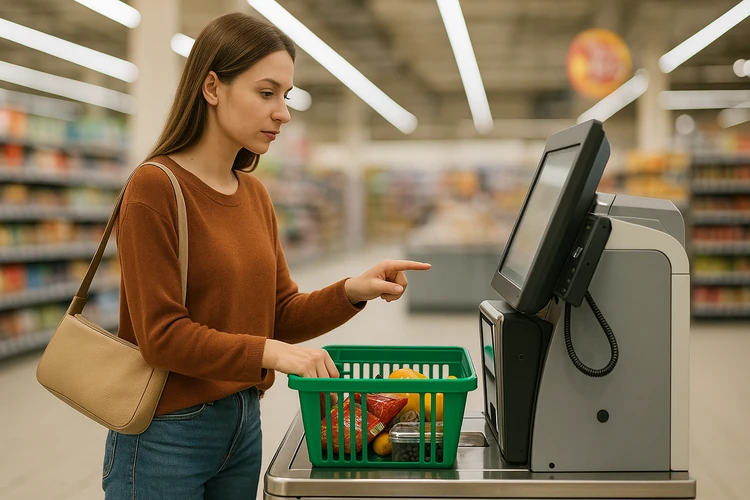

Target is rolling out an accessible self-checkout experience in stores nationwide beginning this holiday season, continuing into early 2026.
The system was built with and for people who are blind or have low vision, and offers features like braille, tactile controls, audio prompts, high-contrast icons, and a headphone jack.
Steve Decker, a blind Target UX accessibility manager, helped lead the effort—and when he saw his daughter use it independently, he called it “joy, independence and change.”
Starting this holiday season and rolling out into early 2026, Target is installing what it calls the first-of-its-kind accessible self-checkout in its stores across the U.S.
The new checkout system is specifically designed for guests who are blind or have low vision, though it can also help those with motor disabilities.
Rather than replacing the existing self-checkout setup, Target is layering on enhancements that make the process more intuitive and navigable. This includes braille labels, high-contrast button icons, physical navigation keys (including a dedicated “info” button), and a custom tactile controller co-developed with Elo.
For audio guidance, a single continuous audio stream walks guests through scanning and payments, and users can plug in headphones and adjust volume.
"This season brings so much joy for our guests, but we know it can be overwhelming, too. That is why even small wins matter — like an accessible self-checkout that helps guests shop their way, with confidence," Adrienne Costanzo, executive vice president and chief stores officer, Target, said in a news release. "Shopping with us should be easy, move fast, and feel good — period."
The story behind it
This isn’t just a tech play — Target leaned heavily on lived experience. Steve Decker, a senior manager on Target’s user experience accessibility team who is himself blind, helped lead the development.
The emotional payoff became real when he and his daughter (who has low vision) walked through a checkout together using the new system
"Shopping with my daughter and teaching her how to use the self-checkout, that was powerful. It is not just tech. It is joy, independence and change," Decker said in the news release.
"If I could leave people with one thing from this story, it would be that accessibility can drive innovation and growth. I really think this work will enable more people to shop and to work at Target. It truly exemplifies Target's purpose of helping all families discover the joy of everyday life."
Target also partnered with the National Federation of the Blind during development, taking feedback from the blind and low-vision community at every stage.
Why this matters
Accessible design often gets framed as a special case, but this rollout shows how inclusive design can be mainstream. People with vision or mobility impairments often rely on help or skip self-checkout altogether. With this upgrade, Target aims to give more guests independence and confidence during a part of shopping many take for granted.
Over 1,900 Target stores will gradually gain this capability. And while the technology is introduced in time for holiday shopping, its promise extends far beyond — advancing a future where everyone can shop on their own terms.