

Planning your moving day
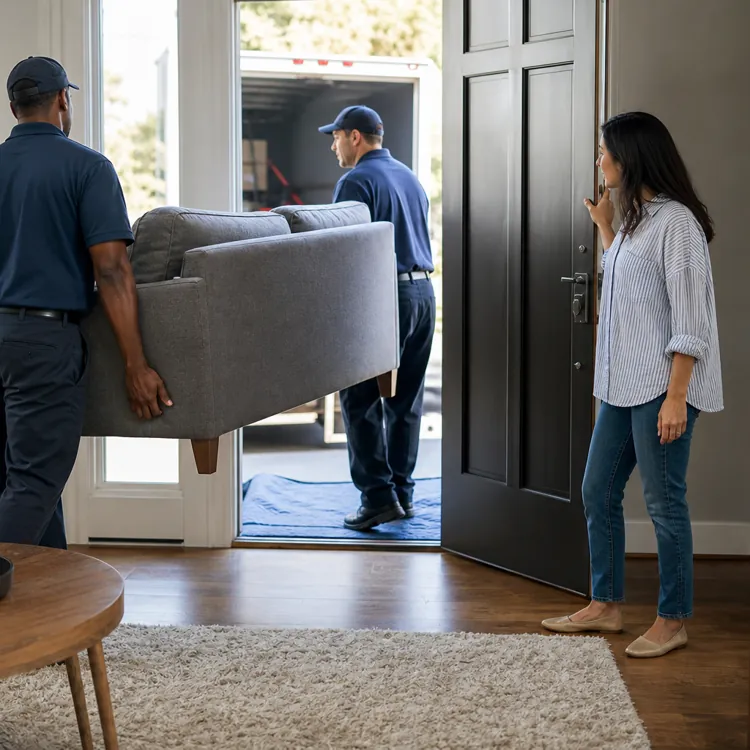
Prepare your home early and communicate often with the moving team. This helps to keep you updated throughout the process and allows you to handle other tasks, like cleaning, as the movers move your stuff. Steering clear of the movers while they work will reduce your stress and theirs.
Before the moving company arrives
Before moving day, have a plan. Start by preparing your home according to your moving contract and the moving company's tips. Pack up what you’re responsible for packing for the move, such as valuables or collectibles, and clear pathways.
Clear approaches to the home so the moving truck can park easily and the team can move furnishings between your home and the truck safely. If possible, arrange for your children and pets to be off-site, or have a plan to keep them away from where the movers are at any given time.
Refer to your contract with the moving company for any other requirements before the movers arrive.
When the moving company arrives
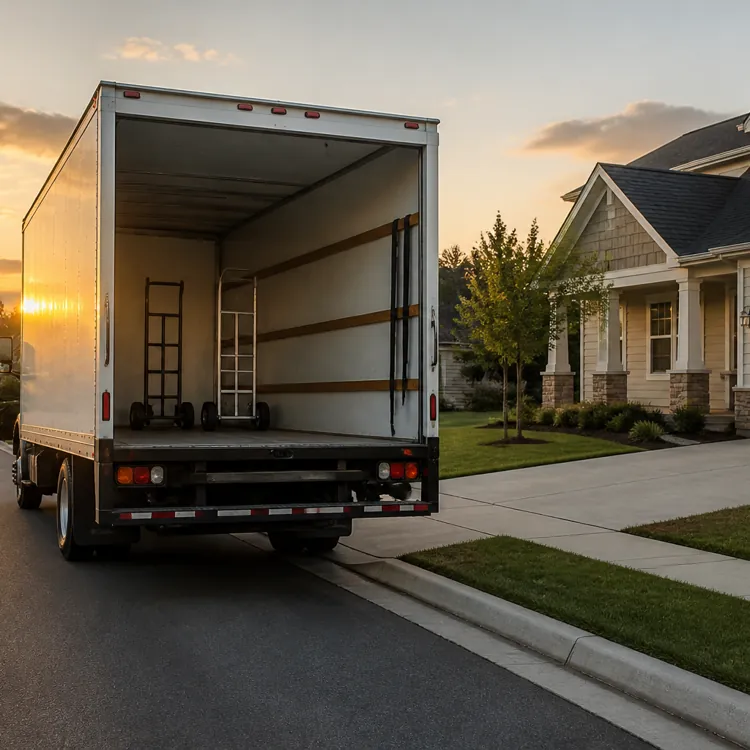
When movers arrive, show them where they can park and point out any hazardous spots in the yard, such as underground pipes — especially if they’ll be backing their truck over grass instead of into a driveway.
Ask the movers what else they might need from you, and provide access to your home.
While the movers are moving your stuff
While movers are moving your stuff, stay out of their way, but be available to answer questions. Once the movers finish a specific room, check for any items left behind and begin cleaning.
While it’s fine to pay attention to what the moving team is doing, try not to micromanage the movers. Instead, as the movers finish up loading, double-check the spaces again and confirm next steps with them if you have any questions.
» EXPLORE: The best moving companies (2026 guide)
Keeping movers (and your stuff) safe
You think of your home as a safe space.
But while the movers are moving your stuff around the house, accidents can happen. You, your family members or even the movers may drop fragile items or trip on stairs. Unsupervised children and pets are at risk of getting injured by moving equipment, the team’s vehicles and everyone in and around the house — including the movers.
Plan ahead to help keep everyone and everything safe.
Identify and clear hazards
Clear out potential hazards before moving day. Walk through your home, identifying potential trip hazards, fragile items that need extra care and items that should stay in the home and could be damaged during moving activities.
For example, glass doors may break, tight corners may be damaged, and ceiling fans can be bumped when tall furniture is moved.
Protect items that need padding, remove hazards where possible and communicate any remaining issues to movers. When first hiring movers, ask if there are additional hazards they want you to identify.
Plan for safe parking and accessible entry
Plan ahead to ensure movers have safe, accessible parking and access to your home.
HOAs often have rules on how long trucks can park. Apartments may require reservations for freight elevators and loading docks, or parking permits for specific areas around the building. Check with your building management, HOA and city for restrictions you need to be aware of.
Likewise, clear pathways are needed into and out of the home as well as through the property. Shared walkways may require working with neighbors or building management to ensure they are safe and clear for movers on the day of your move.
Create a safety checklist
With so much activity during a move, consider using a checklist to keep things organized. A checklist of major safety issues is a great place to start.
- Weather: Mitigate weather-related hazards by clearing snow and ice from walkways and driveways.
- Hidden outdoor hazards: Mark any areas the moving truck cannot drive over, such as pipes or sprinklers, and communicate this to the moving company.
- Lighting: Ensure adequate lighting inside and out. For rentals with shared spaces, you may need to ask maintenance to replace burned-out lightbulbs.
- Rugs: Remove tripping hazards such as rugs from pathways.
- Stairways: Ensure banisters are secure, stairs are dry and any carpet is secure.
- Toys and clutter: Remove toys or other clutter from pathways. For apartments, condos or townhomes with shared spaces, let neighbors know when you’ll have movers on site and ask for their help in keeping travel areas clear.
- Access: Reserve access points such as freight elevators in advance.
- Furniture contents: Relocate personal items from dressers, freezers, refrigerators, bookshelves, china cabinets and other furniture pieces before the movers start moving your stuff.
- Concerns: Inform the movers of any structural hazards, such as low ceilings, loose floorboards or narrow doorways, before they arrive on site.
- Dangerous items: Remove flammable liquids, pool chemicals, insulin needles, guns and ammunition from the area prior to moving day.
Safeguarding kids and pets
Kids and pets require extra protection during moves. Plus, moving activities can scare pets — and pose hazards to movers if they get underfoot. But when you’re focused on moving tasks, it’s easy to lose track of children's and pets' activities and location.
Why kids and pets need supervision during moves
Keeping kids and pets supervised or off-site during moves improves moving speed and safety for everyone. It also helps to prevent meltdowns.
Moving can be scary for children; they’re seeing their safe spaces dismantled by people they don’t know. There’s a lot of uncertainty. That can lead to tantrums, fleeing or hiding.
There is also a serious risk that kids will be struck by the moving truck or other nearby vehicles. Over 5,000 children are injured by vehicles in non-traffic accidents each year.
Cats and small animals tend to hide, dart underfoot at the wrong moment or run away. Dogs can become aggressive out of fear and bite the movers or other people in the home. Even if your dog is not aggressive, its presence can be a distraction — particularly to movers who have experienced aggressive dogs at other homes.
How to keep kids and pets busy while movers work
Keeping pets and children busy can be challenging, but there are ways to help them stay safe and entertained.
| Children | Pets | |
|---|---|---|
| Off-site | Consider having a relative or family friend take them on a fun day out to the park. | Look into boarding or doggy daycare for pets. |
| Secure in place | Depending on their age, children may be able to stay in closed rooms, such as their bedroom, for short periods while movers work. Supervision is recommended. | Pets can be temporarily secured in a closed, pet-safe room with food, water and bathroom essentials, such as a litter box, for short periods. |
| Outside play | Letting children play outside with supervision, such as in a fenced backyard away from moving activity, may be a solution for you. | If you have a secure backyard where pets normally spend time, that may be an option during active loading/unloading of moving vehicles. |
| Toys and activities | Regardless of where your child is, provide plenty of games and activities to keep them busy. | Wherever your pet stays during the move, be sure to provide enrichment and items that help the animal feel safe. |
What to do when the movers are finished
Once everything is loaded, there are a few things you need to do before the truck leaves.
Get eyes on children and pets
Know where your pets and children are. Children can hide in loaded furniture, such as dryers, or investigate the truck. Locate children and pets before anything moves.
Perform a walkthrough
Do a final walkthrough of the home. Look for anything left behind by accident and note any damage to the home and yard. Follow your moving company’s directions for marking and notifying them of damage.
Note: Commonly missed spots include kitchen drawers, attics, garages, the dishwasher and closet shelves.
Review paperwork
Examine the bill of lading, reconcile the inventory list and confirm the delivery address with the crew leader. Most movers do not accept payment on the day of pickup. You should have already paid a deposit to schedule the move, with the balance typically due at delivery.
Consider tipping
If the crew exceeded expectations, consider tipping. While there is no set-in-stone customary rate, tips of $20 to $50 for a partial day and $50 to $100 for a full day of loading are common.
Some moving companies will do a final walk-through with you. Take your time whether you perform the walk-through alone or with the movers.
» RELATED: How to unpack after moving
FAQ
Are there any red flags to watch for when hiring movers?
Common red flags in movers include rental trucks, demanding full payment at pickup, charging extra fees not discussed in the quote and no physical company address.
What will movers not pack?
Movers commonly refuse to pack hazardous materials, live plants or animals, and especially valuable items. Packing service is considered separate from loading service and costs extra. However, loading service usually includes wrapping and protecting furniture.
Do you have to be present while movers are moving your stuff?
Either you or a designated representative — a family member, friend or neighbor — needs to be on hand while movers are working and to sign papers.
Is $100 per person a good tip for movers?
Tipping movers $100 per crew member is on the high end of tip ranges.
Article sources
ConsumerAffairs writers primarily rely on government data, industry experts and original research from other reputable publications to inform their work. Specific sources for this article include:
- National Highway Traffic Safety Administration, "Traffic Safety Facts." Accessed May 14, 2026.