

Key insights
Packing a garage involves decluttering, organizing by category and packing in stages.
Jump to insightPlastic totes, bubble wrap and moving blankets protect garage items better than standard cardboard boxes alone.
Jump to insightMoving companies won’t transport flammable, explosive or corrosive materials, so identify these and dispose of them safely before your move.
Jump to insightSteps for packing a garage
Follow these steps to pack your garage for a move:
1. Declutter and sort items
If possible, start four to six weeks before your move by emptying the garage in sections and sorting everything into three piles: keep, donate (or sell) and discard. “Every item you eliminate now saves you time, effort and moving costs later,” Friedman emphasized.
If you’re stuck between deciding whether you should keep an item or get rid of it, consider this rule of thumb from Paul Giordano, owner of Ontrack Moving, an asset-based moving company operating in California and Arizona: “If you haven’t used an item in years and it has no clear purpose in the next home, donate or dispose of it before the move.”
2. Determine (and gather) necessary packing supplies
Once you’ve sorted your garage items, group what’s left by category, such as tools, sports gear, seasonal items or yard equipment. This will give you an idea of what containers and protective materials you need before buying anything, and how much of each. A garage with mostly hand tools needs different supplies than one packed with large power equipment and appliances.
See the “Garage packing supplies and boxes” section below for a full breakdown by item type.
3. Set aside hazardous items for disposal
Before packing a single box, pull out anything movers can’t legally transport. This includes gasoline, propane tanks, paint, solvents, fertilizers and other flammable or pressurized materials.
See the “Hazardous garage items movers cannot take” section below for details.
4. Pack tools and small hardware safely
Be sure to give tools a good wipe-down before anything goes into a box. Grease and grime can transfer to, and damage, other items.
Giordano recommended packing anything oily or sharp in plastic totes or bins with locking lids instead of cardboard boxes. Plastic bins are sturdier and keep loose hardware from rattling around.
Pack tool chests, compressors and other heavy equipment into their own containers first. Those boxes go onto the truck before anything else.
5. Bundle long tools and bulky items
“Grills, outdoor furniture and power equipment often require wrapping, padding or partial disassembly,” Friedman noted, so try to build extra time into your final week before loading day if you have any of these items. Bundle lumber, or long-handled things such as rakes and shovels, and secure them together rather than trying to box them. This makes them easier to load and less likely to shift in the truck.
6. Label boxes and plan the loading order
Garages tend to have more miscellaneous items than other rooms in the house, which makes labeling critical. Marking the contents on every box before the moving crew arrives can speed up unloading and take the guesswork out of setting up your new garage.
Friedman also advised planning your load order in advance. If the stuff from your garage goes on the truck last, heavy items are readily accessible when you reach your destination.
Garage packing supplies and boxes
“Plastic bins are useful for tools, hardware and heavy equipment because they can handle weight better and protect contents from moisture or grease,” Friedman said. For everything else, match the box size to the weight of what you’re packing. How much packing material you need depends on your garage size and how much stuff you have after decluttering.
» MORE: How to pack golf clubs for moving
Use this table as a reference when building your supply list before moving day:
| Supply type | Best uses | Key features/notes |
|---|---|---|
| Small boxes | Power tools, hardware, hand tools | Keep weight under 50 pounds |
| Medium boxes | Sports gear, extension cords, lightweight equipment | Good for bulky yet light items |
| Large boxes | Seasonal decorations, lightweight bulky items | Avoid packing heavy items |
| Sport utility boxes/dish barrels | Baseball bats, golf clubs, stored dishware | Good for oddly shaped or fragile items |
| Plastic storage bins | Oily or sharp tools, loose hardware | Locking lids prevent spills and shifting |
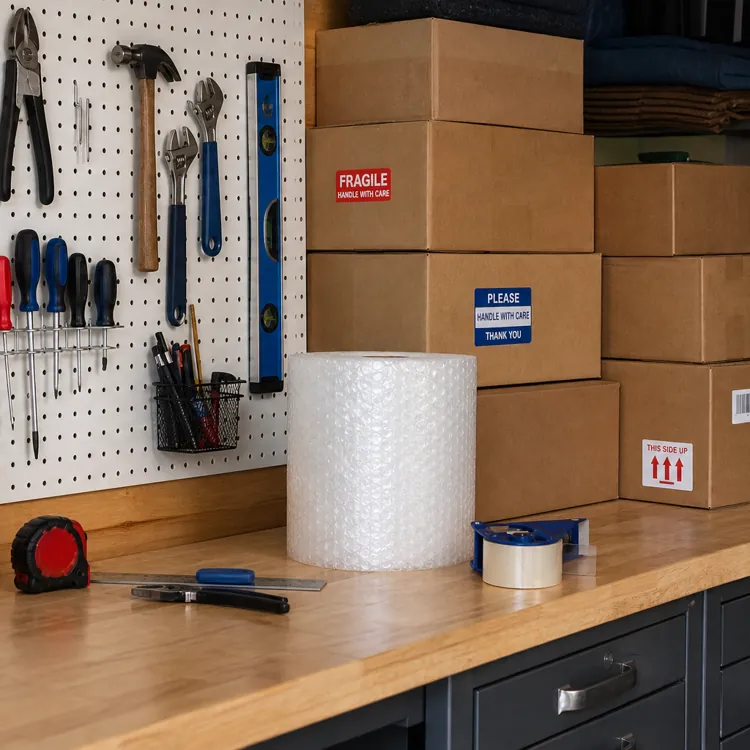
| Bubble wrap | Sharp edges, delicate parts, power tool components | Prevents punctures and scratches |
| Stretch wrap | Drawers, lids, bundled tools, cords | Keeps items secure without tape residue |
| Moving blankets | Large equipment, appliances, finished surfaces | Essential for dent and scratch prevention |
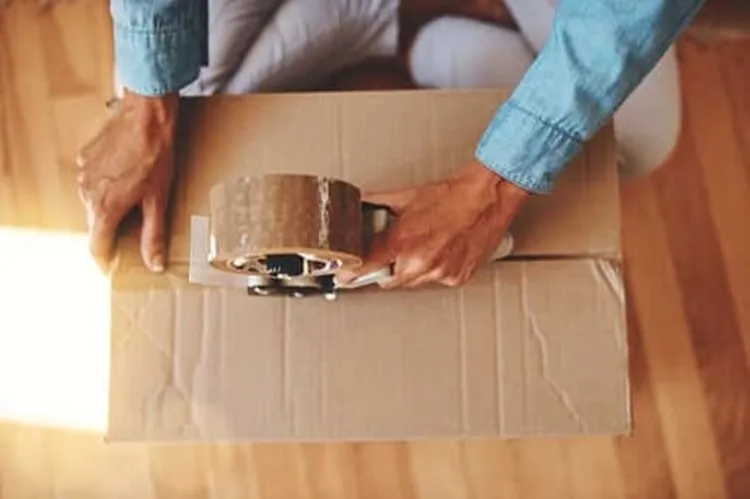
| Heavy-duty tape | Box reinforcement | Use two to three layers on heavy box bottoms |
| Zip-lock bags | Screws, bolts, small hardware, batteries | Label each bag before sealing |
| Markers | Labeling boxes and totes | Mark contents on all sides |
| Rope/twine/ratchet straps | Bundling long tools, securing truck loads | Keep bundles tight and stable in transit |
Hazardous garage items movers cannot take
Most moving companies won’t touch flammable, explosive or corrosive materials, and the garage is where those items typically live. Under federal safety regulations and industry standards, these materials can’t travel on moving trucks, so identifying them early in your packing timeline is critical.
Moving trucks experience temperature changes, vibration and pressure shifts during transit, which can cause chemical containers to leak or pressurized cans to rupture. “Both scenarios could become serious safety risks for the crew and for the entire shipment,” Friedman warned.
Not everything in your garage needs to stay behind, though. Movers will take lawn mowers, chainsaws and other gas-powered equipment if you’ve drained the oil and fuel from them first. For anything on the prohibited list, call your local municipality or public works department to find a hazardous waste collection day or drop-off facility.
Here are the most common prohibited items found in garages, organized by category:
Flammables
- Gasoline
- Motor oil
- Paint and paint thinners
- Lighter fluid
- Charcoal
Explosives and ammunition
- Fireworks
- Ammunition
- Propane tanks
Corrosives and chemicals
- Acids
- Pool chemicals
- Antifreeze
- Pesticides
- Fertilizers
- Cleaning chemicals
Pressurized items
- Aerosol cans
- CO2 canisters
Other
- Car batteries
Warning:Attempting to load prohibited items isn’t worth the risk. If something goes wrong, your moving insurance likely won’t cover the damage. And under federal hazardous materials transportation law, violations can result in penalties of up to $102,348 per incident.
Packing tools, equipment and garage appliances
With supplies in hand and hazardous items out of the way, you can focus on packing.
Pack hand tools and toolboxes
“If hand tools are already in a toolbox, leave them there and secure the drawers or lid,” Friedman suggested. “This keeps everything organized and makes unpacking much easier.” Wrap loose hand tools individually in packing paper or bubble wrap. Cover sharp edges, such as saw blades, pruners and shears, to prevent puncturing boxes or injuring anyone handling them.
Pack power tools and batteries
Power tools need a little extra prep before the move. Remove batteries, pack them separately from the tools themselves and tie up loose cords so nothing tangles during transport.
“If you have the original packaging, that’s often the best option because it’s designed to protect the tool,” Friedman noted. If you don’t have original packaging, wrap tools in bubble wrap and pack them snugly in small boxes to prevent shifting.
Bundle garden tools and sharp edges
Long-handled garden tools like rakes and shovels don’t fit in standard boxes. Bundle four to six of them together, alternating head-to-handle. Secure the bundle with rope or zip ties and wrap metal heads in bubble wrap or moving blankets. Stand bundles upright along the truck wall rather than laying them flat, where they could shift.
Prepare grills, mowers and fuel equipment
Grills and outdoor furniture often need partial disassembly before the move. “Folding down grill shelves or separating table legs can make these items much easier to transport,” Friedman said. For fuel-powered equipment such as lawn mowers, trimmers and generators, remember to drain the fuel and oil ahead of time.
Protect refrigerators, freezers and washers
If you have a refrigerator or freezer in your garage, start by wiping down the interior. Empty, defrost and allow the appliances plenty of time to dry, as moisture can cause mold or damage in transit.
If you have a washing machine in your garage, you should disconnect and secure hoses, and run a short spin cycle to remove remaining water 24 hours before your move.
“Movers typically wrap these appliances in thick moving blankets to prevent dents and scratches,” said Friedman. Secure doors with stretch wrap to keep them from swinging open during loading.
FAQ
How far in advance should you start packing before moving?
The necessary timeline depends on your home size. Packing smaller apartments and studios may take three to four weeks, while larger homes may require six to eight weeks, given the volume of items to sort and pack.
How do you pack shovels and rakes for moving?
Bundle shovels and rakes together and wrap the metal heads in bubble wrap or moving blankets. Secure the bundle with rope or zip ties, and stand it upright along the truck wall rather than laying it flat.
What items should you pack last when moving a garage?
When packing the garage, save for last anything you’ll use up until moving day, such as everyday hand tools, tool boxes, ladders and cleaning supplies.
Can movers transport lawn mowers and other fuel-powered equipment?
Yes, movers can transport lawn mowers and other fuel-powered equipment, provided you drain the fuel and oil at least 24 hours before loading.
Article sources
ConsumerAffairs writers primarily rely on government data, industry experts and original research from other reputable publications to inform their work. Specific sources for this article include:
- LiteMovers, Inc., “What Will Movers Not Move? Complete Prohibited Items List 2025.” Accessed March 11, 2026.
- First Class Moving Systems, “10 Things Your Movers Won't Move.” Accessed March 11, 2026.
- Move, Inc., “How to Pack and Move Lawn Equipment: A Complete Guide.” Accessed March 11, 2026.
- California New York Express Movers, “How To Pack A Garage For Moving.” Accessed March 11, 2026.
- New Haven Moving Equipment, “The Ultimate Homeowners Packing and Moving Checklist.” Accessed March 11, 2026.
- Bekins Van Lines, Inc., “How to Pack Tools for Moving: Tackling the Garage & Workshop.” Accessed March 11, 2026.
- Affinity Moving, “How to Pack a Garage for Moving: The Complete Guide to Moving Garage Items Safely.” Accessed March 11, 2026.
- The Professionals Moving Specialists, “How to Prepare Large Appliances for Moving Day: Essential Tips and Checklist.” Accessed March 11, 2026.
- Hansen Bros. Moving & Storage, “How to Protect Kitchen Appliances When Moving.” Accessed March 11, 2026.
- Allied Van Lines, Inc., “How to Move a Washer and Dryer.” Accessed March 11, 2026.
- Hansen Bros. Moving & Storage, “Tips for Packing Your Power Tools for Moving.” Accessed March 11, 2026.
- U-Haul International, Inc., “How to Pack a Garage for Moving.” Accessed March 11, 2026.
- United States Environmental Protection Agency, “Household Hazardous Waste (HHW).” Accessed March 11, 2026.
- Allied Van Lines, Inc., “What Will Movers Not Move: Non-Transportable Items.” Accessed March 11, 2026.
- Legal Information Institute, Cornell Law School, “49 CFR § 107.329 - Maximum penalties.” Accessed March 11, 2026.
- North American Van Lines, Inc., “Packing Tips: Garage/Hobby Room/Storage.” Accessed March 11, 2026.
- Pak-All, “The Ultimate Guide to Choosing Heavy Duty Storage Containers for Moving and Renovations.” Accessed March 11, 2026.
- Megan’s Moving, “How to Pack Your Garage for a Move.” Accessed March 11, 2026.
- North American Van Lines, Inc., “How to Use Moving Blankets.” Accessed March 11, 2026.
- Storage Rentals of America, “What Items Should Be Roped or Tied Down While Moving.” Accessed March 11, 2026.
- Allied Van Lines, Inc., “Packing Tips For a DIY Move.” Accessed March 11, 2026.
- Two Men and a Truck, “Reducing Moving Costs with Effective Box Labeling and Packing Materials.” Accessed March 11, 2026.
- Wheaton World Wide Moving, “6 Tips to Pack Your Garage, Workshop, or Garden Shed for Moving Day.” Accessed March 11, 2026.
- Taylor Moving and Storage, “How Do Movers Pack a Truck?” Accessed March 11, 2026.
- Alliance Relocation Services, “What Not to Pack: Items Movers Can’t (and Shouldn’t) Transport.” Accessed March 11, 2026.
- On The Go Moving and Storage, “Moving Tips: How to Pack Up Your Garage for Moving.” Accessed March 11, 2026.