
Which pests are most common in U.S. households?
The ConsumerAffairs Research Team sought to determine how common various pests are in American homes, and what people have done — and are willing to do — about them. The team analyzed data from the U.S. Census Bureau’s American Housing Survey, collected every two years, from 2015 to 2021, and conducted a survey of a nationally representative sample of 2,000 people on related issues in February 2024.
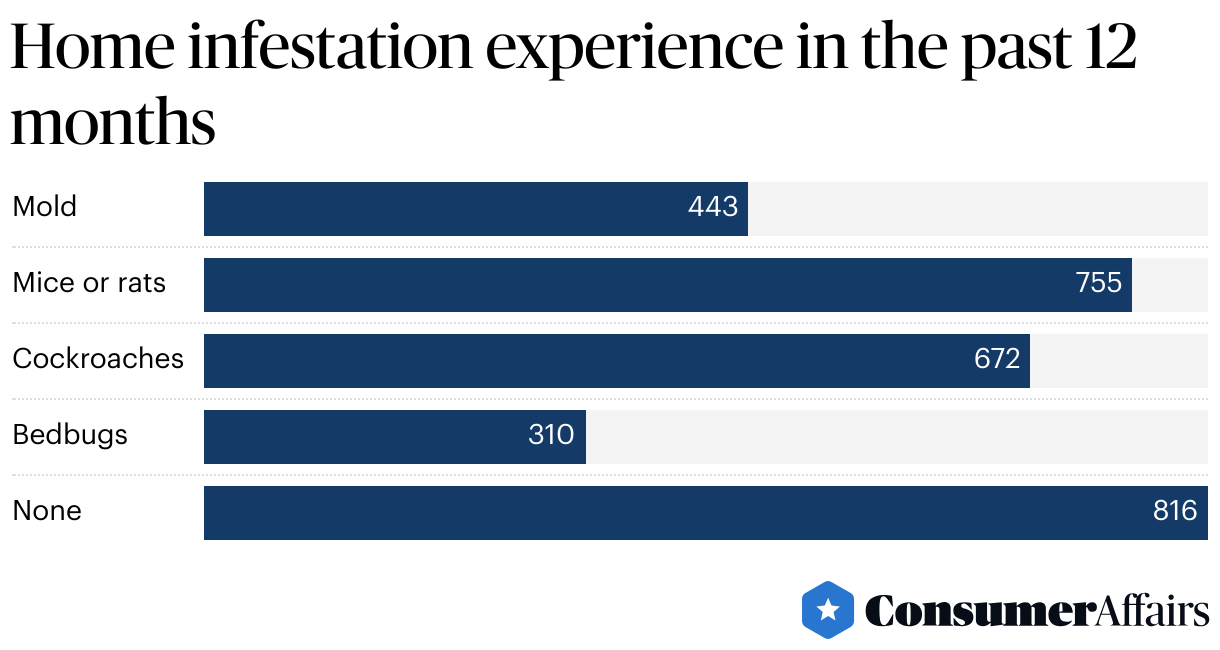
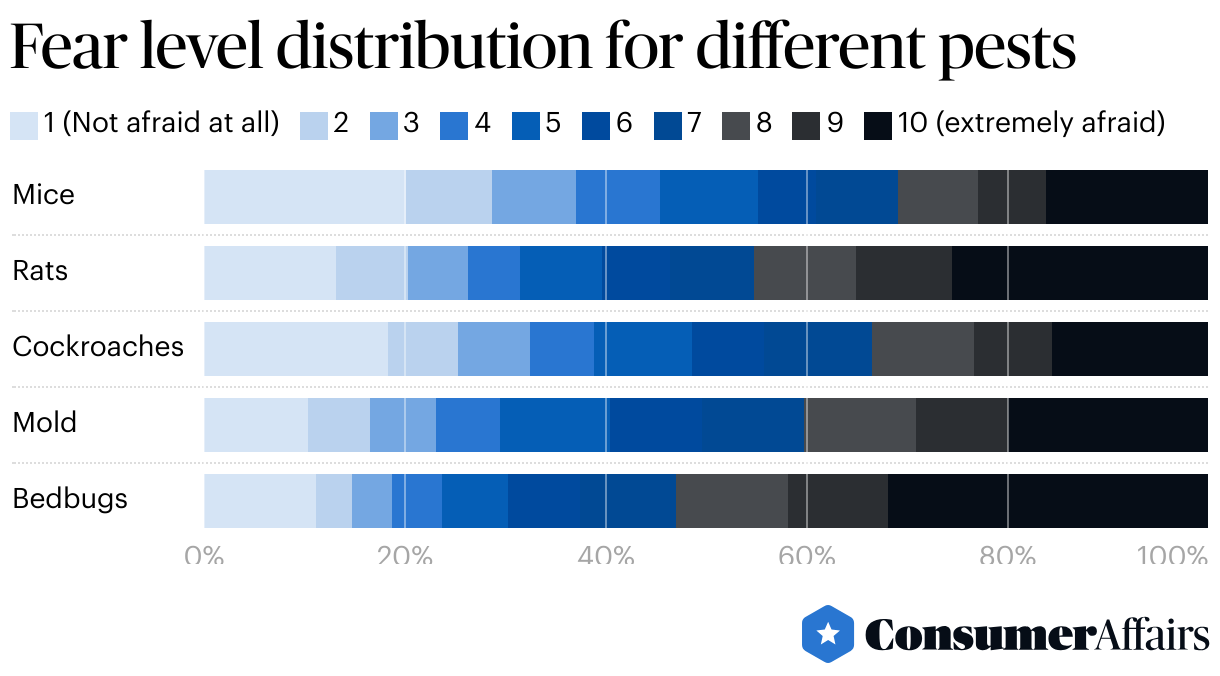
In general, the data shows that rats and mice are most common in U.S. homes, closely followed by cockroaches. Much less prevalent is mold, and even rarer are bedbugs. But bedbugs spark the most fear among residents, followed by rats, mold, cockroaches and mice, in that order.
Harrowing experiences
Having pests in the home can be disruptive, embarrassing and unhealthy. Selbach said some treatment processes, such as fumigation, can be unpleasant for people to be around. Even when placing baits and traps around a home, he tells customers, “It’s going to get worse before it gets better because we’re stirring them up.”
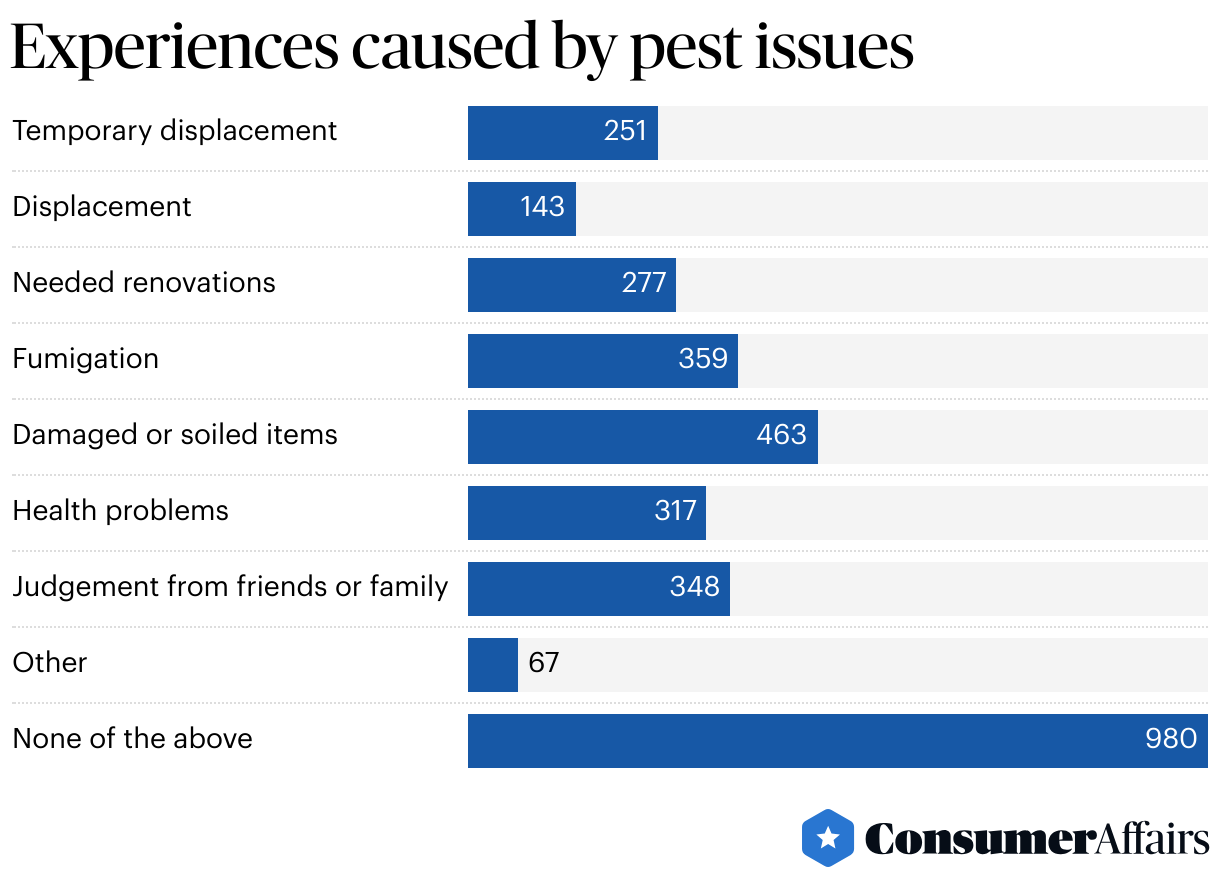
According to the ConsumerAffairs survey, 12% of Americans have had to move out of their homes temporarily because of a pest issue, and another 7% said they had to leave their homes for good. About 14% reported needing renovations to get their infestation under control.
Cockroaches and rodents can trigger allergies and asthma, and they spread germs that contaminate food, said Changlu Wang, an extension entomologist at Rutgers University. Mice and rats can also carry fleas and mites that spread disease.
Ignoring the pests can make the problem worse, Wang said. Many of the people he has surveyed over the years have had infestations for long periods before they took action. And in many cases, neighbors’ homes were the sources of the pests.
In a 2018-2019 survey of low-income apartment residents in New Jersey, Wang and his colleagues found that 56% of homes had at least one pest. He recommends that renters tell their landlords so they can take care of the problem — and that landlords who get resident complaints about pests check with all the neighbors in the building — to prevent the spread of an infestation.
Fighting back
Usually people try to fight pests on their own, Selbach said, and sometimes those measures work. “What’s driving [the pests into the home] is the humidity change,” he explained. “They’re usually looking for more moisture than is available outside but also some nearby dry surfaces to inhabit, and gravitate to rooms with heavy water usage.”
That lines up with the ConsumerAffairs survey, which found that about two-thirds of residents with mold problems find these fungal infestations in their kitchens or bathrooms.
Once they’re in the home, pests can find plenty of food that is easier to access than in outdoor settings, Selbach said, noting that even the cleanest homes have some crumbs on the floor. That’s why the pests stick around.
People try different ways to get rid of the problem: 57% of those surveyed by ConsumerAffairs reported trying store-bought pest control products, and 30% tried various home remedies, which Selbach says can even include essential oils.
By the time someone calls in an expert, Selbach said, they have likely tried a range of unsuccessful approaches. “Typically they’re calling when they’ve thrown in the towel,” he said.

Wang said many of the sprays, bombs and ultrasonic repellers that are on the market don’t actually work. He recommended people check with experts about what does work, such as gel-based cockroach baits and standard snap traps for mice and rats. Wang himself uses snap traps to control the mice that periodically try to get into his garage and shed. They are cheap and reusable, he said, as long as you wear protective gloves while handling the traps.
Then again, according to the ConsumerAffairs survey, 17% of Americans say they take no action about the pests in their homes.
Wang said there are two reasons people might not act: “Either they financially cannot afford it, or they have lived with that environment from a young age, so they are less concerned about the presence of pests.”
It gets expensive
Pests can be costly — a lot more costly than people may hope.
About two-thirds of the residents who have fought pests in their home in the past year paid up to $1,000 to address the problem. And another 30% spent between $1,001 and $5,000.
Yet the ConsumerAffairs survey found 12% of people wouldn’t be willing to spend anything to address a rat or mouse infestation, while 14% said the same for cockroaches and 12% said the same about mold.
“People are willing to spend on emotion,” Selbach said. Once they’re desperate, they’ll have the mindset of ‘I’ll spend whatever to get rid of it,’” he said.


He emphasizes, though, that preventive treatment is less expensive than removing an infestation. Many people first call to get rid of a problem and then sign up for periodic services to make sure it doesn’t return.
He estimated that having an expert take care of roaches can cost $500, and rats about $1,000. Once the problem is gone — or if a homeowner is taking steps in advance of identifying a problem — an initial maintenance visit costs around $200, with quarterly visits costing another $120 or so, he said.
Wang said he has found people often go to extremes when it comes to pests, but not always for the best.
“There are two extremes,” he said. “One is they don’t do anything and let the pests prosper. The other extreme is people get overprotective and use too many chemicals. Then you either waste money or contaminate the environment.”