

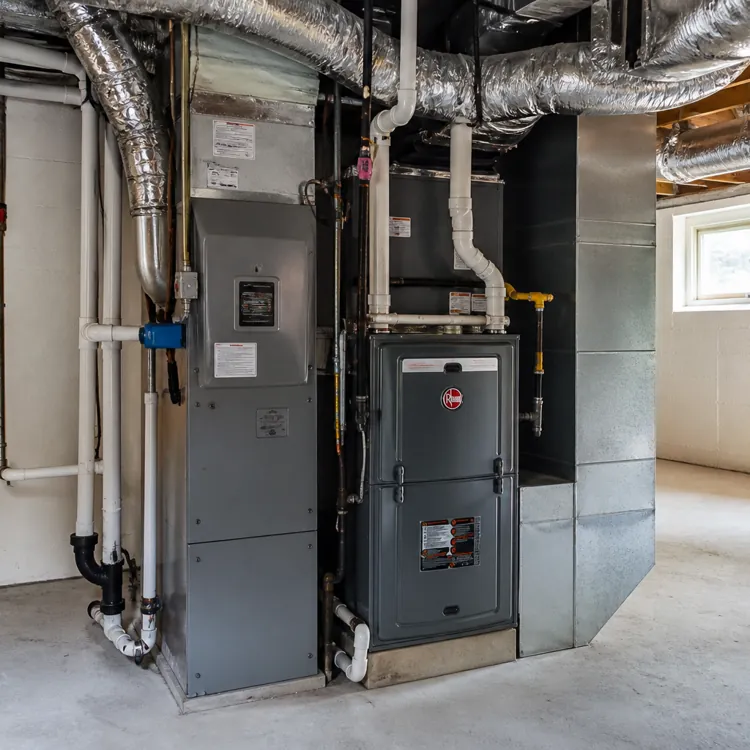
What is HVAC?
The term HVAC refers to anything that heats, cools or otherwise conditions the air in your house, which may include systems that control humidity, purify the air or introduce fresh air into your home’s interior.
Most homes in the U.S. have HVAC systems, as heat is a legal requirement for habitable spaces in most states and municipalities. In some cases, the HVAC system just provides heat, but there are a few different setups that fall under the term “HVAC”:
- A standalone heating system, like a furnace or boiler
- A split system that includes a central AC system and either a furnace or a boiler
- A standalone AC system, which may be legal in very warm climates in the extreme south
- A heat pump, which provides both heating and cooling
- A hybrid or dual-fuel system, which includes a heat pump for heating and cooling and either a boiler or a furnace for higher heat output in extreme cold
- Mini-splits, which are a type of heat pump that can provide both heating and cooling
In addition to these base setups, the following components can be a part of your HVAC system.
- Thermostat
- Ductwork
- Heat recovery ventilators
- Whole-home air purifiers
- Whole-home or in-line dehumidifiers or humidifiers
These are not specifically related to your HVAC’s heating and cooling capabilities, but they help deliver conditioned air through your home, maintain comfortable temperatures, modulate humidity and provide fresh air in your living space.
Where HVAC is used
An HVAC system is a key component of modern construction, and virtually all homes, commercial buildings and industrial spaces have HVAC systems installed. These help maintain the safety and comfort of occupants, and they can help reduce the risk of mold and indoor air contaminants.
HVAC system components explained
The HVAC components in and around your home will depend on the type of HVAC system you choose. Below are most of the major components that you’ll find with different systems.
- Boiler: A boiler burns fossil fuels to heat up water and may act as the primary heat source in your home. Some homeowners use boilers in combination with heat pumps, called a hybrid system, to maximize efficiency and heat production in extremely cold climates. However, this is uncommon, as you’d need both baseboard heaters and ductwork.
- Furnace: Furnaces burn fossil fuels to heat up air and may act as the primary heat source. Similar to boilers, you can couple them with heat pumps for a dual-fuel system. This is more common, as both systems can use the same ductwork.
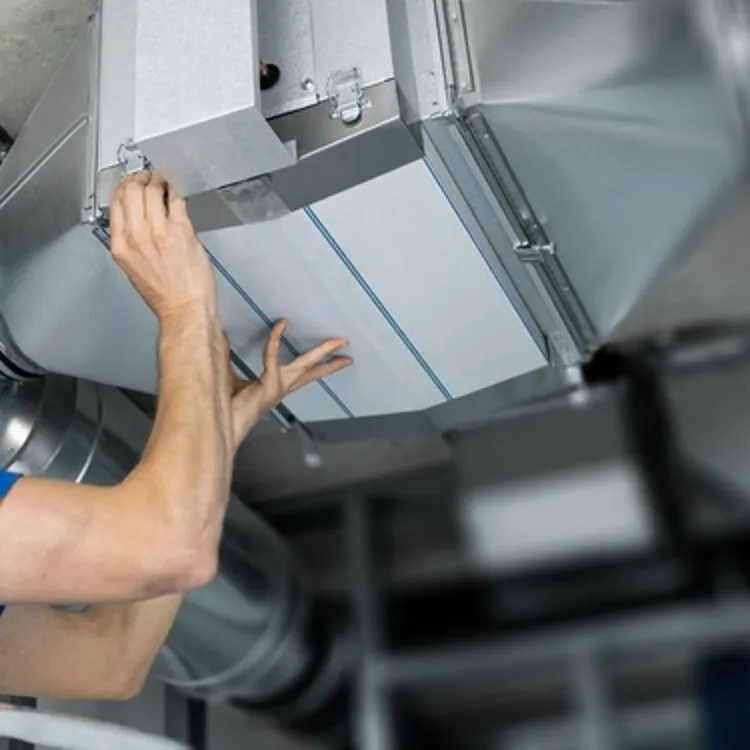
- Air handler: Air handlers distribute heated and cooled air throughout your home. You’ll find them working alongside furnaces, central AC systems and geothermal heat pumps.
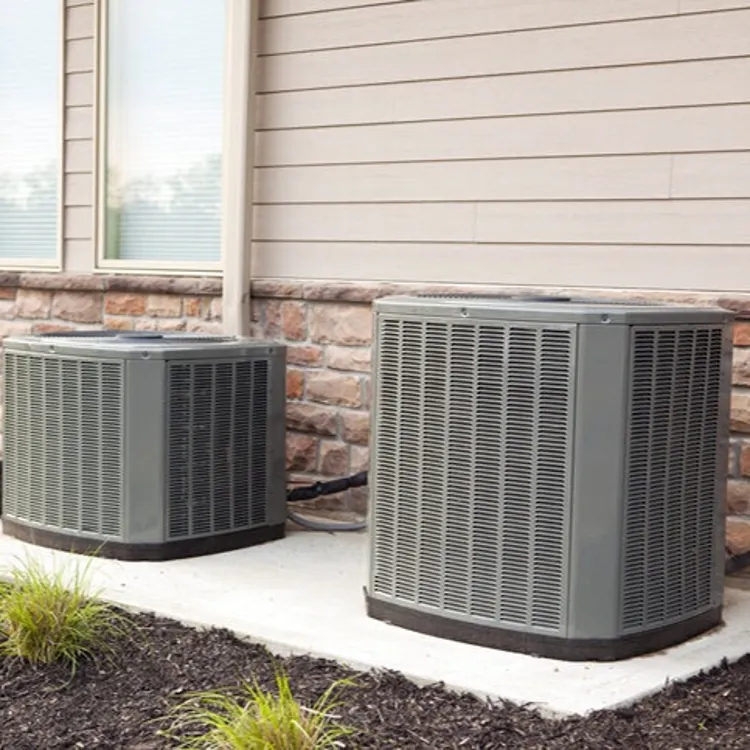
- Condenser coil: Heat pumps, mini-splits and central AC systems use condenser coils, which are located outside, usually on a concrete pad or mounted to an exterior wall. They condense refrigerant inside refrigerant lines to release heat. Heat pumps and mini-splits have reversing valves that can reverse the flow of refrigerant in the lines, allowing the condenser coil to absorb or release heat.
- Compressor: All central AC systems, heat pumps and mini-splits use a compressor to move refrigerant through refrigerant lines. Single-speed compressors are either on or off, and they’re the least efficient. Two-speed compressors can be off or on a low or high setting, so they’re much more efficient. Variable-speed compressors have more speeds and are the most efficient.
- Evaporator coil: Central AC systems, heat pumps and mini-splits couple a condenser coil outside with an evaporator coil inside. These evaporate refrigerant to absorb heat from the surrounding air. Heat pumps and mini-splits use reversing valves that can cause the indoor coil to release heat instead.
- Underground loop: Geothermal heat pumps have a large, underground loop that exchanges heat with the soil instead of the air outside your home. Horizontal loops spread out across a wide portion of land, while vertical loops take up minimal lateral space but extend hundreds of feet underground.
- Humidifier: A humidifier adds moisture to the air flowing through the ductwork in your home. In dry climates, you can add this component to any system that uses ductwork, like a central AC, a furnace or a heat pump.
- Air purifier: You can also add an air purifier to any system that uses ductwork. These usually use an additional mechanical filter and then pass the air through activated carbon filters to scrub out any impurities. Some use UV lights, as well, but these prevent mold growth in certain parts of your ductwork, and they don’t actually clean the air.
- Heat recovery ventilator: A heat recovery ventilator introduces fresh air into your system and heats it before distributing it throughout your home. These can work with most systems that use ductwork.
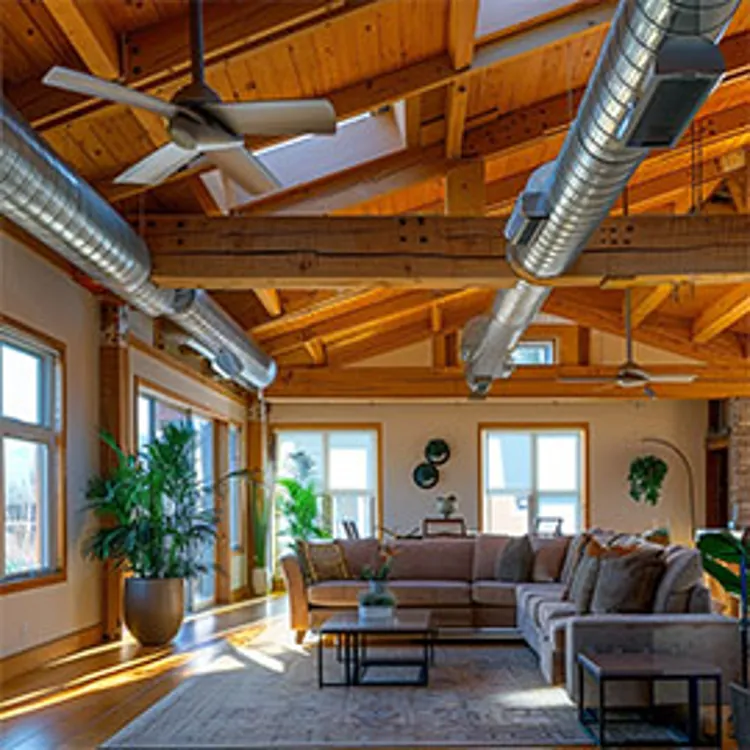
- Ductwork: Ductwork is a key part of most HVAC systems that distribute heated or cooled air throughout your home. According to the Department of Energy, 20% to 30% of the air traveling through ductwork is lost to leaks, so the integrity of your ductwork plays a key role in home efficiency and utility bills.
- Thermostat: All modern heating and cooling systems also include a thermostat, which lets you set temperatures for your living space. The thermostat monitors temperature and regulates when your heating and cooling systems run.
Understanding these components and how they function as a part of the larger system can help you identify issues that might crop up. You may also use this information to help determine if your manufacturer’s warranty or home warranty covers an HVAC repair that you need.
How HVAC systems work
The three possible parts of an HVAC system, which are the heating, cooling and ventilation systems, function differently depending on the type of HVAC system you have.
How heating systems work
There are two primary types of heating systems: those that generate heat and those that move heat.
The systems that generate heat can use oil, gas, propane or electricity to heat water or air and distribute the heated medium throughout the home.
- Boiler: Boilers heat up water using oil, natural gas, propane or electricity, and then they use circulator pumps to move the water through copper baseboards. The copper pipes have fins attached to them that radiate heat into your living space.
- Furnace: Furnaces use oil, natural gas, propane or electricity to heat up air, and then they use an air handler to move heated air throughout your home. The air travels through ducts behind your walls, floors and ceilings, and it exits into your living space through supply vents.
The systems that move heat are called heat pumps. They reverse the process of AC systems to pull heat from some outside source and move it into your home. There are three main types of heat pump systems:
- Air source heat pumps: These systems pair a condenser outside with an indoor evaporator coil inside. They absorb heat from the outdoor air and move it inside through a cycle of evaporating and condensing refrigerant. These systems usually work together with an air handler to distribute heated air.
- Mini-splits: Mini-splits are a type of air source heat pump, but they provide localized heat instead of centralized heat. They still use condensers and evaporator coils, but they don’t need an air handler, as each indoor unit acts as its own hot air distribution system.
- Geothermal heat pumps: Geothermal heat pumps function similarly to air source heat pumps, but instead of pulling heat from the outdoor air, they exchange heat with the ground. They require a large outdoor loop that either extends deep into the ground or travels across a large lateral area several feet under the ground.
How cooling systems work
Unlike heating equipment, cooling systems all use the same basic idea to cool indoor air. There’s a unit inside that pulls heat from the interior and moves it outside through a cycle of evaporating and condensing refrigerant. Still, the types of cooling systems work a bit differently.
- Central AC systems: Central AC systems have an evaporator coil inside and a condenser outside, and they use refrigerant to move heat from the interior of your home to the exterior. These systems always work together with an air handler to distribute cool air inside.
- Air source heat pumps: Air source heat pumps provide cooling by reversing the heat pump’s refrigerant cycle. These also work together with an air handler to move cool air throughout the interior.
- Mini-splits: Mini-splits provide both heating and cooling, and they also switch to cooling by reversing the refrigerant cycle. The indoor wall-mounted units distribute cooled air into your rooms, so there’s no need for ductwork or a standalone air handler.
- Geothermal heat pumps: Geothermal heat pumps also reverse the refrigerant cycle to provide cooling. They need to work alongside an air handler to distribute conditioned air.
How ventilation components work
For most of the systems above, you’ll also have some ventilation components, but it depends on the type of HVAC system you have and what kind of functionality you want.
- Filtration: All HVAC systems that move heated or cooled air have filters that remove contaminants. Most systems have multiple replaceable filters, but you can also introduce whole-home air purifiers that remove virtually all contaminants. A pro can attach a purifier to your existing ductwork to provide clean air in your home.
- Humidity control: Air conditioners naturally remove moisture from the air and collect that moisture in a drip pan or condensate drain. However, HVAC systems can also add humidity in dry areas using a steam humidifier in winter or an evaporative humidifier, both of which add moisture to the air circulating through your home.
- Ventilation: Some ducted HVAC systems have heat recovery ventilators that pull air in from the outside and heat it before pushing it into your living space.
HVAC efficiency ratings to know
According to the Department of Energy, 45% of a home’s utility expenses go toward space heating and cooling, so HVAC efficiency is something every homeowner should consider carefully.
There are a few different HVAC efficiency ratings that can apply, depending on the type of equipment you have.
- EER and EER2: EER stands for Energy Efficiency Ratio, and it measures a cooling system's cooling capacity as it relates to energy consumption. EER2 is similar but tests systems under conditions more like those found in homes and buildings. Higher EER ratings mean lower cooling costs and a smaller carbon footprint.
- SEER and SEER2: SEER stands for Seasonal Energy Efficiency Ratio. It’s just like EER, but it measures performance over an entire season. SEER2 also refers to ratings based on real-world testing conditions.
- HSPF and HSPF2: HSPF stands for Heating Seasonal Performance Factor, and it tells you how efficiently a heat pump provides heat for your home, calculated by taking the heat output and dividing by the energy consumption.
- AFUE: AFUE stands for Annual Fuel Utilization Efficiency. This rating is for boilers and furnaces, and it tells you how much fuel your unit will consume to provide a given unit of heat output.
- ENERGY STAR ratings: ENERGY STAR is a program run by the Department of Energy, and it sets minimum performance ratings for what it determines to be high-efficiency heating and cooling equipment, among other things. ENERGY STAR-certified HVAC systems must have the following general ratings, but keep in mind that there may be higher requirements in particularly cold or hot climates:
- EER: 10 or higher
- EER2: 11 or higher for split systems, 10 or higher for single package equipment
- SEER: 14 or higher
- SEER2: 15.2 or higher
- HSPF: 8 or higher
- HSPF2: 7.8 or higher for split systems and 7.2 for single package equipment
- AFUE: 85% or higher for oil boilers/furnaces and 90% or higher for gas furnaces/boilers
You also should consider the size and capacity of your system to maximize efficiency in your home.
- BTU rating: Most heating and cooling systems have BTU ratings, which tell you the output capability of the unit. Systems with a higher rating can provide sufficient heating or cooling in more extreme temperatures, for larger indoor areas or both.
- Tonnage: Tonnage is another way to represent heating and cooling capabilities, with one ton representing 12,000 BTUs per hour. Systems with more tons have a higher output.
More efficient HVAC systems cost more upfront, but they can save you money over time on utility bills. You should aim to optimize system size and efficiency, and having your HVAC tech perform a Manual J calculation is the best way to do that. Sizing your system appropriately can help avoid breakdowns, shortened system lifespan and the need for HVAC repairs.
| What it measures | Used for | ENERGY STAR minimum rating | |
|---|---|---|---|
| EER | Electricity consumption for cooling | Heat pumps, mini-splits and central ACs | 10 |
| EER2 | Electricity consumption for cooling | Heat pumps, mini-splits and central ACs | 11 for split systems, 10 for single package equipment |
| SEER | Electricity consumption for cooling | Heat pumps, mini-splits and central ACs | 14 |
| SEER2 | Electricity consumption for cooling | Heat pumps, mini-splits and central ACs | 15.2 |
| HSPF | Electricity consumption for heating | Heat pumps | 8 |
| HSPF2 | Electricity consumption for heating | Heat pumps | 7.8 for split systems, 7.2 for single package equipment |
| AFUE | Fuel consumption for heat output | Boilers and furnaces | 85% for oil, 90% for gas/propane |
FAQ
What is the difference between HVAC and air conditioning?
HVAC stands for heating, ventilation and air conditioning, so it encompasses air conditioning but also refers to heating systems and equipment that maintains good indoor air quality. Air conditioning is a part of HVAC but only provides cooling for interior spaces.
How long do HVAC systems typically last?
The average lifespan of HVAC systems depends on the equipment. Central ACs last for seven to 15 years, boilers last for an average of 40 years, furnaces last for 15 to 20 years, heat pumps and mini-splits last for 10 to 15 years, and ductwork can last for up to 100 years. The climate in your area and the maintenance you carry out will both affect lifespan.
Are ductless mini-split systems considered HVAC?
Yes, ductless mini-split systems are a type of HVAC system, as they provide heating and cooling for your interior space.
Article sources
ConsumerAffairs writers primarily rely on government data, industry experts and original research from other reputable publications to inform their work. Specific sources for this article include:
- ENERGY STAR, "Duct Sealing." Accessed May 8, 2026.
- United States Department of Energy, "Why Energy Efficiency Matters." Accessed May 8, 2026.
- U.S. Department of Energy, Office of Energy Efficiency and Renewable Energy, "Guide to Home Heating and Cooling." Accessed May 8, 2026.
- ENERGY STAR, "Heat Pump Equipment Key Product Criteria." Accessed May 8, 2026.
- International Association of Certified Home Inspectors, "InterNACHI's Standard Estimated Life Expectancy Chart for Homes." Accessed May 8, 2026.