
What is a bed rail, and who should get one?
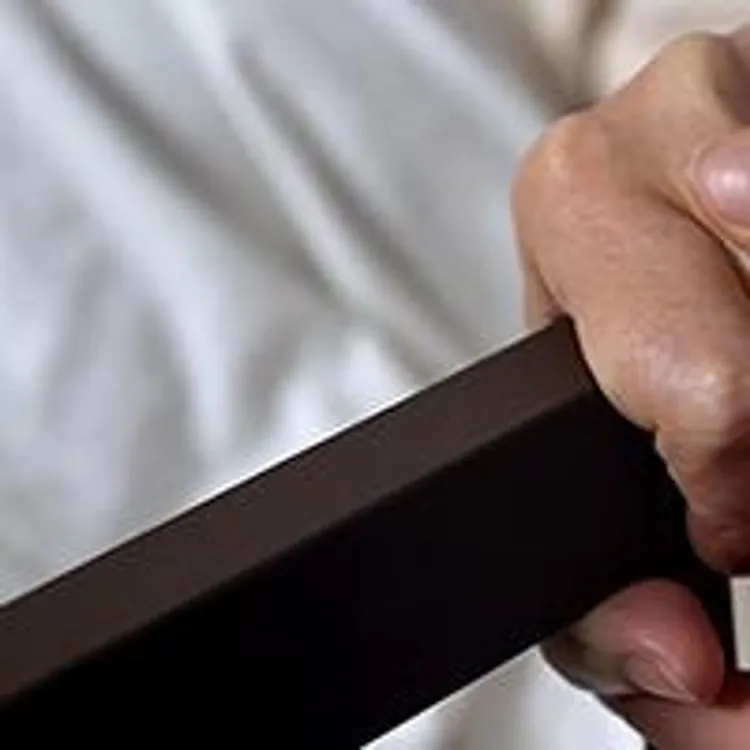
A bed rail is a secure metal rail that runs along the side of a bed. It can be attached to the sides of the bed or installed beneath the mattress. The railing provides a handle that you can hold on to for support while getting in and out of bed. It also reduces the risk of rolling out once you’re on the mattress.
Bed rails are popular with seniors because fall-related injuries can be so severe. Anyone can accidentally tumble out of bed, but a fall can be devastating to an older person's health. Other problems associated with aging — including incontinence, vision problems, dementia — elevate the risk of a fall, particularly around beds.
However, bed side rails aren’t just for elderly adults. Those who have chronic fatigue syndrome, Parkinson’s disease, multiple sclerosis or other conditions that cause dizziness or instability can benefit from some kind of bed side rail or support handle.
How to choose best bed rails for adults
When searching for a bed rail, there are several factors to consider. The most important one is whether the rail is compatible with your bed. Some side rails are universally designed to fit any bed size or mattress format, and others are designed for a box spring and mattress.
Next, determine the size of the bed and what type of bed rail will fit. Consider the rail length and height before you make a purchase. If you’re not sure, find a model with adjustable rails so you can find the sweet spot. Once you determine the specifics of what you need, look for a rail that provides the right level of support, comfort, convenience and style for your budget.
- Support: Most models can accommodate between 250 and 400 pounds — be sure that the assist rail can support enough weight to be useful to you. Bed side rails for adults can come with or without legs. For additional support, look for a model with both handles and legs. Assist handles are typically sold individually — you should get two if you want rails on both sides of the bed.
- Comfort: The whole point of a bed rail is to make it easier for you to get in and out of bed. Some bed rails have extra padding on the handles to make them more comfortable to grasp. We suggest looking for grip bars with foam padding, especially if you’re sensitive to the cold.
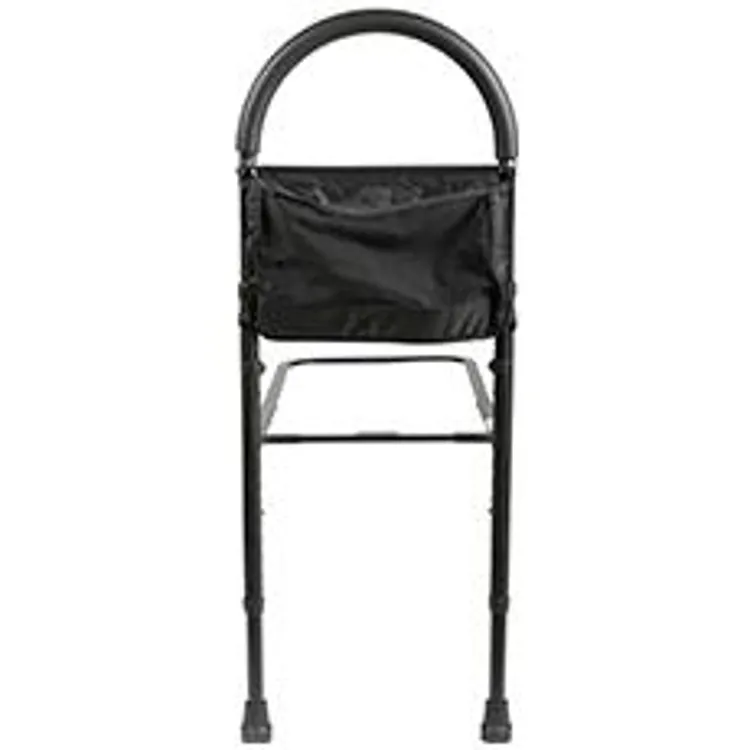
- Convenience: These days, some assist rails come with modern perks like LED lighting for bedside reading. Some also have convenience pouches or pockets so you can conveniently store items nearby. Pivoting handles are best when you need to lower the rail down temporarily (e.g., while making your bed). Travel bed rails for adults can weigh as little as 5 pounds and easily fit in most standard luggage.
- Style: Some types of side rails are smaller and less conspicuous than rails with crossbars and support legs. Most models are steel or aluminum, and some manufacturers offer more modern finishes for a less clinical aesthetic.
Our top bed rail picks
The ConsumerAffairs research team compared more than 50 bed rail models. To narrow our options, we looked at the average customer ratings and the total number of reviews. We gave preference to rails that are easy to install and come with a safety strap for extra security. All of our top picks come with a manufacturer’s limited lifetime warranty or a 100% customer satisfaction guarantee.
Medline Bed Assist
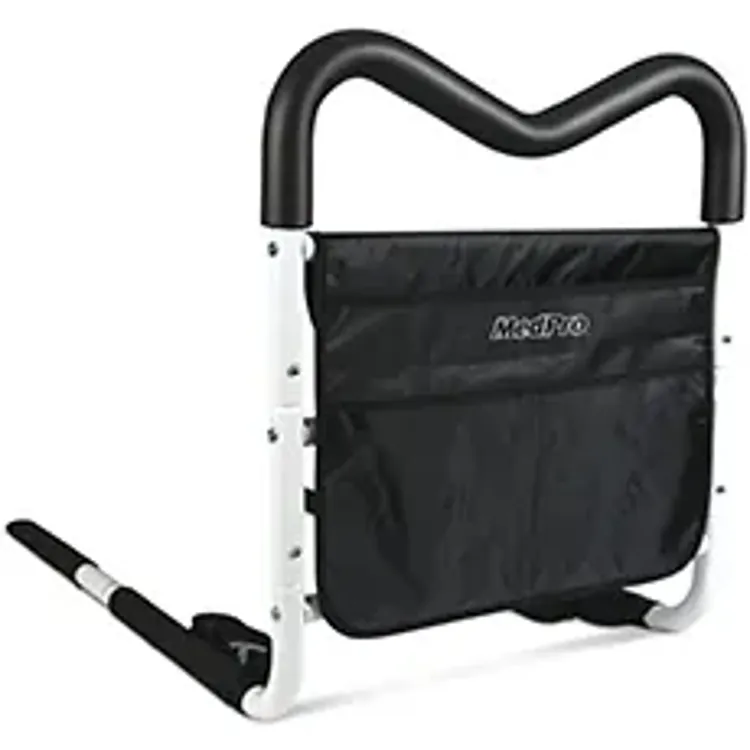
MedPro MGrip Adjustable Bed Rail
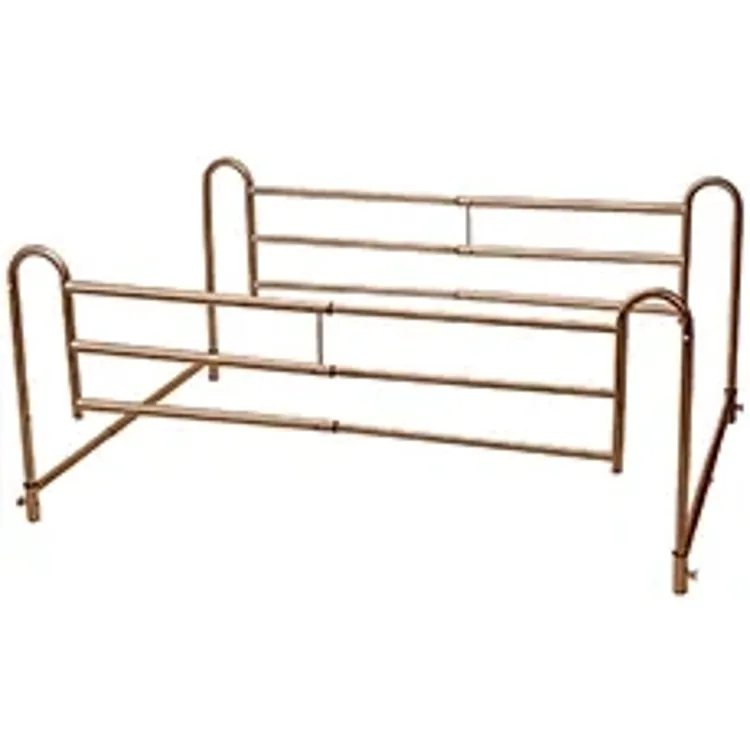
Drive Medical Home Bed Rails
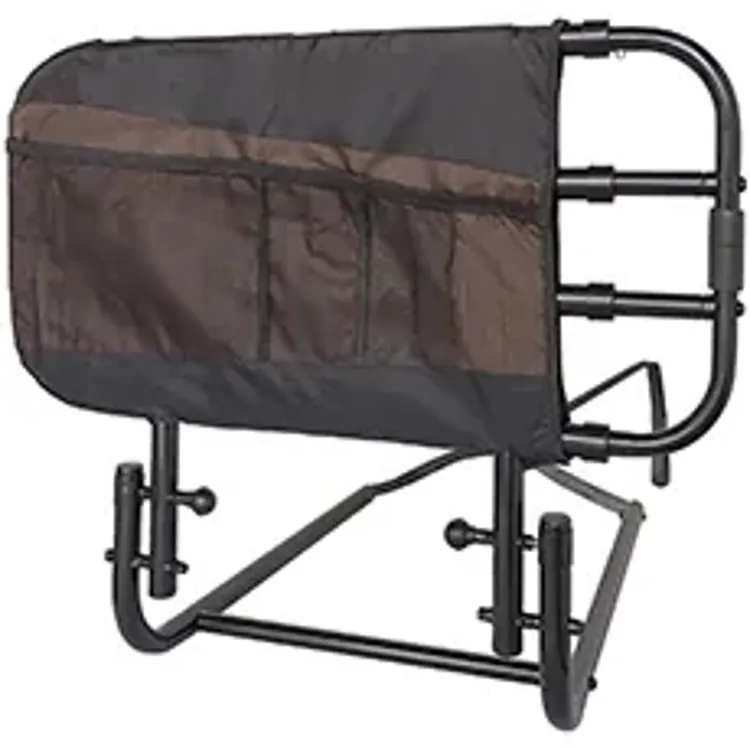
Stander EZ Adjust Bed Rail
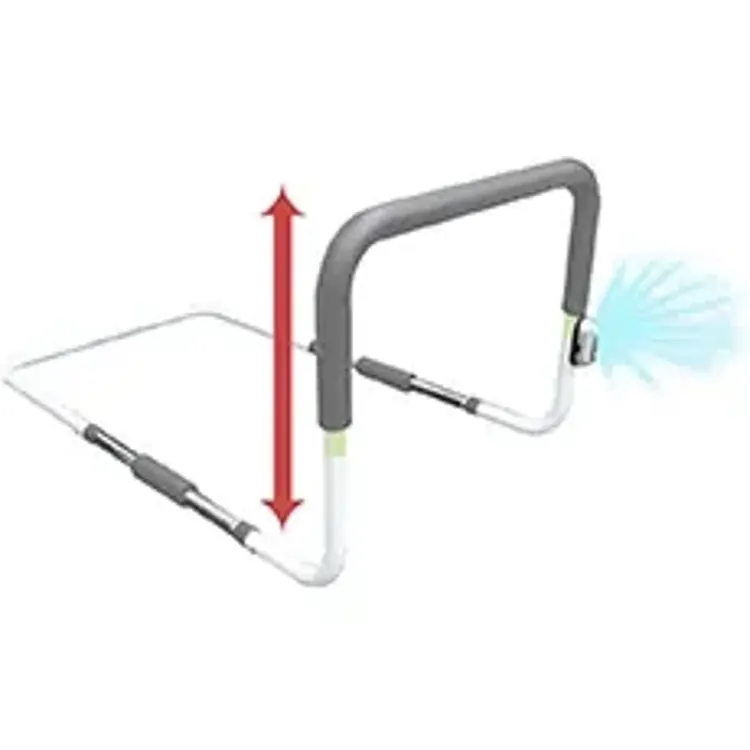
LumaRail-FS Deluxe Bed Assist Rail
Medokare Hospital-Grade Safety Rail
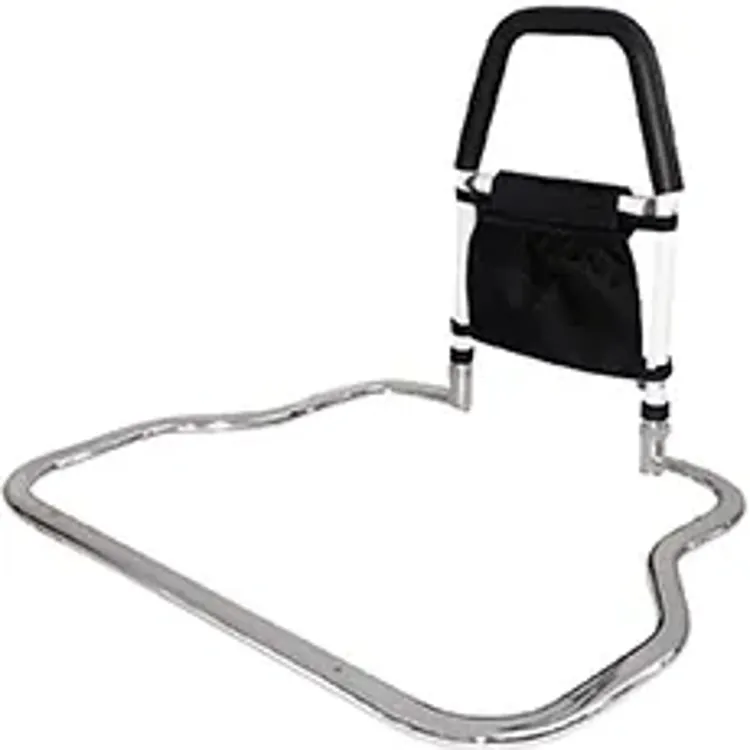
Lifestyle Solutions Bed Rail
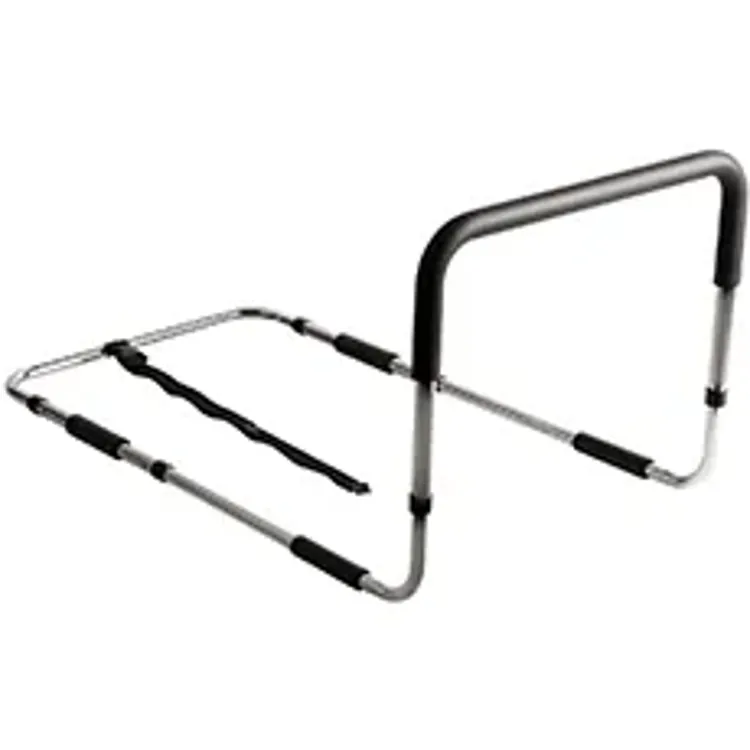
Types of bed rails
Comparing bed rails can be confusing if you don’t understand the different categories. The U.S. Food and Drug Administration divides bed rails into three different types.
Hospital bed rails
These are built into a hospital bed and can be adjusted. Bed rails for hospital beds are considered medical devices and are subject to government regulations. Safety bed handrails and guards designed for at-home elderly patients resemble hospital rails.
Portable bed rails for adults
All portable bed rails are intended for home use. The rail handles attach directly to the bed and can be removed. Safety bed rails for seniors come in a variety of different types and designs.
- Bed rails with legs are tucked under a mattress with two support legs resting on the floor. Most of these models have adjustable heights and lengths. Some are designed to fit any bed, but not all.
- Legless bed rails are also tucked under a mattress, but they do not have extra support legs. These also come with adjustable lengths and heights but may offer less stabilization.
- Fold-down bed rails look like handles but can be folded down to allow full clearance. Fold-down models are often available with adjustable lengths and storage options.
- Crossbar bed rails have multiple handholds and different heights to help you roll over and push up into a standing position. The weight of your mattress affects the sturdiness of the rail or bar.
- Dual bed rails provide support on both sides of the bed. Most people opt for dual rails when their bed is positioned in the middle of a room instead of against a wall. Most dual bed rails have crossbars that extend beneath the mattress.
Portable bed rails for children
Portable bed rails for children are also easily attached and removed. These bed rails are primarily used to improve the security of the sleeping child at night. Much like similar products designed for older adults, bed rails for children are easily attached and removed.
Bed rail FAQ
How much do bed rails cost?
Bed rail prices can range from $30 to $200 or more, but the average cost is $50 or $60. The cost varies based on the type of rail, material and function. If you need more than one bed rail, some can be bought in pairs. Many bed rail models are FSA or HSA eligible.
Does Medicare cover bed rails?
No, Medicare does not cover the cost of detachable bed rails to be used on home beds. However, Medicare patients may be eligible to receive a hospital bed that includes adjustable bed rails for seniors.
Are bed rails safe?
Bed rails are generally considered safe when used properly. However, bedside assist bars aren’t designed to pull yourself up after falling, and doing so is unsafe. Bed rails should never be used as a physical restraint — doing so can lead to suffocation, entrapment and injury. Be sure to install the bed rails in the prescribed manner and adhere to the weight limits.
Where can I buy bed rails?
Bed rails can be bought online or in a medical supply store. Safety bed rails for older adults are also available at home goods stores, including Home Depot and Walmart.
Bottom line
The most important thing to remember is to find a bed side rail model that is compatible with your bed and provides the level of support you need. Extras like foam padding, pockets and LED lighting are nice if you have the budget. For more information about bed rail safety and regulation, visit The U.S. Consumer Product Safety Commission (CPSC) and the Food and Drug Administration (FDA).