


What is a transport wheelchair, and who should get one?
Transport chairs combine the portability of a rollator with the functionality of a wheelchair. They are usually made from flexible materials and lightweight metal, which makes them more portable than standard wheelchairs.
The most significant difference between standard or recliner wheelchairs and transport wheelchairs is the type of wheels. Transport chairs have four small, equal-sized (or close to equal) wheels instead of two larger ones in the back. Unlike standard chairs, transport chairs are meant to be operated with assistance — since the back wheels are smaller, you can’t get the same leverage.
A transport wheelchair is ideal for those with limited mobility who still live moderately active lifestyles. For example, if you’re comfortable walking for short distances but don’t have the stamina for a full daytrip to the museum with the kids or grandkids, the chair lets you enjoy the day without running out of strength. Transport wheelchairs, sometimes called transfer or travel wheelchairs, are compact enough to fit into a car, so you can easily take one from place to place.
Our top transport wheelchair picks
We considered more than 30 transport wheelchairs. To narrow the options down to our top picks, we looked at each model’s average customer rating and its total number of reviews. We also compared frame materials, seat dimensions, weight capacity and cost.
Carex Transport Wheelchair
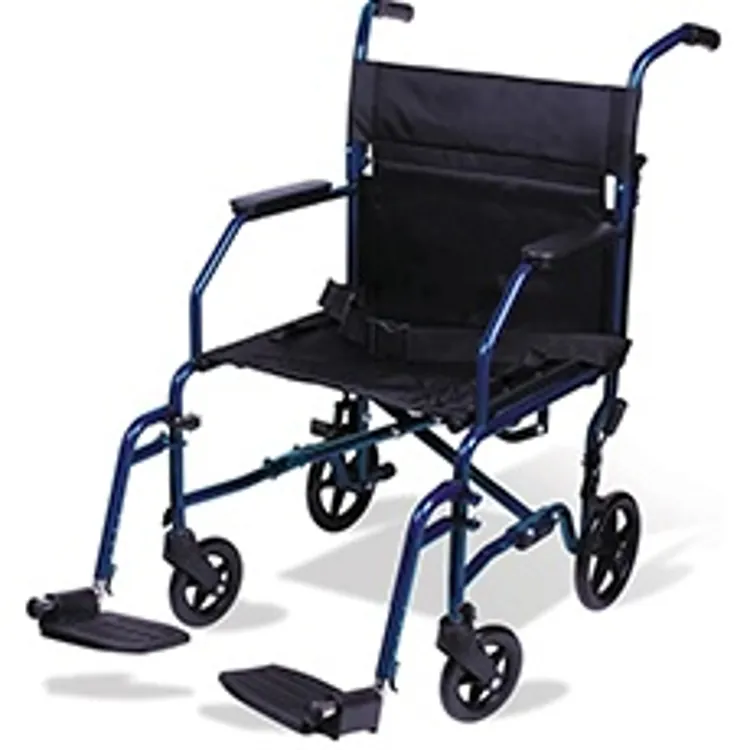
Medline Ultralight Transport Mobility Wheelchair
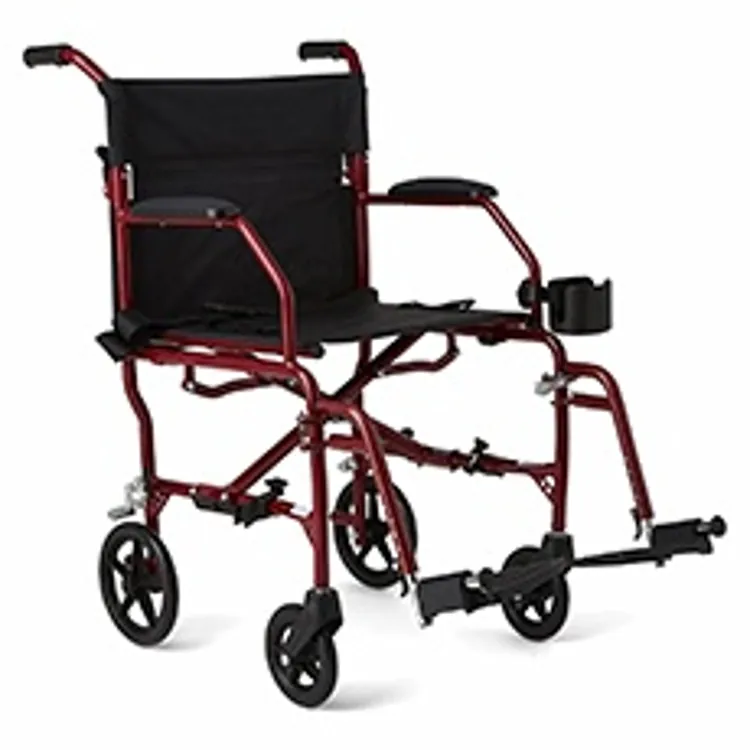
Drive Medical Fly Ultra Lightweight Transport Wheelchair
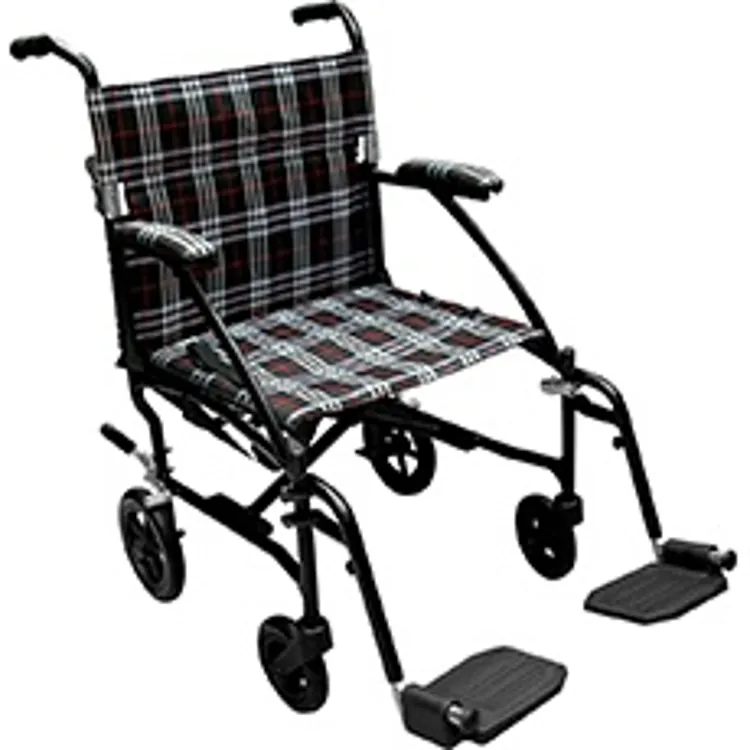
ProBasics Ultralight Transport Wheelchair
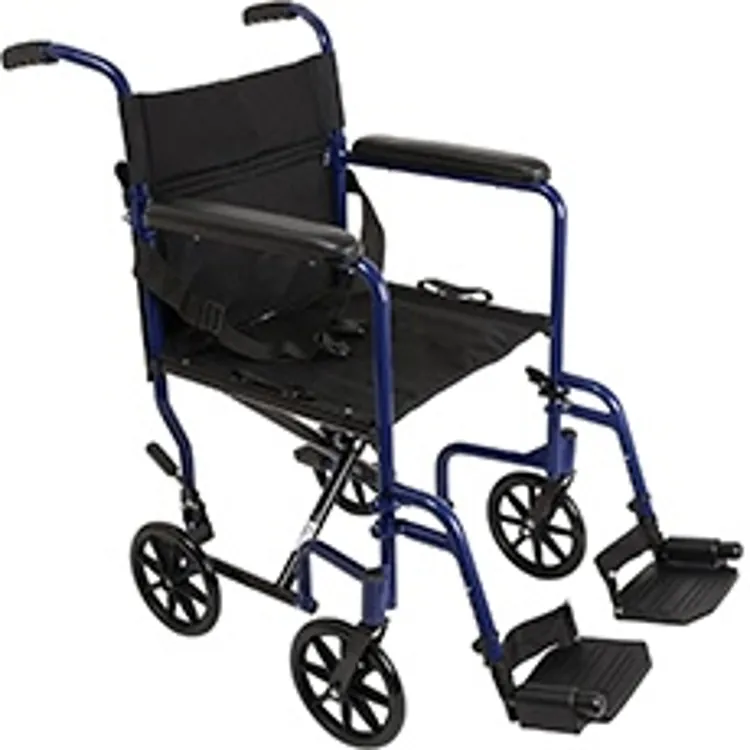
Lumex HybridLX Rollator & Transport Chair
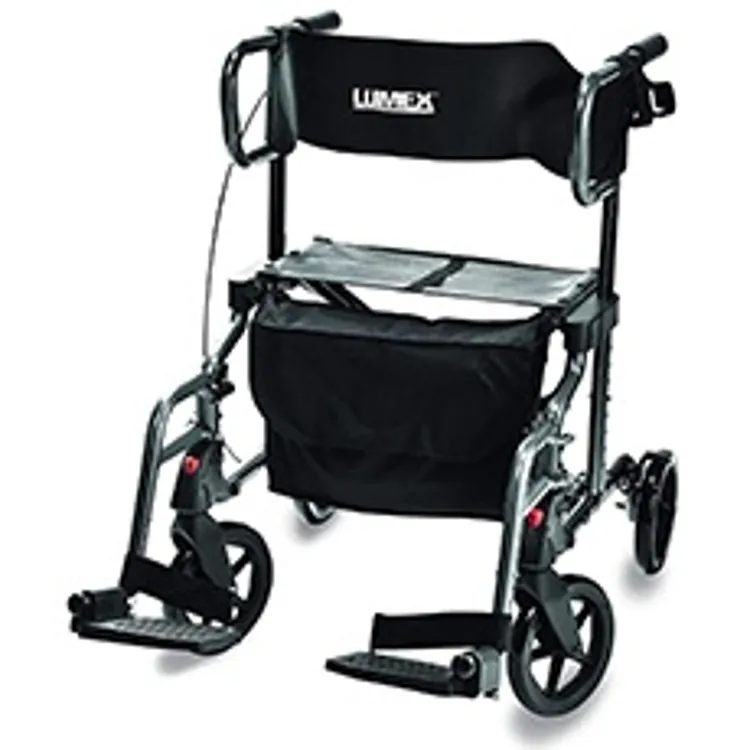
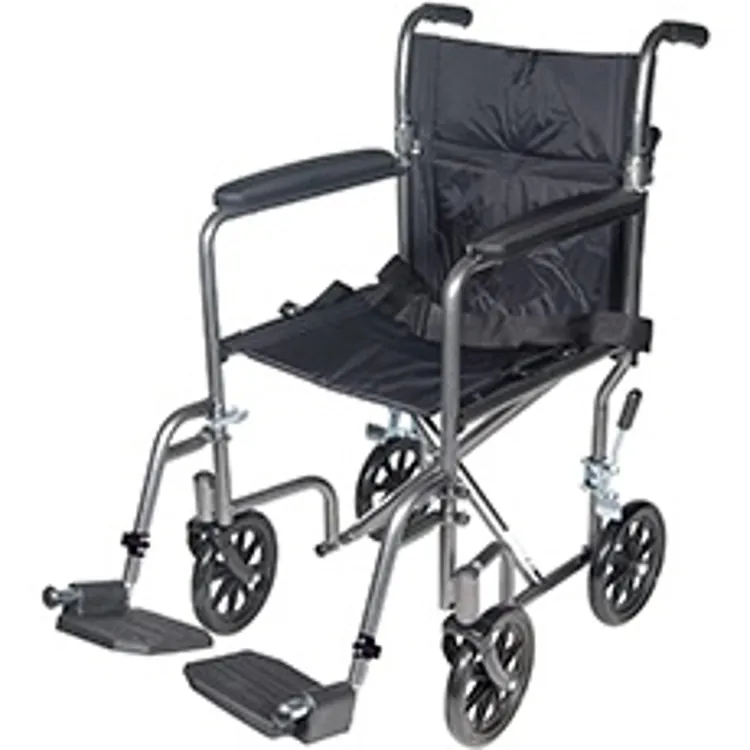
Drive Medical TR37E-SV Transport Wheelchair
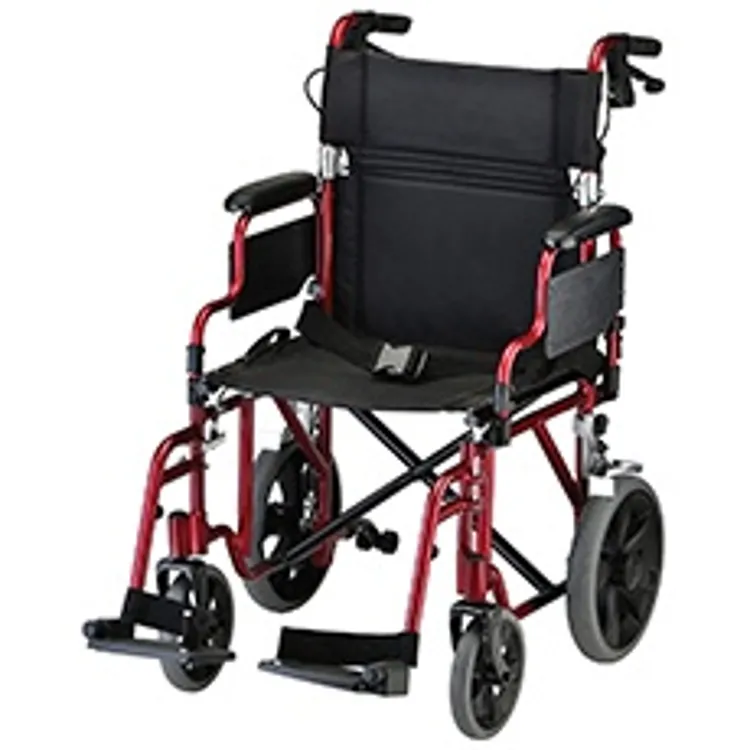
NOVA Lightweight Transport Chair
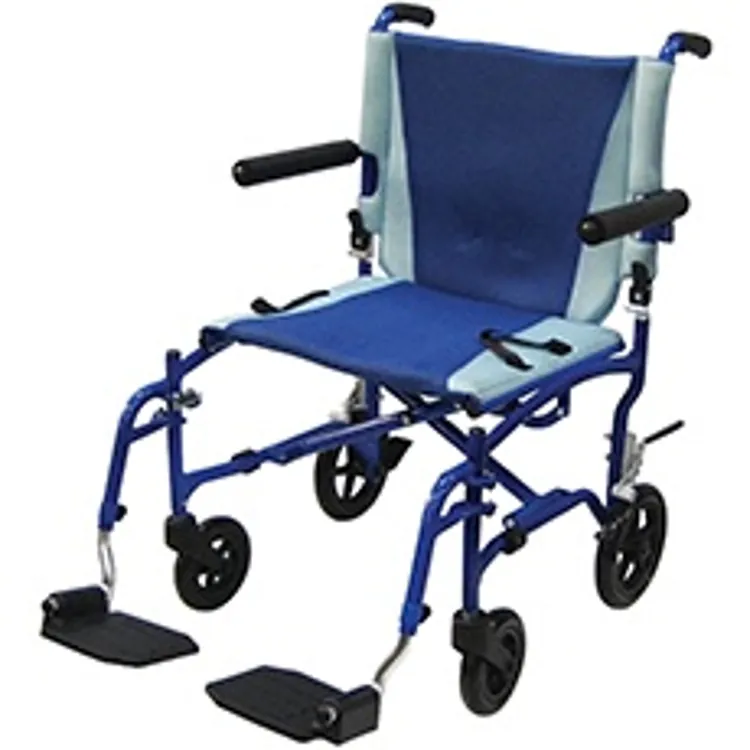
Drive Medical Transport Chair CV
What to look for in a transport wheelchair
With so many transport chair options on the market, it can be challenging to find the right one for your specific needs. To make sure you’re happy with the one you pick, consider the following factors when shopping:
- Comfort: Look at the overall design of the chair, including the seat, backrest, armrest and leg and footrests. If you think a straight-back chair without any give to it is uncomfortable, look for a chair that is made of a more flexible material. Get a chair with some cushion if you expect to be sitting for long periods. Armrests are available in a variety of styles, such as flared, rounded or flat and with or without padding. Consider what style would give you the most comfort. Additionally, you want the footrests to be adjustable for the best fit.
- Safety: Transport chairs have a few different braking system options. Some have brakes on the rear wheels that the person sitting in the chair and the person pushing the chair can access. Other chairs have hand brakes on the handlebars, similar to those on bicycles, that the person pushing the chair can use. Hand brakes add another level of safety on inclines and bumpy roads. They also let you control the speed and lock the chair yourself. Some chairs have both rear brakes and hand brakes. Consider your needs when deciding which braking system is safest for you.
- Portability: A small wheelchair is easier to move than a large one. Look for transport chairs that fold easily and don’t require tools to assemble or disassemble. Lightweight folding wheelchairs for travel typically have seats that are made from flexible materials that fit in a car trunk. Since transport chairs weigh less than 30 pounds, they’re perfect for taking anywhere you need to go, whether it’s a doctor’s appointment or a vacation.
- Maneuverability: The small wheels on transfer wheelchairs are designed to swivel. The design allows them to quickly change direction and maneuver through crowded spaces, narrow openings and twisting hallways.
Transport wheelchair FAQ
How much does a transport wheelchair cost?
Transport wheelchair costs start at around $75. For newer models, the average price ranges from $100 to $200.
What is a transport chair used for?
A transport chair is used for mobility assistance. Since it requires another person to push it, a transport chair is typically pushed by a family member or caregiver.
How much does a transport wheelchair weigh?
The average weight of a transport wheelchair is around 22 pounds. Some weigh as little as 15 pounds.
What is the difference between a transport chair and a wheelchair?
Standard wheelchairs have large rear wheels and are designed to let people use their arms to propel themselves. Transport wheelchairs have smaller rear wheels and typically require someone to push the chair to move it around.
Will Medicare pay for a transport chair?
Yes. Medicare pays for 80% of a transport chair under Medicare Part B as durable medical equipment (DME) if your doctor prescribes it for use in your home. However, Medicare only covers specific medical issues, so consult your policy and primary physician to determine if you’re a candidate.
How wide is a transport wheelchair?
The overall width of a transport wheelchair runs between 20 and 25 inches. The average seat is 19 inches wide, and when folded, a transport chair is usually under 10 inches wide.
What are the benefits of a transport wheelchair?
There are many benefits to owning a transport wheelchair. For starters, they cost less than a standard wheelchair and can still carry the same amount of weight. Transport wheelchairs are also lightweight and fold into a compact size, making them easier to store and travel with.
Are transport wheelchairs FSA or HSA eligible?
Yes, most transport wheelchairs are eligible for FSA or HSA.
Bottom line
Transport wheelchairs are lighter and more compact than a traditional wheelchair. They’re typically foldable and easier to move in and out of vehicles, so they work in multiple situations outside a wheelchair user's home, such as vacations, doctor appointments, grocery shopping and running errands.