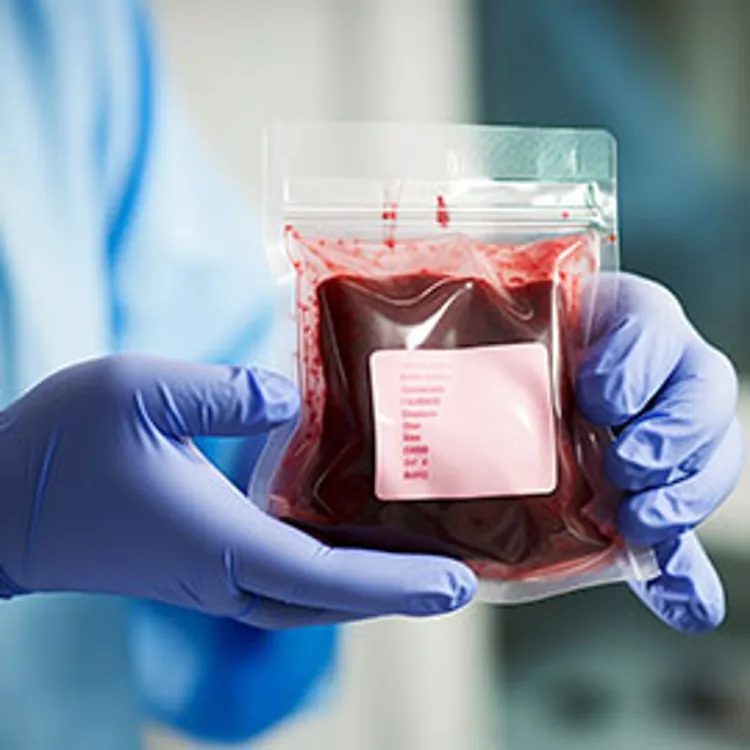


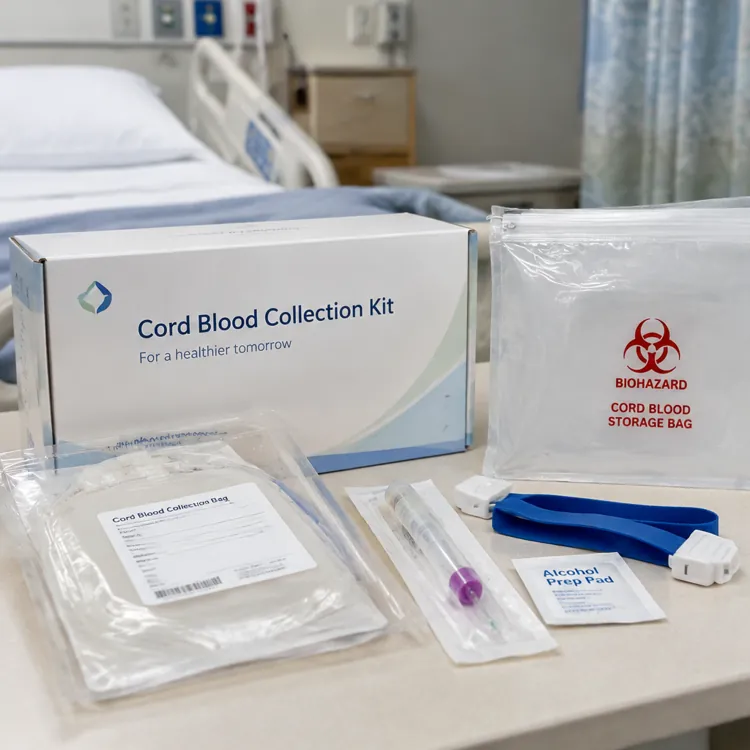
Cord blood banking benefits and drawbacks
The main advantage of private cord blood banking is guaranteed access. If a sibling or other relative develops a condition that cord blood can treat, you already have a sample stored and don’t need to search a registry for a match. The U.S. Food and Drug Administration (FDA) has approved treatments using cord blood for about 80 health conditions.
The biggest drawback, however, is the cost relative to the likelihood of use. Experts note the statistical chance a healthy child will need their own stored cord blood is very low. The American College of Obstetricians and Gynecologists (ACOG) says that the odds are about 3 in 5,000.
Families with a history of treatable blood disorders, or those with a child who already has a condition that cord blood can help treat, have the option of storing cord blood privately with little to no cost. A sibling has about a 1 in 4 chance of a full match with an older child affected by a condition.
» COMPARE: The best cord blood banks
Cord blood banking pros and cons at a glance
| Pros | Cons | |
|---|---|---|
| Medical value | Stem cells treat about 80 blood, immune and metabolic conditions | Uses are mostly limited to blood-related conditions and cancers |
| Likelihood of use | Sample is ready if a match is needed | Odds that a healthy child uses their own sample are very low |
| Cost | Public donation is free | Private banking can cost thousands of dollars over time |
| Access | Private banking reserves the sample for your family | Public donors give up rights to their samples |
| Family matching | Siblings and relatives may be a match | A sample may not match for the family member in need |
Uses and limitations
Cord blood contains hematopoietic stem cells, which means these immature cells can eventually develop into red blood cells, white blood cells and platelets. Hematopoietic stem cells can be used to rebuild a person’s blood and immune systems after a medical condition or treatment.
Currently, cord blood is approved by the FDA to treat about 80 different health conditions, including:
- Leukemia
- Lymphoma
- Some types of anemia, including sickle cell disease
- Immune deficiencies such as lupus erythematosus
- Metabolic disorders
Recently, researchers began testing cord blood for more than blood transplants. Clinical trials are now exploring cord blood for its use in regenerative medicine, and whether it can help with conditions that once had few or no treatment options, such as cerebral palsy and brain injuries.
Cord blood is also being looked at in experimental treatments for Type 1 diabetes, heart attacks and osteoporosis, a condition that weakens bones.
Autologous use limits
In an autologous transplant, health care providers treat a person using stem cells they have collected from the patient's own body. But major medical groups, including ACOG, don’t recommend privately storing your child’s cord blood to be used as an “insurance” against future potential medical concerns.
According to ACOG, a newborn’s cord blood can’t be used to treat a genetic disease or cancer in that same child since the stored cells contain the same gene variant or precancerous cells behind the condition.
Allogeneic transplant considerations
Allogeneic transplants use cord blood from a donor, either a relative or an unrelated donor who was matched from the registry. Most cord blood transplants are allogeneic.
Health care providers match donors and patients using human leukocyte antigen (HLA) markers, which are proteins that help the immune system recognize its own cells. HLA markers don’t need to match perfectly, but the chances of success are higher the closer the match.
Public vs. private cord blood banking
There are three options when choosing a cord blood bank. Public cord blood banks collect donated cord blood at no cost to families, whereas a private cord blood bank stores cord blood only for your family, but there’s an upfront cost and annual storage fees.
All cord blood banks must register with the FDA, and donors must be screened and tested for infectious diseases.
Donating cord blood to a public bank allows the bank to list the cord blood on a national registry where the cord blood can be used by anyone who is a match. If you choose to store your child’s cord blood at a private bank, you’re guaranteed access to that cord blood.
Hybrid banking combines public and private banking and often costs less than private storage. You can store a sample for your own use, but a hybrid bank may also allow the sample to be available to the public, usually with the family’s consent. It includes direct donation, where you can store blood for a family member with a known medical need, for free or at reduced cost.
Public vs. private vs. hybrid cord blood banking
| Option | Cost | Access to sample | Who can use it | Availability | Key tradeoffs |
|---|---|---|---|---|---|
| Public donation | Free | Not guaranteed | Any matching patient on the registry | Only at participating hospitals | Helps others, but you give up ownership |
| Private banking | About $1,350 to $2,350 upfront, plus $100 to $175 a year | Guaranteed | Your child or family members | Available nationwide through private banks | Full control at a high long-term cost |
| Hybrid programs | Varies by program | Depends on program terms | Family or the public | Limited number of banks | Flexible, but terms can vary widely |
Costs and fees
According to the American Academy of Pediatrics (AAP), initial fees for collecting and processing cord blood cost about $1,350 to $2,350, with about $100 to $175 in annual storage fees. Costs vary widely by bank and the services available, such as courier shipping or cord tissue storage.
Besides cost, make sure the bank you choose is accredited by the American Association of Blood Banks (AABB) and NetCord-Foundation for the Accreditation of Cell Therapy (FACT). Also ask about any quality or viability guarantees for better long-term value.
Ways to save
Annual storage fees add up over time, and it’s important to factor this in when budgeting long term. Storing cord blood for 18 to 20 years can double the total cost of the initial fee alone. Some banks offer prepaid plans that lock in pricing, but other banks might not have fixed fees, and these storage fees can increase over time.
Many private banks offer monthly payment plans, discounts for families banking for more than one child and bundled packages that can include cord tissue. Health insurance doesn’t usually cover private banking, but some plans cover the cost of collection and storage when it’s medically necessary, such as when a sibling or parent needs a transplant.
» LEARN MORE: Cord blood banking stats
FAQ
Is it worth it to bank cord blood?
Banking cord blood can be worth it for families with a known medical need, such as a sibling with a condition that cord blood can treat. For most healthy families, public donation offers more value since the odds of a child using their own sample are low.
What are the downsides of cord blood banking?
The downsides of cord blood banking include high upfront and annual costs, low chance of use and the idea that a child’s own cells usually aren’t able to treat their genetic conditions or cancers. Public donors also will give up access to their sample.
Does insurance pay for cord blood banking?
Insurance doesn’t usually pay for private cord blood banking. Some plans cover collection and storage when it’s medically necessary.
What is the difference between cord blood and cord tissue banking?
The difference between cord blood and cord tissue banking is the type of material being stored. Cord blood contains stem cells that can become blood cells used to treat certain health conditions. Cord tissue comes from the umbilical cord itself, and its medical value hasn’t yet been established.
Article sources
ConsumerAffairs writers primarily rely on government data, industry experts and original research from other reputable publications to inform their work. Specific sources for this article include:
- Archives of Gynecology and Obstetrics, “Hybrid umbilical cord blood banking: literature review.” Accessed Oct. 13, 2026.
- Parent's Guide to Cord Blood Foundation, "FAQs." Accessed Oct. 13, 2026.
- The Ohio State University, "Should you bank your baby’s cord blood?" Accessed Oct. 13, 2026.
- European Journal of Midwifery, "Cord blood banking: Balancing hype and hope in stem cell therapy." Accessed Oct. 13, 2026.
- American College of Obstetricians and Gynecologists, "Cord Blood Banking." Accessed Oct. 13, 2026.
- The University of Texas MD Anderson Cancer Center, "Understanding allogeneic stem cell transplants: What you need to know." Accessed Oct. 13, 2026.
- Health Resources and Services Administration, "Options for Umbilical Cord Blood Banking & Donation." Accessed Oct. 13, 2026.