

Key insights
Open-end mortgages let you borrow more to fund purchases and future repairs through a single loan.
Jump to insightYou only pay interest on what you borrow, but monthly payments increase as balances rise.
Jump to insightYou’ll need strong credit and equity to qualify, and the lender may need to review property appraisals for future withdrawals.
Jump to insightHELOCs or Fannie Mae HomeStyle Renovation loans may be easier to qualify for and are more widely available.
Jump to insightHow open-end mortgages work
An open-end mortgage is a mortgage contract that allows a homeowner to borrow additional funds after closing, up to a stated maximum principal amount. The extra funds may be used for home improvements, repairs or other purposes specified in the loan agreement. It can also be called a home improvement loan.
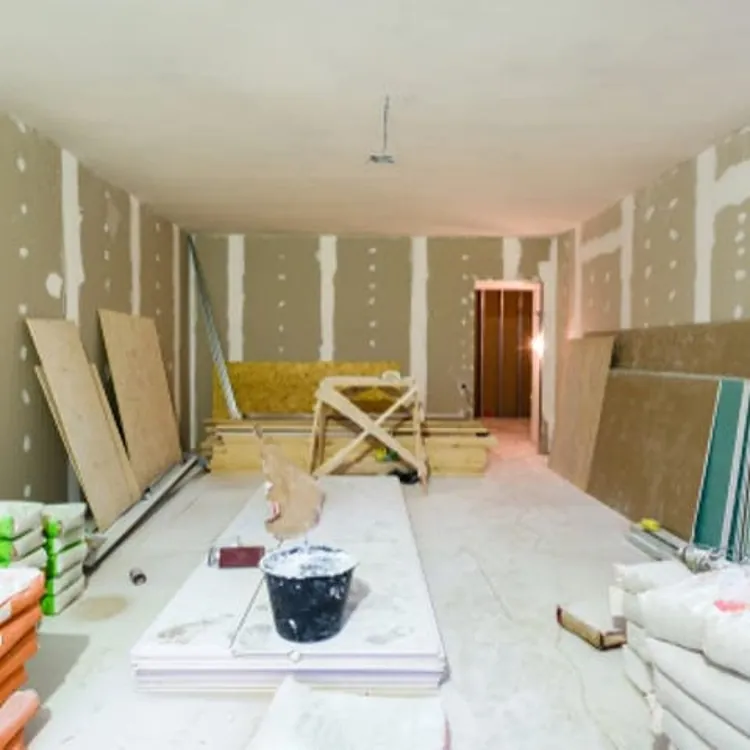
Open-end mortgages are designed to finance the purchase of a home that requires extensive repairs. Typically, these homes are sold at a discount, and the renovations will bring them up to their full value.
For example, imagine a home listed at $450,000 that needs $100,000 in structural and cosmetic repairs to reach its market potential of $600,000. Under an open-end mortgage:
- Initial purchase: The buyer borrows $400,000 toward the sales price at closing.
- Renovation line: The lender approves an extra $100,000 credit limit for repairs.
- Draw period: The borrower receives disbursements over a five- to 10-year period as contractors complete work on the house.
- Loan repayment: Interest is charged only on the active balance, and monthly payments increase whenever new funds are released.
This structure differs from typical closed-end mortgages, which don’t allow you to borrow more money after the initial loan is issued. If you wanted to borrow against the home’s equity with a traditional mortgage, you'd need to take out either a home equity loan or a home equity line of credit.
When asked about the typical terms and conditions, David Ciccarelli, CEO of Lake.com, a vacation rental platform, said: “The original mortgage amount typically has a fixed rate, while any additional funds you draw usually come with a variable rate. The total borrowing limit is based on your home’s value, often up to 80% or 90%.”
“Interest on future draws tends to follow the prime rate, and some lenders will require that you use the funds for home-related expenses.”
Advantages and disadvantages of open-end mortgages
Open-end mortgages are a convenient way to purchase a home that needs renovations, but they aren’t widely available and may carry higher rates.
Pros
- Easy access to home improvement funds
- No need to reapply for a second loan
- One monthly payment
- No interest or payments until you borrow the extra funds
Cons
- Not widely available
- Higher rates than traditional mortgages
With an open-end mortgage, you get easier access to renovation funds because everything is approved upfront using the same loan application. That means less paperwork and a shorter approval process than if you were to apply for a second mortgage or home equity line of credit later.
Also, with an open-end mortgage, you make one monthly payment instead of managing two, with all funds bundled into a single loan. You also pay less interest at first because the balance stays lower until you borrow the renovation money. Once you do, your loan amount and monthly payment increase, and your overall loan cost will be higher.
How to qualify for an open-end mortgage
Qualifying for an open-end mortgage is similar to qualifying for a traditional mortgage. The mortgage lender will consider your credit score, income, down payment and your overall financial situation.
The lender will also look at the property itself, including the loan-to-value ratio. With an open-end mortgage, the lender is interested in both the current value and the expected value after the repairs are completed.
You’ll likely need the following for underwriting:
- Credit score: At least 620, or higher for better interest rates
- Debt-to-income ratio: Less than 43% of the full potential balance
- Down payment: At least 20% down
- Loan-to-value ratio: At least 80% to 90% of the property's projected value
Ciccarelli also noted that the lender may have requirements for the property: “Most lenders want to see that it’s your primary residence, though a few might allow second homes,” he said. “The key is equity; you need enough of it to qualify. Lenders may ask for an updated appraisal to confirm your home’s value, especially if you're requesting more funds after a few years.”
Alternatives to open-end mortgages
If you don't qualify for an open-end mortgage or can't find a lender in your area that offers them, don't worry. There are various alternatives available:
- Home equity loan: A home equity loan is a type of second mortgage that you can take out if you’ve built up equity in your home. It provides a single lump sum of cash that you can use for a variety of purposes, not just home improvements. Home equity loans are widely available, and most mortgage lenders offer them. A drawback is that you must qualify separately from your original mortgage.
- Home equity line of credit (HELOC): A HELOC is a secured revolving credit line. During the draw period, you can generally borrow, repay and borrow again up to the credit limit, as long as you meet the account terms. That flexibility can be very helpful for a renovation with uncertain timing or phased costs.
- Construction loan: You can use a construction loan to build a new home or renovate an existing home. With construction loans, you receive a series of funds issued as construction progresses.
- Fannie Mae HomeStyle Renovation: This type of loan is similar to an open-end mortgage and a construction loan, but it’s backed by Fannie Mae. To qualify, you must work with an approved contractor, and the contractor must submit plans to the lender to draw funds for the renovation. Renovations must be completed no later than 15 months after closing.
FAQ
Is it a good idea to get an open-end mortgage?
Open-end mortgages are a good idea for buyers purchasing a fixer-upper. They ensure the buyer knows that funds will be available for necessary home renovations.
A major drawback, however, is that open-end mortgages often have a higher interest rate than traditional mortgages.
How does an open-end loan work?
An open-end mortgage works by providing the funds to buy the home, plus additional money you can borrow later for renovations. You only pay interest on the amount you’ve used, and your monthly mortgage payment increases when you withdraw more funds.
What is the difference between an open-end and closed-end mortgage?
An open-end mortgage has additional funds available after the home purchase for renovations. A closed-end mortgage does not.
If you want additional funds after getting a closed-end mortgage, you’ll need to take out a home equity loan.
Are open-end mortgages available in all states?
No, open-end mortgages aren’t available in every state. Regulations vary, and some states limit or prohibit this type of loan. Even where they are allowed, not all lenders offer them.
To find out if open-end mortgages are available in your state, check with your state’s housing finance agency or financial regulatory office. You can also ask a local mortgage broker or lender familiar with renovation loans.
Is an open-end mortgage the same as a HELOC?
No. A HELOC is generally a revolving credit line secured by your home, allowing you to draw and repay funds during the draw period (subject to the loan terms).
An open-end mortgage may instead be a first mortgage that permits future advances for specific purposes, such as renovations. It may have more limited draw rights and may not allow you to reborrow the principal you’ve repaid.
Article sources
ConsumerAffairs writers primarily rely on government data, industry experts and original research from other reputable publications to inform their work. Specific sources for this article include:
- Rocket Mortgage, “What Is an Open-End Mortgage and Should You Consider Getting One?” Accessed Aug. 31, 2026.
- RenoFi, “Exploring Open-End Mortgages and Alternative Ways to Add Costs to a Mortgage.” Accessed Aug. 31, 2025.
- Quicken Loans, “What Is An Open-End Mortgage?” Accessed Aug. 31, 2026.
- Consumer Financial Protection Bureau, “What Is a Construction Loan?” Accessed Aug. 31, 2026.
- Fannie Mae, “HomeStyle Renovation.” Accessed Aug. 31, 2026.