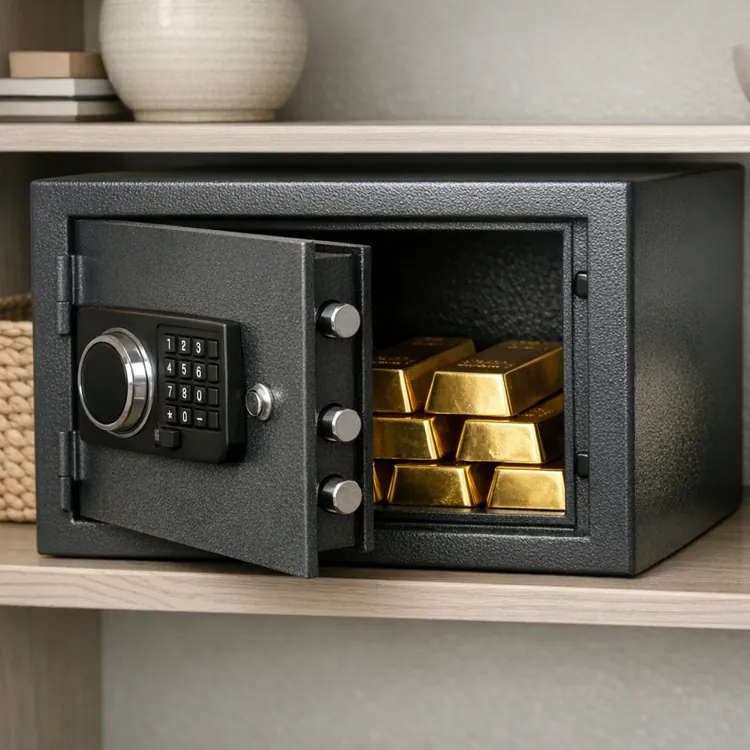



Gold IRA tax rules overview
A gold IRA is different from a traditional IRA only in the type of assets it holds. A gold IRA is backed by physical gold, while a traditional IRA contains conventional investments such as stocks, bonds and mutual funds.
A gold IRA can be a Traditional, Roth, SEP or SIMPLE IRA, and taxation will be based on this, rather than the presence of gold itself.
IRS-approved gold must have a minimum fineness of 99.5% purity.
The underlying IRA type determines how contributions, growth and withdrawals are taxed by the IRS.
»MORE: Gold IRA vs. physical gold
Gold IRA taxation
Gold that’s held inside an IRA is sheltered from taxation on gains. Also, gold held in an IRA isn’t subject to capital gains tax every time it appreciates in value or is sold.
In contrast, if you hold gold collectibles, such as coins or bullion, outside of a tax-sheltered account, you’ll be assessed capital gains each time you sell or the gold increases in value.
Let’s take a look at the different types of IRA accounts and how each is taxed:
- Traditional: A traditional gold IRA allows your money to grow in a tax-deferred status. You can contribute funds that have not yet been taxed, reducing your taxable income. Contributions are tax-deductible, but withdrawals in retirement are taxed as ordinary income.
- ROTH: A Roth gold IRA is funded with after-tax dollars, so contributions are not deductible. However, qualified withdrawals are tax-free.
- SEP/SIMPLE: SEP and SIMPLE gold IRAs are a good choice if you’re self-employed. These IRAs are taxed similarly to traditional retirement accounts. Contributions are pre-tax, and withdrawals are taxed later.
»RELATED: Gold IRA pros and cons
Gold IRA contribution limits and deductions
Annual contribution limits for traditional and Roth gold IRAs are the same as those of standard IRAs. If you’re under 50, you can contribute up to $7,500 each year as of 2026. If you’re 50 or older, you can contribute slightly more (up to $8,600), thanks to catch-up contributions.
These limits apply to the total of all of your IRAs, if you own more than one. For example, if you already contribute $3,000 to a Roth IRA, you can only contribute $4,500 to your gold IRA each year. The accelerated savings for those 50 and older is also subject to maximum contribution limits across all IRAs.
Catch-up contributions help you increase retirement savings as you approach retirement.
Annual contribution limits for SEP IRAs are 25% of income, or $70,000, whichever is less. Designed for those who are self-employed, a SEP IRA allows for much larger annual contributions, which is beneficial if you have a high or variable income and own your own business.
Gold IRA contribution methods
There are two primary ways to fund your gold IRA once you’ve set it up.
- Transfer money directly into your account, following annual contribution limits and eligibility rules
- Perform a rollover from another retirement account, moving funds without cashing out to avoid taxes
When you contribute money to your gold IRA, it’s taxed based on the type of IRA you have.
Traditional gold IRA
Since money is deposited on a pre-tax basis, withdrawals are taxed as income.
Roth gold IRA
Because contributions are made with after-tax dollars, withdrawals in retirement are tax-free.
To decide which type of IRA is right for you, consider whether your tax rate is higher now or will be higher in retirement.
IRS-approved metals requirements
The IRS has strict regulations for the purity of gold and other precious metals used to back IRAs and investment accounts. This ensures quality and consistency in value and distinguishes investment-grade metals from those better suited as collectibles.
Purity standards are listed below.
Minimum fineness rules by metal
- Gold: 99.5%
- Silver: 99.9%
- Platinum/palladium: 99.95%
There is one exception to these rules. The American Gold Eagle coin has been authorized by federal law for use in investments. Other coins that are approved for investment use include, but are not limited to:
- American Gold Buffalo
- Canadian Gold Maple Leaf
- Australian Kangaroo
Eligible bars and approved refiners
COMEX Live and APMEX are trusted refiners used by custodians to ensure the authenticity and acceptability of gold coins. Both sites provide information on precious metals, their value and their trading prices. Reputable gold dealers are helpful sources of information as well.
A gold IRA custodian is an IRS-approved institution that manages your IRA and holds your metals.
Gold in the form of coins, bars and other bullion products is expected to meet certification requirements and should come with a certificate of authenticity that provides information on their weight, purity and manufacturer details.
Gold IRA storage rules and custodians
The IRS also maintains strict regulations about where the gold backing your IRA is stored since the gold is intended to function as a retirement investment and not personal property.
If the gold is not stored properly, it becomes difficult to track, record and assess its value. Because of this, the IRS requires IRA precious metals be maintained in the custody of an independent, insured depository that satisfies approved standards.
Below is a list of features that an IRS-approved precious metals depository must have:
- Multiple layers of physical and electronic security
- Insurance coverage against theft or damage
- Regular inspections with established procedures
- Detailed tracking of ownership
- Documentation for regulatory compliance
- Regular audits
Some of the most commonly used precious metal depositories in the United States include:
- Delaware Depository
- Brinks
- Texas Precious Metals Depository
- JPMorgan Chase
- International Depository Services (IDS)
- HSBC
Tax implications of home storage
If you remove your gold from the depository and take possession of it, the IRS will treat this as a distribution from your retirement account. The value of the gold will become taxable income for the tax year in which you removed it.
The distributed amount is generally treated as ordinary income and will be subject to income taxes. If you’re under age 59 1/2, you’ll face an additional tax penalty of 10% for withdrawing the assets early.
Consider the following example: Mark is 52, and he removes $45,000 in gold from his gold IRA and stores it at home. The entire amount will be treated as a taxable distribution and will be added to his annual income for that tax year, causing him to pay more income tax. He’ll also be subject to a $4,500 early withdrawal penalty.
»COMPARE: Best gold IRA companies
Gold IRA withdrawal rules and penalties
If you need to make a withdrawal from a gold IRA, you will be taxed based on the type of IRA you have and your age at the time of withdrawal. The withdrawal amount will also be added to your taxable income for the current tax year. And if you withdraw before you’re eligible, you’ll also face a 10% early withdrawal penalty.
Withdrawing from a Roth IRA doesn’t have tax implications if you’re at least 59 1/2, since the money was taxed prior to being deposited into the account.
Required minimum distributions
If you own a traditional gold IRA, you’ll be required to take distributions from it once you reach the age of 73. This applies regardless of your account balance, and is calculated using your balance along with a standard life expectancy table.
RMD means required minimum distribution, the yearly withdrawal the IRS requires from retirement accounts at a certain age.
Since gold is a physical asset, you can opt to take an in-kind distribution to satisfy the RMD requirement. So, your custodian might give you an amount of gold equivalent to the distribution amount, which you will then own as a physical asset.
»LEARN: Can you borrow from an IRA?
FAQ
How is gold in an IRA taxed?
Gold is not taxed separately from your IRA’s tax structure. A traditional IRA backed by gold is funded with pre-tax dollars and taxed as ordinary income when withdrawn. A Roth IRA backed by gold is funded with after-tax dollars, and withdrawals are tax-free when made after age 59 1/2.
What is the downside of a gold IRA?
Gold IRAs have higher one-time setup and ongoing annual fees than IRAs backed by non-physical assets. Gold IRAs are also subject to strict IRS storage regulations, and since they are backed by a physical asset (i.e., gold), these IRAs provide no dividends or interest.
Do I have to pay capital gains tax on gold in an IRA?
No. Gold that’s used for investment backing is not subject to capital gains tax. People often confuse this with collectible gold or other precious metals owned and stored outside of a depository for personal use or as part of someone’s collection. This type of gold would be subject to capital gains when sold.
How are gold IRA withdrawals reported to the IRS?
The account custodian typically handles this by issuing IRS Form 1099-R to you and the IRS. The 1099-R is the standard form used for any investment withdrawal or distribution.
Article sources
ConsumerAffairs writers primarily rely on government data, industry experts and original research from other reputable publications to inform their work. Specific sources for this article include:
- LegalClarity, "Can You Hold Gold in an IRA? IRS Rules and Requirements." Accessed May 27, 2026.
- Clute Journals, "In-Depth Gold IRA Fees and Costs Analysis." Accessed May 27, 2026.
- American Precious Metals Exchange, Inc., "APMEX Knowledge Center." Accessed May 27, 2026.
- COMEX, "COMEX Live." Accessed May 27, 2026.
- Best Gold Company, "Gold IRA Tax Rules." Accessed May 27, 2026.
- Retirement Living, "Gold IRA Tax Rules and Regulations." Accessed May 27, 2026.
- Fidelity Brokerage Services LLC, "IRA Contribution Limits for 2026." Accessed May 27, 2026.
- OWNx, "Gold Purity Explained: Karats, Fineness & 999 Gold." Accessed May 27, 2026.