
Timing belt warranty coverage
A timing belt replacement could be covered under a warranty if it fails because of a factory defect — as long as you have stuck to the car’s prescribed maintenance schedule. Also, a warranty may not cover your timing belt if your vehicle was damaged in an accident or driven recklessly (a lot of off-roading, for example). This is how most car warranty terms work.
If you’ve followed all the rules and your timing belt snaps for no apparent reason, your warranty might pay to replace it.
Some timing belts need to be replaced as low as 60,000 miles, while others can last up to 100,000 miles. If you plan on owning a new car until it dies, you may have to replace the timing belt two or three times, depending on how long you drive the car.
Why your car’s timing belt is important
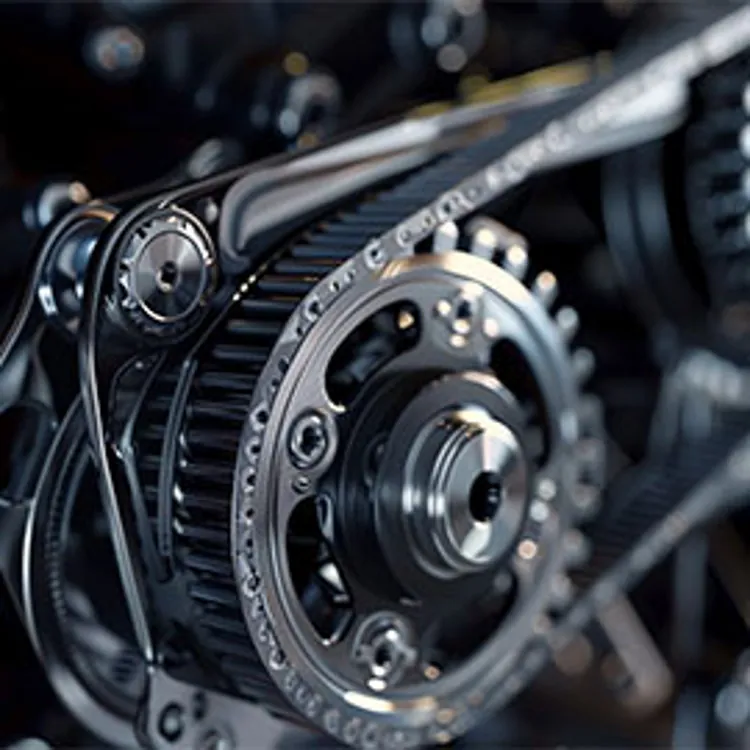
The timing belt is like a conductor keeping the pistons and valves in perfect rhythm. If the timing is off by even a little, the engine can’t run smoothly. In interference engines, if the timing belt breaks, the pistons can collide with open valves. This causes severe engine damage, often requiring costly repairs or even an engine replacement.
» RELATED: Most expensive car repairs
What types of warranties cover timing belts?
You can find many types of car warranties, but not all of them will cover a timing belt. Some powertrain warranties may cover timing belts, even though they’re designed to wear out over time. Also, there may be situations that void your warranty.
For example, if you get into a car accident and damage your timing belt, you may not be able to utilize your warranty. But your car insurance (or the other driver’s car insurance) may cover the replacement cost.
If you buy a used car that is already having issues with its timing belt, purchasing a new warranty will often specifically exclude any preexisting issues. This is fairly standard across all types of warranties.
Manufacturer’s vs. extended warranties
A manufacturer’s warranty, sometimes called a factory warranty, typically covers a timing belt for up to three years or 36,000 miles. Most timing belts should not wear out that quickly. There is no set time frame for how long a timing belt can last, and even having a car warranty does not guarantee that a timing belt will last for a specific number of miles on your odometer.
An extended car warranty or vehicle service contract might not help either. That’s because a timing belt is only designed to last a certain amount of time. After that, replacing it is simply standard maintenance. Warranties only cover costs if the malfunction was caused by a factory defect.
» MORE: Car warranty guide: what you need to know
Which extended warranties cover timing belts?
Multiple extended warranty companies and plans cover timing belts. Below are some popular providers and details on which of their policies include timing belts.
Endurance and olive cover the timing belt in their powertrain or bumper-to-bumper plans. American Dream Auto Protect plans cover only timing chains, while Omega Auto Care offers coverage for your timing gear and cover, but not the belt.
| Company | Customer rating | Timing belt coverage available | Waiting period | Availability | |
|---|---|---|---|---|---|
 Endurance Warranty | Get Pricing | 4.5 |  | 30 to 60 days and 500 to 1,000 miles | Nationwide |
 olive | Learn More | 2.2 | | No waiting period | 49 states |
 American Dream Auto Protect | Get Pricing | 4.1 |  | Not disclosed | Not disclosed |
 Omega Auto Care | Learn More | 3.8 | | 30 days | Not disclosed |
How can I tell if my timing belt or chain is failing?
A failing timing belt or chain could cause any of the following:
- A ticking noise coming from your engine
- Rough idling or a rattling noise coming from your engine
- An oil leak near the motor
- Engine won’t start or fully ignite properly
- Changes to RPM meter
- More exhaust fumes than usual
While many of these problems can be a result of something else, it’s important to check whether the timing belt or chain could be the instigator, especially if you know your timing belt has more than 60,000 miles on it.
What happens if your timing belt fails while driving?
If your timing belt fails while you’re driving, you should immediately try to pull over in a safe spot and shut off the car. Do not attempt to keep driving; doing so could result in major damage to your engine. A timing belt breaking can cause engine damage, but you should try to minimize it as much as possible.
Have your car towed to the dealership or auto repair shop of your choice and get it evaluated there.
How much is a timing belt change?
The average cost to replace a timing belt is between $884 and $1,284, according to RepairPal. That’s a pretty big range.
Average timing belt replacement costs in 2025
| Total cost | Labor | Parts | |
|---|---|---|---|
| Ford F-150 | $2,282 to $3,280 | $2,135 to $3,133 | $147 |
| Ford Escape | $1,132 to $1,578 | $954 to $1,400 | $178 |
| Honda CR-V | $783 to $1,003 | $390 to $573 | $392 to $430 |
| Honda Accord | $760 to $1,170 | $481 to $706 | $279 to $464 |
| Toyota RAV4 | $559 to $1,007 | $329 to $483 | $229 to $523 |
| Toyota Corolla | $451 to $781 | $305 to $447 | $147 to $334 |
Timing belt replacement cost factors
The variation in cost partly comes down to the type of car you have. In general, the more expensive your vehicle, the more you’ll pay for a timing belt. Also, some timing belts are easier for the mechanic to access, which can reduce labor time and, therefore, lower the total replacement cost.
There’s also a cost difference based on how far along the damage is. If the timing belt has already broken, it may have damaged other car parts. In this case, the cost of replacing the timing belt may be higher because you’ll have to fix or replace the other parts as well.
Some mechanics may recommend replacing other parts — such as your water pump, camshaft and crankshaft seals, timing belt tensioner and idler pulleys or drive belts — that are next to the timing belt at the same time, even if there’s nothing wrong with them yet. This can save you money in labor costs later on. But you can always opt to skip this.
FAQ
Are timing belts considered wear and tear items?
A timing belt is an item that goes through normal wear and tear, which means there’s nothing you can do to avoid replacing the timing belt eventually.
No matter what kind of car you have or how you drive, you will have to replace your timing belt at some point if you drive it long enough. A timing belt can last between 60,000 and 100,000 miles, depending on various factors. This should give you a few years’ worth of driving, depending on your annual mileage. All in all, you shouldn’t be surprised when it’s time to replace the timing belt.
Is a timing belt covered under a powertrain warranty?
A timing belt is normally included in the powertrain coverage and will, therefore, be covered if something happens while the powertrain warranty is still active. A powertrain warranty period usually lasts five years or 60,000 miles, whichever comes first.
However, most timing belts won’t break until you’re past the 60,000-mile mark. In that case, your powertrain warranty from the dealership will have likely expired and will no longer be in effect. Incidentally, you shouldn’t count on your warranty covering the timing belt replacement. It’s better to assume that the timing belt won’t need to be replaced until your powertrain warranty has expired.
A powertrain warranty is available even when you buy a used car. When you’re buying the car, ask about transferring the warranty coverage over to you.
Article sources
ConsumerAffairs writers primarily rely on government data, industry experts and original research from other reputable publications to inform their work. Specific sources for this article include:
- Endurance Warranty Services, LLC, "What Does A Powertrain Warranty Cover?" Accessed Dec. 11, 2025.
- RepairPal, Inc., "Timing Belt Replacement Cost Estimate." Accessed Dec. 11, 2025.
- RepairPal, Inc., "Free Car Repair Estimate - Get Auto Repair Costs | RepairPal." Accessed Dec. 11, 2025.