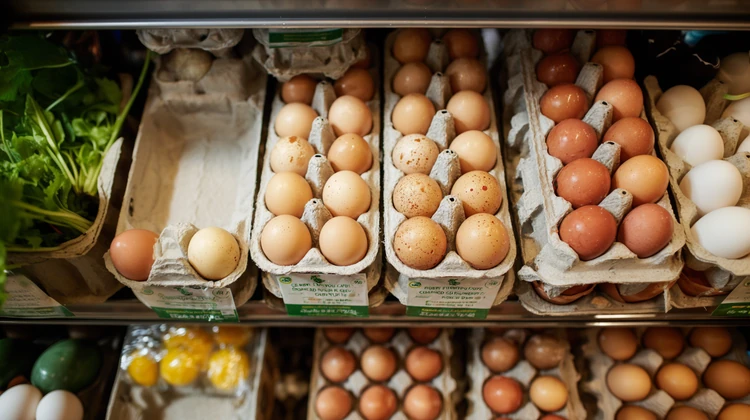

A new lawsuit claims Aldi may have misled shoppers with its “cage-free” egg marketing.
“Cage-free” does not mean outdoor access, as most hens are still raised indoors.
Knowing how to read egg labels can help you avoid paying a premium for something you’re not actually getting.
If you’ve been paying extra for cage-free eggs thinking chickens are roaming outside, a new lawsuit suggests you may want to take a closer look.
A class-action complaint filed in Chicago accuses Aldi of giving shoppers the wrong impression about its store-brand eggs. According to the lawsuit, packaging and marketing images showing farm scenes and outdoor visuals may lead consumers to believe the hens have access to an open pasture.
The reality, according to the complaint, is that most “cage-free” eggs are still produced in large indoor facilities, not outdoor farms.
And that gap between perception and reality is where shoppers may be overpaying — as some will grab the carton with a quaint farm image on it thinking the birds live in similar conditions.
What 'cage-free' actually means
Despite the name, “cage-free” doesn’t mean chickens are outside living the farm life.
Under federal guidelines, it generally means:
- Hens are not kept in cages.
- They are typically housed indoors in large barns.
- They may move around, but don’t necessarily go outside.
That’s very different from other labels you often see:
- Free-range = some outdoor access (often limited)
- Pasture-raised = regular outdoor access with more space
The bottom line is that “cage-free” is more about housing style, not the bird’s lifestyle.
Why the Aldi lawsuit matters for shoppers
The Aldi case is part of a growing wave of lawsuits challenging how eggs are marketed.
The core issue is that shoppers are often willing to pay more for products they believe reflect:
- Better animal welfare
- Higher quality
- More natural conditions
But when labels and imagery suggest more than what’s actually delivered, consumers may end up paying a premium based on assumptions, not the facts.
Even small price differences add up over time, especially for households that buy eggs weekly.
How to tell what you’re really buying
If you want to avoid confusion (and overspending), here’s how to read an egg carton the right way:
1. Don’t rely on the front of the package. The front is of the carton is all marketing. Be sure to flip the carton over and look for:
- Clear descriptions of living conditions
- Certification details
2. Look for third-party certifications. These are more reliable than branding alone:
- Certified Humane
- Animal Welfare Approved
- American Humane Certified
These programs typically require stricter standards than basic “cage-free.”
3. Understand the key labels
Quick cheat sheet:
- Cage-free = No cages, usually indoors
- Free-range = Some outdoor access
- Pasture-raised = Most outdoor access
4. Ignore the farm imagery. Pictures of things like open fields, red barns, and chickens frolicking outdoors can create a misleading impression.
How to save money on eggs right now
Egg prices are still volatile, so it pays to be strategic.
1. Don’t assume cage-free is worth the premium. For many uses like baking or cooking, buying lower-cost eggs work just as well. Save higher-end eggs for when you’ll actually notice the difference, like in an omelet or when you scramble them.
2. Compare price per egg—not just the label. Look at:
- Cost per dozen
- Cost per individual egg
Start paying attention and you’ll notice the price difference between conventional and cage-free eggs can be significant.
3. Shop around. Egg prices can vary widely between grocery stores in your town. Be sure to check:
- Discount grocers
- Warehouse clubs
- Local markets
4. Consider local sources. Farm stands and local sellers in your area may offer:
- Competitive pricing
- More transparency about how hens are raised
Just be sure to ask and you’ll often find eggs from pasture-raised hens at prices similar to what you’d pay at the grocery store.