
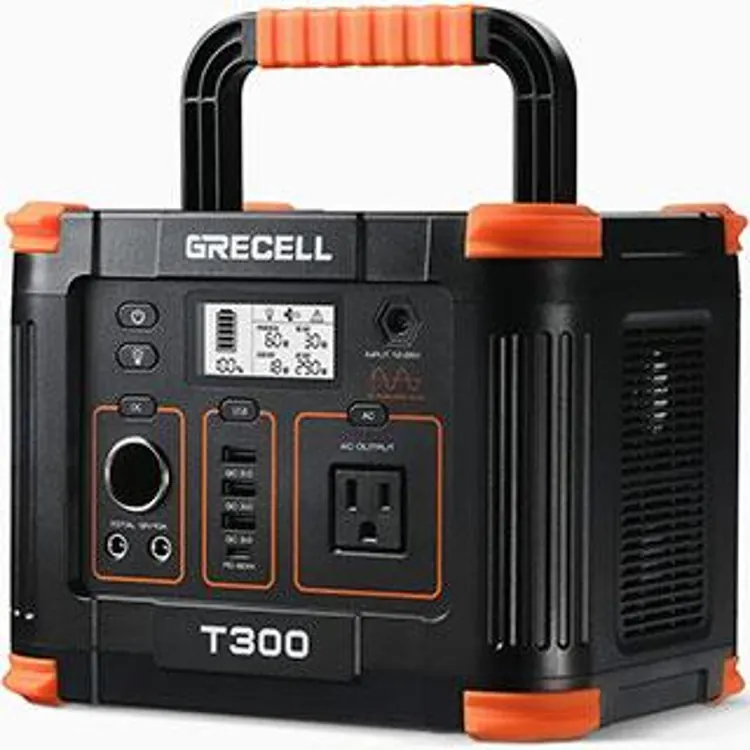
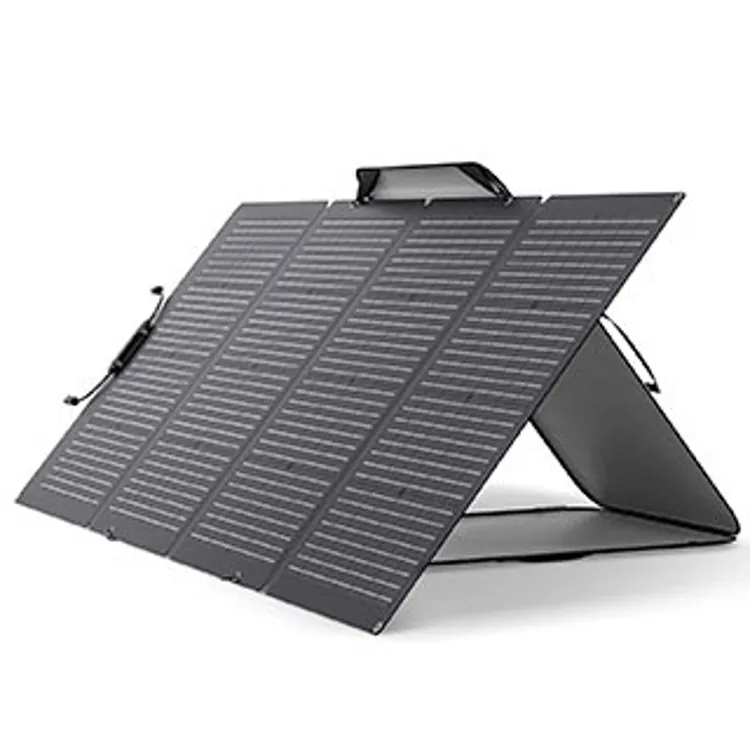
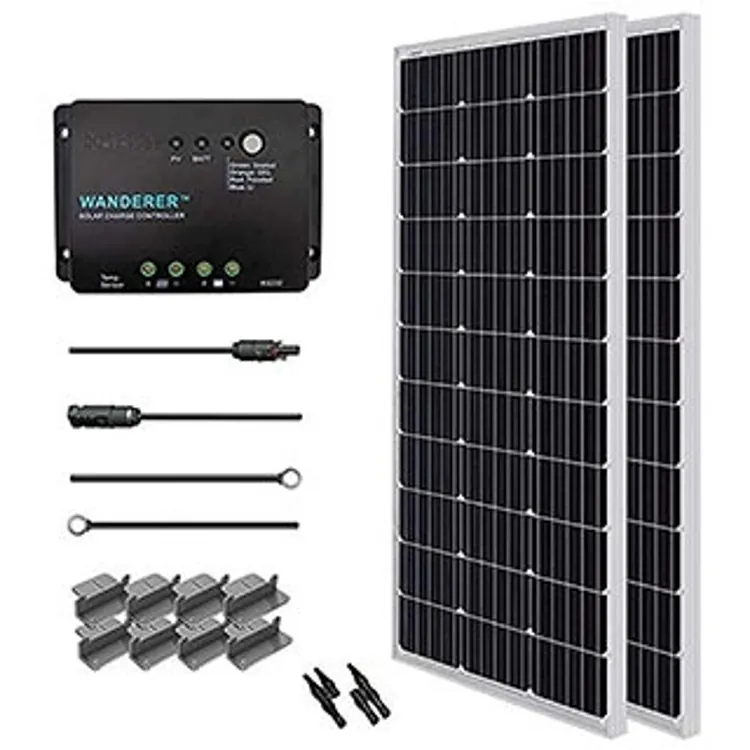
| Features | GRECELL Portable Power Station | EF EcoFlow Bifacial Foldable Solar Panel | Renogy Solar Panel Starter Kit |
|---|---|---|---|
| Amazon rating* | 4.4 stars | 4.5 stars | 4.6 stars |
| Price* | $169.99 | $549 | $199.99 |
| Power | 330 watts | 220 watts | 200 watts |
| Key feature | Charges 8 devices at once | Dual-sided panels for maximum energy | Perfect for novice solar users |
Compare our top 3 solar-powered heater products
We chose our top solar-powered heater picks by looking at popular options on Amazon and comparing their power capacity, pricing and reviews. All ratings and prices listed are accurate as of publishing.
GRECELL Portable Power Station
EF EcoFlow 220-Watt Bifacial Foldable Solar Panel
Renogy 200-Watt 12-Volt Monocrystalline Solar Panel Starter Kit
Solar thermal vs. solar PV electric heating
Solar heating systems fall into two main categories: solar thermal and solar photovoltaic (PV) electric heating, and they differ in how they produce heat.
Solar thermal systems generate heat directly by capturing sunlight in a collector and transferring it to water or air. Because there’s no energy conversion step, they’re typically more efficient for heating applications like water, pools or indoor spaces.
Solar PV systems generate electricity first, which is then used to power an electric heater or heat pump. This added conversion step makes them less efficient for heating alone, but more versatile for powering multiple devices.
In short, solar thermal is usually the most efficient option for dedicated heating, while solar PV offers greater flexibility for whole-home energy use.
» LEARN MORE: What is solar thermal energy?
How do solar heaters work?
There are several types of solar heaters available for purchase. Each type works by capturing solar radiation with a collector, transferring heat to air or water, and circulating it through a system using pumps, fans or natural convection.
You may have landed on this page for one of the following: solar water heaters, solar pool heaters or solar air heaters.
Solar water heaters
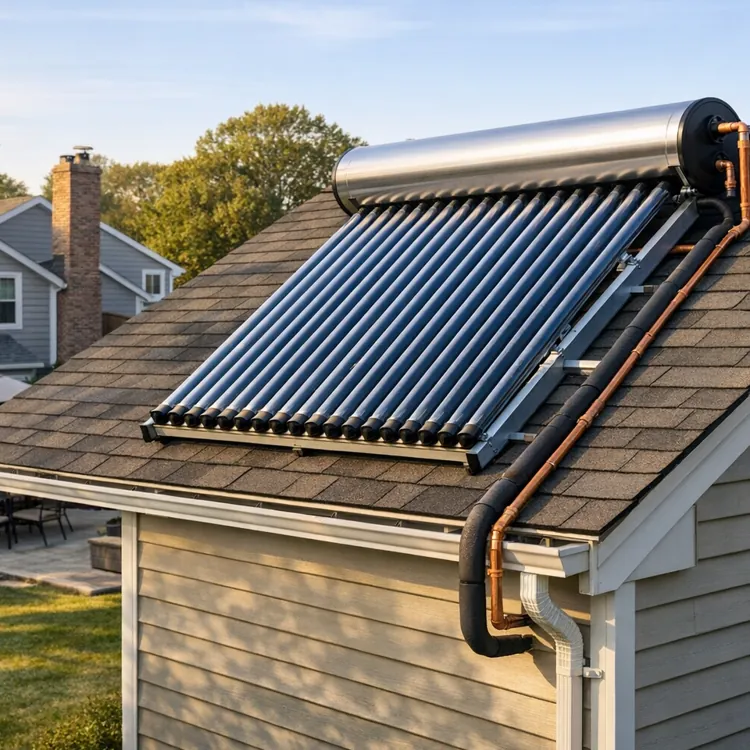
Solar water heaters collect and circulate water using solar energy. At the core of these systems is a solar collector (typically flat-plate or evacuated tube) that absorbs sunlight and transfers heat to water directly or via a heat-transfer fluid.
These systems can be passive, using gravity and convection to naturally heat and move water through a storage tank positioned above the collector, or active, where electric pumps circulate water or heat-transfer fluid between the collector and a storage tank through a heat exchanger.
Passive systems (such as integral collector-storage or thermosiphon systems) are simpler, more affordable and have fewer moving parts, but they’re less efficient in colder climates. Active systems are more efficient and better suited for year-round use, especially in regions with freezing temperatures.
There’s also passive solar home design, which naturally heats water through creative architectural designs and building materials.
Solar pool heaters
Solar pool heaters collect solar energy to heat a pool. They rely on your pool’s existing pump to circulate water through solar collectors — usually unglazed panels installed on a roof or nearby rack.
These systems collect and pump pool water through a series of valves and a filter before it enters the solar collector. A control valve or automatic diverter directs water to the collectors when sufficient sunlight is available.
As the water flows through the collector tubes, it’s heated by solar radiation. A sensor-controlled system may regulate flow based on temperature differences between the collector and the pool, optimizing efficiency. This heated water enters the pool while other water cycles out, and the process repeats until the pool hits your desired temperature.
Because pool heaters operate in a closed-loop system tied to your pool pump, they’re most effective during sunny periods and can extend a swimming season by several months.
Solar air heaters
Solar air heaters use solar collectors to heat air directly, which is then circulated into a space using fans or natural airflow. Unlike water-based systems, they don’t require plumbing or antifreeze, making them relatively simple and low-maintenance.
These systems are commonly used for garages, workshops, greenhouses and supplemental home heating and are commercially available in several designs.
While some DIY setups exist, many manufacturers now offer ready-made solar air heating panels, making them a practical option for reducing heating costs and improving ventilation in sun-exposed spaces.
Types of solar air heaters
There are three main types of solar air collectors:
- Unglazed (transpired) collectors: These consist of a dark, perforated metal panel mounted on a wall. Sunlight heats the panel, and a fan pulls outside air through the tiny holes, warming it before it enters the building. These are often used in commercial or agricultural settings.
- Glazed flat-plate collectors: These include a transparent cover (glass or plastic) over an absorber plate. The glazing traps heat (greenhouse effect), allowing the system to reach higher temperatures and operate more efficiently in cooler climates.
- Boxed or panel collectors: These are self-contained units that can be mounted on walls or windows. They often include insulation, an absorber surface and small fans powered by integrated solar panels.
In terms of performance, solar air heaters can typically raise incoming air temperature by about 30 to 50 degrees Fahrenheit under optimal sunlight conditions. Airflow rates generally range from 100 to 400 cubic feet per minute (CFM), depending on system size and fan capacity.
For sizing, many systems use roughly two to four collectors per 1,000 square feet of space, though this varies based on insulation levels, climate and heating goals.
» COMPARE: Best solar energy companies
Solar heater costs and ROI
The cost of a solar heater depends on the type of system and its intended use. On average:
- Solar water heaters range from $1,500 to $5,000 or more, depending on the size and complexity of the system.
- Solar pool heaters typically cost between $3,000 and $7,000, with professional installation.
- Solar air heaters now range widely in price depending on design and size. Small DIY kits may start around $150 to $500, while commercially manufactured wall- or roof-mounted systems typically cost $1,000 to $3,000-plus (before installation).
While upfront costs can be high, solar heaters generally pay for themselves over time due to significant energy savings. Households can save anywhere from 50% to 80% on water heating bills by switching to solar.
Return on investment (ROI) is usually realized within five to 10 years, depending on local energy rates and the amount of sunlight your home receives. Incentives, including tax credits and rebates, can shorten this payback period significantly.
Using solar heaters also reduces reliance on fossil fuels, offering long-term environmental benefits and protection against energy price hikes.
What to consider when choosing a solar heater
The biggest consideration when buying a system to heat an area using solar power is its capacity. However, beyond sizing the system correctly, you’ll also need to account for installation logistics, ongoing maintenance and safety features to ensure long-term performance.
Size
If you’re just looking for enough heat to warm an RV or a tent, a small generator and solar panel system will work fine. For an entire home, an installed solar heater and panel system will be necessary.
The quick math for this is to divide your average hourly wattage requirement for your specific need by the number of daily peak sunlight hours in your area. The number you get is how much energy your panels need to produce every hour.
Installation requirements
Before purchasing, it’s also important to evaluate installation requirements. Some systems may require professional installation, especially those tied into plumbing or HVAC systems.
The U.S. Department of Energy advises checking local codes and regulations before purchasing and installing solar water heating systems.
A basic checklist should include:
- A site assessment (roof angle, shading and sun exposure)
- Confirming local permits and building codes
- Determining mounting logistics (roof-mounted versus ground-mounted systems)
Maintenance
Maintenance requirements are another consideration. Regular maintenance helps prevent efficiency losses and extends the system’s lifespan.
Most solar heating systems require periodic upkeep every six to 12 months, including checking filters and fans (for air systems), inspecting seals and connections for leaks, and monitoring antifreeze or heat-transfer fluid levels in water-based systems.
Safety features
Safety features should not be overlooked. Look for systems with pressure relief valves (for water heaters), overheat protection to prevent damage during high sun exposure and proper winterization features, such as freeze protection or drain-back systems in colder climates.
Other factors
Other factors to consider will depend on what type of system you’re looking for and how often you plan on using it. In some cases, portability and weight may be big factors. In other cases, durability is more important.
Asim Hafeez, the president of renewable energy company Empower Energy Solutions, said that “initial cost versus potential savings, sunlight exposure, and quality” should all be prioritized when choosing solar-powered heaters.
Regardless of your use case, you’ll definitely want to compare:
- Warranty length and coverage: Is the warranty long and comprehensive?
- Installation requirements: Is it easy to do yourself? Does the product come with all the necessary installation equipment?
- Customer service department: How can you get in touch with customer service? What do reviewers say about their experience?
- Average customer review: What are customers saying about the product?
- Price: Is it within your budget? How does it stand up against the prices of comparable systems?
Pros and cons of solar-powered heaters
While solar power may pay off over time, the upfront cost may be prohibitive for some. Consider the pros and cons before committing.
Pros
- Lower energy bills
- Environmentally friendly
- Low maintenance
- Incentives available
Cons
- High upfront cost for larger systems
- Sunlight dependent
- Installation limitations
- Longer ROI period
FAQ
How long does a solar-powered heater last?
How long solar-powered heaters last depends on maintenance. Solar-powered water heaters can typically last up to 20 years if taken care of properly.
Do solar-powered heaters work in winter?
As long as sunlight is present, solar heaters will work in the winter. However, efficiency can depend on climate.
Do solar heaters actually work?
Yes, solar heaters can be very effective when properly sized and installed in areas with adequate sunlight. Solar water and pool heaters, in particular, are proven technologies that can significantly reduce energy costs. Performance depends on climate, system design and sun exposure, but many systems can meet a large portion of heating needs.
What are the disadvantages of solar heaters?
The main drawbacks of solar heaters are upfront cost, weather dependence and space requirements. Solar heaters rely on sunlight, so performance drops on cloudy days or in winter. Some systems also require roof or ground space for collectors, plus periodic maintenance to stay efficient.
How does a solar heater work at night?
Solar heaters don’t generate heat at night, but most systems store heat for later use. Water heaters use insulated tanks to retain hot water, while some systems integrate backup heaters (electric or gas) to maintain temperature when sunlight isn’t available.
Article sources
ConsumerAffairs writers primarily rely on government data, industry experts and original research from other reputable publications to inform their work. Specific sources for this article include:
- United States Department of Energy, "Solar Water Heaters." Accessed March 20, 2026.
- United States Department of Energy, "Estimating the Cost and Energy Efficiency of a Solar Water Heater." Accessed March 20, 2026.
- United States Department of Energy, "Active Solar Heating." Accessed March 20, 2026.
- U.S. Energy Information Administration, "Solar explained." Accessed March 20, 2026.