
Key insights
Two key elements of passive solar architecture are south-facing windows and thermal mass.
Jump to insightPassive solar homes focus on efficiency first and then use solar energy to help reduce energy usage.
Jump to insightWhile potentially more expensive initially, going solar can pay for itself over time.
Jump to insightMain elements of passive solar architecture
Commonly accepted passive solar home design principles say that you should orient a house in a way that allows it to collect heat from the sun and then use good heat insulators, such as concrete or brick, in the home’s construction. This helps reduce the home’s reliance on utility power for heating and cooling, which in turn lowers energy usage and costs.
These principles are shown in two of passive solar architecture’s main elements: south-facing windows and thermal mass.
South-facing windows
Home location and orientation are important to the success of passive solar architecture. These designs optimize the amount of sun coming in by placing windows and skylights in the right places and using awnings, overhangs and adjustable window coverings to control how much sunlight is absorbed.
In the U.S. and other places in the Northern Hemisphere, south-facing windows get the most reliable sunlight all day long. That’s why passive solar home designs usually try to face their systems toward windows and other surfaces that collect solar energy within 30 degrees of true south and away from any shade that may limit their intake between 9 a.m. and 3 p.m.
Thermal mass
Certain types of building materials hold on to energy better than others, and large amounts of these materials can store heat for long periods of time. For example, thick concrete or brick walls are good heat absorbers that can help regulate the temperature in your home, keeping it warmer in the winter and cooler in the summer. Other examples of thermal mass commonly used in passive home design are water containers and phase-change products.
These materials need to be used correctly, though.
“One of the key considerations you'll need to keep in mind is that the home build will require advanced framing to eliminate thermal bridging,” said Karyna McLaren of Hybrid Power Solutions, a company that specializes in portable battery systems, solar installation and energy storage.
Thermal bridging is when heat moves across an object that is more conductive than the materials around it. In this case, it could mean that your solar home loses the energy it’s taking in, which hurts efficiency.
Not all contractors are familiar with the necessary building methods to avoid thermal bridging, McLaren told us, which is why it’s important to work with experts who understand thermal mass and the appropriate heat absorbers.
Benefits of passive solar homes
Passive solar homes can provide major benefits to homeowners. Here are a few of the main benefits:
- Lower utility bills: If you take advantage of the main two passive home design elements — south-facing windows and thermal mass — you can save significantly on home cooling and heating costs.
- May increase home value: Often, the cost of solar installation can be partially recouped when you sell your home. According to Sunrun, solar homes are commonly listed for at least 3.74% more than comparable, non-solar homes.
- Increased sustainability: Being environmentally friendly is arguably the biggest benefit of any solar home, whether it uses passive or active solar energy.
How much does it cost to build a passive solar home?
Passive solar homes are generally more expensive to build than standard homes, but they don’t necessarily have to be.
Richard Pedranti, a Pennsylvania architect who designs passive homes, created a passive house in Scranton, Pa. He said the house only cost $165 per square foot to build. “We typically use between $175 and $200 per square foot for standard new home construction costs in our area,” he said.
Also, keep in mind that energy-efficient upgrades can eventually pay for themselves when measured against the cost of utility bills over time. For example, if you add a solar panel system, your system can offset its upfront cost in five to 15 years, depending on the price of the system and your energy consumption.
» MORE: Cost of solar panels
New-build solar home vs. retrofit
Newly built solar homes generally use energy efficiency as the starting point for their designs, then add on other solar technologies, such as solar panels, to compensate for any other energy needs. Some building plans also supplement passive solar elements with fans or other mechanical conductors to help circulate air or heat throughout the home as needed.
» LEARN: How solar panels work
Solar home concepts don’t have to be limited to new construction, though.
“While the best solar homes are built with [passive solar architecture] in mind from the ground up, there are definitely some ways to take the same ideas and implement them in your own home,” said Leonard Ang, CEO of iPropertyManagement, a national resource center for landlords and tenants.
Ang says property managers use passive solar concepts such as dark, heat-conducting colors and materials to take advantage of readily available energy, saving on energy costs for both landlords and tenants.
While the best solar homes are built with [passive solar architecture] in mind from the ground up, there are definitely some ways to take the same ideas and implement them in your own home.”
While it may be difficult to achieve the overall efficiency of a purpose-built solar home with a retrofit, you can incorporate passive design principles into your current home. Installing a solar panel system can also help offset your reliance on utility power and give you a different type of solar home.
Other types of solar homes
While passive solar designs often use solar panels and other active solar technologies to complement their existing efficiency, other types of solar homes rely on these technologies more heavily because they aren’t as efficient. This is especially true in cases where you’re trying to retrofit a traditional home into one that relies on solar power.
A reviewer from Arizona told us that when they moved to a new home, they knew they wanted to add solar panels. “I like that it helps the environment,” they said. “I like that I can get batteries, and if a power outage happens, I won't be affected.”
If you’re interested in adding a solar home energy system to your house, there are three main types you should be aware of: grid-tied, off-grid and hybrid solar energy systems.
| Type | Benefit | Drawback |
|---|---|---|
| Grid-tied | Most cost effective | Not fully solar |
| Off-grid | Fully independent | More expensive |
| Hybrid | Most flexible | Still expensive |
Grid-tied solar energy systems
Grid-tied systems generate their own electricity, but they're still connected to a traditional electric utility grid. This means you can switch between solar energy and traditional energy as needed and sell any excess back to the utility company through net metering in places where it’s available. These are often the most cost-effective solar energy systems.
Off-grid solar energy systems
These systems rely solely on solar energy and are not connected to an electrical grid. Instead, they utilize battery storage systems to address energy demands throughout the year when solar energy isn’t as readily available. Purchase and installation costs tend to be higher with these systems because they’re often larger and more intricate.
Hybrid solar energy systems
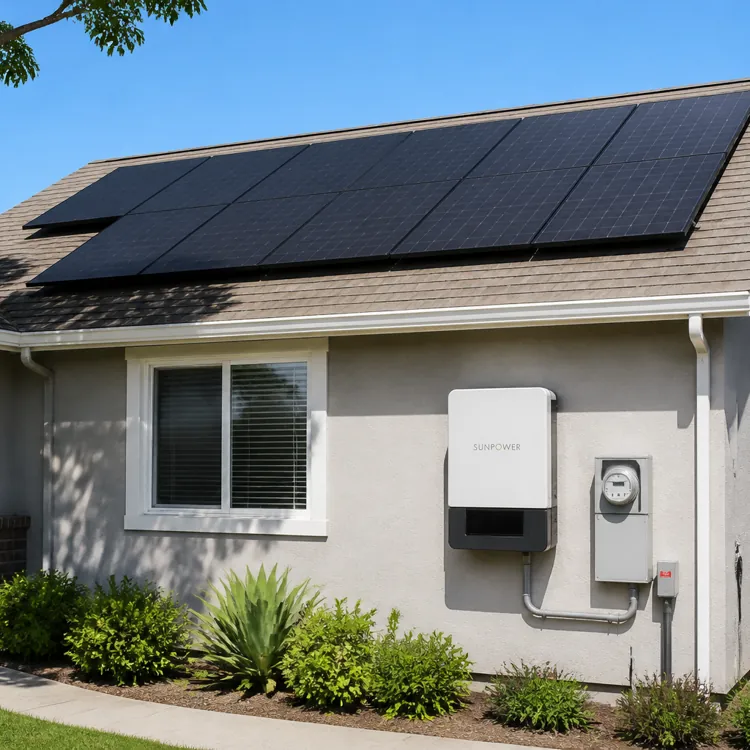
Hybrid systems are basically grid-tied systems with battery backups, so you can choose what to draw energy from as needed. Hybrid systems offer the most flexibility, but they may involve some complex design requirements and maintenance.
FAQ
Can you run your whole house on solar power?
You can run your whole house on solar power, but doing so often requires a significant upfront investment. However, there may be times when your energy needs increase or solar power isn’t as available. If you’re connected to the utility grid, that’s not a big problem, but if you’re off the grid, you may need to rely on battery backups until everything is back in equilibrium.
What are the disadvantages of passive solar design?
The main disadvantage of passive solar design is that the upfront cost is usually pretty steep. However, solar loans, leases and power purchase agreements (PPAs) are available to help spread out the expense, and local or state tax incentives can make installing solar systems more affordable overall.
Why don’t many homes use passive solar energy?
Installing and designing passive home systems is generally more expensive, so many builders and homeowners may skip this part of the design process in favor of a quick, affordable build.
“The upfront costs can sometimes be prohibitive and often discourage homeowners to consider implementing a system,” Karyna McLaren said. “This, paired with the 'cookie cutter' approach to home building that has become wildly popular, means customizations are more difficult to implement.”
What are the best windows for passive solar homes?
About 30% of a home’s heat is lost through its windows, according to the U.S. Department of Energy. Windows with e-coatings or multi-layer glazing, along with well-insulated frames, can help to keep your home at comfortable temperatures all year. When you want to keep your home cool, window coverings like blackout curtains or awnings can help to reduce heat from sunlight.
Bottom line
From passive solar designs to off-grid solar panel systems, homeowners, builders and architects have a lot of options for taking advantage of sustainable energy. While it’s arguably easiest to build a passive solar home from the ground up, there are a few strategies you can implement in your existing home to harness the benefits of solar energy and create a more sustainable future.
Article sources
ConsumerAffairs writers primarily rely on government data, industry experts and original research from other reputable publications to inform their work. Specific sources for this article include:
- U.S. Department of Energy, “Passive Solar Homes.” Accessed Nov. 14, 2025.
- U.S. Department of Energy, “Benefits of Residential Solar Electricity.” Accessed Nov. 14, 2025.
- U.S. Department of Energy, “Energy Efficient Window Coverings.” Accessed Nov. 14, 2025