

- A new law is intended to speed up introduction of advanced sunscreens in the United States
- The U.S. has fallen behind other countries because of delays in approving new ingredients, critics say
- Sunscreen is vital to protect against melanoma and other skin cancers
It. may be cold and overcast where you are now but, sooner or later, the sun will come blazing back and when it does, a new U.S. law aims to bring American sunscreen standards into the 21st century, potentially ending decades of stagnation in the ingredients available to consumers. While the legislation promises faster review of ultraviolet (UV) filters and improved labeling requirements, experts say the move mainly allows the U.S. to catch up to countries that have spent years using more advanced and effective sunscreen technologies.
For now, the gap is real. Europe, Asia, and Australia all approve UV filters that offer stronger, more stable protection against UVA radiation, the wavelength most responsible for premature skin aging and a major contributor to melanoma. Several of these filters — including Tinosorb S, Tinosorb M, Mexoryl XL, and Uvinul A Plus — have been in overseas products for more than a decade, yet remain unavailable in American sunscreens.
“American consumers simply haven’t had access to the best UV protection science can offer,” said one dermatology researcher involved in FDA advisory work. “This law doesn’t magically bring those ingredients here overnight, but it makes it much more likely they will eventually be approved.”
The new law grew out of legislation introduced by U.S. Senators Maggie Hassan (D-NH) and Roger Marshall (R-KS). It requires the U.S. Food and Drug Administration (FDA) to modernize its process for reviewing and approving new sunscreens, helping Americans access sun protection products that have been safely used in other countries for years.
“For too long, outdated regulations have prevented Americans from accessing the same safe and effective sunscreen products available in other countries,” said Senator Hassan. “Now, the FDA will finally update its approval process so that American manufacturers can produce modern, user-friendly sunscreens and American families can benefit from the sun protection options that have been safely used around the world for years. I’m glad that we were able to work across the aisle to get this done.”
Why the U.S. fell behind
Unlike Europe and Asia, which treat sunscreens largely as cosmetics, the U.S. regulates them as over-the-counter drugs. That classification requires additional safety data and longer review times. As a result, no new UV filter has been approved in the U.S. since the 1990s — a startling reality in a world where skin cancer rates continue to rise.
The new law instructs the FDA to modernize and streamline its review framework, create clearer pathways for evaluating long-used international filters, and update broad-spectrum testing to better measure UVA protection. Consumer advocates say these steps are essential, given how central UVA exposure is to skin damage.
“People assume a high SPF number means complete protection,” said a spokesperson for the American Academy of Dermatology. “But SPF mainly measures UVB — the rays that cause sunburn. Many U.S. sunscreens still offer weak UVA defense compared to products available abroad.”
What other countries are doing better
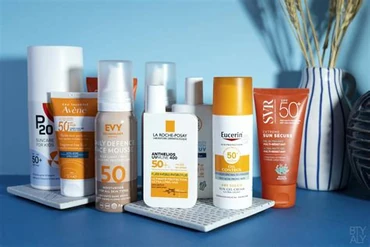
In the European Union, manufacturers can choose from more than 30 approved UV filters — nearly double what’s permitted in the U.S. — allowing them to formulate sunscreens that are both cosmetically elegant and highly protective. Asia’s beauty markets, especially Japan and South Korea, emphasize lightweight, transparent formulas with strong UVA ratings using the PA system (PA++ to PA++++).
Australia, which has some of the world’s highest skin cancer rates, enforces some of the strictest sunscreen regulations globally. Its public-health campaigns have helped drive adoption of high-SPF, high-UVA products that have shown measurable impact on reducing melanoma incidence.
With this much innovation abroad, U.S. dermatologists and cancer-prevention groups have been pressing regulators to act for years.
Melanoma risk remains high
Melanoma is the deadliest form of skin cancer, and UV exposure is responsible for roughly nine out of ten cases. While early detection has improved survival rates, incidence continues to climb in the United States.
A long-term Australian study found that daily sunscreen use reduced melanoma rates by about 50%, a figure often cited by cancer-prevention advocates. Many of the formulations used in high-sunlight regions feature robust UVA filters that help prevent not just cancer, but also photoaging and other UV-linked skin disorders.
In addition to melanoma, basal cell carcinoma and squamous cell carcinoma — far more common but usually less deadly — are also tightly linked to UV exposure. UVA rays, which penetrate deeper into the skin, are thought to play a major role in cumulative DNA damage.
What the new law means for consumers now
Consumers won’t see immediate changes on store shelves. The FDA must issue new guidance and begin evaluating pending UV filter applications before next-generation sunscreens can be marketed. Industry groups say the research is already available for many of the filters used abroad, meaning the potential pipeline could move quickly once the framework is in place.
In the interim, dermatologists recommend that consumers continue using broad-spectrum sunscreens with SPF 30 or higher — ideally mineral sunscreens (zinc oxide or titanium dioxide) for stronger UVA coverage — and reapply every two hours when outdoors.
“This is an important regulatory milestone,” said the AAD spokesperson. “But for meaningful public-health impact, we need high-performance filters, accurate labeling, and consumer education. Sunscreen only works if people understand how and when to use it.”
The bottom line: Better sunscreens are coming, and the U.S. may finally join the rest of the world in offering the full range of UV-filter technology. But until the new system is in place, consumers should stay vigilant — and informed — about what their sunscreen can (and can’t) do.
Consumer Guide — How to pick a sunscreen today
Even with regulatory changes coming, here’s how to choose the best protection right now.
1. Look for “Broad Spectrum”
This ensures the product protects against both UVB (sunburn) and UVA (aging, long-term skin damage). UVA protection is where U.S. sunscreens often fall short, so “broad spectrum” is non-negotiable.
2. Minimum SPF 30
SPF 30 blocks about 97% of UVB rays. Higher SPFs offer marginally more protection but help compensate for under-application — a common problem.
3. Consider mineral sunscreens for stronger UVA coverage
Mineral filters:
Zinc oxide offers the broadest spectrum of UV protection available in U.S.-approved filters.
Titanium dioxide helps but doesn’t cover UVA-1 as well.
Minerals are especially good for sensitive skin, kids, and people seeking robust UVA defense.
4. If using chemical sunscreens, look for these ingredients
While the U.S. lacks the advanced UVA filters used abroad, you can still maximize what’s available. Prioritize formulas containing:
Avobenzone (UVA protection; works best when stabilized with octocrylene)
Meradimate (moderate UVA coverage)
Avoid relying solely on octinoxate, homosalate, or octisalate — these mainly protect against UVB.
5. Choose a formula you’ll actually use
The best sunscreen is the one you’re willing to apply generously and reapply often. Gels, milks, sticks, sprays, and hybrids all work when applied properly.
6. Reapply every two hours (or after swimming/sweating)
Most users apply too little sunscreen and forget reapplication. A shot-glass amount for the body and a nickel-sized amount for the face is a good rule of thumb.
7. Don’t Forget Physical Barriers
Hats, sunglasses, UPF clothing, and shade can dramatically reduce UV exposure. Sunscreen should be your last line of defense, not the only one.