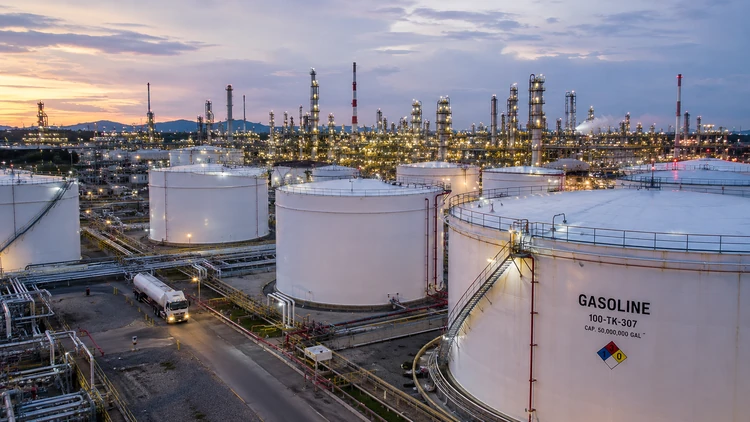

U.S. gasoline inventories have been running below seasonal norms, raising concerns as the summer driving season gets underway.
Lower supplies do not automatically mean higher prices, but they leave the market more vulnerable to refinery outages, storms, or unexpected demand spikes.
Consumers could see greater price volatility at the pump in the weeks ahead, especially in regions that already face tight fuel supplies.
U.S. gasoline supplies have been shrinking in recent months, a trend that energy analysts say bears watching, as Americans head into the peak summer travel season.
According to the Energy Information Administration (EIA), gasoline inventories have spent much of the spring below their five-year average, reflecting a combination of strong demand and tighter supplies. In late May, gasoline stocks had fallen for 15 consecutive weeks and stood roughly 6% below seasonal norms before posting a modest rebound in the latest weekly report.
Even after that increase, inventories remained about 5% below the five-year average for this time of year.
The decline has attracted attention because gasoline inventories serve as a cushion against supply disruptions. When stockpiles are low, markets have less flexibility to absorb unexpected events such as refinery outages, hurricanes along the Gulf Coast, or spikes in consumer demand.
Record rates of declines
Recent reports have focused on the pace of inventory declines. A Forbes analysis described the drop in U.S. gasoline inventories as occurring at a record pace, raising concerns about refinery capacity and fuel availability during the busy summer driving season.
Gasoline supplies are closely linked to oil supplies, which have also been rapidly declining during the Iran War. ExxonMobil senior vice president Neil Chapman recently warned about global oil inventories, suggesting oil prices could top $150 a barrel before the end of the summer.
“We’re approaching unheard-of inventory levels,” Chapman said at a conference hosted by Bernstein, and reported by the New York Post. “You can debate whether that’s going to hit those really low levels in two weeks or three weeks. Once you get to that point, then you’ll see the price shoot up.”
Consumers should brace for volatility
For consumers, the most immediate impact could be increased volatility at the pump. Gasoline prices are determined by several factors, including crude oil prices, refinery operations, taxes, and distribution costs. While crude oil prices have recently fluctuated amid global geopolitical developments, tight gasoline inventories can amplify price increases when markets face supply pressures.
Regional differences are also likely. Areas that rely heavily on imported fuel or have limited refining capacity, such as parts of the West Coast and Northeast, can experience larger price swings when supplies tighten.
Still, there are reasons consumers should not panic. U.S. refineries are operating at high utilization rates, and the latest EIA data showed a 3.4 million-barrel increase in gasoline inventories after weeks of declines. That suggests refiners are responding to seasonal demand and may be able to rebuild stockpiles if operations remain stable.
The key question for motorists is whether refiners can keep pace with summer demand. If inventories continue to recover, gasoline prices could remain relatively stable. If stockpiles resume their decline, however, drivers may face higher prices and greater uncertainty at the pump as the summer travel season reaches its peak.