
2022 Travel Trends

Article Image

A Disney vacation may end in debt, but there may be few regrets

This holiday season, inflation has been top of mind for many consumers. The rising cost of day-to-day goods has made the financial burden of buying holiday gifts more stressful than usual. 

While recent studies have shown the lengths consumers will go to get every gift on their wish list, what about a vacation to Disney World? 

A new survey conducted by LendingTree asked over 1,550 consumers if they’d be willing to go into debt for their Disney vacation – and if they’d regret doing so. 

Perhaps the biggest findings from the survey was that 20% of respondents said they have gone into debt for a Disney vacation, while more than 70% of that group said they don’t regret their decision. 

“It’s no secret that a trip to a Disney park is expensive, but that is a price many Americans are willing to take on some debt to pay,” said Matt Schultz, LendingTree’s chief credit analyst. “That speaks to the power of Disney and is also further proof of just how many of us value experiences and memories that can come with them. 

“Taking on debt for such things can be okay, as long as it is done in moderation. However, doing it too often or to too big a degree can be a recipe for trouble.” 

What are the financial risks, and who’s willing to take them? 

The survey broke down the primary costs associated with a Disney vacation, as well as who is most susceptible to going into debt for their trip. 

According to Mouse Hacking, the price of flights, transportation to and from Disney World, a five-night stay at a Disney resort, five-day park tickets with a paid line-skipping service (Genie+), and a standard meal for a family of four (two adults, one child aged 3-9, and one child 10 or older) would cost $5,731 this year ($287 per person per night). 

However, by 2023, that price is anticipated to increase to $316 per person per night, making that same vacation over $6,300. 

The study identified which groups were most likely to go into debt for their Disney vacations: six-figure earners (26%), parents with children under 18 (30%), and millennials (27%).

However, members of these same groups were also the most likely to use discounts to fund their trips – 49% of six-figure earners, 51% of parents with young children, and 50% of millennials. 

According to participants who have gone into debt for a Disney trip, the top three things that cost more than anticipated were park concessions, admission tickets, and hotels. 

A budget can help

With over 71% of the participants in debt from their Disney trips having no regrets about how they spent their money, the survey revealed that quickly making payments could be the reason. Eighty percent of participants said they’d pay off their Disney debt in under six months. 

However, for those who aren’t looking to add to their debt, LendingTree did offer some budgeting tips. 

For starters, utilizing credit card rewards – whether that’s for airfare, hotels, or other vacation-related purchases – can help reduce out-of-pocket costs. Experts also recommend opening a 0% balance transfer credit card if possible, which will cut interest out of all of your payments, and make it easier – and faster – to pay off debt. 

Lastly, they suggest over-budgeting. While it’s hard to know exactly how much you’ll speed on food and drinks every day, targeting your budget higher than you expect can help you enjoy your vacation without breaking the bank. 

There are also several Disney blogs that help travelers make the most of their stay on a budget. Sites like MagicGuides.com, MouseEarMemories.com, and DisneyTouristBlog.com, among countless others, provide resources for Disneygoers to travel affordably. 
Article Image

U.S. pre-departure testing is crucial barrier to international travel, survey finds

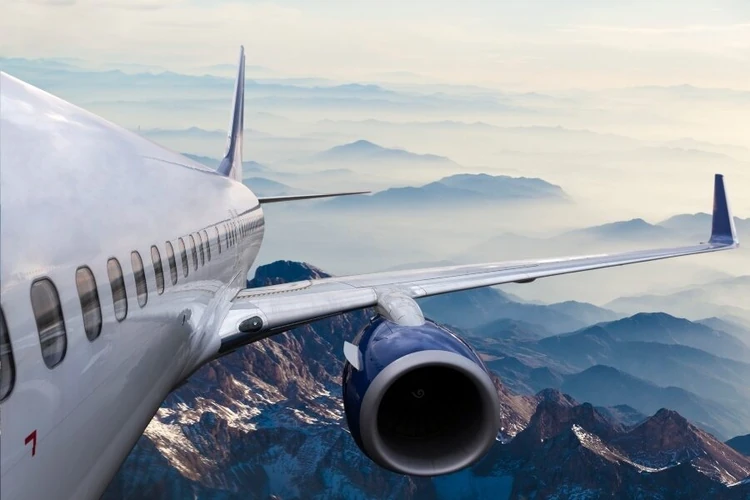
Just weeks before the doors of the summer travel season blow wide open, a new survey shows that vaccinated international travelers consider pre-departure testing requirements as a barrier to them visiting the U.S.

The survey – conducted by Morning Consult for the U.S. Travel Association (USTA) – took the pulse of vaccinated international travelers in the United Kingdom, France, Germany, South Korea, Japan, and India, which are countries that contribute a lot of tourism to the United States. 

Major international U.S.-based carriers like United, American, and Delta may be concerned because of these findings:

  • Nearly half of respondents (47%) who are unlikely to travel abroad in the next 12 months cited pre-departure testing requirements as a reason for not doing so. 

  • Another half of respondents (54%) said pre-departure testing requirements would have a sizable impact on their likelihood to specifically visit the U.S.

  • A large majority of adults surveyed (71%) said they prioritize traveling to destinations without cumbersome entry requirements, including 29% who strongly agree with that sentiment.

Saving the summer travel season

Despite the bleak projections, the USTA says the U.S. government still has time to save the summer travel season and quicken the travel industry’s recovery.

While half of the survey respondents said they wouldn't travel from abroad to visit the U.S, another 46% of respondents said they would be more likely to visit if pre-departure testing requirements for vaccinated adults were lifted.

The USTA said the removal of the pre-departure testing requirement would likely lead to 20% more travelers coming to the U.S. this summer than previously anticipated. Willis Orlando, a senior product operations specialist at Scott’s Cheap Flights, concurs.

“Since the travel industry started to recover, we’ve seen time and time again that the removal of barriers to entry to any single country-particularly testing requirements has been correlated with increased bookings,” Orlando told ConsumerAffairs. 

“Not only would a removal of the pre-departure testing requirement for entry to the U.S. help boost the number of international visitors coming to the U.S., giving a boost to everyone in the travel and hospitality business, but it would also help give more Americans the confidence to strike out and go abroad again,” he added.

Orlando says there are good fares to be had for Americans who are willing to adhere to testing requirements before they come back home, mainly because of the lagging demand for international business travel.

Article Image

High gas prices may limit some Memorial Day travel

Despite the pent-up demand for travel that consumers are experiencing after a two-year pandemic, fewer Americans are planning to travel during the Memorial Day weekend. For many, the high cost of gasoline is the reason.

In a survey of 1,030 American adults over the age of 18, the Vacationer found that about 60% of respondents are planning a holiday trip this year. More than 50% said their primary mode of transportation will be by car. Nearly 7% said they will fly, while the remaining 2.52% will take public transportation.

Just over half – 54% – said high gas prices are affecting their Memorial Day travel plans. Those who are planning to travel by car aren’t planning to travel that far. One-third of respondents said they're planning a car trip over the holiday weekend, but they will only travel 100 or fewer miles.

“The youngest generation of American adults aged 18-29 is most likely to travel for Memorial Day,” the survey authors write. 

Just over 70% of that group plans to travel, with the rate falling for older demographic groups. Only 63.09% of those aged 30 to 44 say they will travel, and 59.29% of American adults aged 45 to 60 said the same. 

Firing up the grill

Of all the activities that people plan for the Memorial Day weekend, a barbecue cookout is by far the most popular. Fifty-eight percent of people in the survey said they’ll stay close to home and fire up the grill.

The next most popular activity is a trip to the beach, favored by 13.4% of respondents.

The survey concludes that inflation is definitely putting a damper on holiday activities. More than 40% of respondents said high gasoline prices are a consideration in their plans. Another 13% reconsidered air travel plans because of rising fares.

A report by WFTS-TV in Tampa found that airfares have nearly doubled to some destinations in just the last two months. The report found that demand for air travel is rising faster than airlines are adding flights.

Article Image

High gas prices have RV campers changing their plans

During the first year of the pandemic, recreational vehicle (RV) sales boomed and campgrounds were crowded with Americans seeking to safely get out of the house.

But with gasoline prices reaching over $4 a gallon in most parts of the country, those campgrounds may be a little less crowded this spring and summer. The Dyrt, an app that's popular with campers, surveyed its users and found that gas prices are causing 60% of RV owners to make other plans.

The survey included consumers who said their primary mode of camping is via RV, camper van, trailer, overlanding, truck camper, or rooftop tent campers. Nearly all said, quite understandably, that gas prices will make camping less affordable.

Many of the people in the survey recently purchased camping vehicles that may have to stay parked for a while. Fifty-seven percent of people who tried a new form of camping last year opted for RVs and camper vans, making these the fastest-growing types of camping.

"Camping with RVs and camper vans has increased dramatically in popularity in recent years, more so than any other type of camping," said Kevin Long, CEO of The Dyrt. "Depending on which part of the country you're filling up in, and obviously the size of the gas tank, the cost for a fill-up could be $500 or more.”

Putting off long road trips

Long says people who recently purchased an expensive RV probably aren’t going to try to sell it. Instead, they may take fewer and shorter trips this summer.

“Maybe they'll save that cross-country road trip of a lifetime for 2023," Long said.

"I had hoped to go on weekend trips around Oregon and Washington at least twice a month or more," said Kelly Ann of Portland, Ore., a Dyrt user who recently purchased a rooftop tent camping rig. "I need to cut that back to once a month. Everyone is rethinking plans."

Campgrounds in the Western U.S. are among the most popular, but unfortunately for campers, western states have the nation’s most expensive gasoline. The average price of regular gas in California is approaching $6 a gallon. Colorado is the region’s gasoline bargain, with an average price of $3.99 a gallon.