2022 Cell phones and smart phones

Article Image

Looking to save money on phone plans? Cricket gives consumers a free try-before-you-buy option.

At a time when mobile phone plans can be a concern for consumers who are trying to save money, Cricket Wireless is giving consumers an opportunity to try its network for free with the launch of the tryCricket app in the Apple App store.

Being a low-cost carrier, Cricket doesn’t always get the same ink that the wireless big boys like AT&T, Verizon, and T-Mobile do, but it has 13 million subscribers who apparently like the service. As an example of that, earlier this year Cricket ranked number one in Customer Service and Purchase Experience for the second consecutive time in a J.D. Power study.

Another question that might be asked is about coverage areas. Riding on the backbone of AT&T, Cricket users have access to the same coverage area, a fact not lost on ConsumerAffairs reviewer Francisco, of Berber, Calif.

“I've used Cricket Wireless for over a year now. Before this, I actually used Metro By T-Mobile, he wrote in his review of the company. "When I compare both cellular companies I actually get better coverage almost wherever I go. Although where I live it's kind of slow sometimes but most of the time I'm able to do most of my things. Usually, I need to have the internet when I go to work in which Cricket does the job.”

Comparing prices, the Cricket plans that ConsumerAffairs reviewed were far more straightforward than the larger carriers, with four-person plans going for $100 a month. 

The only thing that might be a barrier for some is that Cricket is all about simple and essential vs. bells and whistles. If you or someone in your family is a data hog and constantly streaming videos, you need to know that if Cricket’s network gets busy, it “may” temporarily slow speeds.

How this try-before-you-buy offer works

On the surface, it may sound confusing that someone who’s on a T-Mobile plan can actually try another carrier service without changing phones or SIM cards. But in the digital age, someone came up with the bright idea of “eSIM,” which allows mobile customers to switch services without having to physically switch out a SIM card.

Jeff Moore, principal of Wave7 Research, thinks highly of eSIM.

“There are several benefits of eSIM for simplifying consumer experiences, including the ability to switch carriers more easily, the ability to have more than one number associated with a device, and the ability to easily choose a carrier when traveling abroad," he said.

The tryCricket offer is only available for iPhones at the moment, but an Android version could come later. When someone signs up for the tryout, they’ll get a temporary phone number with 3GB of data with unlimited talk and text during the trial period. If they like what they see, then they can port over their current phone number. The tryCricket app is available here.

Article Image

T-Mobile will use SpaceX satellites to expand coverage areas

T-Mobile will use SpaceX’s Starlink satellites to expand cellular coverage, connecting consumers’ phones with satellites orbiting the earth.

The wireless provider announced an agreement with the Elon Musk-owned company – the first of the major cellular providers to offer service from space. 

You may have seen ads from most of the cellular providers, coloring in the areas where they have coverage. While there is a lot of color on most of those coverage maps, there are some white spaces – gaps in the coverage. Melissa, a T-Mobile customer in Onstead, Mich., says she lives in one of those gaps.

“We have 5 phones connected to the T-Mobile network,” Melissa wrote in a ConsumerAffairs review. “When we are home not one phone gets network service. We can only use our calender, alarm clock, and camera on our phones.”

T-Mobile says there are plenty of cellphone users who have Melissa’s problem. Despite powerful LTE and 5G wireless networks, the company says well over half a million square miles of the U.S., in addition to vast stretches of ocean, are untouched by cell signals from any provider.

That should be changing, albeit slowly, at T-Mobile. The company said it will offer plans that will include satellite coverage, along with the current plans that only use cell towers. 

Most users won’t need a new phone

The satellite networks will use T-Mobile's mid-band spectrum. Because of that, most consumers who sign up for the expanded coverage won’t have to buy a new phone. The new satellite plan will start with texting services in a beta test early next year.

“We’ve always thought differently about what it means to keep customers connected, and that’s why we’re working with the best to deliver coverage above and beyond anything customers have ever seen before,” said Mike Sievert, CEO of T-Mobile. “More than just a groundbreaking alliance, this represents two industry-shaking innovators challenging the old ways of doing things to create something entirely new that will further connect customers and scare competitors.”

Musk said the agreement will benefit consumers while improving safety and security, noting that it “means there are no dead zones anywhere in the world for your cell phone.” 

T-Mobile’s announcement did not contain any information about what the new satellite coverage will cost.

Article Image

Consumers say dealing with wireless providers is getting harder

Wireless companies spend lots of money on ads that urge consumers to switch providers. But a new study suggests that consumers find the process of purchasing a new phone or wireless plan less pleasant than in the past.

J.D. Power’s 2022 U.S. Wireless Purchase Experience Study found a number of reasons for this diminished satisfaction. Consumers who participated in the study and who purchased a wireless phone or switched to a new provider in the last six months said the transactions are taking longer to complete.

They also complain that they’re having to do much of the work themselves because of a decline in customer service. Ian Greenblatt, managing director at J.D. Power, says it might be a result of the upheaval in the job market caused by the COVID-19 pandemic.

“Staff retention constraints, shorter representative tenure, and less training are leading to a longer time to complete the purchase, more perceived effort from the customer, and ultimately, a decrease in satisfaction,” Greenblatt said. “As consumers increase their device usage and reliance, the purchase experience becomes that much more important. The study finds that respondents believe they’re paying more and receiving less.”

Happy T-Mobile customer

Among the big three wireless operators, T-Mobile was rated as the easiest to deal with by consumers posting their feedback at ConsumerAffairs. Jacqueline, of Virginia Beach, Va., recently told us about a good experience.

“I had Toure from customer care assist me today in transferring my phone from the Sprint network to the T-Mobile account,” Jacqueline wrote in a ConsumerAffairs review. “She went above and beyond on customer service. She followed through the entire process and got me where I needed to be. She was amazing and T-Mobile should be so grateful to have her on their team!”

Sammy, of Bloomfield, Colo., told us about a frustrating experience with Verizon when he switched from AT&T and tried to transfer four lines on his plan.

“Only three lines were transferred and they forgot to transfer my fourth line,” Sammy told us. “And when I called to [activate] that fourth line they keep telling me that they cannot verify my information.”

Virtual mobile network operators did better in the J.D. Power survey than the legacy carriers. While T-Mobile had a satisfaction score of 797, Cricket led mobile virtual network operators with a score of 821. Metro by T-Mobile ranked second, and Spectrum Mobile ranked third, with both earning satisfaction scores above 800.

Article Image

More consumers report problems with wireless network quality

Consumers are increasingly using their cell phones and smartphones to access the internet as much as they use them to talk, and those growing data demands on mobile networks are causing problems. 

The J.D. Power 2022 U.S. Wireless Network Quality Performance Study found that an increasing number of consumers are reporting problems with network quality. The most common reported problem is slow data or failure to load content.

“An uptick in wireless and device usage was bound to catch up to network quality,” said Ian Greenblatt, managing director at J.D. Power. “Wireless customers are increasingly adept in data usage and streaming, meaning they’re less inspired and more aware of problems. 

J.D. Power tracked customer satisfaction with wireless service across five different regions in the U.S. It found that Verizon Wireless ranked highest in all five regions, achieving the fewest network quality problems per 100 connections (PP100) in call quality.

An analysis of ConsumerAffairs reviews of the Big Three wireless providers shows that consumers give the edge to AT&T:

AT&T: 3.9 stars

Verizon: 3.5 stars

T-Mobile: 3.2 stars

Updated phones can help

Sometimes the perception of service improves when new equipment is involved. Kenneth, of Elmhurst, N.Y., said he was shocked at how much faster his T-Mobile service was when he upgraded phones.

“With the newer phones we got, they all so far worked flawlessly and T-mobile is the only carrier to have 5G on the phones too,” Kenneth wrote in a ConsumerAffairs review. “We have sim cards spread out between all the carriers based on level of use so it's as cheap as possible for us overall and I can say that one carrier has great signal, T-mobile.” 

In fact, J.D. Power found that the number of problems is significantly lower when 5G is available. When wireless customers reported issues, the survey found that it mostly involved streaming audio and video quality, slow loading times, and calls not going through.

Cheaper plans may be problematic

Our analysis of ConsumerAffairs reviews also suggests that customers with the most expensive plans report the fewest problems with network quality. Herbert, of Palmetto, Fla., has a Verizon plan with up to 50 gigabytes of data usage.

“After the usage they claim you will be slowed to .6 Mbps to 3.0 Mbps, which is still fast enough to surf the net and perform email, etc.,” Herbert told us. “Well it doesn't work that way. They slow the data to .01 Mbps up to .26 Mbps which doesn't even allow you to surf the net.”

With inflation at a 40-year high, more customers may be tempted to move to lower-priced plans. While they may pay less money each month, the level of satisfaction may also go down.

Article Image

The hot summer heat plays havoc not only with people, but smartphones, too

With the planet now in its seventh year of the hottest in recorded history, not only are people trying to keep cool, but their smartphones would like to, as well. Phones already have enough heat-producing processes on their own – enabling a device’s camera, apps, and calls – but added environmental heat can lead to battery drain, performance problems, and even a complete shutdown.

There are ways to prevent this from happening, though. ConsumerAffairs surveyed the landscape of advice and found these tips from AT&T, T-Mobile, Xfinity, Asurion, and others. We’ll start with AT&T’s six best tips:

Don’t subject your wireless device to extreme temperature changes. If you and your phone are out in 90+ degree temperatures, it might seem logical that the best way to cool down is to quickly move to an air-conditioned area. Turns out that idea isn’t a smart one, though. “Bringing your electronics from a 90+ degree sunny day to a well air-conditioned room is a great way to moisten the interior of your device,” AT&T told ConsumerAffairs. “Allow your phone to transition gradually to the cooler temperatures by putting it in your purse or pocket before entering the room.”

Keep multiple wireless devices stored separately.  Another hmm-worthy tip AT&T offered was that if you’re carrying both your smartphone and a tablet or laptop, keep them separated and away from each other. The carrier said that since each electronic device conducts heat of its own, stacking them or keeping them pressed up against each other intensifies the heat and obstructs airflow that can keep them comfortably cool.

Don’t leave your wireless device in the car. If you go shopping or running errands in the sweltering heat, it would be wise to take your phone with you instead of popping it in the glove box. Heat is heat, and compartments in the car can suffer just as much as things that are exposed to direct sunlight.

Reduce the risk of overheating from within your phone

While keeping the phone out of the sun's glare can help immensely, AT&T said there are several apps that can help monitor your phone’s temperature and alert you when overheating is a risk. Here are 10 that ConsumerAffairs found expressly for Android phones. As for iPhones, How To's Guru suggests the CPU-Z or System Monitor apps.

In offering suggestions for keeping phones cool, TechRadar suggests removing the case and turning off some of the more intense energy-sucking apps, like games. 

Additional pieces of advice offered by Asurion – the tech insurance provider – were lowering your screen brightness, turning off Bluetooth, and turning on airplane mode, especially if your phone has little or no signal.

When ConsumerAffairs surveyed tips from Xfinity (previously known as Comcast), it suggested that on top of turning off Bluetooth, phone users should also turn off GPS and Wi-Fi to reduce the device’s energy demands.

Finally, device users can go the insurance route, too. Most wireless providers have insurance options that cost a fraction of the price it would cost to replace your phone. Here are AT&T’s device coverage options, T-Mobile’s, and Verizon’s. 

Article Image

AT&T to use GPS locations to route 911 calls

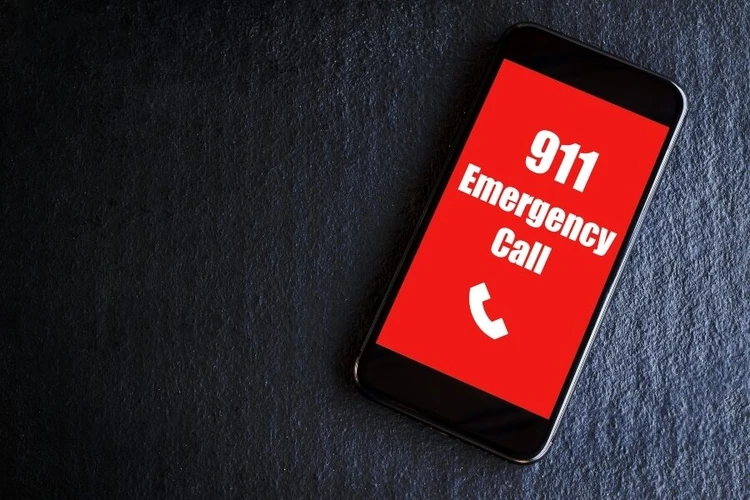
In emergency situations such as a stroke, time is of the essence. To cut down on emergency response times, AT&T has upgraded its system so that wireless 911 calls are routed to the appropriate call centers more quickly.

The new nationwide enhancement – “Locate Before Route” – will use location-based routing so that AT&T can more accurately identify where a wireless 911 call is coming from. The feature will use a device's GPS and hybrid information to route the call.

Previously, wireless 911 calls were routed based on the location of cell towers. Given a tower’s typical 10-mile coverage, emergency responses were sometimes delayed. According to AT&T, those delays sometimes increased when a call was made within the border areas of a 911 call center where state, county, or city boundaries overlap.

“In today’s environment, over 93% of the US Population have cell phones and rely on these for communications. It is critical that when they dial 9-1-1 the call routing is going into the closest dispatch center. This will be a game changer for wireless 9-1-1 calls," said Kim Zagaris, a retired fire chief and the technology and policy advisor of the Western Fire Chief Association, in a comment sent to ConsumerAffairs. 

"With the new release of AT&T location-based routing, a device can be located and routed within 164 feet of the device location. Taking away the transfer time of the past systems and be quicker response for emergency personal responding saving valuable time.”

The nationwide rollout of AT&T's new feature has already started and is available in 16 states – Alaska, Colorado, Hawaii, Idaho, Montana, Oregon, Washington, Wyoming, Kansas, Illinois, Iowa, Minnesota, North Dakota, Missouri, Nebraska, and South Dakota. The company promises that other regions will be rolled out over the next several weeks, and company officials hope to have the country completely covered by the end of June.

AT&T addresses possible privacy concerns

In an email to ConsumerAffairs, an AT&T spokesperson said mobile customers can feel confident that the new location feature will not cross any privacy lines. 

"The handset location used for Location Based Routing is only used when a caller places a 9-1-1 call," the spokesperson said, adding that a 911 caller’s location is only shared with public safety professionals at the call center and the data is delivered via dedicated links to the center.

Article Image

AT&T raises prices on its older wireless plans

AT&T is raising prices on its older mobile service plans for the first time in three years. However, customers on its newer plans will not see any changes at this time.

The monthly fees on AT&T's older packages are increasing by $6 a month for single-line customers and up to $12 a month for families, according to various reports. Subscribers will have the option to avoid the price hike by switching to new unlimited plans.

“The price increases mark a high-profile reversal for an industry that has mostly competed for new customers with discounts, free phones and low-priced family plans—even after shrinking to a three-player market with the purchase of Sprint Corp. by T-Mobile US Inc. in 2020,” Bloomberg reported.

AT&T explains its reasons

In a statement to ConsumerAffairs, AT&T said it is asking its customers to check out its other offerings. 

“We are encouraging our customers to explore our newer plans, which offer many additional features, more flexibility for each line on their account and, in many cases, a lower monthly cost,” a company official told us. 

AT&T says customers who switch plans will gain access to 5G service and ActiveArmor, an app feature that will give its customers advanced security features like identity monitoring. 

Inflation and changes to prices

Consumers who are concerned about paying more for mobile service may have less to worry about than they thought. According to In2013Dollars.com and the U.S. Bureau of Labor Statistics, prices for wireless telephone services are 52.01% lower in 2022 versus 1997 (a $26.01 difference in value).

While it’s not something AT&T has ballyhooed in its marketing campaigns, the company has been warning investors that it’s feeling the pinch of inflation like everyone else.

Despite rising wages taking a bigger bite out of the company's bottom line, CEO John Stankey said on an earnings call last month that AT&T's customer base was "satisfied" with the value the company has been putting back into its products and services.

“Our history would suggest that we know how to do that, and we can do that. And we'll be very smart and judicious as we have to apply it,” he said.

Article Image

Reducing smartphone screen time may improve well-being, study finds

A new study conducted by researchers from Ruhr University explored how consumers’ smartphone use may affect their health. According to their findings, reducing time spent on smartphones over the long term can work to improve consumers’ overall well-being. 

“The smartphone is both a blessing and a curse,” said researcher Julia Brailovskaia. “It’s not necessary to completely give up the smartphone to feel better. There may be an optimal daily usage time.” 

Limiting smartphone use

The researchers divided over 600 participants into three groups for the study. One group of participants didn’t use their phones at all for one week, a second group reduced their smartphone use by one hour each day, and a third group didn’t change their behavior with their phones. The researchers then interviewed the participants one month and four months later to learn about their lifestyles, mental health, and their life satisfaction. 

Ultimately, the researchers learned that cutting back on time spent on smartphones was beneficial. The participants reported less anxiety and depression symptoms and an overall healthier lifestyle. Spending less time on smartphones led to more physical activity and less cigarette smoking.

“We found that both completely giving up the smartphone and reducing its daily use by one hour had positive effects on the lifestyle and well-being of the participants,” said Brailovskaia. “In the group who reduced use, these effects even lasted longer and were thus more stable than in the abstinence group.” 

The researchers explained that there isn’t a set rule for consumers when it comes to how much time they should spend on their phones. The study showed that the group that cut back smartphone use by one hour each day during the study had limited their screen time by about 45 minutes within the first four months of the study. 

The team hopes consumers understand that they don’t need to stop using their smartphones entirely. Instead, cutting back on smartphone use can help consumers long-term. 

Article Image

Consumers report mixed results with 5G’s rollout

There have been a few bumps in the road as telecom companies roll out 5G service, but many industry experts say that’s to be expected with the deployment of what is essentially a new technology.

Earlier this year, there was a delay in turning on 5G service in areas adjacent to airports after the Federal Aviation Administration (FAA) raised concerns about possible interference with navigation systems. 

On Wednesday, the FAA warned that 5G wireless service could interfere with radio altimeters in Boeing 737s. That said, the agency said it does not see a safety issue for planes operating in areas where the 5G environment has been rendered safe for aviation.

What consumers say

An analysis of ConsumerAffairs reviews suggests that consumers have also experienced mixed results in the early days of 5G. Douglas, of Kingsport, Tenn., told us he has had good results so far with Cricket Wireless's unlimited 5G plan.

“I have used the service for over 6-months now and continually exceed the 22GB usage threshold,” Douglas wrote in a ConsumerAffairs review. “I have never been ‘throttled’ or slowed-down and get consistent LTE download speeds of 100-200Mbps and am able to stream full HD video. I am still in a 4G market as of writing this review but have noticed my phone switching between 4G/5G for the last few weeks and expect that 5G will be deployed soon.”

Jackie, of Oxford, Conn., reports satisfactory results from another small player, PureTalk. Even in a rural area, she says she’s receiving 5G service.

“I live off the beaten path and have always had some issues with cell service but that is a thing of the past with PureTalk,” Jackie told us. “I now have 5G coverage where I used to have 0 bars."

But Aja, of Memphis, Tenn., reports that she has 5G connectivity issues on T-Mobile, an issue she thinks might be related to her carrier.

“Didn't have service in multiple places (where) my AT&T worked just fine,” Aja wrote in a ConsumerAffairs review. “Additionally even when I had full bars on 5G, half the time content wouldn't load."

More 5G devices coming

The major wireless companies have recently stepped up the pace of their 5G rollouts, and equipment manufacturers have responded with more 5G devices. A study from ABI Research projects the launch of more always-on 5G portable device models in 2022 and predicts sales could top 12 million by the end of this year.

At the same time, major carriers are beginning to turn off their 3G networks since they need to redeploy the spectrum to 5G users. That raised concerns this week that many security and health monitor devices could go dark since they use the older, slower wireless frequencies.

Article Image

AT&T to phase out 3G service, putting millions of consumers in buy or upgrade mode

AT&T began saying goodbye to 3G on Tuesday. It’s an expensive proposition, as it projects to cost the company around $130 million to sunset the service. But with 5G now becoming the industry standard, the telecom likely feels 3G is an albatross it no longer needs.

The shutdown will create immediate problems for an estimated 10 million people who have older phones, smartwatches, Kindle readers, roadside assistance systems, and home alarm systems.

AT&T is the lone wolf in saying goodbye to 3G at the moment, but that won't last for long. T-Mobile is shuttering its 3G systems on March 31, and Verizon is retiring its 3G service on December 31. With its purchase of Sprint, T-Mobile will reportedly phase out that provider's LTE network on July 1.

The impact on services and customers

ConsumerAffairs took a look at who and what may be impacted short term by AT&T's move. Here's what we found:

Impacted phones: AT&T has released a laundry list of all the phones that WILL continue to work on its network after 3G goes away. That list is available here. It’s a safe bet that if a phone is NOT listed and the user has an AT&T account, then it will either need to be replaced or the user will have to find another service provider that will support the device.

An important side note to people who have aging parents – many of the millions of consumers who have 3G in their lives are older users. Adult children may be called on to help their parents find a new provider or update their phones.

Other impacted devices: Other than phones, people who have 3G Kindles, fall protectors (medical alert systems), and some automotive systems (such as in-car crash notification systems and roadside assistance systems like OnStar) will also have to update their devices or find replacements.

CNN reports that General Motors (GM) – the company behind OnStar – started pushing out updates to Chevrolet, Buick, and Cadillac owners months ago.

“As a general rule, most cars built in the last five years with connectivity are using 4G modems. If the car does run on 3G, the manufacturer may offer an upgrade program or the wireless carrier can provide an adapter with a modem that can be plugged into a vehicle,” CNN reported.

Alarm/security systems: In advice to its customers, Vector Security said that alarm system providers should have already reached out to their subscribers to ensure that there is no lapse in service for your system.

The company has published a list of questions that consumers can ask their providers if they want to start the process of updating their system. Those questions include:

  • Will the 3G sunset impact my security system?

  • When are cellular carrier changes expected to roll out in my area?

  • What is your company’s timeline and plans for customer updates?

  • Can I update my system in advance, or do I need to wait for a tiered rollout?

  • Will I be charged a service fee to upgrade my system? If so, how much?

  • Do I need to purchase new equipment, or will it be provided free of charge?

  • How can I schedule a service call to update my system, if needed?

Is AT&T offering special deals to help impacted customers?

The company hasn’t said whether it’s giving any special discounts or compensation to customers affected by 3G’s sunsetting, but they did for at least one ConsumerAffairs reviewer. 

Jason, from Angelgrove, Del., said he wasn't being given a direct answer about whether his phone/plan was impacted by the 3G change. Finally, he ended up speaking to a supervisor who gave him a one-time $10 credit “out of their infinite generosity and remorse.”

The bottom line? Just ask if AT&T can provide you with assistance. The worst thing the company can do is say no, right?