2022 Student Loan Lawsuits and Challenges

Article Image

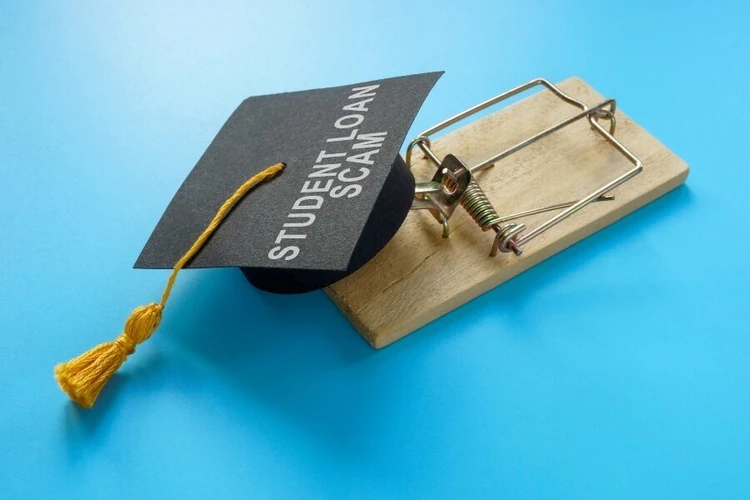
Student loan borrowers are being targeted with dangerous new scam

Since the White House announced its student loan debt forgiveness program, scammers have come out of the woodwork, seeking to convince borrowers they should pay for unnecessary and non-existent services related to loan forgiveness.

Lately, a new scam has emerged that appears to be among the most dangerous that have been reported so far. Instead of randomly targeting people who may or may not have student loans, these scammers have gathered specific information about their intended victims.

Some victims of this scheme have reported the scammer had their name, the date they graduated, their Social Security number, and even their FAFSA (Free Application for Federal Aid) information.

The contact usually comes by phone. A call comes out of the blue from someone who claims to be associated with the Department of Education’s loan forgiveness program. Because they know their victim’s name and have information about them, the caller may have added credibility.

How it works

However, no one from the Department of Education or from any part of the government’s loan forgiveness program cold-calls borrowers.

After gaining credibility with the victim, the caller says the borrower must pay an upfront fee of several hundred dollars, then a monthly fee until the loan forgiveness has been completed. That’s another sign of a scam, since demanding upfront fees for services is illegal.

The scammer also tells the intended victim that their services can result in having as much as $60,000 in student loans wiped clean. Not true. The White House plan allows for forgiveness of up to $10,000 in student loan debt and $20,000 for borrowers who took Pell Grants.

What to do

Student loan borrowers contacted in this manner with these kinds of promises should assume from the start that it is a scam. If there is any doubt, contact StudentAid.gov directly to verify the information.

Never pay a fee to participate in a free government program. A legitimate agency will not ask for a payment, only scammers will. 

Be highly suspicious of phone calls that come out of nowhere. Government agencies, especially, don’t make unsolicited phone calls.

If the caller is aggressive or pushy and warns you will miss out if you don’t act immediately, that’s yet another red flag. The hallmark of a scam is to close the net quickly before the victim has time for rational thought.

While all scams are scary, this one appears to be particularly dangerous. The scammer is targeting specific individuals using sensitive information they have obtained from either a data breach or from the dark web. 

Student loan borrowers should consider changing the passwords to their FAFSA accounts and taking other steps to protect their personal information.
Article Image

Student loan borrowers can now apply for forgiveness

People with federal student loan debt can now apply for forgiveness of a portion of their loans. The White House has announced the application form is now available online.

It's easy, it's fast," President Biden said in announcing the launch. "This is a game changer for millions of Americans to get moving."

The debt relief plan will wipe away up to $10,000 in federal student loan debt for borrowers who earn less than $125,000 per year. It will eliminate up to $20,000 for those borrowers who received Pell Grants.

In making the announcement, Biden noted that it only takes about five minutes to fill out the application. Required information includes the applicant’s name, date of birth, and Social Security number. The form is provided in both English and Spanish on desktop and mobile sites. It will be open through Dec. 31, 2023.

According to White House estimates, more than 40 million Americans may be eligible for some student loan debt forgiveness. Total student loan debt is estimated to be more than $1.5 trillion, with some economists saying it hurts the economy because it limits what young consumers can spend on other things.

Warning about scams

In advance of launching the forgiveness application, the White House warned borrowers to be vigilant against an expected barrage of student loan debt forgiveness scams. Signs of a scam include:

  • Offering to assist borrowers for an upfront fee. There is NO charge to participate in the debt forgiveness program.

  • Someone contacts a borrower and claims to be from the government. Government employees will not contact borrowers until AFTER they have applied.

  • Someone offering help to secure loan forgiveness creates a sense of urgency, claiming the borrower will miss out if they don’t act immediately. 

  • A website or email claiming to be affiliated with the program that DOES NOT have a .gov URL is not legitimate.

Article Image

White House trims number of borrowers eligible for student loan forgiveness

Amid a court challenge to his plan to forgive some student loan debt, President Biden has tweaked his proposal, reducing the number of borrowers who will qualify.

In August Biden announced the U.S. Department of Education (ED) would forgive $10,000 in federal student loans. 

Included in that group of borrowers were those who held Federal Family Education Loans (FFEL), issued by private banks but guaranteed by the U.S. government. 

Under current terms, those loans cannot be consolidated. But when the loan forgiveness program was announced, the Department of Education said FFEL borrowers could consolidate their loans and qualify for debt relief.

Altered guidance

Now the administration has changed its guidance. In a statement on the ED website, officials said: “As of Sept. 29, 2022, borrowers with federal student loans not held by ED cannot obtain one-time debt relief by consolidating those loans into Direct Loans."

"Our goal is to provide relief to as many eligible borrowers as quickly and easily as possible, and this will allow us to achieve that goal while we continue to explore additional legally available options to provide relief to borrowers with privately owned FFEL loans," a spokesman for the Education Department told Reuters.

The move coincides with lawsuits filed in several states that challenge the legality of the president’s loan forgiveness program. The suits specifically challenge the provision that allows FFEL borrowers to consolidate their loans into federal Direct Loans, which are eligible for the program.

As of the last official count, about 4 million student loan borrowers hold FFEL loans. Of those, the administration estimates the change will affect about 770,000 people.

Article Image

President Biden announces plan to forgive some federal student loan debt

In a highly-anticipated move, President Biden has announced plans to issue an executive order forgiving a portion of federal student loan debt for millions of borrowers.

The announcement comes a week before the moratorium on loan payments, in effect since early in the pandemic, is set to expire.

Under the administration’s plan, the Department of Education will provide up to $20,000 in debt cancellation to Pell Grant recipients with loans held by the Department of Education, and up to $10,000 in debt cancellation to non-Pell Grant recipients. 

Borrowers are eligible for this relief if their individual income is less than $125,000 – $250,000 for married couples. Meanwhile, the moratorium on loan payments that would have expired Aug. 31 has been extended to Dec. 31, 2022.

In explaining the move, the White House noted that nearly one-third of borrowers have debt but no degree, according to an analysis by the Department of Education. Many of these students either dropped out or could not complete their degree because the cost of attendance was too high. 

Could help borrowers  in default

The White House also said about 16% of borrowers are in default, including nearly a third of senior citizens with student debt. Federal student loan debt cannot be discharged through bankruptcy so defaulting on a loan usually results in the government garnishing a borrower’s wages or lowering a borrower’s credit score. 

“We must also remember that, while debt cancellation is good news for those who currently hold student loans, it does not solve the underlying problems that caused the student debt crisis in the first place: the exorbitant cost of college, the declining purchasing power of the Federal Pell Grant, and our flawed student loan system,” said Rep. Bobby Scott (D-Va.), chairman of the House Education and Labor Committee.

The forgiveness announcement is likely to be politically controversial, coming a little more than two months before the midterm elections. It may also be challenged in court. Biden has long favored a student loan debt forgiveness program but said it should be done through the legislative process, not with an executive order.

Article Image

Student loan payment pause set to end August 31

For more than two years, people who have taken out federal student loans have been able to suspend payments. Congress placed a moratorium on payments as a way to relieve some of the financial burdens created by the COVID-19 pandemic.

After being extended a couple of times, the payment pause is scheduled to end on August 31, unless President Biden extends it again. A survey of borrowers found most are dreading a resumption of payments. In fact, only 14% said they can afford the payments with no issues when the forbearance period ends.

The survey, conducted by ScoreSense, also found that 42% of respondents are worried about working the resumed payments back into their household budgets.

Eighteen percent of survey respondents said they will need to overhaul their budgets or rely on family to help them resume loan payments. About 25% of borrowers between the ages of 18-34 are counting on help from family members to help with their student loans.

What changed?

What changed between March 2020 and now? During the payment pause, nearly 25% of respondents said they used the money they would ordinarily pay to student loan servicers to pay off other debts and loans. Some said they invested the money in the stock market.

"Unfortunately, we're seeing the perfect storm of economic stress on households where higher prices, interest rates, property assessments, and more is making it very difficult for many people to live within their means,” said Carlos Medina, senior vice president at One Technologies, LLC., which offers ScoreSense. “For many student loan holders, making payments in 2020 was much easier than it will be when they resume." 

Forgiveness is still on the table

Some Democrats in Congress are pressing Biden to forgive a portion of student loan debt, something the president has suggested should be done through Congressional legislation. Currently, Democrats lack the votes to do that.

However, a new poll conducted for CNBC points to possible unintended consequences of wiping away a portion of student loan debt. The survey found that 59% of Americans expressed concern that student loan forgiveness would make inflation worse.

There are also political considerations that could cause the administration to hesitate. While student loan borrowers would no doubt applaud the move, other taxpayers who did not attend college and have no student loan debt might not think it is such a good idea.

Why? Because, according to the Federal Reserve, about 44 million borrowers owe a collective $1.7 trillion in federal student loan debt – money that could possibly be used to fund other initiatives or applied toward something that has more universal benefit.

Article Image

Nearly $4 billion in student loan debt forgiven for former ITT Tech students

Earlier this week, the U.S. Department of Education (DOE) announced that it will be forgiving nearly $4 billion in student loan debt for students who had previously attended ITT Tech. Loan forgiveness is available to over 208,000 students who attended the for-profit university from January 2005, through September 2016. 

“It is time for student borrowers to stop shouldering the burden from ITT’s years of lies and false promises,” said Miguel Cardona, the U.S. Secretary of Education. “The evidence shows that for years, ITT’s leaders intentionally misled students about the quality of their programs in order to profit off federal student loan programs, with no regard for the hardship this would cause. 

While some former students may have already completed Borrower Defense Claims against ITT Tech to have their student debt forgiven, the DOE says this won’t be necessary to receive payment moving forward. No further action is required, and all eligible students will have their loans erased. 

Students have been defrauded for years

This isn’t the first time the DOE has issued a loan forgiveness statement to former ITT Tech students. After the institution closed its doors in 2016 due to being cut off from federal funding, those who had attended the school but never received a degree had their debt erased.

A lengthy investigation into the school revealed that students had been lied to about how their money was used, how much money they’d make after graduating, and how many of their credits would transfer to other schools. 

“ITT defrauded hundreds of thousands of students, as we identified when I was the director of the Consumer Financial Protection Bureau,” said Richard Cordray, the Federal Student Aid Chief at the time. “By delivering the loan relief students deserve, we are giving them the opportunity to resume their educational journey without the unfair burden of student debt they are carrying from a dishonest institution.” 

According to Cardona, the goal moving forward is to make students feel safe and secure when applying to schools and borrowing money. 

“The Biden-Harris Administration will continue to stand up for borrowers who’ve been cheated by their colleges, while working to strengthen oversight and enforcement to protect today’s students from similar deception and abuse,” he said. 

Student loan forgiveness deadline approaching

Federal student loans have been on pause since the beginning of the COVID-19 pandemic in March 2020. After more than two years, consumers only have to wait a few more weeks to learn President Biden’s latest decision regarding loan forgiveness.

The President is scheduled to make an announcement about federal loans on August 31, which has experts speculating about another loan pause or substantial loan forgiveness efforts. 

Article Image

Another pause in student loan payments may be coming

Student loan borrowers are preparing to resume payments after August 31, the date that a moratorium on payments is set to expire. But the Biden administration is dropping clues that another extension of the moratorium could be in the works.

With the scheduled resumption of payments about a month away, student loan servicers need time to prepare bills and resume their collection efforts. But the Wall Street Journal reports that loan servicers have been told to stand down.

Scott Buchannon, who heads the Student Loan Servicing Alliance, says the U.S. Department of Education has told loan servicers not to communicate with borrowers yet. That’s leading to speculation that the White House plans to either extend the pause on payments or even forgive a portion of the loans.

“The situation is that we’re almost 30 days away from the planned resumption and the department has been telling servicers to hold off on resumption communications for the last few months,” Buchanan told the Journal. “Maybe the department expects that the White House will yet again kick the can down the road.”

Resumption of payments may present challenges

Loan servicers have contracts with the Department of Education to manage the repayment of federal student loans. Under normal circumstances, they communicate with borrowers about how much they owe and when and where to send payments. 

Early in the COVID-19 pandemic, when millions of people lost their jobs, student loan payments were suspended as part of one of the pandemic’s many economic relief programs. About 45 million people in the U.S. hold student loan debt. According to the New York Federal Reserve, 67% of student loan debt is owed by people under 40.

That age group is the top household formation demographic, but many have struggled to purchase homes because of student loan debt, which currently totals more than $1.5 trillion.

In March, the New York Fed issued a report warning that it expects a rise in student loan delinquencies whenever the moratorium expires. It noted that very few federal student loan borrowers made voluntary payments during the moratorium. It also said people with private student loans, which were not covered by the moratorium, have struggled to make payments.

Some in Congress, led by Sen. Elizabeth Warren (D-Mass.), have pushed the White House to forgive a large portion of student loan debt.

Article Image

FTC reminds student loan borrowers that waivers for forgiveness end October 31

The Federal Trade Commission (FTC) is reminding student loan borrowers that they have until October 31 to submit an application for the Public Service Loan Forgiveness (PSLF) Limited Waiver. The waiver has already proven its worth to thousands of student loan borrowers who have used it to get closer to total loan forgiveness. 

The FTC says there are two groups that the waiver benefits the most: (1) people who have Federal Direct Loans or can consolidate other types of federal student loans into a Direct Loan by October 31; and (2) those who have a work history with qualifying public service employers.

Until that October 31 deadline, securing a waiver gives borrowers credit for repayment periods that previously wouldn’t have counted. Those would include the following times:

  • When a borrower didn’t make a payment

  • When a borrower didn’t make a payment on time

  • When a borrower didn't pay the full amount due 

  • When a borrower wasn't on a qualifying repayment plan

The steps to take advantage of the waiver

Here’s the short version of how consumers can take advantage of the waiver:

  • Log into the borrower’s Federal Student Aid account. The borrower should use their Federal Student Aid ID to access Studentaid.gov and complete the PSLF Limited Waiver requirements.

  • Submit the PSLF form. Consumers can use the PSLF Help Tool to verify the current and past employment that they want credit for and submit the PSLF form.

  • Confirm (or consolidate into) Direct Loans. The waiver only applies to Direct Loans, so borrowers need to consolidate their existing federal loans by October 31, 2022. The process is free through studentaid.gov. If someone is unsure about what types of loans they have, all they have to do is take a look at their FSA Aid Summary.

If there are questions that the instructions for those steps don’t answer, borrowers can go to StudentAid.gov's comprehensive list of FAQs to help find the answers they’re looking for.

Article Image

Consumers can expect more expensive loans after the Fed hikes interest rates

The Federal Reserve has raised its overnight lending rate by 0.75%, the largest single increase since 2008 and the latest move to try to contain rising inflation.

The rate is still low by historical comparison, and more increases are anticipated at future Fed meetings between now and the end of the year. The federal funds rate is not paid directly by consumers, though it influences the interest rates on several types of consumer loans.

The Fed rate hike will increase the interest rate banks pay when they borrow money from the Federal Reserve. After a Fed rate hike banks usually raise their prime rate – the interest rate they offer their best customers.

That filters down to the consumer level in several different ways. The rate on auto loans will usually go up to reflect the increase, for example.

Higher credit card rates

The interest rate on credit cards, already near a record high, will also go up as a result. The interest rate on personal loans can also be expected to rise. ConsumerAffairs has listed other factors that influence the interest rate on personal loans.

The federal funds rate does not directly affect mortgage rates, which tend to move with the yield on the Treasury Department’s 10-year bond. That yield has been rising because of inflation and in anticipation of the Fed’s action.

Holden Lewis, home and mortgage specialist at NerdWallet, says the mortgage market sometimes moves ahead of any action taken by the Federal Reserve.

“Mortgage rates tend to go up and down in anticipation of Fed rate moves, which is a way of saying that the Fed increase was already ‘baked into’ mortgage rates,” Lewis told ConsumerAffairs. “In other words, mortgage rates are more likely to go up or down before Fed meetings than after Fed meetings. Over the next week or two, we probably won't see big movements in mortgage rates like we did last week.”

Mortgage rates are now over 6%

This week saw a major move in interest rates, with the average interest rate on a 30-year fixed-rate mortgage rising to more than 6%, a major blow to people shopping for a home. But the rate can be higher or lower.

ConsumerAffairs has published a breakdown of the factors affecting an individual's mortgage rate. They include credit score and the amount of the down payment.

“Home sales are slowing dramatically because of skyrocketing mortgage rates,” Lewis said. "The decreased demand means we'll soon see a slowdown in home price increases.”

Meanwhile, consumers looking for a home will have to shop carefully for a mortgage. ConsumerAffairs has listed the latest mortgage rates here.

Article Image

Lenders join consumers in feeling Buy Now, Pay Later pain

Since the middle of 2021, users of Buy Now, Pay Later (BNPL) apps have been falling behind on payments for their purchases. That’s obviously not good for consumers, but it is also taking a toll on the companies that are making these short-term loans.

The Wall Street Journal reports that BNPL companies like Affirm, Afterpay, and Zip are having to adjust because of missed payments and rising interest costs.

“We are putting a real focus on sustainable growth, strong unit economics and, critically, accelerating our pathway to profitability,” Zip co-founder Peter Gray told the Journal.

Alternative to credit cards

BNPL was all the rage at the beginning of the pandemic. The system allows consumers to make a purchase with a down payment and then two or three more equal payments every two weeks to complete the purchase.

Many consumers prefer the system because they aren’t adding to high-interest credit card balances that never seem to get paid off. But sometime in 2021, BNPL companies started sending out late payment notices.

In September, Credit Karma released research showing that 44% of Americans had used a BNPL plan. Of those consumers, 34% said they have fallen behind on payments.

Those missed payments have had significant consequences for consumers. Of those who admitted to having missed at least one payment, 72% said they believe their credit score declined as a result. Nearly a third said they experienced “significant” declines in their credit score.

Annie Millerbernd, one of Nerdwallet’s financial experts, says many consumers are under the mistaken belief that they’re getting a deal. Actually, it’s just a different financing plan.

“You only have to pay for a quarter of the price tag at checkout, but the actual cost isn’t lowered at all,” Millerbernd told ConsumerAffairs. "More payments will follow, usually in two-week increments, and not having a plan to make those payments can get you off track.”

That appears to be what’s happening. If a consumer goes shopping and makes three BNPL purchases, they may be able to handle the three initial down payments. However, they will be on the hook for additional payments over the next six weeks.

Instant gratification

Claudia Valladares, a financial advisor at Kovar Wealth Management, says BNPL plays on consumers’ appetite for instant gratification. If not properly managed, it can have the same result as running up credit card debt.

“The consumer doesn't realize those ‘small’ monthly payments can quickly throw off their monthly budget,” Valladares told us. "[Spending] $50 here, $35 there will add up! But as I mentioned, our generation wants things now so we don't think through the financial consequences at the time of the purchase.”

Millerbernd advises consumers to know their budget before making a BNPL purchase and to stick to it. Valladares says consumers should probably wait until they can pay the cost of the item entirely before making the purchase.

In March, a coalition of 77 consumer groups asked the Consumer Financial Protection Bureau to provide oversight and regulation of these financial products. The letter warned that BNPL is contributing to an explosion in consumer debt.

“BNPL products have largely evaded oversight by federal and state regulators,” the groups stated. “Although these products could have a place in meeting consumer needs if they operate as promised, they pose a risk to consumers and should be covered by basic consumer protections.” 

Article Image

Education Department forgives $5.8 billion in Corinthian College loan debt

The U.S. Department of Education is wiping the slate clean for 560,000 students who borrowed money to attend Corinthian College. The agency announced that it is discharging all those students' remaining federal student loans, an amount that equates to $5.8 billion.

The Department said the discharge will include everyone, even borrowers who have not yet applied for a borrower defense discharge. The discharge will be done automatically without any additional action from borrowers.

Addressing a longstanding problem

It took nearly three administrations to make this happen, but the Corinthian students have the Biden-Harris White House to thank for their loan discharges. Officials have cited an ongoing commitment to helping student loan borrowers get the relief they are entitled to. With the Corinthian action on the books, the administration has approved $25 billion in loan relief. 

Bringing Corinthian to justice has been a personal crusade for Vice-President Harris. She sued the institution when she was the attorney general of California in 2013, claiming that the for-profit college purposely misrepresented its job placement rates and was engaging in deceptive and false advertising and recruitment. 

"As of today, every student deceived, defrauded, and driven into debt by Corinthian Colleges can rest assured that the Biden-Harris administration has their back and will discharge their federal student loans," said U.S. Secretary of Education Miguel Cardona. 

"For far too long, Corinthian engaged in the wholesale financial exploitation of students, misleading them into taking on more and more debt to pay for promises they would never keep. While our actions today will relieve Corinthian Colleges' victims of their burdens, the Department of Education is actively ramping up oversight to better protect today's students from tactics and make sure that for-profit institutions – and the corporations that own them – never again get away with such abuse."

The Department says it’s not finished

The Department of Education made it clear that its efforts to clean up the whole student loan mess doesn’t stop here. Last week, it announced a revamp of its student loan program in hopes of getting students and loan borrowers a full slate of benefits, including loan discharges.

If it sticks, the promises the Department makes could forever change the student loan business -- from making student loans more affordable to preventing a future debt crisis by holding colleges liable for leaving students with mountains of debt and without good jobs.

The Department also recently announced fixes to longstanding problems with income-driven repayment that will help thousands of borrowers receive forgiveness through that program, as well as 40,000 borrowers who receive Public Service Loan Forgiveness (PSLF).

Article Image

Education Department announces revamp of its student loan program

Chalk up another move in the right direction for student loans. In hopes of providing federal student loan borrowers with a 21st-century customer experience, the Department of Education’s (DOE) Federal Student Aid (FSA) office has announced that it is building out a long-term loan servicing solution called Unified Servicing and Data Solution (USDS).

The DOE says it has high expectations for loan servicers going forward, including hitting two key objectives – reducing borrower delinquency and default.

Servicers have little more than a year and a half to get their act together, as the current loan servicing contracts are set to expire in December 2023. As it stands now, loan servicers support borrowers through their time in school and then as they repay their loans. The rub is that each servicer does its own thing – they each have their own website, contact center, staff training protocols, and borrower outreach programs. 

In the DOE’s eyes, the whole system is a can of worms that confuses borrowers. The agency said this fragmented approach has created several issues for the FSA, as well as customers and partners. 

“Frankly, the quality of work has not always met our standards,” said FSA COO Richard Cordray. “Borrowers are understandably frustrated when they receive inconsistent information about something as important as their student loans. Too often, borrowers miss out on available repayment options, and millions have defaulted as a result. More than 35 million borrowers with federally managed student loans are counting on us to help them achieve their life goals through higher education.”

What borrowers can expect

The USDS’ pecking order is pretty straightforward. The first thing it will do is replace the legacy servicing contracts for Direct Loans and federally managed Federal Family Education Loan (FFEL) Program loans with these goals as its target:

  • Providing all federally managed borrowers with complete account management capabilities on StudentAid.gov;

  • Reducing the disruption of account transfers; and

  • Increasing servicer accountability to reduce loan delinquencies and defaults and other customer service benchmarks through clear, measurable service-level agreements.

FSA officials said they have already taken a couple of important steps to implement the next generation of loan servicing. One is the Next Gen FSA initiative, which is designed to check off the modernization goal.

Another is making it easier for borrowers to find what they’re looking for in one place. To that end, the agency says it continues to refine its Digital and Customer Care (DCC) platforms, which include the StudentAid.gov website and a data platform called the Enterprise Data Management and Analytics Platform Services.

The agency said the clock has already started ticking and hopes to have everything in place within five years of the go-live date. In the meantime, borrowers should see some incremental improvements. Officials plan to enhance servicing functionality through a single FSA-branded interface, by building out a servicing data repository to improve the account transfer process, and by enhancing cybersecurity.

Article Image

Biden reaffirms potential plan to forgive some student loan debt taken on by consumers

Just how serious is President Biden about student loan debt? He says he's thinking about forgiving a chunk of what borrowers have taken on to get an education, but not to the tune of $50,000 per borrower like some of his fellow Democrats have been urging him to do.

"I am considering dealing with some debt reduction," Biden said on Thursday in response to a question raised at a White House briefing. "I am not considering $50,000 debt reduction. But I'm in the process of taking a hard look at whether or not there will be additional debt forgiveness."

The president didn’t leave it at that, though. He said he would have a complete answer to that question sometime in the "next couple of weeks."

So, where did the $50,000 forgiveness figure come from? Hoping to help grease the possibilities for Democrats in the upcoming midterm elections, Senate Majority Leader Chuck Schumer (D-NY) and Sen. Elizabeth Warren (D-MA) belabored the point, asking the president to up the ante and cancel $50,000 in student loan debt.

Finding a solution that works for everyone

There’s a fine line between being proactive and being overly generous, and Biden is trying to find it with the student loan issue. During his run for the Oval Office, he vowed that he would erase $10,000 in student loan debt and challenged Congress to take action.

Once he got into the White House, advisors stepped in and cautioned that the president could face legal challenges if he spread the student debt cancellation too far. Biden asked his team to give him the best options, and the answer he promised soon should tell us where the sweet spot is in that regard. 

Biden has to be careful not to set any expectations for future student loan borrowers, suggests Michael Heberling at the American Institute for Economic Research. "Will this really be just a 'one-time' gift? Doubtful!," he said. 

"The students who follow in the years to come will borrow with the understanding that their $10,000 relief will be there as well. After all, it’s only fair. This situation highlights Planer’s Rule (Similar to Murphy’s Law): An exception granted becomes a right expected the next time it is requested."

How about another extension?

The nudge to move the student loan issue forward also came up at a closed door meeting with the Congressional Hispanic Caucus earlier in the week. Among the concerns presented at the meeting, Congressman Tony Cárdenas (D-CA) asked the President to address student loan debt.

Cárdenas said he asked Biden to extend the moratorium past its current Aug. 31 expiration date. “Well, Tony, I’ve extended it every time,” the president responded. Pushing Biden a little harder, Cárdenas then asked the president for another favor – issue an executive order to alleviate at least $10,000 in student loan debts per person. 

Cárdenas emphasized that the situation is particularly burdensome with the Latino community. He told Biden that Latinos in the U.S. who are still trying to pay off student debt aren’t getting very far. Cárdenas said that despite their efforts, Latinos have more than 80% of their bill due after more than a dozen years.

Article Image

Most student loan borrowers regret going into debt

The college application deadline is closing in, and high school seniors are making their final decision on where to attend. But a sobering new survey suggests that applicants should think long and hard about how they will pay for their education.

In a survey conducted for Givling, a crowdfunding trivia game that helps users eliminate debt, 63% of people who attended college said they regret taking out student loans. The survey showed that nearly half of the respondents paid their student loans for 10 years or longer.

Nearly 25% reported that their current student loan balance is more than $70,000. Asked if they would do it again, 27% of respondents said the return on investment isn’t enough to justify their debt.

"The student debt crisis has surged 144% over the past decade, forcing 45 million Americans to shoulder more than $1.5 trillion in loans," said Laurie Farros, president of Givling. "While programs like PSLF (public service loan forgiveness) certainly help, unfortunately they don't go far enough.”

While elite schools tend to be the most expensive, the Wall Street Journal reports that getting into one of them has never been harder. For example, Harvard received a record 61,220 applications for entry this fall and has accepted just 1,954.

Is where you go to school important?

Getting a good job usually requires a bachelor’s degree, but it’s not clear whether getting a degree from an expensive college provides much of an advantage. The majority of business leaders who recently responded to a Gallup poll said it was not very important or not at all important where the candidate went to college.  

What students major in may also be less important than many students think. The same poll found that only 28% of business leaders thought a candidate’s college major was very important.

This suggests that students who are planning to attend college should give a higher priority to how much the education will cost. In the last three decades, the cost of a college education has risen much faster than the rate of inflation. 

According to Investopedia, the average college student has over $40,000 in student loan debt.

Article Image

Department of Education takes another step to fix student loan issues

Less than two weeks after the Biden administration extended the suspension of student loan repayments, the Department of Education announced that it is also tackling the issue by taking actions to fix the widespread failures in the student loan programs.

Included in those actions are steps that will bring borrowers closer to public service loan and income-driven repayment (IDR) forgiveness by addressing “historical failures” in how federal student loan programs have been managed. 

The first step will make some 40,000 borrowers happy. The Federal Student Aid (FSA) estimates that these changes will bring about immediate debt cancellation for at least that many borrowers under the Public Service Loan Forgiveness (PSLF) Program. The agency said several thousand borrowers with older loans are also on its list to receive forgiveness through IDR and that upwards of three million borrowers will receive at least three years of additional credit toward IDR forgiveness.

“Student loans were never meant to be a life sentence, but it’s certainly felt that way for borrowers locked out of debt relief they’re eligible for,” said U.S. Secretary of Education Miguel Cardona.

“Today, the Department of Education will begin to remedy years of administrative failures that effectively denied the promise of loan forgiveness to certain borrowers enrolled in IDR plans. These actions once again demonstrate the Biden-Harris administration’s commitment to delivering meaningful debt relief and ensuring federal student loan programs are administered fairly and effectively.”

The new agenda

Going forward, Cardona’s team will work on three primary initiatives:

  • Ending “forbearance steering”

  • Tracking progress toward IDR forgiveness

  • Tackling student debt

To end “forbearance steering,” the DOE will require that borrowers who are having trouble making their loan payments get “clear and accurate information” from servicers about their options for staying out of delinquency. They will also be informed about any financial ramifications of choosing short-term options like forbearance. 

To improve the tracking of IDR forgiveness, the agency said its research found “significant flaws” that indicate borrowers are missing out on progress toward forgiveness, which most are entitled to after 20 years of payments. Things won’t start to gel on repairing this issue until 2023, but the FSA will begin displaying IDR payment counts on StudentAid.gov at that point so borrowers can view their progress after logging into their accounts. 

The agency indicated that it will remain committed to making student loan relief programs work for everyone.

“Efforts to revise IDR regulations will produce substantially more affordable monthly payments for millions of borrowers,” the DOE said in its announcement. “Today’s actions complement steps the Administration has already taken within its first year to cancel more than $17 billion in debt for 725,000 borrowers in addition to extending the student loan payment pause, saving 41 million borrowers billions of dollars in payments each month.” 

Article Image

Department of Education forgives $71 million in student loans to people defrauded by DeVry University

The Federal Trade Commission (FTC) says its years-long review of DeVry University continues to benefit consumers. The latest good news comes from the Department of Education, which will forgive $71.7 million in student loans for students deceived by the for-profit university.

On top of deception, DeVry had earlier been charged with unlawful business practices and not adequately preparing students for the high-tech jobs it cited in its pitches.

“Students deceived by DeVry should not be drowning in debt, and I’m pleased to see the Department of Education taking action to right this injustice,” said Samuel Levine, Director of FTC’s Bureau of Consumer Protection.

“It also sends a strong message to for-profit schools that luring students with fraudulent claims will not be tolerated. The FTC looks forward to continuing its coordination efforts and partnership with the Department of Education.”

DeVry had earlier been forced to pay $49.4 million to the FTC for partial refunds to some students and $50.6 million in relief from debt owed to the college. The FTC sent 173,000 refund checks to students in compensation for DeVry’s allegedly misleading ads, and it mailed an additional 128,875 checks totaling more than $9.4 million in 2019 to people who cashed their first check.

Where DeVry went wrong

According to the original 2016 FTC complaint, DeVry “deceptively advertised” that 90% of its graduates who sought employment actually landed jobs in their field of study within six months of graduation. Unfortunately for DeVry, it didn’t stop there.

The FTC also claimed that DeVry misrepresented that its graduates had 15% higher incomes within a year of graduation than the graduates of all other colleges or universities.

The FTC says any student who went to DeVry and feels defrauded by its actions can still submit a claim for loan forgiveness if they haven't received a refund. To do that, all they need to do is fill out the necessary forms on the Department of Education’s Borrower Defense Loan Discharge informational page.

Article Image

CFPB to take a harder look at student loan procedures to better protect borrowers

The Consumer Financial Protection Bureau (CFPB) says it will begin to more closely scrutinize the procedures that post-secondary schools, such as for-profit colleges, use to extend private loans directly to students.

Going forward, the CFPB says its new procedures will take a hard look at several aspects of the student loan process, including placing enrollment restrictions on applicants, withholding transcripts, improperly accelerating payments, failing to issue refunds, and maintaining improper lending relationships.

The agency’s effort is another layer of protection that the U.S. is affording student loan borrowers. Just last week, Navient – one of the largest student loan lenders in the U.S. – came to an agreement with 39 state attorneys general over allegations that it wrongly led borrowers into taking on predatory and high-cost loans. 

“Schools that offer students loans to attend their classes have a lot of power over their students’ education and financial future,” said CFPB Director Rohit Chopra. “It’s time to open up the books on institutional student lending to ensure all students with private student loans are not harmed by illegal practices.”

What’s the biggest rub for the CFPB? The agency stated that many of the loans it's taking a harder look at have a potential for abuse because they are made outside the supervision of the Department of Education, with many being connected to banks, non-profits, nonbanks, credit unions, state-affiliated organizations, for-profit schools, and non-profit schools. Officials pointed to past abuses at schools like Corinthian Colleges and ITT Tech as cases in which students were subjected to high-interest rates and strong-arm debt collection practices. 

What student loan borrowers can expect

With Congress’ backing, the CFPB now has supervisory authority over entities that originate private education loans, including institutional loans. In addition to looking at general lending issues, CFPB examiners will be looking at the following:  

  • Placing enrollment restrictions: Students who are late on their loan payments may be restricted from enrolling in or attending classes, which could delay their graduation and prevent them from finding employment.

  • Withholding transcripts: When a school withholds academic transcripts from students who owe the school money, this prevents them from using their transcripts to demonstrate their education levels in the job market.

  • Improperly accelerating payments: Schools that use acceleration clauses in their loans when a student withdraws from the program could be putting a heavy financial burden on them by making their loans immediately due and collectible.

  • Failing to issue refunds: If a borrower withdraws from a program early, they may be entitled to some refunds by the school.

  • Maintaining improper lending relationships: Schools that have preferential relationships with certain lenders may pose risks to students because they may end up paying more for their loans.

To help students and their families get a better grip on how to tackle their student debt, the CFPB has created a new online resource center called “Paying for College,”  It also wants student loan borrowers who are experiencing problems related to repaying student loans or debt collection to know that they can submit a complaint to the agency.

ConsumerAffairs recently researched the student loan landscape and has produced a guide that covers everything from differences between lenders to rates and terms. That guide is available here.

Article Image

Navient to pay $1.7 billion to settle allegations of expensive and predatory loans

Navient – one of the largest student loan lenders in the U.S. – has come to an agreement with 39 state attorneys general over allegations that it wrongly led borrowers into taking on predatory and high-cost loans. 

Under the terms of the agreement, Navient will cancel the remaining balance on an estimated $1.7 billion in student loan balances owed by more than 65,000 borrowers nationwide – predominantly at for-profit schools such as the Art Institute, Corinthian, and ITT Technical Institute. Another $95 million in restitution payments will be made to approximately 350,000 federal student loan borrowers who Navient placed in specific types of long-term forbearances.

What borrowers will receive out of the settlement

The settlement will shake out differently for borrowers depending on where they live. In Pennsylvania, 13,000 borrowers will receive $3.5 million in restitution payments and another 2,467 will receive $67 million in debt cancellation. In Connecticut, 1,339 borrowers will receive $19 million in direct private loan debt relief and another 4,875 borrowers will receive nearly $1.3 million in restitution. 

“This is a massive victory for borrowers, but there is still much work ahead to address the crushing financial burden of student loan debt,” said Connecticut Attorney General Tong. “Connecticut families owe billions of dollars in student loans, an insurmountable barrier for many looking to own their own home, start a family, or grow a business. I am committed to continuing to work alongside my fellow attorneys general, and with state and federal officials, to address this financial crisis and ensure affordable education access for all.”

By all indications, students who took out loans with Navient don’t need to lift a finger to get their portion of the settlement; borrowers should be notified of their loan cancellation directly from Navient by July 2022. Federal loan borrowers will reportedly be notified by a settlement administrator in the form of a postcard later this spring. 

The Department of Education suggests that anyone who has a federal student loan should update their contact information at studentaid.gov. Navient is offering a list of FAQs for borrowers who want more information.

Widespread dissatisfaction

Navient has received one-star reviews on over 70% of reviews submitted about the company at ConsumerAffairs in the last year. That figure underscores the dissatisfaction student loan borrowers have with the lender.

Linda, of Marlton, N.J., left a review about the company in November 2021. She said that after making on-time payments for more than 16 years via an automatic withdrawal from her bank, things curiously started to spiral out of control. 

“Shortly after that I received notification that my payment schedule for my loan had changed which reduced my payment but extended my loan by several years. I did not request this and did not want this. I re-enrolled in autoPay but am being charged a higher interest rate,” she wrote. 

“I have called several times and spoken to several people, always getting the runaround. I have requested to speak to a supervisor but have not been able to. I think this company is very shady.”

You can read more reviews about Navient by visiting the company’s page at ConsumerAffairs here.