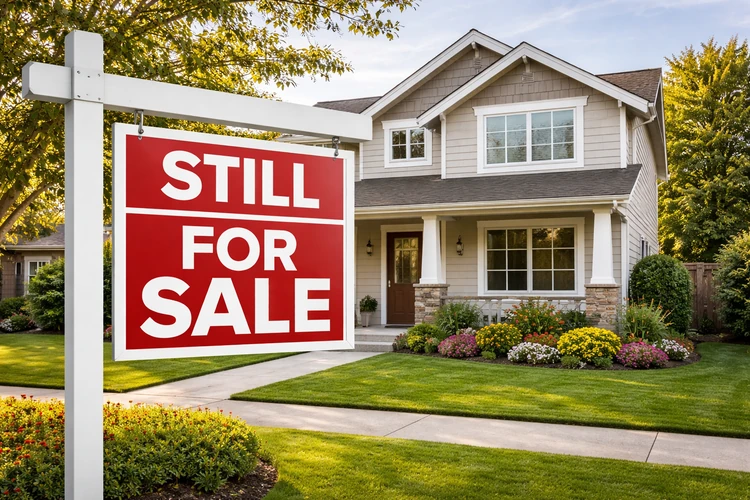

Pending home sales fell sharply in December, dropping 9.3% from November and 3.0% compared with a year earlier, according to the National Association of Realtors (NAR).
All four U.S. regions posted month-over-month declines, though the South was the lone region to see a year-over-year increase.
Economists say low inventory and seasonal factors may be weighing on buyer activity, even as some metro areas continue to see strong gains.
Pending home sales plunged in December, signaling renewed uncertainty for the housing market amid affordability issues after several months of tentative improvement. New data from the National Association of Realtors show that contracts signed for existing homes fell 9.3% from November and were down 3.0% compared with December 2024.
The pullback was broad-based. Month over month, pending home sales fell in every region of the country. The Midwest experienced the steepest monthly decline, down 14.9%, followed by the West at 13.3%, the Northeast at 11.0%, and the South at 4.0%.
A mixed picture year-over-year
On a year-over-year basis, the picture was mixed. Pending sales rose 2.0% in the South but declined in the Northeast (-3.6%), Midwest (-9.8%), and West (-5.1%).
“The housing sector is not out of the woods yet,” said Lawrence Yun, NAR’s chief economist. He noted that December’s figures interrupt a recent stretch of encouraging data on contracts and closed sales, dampening the near-term outlook for the market.
Yun cautioned that December data can be difficult to interpret because of holidays, winter weather, and reduced in-person home search activity.
“We’ll be watching the data in the coming months to determine whether the soft contract signings were a one-month aberration or the start of an underlying trend,” he said.
Inventory constraints appear to be a key factor. While closing activity increased in December, new listings failed to keep pace, pushing inventory lower. There were just 1.18 million homes on the market nationwide, matching the lowest inventory level recorded in 2025.
Consumers tend to be more willing to buy when there are plenty of choices, Yun said, and the lack of available homes may be discouraging some would-be buyers from moving forward despite improved sales activity.
Local bright spots remain
Despite the national decline, several large metro areas posted notable year-over-year gains in pending home sales, according to Realtor.com Economics. Louisville, Kentucky–Indiana, led the nation with a 23.8% annual increase. Other markets with strong gains included San Antonio, Texas; Virginia Beach–Chesapeake–Norfolk, Virginia–North Carolina; Charlotte, North Carolina–South Carolina; and Boston.
Phoenix, Oklahoma City, Miami, Pittsburgh, and Memphis also recorded year-over-year increases, underscoring how local conditions can diverge sharply from national trends.
Additional insight comes from NAR’s December Realtors Confidence Index survey, which reflects closed sales activity. The median time on market rose to 39 days, up from 36 days in November and 35 days a year earlier, suggesting homes are taking slightly longer to sell.
Policy changes
President Trump’s executive order barring private equity groups from buying single-family homes could lead to an increase in available homes for sale in the future and bring prices down for first-time buyers.
In December, first-time buyers accounted for 29% of sales, down from both the prior month and a year earlier. Cash sales edged higher to 28% of transactions, while individual investors and second-home buyers made up 18% of purchases. Distressed sales remained rare, holding steady at 2%.