2019 Medicare

Article Image

Congress raises the curtain on Medicare for All

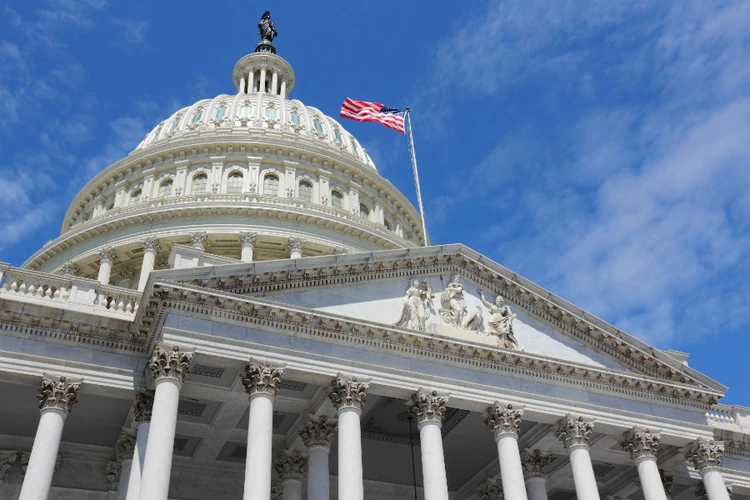
Wednesday was a big day for Medicare legislation on Capitol Hill.

There were three separate bills to amend parts of the Social Security Act that relate to Medicare. Among them is one designed to eliminate a provision under the Medicare Advantage program that inadvertently penalizes Medicare Advantage plans for providing high-quality care to Medicare beneficiaries; another ensures access by Medicaid beneficiaries to appropriate quality foot and ankle care and modifies the requirements for diabetic shoes to be included under Medicare.

But the centerpiece Medicare legislation on Wednesday was the unveiling of the Medicare for All Act of 2019.

The legislation proposed by Sen. Bernie Sanders (I-VT) and 14 Democratic colleagues would, in Sanders’ words, “guarantee health care to every American as a right, not a privilege.”

“The United States spends far more per capita on health care than any other nation; however, 34 million Americans do not have health insurance, thousands of people die each year because they cannot afford medical care, almost one in three adults with insurance have been unable to afford the care they need and nearly half fear bankruptcy in the event of a health emergency,” Sanders said.

The upshot for the consumer

The big question, of course, is what Sanders’ plan means for the consumer.

The short answer is that it depends on if you currently have health insurance and, if you do, how you’re covered. The New York Times untangled that dilemma and found the answers to some of those if’s, and’s, and but’s:

  • People insured through work would have new taxes but no more premiums.

  • People with Medicaid would have more choices but possibly higher taxes.

  • People currently with Medicare would have more generous coverage.

  • The uninsured would all get health care.

  • People who buy their own insurance would have new taxes but fewer out-of-pocket expenses.

  • Veterans would keep their existing health care system.

  • Native Americans could also keep their current source of care.

Bringing healthcare costs down to a reasonable level

Sanders also proposes changing the way health providers and drug companies would be compensated -- a welcome sight for every consumer’s sore eyes.

If the bill makes it all the way through the legislative maze, doctors and hospitals are likely looking at pay cuts but will no longer face unpaid bills. The profit margins at drug manufacturers would most likely be smaller, and health insurance companies would largely be eliminated.

“In my view, the current debate over Medicare for All really has nothing to do with health care. It’s all about greed and profiteering. It is about whether we maintain a dysfunctional system which allows the top five health insurance companies to make over $20 billion in profits last year,” Sanders said.

“The American people are increasingly clear. They want a health care system which guarantees health care to all Americans as a right. They want a healthcare system which will lower healthcare costs and save them money. They want a health care system which will guarantee them freedom of choice as to which doctor or hospital they can go to. They want a health care system which will substantially lower the cost of prescription drugs. They want Medicare for seniors which will finally cover dental care, hearing aids and eyeglasses. In other words, they want Medicare for All, and that’s what we will deliver to them.”

Article Image

Healthy food prescriptions could be cost effective for Medicare/Medicaid recipients

A new study conducted by researchers from Tufts University suggests that healthy food prescriptions could be the answer for a number of traditional health concerns. The researchers say that if Medicare/Medicaid were to start doling out these prescriptions, the results would not only be cost effective but also leave patients with countless health benefits.

“We found that encouraging people to eat healthy foods in Medicare and Medicaid -- healthy food prescriptions -- could be as or more cost effective as other common interventions, such as preventative drug treatments for hypertension or high cholesterol,” said researcher Yujin Lee, PhD.

“Healthy food prescriptions are increasingly being considered in private health insurance programs, and the new 2018 Farm Bill includes a $25 million Produce Prescription Program to further evaluate this approach.”

Food as medicine

The researchers modeled two scenarios to measure how consumers’ health and overall cost would be affected by this change. The team used three years’ worth of data from the National Health and Nutrition Examination Survey (NHANES) to determine sample population sizes of those who would be eligible for Medicare, Medicaid, or both.

In the first model, the researchers aimed to see the effects of Medicare and Medicaid picking up the tab for 30 percent of fruit and vegetable purchases via an electronic debit card. The second model also included fruits and vegetables, while also adding seafood, plant-based oils, whole grains, and nuts/seeds.

Perhaps the biggest finding was that, overall, consumers wouldn’t be relying on healthcare as often. The researchers estimated that the first model would reduce healthcare costs by nearly $40 billion, while the second, more broad model would knock down healthcare costs by over $100 billion.

“Our findings support implementation and evaluation of healthy food prescriptions within healthcare systems to improve the diet and health of Americans,” said researcher Renata Micha.

From a health standpoint, the researchers found similar results. Estimating the results of current beneficiaries over the course of their lifetimes, the second model was predicted to prevent 120,000 cases of diabetes and over 3.2 million cases of cardiovascular disease; the first model was estimated to prevent nearly two million cases of cardiovascular disease.

“Medicare and Medicaid are the two largest healthcare programs in the U.S., together covering one in three Americans and accounting for 1 in every 4 dollars in the entire federal budget,” said researcher Dr. Dariush Mozaffarian. “These new findings support the concept of Food is Medicine: that innovative programs to encourage and reimburse healthy eating can and should be integrated into the healthcare system.”

Effects for body, mind, and planet

Recent studies have explored the countless benefits of eating healthy for physical and mental health, as well as for the environment.

Researchers have also charted out how low-income families can eat healthy on a limited budget; however, making sure that consumers have access to proper federal programs is key.

“This research demonstrates that menus that meet USDA guidelines can be purchased by a family of four when shopping at a bulk supermarket, but any reduction in SNAP benefits or increase in food costs would make it difficult for these economically vulnerable families to maintain a healthy lifestyle,” said researcher Dr. Karen M. Jetter.