
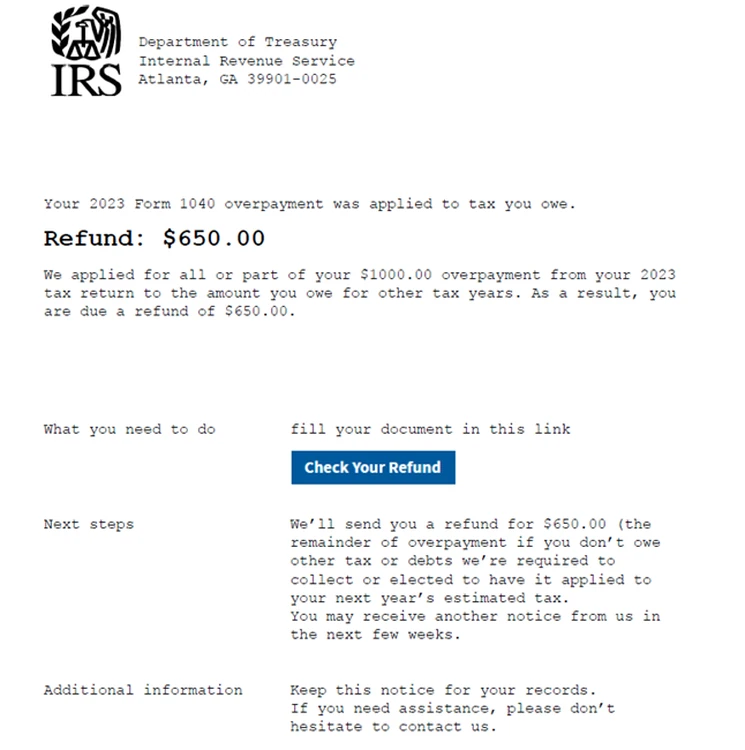
We’re not even a third of the way into tax season and IRS spoofers are already at it. This season, their opening salvo are text messages and emails about your “tax refund” or “tax refund e-statement.”
It’s as official-looking as it can be, but all they’re praying for is the occasional person who might click on the image’s link so they can steal your money, your identity, or drop some malware on your phone or computer.
“If someone contacts you unexpectedly about a tax refund, the most important thing to know is that the real IRS won’t contact you by email, text message, or social media to get your personal or financial information. Only scammers will,” said Larissa Bungo, senior attorney at the Federal; Trade Commission (FTC).
Stop them in their tracks
If someone does reach out, Bungo says you should take these precautions:
Never click on any links, which can put malware on your computer or phone, letting scammers steal from you.
Check the status of any pending refund on the IRS official website. Visit Where’s My Refund to see if you’re really getting a refund.
Share what you know. Whether you lose $500 or nothing at all, tell your friends and family members about the scam, you can help protect your community. And, by all means, report this to the FTC at IdentityTheft.gov to get a free, customized recovery plan.