2022 COVID-19

Article Image

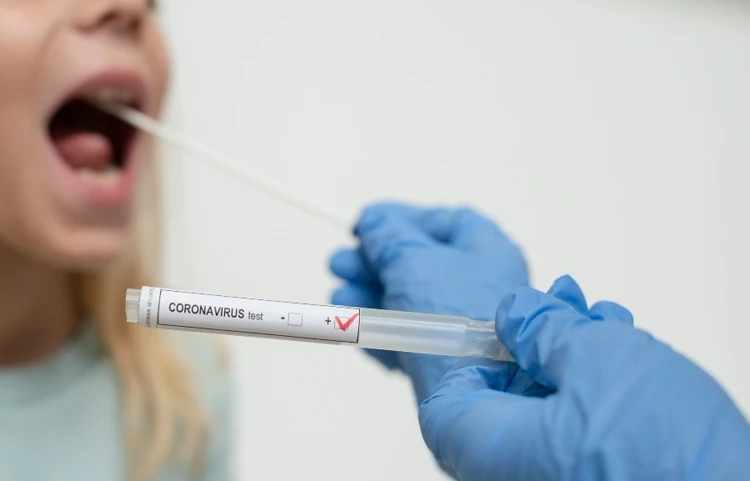
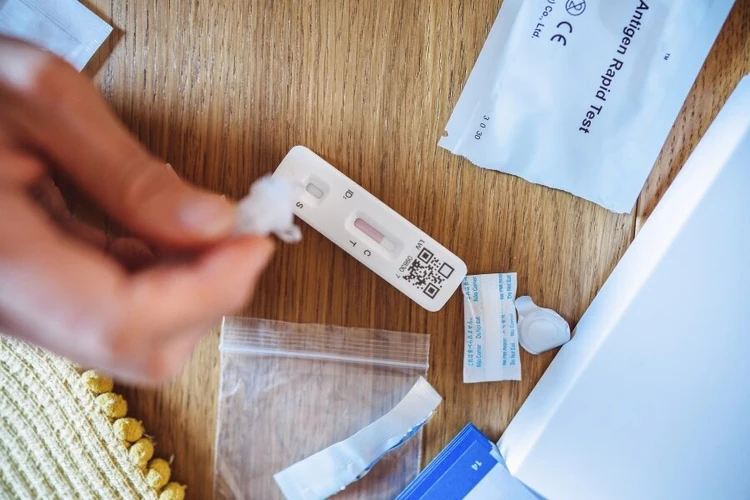
The Postal Service is distributing free COVID-19 tests again

COVID-19 may have disappeared from the headlines but the coronavirus hasn’t gone away. In fact, with the start of cold weather and holiday gatherings, it appears to be making a comeback.

That may be one of the reasons that the U.S. Postal Service is resuming free delivery of COVID-19 tests to Americans who request them. 

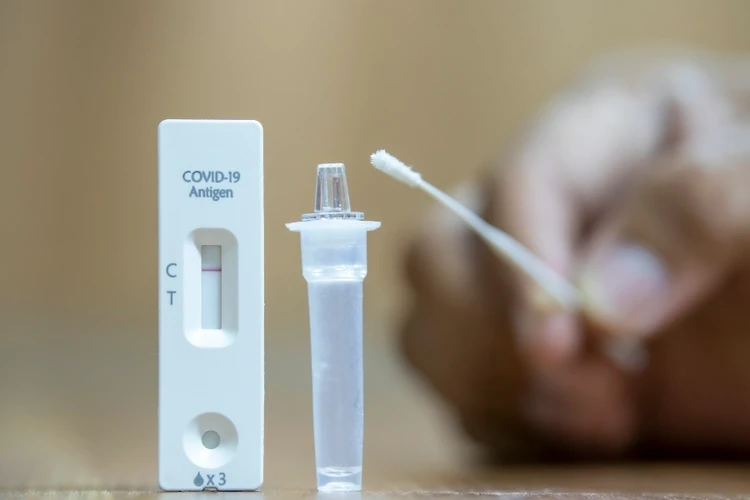
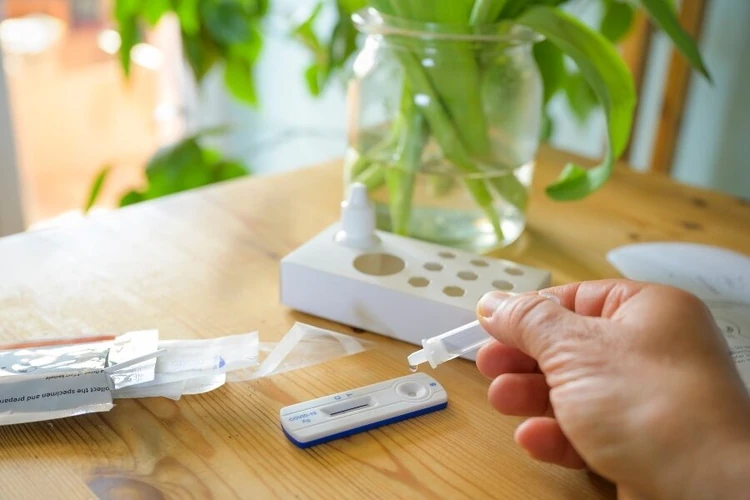
Residential households can order one set of four free at-home tests from USPS.com. Here’s the order form.

Orders of free tests are limited to one order per residential address. Each order includes four individual rapid antigen COVID-19 tests. You can order now but shipping will begin the week of December 19, 2022.

If you have COVID-19 tests sitting on the shelf it may be wise to check the expiration date. The tests don’t last forever.

Wide-ranging expiration dates

According to the FDA, COVID-19 test kits have a shelf life that can range from just four months to as many as 26 months. The FDA lists each test and its shelf life here.

If the expiration date column says that the shelf-life is "extended," there is a link to "updated expiration dates" where you can find a list of the original expiration dates and the new expiration dates. If the expiration date column does not say the shelf-life is extended, that means the expiration date on the box label of your test is still correct. 

The Centers for Disease Control and Prevention (CDC) reports that COVID-19 cases in the U.S. have been rising since early November. So have deaths.

The CDC says the U.S. recorded nearly 3,000 COVID-19 deaths in the first week of December, making it the most deadly week in the last few months.

Article Image

U.S. government to suspend free at-home COVID-19 tests by September 2

A federal program to provide free COVID-19 tests to the public has been suspended until further notice because of a lack of funding. 

According to the official COVID.gov website where tests were previously available for order, a lack of Congressional funding has prompted this pause. Consumers now have until Friday, September 2 – or until supplies run out – to order free at-home COVID tests. 

In mid-January, President Biden created a program for consumers to order free at-home COVID-19 tests. At the time of the initial rollout, households were welcome to up to four free tests. 

The program was then extended in early March and again in mid-May for consumers to order more free at-home tests. The second round entitled households to four free COVID tests, while the most recent one allowed consumers to order up to eight tests, with the goal of increasing testing and keeping more consumers safe and healthy. 

In suspending the program for now, the government hopes to build up its stockpile of tests should cases of COVID-19 surge again with the colder temperatures this fall and winter. Experts speculate that Congress will resume funding for the free at-home testing program if COVID cases are once again on the rise in the coming months. 

Updated vaccine cleared by the FDA

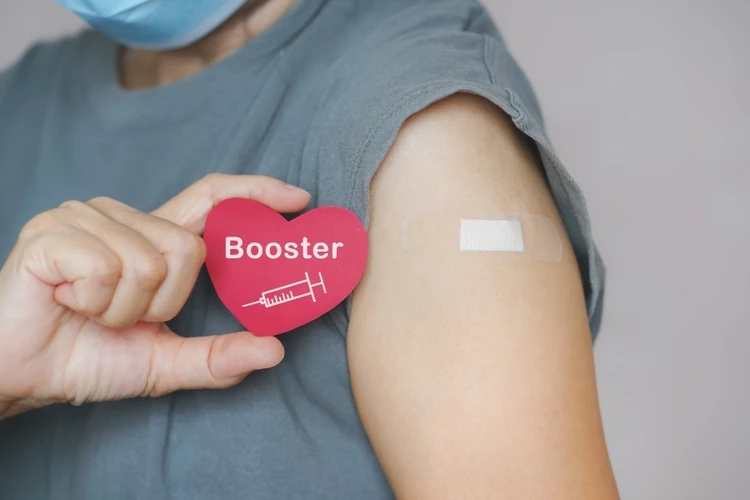
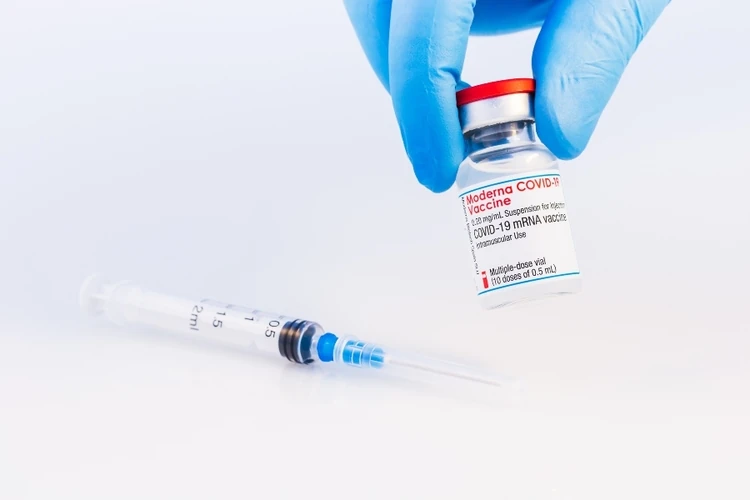
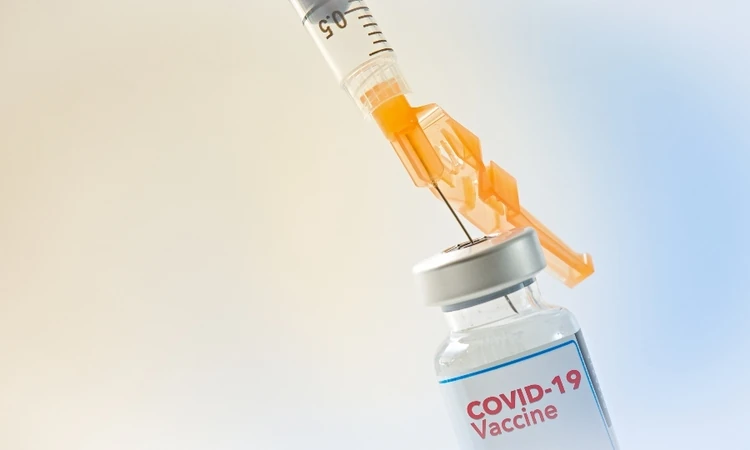
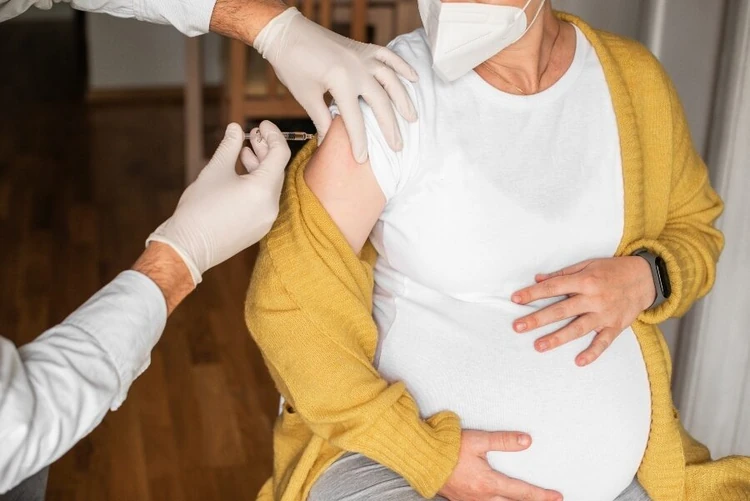
In other COVID-19 news, the Food and Drug Administration (FDA) announced that both Moderna and Pfizer’s bivalent COVID-19 vaccines can be used as a dose of the booster. The bivalent vaccines are expected to provide greater protection against the virus, as they contain mRNA components from both the BA.4 and BA.5 strains of the omicron variant and the original strain of the virus. 

Currently, Moderna’s bivalent vaccine can be used as a booster dose in anyone 18 years old and older, while people over the age of 12 are eligible for Pfizer’s bivalent vaccine.

The FDA warns that consumers must wait at least two months from their first booster dose before getting either bivalent vaccine, and side effects are likely to be similar to those from the original vaccine and booster. 

Additionally, the agency says that monovalent COVID-19 vaccines, which is the type that has been in distribution since December 2020 and only contains mRNA components of the original COVID-19 strain, should no longer be used for booster shots. 

“The FDA has been planning for the possibility that the composition of the COVID-19 vaccines would need to be modified to address circulating variants,” said Dr. Peter Marks, director of the FDA’s Center for Biologics Evaluation and Research. “We sought information from our outside experts on the inclusion of an omicron component in COVID-19 boosters to provide better protection against COVID-19. 

“We have worked closely with the vaccine manufacturers to ensure the development of these updated boosters was done safely and efficiently. The FDA has extensive experience with strain changes for annual influenza vaccines. We are confident in the evidence supporting these authorizations. The public can be assured that a great deal of care has been taken by the FDA to ensure that these bivalent COVID-19 vaccines meet our rigorous safety, effectiveness, and manufacturing quality standards for emergency use authorization.” 

Article Image

Coronavirus update: Updated boosters to be available by the fall

COVID-19 ‌tally‌ ‌as‌ ‌‌compiled‌‌ ‌by‌ ‌Johns‌ ‌Hopkins‌ ‌University.‌ ‌(Previous‌ ‌numbers‌ ‌in‌ ‌parentheses.)‌

Total‌ ‌U.S.‌ ‌confirmed‌ ‌cases:‌ 92,278,387 (94,147,210)

Total‌ ‌U.S.‌ ‌deaths:‌ 1,039,027 (1,038,002)

Total‌ ‌global‌ ‌cases:‌ 592,403,643 (593,438,867)

Total ‌global‌ ‌deaths:‌ 6,446,012 (6,441,888)‌

Updated booster shots could be available soon

People waiting to get a COVID-19 booster until the vaccine has been updated may not have much longer to wait. White House COVID-19 coordinator Dr. Ashish Jha says the updated boosters will be available to teens and adults "in a few short weeks."

"I believe it’s going to be available, and every American over the age of 12 will be eligible for it," Jha told NBC News.

The revised booster has been developed to target the Omicron subvariants BA.4 and BA.5, along with the original strain of the virus. Subvariants account for nearly 90% of new COVID-19 cases in the U.S., according to the Centers for Disease Control and Prevention (CDC).

CDC director says pandemic exposed shortcomings

The CDC has been criticized for its handling of the COVID-19 pandemic, and CDC Director Rochelle Walensky says some of the criticism is justified. On Wednesday, Walensky announced some changes to address what have been perceived as shortcomings.

Walensky says the agency will undergo some top to bottom changes that are designed to “transform” the organization and its work culture by improving how the agency shares information, develops public health guidance, and communicates with the American people.

“For 75 years, CDC and public health have been preparing for COVID-19, and in our big moment, our performance did not reliably meet expectations,” Walensky said. “As a long-time admirer of this agency and a champion for public health, I want us all to do better.”

The government is ending vaccine purchases

Since the start of the pandemic, the U.S. government has paid for COVID-19 vaccines. In the weeks ahead, vaccines will only be available in the commercial market.

Federal health officials say the U.S. government will stop buying vaccines and test kits and will no longer foot the bill for treatments by this fall.

In some cases, that trend has already started. Tests to detect the virus have been available at pharmacies for several months. Of the four approved vaccines, only two have received FDA approval to be sold commercially – Moderna and Pfizer/BioNTech.

Around the nation

  • New York: New York City schools start up again in a few weeks, and education officials won’t be as strict as they were during the last school year. Starting next month, the Department of Education will require vaccinations for all employees, visitors, and students who play in high-risk extracurricular activities. Daily health screeners are not needed, but officials are strongly urging sick people to stay home.

  • California: A study by the CDC found that 71% of all children in California have had COVID-19 since the outbreak of the virus in March 2020. Health experts expressed surprise at that rate. Schools remained closed for much of the pandemic in order to prevent childhood infections.

  • Colorado: It’s not a clean bill of health, but officials say it’s close. For the first time in months, no Colorado counties are on the CDC’s highest level for community spread of the coronavirus. COVID-19 rates are continuing on a downward trend across the state.

  • Massachusetts: State health and education officials say they will scale back COVID-19 restrictions with the start of the new year. While the virus is still spreading, it’s seen as less of a threat. Officials say they will focus efforts on protecting children who are at high risk for severe symptoms.

  • Ohio: Ohio University has revised its mask policy for the upcoming fall semester. The new policy, which takes effect immediately, will continue to be based on CDC COVID-19 Community Levels. If there is a high transmission rate during the year, masks will be required during scheduled class and class-related activities in classrooms, laboratories, studios, clinical settings, other learning spaces, and the Child Development Center.

Article Image

Long COVID is still possible for kids with mild cases of the virus, study finds

A new study conducted by researchers from the University of Texas Health Science Center at Houston explored some of the risks that kids face with mild cases of COVID-19. According to their findings, developing long COVID is still possible for kids with mild symptoms who don’t require hospitalization. 

“We were interested in understanding if children impacted with an acute or severe infection of COVID-19 would go on to have persisting symptoms, or what we call long COVID,” said researcher Sarah Messiah, Ph.D. “This particular study is unique as the first population-based study in literature to report on prevalence of long COVID in children who have not been hospitalized with COVID-19.” 

Health risks

The researchers analyzed data from over 1,800 kids between the ages of five and 18 who were enrolled in the Texas CARES survey. The team assessed the kids’ health outcomes with COVID-19, with all the data being taken before the surges of both the Delta and Omicron variants and the release of the COVID-19 vaccines. 

Ultimately, just under 5% of the kids involved in the study developed long-term COVID-19 symptoms; of that group, over 3% had persistent symptoms for over 12 weeks. Though previous studies have found that kids with the most severe infections are likely to develop long COVID, this study showed that even kids with mild cases may be just as susceptible to long-term COVID-19 symptoms. 

The researchers also pointed out that the timing of this study may have something to do with the results. They explained that many kids who were infected with either the Delta or Omicron variants had less severe symptoms; however, the kids in this study were infected much earlier in the pandemic, which may explain their lingering symptoms. 

After examining the data more closely, the researchers identified a few other risk factors that could predict the likelihood of kids developing long COVID. 

“From this information we wanted to know, ‘What would put a child more at risk for long COVID and who is more susceptible to this?’” Dr. Messiah said. “When we looked at risk factors of those who reported symptoms past 12 weeks, we found that children who were unvaccinated and who had obesity had a higher chance of developing long COVID. These findings are consistent with other literature that found children and adults who have comorbid health conditions and are unvaccinated are at a higher risk of being hospitalized for the virus.” 

Article Image

The COVID-19 pandemic has worsened health disparities among ethnic groups, study finds

A new study conducted by researchers from the University of Leicester is exploring ethnicity-related disparities in health care. According to their findings, the COVID-19 pandemic has worsened some of these inequities in the health care system. 

“As we now plan for recovery, improved surveillance, and risk factor management, it will be imperative that primary and specialist care services urgently focus on the disproportionate impact the pandemic has had on ethnic minority populations,” said researcher Kamlesh Khunti. 

Heightened issues in health care

For the study, the researchers analyzed the structure of health care systems in both the U.S. and the U.K. They looked closely at education, neighborhood resources, housing, employment opportunities, and food, and the ways that disparities in these areas also affected access to health care.

Ultimately, the team found that a lack of attention to issues that are outside of health care is likely to affect minorities in the health care system, and this became especially true throughout the COVID-19 pandemic. The study showed that minorities had a higher risk of exposure to COVID-19, were more likely to struggle to get access to quality health care for the virus, and were more likely to have pre-existing conditions that worsened the virus. 

The researchers explained that several factors are responsible for these conditions – overcrowded living conditions, having jobs as essential workers, health insurance status, access to medical care, and pre-existing conditions, like diabetes. 

“Diabetes is a risk factor for severe COVID-19, and the combination of ethnic disparities may have contributed to the inequality of coronavirus outcomes for those living with the condition,” Khunti said. 

While efforts have been made to mitigate the effects of the COVID-19 virus, these findings point to bigger structural issues that continue to face minority consumers. The researchers say policymakers need to do more work to break down some of the structural inequities that have been plaguing minorities long before the pandemic. 

“Only by taking a long-term, holistic view of health care will we, and particularly our most vulnerable populations, be able to cope better with future pandemics,” said Khunti. 

Article Image

Coronavirus update: COVID-19 may be at a crossroads

COVID-19 ‌tally‌ ‌as‌ ‌‌compiled‌‌ ‌by‌ ‌Johns‌ ‌Hopkins‌ ‌University.‌ ‌(Previous‌ ‌numbers‌ ‌in‌ ‌parentheses.)‌

Total‌ ‌U.S.‌ ‌confirmed‌ ‌cases:‌ 92,562,436 (91,993,384)

Total‌ ‌U.S.‌ ‌deaths:‌ 1,035,549 (1,035,005)

Total‌ ‌global‌ ‌cases:‌ 587,651,288 (586,897,066)

Total ‌global‌ ‌deaths:‌ 6,428,190 (6,422,057)‌

COVID-19 cases at an inflection points, experts say

After an early 2022 surge, the U.S. appears to be at a plateau when it comes to COVID-19 cases, according to some medical experts. After the sharp increase, hospitalizations and deaths have leveled off in recent weeks.

While the U.S. has admitted 40,000 COVID-19 patients to hospitals, and 400 people are dying each day. But the numbers suggest that’s a much better result than during the winter months when serious cases and deaths were much higher. Looking ahead, few scientists know what to expect.

"We've never really cracked that: why these surges go up and down, how long it stays up and how fast it comes down," Dr. Eric Topol, a cardiologist and professor of molecular medicine at Scripps Research,” told CNN. "All these things are still somewhat of a mystery."

CDC says COVID-19 risks are increasing in some areas

While conditions are improving in some areas, other U.S. counties are moving in the wrong direction, according to the Centers for Disease Control and Prevention (CDC). In its latest report, the agency said the number of U.S. counties in the high-risk of transmission category jumped 71% in just the last week.

The CDC’s high-risk map shows that 1,143 counties now meet the threshold for that top threat designation. That’s more than triple the number from last month, a move that CDC officials call a clear reversal.

Only about 25% of counties are now considered to be at low risk for COVID-19 spread. In the June 17 update, 60% were in the low-risk category.

AMA gives an outlook for the fall

Despite current worrisome COVID-19 trends, the American Medical Association (AMA) has a more positive outlook for the fall. The good news, the AMA says, is that most of the country has been exposed to the virus either through infection or vaccination, leading to a reduction in hospitalizations and deaths.

While there has been discussion of an updated COVID-19 vaccine that might be ready for boosters by October, some health experts aren’t sure whether it’s wise to change the vaccine to target the emerging subvariants.

“By the time it's ready in the fall, BA.5 may be past us and we may be on to something entirely new,” said Dr. Peter Hotez, a virology expert and AMA member.

Around the nation

  • California: School is starting in many school districts across the state, and health officials are expressing relief that it’s coinciding with a sharp decline in COVID-19 cases. The California Department of Public Health this week reported that the statewide COVID-19 case rate is at 33.7 per 100,000 residents, a 19% decline in the past week.

  • Texas: Jazmin Kirkland, a North Texas mother of three, left the hospital this week after being treated for a severe case of COVID-19. Kirkland was admitted to the hospital on Aug. 3, 2021. A few days later, she was placed on a ventilator because the virus had attacked her heart and lungs.

  • Virginia: School classrooms are open all across the state, but many students apparently prefer virtual instruction. Virginia Virtual Academy Executive Director Suzanne Sloane said the school’s full-time enrollment is currently nearing 5,000 students, which is higher than before the pandemic.

  • Ohio: Officials at Ohio State University say they plan to use the same COVID-19 protocols that were in place during the summer sessions for the fall term. Students, faculty, and staff will be required to show proof of vaccination, and masking will be optional.

  • Georgia: Stacey Abrams, the Democratic candidate for governor, has tested positive for COVID-19. Abrams' campaign spokesperson Alex Floyd said the candidate tested positive Wednesday morning after giving a public speech on the economy Tuesday night in Atlanta.

Article Image

Obese consumers gained more weight during the COVID-19 pandemic, study finds

Many consumers struggled with their mental health during the COVID-19 pandemic. Now, a new study conducted by researchers from UT Southwestern Medical Center explored how mental health during the pandemic affected physical health outcomes. 

According to their findings, mental health struggles may be responsible for weight gain among obese consumers throughout the COVID-19 pandemic. 

“The COVID-19 pandemic is a fascinating model for individual and social stress and showed that changes in mental health can really preclude people from maintaining a healthy body weight,” said researcher Dr. Jaime Almandoz. 

Mental health and physical health

The researchers surveyed over 400 people who had been receiving obesity treatment for at least two years at one of three clinics in Dallas about their mental and physical health. The surveys were conducted between March 2021, and November 2021.

Though all of the participants were enrolled in a program designed to help them lose weight, they all gained weight over the course of the COVID-19 pandemic. The average weight gain was over 4% of body weight, though some gained as much as 80 pounds throughout the pandemic. 

The team then broke down the survey responses to get a better idea of the participants’ lifestyles and mental health. They learned that mental health concerns played a significant role in weight gain. Participants who reported struggling with anxiety, stress, and depression gained the most weight. 

The researchers also accounted for socioeconomic factors, like household income and education level. While nearly 60% of participants were college graduates and almost half made more than $75,000 per year, these mental health and weight struggles persisted. 

“People who are enrolled in weight management programs typically lose weight,” said Dr. Almandoz. “If people with these levels of privilege are experiencing significant challenges during the pandemic, these stresses are likely amplified in the general population. 

Though the study showed that following an unhealthy diet and having poor sleeping habits also contributed to weight gain, these findings emphasize that consumers’ mental health is an important part of their physical health. 

“Our findings underscore the complexity of obesity; it’s not just about telling people to eat less and move more,” Dr. Almandoz said. “There’s a mental health aspect that has to be integrated into treating the person as a whole.” 

Article Image

Coronavirus update: Antibody drug will be sold commercially

COVID-19 ‌tally‌ ‌as‌ ‌‌compiled‌‌ ‌by‌ ‌Johns‌ ‌Hopkins‌ ‌University.‌ ‌(Previous‌ ‌numbers‌ ‌in‌ ‌parentheses.)‌

Total‌ ‌U.S.‌ ‌confirmed‌ ‌cases:‌ 91,795,201 (90,593,384)

Total‌ ‌U.S.‌ ‌deaths:‌ 1,032,102 (1,031,035)

Total‌ ‌global‌ ‌cases:‌ 580,757,984 (579,597,066)

Total ‌global‌ ‌deaths:‌ 6,410,326 (6,406,057)‌

Drugmaker plans commercial sales of antibody drug

Ely Lilly makes a COVID-19 antibody drug that has been highly successful in keeping patients out of the hospital. The company, which had been selling the drug to the U.S. government, now says the treatment will be commercially available.

Previously, Eli Lilly sold the entire lot of its monoclonal antibody drug through contracts with the federal government, which then distributed the drug at no charge. The federal supply of the drug is now nearly gone.

According to the drug company, the government has run out of appropriated funds to purchase the drug, and Congress has not allocated money to renew the supply. 

Parents balk at vaccinating their youngest children

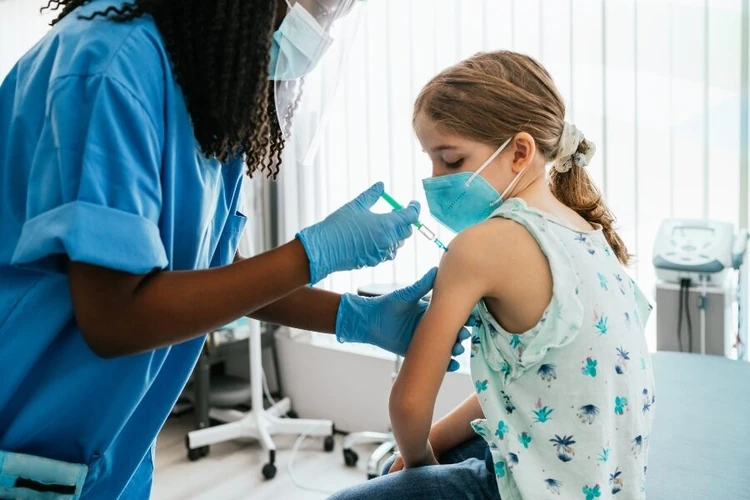
The U.S. Food and Drug Administration (FDA) has cleared the use of the Pfizer and Moderna vaccines for children as young as six months old. But surveys show that parents are in no rush to get their young children vaccinated.

The Kaiser Family Foundation (KFF) reports that 43% of parents say they are not willing to vaccinate their children against COVID-19. In the last year, more parents have taken that position. In July 2021, only 30% of parents said they “definitely” did not want their kids to get the shot. 

The KFF survey found that there are several reasons for hesitation. Fifty-three percent of parents said they believe children face a greater risk from the vaccine than they do from COVID-19. Some parents also cited the newness of the vaccine as a reason to wait.

CDC may relax some of its guidelines

With schools reopening around the U.S., the Centers for Disease Control and Prevention (CDC) is reportedly preparing to relax its COVID-19 guidelines. The guidance for control of the virus in schools and within communities could come within days, sources say.

CNN reports that it has obtained a preview of the CDC’s plans and that the agency will recommend easing quarantine rules for people exposed to the virus. The guidelines also reportedly deemphasize social distancing.

Sources told the network that the CDC is also expected to deemphasize regular testing in schools and, instead, will base testing recommendations on whether a local community has a high transmission rate.

Around the nation

  • Arizona: With the NFL preseason set to get underway this week, Arizona Cardinals quarterback Kyler Murray has tested positive for COVID-19. Coach Kliff Kingsbury said Murray could miss up to five days of practice. Murray’s symptoms were described as “minor.”

  • New Jersey: Researchers at St. Joseph's Health in Paterson have found that some people who were infected with COVID-19 early in the pandemic in 2020 were still suffering from at least one symptom 12 months later. Symptoms include shortness of breath, fatigue, body aches, or other ailments a year after infection.

  • Mississippi: COVID-19 policies are varying by school district as children prepare to return to school for the fall term. Many education leaders are largely planning to continue using their COVID-19 policies from last school year, but some have dropped protections altogether. For the last year, decisions regarding masking, quarantining, sanitation, and vaccinations have been made by districts at the local level.

  • West Virginia: Dr. Clay Marsh, the state’s COVID-19 coordinator, told a press briefing this week that the state is following guidance from the White House on additional booster shots. Marsh said he has been told that instead of using the current vaccine, the goal is now to offer a new, “more Omicron-selective” vaccine sometime around October. 

  • Michigan: The state’s three most-populous counties have moved back into the high-risk category, as designated by the CDC. Oakland, Wayne, and Macomb counties have seen their case numbers rise as the BA.5 variant spreads across the state.

Article Image

Coronavirus update: Cases rise in nursing homes

COVID-19 ‌tally‌ ‌as‌ ‌‌compiled‌‌ ‌by‌ ‌Johns‌ ‌Hopkins‌ ‌University.‌ ‌(Previous‌ ‌numbers‌ ‌in‌ ‌parentheses.)‌

Total‌ ‌U.S.‌ ‌confirmed‌ ‌cases:‌ 90,977,761 (90,739,623)

Total‌ ‌U.S.‌ ‌deaths:‌ 1,028,819 (1,027,924)

Total‌ ‌global‌ ‌cases:‌ 573,920,711 (572,665,174)

Total ‌global‌ ‌deaths:‌ 6,393,783 (6,389,649)‌

New COVID-19 cases on the rise in nursing homes

At the beginning of the COVID-19 pandemic more than two years ago, staff and residents of America’s nursing homes were the first to suffer outbreaks. Health officials now say nursing homes are seeing a new increase in cases.

AARP reports that one in 35 nursing home residents in the U.S. tested positive for COVID-19 in June. That’s a 27% increase from May. The death rate also nearly doubled, rising to 0.07 deaths per 100 residents.

“This is a level of cases that’s comparable to what we saw during the first COVID summer in 2020,” said Ari Hauser, a senior analyst for AARP’s Public Policy Institute.

Drug companies struggle to improve vaccines

The current COVID-19 vaccines are highly effective against the original strain of the virus, but they offer less protection against the variants and subvariants that are currently causing most infections. The White House has urged drug companies to come up with more effective versions of their vaccines.

“The vaccines we have are terrific, but we can do better than terrific,” said Ashish Jha, the White House's COVID-19 response coordinator.

But according to Science Magazine, drugmakers face challenges. Not only is funding for new research tight, but the sense of urgency surrounding the pandemic has dissipated. While current vaccines are much less effective at blocking infections, infections in vaccinated people tend to be much less severe.

Sensory loss can last for months

One of the symptoms of COVID-19 is a loss of taste and smell. It's usually just a temporary condition, but it can last for a very long time for millions of people who suffer from a condition called “long COVID.”

An analysis published in the BMJ (British Medical Journal) found that about 5% of former COVID-19 patients – about 27 million people globally –couldn’t smell or taste for months after recovering from the virus.

The analysis looked at 18 previous studies of sensory loss around the world. About three-quarters of those affected by a loss of taste or smell from COVID-19 were able to regain those senses within 30 days of recovery.

Around the nation

  • Florida: During the first year and a half of the COVID-19 pandemic, Florida enjoyed a boost in its population. People moved to the state for a number of reasons, including fewer pandemic restrictions. The Demographic Estimating Conference reports that the state’s population is still growing, but it has slowed from its pandemic peak.

  • Pennsylvania: Only four counties are considered to have a high risk of COVID-19 transmission, according to the Centers for Disease Control and Prevention’s (CDC) latest analysis. Cases have jumped in the last week in Mercer, Fayette, Washington, and Montour counties, and residents have been asked to mask up indoors.

  • Oregon: State health officials say hospitals are under increasing stress from COVID-19 caseloads, even though cases remain well below their pandemic peak. “They are extremely stressed and doing everything they can to provide quality care for everyone across our state,” state epidemiologist Dr. Dean Sidelinger said at a news briefing.

  • Minnesota: With school starting in just a few weeks, public health officials say only 7% of Minnesota's eligible preschool-aged children have received their first shots. The vaccination rate was sharply higher when young children first became eligible.

  • New York: Hospital admissions for COVID-19 treatment have soared in New York City. The city has recorded the highest admission rate since mid-February. Across the state, the hospitalization rate per 100,000 surged by 50% in the last 30 days, with nearly 2,800 COVID-19 patients being admitted as of Wednesday.

Article Image

New study identifies risk factors for children developing long COVID

A new study conducted by researchers from the University of Calgary explored how long COVID, or experiencing symptoms of COVID-19 for 90 days or more after the initial infection, may affect kids.

“We found that in some children, illness with COVID-19 is associated with reporting persistent symptoms after three months,” said researcher Dr. Stephen Freedman. “Our results suggest that appropriate guidance and follow-up are needed, especially for children at high risk for long COVID.” 

Risk factors for kids

For the study, the researchers analyzed data from over 1,800 children who tested positive for COVID-19 between March 2020, and January 2021. The children received care at 36 different emergency departments across the country, and the team followed them for at least 90 days after infection. 

Of the children involved in the study, under 6% of them reported symptoms related to COVID-19 90 days after their initial infections. The researchers identified three main factors that were consistent among the kids who did experience long COVID: being 14 years old or older, experiencing four or more COVID-related symptoms at the initial visit to the emergency room, and being hospitalized with COVID-19 for at least two days. 

“Our finding that children who had multiple COVID-19 symptoms initially were at higher risk for long COVID is consistent with studies in adults,” said researcher Dr. Todd Florin. “Unfortunately, there are no known therapies for long COVID in children and more research is needed in this area. However, if symptoms are significant, treatment targeting the symptoms is most important. Multidisciplinary care is warranted if symptoms are impacting quality of life.” 

Similar to adults with long COVID, shortness of breath, fatigue, and coughing were the three most common symptoms of kids with persistent COVID-19 symptoms. While the risk of long COVID is much higher in adults than it is in kids, it’s important for parents and health care providers to be aware of the factors that may affect kids’ health long-term. 

“Reported rates of long COVID in adults are substantially higher than what we found in children,” said researcher Dr. Nathan Kuppermann. “Our findings can inform public health policy decisions regarding COVID-19 mitigation strategies for children and screening approaches for long COVID among those with severe infections." 

Article Image

Coronavirus update: President Biden tests positive for COVID-19

COVID-19 ‌tally‌ ‌as‌ ‌‌compiled‌‌ ‌by‌ ‌Johns‌ ‌Hopkins‌ ‌University.‌ ‌(Previous‌ ‌numbers‌ ‌in‌ ‌parentheses.)‌

Total‌ ‌U.S.‌ ‌confirmed‌ ‌cases:‌ 90,200,438 (90,050,839)

Total‌ ‌U.S.‌ ‌deaths:‌ 1,026,294 (1,025,755)

Total‌ ‌global‌ ‌cases:‌ (566,902,282) 567,979,761

Total ‌global‌ ‌deaths:‌ 6,380,915 (6,381,090)‌

President reportedly doing well after testing positive

President Biden is isolating at the White House and is said to be sufferingly fairly mild symptoms after testing positive for COVID-19 on Thursday. Biden, who is 79, said he is suffering from a runny nose and a dry cough.

Aides say the president is being treated with the antiviral drug Paxlovid, which has been shown to be highly effective against COVID-19 when taken early. He was shown in a video Thursday in the White House residence.

“I’m doing well, getting a lot of work done, going to continue to get it done,” Biden said in the video. “And in the meantime, thanks for your concern, and keep the faith. It’s going to be okay.”

High blood pressure increases risks, study finds

There are many factors that go into a COVID-19 patient’s risk of a severe outcome. Cancer is one risk factor, and so is obesity.

Doctors at Cedars-Sinai Medical Center in Los Angeles say people with high blood pressure also appear to have an increased risk of hospitalization if they get COVID-19. High blood pressure "was associated with the greatest magnitude of risk," doubling the chances of hospitalization.

Their study of COVID-19 patients who were fully vaccinated and boosted showed that the risk for severe symptoms was also higher in people with well-established risk factors such as older age, heart failure, or kidney disease.

Mask mandates probably won’t return, health expert says

All across the U.S., cases of COVID-19 are on the rise. The Centers for Disease Control and Prevention (CDC) places the vast majority of U.S. counties in the “high risk” category.

Despite the surge, few jurisdictions have reimposed indoor mask requirements. Chicago Department of Public Health Commissioner Dr. Allison Arwady says that's because the current strain that is causing infections is less severe. She also says hospitalizations, while rising, are under control.

“I do not anticipate a mask and indoor mask mandate requirement coming soon. Where we would put an indoor mask requirement back in place is if we’re seeing our health care system getting threatened,” Arwady said.

Around the nation

  • New Jersey: State health officials report that the increase in COVID-19 cases has pushed hospitalizations to a four-month high. The seven-day average for confirmed positive tests is 2,829, a 1% increase in the past week and a 30% increase from a month ago.

  • Colorado: The Colorado Department of Public Health and Environment is cutting back on its regular reports on COVID-19 outbreaks. Health officials say they expect COVID-19 to be around for the foreseeable future but that the current subvariants are much less severe.

  • Texas: Gov. Greg Abbott has renewed the state’s COVID-19 disaster declaration, first issued in March 2020. The proclamation says a “state of disaster” continues to exist in all Texas counties. “I authorize the use of all available resources of state government and of political subdivisions that are reasonably necessary to cope with this disaster,” Abbott said.

  • Michigan: Jermaine Rose, a former lead claims examiner for the Michigan Unemployment Insurance Agency (MUIA), was sentenced to two years in federal prison this week due to his participation in a $1.5 million pandemic-related unemployment insurance fraud scheme, according to U.S. Attorney Dawn N. Ison.

  • Virginia: More than half of the counties in the state are considered to have a high risk of COVID-19 transmission, according to the Mayo Clinic. Among the highest transmission areas in Virginia are Arlington, Alexandria, Falls Church City, Manassas Park City, and Stafford County, in the Washington, D.C. suburbs. 

Article Image

CDC ends COVID-19 program for cruise ships

It’s all aboard for cruisers – and without coronavirus testing requirements. Just months after lifting its cruise ship risk advisory program, the Centers for Disease Control and Prevention (CDC) has brought its COVID-19 program for cruise ships to a close.

The CDC is not taking its eye off the situation completely though. With the BA.5 variant continuing to spread, the agency says it will continue to publish guidance to help cruise ships continue to provide a safe and healthy environment for travelers and their own crews.

The cruise industry wasted no time weighing in on the good news. The association that represents the cruise industry – the Cruise Lines International Association (CLIA) – said it backed the CDC’s decision 100%. 

"The Cruise Lines International Association and its member cruise lines welcome the decision by the Centers for Disease Control and Prevention to end the CDC COVID-19 Program for Cruise Ships Operating in U.S. Waters in favor of a set of guidelines for public health operations on cruise ships,” the group said in a statement.

The CLIA said it will take a look at the CDC’s new guidance when it’s released and adjust accordingly from there.

"This is an important step forward in the CDC aligning the guidelines for cruises with those it has established for other travel, hospitality, and entertainment sectors,” the association said, then gave kudos to the cruising industry for working through all the problems the pandemic presented.

"The sunsetting of the CDC Program, effective 18 July 2022, is a testament to the effectiveness of the industry’s comprehensive and robust protocols. In fact, cruising has become one of the safest forms of travel and among the most successful industries in mitigating the spread and severity of COVID-19, resulting in few passengers or crew becoming seriously ill or requiring hospitalization compared to hospital statistics for landside patients."

Travelers who are planning a cruise anytime soon should check periodically with the CDC to make sure they’re aware of any changes to the program. A list of FAQs can be found here. 

Article Image

Blood thickness may predict risk of dying from COVID-19, study finds

A new study conducted by researchers from Mount Sinai Hospital explored how blood viscosity (or thickness) may affect COVID-19 patients’ risk of death. According to their findings, patients are more likely to die from coronavirus-related complications when their blood is thicker. 

“This study demonstrates the importance of checking for blood viscosity in COVID-19 patients early in hospital admission, which is easily obtained through routine lab work,” said researcher Dr. Robert Rosenson. 

Long-term health risks

For the study, the researchers analyzed data from over 5,600 COVID-19 patients from six hospitals in the Mount Sinai Health System from February 2020, through November 2021. All of the participants had tested positive for COVID-19, and the team tracked their health care outcomes until they were either discharged or had passed away. 

The team found a clear link between high blood thickness and an increased risk of death among COVID-19 patients. The risk of death was higher than 30% when looking at small vessel circulation, and it surpassed 60% when measuring blood thickness in the arteries. 

The researchers explained that the COVID-19 virus affects the way certain proteins in the blood respond to inflammation. Because the virus creates more inflammation, it makes our blood thicker and affects the way it flows throughout the body.

Patients’ blood viscosity isn’t typically measured directly when they are admitted to the hospital, but measuring hematocrit and globulins can help health care professionals estimate blood thickness. The researchers say it's an important thing to measure when evaluating COVID-19 patients. 

Moving forward, the team hopes more hospitals start paying attention to COVID-19 patients’ blood viscosity so doctors can identify those with a higher risk of dying. This can ensure that consumers get the treatments they need.

“We are currently investigating the effects of therapeutic heparin to reduce the risk of complications during acute COVID-19 infections, which may greatly benefit those with blood viscosity,” said Dr. Rosenson. 

Article Image

Coronavirus update: The BA.5 variant becomes dominant

COVID-19 ‌tally‌ ‌as‌ ‌‌compiled‌‌ ‌by‌ ‌Johns‌ ‌Hopkins‌ ‌University.‌ ‌(Previous‌ ‌numbers‌ ‌in‌ ‌parentheses.)‌

Total‌ ‌U.S.‌ ‌confirmed‌ ‌cases:‌ 89,225,558 (88,947,827)

Total‌ ‌U.S.‌ ‌deaths:‌ 1,023,635 (1,021,853)

Total‌ ‌global‌ ‌cases:‌ 559,652,282 (557,824,287)

Total ‌global‌ ‌deaths:‌ 6,363,656 (6,356,013)‌

BA.5 becomes the dominant strain

COVID-19 cases are rapidly rising in wide areas of the U.S., and health officials say BA.5, a subvariant of the Omicron variant, is mostly responsible. The subvariant is highly transmissible, and people in areas of high infection are being urged to wear masks when indoors.

COVID-19 cases that were reported to the World Health Organization (WHO) so far this month rose by nearly 30%, and scientists say BA.5 and its twin, BA.4, appear to be driving the numbers higher in both the U.S. and Europe.

Health officials say the spread of the subvariants has resulted in an increase in new cases, but they say most of the cases appear to produce mild to moderate symptoms. They say hospitalizations have risen, but not like in previous COVID-19 waves.

FDA authorizes Novavax vaccine

There are now four COVID-19 vaccines that can be used in the U.S. The U.S. Food and Drug Administration (FDA) has granted emergency use authorization (EUA) to the Novavax COVID-19 vaccine for use in adults aged 18 and older.

“Authorizing an additional COVID-19 vaccine expands the available vaccine options for the prevention of COVID-19, including the most severe outcomes that can occur, such as hospitalization and death,” said FDA Commissioner Dr. Robert M. Califf.

Seniors urged to get a second booster shot

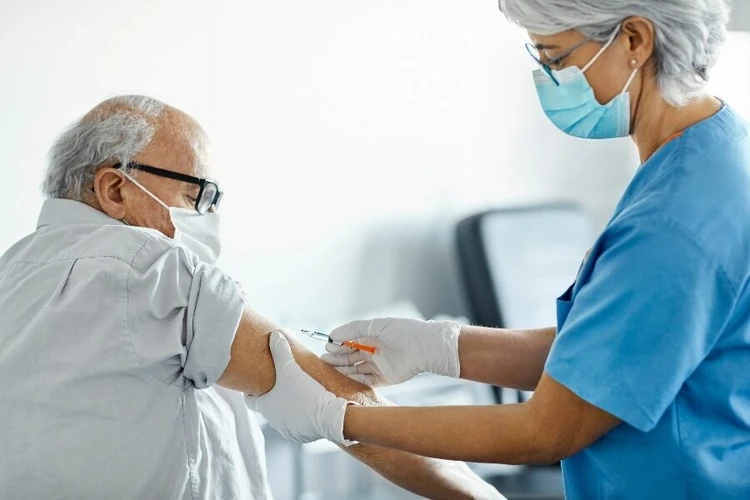
White House officials who are managing the COVID-19 response are urging Americans who are 50 years old or older to get a second booster shot.

"If you have not gotten a vaccine shot in the year 2022, if you have not gotten one this year, please go get another vaccine shot," said response coordinator Dr. Ashish Jha. "It could save your life."

Around the nation

  • New Jersey: Six counties have now been classified as having a “high” risk of COVID-19 transmission. Health officials recommend that people in Morris, Monmouth, Burlington, Camden, Atlantic, and Cape May counties wear masks indoors regardless of vaccination status. 

  • New York: Gov. Kathy Hochul has announced a new free hotline for those who test positive for COVID-19 but don't have a health care provider. "We've made real progress in our fight against COVID-19, but as new variants continue to spread it's important to continue to adapt and expand our efforts to protect New Yorkers," Hochul said. 

  • Colorado: After a string of days with no COVID-19 patients, Rose Medical Center reports that hospitalizations are increasing again. But doctors say it appears to be manageable. "I think we're settling into kind of a new normal. COVID's here to stay for a while," said Dr. Andrew Weinfeld, the hospital’s chief medical officer. "We expect it. There's much less surprise about it."

  • Virginia: Gov. Glenn Youngkin and four members of the Virginia congressional delegation report that they have heard nothing from the Defense Department after they asked the Pentagon to stop the COVID-19 vaccination mandate for members of the state National Guard. The state officials say National Guard readiness could be impacted if troops quit or get kicked out.

  • Illinois: The Illinois Veterans' Home in Quincy is reporting an increase in COVID-19 cases among its residents and staff. Tests this week found 16 residents and 10 staff members who had the virus. Most of the positive residents had mild symptoms.

Article Image

Intermittent fasting may promote less severe COVID-19 symptoms, study finds

The threat of COVID-19 is still very real for consumers around the world, but findings from a recent study suggest that your diet could lower your chances of developing severe symptoms. 

Researchers from Intermountain Healthcare say people who have practiced intermittent fasting for longer periods of time tend to experience less severe health complications when they're infected with the coronavirus. 

"Intermittent fasting has already shown to lower inflammation and improve cardiovascular health. In this study, we're finding additional benefits when it comes to battling an infection of COVID-19 in patients who have been fasting for decades," said Dr. Benjamin Horne, the director of cardiovascular and genetic epidemiology at Intermountain Healthcare.

Combatting inflammation from COVID-19

The researchers came to their conclusions after analyzing COVID-19 outcomes in over 200 patients who tested positive for the virus between March 2020, and February 2021.

The team found that participants who regularly fasted at least once per month had a lower rate of hospitalization and death due to the coronavirus. The researchers noted that intermittent fasting wasn't associated with a lower chance of testing positive for COVID-19; it was only connected to outcomes after participants were infected. 

Horne explained that hyperinflammation is a common symptom that's associated with COVID-19. He suggests that intermittent fasting may counteract this because it tends to reduce inflammation in the body. He also says fasting changes how the body uses certain molecules like linoleic acid.

"There's a pocket on the surface of SARS-CoV-2 that linoleic acid fits into -- and can make the virus less able to attach to other cells," he explained.

Shouldn't be used in place of a vaccine

While intermittent fasting could help consumers avoid serious complications from a coronavirus infection, the researchers stated that the eating plan shouldn't be used as a substitute for a COVID-19 vaccination.

"It should be further evaluated for potential short and long-term preventative or therapeutic use as a complementary approach to vaccines and anti-viral therapies for reducing COVID-19 severity," Horne said.

The full study has been published in the journal BMJ Nutrition, Prevention & Health.

Article Image

Coronavirus update: Modified vaccines could be ready by the fall

COVID-19 ‌tally‌ ‌as‌ ‌‌compiled‌‌ ‌by‌ ‌Johns‌ ‌Hopkins‌ ‌University.‌ ‌(Previous‌ ‌numbers‌ ‌in‌ ‌parentheses.)‌

Total‌ ‌U.S.‌ ‌confirmed‌ ‌cases:‌ 88,277,120 (88,067,709)

Total‌ ‌U.S.‌ ‌deaths:‌ 1,019,157 (1,018,376)

Total‌ ‌global‌ ‌cases:‌ 552,635,153 (547,361,783)

Total ‌global‌ ‌deaths:‌ 6,345,357 (6,342,542)‌

Updated vaccines could be available this fall

Drugmakers are at work on new versions of their COVID-19 vaccines in hopes of providing more effective protection against various Omicron strains. But just when will those updated vaccines be available?

The FDA has asked pharmaceutical companies to have the updated vaccines available in time for booster shots during the fall. The current vaccines have been providing strong protection against severe disease, but the older vaccines are less effective at preventing infections from Omicron's BA.4 and BA.5 subvariants.

An FDA advisory committee said an updated vaccine would offer better protection to match the virus strains that are currently spreading throughout the U.S. The two aforementioned subvariants are much more contagious than the original strain.

FDA authorizes quicker access to COVID-19 treatment Paxlovid

Pfizer’s antiviral drug won praise as an early treatment for COVID-19, and the U.S. Food and Drug Administration (FDA) has taken steps to make it more available to patients.

The FDA has revised its emergency use authorization (EUA) to authorize state-licensed pharmacists to prescribe Paxlovid to eligible patients. Certain limitations will be enacted to ensure appropriate patient assessment and prescribing of Paxlovid is undertaken. 

“The FDA recognizes the important role pharmacists have played and continue to play in combatting this pandemic,” said Patrizia Cavazzoni, M.D., director for the FDA’s Center for Drug Evaluation and Research. “Since Paxlovid must be taken within five days after symptoms begin, authorizing state-licensed pharmacists to prescribe Paxlovid could expand access to timely treatment for some patients who are eligible to receive this drug for the treatment of COVID-19.” 

Employees are losing their ‘pandemic advantage’

Since the start of the COVID-19 pandemic, employees have felt like they were in the driver’s seat. They could work from anywhere, and many took advantage of the situation by seeking out new jobs or quitting altogether.

But over the last few weeks, the advantage appears to be shifting back to employers, many of whom have demanded that employees return to the office. The advantage is illustrated by the weekly initial claims for unemployment benefits, which are rising.

The Labor Department reports that last week’s claims totaled 235,000 – an increase of 4,000 over the previous week. Employers are also trimming their payrolls with the expectation that the U.S. economy is entering a recession.

Around the nation

  • New York: The BA.5 Omicron subvariant has become dominant in New York, and health officials say it is responsible for the latest new wave. Health officials say new cases in New York rose 15% last week and appear to still be going up.

  • Nevada: Even though cases of COVID-19 are increasing, some states are reducing mitigation measures. The Nevada Board of Regents will no longer require staff at the state’s public universities and colleges to be vaccinated for COVID-19.

  • Missouri: State Rep. Tricia Derges resigned last week from her seat representing Christian County (District 140) in the Missouri House of Representatives, according to a report by KOLR-TV. Her resignation came four days after she was convicted on June 28 by a federal trial jury for what prosecutors described as a nearly $900,000 COVID-19 fraud scheme

  • Oregon: Two-thirds of the counties in the state are now back in the “high” transmission rate category. The Centers for Disease Control and Prevention (CDC) has urged those counties to reimpose universal indoor masking.

  • Ohio: Ohio is reporting a surge in new cases caused by the more contagious but less severe BA.4 and BA.5 Omicron subvariants. Health officials say those strains now make up more than 70% of all COVID-19 cases in the CDC's Region 5 area, which includes Columbus.

Article Image

Coronavirus update: FDA could ask for a modified vaccine

COVID-19 ‌tally‌ ‌as‌ ‌‌compiled‌‌ ‌by‌ ‌Johns‌ ‌Hopkins‌ ‌University.‌ ‌(Previous‌ ‌numbers‌ ‌in‌ ‌parentheses.)‌

Total‌ ‌U.S.‌ ‌confirmed‌ ‌cases:‌ 87,411,319 (87,233,810)

Total‌ ‌U.S.‌ ‌deaths:‌ 1,017,470 (1,016,792)

Total‌ ‌global‌ ‌cases:‌ 546,499,530 (545,690,489)

Total ‌global‌ ‌deaths:‌ 6,334,660 (6,332,965)‌

FDA advisors recommend a modified vaccine

An independent advisory committee to the U.S. Food and Drug Administration voted this week to recommend new COVID-19 shots that specifically target the Omicron variant this fall, when public health officials are expecting a new wave of infections.

The current vaccines, introduced in late 2020 and early 2021, were shown to be highly effective against the original strain of COVID-19. However, successive variants have more easily evaded its protection.

If the panel’s recommendations are accepted, the FDA could ask Pfizer, Moderna, and Johnson & Johnson to produce modified vaccines that target Omicron or its subvariants.

Cases level off but don’t drop in New York City

New York City health officials are keeping a wary eye on the BA.4 and BA.5 subvariants of Omicron as COVID-19 cases begin to rise again across the city. Some say BA.5 appears to be “the worst form” of Omicron to emerge so far.

Dr. Jay Varma, formerly then-mayor Bill de Blasio's top public health advisor during the pandemic, said COVID-19 infections appear to have leveled off but do not appear to be dropping. He says they remain at a high level.

"The decline of reported COVID-19 cases in NYC has stopped,” he wrote in a tweet. “Reported cases are at a high plateau, which means actual transmission is very high when you account for the >20x under-counting. This is likely the beginning of a BA.5 wave." 

Around the nation

  • California: The San Francisco Chronicle reports Alameda County’s mask mandate did little to stop the spread of the coronavirus. Compared with neighboring counties that did not reimpose the mandate, cases of COVID-19 did not fall. The mask mandate was lifted June 25.

  • New Jersey: All of New Jersey has slipped into the category of “high” COVID-19 transmission. The state recorded nearly 2,200 new cases Wednesday, with the latest testing data showing a positivity rate of 12.17%. Federal health officials consider anything above 10% to be high.

  • Louisiana: The state Legislature has overwhelmingly passed a bill that would allow parents and students to sue schools that require a COVID-19 vaccination as a condition of enrollment. It’s not clear if Gov. John Bel Edwards, who recently tested positive for the virus, will sign it.

  • Michigan: A study of Michigan residents who had long COVID found they were more likely to be women, Hispanic, and low-income. The Michigan COVID-19 Recovery Surveillance Study also found that people with a body mass index over 30 are also more likely to have long-term post-COVID symptoms.

  • Illinois: Chicago Department of Public Health Commissioner Dr. Allison Arwady has expressed concern about the BA.4 and BA.5 subvariants of Omicron, which is spreading throughout the state. Arwady says the two variants are not only highly transmissible, but that people infected with them can be contagious for up to 10 days.

Article Image

Maternal mortality rate has spiked during the COVID-19 pandemic, study finds

While the COVID-19 pandemic has affected consumers in countless ways, a new study conducted by researchers from the University of Maryland explored the risks to women’s long-term health and longevity. According to their findings, rates of maternal mortality have spiked during the COVID-19 pandemic. 

“The increase was really driven by deaths after the start of the pandemic, which are higher than what we see for overall excess mortality in 2020,” said researcher Marie Thoma. 

Risks for women’s longevity

For the study, the researchers analyzed data from the National Center for Health Statistics. They looked specifically at maternal mortality from before the pandemic (2018 to March 2020) and then during the pandemic, from April 2020 to December 2020. 

Ultimately, the team observed significant increases in maternal mortality during the pandemic. The maternal death rate increased by nearly 35%, while late maternal deaths increased by more than 40% during the pandemic. 

The researchers explained that the COVID-19 virus itself was responsible for nearly 15% of these maternal deaths. Additionally, women with diabetes or cardiovascular concerns – two conditions that worsened COVID-related symptoms – were at a higher risk of maternal death. 

It’s also important to note that Black and Hispanic women were at a much higher risk of maternal death than white women. The maternal death rate spiked by nearly 75% in Hispanic women and by 40% in non-Hispanic Black women. 

“For the first time in more than a decade, the maternal mortality rate for Hispanic women during the pandemic was higher than that for non-Hispanic white women, a shift that may be related to COVID and deserves greater attention moving forward,” said researcher Eugene Declercq. 

Moving forward, the researchers plan to do more work in this area to better understand the effect that COVID has on women’s health and longevity. 

“We need more detailed data on the specific causes of maternal deaths overall and those associated with COVID-19,” Thoma said. “Potentially we could see improvements in 2021 due to the rollout of vaccines, as well as the extension of postpartum care provided for Medicaid recipients as part of the American Rescue Act of 2021 in some states. We’re going to continue to examine this.” 

Article Image

Coronavirus update: More evidence in favor Paxlovid

COVID-19 ‌tally‌ ‌as‌ ‌‌compiled‌‌ ‌by‌ ‌Johns‌ ‌Hopkins‌ ‌University.‌ ‌(Previous‌ ‌numbers‌ ‌in‌ ‌parentheses.)‌

Total‌ ‌U.S.‌ ‌confirmed‌ ‌cases:‌ 86,636,811 (86,478,140)

Total‌ ‌U.S.‌ ‌deaths:‌ 1,014,835 (1,014,174)

Total‌ ‌global‌ ‌cases:‌ 541,470,003 (540,830,183)

Total ‌global‌ ‌deaths:‌ 6,324,459 (6,322,765)‌

Evidence mounts that Paxlovid keeps patients out of the hospital

Two new studies published in Morbidity and Mortality Weekly Report (MMWR) bolster the case for Pfizer’s antiviral drug Paxlovid. Both studies found that patients who take the drug early on in a COVID-19 infection were very unlikely to visit a hospital emergency room (ER).

Paxlovid is a combination of two antiviral medications -- nirmatrelvir and ritonavir. It was approved for emergency use by the U.S. Food and Drug Administration (FDA) in December 2021, for people with mild to moderate COVID-19 who are at risk for more severe symptoms.

Researchers at Kaiser Permanente, the Centers for Disease Control and Prevention (CDC), Harvard University, and the University of California, Berkeley, analyzed electronic health record data from Kaiser Permanente Southern California on 5,287 patients who were 12 years old or older and received Paxlovid from Dec. 31, 2021, through May 26, 2022. 

Research explains why so many vaccinated people get COVID-19

New research suggests that the reason many fully vaccinated people are testing positive for COVID-19 is because the BA.4 and BA.5 subvariants are able to evade the antibody responses among people who are vaccinated or have had a previous infection.

The study found that when the BA.4 and BA.5 subvariants invade the body, the antibody response is several times lower when compared to the body's response to the original strain of the coronavirus.

That said, the researchers have concluded that it’s still worthwhile to get vaccinated because it can prevent severe symptoms in most people.

Booster shots important for nursing home residents

Researchers from Case Western Reserve University, collaborating with scientists at Brown University, have made a case for residents and staff at nursing homes to not only be vaccinated against COVID-19 but to also get booster shots.

Their study shows that high levels of Omicron-specific immunity can be achieved in nursing home residents and their caregivers with a third dose of the COVID-19 vaccine. The findings were published this month in the journal eBioMedicine.

Researchers examined blood samples from 85 nursing home residents and 48 health care workers in Ohio who received the COVID-19 vaccine booster to determine the level of neutralizing antibodies present. It found that Omicron-specific antibodies reached detectable levels in 86% of nursing home residents and 93% of health care workers after receiving the booster shot.

Around the nation

  • New York: The five boroughs of New York City have all been downgraded to medium COVID-19 transmission risk. In early May, all five were classified as high risk. Cases have fallen so sharply that Broadway theaters will drop their mask mandate beginning July 1.

  • Florida: Florida is seeing a renewed surge in COVID-19 infections, and the outbreak is more serious in some communities than others. “We're seeing a lot of new cases,” said Seminole County emergency manager Alan Harris. "We're definitely in high transmission."

  • Illinois: The Illinois Department of Public Health reported 4,609 new confirmed and probable cases of COVID-19 and 33 additional deaths on Wednesday. However, the cases per 100,000 population has declined slightly. The intensive care unit occupancy rate remains elevated at 81%.

  • Virginia: In a break with the CDC, the Virginia Department of Health is relaxing quarantine guidelines for people who are exposed to COVID-19. Most won’t be recommended to quarantine if they recovered from a positive case within the last six months or if they are up-to-date on their vaccines.

  • Tennessee: Some Republican state lawmakers are asking Gov. Bill Lee to block the distribution of COVID-19 vaccines for children under the age of five. The members of the Tennessee House said they had too many concerns about the vaccine for it to be used on young children.

Article Image

FDA approves COVID vaccines for children 5 and younger

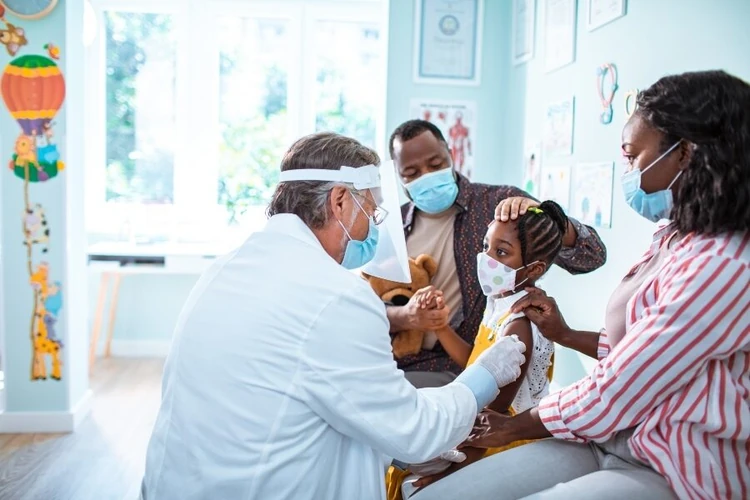
The U.S. Food and Drug Administration (FDA) has given the go-ahead on emergency use of both the Moderna and the Pfizer-BioNTech COVID-19 vaccines in children down to 6 months of age. The agency said that its analysis of the vaccines' safety and efficacy was “rigorous and comprehensive,” adding that the benefits of using those vaccines outweigh any “known and potential risks.”

“Many parents, caregivers and clinicians have been waiting for a vaccine for younger children, and this action will help protect those down to 6 months of age.  As we have seen with older age groups, we expect that the vaccines for younger children will provide protection from the most severe outcomes of COVID-19, such as hospitalization and death,” said FDA commissioner Robert M. Califf, M.D.

Timing is everything, and Moderna says the upside for younger school-age children is good. "Children vaccinated early this summer with a two-dose regimen will initiate protection as they return to school and daycare settings in the fall," the company said in its announcement.

How and when the two vaccines are administered vary a bit. For the Moderna vaccine, it should be administered in two doses, each a month apart. The Pfizer-BioNTech vaccine will require three doses – the first two area taken three weeks apart and the third eight weeks after the second dose.

Covering all risks

Much like it did earlier this year when it authorized a second booster dose for immunocompromised people, the FDA says the vaccines are also authorized for a third primary series dose at least one month following the second dose for those in that risk category.

The FDA said it also continues to monitor previously identified increased risks of myocarditis (inflammation of the heart muscle) and pericarditis (inflammation of tissue surrounding the heart) following vaccination. The agency reported that the risks it observed are highest in males 18 through 24 years of age for the Moderna vaccine and males 12 through 17 for the Pfizer-BioNTech vaccine, but that evidence shows there’s “rapid resolution” for those experiencing related symptoms with no impact on quality of life.

Both companies said that there are possible side effects for younger vaccine recipients. Moderna said the most commonly reported local symptom was injection site pain across all age groups, and that the most commonly reported systemic symptoms were headache and fatigue in older children and irritability in younger children.

Pfizer reported several side effects as well, including rash, itching, hives, swelling of the face, injection site pain, and tiredness.

Fact sheets for both the Pfizer vaccine and the Moderna vaccine are available for recipients and caregivers.

Article Image

Coronavirus update: Two vaccines recommended for young children

COVID-19 ‌tally‌ ‌as‌ ‌‌compiled‌‌ ‌by‌ ‌Johns‌ ‌Hopkins‌ ‌University.‌ ‌(Previous‌ ‌numbers‌ ‌are in‌ ‌parentheses.)‌

Total‌ ‌U.S.‌ ‌confirmed‌ ‌cases:‌ 85,960,775 (85,763,130)

Total‌ ‌U.S.‌ ‌deaths:‌ 1,012,776 (1,011,926)

Total‌ ‌global‌ ‌cases:‌ 537,458,937 (536,747,070)

Total ‌global‌ ‌deaths:‌ 6,413,928 (6,312,635)‌

Two vaccines recommended for kids 5 and younger

A U.S. Food and Drug Administration (FDA) advisory panel has voted to recommend two mRNA COVID-19 vaccines for children age 5 and younger. The vaccines were developed by Moderna and jointly by Pfizer and BioNTech.

The panel voted 21-0 to recommend approval of the two vaccines. While the FDA is not required to follow the advice of its advisory committee, it usually does.

It’s expected the FDA will approve the committee’s recommendation, possibly before the end of the week. The Centers for Disease Control and Prevention must also give its approval.

Major study uncovers new clues about long COVID

Researchers at the University of California San Diego School of Medicine are conducting a major study to track neurological symptoms in COVID-19 patients who continue to have symptoms long after they recover from their illness. It’s a condition known as “long COVID.”

The first round of the study, published this week, showed the prevalence of various short- and long-term symptoms and found that, while many patients showed improvement, the majority still had some neurological symptoms after six months. A subset of individuals also exhibited significant coordination and cognitive issues, not reported in previous findings.

At the time of their first visit with a physician, 89% of participants reported fatigue and 80% reported headaches. Other common neurological symptoms included memory impairment, insomnia, and decreased concentration. Eighty percent of participants said these symptoms impacted their quality of life.

Dr. Fauci tests positive

Dr. Anthony Fauci, the leading government health official on COVID-19, has announced that he has tested positive for the virus. Fauci, head of the National Institute for Allergy and Infectious Diseases (NIAID), says he has isloated and has mild symptoms.

“He has not recently been in close contact with President Biden or other senior government officials,” NIAID said in a statement. “Dr. Fauci will follow the COVID-19 guidelines of the Centers for Disease Control and Prevention and medical advice from his physician and return to the NIH when he tests negative.”

Around the nation

  • Tennessee: Tennessee Titans right guard Nate Davis had what he considers a lackluster 2021 NFL season. But he tells Titans Online there might have been an extenuating circumstance. He caught COVID-19 during the season, not once but twice. “Getting [COVID-19] twice affects your conditioning, your strength, and even a little bit of your confidence,” Davis admitted.

  • California: It was a year ago this week that California officials reopened from COVID-19 lockdown. People returned to theme parks, restaurants, and concert halls. Since then Omicron subvariants have triggered a new surge in cases, but health officials say most are less severe.

  • New York: New York appears to have weathered the latest COVID-19 surge but Gov. Kathy Hochul says it’s no time to take anything for granted. "As we continue to monitor the numbers, it is important that we take every precaution necessary to stay healthy," Hochul said. "Take a test before traveling, stay home if you feel unwell, and keep up to date with vaccinations and booster doses. We must use every resource available to stay prepared for potential surges this year and keep our communities safe."

  • Vermont: Business organizations in the state are being credited with helping to pass Vermont’s S. 11 – legislation that includes over $15 million in funding for the new COVID-19 Related Paid Leave Grant Program. Gov. Phil Scott signed the legislation this week.

  • Texas: With children 5 and older now eligible for the COVID-19 vaccine, Tarrant County is stepping up its “pop-up” clinics to administer the jabs. Officials say parents need to bring proof of the child’s age and their own ID for the vaccination. Booster vaccinations are available at all of the vaccination locations.

Article Image

Substance use among youth declined during the COVID-19 pandemic, study finds

While recent studies have found that drug and alcohol use have spiked over the course of the COVID-19 pandemic, a new study conducted by researchers from West Virginia University explored how young people in particular were affected by substance use. 

According to their findings, substance use among teens and adolescents dropped throughout the pandemic; the team attributes this to limitations in how young people were able to socialize during the pandemic. 

“One of the driving factors for youth substance use is access to substances,” said researcher Hannah Layman. “With stay-at-home orders, virtual schooling, and social distancing, children have been spending more time with family and are actually more socially isolated from peers than before. Although social isolation from peers may have a negative effect on their mental health, it may just be one of the desirable outcomes of the pandemic when considering substance use in children.” 

Unexpected benefits of social isolation

The researchers examined nearly 50 studies that looked at how young people use tobacco, alcohol, cannabis, e-cigarettes, and other drugs and substances. The participants in all of the studies were under the age of 24, and they focused specifically on substance use during the pandemic. 

Ultimately, the use of e-cigarettes, cannabis, alcohol, and tobacco has declined among young people throughout the COVID-19 pandemic. The researchers explained that, typically, adolescents and teens are likely to get involved with substance use when they’re outside the home and with their friends and peers. However, the pandemic prevented many such gatherings from taking place. 

Instead, young people were spending most of their time at home with their families. Interactions with friends were limited during stay-at-home orders. Because of this, the researchers believe it was difficult to access substances. 

Though these findings are ultimately positive when thinking about young people’s physical health and wellness, the researchers hope that more work is done to better understand the risks associated with youth substance use. 

“Substance use can affect a young person’s body in many ways, such as the development of mental health issues (depression, anxiety, conduct problems, personality disorders, and suicidal thoughts), injuries due to accidents, decreased bone mineral density, preventing proper brain growth and function, delayed puberty, liver damage, and so much more,” said Layman. 

“Our findings also identified the importance of improving youth mental health and the value of telemedicine to address young people’s health needs during the pandemic.” 

Article Image

Coronavirus update: FDA ready to approve vaccine for kids

COVID-19 ‌tally‌ ‌as‌ ‌‌compiled‌‌ ‌by‌ ‌Johns‌ ‌Hopkins‌ ‌University.‌ ‌(Previous‌ ‌numbers‌ ‌in‌ ‌parentheses.)‌

Total‌ ‌U.S.‌ ‌confirmed‌ ‌cases:‌ 85,515,980 (85,500,976)

Total‌ ‌U.S.‌ ‌deaths:‌ 1,011,277 (1,011,259)

Total‌ ‌global‌ ‌cases:‌ 535,319,747 (535,153,489)

Total ‌global‌ ‌deaths:‌ 6,309,616 (6,309,255 )‌

FDA poised to approve vaccinations for kids under five

The U.S. Food and Drug Administration (FDA) has released its analysis of the Pfizer/BioNTech COVID-19 vaccine and said it appears to be safe and effective for children under age five, according to a report by the Associated Press. An FDA advisory committee meets this week to discuss the data.

If the committee votes to recommend the shots for young children, officials say vaccinations could begin as early as next week. First, the FDA and the Centers for Disease Control and Prevention (CDC) would have to formally approve the vaccinations.

Children between the ages of six months and four are the last group of Americans not yet eligible for vaccinations.

Inhaled vaccine more effective than nasal sprays, scientists say

Scientists, who are already working on the next generation of COVID-19 vaccines, are debating which delivery method is the most effective. Some researchers advocate for a nasal spray, saying it should be deployed at the location of infection.

But scientists at McMaster University in Canada argue that inhaled aerosol vaccines provide far better protection and a stronger immune response than nasal sprays. They point out that inhaled aerosols bypass the nasal passage and deliver vaccine droplets deep in the airway, where they can “induce a broad protective immune response.”

“Infections in the upper respiratory tract tend to be non-severe,” said  Matthew Miller, a co-author of the study. “In the context of infections caused by viruses like influenza or SARS-CoV-2, it tends to be when the virus gets deep into the lung that it makes you really sick.” 

Vaccine may provide strong protection for heart patients

For people being treated for cardiac issues, doctors have some urgent advice: Get vaccinated and boosted against COVID-19.

Scientists writing in the Journal of Cardiac Failure say heart failure patients who are unvaccinated are three times more likely to die if infected with the virus than fully boosted heart failure patients. The study is the first to look at COVID-19 vaccination status and outcomes in patients with this cardiovascular condition.

Researchers said they launched the study because many cardiac patients expressed fear of getting vaccinated due to the risk of vaccine-related myocarditis, which is rare.

Around the nation

  • Michigan: New cases of COVID-19 declined again last week. The previous week, there were 10 counties classified as having a “high risk” of transmission. Last week, the number of counties where officials urge residents to mask up fell to only five – Mackinac, Saginaw, Oakland, Washtenaw, and Wayne counties.

  • New York:  New York City Mayor Eric Adams has announced plans to end the city’s controversial mandate for two- to four-year-old children to wear masks in public, citing a continuing decline in cases. The mask mandate for Broadway theaters and public transit continues, at least for now.

  • Alabama: State health officials say that because so many COVID-19 tests are now conducted at home, their results rarely make it into the official records. But the one metric that has remained useful, they say, is hospitalizations. Unfortunately, that number has moved higher over the last few weeks.

  • Oklahoma: State health officials are expressing concern about a rise in severe COVID-19 cases among children. Over the last few days, at least one child under five has died of COVID-19. Pediatric patients account for 24 of the state’s 122 COVID-19 hospitalizations.

  • Kansas: Cases of the coronavirus may be rising, but health officials say there are fewer severe cases. Experts at the University of Kansas Health System say Omicron BA.2 has largely been eclipsed by another subvariant, BA.2.12.1, which is causing fewer hospitalizations and deaths.

Article Image

Coronavirus update: Other viruses are taking COVID-19’s place

COVID-19 ‌tally‌ ‌as‌ ‌‌compiled‌‌ ‌by‌ ‌Johns‌ ‌Hopkins‌ ‌University.‌ ‌(Previous‌ ‌numbers‌ ‌in‌ ‌parentheses.)‌

Total‌ ‌U.S.‌ ‌confirmed‌ ‌cases:‌ 85,333,275 (85,217,725)

Total‌ ‌U.S.‌ ‌deaths:‌ 1,010,808 (1,010,525)

Total‌ ‌global‌ ‌cases:‌ 534,307,874 (533,781,613)

Total ‌global‌ ‌deaths:‌ 6,306,792 (6,305,292)‌

With COVID-19 in retreat, other viruses are moving forward

COVID-19 and the restrictions put in place to contain it also had the effect of limiting other diseases.

The 2020 and 2021 U.S. winter flu seasons were some of the mildest on record, both in terms of deaths and hospitalizations. But now flu cases are spreading quickly, something that almost never happens in June.

“COVID has clearly had a very big impact on that,” Dr. Scott Roberts, associate medical director for infection prevention at Yale New Haven Hospital, told CNBC. “Now that people have unmasked, places are opening up, we’re seeing viruses behave in very odd ways that they weren’t before.”

Some summer school students will be masking up again

By the time the school year ended, most school districts had dropped mask mandates for students and staff. But with summer school beginning, some schools in areas where new COVID-19 cases are increasing have returned to masking.

The increase is mostly occurring in the nation’s largest school districts, but some smaller districts, such as Berkley, Calif., have also reinstated their mask mandates.

While the cases of the coronavirus caused by the highly transmissible subvariants are typically less severe, especially among children, some school administrators say they want to protect children who are more vulnerable because of compromised health conditions.

Popular tourist destinations see sharp rise in cases

It should be no surprise that places that attract the most people from other areas should see an outsized spread of COVID-19. Health officials say popular U.S. tourist destinations are proving to be prime examples.

An analysis of cases shows that Miami, Honolulu, and San Juan, Puerto Rico are averaging at least 85 new cases each day per 100,000 population, a positivity rate of over 20%.

That compares with an average of 34 new daily cases per 100,000 population for the nation as a whole -- a positivity rate of 13%.

Around the nation

  • Connecticut: The state’s rate of positive COVID-19 test results remains elevated, but it has come down in recent days. Gov. Ned Lamont announced that 3,219 PCR/NAAT tests came back positive out of 36,801 administered over the last seven days. That yields a positivity rate of 8.81%. In another encouraging sign, hospitalizations have declined.

  • New Mexico: COVID-19 cases are up across the state, but health officials say this wave appears to be different. Most cases are less severe. “Despite the rise in cases and community transmission levels, hospitalizations, ICU admissions, and deaths remain comparatively low,” said Dr. Christine Ross, the state’s epidemiologist. “Clearly, what we’re seeing with this wave is very different than what we’ve seen in the past.”

  • Washington: Hospital officials say a rise in the number of COVID-19 patients who require treatment in a hospital is “concerning.” All but five Washington counties are reporting a "high rate" of the virus. The Washington State Hospital Association says COVID-19 hospitalizations rose 10% in one week.

  • Florida: Federal agents have arrested a Florida man and charged him with pandemic-related fraud. Thirty-four-year-old Vinicius Santana is accused of submitting four Paycheck Protection Program loan applications for the paint company he owned, requesting $2.5 million.

  • Ohio: The Ohio Supreme Court has ruled that pandemic-related legislation passed by state lawmakers does not violate the state constitution. The high court dismissed claims by five Ohio residents’ who said a 2011 amendment to the state constitution prohibits legislators from enacting or enforcing any law requiring state residents to participate in a health care system.

Article Image

Coronavirus update: White House ready to vaccinate youngest children

COVID-19 ‌tally‌ ‌as‌ ‌‌compiled‌‌ ‌by‌ ‌Johns‌ ‌Hopkins‌ ‌University.‌ ‌(Previous‌ ‌numbers‌ ‌in‌ ‌parentheses.)‌

Total‌ ‌U.S.‌ ‌confirmed‌ ‌cases:‌ 85,217,725 (85,011,505)

Total‌ ‌U.S.‌ ‌deaths:‌ 1,010,525 (1,009,339)

Total‌ ‌global‌ ‌cases:‌ 533,781,613 (533,153,104)

Total ‌global‌ ‌deaths:‌ 6,305,292 (6,302,589)‌

White House announces plan to vaccinate infants and toddlers

A U.S. Food and Drug Administration (FDA) advisory committee meets next week to consider whether to approve COVID-19 vaccinations for children between the ages of six months and five years old. However, the White House says it anticipates a green light and has revealed a plan to quickly ramp up the vaccination process.

The Biden administration said it "has made 10 million vaccine doses available for states, tribes, territories, community health centers, federal pharmacy partners, and others to pre-order," according to a White House fact sheet.

Officials say the first vaccinations could start "as early as the week of June 20th —with the program ramping up over time as more doses are delivered and more appointments become available." 

Pandemic set kids back academically, study shows

A new government report reveals how the pandemic slowed academic progress for American school children over the last two years. The U.S. Government Accountability Office (GAO) interviewed K-12 teachers nationwide.

Compared to a typical school year, teachers reported that more of their students started the 2020-2021 school year behind and made less academic progress. Teachers also reported that many students ended the year behind grade level expectations. Educators and parents also shared their insights and experiences about student struggles and learning loss during the year.

The study found that 52% of teachers had more of their students start the 2020-2021 school year behind when compared to a typical school year. The researchers say this affected younger students more than older students. About 64% of teachers had more students make less academic progress than in a typical school year. 

What doctors want people to know about at-home testing

Over-the-counter COVID-19 tests that can be self-administered at home have become the new norm as the pandemic continues. In the American Medical Association (AMA) series “What Doctors Wish Patients Knew,”  Dr. Emily Volk says patients need to understand the importance of administering these tests correctly.

“The fact that you can actually test yourself and get a reasonably accurate result within about 20 minutes can be very, very powerful,” said Volk, who is the president of the College of American Pathologists. “It’s very important, though, if you use those tests at home, that you treat them with the respect that they deserve.”

Volk says that means following the directions very carefully. Consumers should read the instructions, pay full attention, and avoid distractions.

Around the nation

  • Texas: COVID-19 is still affecting sports teams. The Texas Rangers placed relief pitcher Brett Martin on the COVID-19 list this week before the first game of a doubleheader against the Guardians. The team also placed bench coach Donnie Ecker in health and safety protocols.

  • California: State and local officials continue to walk a fine line when it comes to COVID-19 mitigation measures as cases rise around the state. Sacramento County health officials said they “strongly urge” citizens to mask up in public. However, they aren't requiring it as of yet.

  • Nevada: Clark County, home to Las Vegas, is seeing a sharp rise in new coronavirus cases. County health officials also report that local hospitalizations are beginning to rise among mostly older seniors. Nevada’s latest health figures show a 14-day rolling average of 315 patients per day, 276 of which are in Clark County.

  • Maryland: Democrats and Republicans in the state are sharply divided over whether to require COVID-19 vaccinations for school children. A poll that was conducted for Baltimore Sun Media and the University of Baltimore shows that three-quarters of Maryland Democrats support a vaccination mandate while half of Republicans in the poll oppose it.

  • Wisconsin: Gov. Tony Evers and the Wisconsin Department of Health Services (DHS) are wrapping up their tour of the state by thanking residents for their COVID-19 response. “Our state’s public health workers have endured so much these past years, helping folks through some of the most challenging of circumstances, and it is no small part due to their selfless efforts that our state is in the positive position we are today," Evers said.

Article Image

Getting a COVID-19 vaccine during pregnancy may lower infants' risk of infection, study finds

A new study conducted by researchers from the University of Ottawa explored how the COVID-19 vaccine may help pregnant women and their babies. According to their findings, infants are likely to have a lower risk of contracting the virus when their mothers are vaccinated during pregnancy.

“Young infants are at a higher risk of severe COVID-19 compared with older children, and there is no approved COVID-19 vaccine for this age group,” said researcher Dr. Deshayne Fell. “Getting fully vaccinated against COVID-19 during pregnancy helps protect young infants from potential SARS-CoV-2 infection when they are born.” 

Protecting infants’ health

The researchers analyzed data from over 21,600 infants born in Norway between September 2021, and February 2022. They compared data on infants whose mothers had received the COVID-19 vaccine while pregnant to infants of women who didn’t get the vaccine. 

The findings showed that when women received the COVID-19 vaccine during pregnancy, it benefited their infants’ health. Nearly half of the women involved in the study received either a second or third dose of the vaccine during their last two trimesters, and their infants were less likely to contract the virus. 

During the surge of the Delta variant (which occurred before January 2022), the incidence rate for infants testing positive was 3.0 per 10,000 days for infants born to unvaccinated mothers and 1.2 per 10,000 for infants born to vaccinated mothers. The researchers also found that protection against the virus was strongest during this time as opposed to during the surge of the Omicron variant. 

The team hopes these findings highlight the protective health benefits for infants when women receive the COVID-19 vaccine during pregnancy. 

“It is not unexpected that maternal COVID-19 vaccination during pregnancy could reduce infant infection, as similar protective benefits against infant infection have been observed for pertussis and influenza vaccination during pregnancy in randomized clinical trials and observational studies,” Dr. Fell said. 

Article Image

Coronavirus update: Moderna says it has a better booster

COVID-19 ‌tally‌ ‌as‌ ‌‌compiled‌‌ ‌by‌ ‌Johns‌ ‌Hopkins‌ ‌University.‌ ‌(Previous‌ ‌numbers‌ ‌in‌ ‌parentheses.)‌

Total‌ ‌U.S.‌ ‌confirmed‌ ‌cases:‌ 85,079,798 (84,885,712)

Total‌ ‌U.S.‌ ‌deaths:‌ 1,010,021 (1,008,881)

Total‌ ‌global‌ ‌cases:‌ 533,327,522 (532,504,668)

Total ‌global‌ ‌deaths:‌ 6,303,578 (6,300,491)‌

Moderna reports positive results from updated booster

Moderna has updated its vaccine to deal with Omicron subvariants that are able to slip past antibodies. It has released new clinical data on its Omicron-containing bivalent COVID-19 booster candidate, mRNA-1273.214, and reports that it is highly effective.

The company said a booster dose of mRNA-1273.214 met all pre-specified endpoints, including superior neutralizing antibody response against the Omicron variant one month after administration when compared to the original mRNA-1273 vaccine.The booster dose was generally well-tolerated, with side effects comparable to a booster dose of the previous vaccine.

"We are thrilled to share the preliminary data analysis on mRNA-1273.214, which is the second demonstration of superiority of our bivalent booster platform against variants of concern and represents an innovation in the fight against COVID," said Stéphane Bancel, CEO of Moderna. 

Cases are sharply higher but deaths are significantly lower

The daily COVID-19 numbers collected by Johns Hopkins University present a mixed picture, especially when compared to the numbers from exactly one year ago. Cases are surging but deaths are declining.

On Tuesday, the U.S. recorded more than 116,000 new cases of COVID-19, more than any other nation. On June 7, 2021, after vaccines had rolled out and before the Delta variant surfaced, there were only 13,565 new cases.

But one year ago, there were 403 deaths from the virus. On Tuesday, even with substantially more cases, there were only 339 deaths. Medical experts says the current virus strains spread more easily than previous variants but are much less lethal.

U.S. may get a fourth vaccine

An advisory committee for the U.S. Food and Drug Administration (FDA) has recommended approval of Novavax's COVID-19 vaccine for use in adults. If the proposal is adopted by the FDA,  the Novavax vaccine would join other approved vaccines produced by Moderna, Pfizer/BioNTech, and Johnson & Johnson.

But the new vaccine faced some questions from some committee members. Some wondered whether there was a need for another vaccine at this point in the pandemic.

The FDA’s Dr. Peter Marks suggested that there are still some unmet vaccine needs in the U.S. He said some people who have not been vaccinated might have various concerns about the three approved vaccines and might welcome an alternative.

Around the nation

  • Massachusetts: Five counties are now listed by federal health authorities as having a high risk of COVID-19 transmission. Those counties are Barnstable, Franklin, Middlesex, Norfolk, and Suffolk. Bristol County is the only area of Massachusetts classified as low risk.

  • Nebraska: Nebraska’s rate of COVID-19 infection is higher than the nation as a whole, with cases climbing over the last two months. The state recorded 2,354 new cases last week, significantly higher than the 1,671 logged during the previous week.

  • New Jersey: State officials are cautiously optimistic that this summer will be marked by a return to normalcy, from offices to the beaches. New cases are on the rise across the state, but the current strains have not resulted in rising hospitalizations and deaths.

  • New Hampshire: The New Hampshire Hospital Association reported that 91 people tested positive for COVID-19 in hospitals around the state on Tuesday. That’s an increase from 89 people on Monday. Of those 91 people, 27 required treatment for COVID-19, which was one fewer than Monday.

  • Oregon: New cases of the coronavirus declined for a second week, as Oregon posted an 11% weekly drop in identified cases. The Oregon Health Authority recorded 9,800 confirmed or presumed infections in the past week. That translated into 1,400 a day, down from 1,579 daily cases last week.

Article Image

Coronavirus update: Four more travel destinations listed as ‘high risk’

COVID-19 ‌tally‌ ‌as‌ ‌‌compiled‌‌ ‌by‌ ‌Johns‌ ‌Hopkins‌ ‌University.‌ ‌(Previous‌ ‌numbers‌ ‌in‌ ‌parentheses.)‌

Total‌ ‌U.S.‌ ‌confirmed‌ ‌cases:‌ 84,885,712 (84,774,441)

Total‌ ‌U.S.‌ ‌deaths:‌ 1,008,881 (1,008,593)

Total‌ ‌global‌ ‌cases:‌ 532,504,668 (532,038,696)

Total ‌global‌ ‌deaths:‌ 6,300,491 (6,299,323)‌

Four more destinations marked as "high risk"

While planes are full and demand for travel is surging, the Centers for Disease Control and Prevention (CDC) is cautioning Americans that there are still risks. The health agency has added four more destinations to the “high risk” category for summer travel.

This week, the CDC added Guyana, Mongolia, Namibia, and the islands of St. Kitts and Nevis to the Level 3 list. All four areas had previously been listed at Level 2.

The new additions to Level 3 join France, Germany, Greece, Ireland, Italy, The Netherlands, Portugal, Spain, and the United Kingdom on the list of countries that present the highest risk for contracting COVID-19.

Half of COVID-19 patients have lingering symptoms

Penn State researchers say half of COVID-19 patients still deal with lingering symptoms from a prior infection. In their just-concluded study, they describe two conditions – long COVID and what are known as "post-COVID conditions."

Both cover a wide range of continuing health problems. Chief among them is a distorted sense of smell. Some people lose the ability to smell altogether for an extended period of time. The less severe symptoms fall into the post-COVID condition category.

Penn State researchers say long COVID usually lasts up to six months after the initial COVID virus onset, but scientists at the CDC say it can last weeks, months, or even years.

COVID-19 can increase risk of psychiatric issues

A study by scientists at Oregon State University has found that COVID-19 patients had a roughly 25% increased risk of developing a psychiatric disorder in the four months following their infection when compared to people who were not infected.

The researchers looked at the rate of psychiatric diagnoses for two time periods: from 21 to 120 days after patients’ COVID-19 diagnosis, and from 120 to 365 days after diagnosis. The study was limited to patients with no previous mental illness.

Around the nation

  • Michigan: Transportation Secretary Pete Buttigieg has tested positive for COVID-19 after attending a public affairs conference on Michigan’s Mackinac Island. At least 14 other people who attended the event were also infected. The event was put on by the Detroit Regional Chamber of Commerce, and more than 1,000 public officials, journalists, and others attended. 

  • Utah: The latest COVID-19 wave appears to be over in Utah. State health officials reported 5,728 new cases of coronavirus in the week ending Sunday, nearly the same as the week before. Cases had been rising quickly across the state due to the highly transmissible subvariants of the Omicron variant.

  • Illinois: Chicago health officials say city residents who traveled to parts of the U.S. that were categorized as medium or high COVID-19 community transmission levels should take steps to prevent the spread of the virus on their return. The Chicago Department of Public Health notes that 7.4% of U.S. counties are now listed at either the medium or high community level.

  • Minnesota: As the Omicron wave begins to recede in Minnesota, state health officials say the latest wave appeared to target seniors. They say around 90% of coronavirus deaths during May in Minnesota were among people aged 65 and older. It was just 66%  in December.

  • Kentucky: New cases of COVID-19 are on the rise across the state, according to state health officials. The Kentucky Health Department’s weekly COVID-19 report shows that the state’s positivity rate has risen in the last week to 12.42%.

Article Image

Coronavirus update: Many vaccine doses were wasted, report finds

COVID-19 ‌tally‌ ‌as‌ ‌‌compiled‌‌ ‌by‌ ‌Johns‌ ‌Hopkins‌ ‌University.‌ ‌(Previous‌ ‌numbers‌ ‌in‌ ‌parentheses.)‌

Total‌ ‌U.S.‌ ‌confirmed‌ ‌cases:‌ 84,796,633 (84,748,884)

Total‌ ‌U.S.‌ ‌deaths:‌ 1,008,639 (1,008,567)

Total‌ ‌global‌ ‌cases:‌ 532,143,171 (531,720,689)

Total ‌global‌ ‌deaths:‌ 6,299,644 (6,298,476)‌

Millions of vaccine doses were wasted, report finds

U.S. pharmaceutical companies developed COVID-19 vaccines in record time, but the deployment of those vaccines to control the pandemic was not exactly efficient, according to a new report.

The Centers for Disease Control and Prevention (CDC) reports that pharmacies, states, U.S. territories, and federal agencies threw out 82.1 million vaccine doses from December 2020, through mid-May of this year. That amounts to about 11% of the total vaccines the U.S. government distributed.

The report said two major pharmacy chains – CVS and Walmart – accounted for about a quarter of the discarded vaccine doses, partly because of the scale of the two firms’ operations. The overall amount of waste is consistent with World Health Organization (WHO) estimates for large vaccination campaigns.

Many PPP loans went to real estate firms

Congress authorized the Paycheck Protection Program (PPP) to make loans to businesses at the beginning of the pandemic so they would not have to lay off employees. Many businesses, including restaurants, faced a battle for survival.

But real estate is one industry that managed to do just fine during the early days of the pandemic. Home sales surged and prices rose during that time, increasing sales commissions. Yet the U.S. government’s Pandemic Response Accountability Committee (PRAC) reports that real estate brokers received $3.9 billion in PPP loans.

The average real estate company borrower got $13,000. However, the PRAC data shows that 146 entities got more than $90,000 each.

Consumers are tipping less

Many Americans dug into their pockets and provided generous tips for service workers in the early days of the pandemic to help offset the loss of business. But that practice hasn’t lasted.

A survey from CreditCards.com found that 73% of Americans say they always tip when dining at a full-service restaurant. In 2019, before the pandemic, the percentage was 77%.

“Inflation is cutting into consumers’ purchasing power and a tight labor market has left many service industry businesses understaffed and struggling to provide top-notch customer experiences,” said Ted Rossman, senior industry analyst at CreditCards.com.

Around the nation

  • California: Los Angeles County is now dealing with a sharp rise in hospitalizations, and officials say there could be a new indoor mask mandate later this month if that trend continues. “Our weekly case rate and the rate of increase in hospital admissions are of concern,” L.A. County Public Health Director Barbara Ferrer told the Los Angeles Times.

  • Maine: Severe COVID-19 cases that require admission to a hospital are on a downward trend. They declined on Sunday, and nine patients were discharged on Saturday. Health officials say only 19 patients are currently receiving critical care.

  • Colorado: In an unusual turn, flu cases in Colorado are spiking heading into summer. State health officials say not only are the number of recording flu cases on the rise, but their symptoms are more severe than those of the current COVID-19 subvariants that are present in the state.

  • Texas: The City of Austin is renewing efforts to encourage residents to be fully vaccinated against COVID-19 and to get booster shots as cases from two Omicron subvariants rise. “These rising numbers and new subvariants are very concerning, especially at a time when many will be traveling and gathering with loved ones,” said Dr. Desmar Walkes, Austin-Travis County Health Authority.

  • North Carolina: North Carolina has 100 counties, and more than half of them are now classified by federal health authorities as either orange or yellow, denoting high or medium levels of COVID-19 transmission. Granville and Person counties are among the 13 counties now in the orange category.

Article Image

Coronavirus update: Getting a booster may increase chance of breakthrough infection, study finds

COVID-19 ‌tally‌ ‌as‌ ‌‌compiled‌‌ ‌by‌ ‌Johns‌ ‌Hopkins‌ ‌University.‌ ‌(Previous‌ ‌numbers‌ ‌in‌ ‌parentheses.)‌

Total‌ ‌U.S.‌ ‌confirmed‌ ‌cases:‌ 84,550,392 (84,449,947)

Total‌ ‌U.S.‌ ‌deaths:‌ 1,008,063 (1,007,717)

Total‌ ‌global‌ ‌cases:‌ 531,040,445 (530,832,620)

Total ‌global‌ ‌deaths:‌ 6,296,853 (6,295,090)‌

Boosted Americans at risk of breakthrough cases

Government health officials have urged all eligible Americans who are vaccinated against COVID-19 to get a booster shot. But a new study appears to suggest that people who get the booster shot are more likely to suffer a “breakthrough” coronavirus infection.

The federal study found that the rate of breakthrough COVID-19 infections in April was worse in boosted Americans when compared to those who were only fully vaccinated. At the same time, the rates of deaths and hospitalizations remained lowest among people who had been boosted.

In an interview with CBS News, John Moore, a professor of microbiology and immunology at Weill Cornell Medical College, said the Omicron variant and its subvariants seem to be able to easily break through antibody protection and cause infections. However, these cases are mostly mild among the boosted population.

The economy added 390,000 jobs in May

Evidence continues to show that the job market is continuing to get stronger as the COVID-19 pandemic fades into the rearview mirror. The Labor Department reports that the U.S. economy added 390,000 jobs last month and that the unemployment rate remained steady at 3.6%, only slightly higher than before the pandemic.

Travel and leisure businesses saw the strongest job growth in May. Employment in leisure and hospitality increased by 84,000, with about half of those jobs being created at bars and restaurants. However, employment in the industry is still down nearly 8% when compared to before the pandemic.

Hiring also accelerated in the transportation and warehousing sector, which may be a positive sign for the supply chain. A shortage of truck drivers and warehouse workers during the pandemic has made it harder for stores to keep shelves fully stocked.

Feds adopt test-to-treat strategy to contain the virus

When someone tests positive for COVID-19, days may pass before they receive any kind of treatment for the virus. The U.S. government has adopted a test-to-treat strategy that is designed to treat infected Americans immediately.

The government has set up the first test-to-treat clinic in Providence, R.I., where people can go to be tested; if the test is positive, they receive immediate treatment with an antiviral drug. White House COVID-19 Coordinator Dr. Ashish Jha appeared virtually with Rhode Island Gov. Dan McKee to kick off the program, which will be duplicated in other states.

“I think it is an innovative idea that Dr. Jha and his team have looked at and Rhode Island is so fortunate to be leading the nation in this effort with vaccines and boosters also being available at these sites,” McKee said.

Around the nation

  • New York: New York City’s streets weren’t deserted during the pandemic just because of lockdowns. It turns out that a lot of people moved out of the city and the state. Information tracked by the federal government suggests that, while the rate of decline is slowing, more people are continuing to leave or die than are being born or moving into the Big Apple, resulting in a declining population.

  • West Virginia: While older people are most vulnerable to death from COVID-19, the virus can also kill young people. The West Virginia Department of Health and Human Resources (DHHR) reports that a 15-year-old girl from Raleigh County has become the youngest coronavirus-related death so far.

  • South Dakota: New cases resulting from Omicron subvariants have often been fairly mild, but that’s not the case in South Dakota. State health officials report that severe cases resulting in hospitalizations surged over the last week, rising 73%. At the same time, there were no new deaths.

  • Virginia: The state health department reports that 582 COVID-19 patients across the state were hospitalized as of Thursday with confirmed or test-pending cases of COVID-19. That’s down slightly from 588 on Wednesday.

  • Alaska: The Alaska Housing Finance Corporation has announced that nearly 11,000 Alaska households that have been economically impacted by COVID-19 will receive some form of financial aid through the federal Homeowner Assistance program. The program aims to prevent mortgage delinquencies that can turn into foreclosures.

Article Image

Coronavirus update: Drug firms seek to vaccinate very young children

COVID-19 ‌tally‌ ‌as‌ ‌‌compiled‌‌ ‌by‌ ‌Johns‌ ‌Hopkins‌ ‌University.‌ ‌(Previous‌ ‌numbers‌ ‌in‌ ‌parentheses.)‌

Total‌ ‌U.S.‌ ‌confirmed‌ ‌cases:‌ 84,449,947 (84,218,910)

Total‌ ‌U.S.‌ ‌deaths:‌ 1,007,719 (1,007,059)

Total‌ ‌global‌ ‌cases:‌ 531,567,231 (530,201,825)

Total ‌global‌ ‌deaths:‌ 6,297,253 (6,293,029)‌

Vaccine approval requested for very young children

Pfizer and BioNTech say they will ask the U.S. Food and Drug Administration (FDA) to clear their COVID-19 vaccine for children between the ages of six months and four years, the only age group not yet eligible to be vaccinated.

An FDA advisory committee will consider the request. After analyzing data from clinical trials, it will make a recommendation to the FDA before the end of this month.

The FDA could give its approval for doses of the vaccine for the age group within days of a positive recommendation from the committee. The Centers for Disease Control and Prevention (CDC) would also need to give the green light, as the agency has done for all other age groups.

Airlines push for an end to pre-travel testing

Travel industry officials used a meeting this week at the White House to press the Biden administration to end the requirement that vaccinated international travelers take a COVID-19 test before leaving for U.S. destinations.

Airline trade group Airlines for America pressed its case, arguing that the requirement no longer matches the current threat from the coronavirus. The group also claimed that the requirement is reducing international travel and hurting the U.S. economy.

"Quite frankly, the only impact the pre-departure testing requirement is having is a chilling effect on an already fragile economy here in the U.S.," Airlines for America CEO Nick Calio said in a statement.

Dogs can sniff out COVID-19, researchers say

When a COVID-19 test isn’t readily available, maybe your dog can tell if you have the virus. It’s not a farfetched idea, researchers say.

A study published in the journal Plos One presents evidence that dogs can be trained to detect the coronavirus in humans. The dogs tested in the research accurately identified 97% of positive cases after sniffing human sweat samples. Researchers say that’s more accurate than some rapid antigen tests currently in use.

Previous research has suggested that dogs can detect the presence of some other diseases, such as cancer.

Around the nation

  • Michigan: State health officials are reporting a sharp drop in new COVID-19 cases. Last week, there were 73 outbreaks, down from 120 the previous week.  But doctors are still concerned about schools.  The Department of Health and Human Services reports that 16 of the outbreaks were at K-12 schools.

  • Ohio: Statistics from the Ohio Department of Health (ODH) show a 22.1% increase in alcohol-related death from 2019 to 2020, and health officials attribute it to the effects of the pandemic. The 2021 numbers are still preliminary, but officials say it appears that the upward trend is continuing.

  • Florida: Cases are rising across the state, driven largely by the proliferating Omicron subvariants. The CDC has placed nine Florida counties — including the Tampa Bay and South Florida regions — in the high risk for COVID-19 transmission category.

  • California: The surge in new COVID-19 cases caused by Omicron subvariants hasn’t resulted in much of an increase in hospitalizations – until now. Health officials say hospitalizations have spiked across the state in the last week; in San Francisco, they have doubled over the course of the last month.

  • Texas: State employment officials report that COVID-19 has increased employee benefit costs. They say the number of workers’ compensation claims reported to the Texas Department of Insurance, Division of Workers’ Compensation (DWC) increased 20% during the first 27 months of the COVID-19 pandemic. Most of the claims involve corrections officers and first responders.

Article Image

Coronavirus update: Omicron variants are proliferating

COVID-19 ‌tally‌ ‌as‌ ‌‌compiled‌‌ ‌by‌ ‌Johns‌ ‌Hopkins‌ ‌University.‌ ‌(Previous‌ ‌numbers‌ ‌in‌ ‌parentheses.)‌

Total‌ ‌U.S.‌ ‌confirmed‌ ‌cases:‌ 84,263,093 (84,022,711)

Total‌ ‌U.S.‌ ‌deaths:‌ 1,007,254 (1,004,770)

Total‌ ‌global‌ ‌cases:‌ 530,311,334 (529,487,333)

Total ‌global‌ ‌deaths:‌ 6,293,630 (6,289,298)‌

Omicron variants are proliferating, report finds

A new report from the Centers for Disease Control and Prevention (CDC) shows just how fluid the Omicron variants can be. Last week, the BA.2.12.1 Omicron subvariant became the dominant strain infecting Americans.

This week, two newcomers – BA.4 and BA.5 – are emerging as the strains that are spreading the fastest. Researchers say the latest subvariants are not only highly transmissible, but they have a stronger ability to reinfect.

Researchers also say the new Omicron strains are spreading more quickly in some parts of the U.S. than others. The BA.2.12.1 strain hit the Northeast very hard in March. Now, Midwestern states like Iowa, Kansas, Nebraska, and Missouri are seeing cases rise from BA.4 and BA.5.

Study promotes three shots for the best protection

For the best protection against the coronavirus, a new study published in the British Medical Journal (BMJ) recommends three shots of a COVID-19 vaccine. The study found equal results for three shots of the same vaccine or a mixture.

The study is significant because it is the largest conducted on vaccine combination effectiveness. It analyzed data from more than 100 million people, and scientists say it confirms the number of doses needed to boost immunity.

The researchers found that three doses of any mRNA vaccine appear to provide the highest level of protection against non-severe COVID-19 infections. It was also most effective in reducing COVID-19 hospitalizations.

Poll: Pregnant women likely to believe misinformation

Perhaps because having a baby is often an anxious time under the best of circumstances, a new poll has found that pregnant women are especially vulnerable to incorrect information about COVID-19 vaccines that has spread on social media.

The poll by the Kaiser Family Foundation found that about one in five adults and about three in ten women who are pregnant or planning to get pregnant believe at least one of three false statements about pregnancy and the vaccines. As a result, many of these women do not believe pregnant women should be vaccinated against COVID-19.

“While most of the public say they are at least somewhat confident in the safety of the COVID-19 vaccines for adults in general, they are less likely to express confidence that the vaccines are safe for those who are pregnant or trying to become pregnant,” the authors write. “Even among Democrats and vaccinated adults – groups that express high levels of confidence in the safety of the vaccines for adults – less than half say they are ‘very confident’ the vaccine is safe for those who are pregnant.”

Around the nation

  • California: California is now in the midst of a surge in COVID-19 cases, but not all areas have been affected equally. San Joaquin County coronavirus cases declined by 14.1% over the past week. At the same time, the San Francisco Bay Area has become the state’s COVID-19 hot spot.

  • Arkansas: State health officials are cautiously optimistic after a surge in new COVID-19 cases leveled off this week and actually declined in some areas. The Arkansas Department of Health's website reported 118 new cases of the coronavirus on Monday, a decrease in the number of new cases reported at the end of last week and over the weekend.

  • New York: A month ago, New York was the epicenter of new cases of the Omicron subvariant. Now it’s not. Data analysis shows that New York's statewide COVID-19 case count fell by 36.5% last week, suggesting that the wave caused by several Omicron subvariants is fading. 

  • Oklahoma: John Rampey of Tulsa is back home after spending 512 days in a hospital and fighting for his life against COVID-19. Rampey was infected just two weeks before he would have been eligible to receive the vaccine in December 2020.

  • Oregon: Health officials report that new cases of COVID-19 are trending lower across the state, with daily cases down more than 200 since peaking a week ago. At the same time, officials point to a decline in testing and say some cases may go unreported.

Article Image

Coronavirus update: New drug may keep COVID-19 hospitalizations down

COVID-19 ‌tally‌ ‌as‌ ‌‌compiled‌‌ ‌by‌ ‌Johns‌ ‌Hopkins‌ ‌University.‌ ‌(Previous‌ ‌numbers‌ ‌in‌ ‌parentheses.)‌

Total‌ ‌U.S.‌ ‌confirmed‌ ‌cases:‌  84,022,711 (83,984,644)

Total‌ ‌U.S.‌ ‌deaths:‌ 1,004,770 (1,004,733)

Total‌ ‌global‌ ‌cases:‌ 529,487,333 (529,066,607)

Total ‌global‌ ‌deaths:‌ 6,289,298 (6,287,992)‌

Paxlovid plays role in keeping virus in check

There’s no denying that new cases of the coronavirus are rising rapidly around the U.S. At the same time, severe cases requiring hospitalization are not rising. Experts think the therapeutic drug Paxlovid may be partly the reason.

The Wall Street Journal reports that supplies of the drug improved at pharmacies nationwide in recent weeks and that doctors have written 412,000 prescriptions for it through early May. The drug is intended to be taken soon after infection and is most effective for patients with underlying conditions who have mild to moderate symptoms.

A clinical trial showed that Paxlovid, made by Pfizer, was 88% effective at preventing a patient from being hospitalized.

New cases are surging but deaths are falling

The U.S. once again leads the world in the number of daily cases of COVID-19. There were at least 12 countries ahead of the U.S. a month ago, but that changed drastically in May.

At the end of May 2021, the COVID-19 Tracking Project at Johns Hopkins University counted only 20,000 daily cases. On Monday, the count was 91,000. And as we previously reported, infectious disease experts say the actual number of new cases could be even higher. 

However, a higher infection rate than officially reported may hold a silver lining because fewer of those cases are likely severe. While the U.S. is recording nearly twice as many new cases as a month ago and four times higher than this time a year ago, today's death rate is half the rate of late May 2021.

Survey pinpoints most likely long COVID victims

Scientists continue to be baffled by the condition known as long COVID, which consists of lingering symptoms after the patient has recovered from their COVID-19 infection. Who gets it and who doesn’t?

A new survey from 23andMe appears to shed some light on that question. The voluntary survey suggests that women are far more likely to experience long-term symptoms, and so are people with a prior diagnosis of depression or anxiety.

More telling, perhaps, is that half of the people who reported a diagnosis of long COVID had a history of cardiometabolic diseases, such as heart attacks or diabetes. The survey collected data from 100,000 people who had been infected with the coronavirus.

Around the nation

  • New Jersey: State Sen. Nia H. Gill, a Democrat from Essex County, has joined with Republicans in the state legislature to seek an investigation of COVID-19 deaths in New Jersey nursing homes. Opponents said federal and state investigations are already underway.

  • Colorado: In the last few days, Boulder and Jackson counties have been designated as having high rates of COVID-19 transmission by the Centers for Disease Control and Prevention (CDC). Health officials worry that other counties could join them now that the people who traveled over the holiday weekend are back home.

  • Florida: The Florida Inspector General has concluded that claims about a data scientist being fired for refusing to manipulate COVID-19 numbers are “unsubstantiated.” Rebekah Jones said she was pressured to fudge the numbers to support lifting COVID-19 restrictions.

  • Ohio: Researchers working with the Dayton Daily News say Ohio could recover its pandemic-related job losses by early 2023, though the Dayton area may take longer. “Dayton has recovered a smaller share of jobs than the state so far, though I’d say it’s close,” said Michael Shields, a researcher with Policy Matters Ohio. 

  • Washington: The masks could be coming back on in Washington state. Health officials report that new cases have surpassed the level that Gov. Jay Inslee used to determine the lifting of a state-wide mask mandate in March. Meanwhile, both Inslee and Lt. Gov. Denny Heck announced last week that they had contracted COVID-19. 

Article Image

Coronavirus update: Experts say current surge is bigger than numbers suggest

COVID-19 ‌tally‌ ‌as‌ ‌‌compiled‌‌ ‌by‌ ‌Johns‌ ‌Hopkins‌ ‌University.‌ ‌(Previous‌ ‌numbers‌ ‌in‌ ‌parentheses.)‌

Total‌ ‌U.S.‌ ‌confirmed‌ ‌cases:‌ 83,864,802 (83,745,827)

Total‌ ‌U.S.‌ ‌deaths:‌ 1,004,300 (1,003,858)

Total‌ ‌global‌ ‌cases:‌ 528,007,458 (527,529,231)

Total ‌global‌ ‌deaths:‌ 6,285,128 (6,283,923)‌

COVID-19 numbers don’t accurately portray current surge

New cases of the coronavirus are continuing to trend higher across the U.S., surpassing 100,000 per day. However, the statistics that are currently available may not be capturing the true scope of the recent surge.

White House COVID-19 Response Coordinator Dr. Ashish Jha recently told reporters at a press briefing that officials are “clearly undercounting infections.” He said one of the reasons for this is that consumers have come to rely on at-home tests. While these tests are useful for quickly figuring out whether or not a person has COVID-19, they are not processed in official case counts.

While experts can get a good ballpark estimate of the number of new cases through official reports and wastewater testing, getting a truly accurate number has only gotten harder as the pandemic wears on.

Pfizer to support poorer countries at no profit

Pfizer has announced that it will be sending medicines and vaccines to 45 lower-income countries on a not-for-profit basis as a way to close the world’s health equity gap.

Rwanda, Ghana, Malawi, Senegal, and Uganda will be the first five nations to receive aid from the company. Officials in those countries will work to help Pfizer spot and resolve any initial hurdles so that aid can be provided more easily to the rest of the countries who will join the “Accord for a Healthier World.”

Included in the aid are 23 medicines and vaccines that will be used to treat infectious diseases, certain cancers, and inflammatory diseases that take millions of lives in low-income countries each year. 

Misinformation about COVID-19 and pregnancy persists

COVID-19 misinformation has been a threat to response efforts since the very beginning of the pandemic. Unfortunately, it doesn’t seem to be going away.

Survey results from the Kaiser Family Foundation (KFF) show that pregnancy-related misinformation is still especially persistent. The findings suggest that 14% of adults and 24% of women who are pregnant or are planning to become pregnant believe that pregnant women should not get vaccinated for COVID-19. 

The CDC estimates that around 30% of pregnant women in the U.S. are not vaccinated. 

Around the nation

  • Connecticut: Connecticut officials have launched a new data portal that consumers can use to get statistics about the impact of COVID-19 in nursing homes. The portal will be updated weekly on Thursday afternoons.

  • New Mexico: New cases, deaths, and hospitalizations are all increasing across the state, but they are still below levels previously seen during the pandemic. On Wednesday, officials reported 900 new COVID-19 cases, 116 hospitalizations, and 32 deaths.

  • Pennsylvania: Erie County passed a bleak milestone this week when it recorded its 800th COVID-19 death. “We are still battling this virus,” said Department of Health official Charlotte Berringer. “We are tired of dealing with it, but the virus isn't finished with us yet. Vaccinations are good at preventing hospitalizations and deaths, though not as good at preventing infection. Masks remain a good way to reduce transmission.”

  • New York: Officials are urging residents to remain cautious during the Memorial Day weekend so that they can avoid becoming infected with COVID-19. “As we head into the Memorial Day weekend and prepare to travel and gather with loved ones, I encourage everyone to continue taking advantage of the tools we have available to protect against and treat COVID-19," said Gov. Kathy Hochul in a statement.

  • North Carolina: The CDC says high-risk residents in North Carolina may want to mask up now that cases are trending higher in several counties. Officials say many of the new cases can be traced to the BA.2. Omicron subvariant.

Article Image

Coronavirus update: Researchers uncover possible cause of neurological symptoms

COVID-19 ‌tally‌ ‌as‌ ‌‌compiled‌‌ ‌by‌ ‌Johns‌ ‌Hopkins‌ ‌University.‌ ‌(Previous‌ ‌numbers‌ ‌in‌ ‌parentheses.)‌

Total‌ ‌U.S.‌ ‌confirmed‌ ‌cases:‌ 83,745,827 (83,518,205)

Total‌ ‌U.S.‌ ‌deaths:‌ 1,003,858 (1,002,780)

Total‌ ‌global‌ ‌cases:‌ 527,529,231 (526,849,172)

Total ‌global‌ ‌deaths:‌ 6,283,923 (6,280,942)‌

Experts discover possible cause of neurological symptoms

COVID-19 infections have often been linked to certain neurological symptoms, such as problems with memory, concentration, and headaches. In a recent study, researchers say the formation of amyloids in the brain could be to blame. 

Amyloids are abnormal proteins found in the body that experts have long linked to the development of Alzheimer’s disease. However, the research team says their findings show that they could also be formed during a COVID-19 infection. Infectious disease expert Dr. Arturo Casadevall said the study may provide another clue about how the virus affects our bodies.

“This is a very interesting study showing that the SARS-CoV-2 spike protein has domains that could promote aggregation to form amyloid fibrils. Such fibrils have been associated with cellular dysfunction, and if this happened during COVID-19, it would suggest yet another mechanism by which the virus can damage organs,” he said.

Antibacterial drug may be a potential treatment

Researchers around the world are continuously working on new treatments to fight COVID-19 and all its subvariants. But experts from the Pasteur Institute in France say an antibacterial drug that already exists shows some promise.

The researchers say clofoctol, a drug that is used to treat respiratory tract infections, could be repurposed as a potential COVID-19 treatment. After seeing initial success in a mouse model, the team wants to move to a stage 3 clinical trial that will involve human subjects.

“Drug repurposing can accelerate the time for using it in humans since such a drug has already been tested for its toxicity and tolerability in humans,” explained researcher Dr. Jean Dubuisson. “Developing…a new drug takes much more time because it needs chemical optimization, with a lot of preclinical validations, and it can take 10-15 years for such a development.”

Jeff Bridges says COVID-19 nearly took his life

Well-known American actor Jeff Bridges recently opened up about his personal battle with COVID-19. He stated that the virus nearly ended his life while he was receiving chemotherapy treatment for non-Hodgkin lymphoma. 

“I had no defenses. That’s what chemo does – it strips you of all your immune system. I had nothing to fight it,” he said. “COVID made my cancer look like nothing.”

Bridges certainly had a lot to overcome while battling cancer and his COVID-19 infection. Researchers from Case Western University recently found that breakthrough cases of the virus are much more common among consumers who have cancer or Alzheimer’s. They also said these consumers have a much higher chance of being hospitalized or dying.

Around the nation

  • Michigan: New cases and deaths linked to COVID-19 continue to rack up in the state. On Wednesday, officials reported an additional 25,968 cases and 139 deaths from the virus over the previous six days. Despite the high totals, the average number of daily cases decreased over the last seven days from 4,181 to 3,710.

  • Tennessee: Data from the State Department of Health shows that cases in Tennessee rose sharply over the last week. After remaining flat for months, hospitalizations spiked upwards over the same time period – rising by 44% to 270.

  • New Jersey: Officials say “long hauler” illnesses in the Garden State now represent one-third of all cases. The CDC currently lists 10 New Jersey counties as having “high” transmission rates for COVID-19. Included in that list are Atlantic, Burlington, Camden, Cape May, Gloucester, Monmouth, Morris, Ocean, Salem, and Sussex counties.

  • Arizona: A recent report reveals just how many lives may have been lost due to vaccination resistance. Researchers say 9,000 Arizonan COVID-19 deaths could have been prevented if vaccination rates were higher.

  • Iowa: The Iowa Department of Public Health reports that 4,739 people tested positive for COVID-19 in the last week. That’s around 200 more cases than last week.

Article Image

Coronavirus update: CDC says many consumers suffer from long COVID

COVID-19 ‌tally‌ ‌as‌ ‌‌compiled‌‌ ‌by‌ ‌Johns‌ ‌Hopkins‌ ‌University.‌ ‌(Previous‌ ‌numbers‌ ‌in‌ ‌parentheses.)‌

Total‌ ‌U.S.‌ ‌confirmed‌ ‌cases:‌ 83,518,205 (83,394,712)

Total‌ ‌U.S.‌ ‌deaths:‌ 1,002,780 (1,002,386)

Total‌ ‌global‌ ‌cases:‌ 526,849,172 (526,228,343)

Total ‌global‌ ‌deaths:‌ 6,280,942 (6,278,929)‌

CDC identifies most common symptoms of long COVID

A new study suggests that not everyone who recovers from COVID-19 gets a clean bill of health. The Centers for Disease Control and Prevention (CDC) has found that COVID-19 survivors are twice as likely to develop pulmonary embolism or respiratory conditions.

The study also found that one in five COVID-19 patients who recover and are between the ages of 18 and 64 have at least one lingering condition that could be a result of their COVID-19 infection – a condition known as long COVID. For people aged 65 and older, the odds of lingering symptoms are one in four.

In addition to neurological issues, the CDC identified cardiovascular conditions, kidney failure, respiratory conditions, musculoskeletal conditions, and blood clots as the most common lingering effects associated with long COVID.

Pfizer CEO predicts constant waves of the virus

If the current buildup in COVID-19 cases turns into another wave, it might be something to get used to. Pfizer CEO Albert Bourla predicts that the world could experience “repeated waves” of the coronavirus.

In an interview with the Financial Times, Bourla said weakening immunity from previous infections and vaccinations could lead to “constant waves” of COVID-19 variants and deaths, especially if people stop taking precautions.

“What worries me is the complacency,” Bourla said, noting that the public is growing tired of mitigation measures.

New York has reopened, but the exodus to Florida continues

At the height of the pandemic, when New York was largely restricted, thousands of New Yorkers headed for Florida. Even though New York is now mostly open, data shows that the migration to Florida has continued.

The Department of Motor Vehicles can track the movement by analyzing drivers' license data. The latest analysis shows that 21,546 New Yorkers traded their driver’s licenses for a Florida license during the first four months of this year. That’s a 12% increase from the same period last year.

New York City Mayor Eric Adams previously said New Yorkers would stop moving once the city reopened. The city has even leased billboards in Florida that urges recent transplants to return.

Around the nation

  • Minnesota: While new cases of COVID-19 are rising in dozens of states, the numbers appear to be trending lower in Minnesota. Official statistics show that the state’s case growth rate stands at 36.1 daily new cases per 100,000 residents. That's above the high-risk threshold, but it's a sign that new cases are falling.

  • Ohio: Fewer colleges across Ohio will require vaccinations for students attending in the fall. The University of Cincinnati, Ohio University, and Bowling Green State University eased their COVID-19 requirements during the spring semester.

  • Louisiana: COVID-19 cases are trending higher, but state health officials have expressed confidence that the caseload is manageable. “We are in a very different place than we were during March and April and May of 2020. We have a highly effective vaccine. We have several treatments. Our health care system right now is handling this pretty well and is stable,” said Dr. Lacey Cavanaugh, an official with the Louisiana Department of Health.

  • Oregon: Oregon has experienced a surge in new coronavirus cases this month. State health officials report that there were about 12,000 new cases last week. However, they say cases requiring a stay in the hospital are not rising nearly as fast and should peak early next month.

  • Maine: In another sign that the current variants of COVID-19 are less severe, state health officials report that hospitalizations dropped by nearly 10% this week. The number of hospitalized COVID-19 patients is 47 fewer than its recent high of 231.

Article Image

Coronavirus update: ‘Long COVID’ symptoms can last a year or more

COVID-19 ‌tally‌ ‌as‌ ‌‌compiled‌‌ ‌by‌ ‌Johns‌ ‌Hopkins‌ ‌University.‌ ‌(Previous‌ ‌numbers‌ ‌in‌ ‌parentheses.)‌

Total‌ ‌U.S.‌ ‌confirmed‌ ‌cases:‌ 83,455,303 (83,291,791)

Total‌ ‌U.S.‌ ‌deaths:‌ 1,002,505 (1,002,178)

Total‌ ‌global‌ ‌cases:‌ 526,345,136 (525,703,492)

Total ‌global‌ ‌deaths:‌ 6,279,189 (6,277,424)‌

Study finds some ‘long COVID’ symptoms can last more than a year

In one of the largest studies of the condition known as “long COVID,” researchers at Northwestern University have found that some coronavirus symptoms can linger longer than a year while others fade away. In particular, they found that cognitive difficulties are likely to persist.

The study, published in the journal Annals of Clinical and Translational Neurology, found that neurological symptoms like brain fog, numbness, tingling, headache, dizziness, blurred vision, tinnitus, and fatigue are the most frequently reported symptoms of the condition. 

A previous study found that 85% of the patients whose COVID-19 cases were followed reported at least four lasting neurological problems at least six weeks after their infections. For the follow-up, researchers studied 52 participants in the original group and found that most of them experienced neurological issues for at least a year after their infection.

Study underscores effectiveness of boosters

Scientists say there is a good reason for fully vaccinated people to get a booster shot. A study by the Minnesota Department of Health found that vaccine boosters have lowered rates of hospitalizations and deaths in Minnesota.

The researchers studied people who suffered “breakthrough” infections after being vaccinated. They found that those who received a booster shot were more likely to weather their infection with only mild symptoms.

The study found that people over age 60 were likely to benefit the most from the extra shot. Unvaccinated seniors were 1.6 times more likely to be hospitalized than those who were fully vaccinated. The unvaccinated were five times more likely to require hospital treatment than seniors who received scheduled boosters.

FDA sets meeting to consider infant vaccinations

The U.S. Food and Drug Administration (FDA) will convene its panel of independent experts on June 15 to review data and make a recommendation on whether the Pfizer and Moderna vaccines should be administered to infants and toddlers.

The committee will review the data that has been collected in clinical trials regarding the safety and efficacy of the two mRNA vaccines. It will then make a recommendation on whether the FDA should grant emergency use authorization (EUA) for vaccinating young children.

“We know parents are anxious for us to determine if these vaccines are safe & effective,” the FDA said in a Twitter post. “We are working as quickly as possible to carefully review all the data.”

Around the nation

  • Colorado: The state health department is warning that a new wave of the coronavirus is already causing infections across the state and could send hundreds more Coloradans to the hospital. “I do believe that we are starting to see an increase in cases associated with a new wave,” said Dr. Rachel Herlihy, the state’s epidemiologist.

  • Missouri: While case reporting has been scaled back, wastewater analysis has been stepped up. Unfortunately, it shows an increase in new COVID-19 cases around the state. “In Missouri, numbers aren't scary high. But they're the highest they've been since early February,” said Marc Johnson, a researcher at Missouri University.

  • Virginia: Most areas of Virginia are beginning to see a rise in new COVID-19 cases. State health officials report that the positivity rate statewide jumped to 16.6% last week. Officials say subvariants of the Omicron variant are responsible for most of the new cases.

  • Michigan: Health records show that schools in Michigan have been the source of recent outbreaks reported across the state. Officials identified 120 new COVID-19 outbreaks last week, including 43 linked to schools. About 212 students and staff reportedly tested positive for the coronavirus last week.

  • Delaware:  The Delaware Division of Public Health has recommended that residents wear masks in public spaces, but so far it’s only a request. “Although there are no Delaware or federal government mask mandates, individuals are encouraged to mask in public indoor areas in Delaware,” the agency said in a statement. 

Article Image

Breakthrough COVID-19 cases more likely in cancer and Alzheimer's patients, study finds

A new study conducted by researchers from Case Western Reserve University explored some of the risk factors associated with breakthrough cases of COVID-19. According to their findings, consumers with cancer or Alzheimer’s may have a higher risk of developing these cases. 

“This study showed significantly increased risks for COVID-19 breakthrough infection in vaccinated patients with cancer, especially those undergoing active cancer care, with marked variations among specific cancer types,” said researcher Rong Xu. 

Identifying breakthrough cases

The researchers conducted two studies to assess the risk that COVID-19 poses to patients with cancer and Alzheimer’s. Both studies analyzed electronic health records of patients who were diagnosed with either cancer or Alzheimer’s and also tested positive for COVID-19 after getting fully vaccinated to protect against the virus. 

The first study analyzed data from over 636,000 vaccinated cancer patients who had one of 12 different types of cancer. The second study looked at anonymous health data from more than 262,000 adults who were vaccinated between December 2020, and August 2021. Among that group, nearly 9,000 participants had been diagnosed with some form of dementia. 

The researchers learned that the risk of a breakthrough COVID-19 case was 13.6% for vaccinated cancer patients; on the other hand, vaccinated people without cancer had a less than 5% risk of a breakthrough case. Certain kinds of cancer posed a greater risk of breakthrough infection, including pancreatic, liver, lung, and colorectal cancer. Patients with thyroid cancer, endometrial cancer, and breast cancer had the lowest risk of having a breakthrough COVID-19 case. 

“Breakthrough infections in patients with cancer were associated with significant and substantial risks for hospitalizations and mortality,” said Xu and researcher Nathan Berger. “These results emphasize the need for patients with cancer to maintain mitigation practice, especially with the emergence of different virus variants and the waning immunity of vaccines.” 

The study on patients with dementia yielded similar results. For those with Alzheimer’s, the risk of a breakthrough infection was 10.3%. In contrast, vaccinated older adults without dementia had a 5.6% risk of breakthrough infection. 

“Patients with dementia have a significantly higher rate of breakthrough COVID infections after vaccination than patients of the same age and risk factors other than dementia,” said researcher Pamela Davis. “Therefore, continued vigilance is needed, even after vaccination, to protect this vulnerable population. Caregivers should consider ongoing masking and social distancing, as well as booster vaccines to protect these individuals.” 

Article Image

Coronavirus update: Pfizer reports vaccine results for youngest children

COVID-19 ‌tally‌ ‌as‌ ‌‌compiled‌‌ ‌by‌ ‌Johns‌ ‌Hopkins‌ ‌University.‌ ‌(Previous‌ ‌numbers‌ ‌in‌ ‌parentheses.)‌

Total‌ ‌U.S.‌ ‌confirmed‌ ‌cases:‌ 83,291,791 (83,269,791)

Total‌ ‌U.S.‌ ‌deaths:‌ 1,002,178 (1,002,126)

Total‌ ‌global‌ ‌cases:‌ 525,703,492 (525,430,667)

Total ‌global‌ ‌deaths:‌ 6,277,424 (6,276,826)‌

Pfizer reports vaccine results for very small children

Pfizer and BioNTech, partners that developed one of the first approved COVID-19 vaccines, say three smaller doses of their vaccine are safe and effective when administered to young children between the ages of six months and five years.

The companies plan to cite results that were provided by a clinical trial as the basis for seeking emergency use authorization from the U.S. Food and Drug Administration (FDA) later this week. According to the researchers who conducted the trial, antibody levels checked one month after the third dose showed that the vaccine produced a similar immune response as two doses in consumers between the ages of 16 and 25.

 “Our COVID-19 vaccine has been studied in thousands of children and adolescents, and we are pleased that our formulation for the youngest children, which we carefully selected to be one-tenth of the dose strength for adults, was well tolerated and produced a strong immune response,” said Pfizer CEO Albert Bourla.

Infection plus vaccination produces ‘super immunity,’ researchers say

Being vaccinated doesn’t mean you won’t get COVID-19. But if you do have a “breakthrough” case, researchers say the combination of being vaccinated and infected could have some benefits. Theodora Hatziioannou, a virologist and research associate professor at Rockefeller University, says it could produce a “hybrid” immunity.

“The use of the word hybrid is, for lack of a better term, what they are referring to is the immunity that a person acquires after having been infected with SARS-CoV-2 and then vaccinated, essentially trying to describe that you have had two slightly different exposures to the antigen, one via infection and one via vaccination,” she told NPR.

Hatziioannou says one advantage of the hybrid immunity produced by antibodies in the body is that the patient appears to have greater immunity against variants of the coronavirus.

Will monkeypox be the next pandemic?

Over the last two years, scientists around the world have learned how to deal with the COVID-19 pandemic. Now, many are turning their attention to what may be a new public health threat – monkeypox.

So far, there have been only a limited number of cases of monkeypox – a disease that leaves distinctive blisters on the skin but rarely results in fatalities. Scientists are still learning about the disease but say people who have received a smallpox vaccination should have some protection against the disease.

Around the nation

  • New York: New York continues to be the national hot spot for the new subvariants of the coronavirus. The Centers for Disease Control and Prevention (CDC) classifies 54 of NY's 62 counties as having a "high risk" for community COVID-19 spread. That number has more than doubled in the last three weeks, and the state's daily case total just hit a number unseen since January.

  • Wisconsin: State health officials say a number of different Omicron subvariants are behind a renewed spread of COVID-19 since late March. The state's seven-day average for new confirmed cases stood at just over 2,000, according to the Wisconsin Department of Health Services.

  • Massachusetts: The Massachusetts Coalition for Health Equity is calling for state officials to reinstate mask mandates across the state as cases of COVID-19 spread across New England. Some health experts believe the actual number of new cases is higher than what is being reported.

  • Tennessee: Gov. Bill Lee declined to sign Tennessee’s new “acquired immunity” law that equates a past COVID-19 infection with a vaccination when it comes to mandates imposed by governments and businesses. The legislation became law on Friday without the governor’s endorsement.

  • Arizona: The Arizona Department of Health Services updates its COVID-19 dashboard on a weekly basis, and the number of new cases has risen every week over the last month. However, health officials say the current number is still 96% below the January peak.

Article Image

Coronavirus update: CDC backs boosters for kids

COVID-19 ‌tally‌ ‌as‌ ‌‌compiled‌‌ ‌by‌ ‌Johns‌ ‌Hopkins‌ ‌University.‌ ‌(Previous‌ ‌numbers‌ ‌in‌ ‌parentheses.)‌

Total‌ ‌U.S.‌ ‌confirmed‌ ‌cases:‌ 83,089,370 ( 82,955,985)

Total‌ ‌U.S.‌ ‌deaths:‌ 1,001,692 (1,001,274)

Total‌ ‌global‌ ‌cases:‌ 526,121,673 (525,505,350)

Total ‌global‌ ‌deaths:‌ 6,286,298 (6,284,006)‌

CDC backs FDA’s approval of boosters for kids

The Centers for Disease Control and Prevention (CDC) has endorsed the U.S. Food and Drug Administration (FDA) decision to approve a booster shot of Pfizer’s COVID-19 vaccine for children between the ages of five and 11.

CDC Director Rochelle Walensky moved quickly to grant final approval after the CDC’s Advisory Committee on Immunization Practices (ACIP) voted 11-1 to back the FDA’s move.

"Today, I endorsed ACIP’s vote to expand eligibility for Covid-19 vaccine booster doses," Walensky said in a statement. "Children five through 11 should receive a booster dose at least five months after their primary series."

Vaccinations after infection may lower ‘long COVID’ risk

Scientists in the U.K. have published a study that suggests people who were infected with COVID-19, then were vaccinated, were less likely to experience “long COVID” symptoms. Long COVID is a condition in which a recovered patient continues to experience some symptoms of the virus.

The study, which was published in the BMJ, is the first large examination of anecdotal evidence suggesting the shot mitigates the risk of prolonged symptoms. More than 28,000 people took part in a study that indicated a post-infection vaccination improves outcomes.

While vaccination after infection was associated with a lower likelihood of long COVID, the researchers say more data will be needed to prove any cause-and-effect connection.

Scientists working on COVID-19 vaccine 2.0

COVID-19 researchers around the world tend to agree on two things: The virus isn’t going away, and vaccines lose some of their protection power over time. That's why work is underway to develop the next generation of vaccines that will have more staying power.

Scientists have found that the biggest drops in immunity occur about four or five months after vaccination. However, vaccinated people who get infected tend to have a better chance of avoiding the most severe symptoms. For that reason, the new generation of vaccines may build on the existing mRNA type.

"We got a really great platform with mRNA," Dr. Anthoney Fauci, head of the National Institute for Allergy and Infectious Disease (NIAID), told CNN. "But let's try to be better. Because our experience, maybe it's peculiar to coronavirus, but I doubt it, is that the durability of the response you can be better on."

Around the nation

  • New Jersey: The CDC is recommending that people wear masks indoors in public locations in nine counties. The counties, now listed as “high risk” of transmission of COVID-19, are Atlantic, Burlington, Camden, Cape May, Gloucester, Monmouth, Morris, Ocean, and Sussex.

  • Indiana: The Office of the U.S. Surgeon General has asked state attorneys general to report instances of misinformation about COVID-19. It got an unexpected response from Indiana Attorney General Todd Rokita, who submitted what he said were erroneous messages from federal health agencies.

  • Colorado: Cases are definitely on the rise in Colorado. State health officials report that 40% of the state is testing positive with the BA.2.12.1 Omicron subvariant variant and that it is approximately 25% more transmissible. They also say the first case of the BA 5 Omicron subvariant was detected in Colorado.

  • Maine: Maine has one of the highest COVID-19 infection rates in the nation, but when it comes to hospitalizations, officials at MaineHealth report that nearly a third are being treated for other issues. So-called “coincidental” hospitalizations occur when a patient is admitted for another reason but a test shows they also have a COVID-19 infection.

  • Oregon: Even though cases of the coronavirus are spreading quickly across the U.S., health officials in states like Oregon are not exactly sounding the alarm. Dr. Dean Sidelinger, Oregon’s chief disease specialist, is urging people to take precautions, but he notes that the current subvariants of the virus are relatively mild.

Article Image

Coronavirus update: White House seeks more COVID-19 funding

COVID-19 ‌tally‌ ‌as‌ ‌‌compiled‌‌ ‌by‌ ‌Johns‌ ‌Hopkins‌ ‌University.‌ ‌(Previous‌ ‌numbers‌ ‌in‌ ‌parentheses.)‌

Total‌ ‌U.S.‌ ‌confirmed‌ ‌cases:‌ 82,956,116 (82,731,284)

Total‌ ‌U.S.‌ ‌deaths:‌ 1,001,274 (1,000,207)

Total‌ ‌global‌ ‌cases:‌ 525,512,337 (524,794,769)

Total ‌global‌ ‌deaths:‌ 6,284,012 (6,281,631)‌

White House pushes for more COVID-19 funding

The Biden administration is increasingly putting pressure on Congress to provide more money to meet the challenges of dealing with COVID-19. But with the pandemic producing fewer deaths and hospitalizations, Congress has rejected requested appropriations so far.

White House COVID-19 coordinator Dr. Ashish Jha says Congress should think about the next vaccine that will be more effective against variants of the virus. Without a congressional appropriation, the government will not be able to make the next generation of vaccines available to every American.

"I want to make sure we have enough resources that we can buy enough vaccines for every American who wants one,” Jha said. “I think that is absolutely critical. We do not have the resources to do that right now.” 

FDA rejects antidepressant as COVID-19 treatment

The U.S. Food and Drug Administration (FDA) has denied a petition from a group of doctors that was seeking approval for the drug fluvoxamine as a treatment for COVID-19. The drug is an older, generic antidepressant that its advocates say reduces COVID-19 hospitalizations and deaths.

The FDA normally doesn’t explain its reasons for rejecting a drug, but it did in this case. The agency released a two-page summary that essentially stated that there wasn’t enough evidence that the drug is effective.

The doctors’ group that asked for approval submitted details of a 1,500-patient randomized, controlled trial in Brazil that found patients who received fluvoxamine early in the course of their disease were about a third less likely to need hospital care.

Study links COVID-19 to Parkinson’s disease risk

Researchers at Thomas Jefferson University have published a study using laboratory mice that suggests the virus that causes COVID-19 could increase the risk of brain degeneration seen in Parkinson’s disease.

“Parkinson’s is a rare disease that affects 2% of the population above 55 years, so the increase in risk is not necessarily a cause for panic,” said Richard Smeyne, the first author of the study. “But understanding how coronavirus impacts the brain can help us prepare for the long-term consequences of this pandemic.”

Previous research has found that viruses can make brain cells or neurons more susceptible to damage or death. In an earlier study, the researchers found that mice infected with the H1N1 strain of influenza, which was responsible for the 2009 flu pandemic, were more susceptible to MPTP, a toxin that is known to induce some of the characteristic features of Parkinson’s.

Around the nation

  • Hawaii: The tiny state of Hawaii is suddenly reporting a huge number of COVID-19 cases. The Hawaii Department of Health reports that there have been 7,149 new coronavirus cases and 12 deaths in just the last week.

  • Vermont: Even though cases of COVID-19 are rising in the state, as well as the rest of New England, Vermont officials discontinued daily updates to the state’s COVID-19 dashboard on Wednesday. Instead of daily updates, the health department is moving to a weekly surveillance report that will provide an overview of daily COVID-19 cases for the week.

  • Virginia: New cases are on the rise across the state. For the first time since February, Virginia is averaging nearly 3,000 new coronavirus cases per day this week. One bright spot – fewer cases require a stay in the hospital, according to the Virginia Hospital and Healthcare Association.

  • California: State health officials are increasing the number of “test-to-treat” sites in California. Residents can be tested for COVID-19 and, should the test indicate an infection, receive therapeutic treatment at these facilities. Officials say they plan to add 146 locations over the next two weeks.

  • North Carolina: The NC COVID-19 Student Response Corps, which was established early in the pandemic, has begun its third year of providing internships at government agencies and non-profits. “The Response Corps offers a way for students and recent graduates from across our state to provide key support to government and nonprofits while gaining valuable experience to help launch their careers in public service,” said Gov. Roy Cooper. 

Article Image

COVID-19 may increase risk of Parkinson's disease, study finds

A new study conducted by researchers from Thomas Jefferson University explored how COVID-19 may affect brain health long-term. According to the findings, the virus may increase the risk of developing Parkinson's disease. 

“Parkinson’s is a rare disease that affects 2% of the population above 55 years, so the increase in risk is not necessarily a cause in panic,” said researcher Richard Smeyne, Ph.D. “But understanding how coronavirus impacts the brain can help us prepare for the long-term consequences of the pandemic.” 

COVID-19 and brain health

The researchers conducted their study on mice that were injected with mild variants of COVID-19. About a month and a half after infection, a group of the mice was injected with a low dose of MPTP, a toxin that is closely associated with Parkinson’s. Two weeks later, the researchers analyzed the subjects' brains to understand how the virus and the MPTP affected their brain health. 

The study showed that the combination of the COVID-19 infection and the MPTP led to the loss of neurons, which is typically seen in patients who have Parkinson’s disease. While the virus alone wasn’t responsible for the loss of neurons, the combination of the two led the researchers to believe it could contribute to a higher risk of Parkinson’s. 

“We think about a ‘multi-hit’ hypothesis for Parkinson’s – the virus itself does not kill the neurons, but it does make them more susceptible to a ‘second hit,’ such as a toxin or bacteria or even an underlying genetic mutation,” said Dr. Smeyne. 

While the findings highlight connections between COVID-19 and Parkinson’s, the team believes that more work will be needed down the line to better understand this link. 

“First of all, this is preclinical work,” Dr. Smeyene said. “It is too soon to say whether we would see the same thing in humans, given that there seems to be a 5-10 year lag between any changes in clinical manifestation of Parkinson’s in humans. If it does turn out that COVID-19 increases the risk of Parkinson’s, it will be a major burden on our society and health care system. But we can anticipate that challenge by advancing our knowledge of potential ‘second hits’ and mitigating strategies.” 

Article Image

Coronavirus update: Boosters approved for young children

COVID-19 ‌tally‌ ‌as‌ ‌‌compiled‌‌ ‌by‌ ‌Johns‌ ‌Hopkins‌ ‌University.‌ ‌(Previous‌ ‌numbers‌ ‌in‌ ‌parentheses.)‌

Total‌ ‌U.S.‌ ‌confirmed‌ ‌cases:‌ 82,731,284 (82,619,858)

Total‌ ‌U.S.‌ ‌deaths:‌ 1,000,207 (999,852)

Total‌ ‌global‌ ‌cases:‌ 524,794,769 (522,165,282)

Total ‌global‌ ‌deaths:‌ 6,281,631 (6,267,509)‌

FDA approves booster shots for young children

The U.S. Food and Drug Administration (FDA) has amended the emergency use authorization (EUA) for the Pfizer-BioNTech COVID-19 vaccine. The change allows it to be used to administer a booster shot to children between the ages of five and 11.

“While it has largely been the case that COVID-19 tends to be less severe in children than adults, the Omicron wave has seen more kids getting sick with the disease and being hospitalized, and children may also experience long term effects, even following initially mild disease,” said FDA Commissioner Dr. Robert M. Califf.

Before getting a booster, children must have received the initial doses of the vaccine. Califf urged parents to get their eligible children vaccinated and boosted as a protection against what appears to be a building wave of new cases.

Flu shot may protect against COVID-19, study finds

If you got a flu shot in addition to your COVID-19 vaccination, you may have an extra layer of protection against the coronavirus. That’s the conclusion of researchers who published their findings in the journal Nature.

Scientists conducted a study of more than 30,000 health care workers in Qatar and found that those who got a flu shot were nearly 90% less likely to develop severe COVID-19 over the next few months when compared to those who didn’t get a flu shot.

Scientists believe the flu shots’ positive effect on the body’s immune system is what gives it the power to protect against the coronavirus. The findings could lead to a combined annual effort to encourage both vaccinations.

Terminated employee sues Mayo Clinic

A Mayo Clinic employee who was dismissed – along with 700 others – for not getting a COVID-19 vaccination has filed a lawsuit against the medical institution. The suit, filed by Shelley Kiel, claims unlawful termination and demands a jury trial.

Kiel and her unvaccinated colleagues were fired in January for failing to abide by the Mayo Clinic’s mandate that all employees be vaccinated against the virus. About 1% of all employees were dismissed over the issue.

The suit claims that the medical center did not use a case-by-case analysis or individualized interactive process to consider religious exemptions. The suit claims the terminations were unfair because they were predetermined.

Around the nation

  • New York: Health officials have raised New York City’s COVID-19 threat level to “high” for the first time in weeks. Health officials say the strain is building on the health care system, so they are strongly recommending wearing masks in public indoor settings.

  • Pennsylvania: Attorney General Josh Shapiro, the Democratic candidate for governor, tested positive for COVID-19 just hours before the primary election polls opened on Tuesday. A spokesperson for the campaign said Shapiro received his positive test result on Monday evening “after taking a precautionary test” ahead of a scheduled trip to Johnstown and Pittsburgh.

  • South Carolina: Health officials in Charleston are expressing concerns about the rising number of new COVID-19 cases in the state’s largest city. It comes as the state health department reported nearly 5,600 new cases on May 17, an increase of 266% from a month earlier.

  • Maryland: People in Montgomery County, a Washington, D.C. suburb, are being urged to wear masks again when they visit indoor public spaces. “Our current surge in cases is lasting longer than expected, which leaves more people at-risk of being exposed to COVID-19,” County Executive Marc Elrich said in a statement.

  • Nevada: An investigative report by ProPublica claims that COVID-19 tests from a Chicago lab that were widely used across Nevada during the pandemic were flawed and often returned the wrong results. The report claims that the company used political connections to fast-track its state approval and sign testing agreements with five government entities in the state.

Article Image

Alcohol use disorder-related deaths spiked during COVID-19 pandemic, study finds

While recent studies have highlighted how consumers’ drinking habits have changed during the COVID-19 pandemic, a new study conducted by researchers from Cedars-Sinai Medical Center further explored this area. According to their findings, deaths related to alcohol use disorder surged during the pandemic. 

“During the first few months of the pandemic, my colleagues and I saw increased numbers of patients being treated for acute alcohol use-related conditions in the intensive care unit and throughout the medical center,” said researcher Dr. Yee Hui Yeo. “We also became aware of reports from single centers of elevated alcohol use-related complications. That prompted us to think, maybe this is a significant public health crisis."

Alcohol use disorder affects longevity

For the study, the researchers analyzed mortality data from the Centers for Disease Control and Prevention (CDC) from 2012 through 2019. They then used a predictive model that assessed what mortality rates would look like for 2020 and 2021 based on earlier figures and compared that with the mortality rates that were reported for those years. 

Ultimately, the researchers learned that deaths related to alcohol use disorder were much higher than the predicted rates in both 2020 and 2021. In 2020, alcohol use-related deaths were 25% higher than predicted; in 2021, the mortality rate was 22% higher. 

“What we found in our analysis reflects what we had been seeing anecdotally in our patients and in academic papers tracking complications like alcohol-related liver disease,” said Dr. Yeo. “We also know that alcohol use disorder is often under-reported, so actual mortality rates related to alcohol use may be even higher than reported.” 

The study showed that younger adults who were between the ages of 25 and 44 years old experienced the greatest increase in alcohol-related deaths over the course of the pandemic. While the mortality rate was highest among older adults over the course of the study, alcohol use-related deaths shot up to more than 40% in 2020 and dropped down to under 34% in 2021 for younger adults. 

The researchers hope these findings highlight the significant health risks associated with alcohol use disorder and the ways that the COVID-19 pandemic has affected consumers’ drinking. 

“In publishing this article, we want everyone, especially policymakers and physicians on the front lines, to know that during the pandemic, there is really a significant surge in alcohol use disorder-related deaths,” Dr. Yeo said. “We also want to recognize that patients who die from alcohol use disorder-related causes tend to have social determinants of health, like lower socioeconomic status, that can make it harder for them to access health care and help. Finally, we want to make sure that patients who do seek treatment for alcohol or substance use have access to follow-up care to prevent secondary complications.” 

Article Image

Coronavirus update: Whitehouse restarts free test program

COVID-19 ‌tally‌ ‌as‌ ‌‌compiled‌‌ ‌by‌ ‌Johns‌ ‌Hopkins‌ ‌University.‌ ‌(Previous‌ ‌numbers‌ ‌in‌ ‌parentheses.)‌

Total‌ ‌U.S.‌ ‌confirmed‌ ‌cases:‌ 82,619,858 (82,476,893)

Total‌ ‌U.S.‌ ‌deaths:‌ 999,852 (999,607)

Total‌ ‌global‌ ‌cases:‌ 522,165,282 (521,567,640)

Total ‌global‌ ‌deaths:‌ 6,267,509 (6,264,186)‌

White House restarts free test kit program

This week, the Biden administration resumed a federal program that mailed free COVID-19 test kits to Americans who requested one. Actually, the U.S. Postal Service will deliver up to eight free tests per household.

With little fanfare, the once dormant website where consumers could order tests went back online on Monday. According to users, the site was functional and taking orders before the White House announced a resumption of the program.

The free test kit program resumes as U.S. cases of the coronavirus rapidly increase. New cases have reportedly risen more than 60% this month, with most of them caused by the less severe but more highly contagious subvariants of the Omicron variant.

Congressional panel claims collusion between meatpackers and feds

In the early days of the pandemic, long before vaccines were available, the coronavirus spread quickly through the nation’s meat processing plants. Now, a shocking congressional report claims that meatpackers and the Department of Agriculture (USDA) bent safety rules to keep the plants operating.

In its report, which contains harsh criticism of the Trump administration, the House Subcommittee on the Coronavirus Crisis claims that COVID-19 safety guidelines for meatpacking plants released by the USDA had been heavily influenced by the companies it was charged with regulating. 

Meat processing plants require employees to work in close proximity to one another, making it easy to spread the virus. Some plants reported a large number of cases, resulting in several deaths, during the first year of the pandemic.

Former Trump health official predicts large wave in the South

Dr. Deborah Birx, who served as a top health official in the Trump administration, warns that Florida and much of the South should get ready for an "exponential" COVID-19 surge this summer. Birx spoke to a group in West Palm Beach, Fla., to promote her book about the pandemic, “Silent Invasion.”

Birx said she expects a swell of new cases across the region this summer that could bring an increase in hospitalizations. So far, hospitalizations have remained well below pandemic peaks.

"We are heading into Memorial Day when families like to get together," Birx said. She urged her audience to acquire COVID-19 test kits now ahead of what could be a shortage as cases increase this summer.

Around the nation

  • Nebraska: After a prolonged leveling off, new cases in Nebraska rose sharply in the last seven days, according to state health officials. The state reported 1,500 new virus cases last week, a sharp increase from just over 800 in each of the two previous weeks.

  • Michigan: Some schools in the Detroit area have reimposed mask mandates as cases of the coronavirus continue to rise. The Centers for Disease Control and Prevention (CDC) recommended last week that people in the Detroit area wear masks in indoor public spaces.

  • Massachusetts: New cases of COVID-19 are being reported in greater numbers across the state. The CDC has rated 11 of Massachusetts' 14 counties as having high community transmission levels of the coronavirus. Berkshire County reported the highest case rate per 100,000 individuals.

  • Arizona: State health officials are reporting an increase in both flu and COVID-19 cases since the beginning of May. The latest numbers show that the state recorded almost 5,000 new COVID-19 cases for the week of May 1, with a 9% test positivity rate. Four weeks earlier, Arizona reported fewer than 2,000 new cases when the test positivity rate was 3%.

  • Florida: Masks are gone, planes are full, and Florida tourism officials report that things have never been better. The state’s tourism agency says 36 million visitors came to Florida in the first quarter of this year – 1.3% more than during the same period in 2019, before the pandemic.

Article Image

Coronavirus update: Airlines face pilot shortage

COVID-19 ‌tally‌ ‌as‌ ‌‌compiled‌‌ ‌by‌ ‌Johns‌ ‌Hopkins‌ ‌University.‌ ‌(Previous‌ ‌numbers‌ ‌in‌ ‌parentheses.)‌

Total‌ ‌U.S.‌ ‌confirmed‌ ‌cases:‌ 82,476,893 (82,437,716)

Total‌ ‌U.S.‌ ‌deaths:‌ 999,607 (999,270)

Total‌ ‌global‌ ‌cases:‌ 521,567,640 (521,213,114)

Total ‌global‌ ‌deaths:‌ 6,264,186 (6,263,478)‌

Airline industry faces pilot shortage

The pandemic is blamed for what has been called “the great resignation,” and it's being felt especially in the airline industry. Airlines say they have fewer pilots than before COVID-19’s arrival. and it could affect summer flight schedules.

Industry insiders say COVID-19 reduced and slowed the training of new pilots. They also point to a wave of early retirements when airlines slashed flights in the early days of the pandemic.

Airline executives say the easiest and fastest remedy would be to raise the mandatory retirement age from 65 to 67 or older.

Children’s activity fell below federal guidelines during the pandemic

A new study conducted at the University of Bristol shows how much of an effect early COVID-19 lockdowns had on children’s health. Researchers say children’s physical activity levels were significantly lower by the time the COVID-19 pandemic public lockdown restrictions were lifted.

The researchers found that little more than a third of children – 36% –  were meeting the recommended physical activity guidelines by the end of 2021. Specifically, children between the ages of 10 and 11 were active for just 56 minutes during weekdays from April 2021, to December 2021.

“These findings highlight a greater need to work with children, families, schools, and communities to maximize the opportunities for children to be physically active, as we emerge from the COVID-19 pandemic,” said senior author Russ Jago.

Drake University puts the masks back on for graduation

Iowa is one of the states where new cases of COVID-19 have spiked in recent days. So when it came time for commencement exercises at Drake University, it reinstated its mask mandate for graduates and members of the audience.

Cases have also risen recently on the Drake University campus, adding motivation for the university to ask people attending the event to mask up.

"We all want to be healthy and get together and do whatever it takes to get through all of this," said Ron Waldbilling, a relative of one of the graduates.

Around the nation

  • Ohio: Cases are rising in Northeast Ohio, but wearing a mask in public is now voluntary. Dr. Claudia Hoyen, a pediatric infectious disease specialist at University Hospitals, has noticed that not many people are wearing one. "People are done with it (the pandemic). You hope that if they're done with it, they've been vaccinated," she said.

  • Kansas: Gov. Laura Kelly has vetoed a bill passed by the state legislature that would have barred any government agency from issuing a mask mandate for any public health reason. In her veto message, Kelly said the bill “significantly limits any government entity’s response to any infectious disease outbreak.” 

  • New York: In the last week, all of New York state except for one county has been classified by the Centers for Disease Control and Prevention as a “high risk” area for COVID-19. The Bronx is the only region of New York that still carries a “low risk of transmission.”

  • Missouri: The state legislature has passed a bill that is aimed at restrictions on hospital visitors. The measure would prevent hospitals from keeping family members away from hospitalized loved ones, even during a pandemic.

  • Utah: Gov. Spenser Cox has tested positive for COVID-19, prompting the Utah Health Department to issue a reminder that vaccinations provide the best protection. “Most people who are infected with COVID-19 have mild symptoms, especially if they are up-to-date with their COVID-19 vaccinations. The vaccines have been shown to be safe and effective, and provide protection against serious disease,” the agency said. 

Article Image

Coronavirus update: Experts say the COVID-19 reprieve in the U.S. may be over

COVID-19 ‌tally‌ ‌as‌ ‌‌compiled‌‌ ‌by‌ ‌Johns‌ ‌Hopkins‌ ‌University.‌ ‌(Previous‌ ‌numbers‌ ‌in‌ ‌parentheses.)‌

Total‌ ‌U.S.‌ ‌confirmed‌ ‌cases:‌ 82,330,411 (82,227,408)

Total‌ ‌U.S.‌ ‌deaths:‌ 999,138 (999,009)

Total‌ ‌global‌ ‌cases:‌ 520,227,679 (519,604,066)

Total ‌global‌ ‌deaths:‌ 6,260,880 (6,258,885)‌

The reprieve may be over, experts say

There’s no question that cases of COVID-19 in the U.S. dropped sharply in March. At one point, the U.S. was 13th in the world in the seven-day average of new cases. Now it's back up to second behind Germany.

The medical information publication STAT suggests that the reprieve the U.S. enjoyed is ending because new cases caused by subvariants of Omicron are spreading quickly. Despite the increase in new cases, the death and hospitalization rate has remained the same.

Meanwhile, the official COVID-19 death toll tracked by Johns Hopkins University remains just below the 1 million mark.

COVID-19 summit receives pledges of financial aid

World leaders gathered virtually Thursday for the 2nd Global COVID-19 Summit, and the White House says the participating governments made major new policy and financial commitments to make vaccines available to those at the highest risk, to expand access to tests and treatments, and to prevent future health crises. 

“Financially, leaders committed to provide $3.2 billion in new funding – additional to previous 2022 pledges, while acknowledging the need is still great,” the White House said in a statement. “This includes nearly $2.5 billion for COVID-19 and related response activities and $712 million in new commitments toward a new pandemic preparedness and global health security fund at the World Bank.”

Summit participants committed to double down on their collective efforts to control COVID-19 by directing their efforts to increase protections for high-risk populations.

Americans hit the bottle early in the pandemic, study finds

Adult alcohol consumption patterns changed during the pandemic, with a new study in the journal Alcoholism: Clinical and Experimental Research finding that Americans drank more during the first 42 weeks.

The study said it is unknown if the pattern persisted after that initial period. It attributes the initial binge to stress, reduced health care access, economic distress, and the sudden availability of alcohol delivery services.

In the aggregate sample, the average past-week drinking days increased from 1.17 in March to 1.48-to-1.55 in the next month. Those numbers gradually dropped throughout the year and ranged from 1.2 to 1.33 during the last four months of the study period. 

Around the nation

  • New Hampshire: New cases of the coronavirus are spreading across the Northeast, and New Hampshire is bearing the brunt of the outbreak. Reported active cases in the state hit 4,000 for the first time since mid-February. Hospitalizations also increased, rising above 100.

  • Iowa: A state court judge has ruled that a hospital administrator who refused the COVID-19 vaccine, refused to be screened for the virus, and refused to wear a mask is not entitled to collect jobless benefits after being fired. Joshua Braunschweig had been employed by Buena Vista Regional Medical Center in Storm Lake.

  • Michigan: The Centers for Disease Control and Prevention (CDC) has placed nearly all of Southeastern Michigan in the “high risk of transmission” category. Cases have risen in Wayne, Oakland, Macomb, Washtenaw, Livingston, and St. Clair counties in recent days.

  • Oregon: State health officials say they expect a significant increase in COVID-19 cases over the next few weeks, but they also expect most of those cases to be mild. At-risk people should continue to mask up, but one official says they "want people to be gathering" and "doing the things that are important to them."

  • Louisiana: Schoolchildren will have to be vaccinated against COVID-19 to attend school in the fall. In the state legislature, the Senate Health and Welfare committee rejected a House resolution on Wednesday to repeal a state rule requiring COVID-19 vaccines for students.

Article Image

Coronavirus update: White House commemorates 1 million U.S. dead

COVID-19 ‌tally‌ ‌as‌ ‌‌compiled‌‌ ‌by‌ ‌Johns‌ ‌Hopkins‌ ‌University.‌ ‌(Previous‌ ‌numbers‌ ‌in‌ ‌parentheses.)‌

Total‌ ‌U.S.‌ ‌confirmed‌ ‌cases:‌ 82,256,336 (82,061,553)

Total‌ ‌U.S.‌ ‌deaths:‌ 998,898 (998,078)

Total‌ ‌global‌ ‌cases:‌ 519,748,728 (518,823,826)

Total ‌global‌ ‌deaths:‌ 6,259,219 (6,256,043)‌

White House marks 1 million U.S. dead

President Biden is using the second Global COVID Summit, a virtual gathering of world leaders, nongovernmental organizations, and private sector companies, to commemorate the deaths of 1 million Americans from COVID-19.

The president may be a little early. The semi-official tally maintained by Johns Hopkins University shows that the death toll is approaching one million but is currently short of that mark. Even so, Biden says it’s as good a time as any to pause and reflect.

"To those who are grieving, and asking yourself how will you go on without him or what will you do without her, I understand,” the president said in a statement. I know the pain of that black hole in your heart. It is unrelenting. But I also know the ones you love are never truly gone. They will always be with you.”

More vaccinated people are dying as subvariants spread

Just a few months ago, the number of unvaccinated people dying from COVID-19 far outnumbered those who were vaccinated. But the proliferation of subvariants seems to have flipped that script.

Federal data shows that less than a quarter of all COVID-19 deaths were among the vaccinated in the second half of September -- before the Omicron variant's arrival. But during January and February, more than 40% of COVID-19 deaths were among vaccinated people.

While the subvariants are believed to cause less severe symptoms, health experts say elderly people who were among the first to be vaccinated may be less protected, especially if they haven’t received a booster shot.

U.S. health officials hid early data on COVID-19

The acting director of the National Institutes of Health (NIH) told Congress Wednesday that U.S. health officials honored a request from China and concealed early genomic sequences of the COVID-19 virus. Critics say that information could have been used to trace the origin of the coronavirus.

Lawrence Tabak told a House Appropriations subcommittee that the NIH “eliminated from public view” the information retrieved from Wuhan, China, in 2020 -- the location of the earliest outbreak.

Some scientists say the data could perhaps resolve whether the virus leaked from the Wuhan Institute of Virology or passed naturally from animals to humans.

Around the nation

  • Colorado: UCHealth in Aurora has established a clinic that will focus its attention on the condition known as “long COVID.” Health officials in the state say up to 7% of Colorado's population is estimated to have long COVID.

  • New Jersey: As state lawmakers begin work on crafting next year’s budget, pressure is growing on Gov. Phil Murphy to give the legislature a say in how any remaining COVID-19 aid money is spent. The state received $6.24 billion through the American Rescue Plan and much of it remains unspent.

  • Maryland: With new cases of COVID-19 rising, health officials are urging people to mask up indoors once again. Anne Arundel County Health Officer Dr. Nilesh Kalyanaraman told WJZ-TV that cases are rising again and that residents should take all precautions.

  • Pennsylvania: State health officials have ranked Pennsylvania counties according to their vaccination rates. Montour County has come out on top with a vaccination rate of 76.9%. That’s 12.3% higher than the vaccination rate for the entire state.

  • California: The Los Angeles Unified School District has postponed a COVID-19 vaccination mandate for students aged 12 and older from this fall to next year. The move aligns the school district’s policy with the rest of the state.

Article Image

Coronavirus update: Employers continue relaxing vaccination mandates

COVID-19 ‌tally‌ ‌as‌ ‌‌compiled‌‌ ‌by‌ ‌Johns‌ ‌Hopkins‌ ‌University.‌ ‌(Previous‌ ‌numbers‌ ‌in‌ ‌parentheses.)‌

Total‌ ‌U.S.‌ ‌confirmed‌ ‌cases:‌ 82,073,745 (81,976,948)

Total‌ ‌U.S.‌ ‌deaths:‌ 998,109 (998,010)

Total‌ ‌global‌ ‌cases:‌ 518,943,587 (518,145,195)

Total ‌global‌ ‌deaths:‌ 6,256,280 (6,253,856)‌

Employers relaxing vaccination mandates, study finds

After COVID-19 vaccines became available about a year ago, many U.S. employers required employees to get one, sparking controversy at some hospitals and airlines. With new cases of the virus causing less severe symptoms, employers now appear to be relaxing these mandates.

An analysis of April job postings at job site Indeed shows that about 6.7% of U.S. job listings cited vaccination as a requirement. That percentage is down from its March peak of 7.1%.

“I believe the downward trend is indicative of whether employers think advertising required vaccination will help them attract the workers they want,” said AnnElizabeth Konkel, an economist at Indeed who conducted the analysis.

Booster shots lag behind vaccination rate

While around 76% of the U.S. adult population has been fully vaccinated, the Centers for Disease Control and Prevention (CDC) says fewer Americans have gotten one booster shot, much less a second one.

In its latest update, the CDC reported that fewer than half of eligible Americans have gotten a first booster shot. Only about 10 million Americans have gotten a second booster shot.

The CDC is urging Americans to get booster shots, saying they will offer better protection against the emerging subvariants of COVID-19. While the subvariants spread easier, vaccinated and boosted individuals appear to have less severe symptoms.

Insomnia may be a result of ‘long COVID’

The symptoms of COVID-19 are well-known. Patients often experience dry coughs, congestion, fever, and fatigue. Sometimes they lose their sense of smell. 

But patients whose symptoms drag on for weeks – a condition known as long COVID – may also suffer from sleep disorders like insomnia, a study has found.

“Sleep disorders are one of the most common symptoms for patients who’ve had COVID-19,” said Dr. Cinthya Pena Orbea, a Cleveland Clinic sleep medicine specialist “They report insomnia, fatigue, brain fog and sometimes we even see circadian rhythm disorders.”

Around the nation

  • Florida: Cases are trending higher in just the last week. An analysis of federal data shows that the state has added 5,299 news cases in just the last seven days. In the previous three weeks, the state averaged about 113 cases per day.

  • Nevada: Gov. Steve Sisolak has announced that he will end his COVID-19 state of emergency on May 20 as the state begins to return to normal. In a statement, Sisolak said the emergency order provided flexibility to state agencies in meeting the health crisis.

  • Tennessee: A report issued by the Tennessee Department of Health covering the month of April shows that new COVID-19 cases and deaths were prevalent in eight Northeast Tennessee counties. But the totals were much lower than the region reported in January.

  • Massachusetts: Health officials report that the test positivity rate in Boston, excluding colleges, is now over 10%. Several schools in the region, including Arlington, Belmont, and Cambridge, are once again urging students and staff to wear masks as cases continue to climb.

  • Minnesota: Minnesota is now down to a single high-risk county when it comes to the spread of COVID-19. Pennington County in the state’s northwest corner currently has the only high community-level risk rating in the state.

Article Image

Coronavirus update: White House encourages boosters to fight variants

COVID-19 ‌tally‌ ‌as‌ ‌‌compiled‌‌ ‌by‌ ‌Johns‌ ‌Hopkins‌ ‌University.‌ ‌(Previous‌ ‌numbers‌ ‌in‌ ‌parentheses.)‌

Total‌ ‌U.S.‌ ‌confirmed‌ ‌cases:‌ 81,979,368 (81,877,929)

Total‌ ‌U.S.‌ ‌deaths:‌ 998,060 (997,539)

Total‌ ‌global‌ ‌cases:‌ 518,154,019 (517,393,760)

Total ‌global‌ ‌deaths:‌ 6,253,879 (6,251,576)‌

White House steps up campaign for boosters

Cases of COVID-19 are rising in the U.S., but it's happening faster in some states than others. The White House says the difference may lie in the percentage of the population that is fully vaccinated and boosted.

Dr. Ashish Jha, the White House pandemic response coordinator, says states with low rates of booster shots may see the worst outbreaks of the easily transmissible subvariants of the virus. He points to upper New York state as a case in point.

Jha said the U.S. has weapons available, such as booster shots, to keep the effects of the virus in check if people would only take advantage of them. While cases of the coronavirus are rising, there has been almost no increase in severe cases.

Prescriptions for Paxlovid have increased tenfold

Prescriptions of Paxlovid have surged since the White House began encouraging doctors to treat COVID-19 patients with the antiviral drug. Experts say that may be what’s keeping severe cases of the virus from rising.

Pfizer CEO Albert Bourla says prescriptions for Paxlovid increased from 8,000 to 80,000 between late February and April.

Paxlovid is a drug cocktail made up of two drugs. One of them keeps the virus from replicating and the other keeps the first from breaking down in the body too quickly. The drug is approved for COVID-19 patients with mild to moderate symptoms who are at risk for hospitalization.

Coach tests positive but the Warriors win anyway

When the Golden State Warriors faced off against the Memphis Grizzlies Monday night in the NBA playoffs, they did so without their head coach. Earlier in the day, Steve Kerr tested positive for the virus and had to sit out the game.

With assistant coach Mike Brown filling in, the Warriors held their own against Memphis, thanks to Steph Curry’s 32 points. The team won 101-98 and took a 3-1 series lead. Game five is tomorrow night in Memphis.

Around the nation

  • New York: Gov. Kathy Hochul has announced that she tested positive for COVID-19. “Today I tested positive for COVID-19. Thankfully, I'm vaccinated and boosted, and I'm asymptomatic. I'll be isolating and working remotely this week," Hochul said in a tweet at the beginning of the week.

  • California: The city of San Jose has reimposed a mask mandate for municipal workers, joining other California cities that have done so. While cases are on the rise around the state, the San Francisco Bay area is seeing the sharpest increase.

  • Michigan: Federal health officials have upgraded the COVID-19 risk in parts of Michigan. Grand Traverse County in Northern Michigan was considered to have a “high” community COVID-19 spread as of the start of this week, and people are being urged to wear masks in indoor public spaces.

  • Texas: The Texas Medical Center has announced that it will no longer provide COVID-19 data updates on its dashboard. It says the information is now less relevant. "With advancements in treatment and the successes in vaccination, we are now able to effectively manage the virus in our community,” the center said in a statement.

  • Alabama: The COVID-19 lockdowns in China are adversely affecting a hospital in Birmingham. University of Alabama Hospital officials say they are being forced to ration a key medical supply because they can no longer get enough of it from Chinese factories in Shanghai.

Article Image

Coronavirus update: Cases are higher but deaths aren’t

COVID-19 ‌tally‌ ‌as‌ ‌‌compiled‌‌ ‌by‌ ‌Johns‌ ‌Hopkins‌ ‌University.‌ ‌(Previous‌ ‌numbers‌ ‌in‌ ‌parentheses.)‌

Total‌ ‌U.S.‌ ‌confirmed‌ ‌cases:‌ 81,877,929 (81,858,744)

Total‌ ‌U.S.‌ ‌deaths:‌ 997,539 (997,403)

Total‌ ‌global‌ ‌cases:‌ 517,397,826 (517,119,260)

Total ‌global‌ ‌deaths:‌ 6,251,585 (6,250,875)‌

Cases higher, deaths flat from one year ago

In May 2021, the three COVID-19 vaccines were rolling out to the general population. Most older Americans had gotten the jab, and now younger adults were rolling up their sleeves. Cases and deaths were declining.

A one-year comparison shows that new cases of COVID-19 are sharply higher, but deaths from the virus are about the same. Analysis of data from Johns Hopkins University shows that the seven-day average of new cases is 71,742 now, compared to 42,015 on May 8, 2021. The seven-day average of deaths is exactly the same – 607.

Over the weekend, the White House warned that the U.S. might see 100 million COVID19 infections this fall and winter. The warning was part of an appeal to Congress for more COVID-19 funding.

The next vaccine may go up your nose

Variants and subvariants of the coronavirus have made the early vaccines less effective at blocking infection, even though they can prevent serious illness. Now scientists believe changing the location of the vaccinations might improve effectiveness.

Instead of shots in the arm, the next generation of COVID-19 vaccines may be sprayed in the nose. Scientists say eight such vaccines are currently in clinical trials.

The reasoning is simple. Scientists say it makes more sense to deliver the vaccine to the point where the infection takes place. They also say the vaccine could be administered at home, making it easier to quickly innoculate the population.

Interferon is effective against COVID-19, scientists say

In the last two years, there have been vaccines and new therapeutic drugs to combat the pandemic. Some scientists are now pointing to interferon, part of the body’s natural defense against infection, as a potential weapon.

Scientists in Brazil who conducted a trial of an interferon-based drug are reporting a “strikingly positive result.” Of more than 1,900 high-risk people who received a single shot within seven days of developing symptoms, severe symptoms declined by 50%.

Even better, the pharmaceutical company that developed the drug said it appeared to be effective against all variants, including the Omicron variant.

Around the nation

  • California: New cases of COVID-19 are on the rise across the state, but especially in the San Francisco Bay area. The California Department of Public Health’s latest report shows that the statewide daily case rate for COVID-19 at 14 per 100,000 residents. That’s a 27% increase in the past week and an increase of 71% in the past two weeks.

  • Connecticut: State health officials say the most recent COVID-19 tracking numbers have become so skewed that they’re almost meaningless. They point to a test positivity rate of more than 11%, which suggests a surge. At the same time, the state is logging only 900 new cases a day on average.

  • Maine: According to the Centers for Disease Control and Prevention (CDC), Maine now has the highest COVID-19 infection rate in the nation. State health officials report that the number of people hospitalized with the coronavirus grew to 169 on Wednesday, the highest number in Maine in months.

  • New Mexico: Hospital cases of the coronavirus continue to fall in New Mexico. State health officials report that the number of logged COVID-19 hospitalizations in New Mexico dropped significantly at the end of last week in spite of a slight increase in case counts.

  • Hawaii: It’s prom season, and in many places that means COVID-19 Season. Officials at the Hawaii Department of Health have linked two recent outbreaks involving teenagers with two Oahu high school proms. Both schools required all attendees to be vaccinated.

Article Image

Coronavirus update: Subvariants are proliferating

COVID-19 ‌tally‌ ‌as‌ ‌‌compiled‌‌ ‌by‌ ‌Johns‌ ‌Hopkins‌ ‌University.‌ ‌(Previous‌ ‌numbers‌ ‌in‌ ‌parentheses.)‌

Total‌ ‌U.S.‌ ‌confirmed‌ ‌cases:‌ 81,711,387 (81,621,102)

Total‌ ‌U.S.‌ ‌deaths:‌ 997,023 (996,713)

Total‌ ‌global‌ ‌cases:‌ 516,292,773 (515,017,808)

Total ‌global‌ ‌deaths:‌ 6,248,147 (6,245,407)‌

COVID-19 subvariants increasing faster than primary variants

First, it was new strains of the coronavirus we had to worry about. But since the appearance of the Delta variant in mid-2021, we’ve had the Omicron variant and its multiple subvariants. At last count, scientists have identified BA.1; BA.1.1; BA.2; BA.2.12.1; BA.3; and the most recent, BA.4 and BA.5.

“They all differ from each other by having different mutations in the spike protein,” which is the part of the virus that penetrates host cells and causes infection, Dr. Monica Gandhi, a professor of medicine at the University of California-San Francisco, told Kaiser Health News.

The numbers associated with the names are important. Generally, the higher the number following “BA” in the subvariant’s name, the more transmissible that subvariant is. For instance, BA.2 is thought to be about 30% to 60% more transmissible than previous subvariants. 

FDA limits the use of Johnson & Johnson’s vaccine

The U.S. Food and Drug Administration (FDA) is modifying its emergency use authorization (EUA) for the Johnson & Johnson COVID-19 vaccine. Going forward, it is only approved for people 18 and older for whom other vaccines aren't appropriate or who otherwise wouldn’t get vaccinated.

The change was prompted by research showing that there is a risk of a rare and dangerous blood clotting condition called thrombosis with thrombocytopenia syndrome (TTS) after receiving the vaccine.

“We recognize that the Janssen COVID-19 Vaccine still has a role in the current pandemic response in the United States and across the global community,” said Dr. Peter Marks, director of the FDA’s Center for Biologics Evaluation and Research. “Our action reflects our updated analysis of the risk of TTS following administration of this vaccine and limits the use of the vaccine to certain individuals.”

Omicron less likely to produce ‘long COVID’

There have been fewer reports of “long COVID” cases in recent months, and we may be able to thank the Omicron variant for that. An analysis of case data suggests that infections caused by the Omicron variant are less likely than those caused by the Delta strain to produce long-lasting symptoms.

The analysis shows that the chance of fully vaccinated adults infected with the BA.1 subvariant developing long COVID is about 50% lower than people whose infection was caused by the Delta variant.

The analysis was conducted by the British Office for National Statistics (ONS). It showed the prevalence of self-reported long COVID for fully vaccinated adults infected with the Delta variant was 16%, compared to 9% for Omicron BA.1. 

Around the nation

  • Pennsylvania: Bishop Daniel Gutiérrez has revealed that at least 41 clergy members in the Diocese of Pennsylvania tested positive for COVID-19 after attending a clergy conference last week. The conference was held in Cape May, N.J.

  • North Carolina: New cases of COVID-19 are slowly rising throughout the state, and emerging subvariants of the Omicron variant are getting most of the blame. New data from the Centers for Disease Control and Prevention (CDC) shows that BA.2 is still the predominant strain in North Carolina, making up 91% of the positive cases sequenced. 

  • New Jersey: Public health officials report that the coronavirus' BA.2 variant continues to spread rapidly through the state. However, they say it's not causing anywhere near the severe outcomes that the Delta and Omicron variants did in the past year. Hospitalizations are up, but they're below worst-case predictions.

  • Ohio: Cuyahoga County is the first area in Ohio to return to a high COVID-19 transmission status. However, the virus is ticking up in several areas of the state. Federal data shows that there are 91.33 cases per 100,000 people this week.

  • Nevada: State health officials report a sharp upturn in new COVID-19 cases, an increase of nearly 58%. Washoe County reported 258 cases and two deaths in the latest week. A week earlier, it had reported 152 cases and one death.

Article Image

FDA imposes new limits on Johnson & Johnson’s COVID-19 vaccine

With an updated analysis, evaluation, and investigation of reported cases in its hands, the U.S. Food and Drug Administration (FDA) has decided to limit the emergency use authorization of the Janssen (Johnson & Johnson) COVID-19 vaccine to two demographic groups.

Those groups include people 18 and older for whom other authorized or approved COVID-19 vaccines are not accessible or clinically appropriate and individuals 18 and older who choose to receive the Janssen COVID-19 vaccine because they would otherwise not receive a COVID-19 vaccine.

The FDA said its decision is based on the determination that the Johnson & Johnson COVID-19 vaccine comes with a higher risk of thrombosis with thrombocytopenia syndrome (TTS), a rare but serious condition that produces blood clots. 

Where does this leave Johnson & Johnson?

This doesn’t mean the end for Johnson & Johnson’s participation in the vaccine pipeline.

“We recognize that the Janssen COVID-19 vaccine still has a role in the current pandemic response in the United States and across the global community. Our action reflects our updated analysis of the risk of TTS following administration of this vaccine and limits the use of the vaccine to certain individuals,” said Peter Marks, M.D., Ph.D., and director of the FDA’s Center for Biologics Evaluation and Research. 

Marks said the FDA will continue to monitor the safety of the Janssen vaccine –  as it will all other vaccines –  and will thoroughly evaluate any new safety information that emerges.

Johnson & Johnson said it has updated its U.S. COVID-19 vaccine fact sheet in an effort to make the public aware of the risk of thrombosis with thrombocytopenia syndrome. However, the company reinforced its belief that the benefits of its vaccine outweigh the risks.

“Our number one priority is the safety and well-being of those who use the Johnson & Johnson COVID-19 vaccine,” the company said in a press release. “Data continue to support a favorable benefit-risk profile for the Johnson & Johnson COVID-19 vaccine in adults, when compared with no vaccine.”

Company officials stated that they will continue to collaborate with health authorities, regulators, and vaccine recipients to make sure everyone is kept up to date about reports of TTS.

Article Image

Coronavirus update: New cases aren’t increasing deaths

COVID-19 ‌tally‌ ‌as‌ ‌‌compiled‌‌ ‌by‌ ‌Johns‌ ‌Hopkins‌ ‌University.‌ ‌(Previous‌ ‌numbers‌ ‌in‌ ‌parentheses.)‌

Total‌ ‌U.S.‌ ‌confirmed‌ ‌cases:‌ 81,630,729 (81,514,062)

Total‌ ‌U.S.‌ ‌deaths:‌ 996,746 (994,781)

Total‌ ‌global‌ ‌cases:‌ 515,733,220 (515,017,808)

Total ‌global‌ ‌deaths:‌ 6,245,723 (6,241,347)‌

U.S. cases are rising, but hospitalizations and deaths aren’t

By the early days of March, new cases of COVID-19 in the U.S. were sharply lower than their peak in January. Now, cases of the virus are rising again thanks to the more transmissible subvariants of Omicron.

But an analysis of data compiled by the COVID-19 Tracking Project at Johns Hopkins University suggests that most of the new cases are not producing symptoms that are as severe as in earlier strains. Hospitalizations and deaths attributed to the virus are stable or falling in some areas.

The U.S. is closing in on 1 million COVID-19 deaths, but it's adding fewer deaths each day. The seven-day average of deaths on Wednesday was 568. On May 4, 2021, the seven-day average of deaths was 723.

CDC ‘recommends’ masks on planes

A federal judge ended the requirement that passengers on planes and other networks wear masks at all times to protect against COVID-19. But the Centers for Disease Control and Prevention (CDC) this week renewed its recommendation that everyone mask up.

In an update, the CDC said it recommends a mask for everyone age two and older “in indoor areas of public transportation (such as airplanes, trains, etc.) and transportation hubs (such as airports, stations, etc.).” 

The agency said it also encourages everyone to wear a mask “in crowded or poorly ventilated locations, such as airport jetways.”

CDC reportedly bought access to data to track people’s movement

In the early days of the pandemic, the CDC reportedly purchased access to cell phone data that would allow it to track members of the Navajo Nation’s compliance with curfews and lockdown orders. Documents obtained by the technology publisher Motherboard reportedly show that the purchase would have provided data from millions of devices.

According to the report, the data can show where a person lives, works, and goes. While the data the CDC purchased was more general in nature and not linked to an individual person, Motherboard’s report raised the concern that the data could be “deanonymized” and used to track individuals.

The report cites documents showing that the CDC planned to use location data from a “highly controversial” data broker called SafeGraph. The CDC reportedly paid $420,000 for access to one year of data.

Around the nation

  • New York: A wave of new COVID-19 cases continues to build across the state. Gov. Kathy Hochul reports that 2,119 New Yorkers are hospitalized with the virus across the state's 10 regions. That’s a 153% increase since April 3 but well below the 13,000 hospitalized in January.

  • Washington: Even though federal money has run out to pay for COVID-19 tests for people without insurance, the state health department says it still has plenty of tests and is making them available to the public. “We have about 3.3 million tests on hand and more on the way,” said Department of Health spokesman Frank Ameduri.

  • Minnesota: Public health officials report that the CDC has identified a new Omicron subvariant, BA.2.12, in Minnesota. A local website, Bring Me The News, quotes state officials who say 20 cases of the new subvariant have been identified so far. The BA.2.12 is believed to be an even more contagious version than BA.2.

  • Oklahoma: Oklahoma County commissioners rejected a proposal this week to divert up to $25 million in COVID-19 relief funds to build a new search and rescue dog training facility. Dissenting commissioners said it would be premature to use the relief funds for other purposes.

  • Virginia: The Virginia Department of Health (VDH) this week released its latest set of COVID-19 guidelines for overnight summer camps. Topping the list is guidance stating that all campers and staff should be up-to-date on COVID-19 vaccines, including boosters if eligible. Wearing a mask indoors is also encouraged.

Article Image

Coronavirus update: FDA says annual vaccination may be needed

COVID-19 ‌tally‌ ‌as‌ ‌‌compiled‌‌ ‌by‌ ‌Johns‌ ‌Hopkins‌ ‌University.‌ ‌(Previous‌ ‌numbers‌ ‌in‌ ‌parentheses.)‌

Total‌ ‌U.S.‌ ‌confirmed‌ ‌cases:‌ 81,519,193 (81,448,159)

Total‌ ‌U.S.‌ ‌deaths:‌ 994,807 (994,019)

Total‌ ‌global‌ ‌cases:‌ 515,082,443 (514,358,501)

Total ‌global‌ ‌deaths:‌ 6,241,652 (6,238,647)‌

Annual COVID-19 shot may be needed, FDA says

Top officials at the U.S. Food and Drug Administration say Americans may need an annual COVID-19 shot, just like getting an annual flu shot. They say vaccines will likely be updated each year to head off the latest variant.

Dr. Peter Marks, director of the FDA's Center for Biologics Evaluation and Research; Principal Deputy Commissioner Dr. Janet Woodcock; and new FDA Commissioner Dr. Robert Califf expressed that opinion in a paper published in the journal JAMA.

"Widespread vaccine- and infection-induced immunity, combined with the availability of effective therapeutics, could blunt the effects of future outbreaks,” the officials wrote. “Nonetheless, it is time to accept that the presence of SARS-CoV-2, the virus that causes COVID-19, is the new normal. It will likely circulate globally for the foreseeable future, taking its place alongside other common respiratory viruses such as influenza. 

Scientists think COVID-19 may damage the brain

COVID-19 has only been around for a couple of years, and scientists are still learning about its long-term effects. They say there is some evidence that mild cases of the virus can permanently affect the brain.

In the U.K., one study led by the Wellcome Center for Integrative Neuroimaging at the University of Oxford examined brain scans on patients before and after being infected with the virus. The examination showed that the people who had mild cases of the coronavirus lost some gray matter.

“We saw cortical thinning in areas associated with the sense of smell,” Winkler said. “We noticed a blurring of the contrast between the gray and white matter and we also saw changes in the diffusion of water molecules,” said Dr. Anderson Winkler, a senior associate scientist at the National Institute of Mental Health.

Washington dinner spreads COVID-19 among journalists

Last weekend’s White House Correspondents Dinner – the first since 2019 – may have been a “superspreader” event. Several journalists and other attendees have now tested positive for the virus.

According to Politico, reporters and other staffers from CNN, ABC News, NBC News, CBS News, and Politico have tested positive for the virus. The report said ABC's Jon Karl, who shook hands with President Biden, is one of the journalists who now has COVID-19.

Around the nation

  • California: Federal money to pay for COVID-19 tests for the uninsured has run out, but California is still providing the tests and absorbing the cost. State officials say there are already programs in place that can pay for the tests. They say it helps that demand for testing has dropped sharply.

  • Florida: Prosecutors continue to level fraud charges against individuals that they claim ripped off COVID-19 relief programs. A Croatian citizen has been extradited to Florida to stand trial on charges of defrauding the Paycheck Protection Program to the tune of $7.2 million.

  • Massachusetts: All of a sudden, Massachusetts is dealing with a COVID-19 outbreak while new cases remain subdued in other areas of the country. On Tuesday, state health officials reported more than 2,600 new COVID-19 cases across the state, a 12% increase in seven days. Hospitalizations surpassed 500 patients for the first time in months.

  • Michigan: White House medical adviser Dr. Anthony Fauci says Detroit’s Black population is being targeted on social media with misinformation about COVID-19 vaccines. “I don’t have an easy solution except to tell people that if you look at things like vaccination, the evidence for vaccines protecting you from severe disease and death, compared to unvaccinated people is overwhelmingly obvious. You just need to look at the data,” he said.

  • Missouri: A Kansas City school has moved to year-round learning to help combat COVID-19 learning loss. Officials at Gordon Parks Elementary School say the extension of the school year may force families to alter summer plans, but it will allow the school to support students throughout the year.

Article Image

Hybrid learning may have been effective at slowing the spread of COVID-19, study finds

A new study conducted by researchers from the Georgia Institute of Technology explored how hybrid learning initiatives affected the spread of COVID-19. According to their findings, following a hybrid learning model by alternating which days kids are in a school building can be effective at slowing the spread of COVID-19. 

“Early in the pandemic when school closures were becoming the norm, many debated the pros and cons of this measure,” said researcher Pinar Kestinocak.

“Do we get enough benefit to offset the social costs and impacts on education? This research shows that there is a benefit in infection reduction, especially in the absence of effective pharmaceutical interventions, and most of the benefits can be attained with a hybrid approach.” 

How schools affect community spread of COVID-19

For the study, the researchers used a simulation model to project how several different school opening methods impacted the number of COVID-19 infections, hospitalizations, and deaths across Georgia from February 2020, through November 2020. The team looked at: 

  • Fully remote learning for all students

  • Hybrid learning – half of the students go into school Monday and Wednesday, and the other half go into school Tuesday and Thursday

  • Only kids up to the age of 9 receive in-person learning

  • All students return to in-person learning 

The researchers learned that keeping schools closed and making schooling entirely online was associated with the greatest reductions in COVID-19 cases; with this method, the infection rate was 13% lower. However, in thinking about how to ensure kids receive in-person learning in some way, the study also showed that the other hybrid options had similar results. 

The hybrid learning model, where kids alternate two days in school and three days online, was associated with an 11% lower rate of COVID-19 infections. Similarly, keeping just children under the age of 10 in school was linked with a 9% lower rate of infection.

Though this study didn’t look at how these school opening efforts impact families or students’ learning outcomes, it was clear that limiting the amount of time that children were in school helped keep community COVID-19 spread low. 

“The additional benefit of complete school closure compared to hybrid was relatively small,” said Kestinocak. “The implementation of an alternating day model can be challenging but could have public health benefits early in the pandemic or during a new wave, providing social and learning benefits as well.” 

Article Image

Coronavirus update: Groups with highest severe COVID-19 risk identified

COVID-19 ‌tally‌ ‌as‌ ‌‌compiled‌‌ ‌by‌ ‌Johns‌ ‌Hopkins‌ ‌University.‌ ‌(Previous‌ ‌numbers‌ ‌in‌ ‌parentheses.)‌

Total‌ ‌U.S.‌ ‌confirmed‌ ‌cases:‌ 81,382,356 (81,349,665)

Total‌ ‌U.S.‌ ‌deaths:‌ 993,767 (993,312)

Total‌ ‌global‌ ‌cases:‌ 514,943,304 (514,497,665)

Total ‌global‌ ‌deaths:‌ 6,236,985 (6,235,580)‌

Study identifies groups most at risk from severe COVID-19

A study involving 2.3 million adults, published in the journal Nature Communications, has identified groups of people who may be the most vulnerable to severe symptoms of COVID-19.

In the largest study of its kind, researchers at Imperial College London identified several factors that increase the risk of hospitalization and death from the virus. Those groups are older people, males, and people from Asian and Black ethnic backgrounds.

Among those groups, the people at the highest risk of severe illness and death from COVID-19 were those with long-term conditions, including learning disabilities and mental illness.

Paxlovid more effective at treating than preventing COVID-19

While there are high hopes for Pfizer’s antiviral drug Paxlovid, the drugmaker says recent trials show that there are limits. While the drug is an effective treatment for mild to moderate symptoms, Pfizer says it’s less effective at preventing infection.

In the trial, compared to a placebo, Pfizer observed risk reductions of 32% and 37% in adults who received Paxlovid for five and ten days, respectively, to prevent infection. But the company said those results were not statistically significant. As such, the company stated that the primary endpoint of reducing the risk of confirmed and symptomatic COVID-19 infection in adults who had been exposed to the virus through a household contact was not met. 

“While we are disappointed in the outcome of this particular study, these results do not impact the strong efficacy and safety data we’ve observed in our earlier trial for the treatment of COVID-19 patients at high risk of developing severe illness, and we are pleased to see the growing global use of PAXLOVID in that population,” said Pfizer CEO Albert Bourla.

Inflammation may cause loss of sense of smell, study finds

Some people infected with COVID-19 lose their sense of smell while others don’t. Scientists are trying to determine why that is.

New research conducted at Johns Hopkins University suggests that there is a fairly simple reason. They have concluded that inflammation caused by the virus, not the virus itself, is responsible for sensory loss.

The condition is known in medical circles as anosmia. The loss of smell is a frequent and often long-term symptom associated with COVID-19 that can severely burden a person’s quality of life, making it extremely difficult to taste foods, detect airborne hazards in the environment, and carry out other functions.

Around the nation

  • New York: The masks are back on in wide areas of New York State. The Centers for Disease Control and Prevention (CDC) has classified 37 New York counties as areas of moderate to high transmission of COVID-19, the most of any state.

  • Colorado: The number of people hospitalized for COVID-19 treatment continues to go down, but health officials say there has been a change in which people get severely ill. The Colorado Department of Public Health reports that 57% of hospital patients have been vaccinated, while only 43% are unvaccinated.

  • Florida: Thanks to the fast-spreading BA.2 subvariant, cases of COVID-19 are rising again in Florida. However, one important number is going down. The number of patients admitted to intensive care units (ICU) as a result of the virus fell to 88 last week, the lowest amount since the beginning of the pandemic.

  • Connecticut: State health officials reported a sharp rise in new cases of COVID-19 last week. They say the rate of positive tests jumped to nearly 10%. Despite the sudden rise in cases, hospitalizations remain fairly low, suggesting many of the new cases are less severe.

  • Tennessee: Gov. Bill Lee refused to sign a new law passed by the state legislature that gives “acquired immunity” from a previous COVID-19 infection the same status as a vaccination. The measure became law without the governor’s signature, requiring governments and businesses to treat immunity from a previous COVID-19 infection as equal to getting vaccinated. 

Article Image

Coronavirus update: South had the highest COVID-19 death rate

COVID-19 ‌tally‌ ‌as‌ ‌‌compiled‌‌ ‌by‌ ‌Johns‌ ‌Hopkins‌ ‌University.‌ ‌(Previous‌ ‌numbers‌ ‌in‌ ‌parentheses.)‌

Total‌ ‌U.S.‌ ‌confirmed‌ ‌cases:‌ 81,257,934 (81,189,980)

Total‌ ‌U.S.‌ ‌deaths:‌ 993,198 (992,740)

Total‌ ‌global‌ ‌cases:‌ 512,541,971 (511,905,205)

Total ‌global‌ ‌deaths:‌ 6,232,189 (6,229,497)‌

CDC says the South had the highest COVID-19 death rate

A new study by the Centers for Disease Control and Prevention (CDC) shows that the South experienced the highest COVID-19 death rate, suffering the highest percentage of avoidable deaths.

The study shows that starting in the summer of 2020, southern states began recording deaths from the virus at a faster rate than other regions of the country. Researchers attribute the increased deaths to fewer mitigation measures in most southern states.

The study concludes that 62% of avoidable COVID-19 deaths in the U.S. during the pandemic occurred in the South.

Senator calls for research into ‘long COVID’

Sen. Tim Kaine (D-Va.), the 2016 Democratic vice presidential candidate, is calling for more research into the causes and treatment of what’s known as ‘long COVID,’ which is characterized by the persistence of some symptoms after a patient has recovered from COVID-19. Kaine is very familiar with the condition since he has suffered from it for more than a year.

"I feel like, you drop an Alka-Seltzer in the water and watch it fizz," Kaine told CBS News. "It kind of feels like that; like a fizzing or buzzing nonstop... I can feel it in the tip of my forehead right now. I can feel it in the tops of my legs."

Kaine was one of the first national leaders to be diagnosed with the virus, testing positive in the summer of 2020. The Government Accountability Office (GAO) estimates that 23 million Americans may be suffering from long COVID.

Actor Kenneth Tsang dies of COVID-19

Actor Kenneth Tsang has died while in a quarantine hotel in Hong Kong, according to Chinese media. Reports said Tsang was observing seven days of isolation in the hotel after returning from Singapore.

An action movie star, Tsang was best known for his roles in “Die Another Day” and "The Killer." In 2001, he starred in "Rush Hour 2" along with Jackie Chan and Chris Tucker. Tsang was 87.

Around the nation

  • New Jersey: Department of Health Commissioner Judith Persichilli defended her agency in testimony before the State Assembly Budget Committee after lawmakers took aim at the state’s COVID-19 response. The sparring took place when Persichilli appeared before the committee to discuss next year’s budget request.

  • Pennsylvania: A new report suggests that the pandemic delivered a blow to education in the state. The report identified a sharp decline in Pennsylvania’s pre-kindergarten enrollment, with approximately 8,000 fewer children participating in 2020-21 compared to 2019-20 in programs for three- and four-year-olds.

  • Utah: Wastewater analysis shows that COVID-19 cases are rising across the state. “They’re not super concerning yet but the overall trajectory that we seem to be on doesn’t seem to be particularly great,” said Nathan LaCross, manager of the state health department’s wastewater surveillance program.

  • Vermont: Vermont is seeing a rise in new COVID-19 cases, but most are not severe. There have been four deaths so far this week, and state health officials report that most deaths lately have been among the very elderly and/or people with underlying health conditions. No one under 60 has died due to COVID-19 in Vermont in over two months. 

  • Delaware: Gov. John Carney has extended Delaware’s public health emergency for another 30 days. Carney said the extended order will allow medical providers in the state to continue COVID-19 vaccination and testing programs. It also enables ongoing staffing flexibility at hospitals and long-term care facilities.

Article Image

Coronavirus update: Fauci says pandemic comments were ‘mischaracterized’

COVID-19 ‌tally‌ ‌as‌ ‌‌compiled‌‌ ‌by‌ ‌Johns‌ ‌Hopkins‌ ‌University.‌ ‌(Previous‌ ‌numbers‌ ‌in‌ ‌parentheses.)‌

Total‌ ‌U.S.‌ ‌confirmed‌ ‌cases:‌ 81,202,344 (81,101,687)

Total‌ ‌U.S.‌ ‌deaths:‌ 992,798 (991,959)

Total‌ ‌global‌ ‌cases:‌ 512,057,112 (511,107,390)

Total ‌global‌ ‌deaths:‌ 6,230,152 (6,225,901)‌

Fauci walks back comments on pandemic

Dr. Anthony Fauci, President Biden’s top health adviser, says comments he made Tuesday about the pandemic are being mischaracterized. Fauci told PBS on Tuesday that the U.S. is "certainly, right now, in this country, out of the pandemic phase."

On Wednesday, he told CNN that he didn’t mean to say that the pandemic is over, making a distinction between “pandemic phase” and the pandemic itself. In  his clarification, Fauci said the U.S. is in a “transition phase.”

"We're not over the pandemic,” Fauci said Wednesday. “Don't let anybody get the misinterpretation that the pandemic is over, but what we are in is a different phase of the pandemic."

Moderna seeks approval for pediatric vaccinations

Moderna has petitioned the U.S. Food and Drug Administration (FDA) for approval of its COVID-19 vaccine for children between the ages of six months and five years. In its filing, the company said its vaccine was about 51% effective against the Omicron variant in children under two years old. It was less effective – 37% – in two- to five-year-olds.

Researchers say the Moderna vaccine protection is less effective now than it was when it was first released. The dominant strains now are subvariants of the Omicron variant, which more easily evades the body’s immune defense.

Dr. Paul Burton, Moderna’s chief medical officer, said children under six years old who receive two doses should have high levels of protection against severe illness.

Denmark shutters its COVID-19 vaccination program

Denmark has become the world’s first nation to suspend its vaccination program, at least for the time being. The country’s leaders cite high vaccination rates and a low number of new cases.

Denmark's chief physician, Bolette Soborg, said the shutdown is basically just for the summer months.

"We plan to reopen the vaccination program in the Autumn,” Soborg said. “This will be preceded by a thorough professional assessment of who and when to vaccinate and with which vaccines."

Around the nation

  • New York: New York may be once again turning into the epicenter of COVID-19 outbreaks. The latest update from the Centers for Disease Control and Prevention (CDC) shows that only 40 of America’s more than 3,000 counties are considered high transmission areas, but 23 of those counties are in New York.

  • Louisiana: Mardi Gras is over, but the first New Orleans Jazz & Heritage Festival in almost three years is coming up. Health officials say they plan to examine waste from the portable toilets to look for an early warning of a potential COVID-19 outbreak.

  • Michigan: In another sign that the state thinks COVID-19 is under control, the Michigan Department of Natural Resources is planning the return of facilities and sites to pre-pandemic public hours. Starting May 1, most DNR customer service centers and field office locations will be open to the public Monday through Friday from 8 a.m. to 5 p.m.

  • New Hampshire: New Hampshire is a leader when it comes to bills in the state legislature aimed at COVID-19 restrictions. The Network for Public Health Law counts 16 measures aimed at limiting the authority of public health agencies. Officials say the real number is closer to 60.

  • Iowa: Iowa is one of the few states where hospitalizations are rising along with a rise in new coronavirus cases caused by Omicron subvariants. There were 84 people hospitalized with COVID-19 on Wednesday, up from 63 last week and the most since mid-March.

Article Image

Coronavirus: Fauci says U.S. is out of the pandemic

COVID-19 ‌tally‌ ‌as‌ ‌‌compiled‌‌ ‌by‌ ‌Johns‌ ‌Hopkins‌ ‌University.‌ ‌(Previous‌ ‌numbers‌ ‌in‌ ‌parentheses.)‌

Total‌ ‌U.S.‌ ‌confirmed‌ ‌cases:‌ 81,106,584 (81,045,532)

Total‌ ‌U.S.‌ ‌deaths:‌ 992,009 (991,629)

Total‌ ‌global‌ ‌cases:‌ 511,142,131 (510,331,384)

Total ‌global‌ ‌deaths:‌ 6,226,008 (6,221,415)‌

Fauci says pandemic is over

Dr. Antony Fauci, the Biden administration’s top medical adviser, says the U.S. is “out of the pandemic phase” when it comes to COVID-19. He made the comments in an interview with PBS.

“Namely, we don't have 900,000 new infections a day and tens and tens and tens of thousands of hospitalizations and thousands of deaths,” Fauci said. “We are at a low level right now.”

However, Fauci predicted that the U.S. would not eradicate the virus that has killed nearly 1 million people in the U.S. since 2020. He said the U.S. could keep cases at a very low level and intermittently vaccinate the population. “That might be every year, that might be longer, in order to keep that level low,” Fauci said.

More than half of U.S. population may have had COVID-19

A report from the Centers for Disease Control and Prevention (CDC) may provide a clue as to why there is a lower number of coronavirus cases in the U.S. The report suggests that 58% of the U.S. population has already had the virus and, thus, has built up some immunity.

Many of the cases were likely caused by the Omicron variants. The CDC report found that the estimate of the percentage of the population that had been infected rose from 34% in December to 58% in February.

“We do believe that there is a lot of protection in the community both from vaccination, as well as from boosting and from prior infection,” said CDC Director Rochelle Walensky. 

How good are rapid tests at detecting Omicron variants?

With state after state shutting down mass testing centers, a growing number of COVID-19 tests are now administered at home using over-the-counter rapid tests. But just how effective are these tests at detecting the highly-transmissible strains?

According to NPR, there is no evidence that these tests are any less effective at detecting the Omicron variant and its subvariants. However, the tests might take longer to yield a positive result.

"There's usually a day or two delay between when you might test positive on a PCR versus when you might test positive on one of these at-home rapid antigen tests," Dr. Celine Gounder, a senior fellow and editor-at-large for public health at Kaiser Health News, told the network. "But they do work to pick up an infection, and they should be used frequently."

Around the nation

  • Massachusetts: State health officials point to fresh data as evidence of how easily the Omicron variant and its subvariants spread. They report that more than 52% of the residents of the state were infected from the Omicron surge that began in December.

  • Illinois: New cases of the coronavirus are rising across the state. According to the Illinois Department of Public Health, the state averaged 3,136 new cases per day over the last seven days. That represents an increase of 43.1% in the last week.

  • Texas: Democratic gubernatorial candidate Beto O’Rourke has announced that he tested positive for the coronavirus this week. The candidate said he tests regularly for the virus. “I tested negative yesterday morning before testing positive today. I have mild symptoms and will be following public health guidelines.”

  • Virginia: All areas of the state now meet the criteria for “medium risk” of COVID-19. As a result, no localities within Virginia mandate masks for indoor public spaces. The Virginia Department of Health reports that new cases dropped 28% last week and that 73.1% of Virginians are fully vaccinated.

  • Oklahoma: In a briefing with the media on Tuesday, Dr. Dale Bratzler, the University of Oklahoma’s chief COVID officer, said cases of the virus are “relatively low” across the state. However, he expects an increase to occur because of the fast-spreading Omicron subvariants. But as in other states, he says Oklahoma is not seeing a rise in severe cases that require hospitalization.

Article Image

Pregnant women were more susceptible to the Omicron variant but less likely to be hospitalized, study finds

A new study conducted by researchers UT Southwestern Medical Center looked at how the Omicron variant of COVID-19 has affected pregnant women. The researchers learned that while the virus spread more rapidly among pregnant women than the previous variants, those who were infected were less likely to be hospitalized. 

“Obstetrics never stopped during the pandemic,” said researcher Dr. Emily Adhikari. “Women are still having babies and coming in for their prenatal care. It’s important to understand how this virus behaves in the population we serve.” 

More cases but fewer hospitalizations

For the study, the researchers analyzed data from women who received prenatal care at Parkland Health in Dallas. They studied the overall number of positive cases, the severity of those positive cases, and hospitalizations of pregnant women from May 2020, through the end of January 2022. 

The study included information from before the surge of the Delta variant, during the surge of the Delta variant, and during the surge of the Omicron variant. While the peak of the Delta variant led to three times as many positive COVID-19 cases, the peak of the Omicron variant saw cases increase 10 times as much. 

However, perhaps the most important finding from this study was that cases were much less severe with the Omicron variant. The researchers found that these COVID-19 cases were about 80% less severe than Delta cases; on the other hand, Delta cases were about three times as severe as pre-Delta cases. 

The team speculates that the COVID-19 vaccine, immunity from previous strains, and the natural changes that occur with each strain could all explain why this trend has occurred among pregnant women. 

“We’re very lucky that although Omicron caused more cases than Delta, it was a less severe variant,” Dr. Adhikari said. “If the same portion of positive patients had ended up on oxygen or ventilators, we would have been overwhelmed. We have no control over the nature of the next variant, but pregnant women do have control over whether to receive the COVID-19 vaccine, which has been proven to prevent severe illness and spread.” 

Article Image

Coronavirus update: Remdesivir cleared for treatment of very young children

COVID-19 ‌tally‌ ‌as‌ ‌‌compiled‌‌ ‌by‌ ‌Johns‌ ‌Hopkins‌ ‌University.‌ ‌(Previous‌ ‌numbers‌ ‌in‌ ‌parentheses.)‌

Total‌ ‌U.S.‌ ‌confirmed‌ ‌cases:‌ 81,045,532 (80,988,514)

Total‌ ‌U.S.‌ ‌deaths:‌ 991,629 (991,260)

Total‌ ‌global‌ ‌cases:‌ 510,331,384 (509,574,738)

Total ‌global‌ ‌deaths:‌ 6,221,415 (6,218,431)‌

FDA approves remdesivir to treat young children

The U.S. Food and Drug Administration (FDA) has expanded its approval of the COVID-19 treatment remdesivir to include pediatric patients, including infants.

The drug may be used if children test positive for the coronavirus and are hospitalized. The drug may also be prescribed if a child is at high risk for progression to severe COVID-19.

The FDA action makes remdesivir the first approved COVID-19 treatment for children under 12 years of age. Previously, the drug was only approved to treat certain adults and pediatric patients who are 12 years of age and older and weigh at least 40 kilograms, which is about 88 pounds.

White House to make Paxlovid more available

The White House today said it is taking steps to help more COVID-19 patients get access to Pfizer’s treatment drug Paxlovid. They say the drug could make the U.S.’ falling death toll decline even more.

So far, the drug has been underused in the fight against the virus. To turn that around, administration officials say the government plans to double the number of places where patients can access Paxlovid.

“We can save more lives by getting this medication to more people,” a senior administration official stated. The official said the drug will soon be available at as many as 10,000 locations in the U.S.

Cruise ship reports outbreak

Cruise ships were among the first venues to see a surge in COVID-19 cases in March 2020, before the rest of the nation fully grasped the severity of the pandemic. Now, at least one cruise ship is experiencing a disconcerting case of deja vu.

CBS reports that the Ruby Princess docked in San Francisco earlier this month with 143 passengers who had tested positive for the virus. Travelers reported seeing some of their fellow passengers with symptoms not long after leaving Hawaii.

But unlike two years ago, everyone aboard the cruise ship was vaccinated. The San Francisco Health Department reports that nearly all infected passengers had mild or no symptoms. Only one person was admitted to a hospital for treatment.

Around the nation

  • Nevada: The number of new COVID-19 cases rose by 7.9% last week, as the state added 1,230 positive test results. The previous week had 1,140 new cases of the virus that causes COVID-19. Despite that, Nevada only ranks 33rd among states where the virus is spreading the fastest.

  • Connecticut: State officials are urging school districts to prepare for an increase in COVID-19 cases. In a message to school officials, the departments of Education and Public Health stated that COVID-19 transmission rates are on the rise throughout Connecticut. The positivity rate went over 8% last week.

  • Kansas: Even though cases of COVID-19 are at only a fraction of what they once were, the state legislature is considering a number of bills that limit government rules and mandates. Cheered on by anti-vaccination activists, lawmakers are considering passage of House Bill 2280, which would open the door to treatments not fully endorsed by federal regulators.

  • New Mexico: One sign that the virus may be in retreat is the return of tourists to New Mexico. After suffering sharp declines over the last two years, tourism officials say things are looking up. "We returned to 2019 levels in October of 2021," Jim Walton, public Information officer with the New Mexico Tourism Department, told The Center Square. "We're actually doing quite well."

  • Maine: While many states have seen COVID-19 hospitalizations drop off this month, Maine is seeing its numbers move in the opposite direction. Health officials report that the number of people requiring hospital treatment for the virus increased sharply last week to the highest level since March 9.

Article Image

Coronavirus update: Hospital patients have trouble recovering

COVID-19 ‌tally‌ ‌as‌ ‌‌compiled‌‌ ‌by‌ ‌Johns‌ ‌Hopkins‌ ‌University.‌ ‌(Previous‌ ‌numbers‌ ‌in‌ ‌parentheses.)‌

Total‌ ‌U.S.‌ ‌confirmed‌ ‌cases:‌ 80,995,048 (80,971,930)

Total‌ ‌U.S.‌ ‌deaths:‌ 991,360 (991,211)

Total‌ ‌global‌ ‌cases:‌ 509,805,166 (509,222,272)

Total ‌global‌ ‌deaths:‌ 6,218,898 (6,217,289)‌

Hospitalized patients have trouble overcoming COVID-19

If a COVID-19 infection requires hospital treatment, a new study shows that the patient has a long road to complete recovery. Researchers in the U.K. report that only 29% of hospitalized COVID-19 patients are completely free of symptoms a year later.

The study tracked 2,300 recovered COVID-19 patients who spent time in a hospital. It found that women were 33% less likely than men to fully recover from their illness.

The study also found that if a hospitalized patient was on a ventilator, they were 58% less likely to fully recover. If the hospitalized patient was obese, they were 50% less likely to fully recover.

New drug shown to effectively clear the virus

A Japanese drug company, Shionogi & Co Ltd, has produced an experimental drug that researchers say rapidly clears the virus that causes COVID-19. The drug, called S-217622, is a pill that has just completed a clinical trial.

The report, released Sunday, said the drug was most effective against five COVID-19 symptoms that are associated with fever and respiratory issues.

The company said it is planning a worldwide clinical trial and has received developmental support from the U.S. government.

White House reportedly will seek more COVID-19 funds

Congress returns this week, and one Biden administration official tells NBC News that the White House will seek additional money to combat the pandemic. Just before the Congressional recess, the Senate rejected a request for another $10 billion in funds.

Some Republicans and Democrats in the Senate had reached an outline of the funding bill before the recess. Under the agreement, half of the money would be used to pay for vaccinations and the other half to purchase drugs to treat the virus.

Around the nation

  • New York: The Centers for Disease Control and Prevention (CDC) has updated its COVID-19 threat assessment for New York and is recommending that masks be worn in indoor public spaces in 23 counties due to a rising number of cases. All of the counties are located in upstate New York.

  • Wisconsin: After slowing for months, cases of COVID-19 are increasing once again across the state. Last week’s seven-day average of new cases was around 830. That’s more than double the number from a month earlier.

  • California: State health officials report that the COVID-19 positivity rate has spiked by more than 47%, mainly because of the spread of a subvariant of the Omicron variant. The subvariant of BA.2, called BA.2.12.2, is causing most of the new infections, which are described as less severe.

  • Ohio: State lawmakers have introduced legislation that would protect and expand access to drugs and treatments for COVID-19 patients, some of which are not approved by federal health authorities for treatment of the virus. The measure allows a patient and health care provider to make the decision.

  • Hawaii: Police have charged a 28-year-old woman with wire fraud, accusing her of selling fake COVID-19 test results to people traveling to Hawaii. The state requires anyone traveling to the island to test negative for the virus before arriving.

Article Image

Coronavirus update: WHO endorses Paxlovid

COVID-19 ‌tally‌ ‌as‌ ‌‌compiled‌‌ ‌by‌ ‌Johns‌ ‌Hopkins‌ ‌University.‌ ‌(Previous‌ ‌numbers‌ ‌in‌ ‌parentheses.)‌

Total‌ ‌U.S.‌ ‌confirmed‌ ‌cases:‌ 80,854,446 (80,804,068)

Total‌ ‌U.S.‌ ‌deaths:‌ 990, 691 (990,237)

Total‌ ‌global‌ ‌cases:‌ 508,013,743 (507,165,448)

Total ‌global‌ ‌deaths:‌ 6,213,459 (6,209,165)‌

WHO endorses Pfizer’s treatment drug

If you become infected with COVID-19 and are a member of a vulnerable group, the World Health Organization (WHO) recommends that your doctor prescribe Paxlovid, an antiviral drug created by Pfizer.

The international health agency said it is making a “strong recommendation” for the drug after trials showed that it was highly effective at keeping people out of the hospital. In the trial, it reduced the risk of high-risk patients being admitted to a hospital by 85%.

The drug is a combination of two other drugs – nirmatrelvir and ritonavir – and is currently used to treat people with mild and moderate cases of COVID-19, but at risk of hospital admission. In its endorsement, the WHO called Paxlovid the “best therapeutic choice for high-risk patients to date.”

New mRNA vaccine shows good results in trial

Arcturus Therapeutics, based in San Diego, reports positive results of its new mRNA vaccine against COVID-19. In a clinical trial involving 17,000 people, the company said it showed 55% efficacy against symptomatic COVID-19 and provided 95% efficacy against severe illness and death. 

The company cited what it said were other advantages when compared to the vaccines produced by Pfizer and Moderna. It’s easier to store and is “self-amplyfying,” allowing for smaller doses.

“This represents a key milestone for the company and provides significant clinical validation of our STARR platform,” said Joseph Payne, CEO of Arcturus Therapeutics. “We believe self-amplifying mRNA combined with our LUNAR delivery technology will create a path to better mRNA medicines.” 

Mandates vary by location

The overturning of the federal travel mask mandate has created some confusion about where and when to put on a mask. Some local leaders have their own ideas.

Starting today, masks will be required on all Los Angeles County mass transit services. New York never ended its mass transit mask mandate, with Gov. Kathy Hochul extending it “for a short time.”

In Philadelphia, days after reinstating an indoor mask mandate for public spaces, city officials have announced that they are dropping the mandate again starting Monday. Mayor Jim Kenney cited decreasing hospitalizations and falling case counts as the reason for the shift.

Around the nation

  • Missouri: State Senate Appropriations Committee Vice Chairman Lincoln Hough of Springfield won committee support for cutting $500,000 from Attorney General Eric Schmitt’s budget because of his aggressive lawsuits against localities enforcing COVID-19 rules. “As our attorney general continues to sue most of the citizens of this state, I don’t know why we are giving him another half million dollars,” Hough said.

  • Pennsylvania: New cases are spreading quickly across Pennsylvania, health officials report. In the most recent tally, cases were up nearly 30%. Despite that, Pennsylvania still ranks 23rd among states with the fastest transmission of the virus.

  • South Carolina: Health officials are cautiously optimistic that the state has turned the corner on COVID-19. Cases in the Charleston Tri-county area were both low and stable over the past week, according to the Medical University of South Carolina’s COVID-19 Epidemiology Intelligence Project. 

  • Maryland: Maryland is apparently a good place to be if you want to avoid the coronavirus. In a ranking of the 50 states, based on five metrics, Maryland led all states with a score of 80.79. The metrics include transmission rate, positivity rates, hospitalizations, deaths, and percentage of eligible residents vaccinated.

  • Alaska: Cruise line operators planning to visit Alaskan ports this summer have said they will require most passengers to be vaccinated against COVID-19. The virus avoidance protocols have been made optional since last summer, but all lines have indicated that they will follow them.

Article Image

Coronavirus update: CDC urges Americans to continue masking up

COVID-19 ‌tally‌ ‌as‌ ‌‌compiled‌‌ ‌by‌ ‌Johns‌ ‌Hopkins‌ ‌University.‌ ‌(Previous‌ ‌numbers‌ ‌in‌ ‌parentheses.)‌

Total‌ ‌U.S.‌ ‌confirmed‌ ‌cases:‌ 80,818,490 (80,733,941)

Total‌ ‌U.S.‌ ‌deaths:‌ 990,395 (989,367)

Total‌ ‌global‌ ‌cases:‌ 507,371,986 (506,185,821)

Total ‌global‌ ‌deaths:‌ 6,210,317 (6,204,500)‌

CDC still recommends masks on planes and trains

While the U.S. government is appealing a judge’s ruling that blocks the extension of the travel mask mandate, the Centers for Disease Control and Prevention (CDC) says everyone should continue masking up.

In a statement to the media, the CDC said it will continue to monitor public health conditions to determine whether such an order remains necessary. In the meantime, it has asked the Justice Department to appeal a federal judge’s ruling blocking the extension of the travel mask mandate.

“CDC continues to recommend that people wear masks in all indoor public transportation settings,” the agency said in a statement. “CDC’s number one priority is protecting the public health of our nation. As we have said before, wearing masks is most beneficial in crowded or poorly ventilated locations, such as the transportation corridor.”

Justice Department charges 21 people with COVID-19 financial fraud

The U.S. Justice Department has leveled criminal charges against 21 people in nine federal districts across the U.S. for their alleged participation in various health care-related fraud schemes that exploited the COVID-19 pandemic. 

According to the complaint, the cases resulted in over $149 million in COVID-19-related false billings to federal programs and theft from federally-funded pandemic assistance programs. In connection with the enforcement action, the department seized over $8 million in cash and other alleged fraud proceeds.

“The Department of Justice’s Health Care Fraud Unit and our partners are dedicated to rooting out schemes that have exploited the pandemic,” said Assistant Attorney General Kenneth Polite, Jr. “Today’s enforcement action reinforces our commitment to using all available tools to hold accountable medical professionals, corporate executives, and others who have placed greed above care during an unprecedented public health emergency.”

Unions protected staff at nursing homes, study finds

Nursing homes have been vulnerable hot spots during the pandemic. Residents are elderly, sometimes in declining health, and live in close proximity. Many early deaths occurred among residents and staff at long-term care facilities.

But a new study by researchers at George Washington University found that facilities that employed union staff members suffered fewer infections and deaths. The study was published in the journal Health Affairs and suggests that union work rules made the difference.

"By protecting workers during the pandemic, labor unions are limiting the spread of COVID-19 inside nursing homes and have likely saved the lives of thousands of residents," said Adam Dean, the study’s lead author.

Around the nation

  • Kansas: Gov. Laura Kelly has vetoed a bill to renew the COVID-19 liability immunity protections for businesses. Kelly said she supported parts of the legislation but opposed an expansion of the protections that some described as too broad. Kelly said last-minute amendments doomed the legislation.

  • New York: Despite a federal judge’s ruling that overturns the federal transportation mask mandate, Gov. Kathy Hochul said masks are still required aboard New York mass transit -- but only for “the short term.” Hochul said the emergence of two subvariants is reason enough to keep masks on for now.

  • Kentucky: After struggling with a surge in COVID-19 cases throughout most of 2021, Kentucky officials are reporting a 67% decline in new cases. Anderson County, west of Lexington, is the only one of the state’s 120 counties not to be classified as an area of low COVID-19 community transmission. The rest of the state is in the green this week.

  • Washington: The Washington State Department of Health (DOH) has updated the design of its COVID-19 data dashboard with the goal of providing a new, more user-friendly format. The goal of the new format is to make it easier for the public to access and understand the data that health officials post.

  • Mississippi: The Mississippi State Department of Health reports that second-dose booster shots of both the Pfizer and Moderna mRNA vaccine are now available at all county health department clinics for eligible individuals. The shot is recommended for people over age 50 at least four months after the first booster.

Article Image

Coronavirus update: CDC may appeal mask ruling after all

COVID-19 ‌tally‌ ‌as‌ ‌‌compiled‌‌ ‌by‌ ‌Johns‌ ‌Hopkins‌ ‌University.‌ ‌(Previous‌ ‌numbers‌ ‌in‌ ‌parentheses.)‌

Total‌ ‌U.S.‌ ‌confirmed‌ ‌cases:‌ 80,746,966 (80,688,517)

Total‌ ‌U.S.‌ ‌deaths:‌ 989,481 (988,946)

Total‌ ‌global‌ ‌cases:‌ 506,282,194 (505,103,302)

Total ‌global‌ ‌deaths:‌ 6,205,279 (6,200,525)‌

Travel mask mandate ruling may be appealed

In an about-face, the Biden administration says it will probably appeal a judge’s ruling that overturned the COVID-19-related mask mandates on planes and other forms of public transportation. Previously, the administration said it would let the ruling stand.

“The Department of Justice (DOJ) and the Centers for Disease Control and Prevention (CDC) disagree with the district court’s decision and will appeal,” the DOJ said in a statement, “subject to CDC’s conclusion that the order remains necessary for public health.”

A federal judge in Tampa had ruled that the CDC lacked proper authority to extend the mask mandate for travel. The judge said the agency failed to explain its reasons and that it did not seek public comment, as required by federal rules.

Do masks contribute to air rage incidents?

When a federal judge struck down the travel mask mandate, airline passengers and the airlines themselves celebrated. Some blame the requirement to wear a mask on commercial aircraft for an increase in violence aboard aircraft over the last two years.

According to Statista, the vast majority of violent encounters aboard aircraft involved passengers who objected to the rule requiring a mask. It was flight attendants who often suffered the assault when they enforced the rule.

In an interview with ABC News last year, Federal Aviation Administrator Steve Dickson said a typical year sees about 100 such incidents. He said it was clear the number had increased since the start of the pandemic.

Study links COVID-19 pneumonia with dementia risk

Researchers at the University of Missouri School of Medicine and MU Health Care say their study shows that patients hospitalized with COVID-19 pneumonia have a higher risk of developing dementia than those with other types of pneumonia. 

The research team assembled data from 1.4 billion medical encounters prior to July 31, 2021. They selected patients who were hospitalized with pneumonia for more than 24 hours. Among 10,403 patients with COVID-19 pneumonia, 312 (3%) developed new onset dementia after recovering, compared to 263 (2.5%) of the 10,403 patients with other types of pneumonia diagnosed with dementia.  

“The risk of new onset dementia was more common in COVID-19 pneumonia patients over the age of 70 in our study,” said lead researcher Dr. Adnan I. Qureshi, a professor of clinical neurology at the MU School of Medicine. “The type of dementia seen in survivors of COVID-19 infection mainly affects memory, ability to perform everyday tasks and self-regulation. Language and awareness of time and location remained relatively preserved.” 

Around the nation

  • New Jersey: The New Jersey Department of Health reports that two new “stealth Omicron” subvariants have been detected in the state. Officials confirmed 80 cases this week of Omicron subvariants BA.2.12 and BA.2.12.1, which previously had been confined to New York.

  • California: A truckers’ convoy rolled into Sacramento this week to protest a number of COVID-19-related issues. The truckers are demanding that the state legislature kill a number of pandemic-related bills that were recently introduced. They also want the U.S. to end the state of emergency declared at the beginning of the pandemic.

  • Wisconsin: A report from the nonpartisan Wisconsin Policy Forum says the state received less pandemic financial aid than most other states. The report found that, unlike most other states, Wisconsin used its funds to support the state’s economy.

  • Utah: The masks have come off and things are getting back to normal, but the virus is still out there. Even so, a new poll shows that around 75% of Utah residents are not worried about getting infected. However, only 22% said their lives are completely back to normal.

  • Tennessee: Business owners in Tennessee say they are feeling the effects of the latest COVID-19 lockdown in Shanghai, China’s largest port. Andy Borchers, professor and associate dean at Lipscomb University's College of Business, said delays in receiving goods from China have prompted local businesses to seek shorter supply chains.

Article Image

Coronavirus update: Pandemic population drop rebounds

COVID-19 ‌tally‌ ‌as‌ ‌‌compiled‌‌ ‌by‌ ‌Johns‌ ‌Hopkins‌ ‌University.‌ ‌(Previous‌ ‌numbers‌ ‌in‌ ‌parentheses.)‌

Total‌ ‌U.S.‌ ‌confirmed‌ ‌cases:‌ 80,698,111 (80,635,953)

Total‌ ‌U.S.‌ ‌deaths:‌ 989,137 (988,663)

Total‌ ‌global‌ ‌cases:‌ 505,383,274 (504,650,389)

Total ‌global‌ ‌deaths:‌ 6,201,549 (6,198,926)‌

The baby bust is over, report finds

The COVID-19 decline in births is over, according to a United Nations report analyzed by the Financial Times. The so-called “baby bust” reached its peak in late 2020 with a drop in births, and the report credits financial stimulus for the population turnaround.

“The short-term decline in births observed in many countries is consistent with other historical crises . . . but in the case of Covid-19, these declines have been more shortlived,” the authors wrote.

Between the end of 2020 and the first half of 2021, nine months after the first lockdowns, the analysis of the report showed that countries ranging from China to France experienced their lowest number of births on record. Italy had fewer births in 2021 than at any time since 1861.

Judge overturns transportation mask mandate

The Biden administration’s plan to continue the transportation mask mandate for another two weeks beyond its expiration date has hit a roadblock. U.S. District Judge Kathryn Kimball Mizelle in Tampa has ruled that the government overstepped its bounds and has effectively ended the mandate.

From now on, consumers traveling by air, rail, or by car will not be required to wear a mask. The U.S. Centers for Disease Control and Prevention (CDC) said it would not appeal the judge’s decision.

In making her ruling, Mizelle said the CDC did not explain its reason for the extension. She also found that the agency did not allow for public comment, a violation of federal rules.

Report finds red states fared better than blue states

Almost from the beginning, the COVID-19 pandemic has been entangled in partisan politics. A new report by the Committee to Unleash Prosperity attempts to break down the divide even more and is likely to be a source of political dispute.

The report evaluated how states balanced the health of their citizens with other policies and determined that nine of the 10 states that fared the best were led by Republican governors. In addition to economic impact, the report also looked at which states had the highest death toll from the virus.

According to the analysis, Utah fared the best in all categories. It was followed by Nebraska, Vermont, Montana, South Dakota, Florida, New Hampshire, Maine, and Arkansas. 

Around the nation

  • Connecticut: State health officials report that cases of COVID-19 are on the rise across Connecticut. There were 4,758 cases reported last week, a 31.5% increase from the previous week. The official case tally shows that Connecticut ranked ninth among the states where coronavirus cases were spreading the fastest on a per-person basis.

  • South Dakota: Positive results from COVID-19 tests are rising quickly in South Dakota. The positivity rate last week was 33.5%, the highest in the nation. Despite that, health officials say actual cases of the virus remain quite low in comparison to January.

  • Colorado: A national COVID-19 tracker pegs Colorado as a hotspot for COVID-19, with a one-week increase of 1,323 new cases. But state health department officials say the numbers are misleading because they are out of date. The real number, they say, is less than 500.

  • Minnesota: Doctors say two sets of COVID-19 numbers are moving in opposite directions. On one hand, new cases of the coronavirus are increasing across the state. At the same time, they say the number of people being treated in intensive care units (ICU) is at a pandemic low.

  • Arkansas: Clinical trials have shown that Pfizer's Paxlovid reduced the risks of death and hospitalizations by 88%, but pharmacists in Arkansas say the pills are hard to come by. The Arkansas Pharmacists Association reports that just one in seven drug stores in the state has the medication.

Article Image

Federal judge strikes down federal mask mandate on airplanes

Say farewell to the mask mandate on airlines. After weeks of airlines going to the White House to get some relief and legislation introduced to end the mask requirement, a federal judge in Florida struck down the Biden administration's mask mandate for airplanes and other forms of public transportation like trains and busses. 

In her 59-page ruling, U.S. District Judge Kathryn Kimball Mizelle said that while it’s indisputable that the public has a “strong interest” in curtailing the spread of COVID-19, the mask mandate exceeded the Centers for Disease Control and Prevention (CDC)’s authority.

President Biden hasn’t officially responded on whether he’ll try to appeal the judge’s decision, but White House spokesperson Jen Psaki said the move was a “disappointing decision.” Psaki repeated the CDC’s mantra that people should wear a mask in public transit.

“We would say to anyone sitting out there, we would recommend you wear masks on the airplane,” she said.

As well-intentioned as the mask mandate was, it also led to an avalanche of incidents involving unruly passengers who refused to comply with it. Airline crews reported almost 6,000 unruly passenger incidents to the FAA in 2021, with 4,290 of them involving masks. 

Airlines are establishing new guidelines

Major U.S. airlines moved to redefine their requirements within hours of the ruling. In surveying what actions the major domestic airlines are doing in response to the judge’s order, this is what ConsumerAffairs found:

Alaska Airlines: The airline now considers face masks optional and has asked for passengers to be considerate.

American Airlines: American says it is no longer enforcing the federal mandate, but it wants travelers to know that face masks may still be required because of local ordinances or when traveling to/from certain international locations. The carrier said in a statement that customers and team members may choose to continue to wear masks at their own discretion.

United Airlines: The airline’s position is similar to the response from American Airlines. In an email to ConsumerAffairs, the company said "masks are no longer required at United on domestic flights, select international flights (dependent upon the arrival country's mask requirements) or at U.S. airports," but the flying public can still mask up if they choose to. 

Southwest Airlines: Effective immediately, Southwest said masking up is at the sole discretion of both its employees and customers.

Delta Air Lines: In a memo to employees, Delta said it is proceeding with caution. “Given the unexpected nature of this announcement, please be aware that customers, airline employees and federal agency employees – such as TSA – may be receiving this information at different times,” the memo said. “You may experience inconsistent enforcement during the next 24 hours as this news is more broadly communicated — remember to show understanding and patience with others who may not be aware enforcement is no longer required."

Medical expert weighs in

ConsumerAffairs asked infectious disease expert and CEO of Hfit Health Dr. Anthony Harris what the public should do until the dust officially settles on the mask mandate situation.

“Even though the mask mandate is lifted for travel, wear that n95 still. We see that numbers are still going up, especially in the Northeast and we are finding out more about COVID and the effects it has on people long term,” Harris told us. “Even if you had mild symptoms, you can still end up with long covid symptoms/issues. We're seeing an increased risk for  type 1 diabetes and heart and lung conditions so wearing that mask can help prevent transmission, especially when traveling.”

Specifically for airplane travel, Harris says he is in favor of masking up.

“Yeah, it's crucial that we wear the mask still, and of course it changes when you eat and drink, but keep it on as much as possible. And then keep your distance where possible,” he said.

Article Image

Coronavirus update: Small businesses oppose Congress’ move to reclaim aid money

COVID-19 ‌tally‌ ‌as‌ ‌‌compiled‌‌ ‌by‌ ‌Johns‌ ‌Hopkins‌ ‌University.‌ ‌(Previous‌ ‌numbers‌ ‌in‌ ‌parentheses.)‌

Total‌ ‌U.S.‌ ‌confirmed‌ ‌cases:‌ 80,647,520 (80,627,545)

Total‌ ‌U.S.‌ ‌deaths:‌ 988,695 (988,587)

Total‌ ‌global‌ ‌cases:‌ 504,718,824 (504,435,540)

Total ‌global‌ ‌deaths:‌ 6,199,113 (6,197,889)‌

Small businesses oppose Congress’ move to reclaim aid money

A battle is brewing in Washington between small businesses and lawmakers who want to reclaim unspent COVID-19 aid. In particular, a congressional proposal would “claw back” about $5 billion in unspent funds directed at three programs to support small businesses.

Lawmakers say the money would be best used by redirecting it toward providing free vaccinations and tests for Americans who lack health insurance. The administration sought additional funding last month, but it was rejected by the Senate.

Small business leaders say they continue to face many economic challenges caused by the pandemic. They've pointed to declining optimism among small business owners last month and argued that pandemic-related problems are being compounded by inflation.

Pressure builds to test Paxlovid as ‘long COVID’ treatment

Pfizer’s oral drug Paxlovid is used to treat COVID-19, but some researchers say it may also be useful for treating "long-COVID," a condition characterized by prolonged COVID-19 symptoms. One researcher suffering from the condition took the drug and said it relieved her symptoms.

“This provides really strong evidence that we need to be studying antiviral therapy in this context as soon as possible," Dr. Steven Deeks, a medical professor at the University of California, told Reuters. He is pressing for a clinical trial to determine if Paxlovid can help.

Long COVID is said to affect about 30% of the people who are infected with the virus but recover. These patients say some symptoms, such as fatigue and loss of sense of taste or smell, can persist for months.

Are U.S. cases really declining?

The official numbers show that the U.S. has turned the corner on the pandemic. The number of confirmed cases of COVID-19 has dropped sharply since January.

However, testing that is administered by medical and lab facilities has also declined. The U.S. has encouraged consumers to take at-home tests in recent weeks, and those results don’t always get recorded.

The Institute for Health Metrics and Evaluation estimates that COVID-19 cases are nearly 15 times higher than the official tally. However, many of those allegedly unreported cases appear to be less severe because hospitalizations have also declined.

Around the nation

  • Florida: Cases of the BA.2 subvariant of the Omicron variant are rising in Florida, but most cases are not severe enough to require hospitalization. Gov. Ron DeSantis says there will be no return to any kind of COVID-19 restrictions. “I just want to be very clear, as long as I sit in the chair in which I sit, no Floridian will be restricted, mandated or locked down in any possible way,” DeSantis said.

  • New York: Cases of COVID-19 are also rising in New York, but they have not put a strain on hospitals. Gov. Kathy Hochul says the situation is manageable and will not require extreme measures. “I’m not going to shut it down again, you can count on that,” Hochul said.

  • Delaware: The Delaware Division of Public Health (DPH) is launching the COVID-19 Test-to-Treat program in the state as part of a federal initiative aimed at providing convenient testing and treatment options combined in one location. Test-to-treat locations are designed to be a “one-stop shop” for individuals seeking diagnosis and treatment of COVID-19 within five days of showing symptoms. 

  • Oregon: Officials at Oregon Health & Science University have apologized to employees after they sent out a fake phishing email as a test of cybersecurity awareness. The email promised up to $7,000 in financial assistance to deal with COVID-19 expenses. Some employees were upset that it wasn’t for real.

  • New Hampshire: The U.S. Centers for Disease Control and Prevention (CDC) has updated its threat levels for New Hampshire due to a recent increase in cases. Eight of New Hampshire’s 10 counties are now considered to have a “medium” level of community transmission.

Article Image

Coronavirus update: FDA approves COVID-19 breath test

COVID-19 ‌tally‌ ‌as‌ ‌‌compiled‌‌ ‌by‌ ‌Johns‌ ‌Hopkins‌ ‌University.‌ ‌(Previous‌ ‌numbers‌ ‌in‌ ‌parentheses.)‌

Total‌ ‌U.S.‌ ‌confirmed‌ ‌cases:‌ 80,576,205 (80,514,666)

Total‌ ‌U.S.‌ ‌deaths:‌ 988,161 (987,560)

Total‌ ‌global‌ ‌cases:‌ 503,025,210 (501,970,999)

Total ‌global‌ ‌deaths:‌ 6,194,288 (6,190,360)‌

FDA clears COVID-19 breath test

The U.S. Food and Drug Administration (FDA) has granted emergency use authorization (EUA) for a breathalyzer test that indicates the presence of the coronavirus. The test, produced by InspectIR Systems, collects a breath sample and analyzes it for chemical compounds associated with the virus that causes COVID-19.

The FDA was likely impressed with the results of a clinical trial. In a study of 2,409 people, the test correctly returned correct positive readings 91.2% of the time and correctly delivered negative results 99.3% of the time.

The equipment that performs the test is about the size of a small suitcase. The FDA said it can be deployed in hospitals, medical offices, and other test sites.

U.S. updates its COVID-19 travel advisories

The State Department has announced that it will change how it advises U.S. citizens about foreign travel, with those recommendations being based on the Centers for Disease Control and Prevention’s (CDC) updated guidelines. The CDC says the change will reduce the number of countries the government recommends avoiding.

Under the new system, the U.S. will limit “Level 4” classification to countries where the virus is rapidly spreading. Level 4 destinations currently include most of Europe, Brazil, Turkey, Russia, South Korea, Singapore, Hong Kong, Israel, and Australia. 

“This update will leave approximately 10% of all Travel Advisories at Level 4: Do Not Travel,” the State Department said in a Travel Advisory Update. “This 10% includes Level 4 Travel Advisories for all risk indicators, not just COVID-19.  We believe the updated framework will help U.S. citizens make better informed decisions about the safety of international travel.”

China’s lockdown expected to increase U.S. inflation

What happens in China doesn’t stay in China, at least when it comes to COVID-19. Economists say the extended lockdown in Shanghai, China’s largest city, will undoubtedly contribute to the U.S.’ already high inflation rate.

CNBC cites a note from Bernstein analyst Jay Huang who points out that China’s exports are falling at a faster rate than two years ago, at the start of the pandemic. That is likely to lead to more shortages and other supply chain issues that usually drive up costs.

The note said Shanghai export container costs are five times higher than before the pandemic, and air freight rates are two times higher. “Hence, there would be higher export of inflation, especially to China’s large trading partners,” the analyst concluded.

Around the nation

  • Virginia: An uptick in COVID-19 cases is unlikely to result in a resumption of a statewide mask mandate. That’s the view of Dr. Colin Greene, Virginia’s Health Commissioner. “Right now we don’t have a protocol for going back to the mask mandate and don’t foresee that,” he said at a Department of Health Advisory Committee meeting.

  • Vermont: An outbreak of COVID-19  closed the Glover Community School this week. Most kids are now back in the classroom, but school officials are keeping the fifth and sixth graders out until next week. 

  • California: State health officials have decided to delay a requirement that all school children receive a COVID-19 vaccination. The mandate has been pushed back to July 1, 2023, pending approval by federal health officials of a vaccine for the youngest students.

  • Utah: Utah is ranked first in the nation in the National Bureau of Economic Research’s evaluation that measured COVID-19-related outcomes. The ranking is based on a number of metrics, including how states’ pandemic policies influenced health outcomes, economic performance, and impact on education. 

  • South Carolina: The number of people being treated for COVID-19 in hospitals around the state has dropped to one of its lowest points since the start of the pandemic. The state health department has counted 89 patients this week, down from 101 last week. Twenty-four of those patients are receiving intensive care.

Article Image

Telemedicine use during COVID-19 pandemic comes with racial disparities, study finds

Consumers in rural areas have struggled to receive health care services during the COVID-19 pandemic, and now a new study conducted by researchers from the University of Houston shows that access to telemedicine services has been more difficult for racial minorities.

According to the findings, telemedicine usage wasn’t universal among all consumers because racial and ethnic minorities weren’t as likely to utilize these services. 

“We found that racial and ethnic disparities persisted,” said researcher Omolola Adepoju. “This suggests that the promise of the positive impact of telemedicine on health care use and health outcomes could elude underserved populations.” 

Disparities in telemedicine

For the study, the researchers analyzed medical health records from 55 clinics in Texas that were visited between March 2020, and November 2020. The team looked closely at how different demographic factors impacted consumers’ telemedicine usage throughout the COVID-19 pandemic. 

For starters, the researchers learned that age and insurance status played a role in consumers’ likelihood to utilize telemedicine services. They found that older adults and those under the age of 18 were the least likely to use telemedicine, as were those with no health insurance and those on Medicaid. However, the researchers say the biggest takeaway from the study was the racial disparities that were apparent with telemedicine use. 

“Our main finding was that African Americans were 35% less likely to use telemedicine compared to whites,” Adepoju said. “And Hispanics were 51% less likely to use it. The people who really need to access their primary care providers might be cut out [of telemedicine] because they don’t have the technology or might not know how to use it.” 

The team explained that a lack of access to digital devices and reliable internet connections directly impacted the likelihood that consumers were able to access telemedicine. They found that nearly 80% of white households have a broadband internet connection, compared to 61% of Hispanic households and 66% of African American households.

Location can also play a role

The researchers learned that where residents live in proximity to local clinics is also likely to affect their decision to use telemedicine. 

“We observed a dose-response to geographic distance so that the further a patient lived, the higher the likelihood of telemedicine use,” Adepoju said. “The type of visit, whether for an acute or non-acute condition, was also associated with telemedicine use. Non-acute visits were more likely to be conducted via telemedicine.” 

Because of how widespread telemedicine has become since the pandemic, the researchers hope more work is done to expand access to these services for all consumers. 

“Clinics will need a technology support system,” said Adepoju. “A staff that conducts pre-visit device and connectivity testing with patients can be instrumental to helping patients maximize telemedicine as an access to care option.” 

Article Image

Coronavirus update: Pfizer booster reportedly protects kids from Omicron variant

COVID-19 ‌tally‌ ‌as‌ ‌‌compiled‌‌ ‌by‌ ‌Johns‌ ‌Hopkins‌ ‌University.‌ ‌(Previous‌ ‌numbers‌ ‌in‌ ‌parentheses.)‌

Total‌ ‌U.S.‌ ‌confirmed‌ ‌cases:‌ 80,514,666 (80,480,771)

Total‌ ‌U.S.‌ ‌deaths:‌ 987,560 (986,460)

Total‌ ‌global‌ ‌cases:‌ 501,970,999 (501,027,009)

Total ‌global‌ ‌deaths:‌ 6,190,360 (6,186,045)‌

Drugmakers say booster shots effective for young children

Pfizer and BioNTech report that a clinical trial has shown that their vaccine booster shot provides effective protection from COVID-19 in children between the ages of five and 11. Specifically, they say the shot provided protection against infection from the Omicron variant.

The trial analyzed data from 140 children five through 11 years of age who received a booster dose approximately six months after the second dose of the Pfizer-BioNTech COVID-19 vaccine. It showed that antibody levels increased 36 times more than after the second dose of the mRNA vaccine.

“A robust response was observed regardless of prior SARS-CoV-2 infection,” the companies reported.

FDA approves two more at-home tests

The U.S. Food and Drug Administration (FDA) has approved two additional over-the-counter (OTC) at-home COVID-19 antigen tests. The agency says validation data was gathered through the FDA’s collaboration with the National Institutes of Health (NIH) Independent Test Assessment Program (ITAP). 

The Emergency Use Authorizations (EUAs) were issued to Osang LLC for its OHC COVID-19 Antigen Self Test and Xiamen Boson Biotech Co., Ltd for its Rapid SARS-CoV-2 Antigen Test Card. The FDA said it is continuing to make it easier for Americans to test for the virus.

The FDA says the products are antigen diagnostic tests that show results in 15 minutes and that they can be used as a serial test for people with or without symptoms. That means the test is done two times over three days, with at least 24 hours and no more than 48 hours between tests.

Uninsured face COVID financial crunch

Americans who have no health insurance will face costs when they need a COVID-19 test or treatment for the virus. The federal government bore those costs up until now, but funding has run out and has not been renewed.

Unless and until funding is restored, uninsured Americans may be charged $100 or more for a test and will be presented with hospital bills if they require treatment. 

CNBC reports that Senate negotiators reached a $10 billion bipartisan COVID-19 funding deal last week. However, the package does not include a White House request for $1.5 billion to cover the uninsured and pay some vaccine costs.

Around the nation

  • Ohio: Ohio is one of the latest states to report a sharp uptick in COVID-19 cases. State health officials say new cases have increased by more than 23%. Despite that, Ohio ranks 31st among the states where coronavirus was spreading the fastest on a per-person basis, according to USA TODAY.

  • California: Hundreds of thousands of Californians are reportedly waiting for promised emergency COVID-19 rental assistance, with fewer than half of applicants having received the money. "We’ve had to choose between paying bills and feeding our family,"  Melissa Menez told KTVU-TV. "I don’t know what’s taking so long."

  • Michigan: Even though COVID-19 cases are increasing in the state, the Detroit Free Press reports that thousands of doses of an effective antiviral medicine are sitting unused because doctors aren’t prescribing them. "What we really saw was the clinicians were a little bit hesitant to prescribe it,” said Dr. Natasha Bagdasarian, the state's chief medical executive.

  • Texas: New cases of the coronavirus are rising in Texas, but hospitalizations aren’t. In fact, health officials are reporting the fewest hospitalizations since the pandemic began. As of Tuesday, 823 Texans were hospitalized with the virus, a decrease of 34 from the day before.

  • Iowa: The virus spread quickly through meatpacking plants in the early days of the pandemic, and now the family of an employee who died of COVID-19 is suing his former employer. Jose Andrade-Garcia died after contracting COVID-19 while working at the JBS USA meatpacking plant in Marshalltown.

Article Image

U.S. travel mask mandate extended for another two weeks

The Centers for Disease Control and Prevention (CDC) has decided that the U.S. is not quite ready to lift its travel mask mandate.

The agency is extending the Transportation Security Administration's mask requirement for all transportation networks through May 3 – two weeks longer than it was set to expire – over concerns of a coronavirus surge spurred by the BA.2 subvariant, which has proven to spread quickly.

The TSA mask mandate for travel stipulates that consumers must wear a mask while on trains, buses, rail systems, airplanes, and at airports.

"In order to assess the potential impact the rise of cases has on severe disease, including hospitalizations and deaths, and health care system capacity, the CDC Order will remain in place at this time," the CDC said in a statement. "At CDC’s recommendation, TSA will extend the security directive and emergency amendment for 15 days, through May 3, 2022."

Despite the short extension, there is no guarantee that May 3 is the definitive end to the mask mandate. In a press briefing delivered Wednesday, White House press secretary Jen Psaki defended the CDC's move and said the extra two weeks will give officials more time to assess the potential impact of the BA.2 subvariant. Psaki said the CDC will determine what the next steps will be at the end of the two-week extension.

No longer practical

ConsumerAffairs reached out to the U.S. Travel Association to get their reaction to the extension, and the organization was not shy about expressing its displeasure with the move.

“Travelers and the travel industry need to hear firm plans to navigate the endemic environment in which the public and practically all other industries are now operating, particularly as the CDC no longer recommends masks for the overwhelming majority of the U.S. population,” Executive Vice President of Public Affairs and Policy Tori Emerson Barnes told us.

“With all of the tools now available to mitigate the virus, it is time for the administration to set a clear end date for federal requirements on mask usage as well as pre-departure testing for air travelers to the U.S.”

Article Image

Coronavirus update: New surge would likely be handled differently

COVID-19 ‌tally‌ ‌as‌ ‌‌compiled‌‌ ‌by‌ ‌Johns‌ ‌Hopkins‌ ‌University.‌ ‌(Previous‌ ‌numbers‌ ‌in‌ ‌parentheses.)‌

Total‌ ‌U.S.‌ ‌confirmed‌ ‌cases:‌ 80,486,936 (80,449,398)

Total‌ ‌U.S.‌ ‌deaths:‌ 986,511 (985,826)

Total‌ ‌global‌ ‌cases:‌ 501,199,108 (499,748,065)

Total ‌global‌ ‌deaths:‌ 6,187,033 (6,181,560)‌

New surge would be different, experts say

Cases of COVID-19 have begun to increase again, but they are nowhere near the number reached during the most recent peak in January. Still, experts who are preparing for another spike in U.S. cases expect that the surge will be handled differently than before.

First, scientists expect any new surge to be less severe. That’s because new cases are being fueled by the BA.2 subvariant of the Omicron variant, which generally causes less severe symptoms in people who are vaccinated.

They also point out that so many Americans have now either been vaccinated or have been infected – or both – that there is growing immunity to the virus. There are also plenty of ways to fight the virus. A Pfizer drug called Paxlovid has been shown to cut the risk of hospitalization or death by about 90%.

Studies find heart side effects of vaccines are rare

Despite early concerns that COVID-19 vaccines could be linked to a heart condition in some people, two new studies find that the risk is very low.  One of the studies, which consisted of an analysis of 22 other studies, found that the risk of developing myocarditis was about the same as for vaccines against measles and other common diseases.

Another study conducted by the Centers for Disease Control and Prevention (CDC) showed that the risk of heart ailments -- including myocarditis, an inflammation of the heart muscle -- was higher in people after they were infected with the virus than after receiving a vaccine.

Surveys show that concerns about vaccine side effects, including well-publicized reports of rare heart conditions, have contributed to vaccine hesitancy.

Airlines step up push to drop mask mandate

Top executives at U.S. airlines have renewed their push for the Biden administration to drop the requirement that everyone aboard commercial aircraft wear a mask. However, some foreign airlines that have dropped the mask mandate have run into turbulence.

CBS News reports that some international airlines that recently dropped the mask rule have had to cancel hundreds of flights because so many members of flight crews have been infected with COVID-19.

As an example, CBS cites data showing that EasyJet canceled 202 of its 3,517 flights scheduled to depart from the U.K. between March 28 and April 3. During the same period in 2019, before the pandemic, there were no flight cancellations.

Around the nation

  • New Jersey: Even though Philadelphia has reimposed its mask mandate, New Jersey probably won’t, at least according to Gov. Phil Murphy. Murphy said he would be “shocked” if the state decided to follow Philadelphia’s lead. He also said he was surprised by the action Philadelphia took.

  • Nevada: The Nevada Department of Corrections has resumed visits to inmates at prisons around the state after they were suspended during January’s surge in COVID-19 cases. The state said masking requirements, social distancing, barriers between inmates and visitors, and previously required sanitation measures would be suspended as visits resume.

  • Massachusetts: New cases of COVID-19 are rising quickly across the state, health officials report. Positive test results have risen more than 50% in the last seven days, and virus hospitalizations have also jumped. The positivity rate is now 3.42%, more than double the rate of 1.60% a few weeks ago.

  • Texas: Gov. Greg Abbott has announced that the Texas Health and Human Services Commission (HHSC) has received approval from the U.S. Department of Agriculture for a fourth round of federal Pandemic Electronic Benefit Transfer (P-EBT) food benefits. The aid will go to Texas families with children who temporarily lost access to free or reduced-price school meals due to COVID-19.

  • Illinois: Chicago health officials say they don’t expect the city to follow the lead of Philadelphia, which reimposed a mask mandate for indoor spaces after cases spiked. Chicago and the state of Illinois are both seeing similar increases, but Dr. Amaal Tokars, the acting director of the state Department of Public Health, says the return of a mask mandate isn’t expected any time soon.

Article Image

Coronavirus update: Masks are back on in Philadelphia

COVID-19 ‌tally‌ ‌as‌ ‌‌compiled‌‌ ‌by‌ ‌Johns‌ ‌Hopkins‌ ‌University.‌ ‌(Previous‌ ‌numbers‌ ‌in‌ ‌parentheses.)‌

Total‌ ‌U.S.‌ ‌confirmed‌ ‌cases:‌ 80,449,398 (80,387,143)

Total‌ ‌U.S.‌ ‌deaths:‌ 985,826 (985,436)

Total‌ ‌global‌ ‌cases:‌ 499,748,065 (499,564,212)

Total ‌global‌ ‌deaths:‌ 6,181,560 (6,113,040)‌

Masks are going back on in Philadelphia

City officials in Philadelphia have reimposed a mask mandate for indoor public spaces. The order is in response to a marked increase in COVID-19 cases and makes Philadelphia the first major U.S. city to resume requirements for masking up in public.

Public health reports show that cases of the virus are up more than 50% in the past 10 days. Doctors say the increase is mostly being caused by the highly-transmissible BA.2 subvariant of the Omicron variant.

Dr. Cheryl Bettigole, the city’s health commissioner, says the move is being made to head off a worsening outbreak. She notes that in the last two years, each outbreak of cases has been followed by a large increase in hospitalizations.

Clinic established to treat ‘long COVID’

A condition known as “long COVID” – which is characterized by symptoms that linger long after the patient has recovered – has become so common that a clinic is being set up just to treat it. The Iowa Heart Center has opened a clinic in Des Moines that aims to provide treatment for the long-term effects of COVID-19.

Right from the start, research has suggested that even people with mild COVID-19 symptoms can be vulnerable to developing ailments like heart and lung disease. The Centers for Disease Control and Prevention (CDC) recommends these patients undergo close monitoring of organ functionality.

The clinic will treat and monitor patients while offering holistic health management. Doctors hope it will allow for early detection and prevent long-term systemic damage from the virus.

Research promotes dietary supplements as ‘healthy’ weapon

Medical experts at Tel Aviv University (TAU) have published a study that explores the role of dietary supplements in protecting people from COVID-19. They say the “healthy” supplements are not only effective against the virus but also against other wintertime illnesses.

The researchers say that vaccines and antiviral drugs have been shown to be effective, but they note that the virus changes frequently, in some cases spinning off variants.

"To address the rapid changes of the virus, we decided to develop active vaccines made of safe and easily obtainable dietary supplements, that would reduce the viral load in the body and cut down contagion,” said Prof. Ehud Gazit, one of the researchers. “We have known for years that food supplements containing zinc can enhance immunity to severe, viral, and chronic infections and their potentially grave consequences."

Around the nation

  • Connecticut: The Connecticut Department of Social Services has announced that it will deliver more than $34.7 million in Emergency Supplemental Nutrition Assistance Program (SNAP) benefits to approximately 216,700 Connecticut households on Friday. The provisions are authorized under the Families First Coronavirus Response Act of 2020. It will provide a minimum of $95 in extra food aid to all enrolled families and individuals, raising the state’s total emergency SNAP funding to over $679.7 million since the COVID-19 pandemic began.

  • California: The state Department of Public Health has stopped issuing weekday updates on COVID-19 data, including test positivity, hospitalizations, deaths, and vaccinations. It now publishes those numbers just two days a week, on Tuesdays and Fridays. Some counties have since followed suit with their local dashboards.

  • Alaska: The Alaska Department of Fish and Game is teaming up with two federal agencies to screen wildlife for COVID-19. Scientists want to make sure that a new variant doesn’t emerge in animals that will then infect people. 

  • Minnesota: State health officials say the BA.2 subvariant of the Omicron variant is causing the most cases of COVID-19 in Minnesota. Scientists who have studied Minneapolis wastewater report that 81% of samples in the seven-county metro area are BA.2 positive.

  • Florida: Florida’s 5th District Court of Appeal has upheld the dismissal of a lawsuit against the state that was brought by Orlando bar owners who claimed they were harmed financially by a state order that closed their establishments at the beginning of the pandemic. The lawsuit had argued that the state acted outside its authority.

Article Image

Coronavirus update: Health experts worry about undetected spread

COVID-19 ‌tally‌ ‌as‌ ‌‌compiled‌‌ ‌by‌ ‌Johns‌ ‌Hopkins‌ ‌University.‌ ‌(Previous‌ ‌numbers‌ ‌in‌ ‌parentheses.)‌

Total‌ ‌U.S.‌ ‌confirmed‌ ‌cases:‌ 80,399,474 (80,269,527)

Total‌ ‌U.S.‌ ‌deaths:‌ 985,482 (984,573)

Total‌ ‌global‌ ‌cases:‌ 498,154,313 (496,455,668)

Total ‌global‌ ‌deaths:‌ 6,176,420 (6,167,708)‌

Health experts worry about undetected spread

As cases of the coronavirus began to decline in February, most states relaxed their COVID-19 mitigation measures. Along with expiring mask mandates, many states reduced testing.

That worries some health experts who say a surge in U.S. cases, similar to what many other countries are now experiencing, could be hard to detect. They argue that testing and viral sequencing are critical to a quick response to an outbreak of the virus.

“There’s always more spread than we can detect,” Abraar Karan, an infectious disease physician at Stanford University, told Bloomberg.  “That’s true even more so now than earlier in the pandemic.” 

Cases are up sharply in New York City

New York City is experiencing a sharp increase in new cases of COVID-19, and one of the latest to be infected is Mayor Eric Adams. Over the weekend, Adams tweeted that he had tested positive but is experiencing minimal symptoms.

In the last 14 days, New York City’s average daily case count has risen by 49%, to 1,688. Statewide, new cases are up 61%.

Officials say most of the new infections are being caused by the fast-spreading BA.2 subvariant of the Omicron variant. Even though the subvariant appears to be milder, hospitalizations have risen in New York by 2%.

Researchers still working on COVID-19 tests

Operating under the assumption that the world will have to live with COVID-19 for the foreseeable future, academic researchers continue to develop new tests to detect the virus. Many of the new efforts focus on increasing the speed of test results. A University of Georgia nanotechnology research group is using optical sensors to detect the virus quickly and accurately.

“Right now, we already have rapid antigen test kits available on the market, though the big issue continues to be the high rate of false positives, around 60%,” said Yanjun Yang, a doctoral student at the UGA College of Engineering and lead author on the new paper.

Researchers at the University of Florida have helped develop a COVID-19 testing device that can detect coronavirus infections in as little as 30 seconds. They say the test is as sensitive and accurate as a PCR test, which is the gold standard of testing. 

Around the nation

  • Pennsylvania:  Evangelical Community Hospital in Lewisburg is being recognized by the Hospital and Healthsystem Association of Pennsylvania for the creative way it approached the COVID-19 pandemic. The hospital is being honored for quickly setting up an alternative testing site to meet the needs of the community by using a drive-through method. The hospital's work made it possible to separate people who only needed tests from those who required emergency treatment.

  • Florida: Cases of COVID-19 have increased for the first time in nine weeks along Florida’s central Atlantic coast. The Florida Department of Health on Friday reported 312 cases in Brevard County, or 51 cases per 100,000 population compared to 26.3 cases per 100,000 population from the last period. 

  • Maine: The state government will distribute more than 1 million free COVID-19 tests to schools for use by students and staff. The at-home tests are being purchased with federal funds and distributed to any Maine schools that choose to participate.

  • Colorado: The Colorado Department of Public Health has suspended Centennial-based Health Now Medical from the COVID-19 vaccination program. The agency said it has determined that a small number of patients received vaccine doses that may not be effective. It said the facility wasn’t properly storing the vaccine.

  • Hawaii: With COVID-19 cases declining, Hawaii's transportation officials have allowed the resumption of inter-island cruises for the first time in two years. However, The Pride of America Cruise ship will operate at only 50% capacity.

Article Image

Coronavirus update: Schools unlikely to bring back masks

COVID-19 ‌tally‌ ‌as‌ ‌‌compiled‌‌ ‌by‌ ‌Johns‌ ‌Hopkins‌ ‌University.‌ ‌(Previous‌ ‌numbers‌ ‌in‌ ‌parentheses.)‌

firmed‌ ‌cases:‌ 80,269,527 (80,251,517)

Total‌ ‌U.S.‌ ‌deaths:‌ 984,573 (983,869)

Total‌ ‌global‌ ‌cases:‌ 496,455,668 (495,296,881)

Total ‌global‌ ‌deaths:‌ 6,171,601 (6,167,708)‌

Few schools consider return of mask mandates

Cases of COVID-19 are increasing in some parts of the country, but schools in those areas have shown no signs of reimposing mask mandates. The Wall Street Journal reports that school officials are counting on vaccinations and less severe variants to keep students and teachers safe.

Dan Domenech, executive director of the American Association of School Administrators, told the Journal that risks are perceived as relatively low. But another factor is that school boards don’t want to face angry parents.

“Over the last couple of years, school boards and superintendents have gotten beaten up to the point that they’re damned if they do and they’re damned if they don’t,” Mr. Domenech said. “They’re afraid to change course.”

China lockdown affects more consumer products

China has extended and increased its lockdown of Shanghai, and economists say the country will likely curb the production of more consumer goods that are popular in the U.S. In particular, automobiles and parts have been adversely affected.

Tesla shut down its Shanghai plant at the end of March and has yet to set a date for reopening it. Volkswagen said two of its plants in China remain closed.

Electronics manufacturers are also being affected. The Wall Street Journal reports that the amount of exports moving through the port of Shanghai has been reduced to about 40% of pre-lockdown levels.

Mayo Clinic offers advice for treating ‘long COVID’

Some people who recover from COVID-19 find that some symptoms continue for weeks, even months – a condition known as “long COVID.” After extensive research, specialists at the Mayo Clinic are now offering advice that they say will lead to a speedier recovery.

The advice includes staying hydrated and eating healthy food, getting plenty of sleep, performing light resistance exercise instead of cardio activities, and giving yourself plenty of time to recover.

“The fastest way to recover is to take things slow and easy at first, then try to gradually increase your activities,” said Dr. Greg Vanichkachorn, director of Mayo Clinic's COVID Activity Rehabilitation Program.

Around the nation

  • Utah: Most metrics show that the coronavirus is declining across the state. The virus is decreasing in Vernal, Tooele, and Lehi, and state health officials say levels have remained steady along the Wasatch Front and Wasatch Back. COVID-19 ER visits declined this week.

  • New Mexico: The New Mexico Department of Health at midweek reported 18 additional COVID-19-related deaths and 126 new COVID-19 cases. The numbers are in line with recent trends in the state. There are currently 63 patients hospitalized in New Mexico with COVID-19.

  • Pennsylvania: Despite fears that the Omicron subvariant would cause a spike in U.S. infections, state health officials say that hasn’t happened so far in Pennsylvania. The latest data shows that the number of people hospitalized for COVID-19 in Pennsylvania plunged by 67% during March.

  • Oregon: Attorney General Ellen Rosenblum has filed a lawsuit against the Center for Covid Control (CCC) and its testing partner, Doctors Clinical Laboratory (DCL), over claims that the pair deceptively marketed testing services and violated Oregon’s Unlawful Trade Practices Act. The lawsuit alleges that the CCC and DCL produced questionable test results.

  • Georgia: Sen. Raphael Warnock (D-Ga.) says he took a COVID-19 test on Thursday and tested positive for the virus. “I’m so thankful to be both vaccinated & boosted, and at the advice of the Attending Physician I plan to isolate," Warnock posted on Twitter. "If you haven’t gotten your shot yet, I encourage you to do so."

Article Image

Coronavirus update: Study sheds new light on severe infections

COVID-19 ‌tally‌ ‌as‌ ‌‌compiled‌‌ ‌by‌ ‌Johns‌ ‌Hopkins‌ ‌University.‌ ‌(Previous‌ ‌numbers‌ ‌in‌ ‌parentheses.)‌

Total‌ ‌U.S.‌ ‌confirmed‌ ‌cases:‌ 80,251,517 (80,219,035)

Total‌ ‌U.S.‌ ‌deaths:‌ 983,869 (983,229)

Total‌ ‌global‌ ‌cases:‌ 495,296,881 (494,264,883)

Total ‌global‌ ‌deaths:‌ 6,167,708 (6,164,408)‌

COVID-19 triggers massive inflammation in some, study finds

Some people who test positive for COVID-19 have no symptoms at all. Others end up in hospitals on ventilators and are forced to fight for their lives. Scientists are now only beginning to understand why.

While compromised immune systems and underlying conditions play a role, a new study traces how immune responses in some patients overreact and cause severe damage to the lungs. The researchers found that the virus can infect certain kinds of immune cells called monocytes and macrophages, which are key elements of the immune system.

In some patients, the virus is not destroyed by the immune system and escapes into other cells, where they wreak havoc. Not only that, the researchers say the escaped virus starts replicating, damaging other cells and organs.

Fewer people are getting laid off

The labor market damage caused by the COVID-19 pandemic appears to be over. The Labor Department reports that initial claims for unemployment benefits last week totaled 166,000.

That’s 5,000 fewer than the previous week’s revised total and is the lowest since the start of the pandemic. At one point early in the economic shutdown caused by the virus, jobless claims totaled more than 1 million.

The jobless claims numbers have been trending lower since the start of the year. The Labor Department’s four-week moving average of new benefit claims fell to 170,000, a decrease of 8,000 from the previous week's revised average. 

Some state economies dealt with pandemic better than others

The COVID-19 pandemic dealt a hammer blow to the U.S. economy, but a new report suggests that some states were able to handle it a lot better than others. The report from TopAgency.com found that Vermont’s economy performed best.

Vermont was ranked number one in both consumer confidence and health safety and number three in job market strength. New England is well-represented on the list, with New Hampshire, Massachusetts, Iowa, and Wisconsin rounding out the top five.

Michigan ranked at the bottom, scoring 42nd in consumer confidence and 29th in health safety. It scored the worst of any of the ranked states in job market strength.

Around the nation

  • Texas: Texas’ chief state epidemiologist says about 99% of the state’s population has developed at least some immune response to COVID-19. That finding comes as hospitalizations dropped below 1,000 this week for the first time during the pandemic. "Less than a thousand is a good place to be and this is what we've kind of been waiting for and watching really closely," said Dr. Jennifer Shuford.

  • Nebraska: Noting that on-campus cases of COVID-19 have fallen sharply, the University of Nebraska has announced the end of its random testing program. In the last two weeks, the program turned up 34 cases for a positivity rate of only 1.36% in the last seven days.

  • Connecticut: Even with cases of the coronavirus in retreat, state officials are not letting up on their campaign to increase vaccinations. In his weekly update, Gov. Ned Lamont reported that 47% of the 117 people being treated for COVID-19 in Connecticut hospitals are not fully vaccinated.

  • Tennessee: Clinical trials have yet to provide convincing evidence that the antiviral drug ivermectin is effective at preventing or treating COVID-19, but the drug has its enthusiasts. The state legislature is considering a GOP-backed measure to make ivermectin available without a prescription in Tennessee.

  • Maine: With severe cases of COVID-19 in decline across the U.S., the once scarce supplies of the treatment drugs Paxlovid and Molnupiravir are now plentiful. They are so plentiful that health officials in Maine say the drugs are being underused. “Initially we had to be very selective about who got it,” Erich Fogg, the clinical director of York Hospital’s walk-in services, told the Bangor Daily News. “For 10 people who requested it, maybe only two got treated. Now we’ve relaxed and are able to prescribe it more.”

Article Image

Coronavirus update: Fourth COVID-19 vaccine protection doesn’t last long, study finds

COVID-19 ‌tally‌ ‌as‌ ‌‌compiled‌‌ ‌by‌ ‌Johns‌ ‌Hopkins‌ ‌University.‌ ‌(Previous‌ ‌numbers‌ ‌in‌ ‌parentheses.)‌

Total‌ ‌U.S.‌ ‌confirmed‌ ‌cases:‌ 80,219,035 (80,181,869)

Total‌ ‌U.S.‌ ‌deaths:‌ 983,229 (982,161)

Total‌ ‌global‌ ‌cases:‌ 494,264,883 (492,743,552)

Total ‌global‌ ‌deaths:‌ 6,164,408 (6,156,480)‌

Protection from a fourth vaccine shot wanes quickly

Late last month, the U.S. Food and Drug Administration (FDA) granted approval for Pfizer and Moderna to offer a second booster dose of their COVID-19 vaccines. But a recent study conducted in Israel casts doubt on how long these shots may be able to provide protection from infection.

The study showed that protection against COVID-19 infection continued to decline several weeks after fully vaccinated participants received their fourth shot of the Pfizer vaccine. However, the researchers noted that protection against severe illness was a benefit that lasted over time.

“Protection against confirmed infection appeared short-lived, whereas protection against severe illness did not wane during the study period,” the researchers said.

BA.2 subvariant becoming dominant, CDC says

The subvariant of the COVID-19 Omicron variant – the strain known as BA.2 – now accounts for most of the new cases of the virus in the U.S., according to the Centers for Disease Control and Prevention (CDC).

In its weekly update, the health agency said BA.2 is causing about 72% of new cases. That’s up from 55% a week ago.

The CDC said there is no cause for increased concern. Currently available evidence suggests that BA.2 does not cause more severe symptoms than previous strains. However, it is thought to be highly contagious.

Further research to be conducted on ‘long COVID’

Many consumers who become infected by COVID-19 eventually recover from their symptoms and can resume normal life. But there are some people out there who experience lasting symptoms from the virus – a condition that has been called “long COVID.” 

This week, President Biden directed the Health and Human Services Department to put together a plan to research long COVID to bolster diagnosis and treatment efforts. HHS Secretary Xavier Becerra said he has plans for any additional funding that is granted by lawmakers.

“If we receive additional financial support for it from Congress, we will launch new centers of excellence in communities across the country to provide high quality care to individuals experiencing long Covid,” he stated.

Around the nation

  • New York: Cases are up sharply across the state, and the New York Health Department is renewing its recommendation to mask up when in indoor public spaces. Cases of the coronavirus were up 17% last week in parts of New York.

  • Illinois: Gov. J.B. Pritzker has signed legislation that will allow fully vaccinated teachers and other school employees to take COVID-19 related paid time off without burning up sick days. Pritzker vetoed a similar version of the measure earlier this year after it sharply divided the Chicago Teachers Union and Chicago Public Schools.

  • Washington: State health officials say thousands of doses of a potentially life-saving COVID-19 drug are available and could benefit those who have the highest risk for hospitalization and death from COVID-19. Evusheld (tixagevimab co-packaged with cilgavimab) is a monoclonal antibody treatment that has sometimes been in short supply.

  • Arkansas: Arkansas is another state that got hit hard by COVID-19, but it now appears to have turned the corner. After falling to an almost 23-month low over the weekend, the average daily increase in cases over a rolling seven-day period rose on Monday by two, to 84, the second-smallest of the year.

  • Minnesota: State health officials are cautioning residents to not let down their guard, saying Minnesota could face a resurgence in coronavirus cases. Specifically, officials say they are concerned about the BA.2 subvariant of Omicron. "We will see more waves. That’s almost I'd say guaranteed,” Dr. George Morris, COVID lead physician with CentraCare Health told Minneapolis’ FOX 9.

Article Image

Coronavirus update: Senate agrees to more COVID-19 spending

COVID-19 ‌tally‌ ‌as‌ ‌‌compiled‌‌ ‌by‌ ‌Johns‌ ‌Hopkins‌ ‌University.‌ ‌(Previous‌ ‌numbers‌ ‌in‌ ‌parentheses.)‌

Total‌ ‌U.S.‌ ‌confirmed‌ ‌cases:‌ 80,181,869 (80,155,446)

Total‌ ‌U.S.‌ ‌deaths:‌ 982,161 (982,566) (revised lower)

Total‌ ‌global‌ ‌cases:‌ 492,743,552 (491,572,015)

Total ‌global‌ ‌deaths:‌ 6,156,480 (6,153,616)‌

Congress considers more COVID-19 spending

The U.S. Senate has approved $10 billion in new spending that the White House requested to deal with the COVID-19 pandemic. The money was about half of what the administration requested.

"This $10 billion COVID package will give the federal government and our citizens the tools we need to continue our economic recovery, keep schools open and keep American families safe," said Senate Majority Leader Chuck Schumer (D-N.Y.)

Administration officials say the funds will be spent to meet domestic needs for vaccines, tests, and therapeutic drug treatments. An additional $5 billion in international aid was cut in order to reach a compromise.

Don’t expect an ‘all clear’ announcement, researchers say

Americans who are waiting for someone in authority to say that the pandemic is over probably won’t get that announcement, researchers say. Their study predicts that cases and deaths will eventually rise again, but they conclude that there isn’t really a way to prevent the next surge.

“There is likely no amount of additional waiting time in any state after which removing [Covid-19 restrictions] will not lead to a rise in morbidity and mortality,” the authors wrote.

Cases, hospitalizations, and deaths have all trended lower in the U.S. since the end of January, but they have risen sharply in many other nations, including China. The U.S. 28-day total of cases has fallen to the 13th-highest in the world, with South Korea, Germany, Vietnam, and France in the lead.

Study traces source of extra pandemic pounds

Scientists report that more Americans tipped the scales toward obesity during the first year of the COVID-19 pandemic than in the previous year. Their study in the American Journal of Preventive Medicine presents evidence and explains behavior changes that led to widespread weight gain in 2020.

“Previous studies present evidence that intra-pandemic changes in risky dietary and other health-related behaviors likely contributed to the rapid rise in body weight during this period,” said lead investigator Brandon J. Restrepo.

The study found that adults who put on weight during the first year of the pandemic reported drinking more and consuming more snacks while getting less exercise.

Around the nation

  • Kentucky: For the first time since the start of the pandemic, every one of Kentucky’s 120 counties is out of the red zone, the way the Centers for Disease Control and Prevention (CDC) measures areas of high risk of transmission. Six counties remain in the yellow zone, which denotes medium risk. All others are in the green.

  • Arizona: Arizona has joined two other states in a lawsuit against President Biden that seeks to block the lifting of a ban on asylum-seekers at the U.S-Mexico border that is based on public health policy. Because of the ban, border agents have turned away migrants because of the COVID-19 pandemic.

  • New Jersey: Gov. Phil Murphy has tested positive for COVID-19. Officials in the governor’s office said the governor is asymptomatic and feeling well. However, he has decided to cancel all events and isolate himself for five days.

  • Maine: Many states are logging fewer hospitalizations as cases decline, but Maine is one of the states where hospitalizations are rising. The Maine CDC says 104 people are in the hospital with the virus, up 11 from Sunday. Twenty-eight people are in the ICU, up from nine on Sunday.

  • West Virginia: Active COVID-19 cases have fallen to their lowest point since early in the pandemic, but health officials are urging residents not to be complacent. “COVID-19 has hurt far too many West Virginia families,” said Bill Crouch, the state’s top health official. “I urge everyone to schedule a COVID-19 vaccine and booster shot as soon as possible.”

Article Image

Omicron variant may not be as severe as Delta variant for children under 4, study finds

A new study conducted by researchers from Case Western Reserve University explored how the COVID-19 variants may affect young children differently. 

According to their findings, the Omicron variant may not lead to COVID-19 cases that are as severe as those caused by the Delta variant in children under the age of four. 

“The major conclusion to our research was that many more children were infected with Omicron when compared to Delta, but the children who are infected are not impacted as severely as were children infected with the Delta variant,” said researcher Pamela Davis. “However, because there are so many more children infected, our hospitals were affected over the winter months by an influx of young children.” 

Less severe infection

For the study, the researchers analyzed electronic health records from over 651,000 children who had received medical attention between September 2021, and January 2022. This included data on over 66,000 kids infected with the Delta variant, nearly 23,000 kids infected with the Omicron variant, and more than 10,000 kids who had COVID-19 at the start of the Omicron surge when the Delta variant was still prominent. The team paid close attention to emergency room visits, hospitalizations, ICU admissions, and ventilation use. 

The researchers ultimately learned that the Omicron variant yielded less severe health outcomes than the Delta variant of COVID-19. While Omicron was found to be as much as eight times more contagious than Delta, the risks were much lower for children under the age of four. 

The study showed that 3.3% of children infected with the Delta variant were hospitalized, whereas 1.8% of children infected with the Omicron variant were hospitalized. Similarly, the risk for ventilation use was 85% lower with the Omicron variant when compared to the Delta variant, and the risk of needing emergency room care was 16% lower. 

Because children under the age of five remain ineligible for the COVID-19 vaccine, these findings are important in understanding kids’ health risks. The researchers explained that the long-term health risks related to COVID-19 remain unknown among this young age group. 

“We saw the number of hospitalizations within this age group skyrocket in January of this year because the infection rate of Omicron is about 10 to 15 times compared to that of the Delta variant,” said researcher Rong Xu.

“Omicron is less severe than Delta, however, the reduction of the severity range in clinical outcomes is only 16 to 85%. Furthermore, since so many unvaccinated children were infected, the long-term effects of COVID-19 infections on the brain, heart, immune systems, and other organs of children remains unknown and worrisome.” 

Article Image

Coronavirus update: Medicare to pay for COVID-19 tests

COVID-19 ‌tally‌ ‌as‌ ‌‌compiled‌‌ ‌by‌ ‌Johns‌ ‌Hopkins‌ ‌University.‌ ‌(Previous‌ ‌numbers‌ ‌in‌ ‌parentheses.)‌

Total‌ ‌U.S.‌ ‌confirmed‌ ‌cases:‌ 80,155,446 (80,150,811)

Total‌ ‌U.S.‌ ‌deaths:‌ 982,566 (982,233)

Total‌ ‌global‌ ‌cases:‌ 491,572,015 (490,825,132)

Total ‌global‌ ‌deaths:‌ 6,153,616 (6,151,961)‌

Medicare now covers over-the-counter COVID-19

Starting today, Medicare will cover the cost of an over-the-counter, self-administered COVID-19 test. The Centers for Medicare and Medicaid Services (CMS) says Medicare will cover up to eight over-the-counter COVID-19 tests each calendar month.

If you are in a Medicare Advantage plan, the tests covered under this initiative will be covered outside of your existing plan’s coverage and in addition to any over-the-counter tests that may be covered under the plan as a supplemental benefit.

There should be no out-of-pocket expense. Medicare says participating pharmacies will distribute the tests kits to Medicare recipients and then bill Medicare.

Omicron less severe for young children, study finds

Researchers at Case Western Reserve University (CWRU) School of Medicine have published a study that suggests young children below age 5 who are infected with the COVID-19 Omicron variant have less risk of severe health outcomes than those infected with the Delta variant.

The study, published in JAMA Pediatrics, compares the health outcomes of coronavirus infection from Omicron to Delta in children aged 4 and younger. That age group is not eligible for vaccination. 

The findings show that the Omicron variant is six to eight times more infectious than the Delta variant. The severe clinical outcomes ranged from a 16% lower risk for emergency room visits to 85% less risk for mechanical ventilation. Researchers found that about 1.8% of children infected with the Omicron variant were hospitalized, compared to 3.3% who were infected with the Delta variant.

China extends Shanghai lockdown

The Chinese government has extended the COVID-19 lockdown in Shanghai after the Herculean task of testing all 25 million residents of China’s largest city. Thousands of medical personnel from all over the country poured into the city over the weekend to perform the tests.

Monday was supposed to be the final day of the lockdown, which was imposed to get a spike in new cases of the virus under control. City officials said the lockdown will continue while health authorities assess the situation. 

The lockdown is likely to be felt by American consumers because Shanghai has many factories that produce goods for export. Economists say the production disruption is likely to make supply chain issues worse.

Around the nation

  • Virginia: The number of new cases is rising in Virginia, but the all-important hospitalization metric is moving in the right direction. The Virginia Hospital & Healthcare Association (VHHA) reports that there were 242 patients being treated for COVID-19 on Sunday, down from 282 the previous Sunday.

  • Colorado: State health officials are reporting an increase in coronavirus cases, with 21% identified as the new Omicron BA.2 variant, according to state epidemiologist Rachel Herlihy. While about a million Colorado residents are eligible for a second booster shot, officials say they currently lack enough vaccine doses to administer the jab to all of them.

  • New York: Despite the expiration of most emergency pandemic measures, the state health department is urging increased public health action to blunt the recent rise in new cases. "The high number of COVID-19 cases in Central New York suggests that transmission of the virus is widespread throughout the region, and levels remain above the state average," State Health Commissioner Dr. Mary T. Bassett said. "The good news is we have tools to address this."

  • Vermont: The U.S. Centers for Disease Control and Prevention (CDC) has removed three Vermont counties from its “high” COVID-19 community level category in its latest data update. All three counties have recorded declines in the number of new COVID-19 cases.

  • Nevada: State health officials are moving quickly to ramp up a campaign to urge older residents to get a second shot. “We know booster doses are continuing to provide people with protection against severe disease, hospitalizations and death,” said Dr. Fermin Leguen, district health officer for the Southern Nevada Health District.  “Having the option to get an additional booster is significant for people who may be at higher risk for severe disease, especially if cases begin to increase.”

Article Image

New study highlights how COVID-19 impacts brain health

A new study conducted by researchers from Tulane University explored how COVID-19 affects consumers’ brain function. They learned that those who are infected with the virus are likely to experience neurological symptoms like inflammation, reduced blood flow to the brain, and neuron damage; this was true even for those with mild cases of the virus. 

“Because the subjects didn’t experience significant respiratory symptoms, no one expected them to have the severity of disease that we found in the brain,” said researcher Tracy Fischer, Ph.D. “But the findings were distinct and profound, and undeniably a result of the infection.” 

Identifying neurological concerns

For the study, the researchers analyzed data from the Tulane National Primate Research Center. The team evaluated the brain tissue of primates that had been infected with COVID-19. 

Their work showed that neurological symptoms were common among the animals that had been infected with the virus. This was true even when the subjects showed more mild symptoms related to COVID-19. The findings showed that headaches and confusion were linked with COVID-19, as well as serious brain inflammation, small brain bleeds, and a reduction in blood flow and oxygen to the brain. 

While the researchers are unclear how long these symptoms can last, neurological symptoms have been linked with human studies on COVID-19 before. Researchers found that these symptoms can severely affect consumers who are infected with the virus, regardless of how severe their respiratory symptoms are. 

Moving forward, the researchers hope more studies are done using primate subjects because they could help advance our understanding of how COVID-19 affects people.

Article Image

Women struggled with mental health during COVID-19 lockdowns, study finds

A new study conducted by researchers from the University of California at San Diego explored how COVID-19 lockdowns have impacted women’s mental health around the world. 

According to their findings, women in developing countries had a higher risk of struggling with anxiety and depression following long periods of time at home during lockdowns. 

“We wanted to know the impact lockdown policies have on women in lower-income countries where there may be limited social safety nets to absorb these shocks,” said researcher Gaurav Khanna. “As we found in our study, the consequences of lockdown policies are exacerbated for women. We hope policymakers in developing countries and beyond know what the implications are for these policies, especially for those in vulnerable positions because if there was another wave, communities could be faced with similar lockdowns.” 

Global mental health risks

For the study, the researchers analyzed survey responses from over 1,500 households in northern India. Participants were surveyed about their mental health in the fall of 2019, and then again during a significant wave of the pandemic in August 2020. 

The researchers learned that women’s mental health took a hit after spending extended time at home during COVID-19 lockdown hours. The survey responses showed that women were more than 70% more likely to experience exhaustion, 44% more likely to experience anxiety, and 38% more likely to experience depression. 

“Not having access to work and socialization outside the home can be very detrimental for women’s mental health in developing countries,” said Khanna. 

Impact on income

The researchers explained that many of the women also struggled with losing income, which affected both their mental health and their food intake. Nearly 25% of the survey respondents reported experiencing food shortages and skipping meals as a result of fewer work opportunities during the COVID-19 lockdowns. 

The team hopes these findings prompt policymakers to make changes that can benefit women long-term. 

“When kids are not in school, or daycare, the burden usually falls on women because of traditional gender roles with child care,” said Khanna. “Policymakers should be cognizant of the fact that women are going to be impacted differently by these policies.” 

Article Image

Coronavirus update: Health officials identify more variants

COVID-19 ‌tally‌ ‌as‌ ‌‌compiled‌‌ ‌by‌ ‌Johns‌ ‌Hopkins‌ ‌University.‌ ‌(Previous‌ ‌numbers‌ ‌in‌ ‌parentheses.)‌

Total‌ ‌U.S.‌ ‌confirmed‌ ‌cases:‌ 80,104,757 (80,058,164)

Total‌ ‌U.S.‌ ‌deaths:‌ 980,650 (979,879)

Total‌ ‌global‌ ‌cases:‌ 488,654,695 (487,106,557)

Total ‌global‌ ‌deaths:‌ 6,144,667 (6,139,976)‌

Health agency identifies another variant

The BA.2 Omicron variant of the COVID-19 virus has quickly become the most dominant strain in the U.S. However, there’s now another variant to worry about.

Actually, there’s more than one. The U.K. Health Services Agency recently identified variants it calls XD and XF, describing them as combinations of Delta and BA.1, or so-called “Deltacron” strains, which have been talked about for months.

A report this week by the World Health Organization (WHO) suggested that XD and XF have combined to create a new variant it calls XE. The report says XE may be the most transmissible mutation of the COVID-19 virus yet.

March jobs report suggests things are returning to normal

One gauge of how the pandemic has affected the economy is employment. Despite the “Great Resignation,” the Labor Department reports that employment conditions in March are returning to normal two years after the start of the pandemic.

The economy created 431,000 jobs in March, and the unemployment rate dropped to 3.6%. The labor participation rate was nearly the same as it was in February 2020, before the start of the pandemic.

The leisure and hospitality sector of the economy continued to lead the jobs recovery in March. The overall sector added 112,000 jobs last month, with more than half the hiring taking place at bars and restaurants.

Plasma can be an effective treatment

Researchers at Johns Hopkins University, writing in the New England Journal of Medicine, say plasma from patients who have recovered from COVID-19 and whose blood contains antibodies is an effective and safe option as an early outpatient treatment for the disease. 

Administering antibodies from recovered patients was an early measure that some doctors employed, but it was soon overshadowed by drug therapies and vaccines. The latest research shows that plasma, when given to outpatients within nine days of testing positive, cuts hospitalizations in half.

“Based on our findings and conclusions, which are now validated through the peer-review process, we encourage health care professionals to keep SARS-CoV-2 antibody-rich blood plasma available in their blood banks as part of the treatment arsenal against early-stage COVID-19,” said study co-lead author Dr. David Sullivan.

Around the nation

  • New Jersey: Deaths from COVID-19 are being cited as the reason for the state’s population dipping slightly between 2020 and 2021. Census records show that New Jersey’s population declined by about 22,000. Hudson County recorded one of the biggest drops for any county in the nation.

  • Ohio: As the number of coronavirus cases continues to fall, Ohio still has millions of dollars in COVID-19 aid from the federal government. Gov. Mike DeWine says the state will use about $10.5 million in leftover money to purchase nine new machines that analyze and compare bullets and other ballistic evidence to help solve crimes.

  • Michigan: The state health department is partnering with major libraries to distribute at-home COVID-19 tests. The state said it has shipped out 24,000 tests to participating locations. People can get one kit per person or up to five for a household.

  • Oregon: The state is drawing down its response to the coronavirus by ending a command team that had coordinated efforts since August to combat surges of COVID-19. "Though the period of active operations ends today, some team members will continue to serve through the end of June," the state health department said in a statement.

  • Louisiana: Health department records show that the number of COVID-19 patients in Louisiana hospitals fell below 100 this week for the first time since the start of the pandemic. When the Delta variant was spreading rapidly last summer, there were 3,022 patients in hospitals at the wave’s peak. 

Article Image

Coronavirus update: China outbreak likely to worsen supply chain issues

COVID-19 ‌tally‌ ‌as‌ ‌‌compiled‌‌ ‌by‌ ‌Johns‌ ‌Hopkins‌ ‌University.‌ ‌(Previous‌ ‌numbers‌ ‌in‌ ‌parentheses.)‌

Total‌ ‌U.S.‌ ‌confirmed‌ ‌cases:‌ 80,060,491 (80,019,456)

Total‌ ‌U.S.‌ ‌deaths:‌ 979,907 (978,693)

Total‌ ‌global‌ ‌cases:‌ 487,118,192 (484,496,268)

Total ‌global‌ ‌deaths:‌ 6,140,023 (6,128,712)‌

COVID-19 outbreaks in China likely to make supply chain issues worse

The coronavirus is raging across China, causing officials to order a lockdown this week in Shanghai, the country’s largest city. Elsewhere, the virus has caused factories all across China to close for days at a time.

Economists say American consumers are probably going to feel the fallout from that, as the supply of finished goods from China will be limited, at least for the short-term future. 

At Goldman Sachs, analysts tell the Wall Street Journal that the regions of China that are suffering the worst COVID-19 outbreaks supply about 30% of the country’s goods.

CDC drops cruise line risk advisory

In another sign that the COVID-19 pandemic may be passing in the rearview mirror, the Centers for Disease Control and Prevention (CDC) has dropped its risk advisory for people who want to go on a cruise. Previously, the CDC urged consumers to avoid cruises.

The update was posted on the CDC website to remove its “cruise ship travel notice.” Late last year, as the Omicron variant was spreading around the world, the health agency increased its cruise ship travel warning. The cruise line industry hailed the latest move.

"Today's decision by the CDC to altogether remove the Travel Health Notice for cruising recognizes the effective public health measures in place on cruise ships and begins to level the playing field, between cruise and similarly situated venues on land, for the first time since March 2020,” the Cruise Lines International Association said in a statement.

Researchers find protective effects of ivermectin are ‘unclear’

Ivermectin, an existing antiviral drug used by some people to prevent or treat COVID-19, has finally been subjected to a clinical trial. Researchers writing in the New England Journal of Medicine say its effects “are unclear.”

The researchers conducted a double-blind, randomized, placebo-controlled, adaptive platform trial involving adults with COVID-19 symptoms who were recruited from 12 public health clinics in Brazil. Patients who had symptoms for up to 7 days and had at least one risk factor for disease progression were randomly assigned to receive ivermectin once daily for 3 days or a placebo.

“Treatment with ivermectin did not result in a lower incidence of medical admission to a hospital due to progression of COVID-19 or of prolonged emergency department observation among outpatients with an early diagnosis of COVID-19,” the authors wrote.

Around the nation

  • Vermont: State residents will not be required to make appointments to access services at COVID-19 clinics starting Friday. Vermont Commissioner of Health Dr. Mark Levine says all clinics will change to walk-in status for both vaccinations and testing.

  • Georgia: While mask mandates are expiring just about everywhere, Georgia Republicans are trying to make sure they don’t return. Gov. Brian Kemp has signed legislation that allows parents to opt out of school mask mandates for the next five years.

  • Minnesota: The state government is trying to make it easier for residents to access free, at-home COVID-19 tests. Residents can order two test kits per home, for a total of four tests, at this website. The website includes information on at-home rapid testing and a video demonstration.

  • Pennsylvania: Mifflin County, Pa., is a small rural county, but it has one of the nation’s highest death rates from COVID-19. “It was pure hell,” Mifflin County Coroner Daniel Lynch told the Philadelphia Inquirer. “I have been a coroner since 1996 and never got calls from nurses reporting deaths crying on the phone or facilities reporting two or three deaths at one time.”

  • Missouri: Gov. Mike Parson has announced an end to the state’s emergency status regarding the pandemic. Going forward, he said the state will treat the situation as an endemic. “Over the past two years, we have learned a lot that will help us respond to future outbreaks and challenges that may come our way,” Parson said at a news conference.

Article Image

CDC lifts its COVID-19 cruise ship risk advisory

Anchors aweigh! After two years of cautioning travelers that venturing out on a cruise ship puts them in harm’s way for COVID-19, the Centers for Disease Control and Prevention (CDC) has lifted its risk advisory for cruise ship travel.

The news is a good sign that the prospects of contracting COVID-19 onboard a ship are fading. Just three months ago, the CDC thought things were still a bit touch-and-go and actually heightened its cruise travel warnings to the highest level (level 4) after it had investigated ships that reported COVID-19 outbreaks.

The agency is still cautioning cruisers to play it safe and is toeing a new official line that it’s up to passengers to dictate their own personal health safety before they set foot on a cruise ship.

“While cruising will always pose some risk of COVID-19 transmission, travelers will make their own risk assessment when choosing to travel on a cruise ship, much like they do in all other travel settings,” a CDC spokesperson told ConsumerAffairs. “CDC will continue to provide guidance to the cruise ship industry to operate in a way that provides a safer and healthier environment for crew, passengers, and communities through CDC’s COVID-19 Program for Cruise Ships.”

Needless to say, the cruise industry is happy with the CDC’s move.

“Today’s decision by the U.S. Centers for Disease Control and Prevention (CDC) to altogether remove the Travel Health Notice for cruising recognizes the effective public health measures in place on cruise ships and begins to level the playing field, between cruise and similarly situated venues on land, for the first time since March 2020,” the Cruise Lines International Association stated.

CDC expectations for cruise passengers

In an email to ConsumerAffairs, the CDC said cruise ship travelers can help keep the advisory lifted by making sure they are up to date with their COVID-19 vaccines before cruise ship travel and by following their cruise ship’s requirements and recommendations. 

The CDC also recommends that travelers check their cruise ship’s color code and vaccination status classification before embarking on a cruise. The agency runs a website that gives complete information about COVID-19 cases that have been reported for each ship, whether or not an investigation is needed, additional public health measures a ship is taking, and whether a ship has opted out of the program.

Additional recommendations for travelers before, during, and after cruise travel can be found on the CDC’s Cruise Ship Travel During COVID-19 webpage. 

Article Image

White House launches new COVID-19 website

In an effort to give Americans a single source where they can find all important and legitimate coronavirus-related information, the Biden administration has launched COVID.gov. The new website will have anything and everything a person needs to stay informed about the pandemic, including updates on mask mandates, vaccine availability, where to get tested, and approved treatments.

It may be a little late in getting here, but the White House says it’s been busy setting up vaccination sites, making masks available for free to the public, and sending out free test kits. But later is better than never, and now people will be able to find where to access all of these options with a click of a button. The site will also let them receive the latest CDC data on the level of COVID-19 in their community.

What people will find on the site

ConsumerAffairs took a look at the new site, and it doesn’t appear to miss anything. Among the highlights, consumers will be able to:

Use the Test-to-Treat locator. This geo-search widget works somewhat like Google Maps or other map-related searches. All someone has to do to find out where they can get tested for COVID-19 and receive appropriate treatments is put in their zip code and filter how far away they want to search from their location. The White House says the database contains more than 2,000 locations, including pharmacies and community health centers. The number of these locations will continue to grow in the coming weeks as more and more federally-qualified health centers, Rural Health Clinics, and Indian Health Service locations come online with Test-to-Treat programs.

Use the free mask locator. The White House is dovetailing this effort with the Centers for Disease Control and Prevention (CDC). Not only can you learn about different types of masks and respirators you can use to protect yourself and others, but there’s a search widget that allows you to find a nearby location where free masks (N95 respirators) are available.

Find vaccines. For people who are either getting their first dose of a vaccine or a booster shot, the site currently has a searchable database of where each type of Pfizer-BioNTech, Moderna, and Johnson & Johnson/Janssen vaccine is available. That part of the website even goes as far as laying out details about each vaccine and the timeline between the initial vaccinations and the boosters for each. 

Article Image

Coronavirus update: Here’s who should consider a second booster shot

COVID-19 ‌tally‌ ‌as‌ ‌‌compiled‌‌ ‌by‌ ‌Johns‌ ‌Hopkins‌ ‌University.‌ ‌(Previous‌ ‌numbers‌ ‌in‌ ‌parentheses.)‌

Total‌ ‌U.S.‌ ‌confirmed‌ ‌cases:‌ 80,019,456 (79,997,466)

Total‌ ‌U.S.‌ ‌deaths:‌ 978,693 (977,497)

Total‌ ‌global‌ ‌cases:‌ 485,454,999 (482,496,268)

Total ‌global‌ ‌deaths:‌ 6,134,829 (6,128,712)‌

Should you get a second booster?

Now that the U.S. Food and Drug Administration (FDA) has expanded the emergency use authorization (EUA) of two vaccines to include a second booster shot, many people are wondering if they need to roll up their sleeves again, especially since cases of COVID-19 have declined recently.

First, someone must be eligible. In its action Tuesday, the FDA cleared the fourth shot of both the Pfizer and Moderna vaccines for people aged 50 and older, the group most vulnerable to severe symptoms. But it also included people aged 12 and older who suffer from immunocompromised conditions.

Experts suggest people should wait at least four months after their first booster shot to get a second one. People who are uncertain about whether to get the fourth shot/second booster should consult with their health care provider. Meanwhile, the FDA said it will “continue to evaluate data and information" before clearing a second booster dose for other age groups.

Researchers develop nose spray to counter COVID-19

Scientists at Cornell University say their research suggests a simple and inexpensive way to prevent and treat the coronavirus is with a nasal spray. They say a newly discovered small molecule could be sprayed into people’s noses to prevent infection and provide early treatment after infection.

The study, published in Nature, employed experimental mice engineered with human receptors for the coronavirus on their cell surfaces. The researchers found that the molecule, called N-0385, inhibited entry of the virus into cells in the body. Experiments showed blocked infection if administered up to 12 hours after exposure.

“There are very few, if any, small molecule antivirals that have been discovered that work prophylactically to prevent infection,” said Hector Aguilar-Carreno, associate professor of virology, and senior author of the paper. “This is the first of its kind.” 

Poll shows many who quit jobs wish they hadn’t

It’s called the “Great Resignation,” a pandemic phenomenon in which millions of Americans quit their jobs. Some started businesses, others went to other companies, and others just quit. The trend has continued, with a government report showing that 4.4 million people quit jobs in February.

A new NBC News poll finds that many of these former workers now regret their decision, with nearly 20% of people who quit their job in the last two years now wishing they had their old job back. 

“A lot of times, the grass is not any different on the other side of the fence,” said Dietrich von Biedenfeld, a professor studying employment trends.

Around the nation

  • California: Truckers who have protested COVID-19 mandates in the Washington, D.C. area for several weeks are heading to California to protest bills coming up for votes soon in the legislature. The truckers are moving to California to protest what organizers call the “most invasive COVID-19 legislation yet.” 

  • Texas: COVID-19 vaccinations have peaked in Texas, and many doses of the vaccine have been discarded. But doses near their expiration dates are being sent across the border to vaccinate Mexican citizens who are eager to get inoculated. At one point last year, Nuevo Laredo only had a 7% vaccination rate.

  • Maryland: The state court system is returning to normal operations next week after exiting the COVID-19 mitigation policies that have been in place since the start of the pandemic. “This is the final step in resuming complete Judicial operations, but we recognize that we still have more work to do,” said Chief Judge Joseph Getty.

  • South Carolina: Only 12 COVID-19 patients are on ventilators in the state’s hospitals, and officials say it is a sign of the decreasing number of severe cases of the virus.  The number of patients in intensive care has fallen to 27, according to the South Carolina Department of Health and Environmental Control.

  • Arkansas: State health officials say there were no official deaths from COVID-19 on Tuesday, the first time that’s happened in more than a month. Meanwhile, the state health department is already getting requests for a second booster shot of the vaccine, which was cleared Tuesday by the FDA.

Article Image

FDA approves second Pfizer and Moderna COVID-19 boosters for some people

On Tuesday, the U.S. Food and Drug Administration (FDA) gave the green light for older and immunocompromised people to get a second booster dose of the Pfizer-BioNTech and the Moderna COVID-19 vaccines. With this action, the agency says consumers who have a higher risk of severe disease, hospitalization, and death can rest easier. 

“Current evidence suggests some waning of protection over time against serious outcomes from COVID-19 in older and immunocompromised individuals. Based on an analysis of emerging data, a second booster dose of either the Pfizer-BioNTech or Moderna COVID-19 vaccine could help increase protection levels for these higher-risk individuals,” said Dr. Peter Marks, director of the FDA’s Center for Biologics Evaluation and Research. 

“Additionally, the data show that an initial booster dose is critical in helping to protect all adults from the potentially severe outcomes of COVID-19. So, those who have not received their initial booster dose are strongly encouraged to do so.”

The agency said its approval of the new uses for the vaccines came as a result of safety surveillance data provided to the FDA. The Ministry of Health of Israel immunized approximately 700,000 people with second booster doses of the Pfizer-BioNTech COVID-19 vaccine. A second booster dose of the Moderna COVID-19 vaccine was tested on 120 participants over the age of 18 years old in a separate study.

“No new safety concerns were reported during up to three weeks of follow up after the second booster dose,” the agency reported.

What older and immunocompromised individuals need to know

The agency has provided the following additional information on the emergency use authorizations: 

  • Older individuals: A second booster dose of the Pfizer-BioNTech COVID-19 vaccine or Moderna COVID-19 vaccine may be administered to individuals 50 years of age and older at least 4 months after receipt of a first booster dose of any authorized or approved COVID-19 vaccine.

  • Immunocompromised individuals: A second booster dose of the Pfizer-BioNTech COVID-19 vaccine may be administered to individuals 12 years of age and older with certain kinds of immunocompromise at least 4 months after receipt of a first booster dose of any authorized or approved COVID-19 vaccine. These are people who have undergone solid organ transplantation or who are living with conditions that are considered to have an equivalent level of immunocompromise.

As for the Moderna COVID-19 vaccine and immunocompromised individuals, a second booster dose of the vaccine may be administered at least 4 months after the first booster dose of any authorized or approved COVID-19 vaccine to individuals 18 years of age and older with certain kinds of immunocompromise.

The FDA previously authorized a single booster dose for certain immunocompromised individuals following the completion of a three-dose primary vaccination series. 

Article Image

Coronavirus update: PPP rife with fraud, investigators say

COVID-19 ‌tally‌ ‌as‌ ‌‌compiled‌‌ ‌by‌ ‌Johns‌ ‌Hopkins‌ ‌University.‌ ‌(Previous‌ ‌numbers‌ ‌in‌ ‌parentheses.)‌

Total‌ ‌U.S.‌ ‌confirmed‌ ‌cases:‌ 79,999,187 (79,954,968)

Total‌ ‌U.S.‌ ‌deaths:‌ 978,059 (976,705)

Total‌ ‌global‌ ‌cases:‌ 482,602,737 (481,121,555)

Total ‌global‌ ‌deaths:‌ 6,128,763 (6,124,475)‌

PPP led to ‘biggest fraud in a generation,’ investigators say

When the COVID-19 pandemic struck two years ago, Congress responded with a number of emergency measures. One of those measures was the Paycheck Protection Program (PPP), which rewarded businesses for retaining employees as the economy shut down. Two years later, investigators claim that the program produced the “biggest fraud in a generation.”

Investigators and other public officials told NBC News that fraudsters made bogus claims and collected millions of dollars that they spent on houses, cars, and travel. Investigators say fraudsters collected as much as $80 billion from the $800 billion program.

According to Justice Department officials, the structure of the program made it easy to abuse. They say the Small Business Administration required very little verification from applicants.

Most of the pandemic’s lost jobs haven’t returned, report finds

Layoffs and resignations have been a hallmark of the COVID-19 pandemic. Two years later, with the virus in apparent retreat in the U.S., a government report shows that jobs have not returned to a majority of states. The report from the Bureau of Labor Statistics found that the number of jobs had surpassed pre-pandemic levels in only 21 states as of February.

According to the report, New York is running a 454,000 private-sector job deficit when compared to February 2020. The 4.1% decline in employment is one of the worst in the U.S.

Nebraska and Utah had the lowest jobless rates in February, at 2.1% each. The next lowest rates were in Indiana (2.3%) and Kansas (2.5%).

Study finds dental health can affect COVID-19

Scientists continue to learn about the virus that causes COVID-19 by finding connections between it and other health conditions. In a new study, researchers have concluded that people with poor dental hygiene are more vulnerable to severe symptoms.

In the study, about 75% of people who suffered from severe dental disease were hospitalized with COVID-19. Conversely, none of the subjects who enjoyed good dental health were hospitalized. 

The researchers aren't ruling out the possibility that people with poor dental health may be generally unhealthy, but they note that the virus enters the bloodstream through the body’s ACE2 receptors, which are plentiful in the tongue and gums.

Around the nation

  • New Jersey: New Jersey continues to make progress in a key COVID-19 metric, with fewer residents of the state dying from the virus. On Monday, health officials reported one more confirmed COVID-19 death and 617 positive tests. Officials say New Jersey has fallen bbbbbb below West Virginia and Tennessee as the state with the seventh-most coronavirus deaths per capita in the U.S.

  • North Carolina: State health officials report that the number of people hospitalized in North Carolina with the coronavirus dropped below 500 on Sunday for the first time since July 2021. One hospital,  CarolinaEast Medical Center in eastern North Carolina, discharged its final COVID-19 patient last week.

  • Mississippi:  The Trips to Discover organization, which tracks online travel searches, reports that Mississippi ranks number one in the nation in travel since COVID-19. Greenville is the most searched city, with interest rising 400% from pre-pandemic levels, according to the organization.

  • Utah: The state government is winding down its COVID-19 emergency response as cases of the virus continue to fall. The Utah Department of Health is closing a series of mass testing sites this week and will direct people to private testing facilities and home testing. 

  • Massachusetts: Schools have become the new hotspots for COVID-19, at least in Massachusetts. Several schools districts have reported a sharp rise in cases. Last week  Brookline schools recorded a total of 74 COVID-19 cases, a significant rise from the previous week when there were only 12 positive cases reported.

Article Image

Contracting COVID-19 and the flu increases risk of severe infection and death, study finds

A new study conducted by researchers from the University of Edinburgh explored the severity of contracting both COVID-19 and the flu. Their work showed that both viruses are likely to increase consumers’ risk of both severe infection and death. 

“We found that the combination of COVID-19 and flu viruses is particularly dangerous. This will be important as many countries decrease the use of social distancing and containment measures," said researcher Kenneth Baillie.

"We expect that COVID-19 will circulate with flu, increasing the chance of co-infections. That is why we should change our testing strategy for COVID-19 patients in hospitals and test for flu much more widely.” 

Two infections are detrimental to health

For the study, the researchers analyzed data from over 305,000 patients who were admitted to the hospital with COVID-19 between February 2020, and December 2021. Roughly 7,000 of the participants were tested for other viral respiratory infections, and the researchers monitored their health outcomes. 

Ultimately, 583 of the patients developed both COVID-19 and another viral infection; of that group, 227 patients contracted both COVID-19 and the flu. 

The researchers learned that the combination of COVID-19 and the flu posed the biggest threat to the participants’ health – more so than any of the viruses combined with COVID-19. Patients had a higher risk of requiring mechanical ventilation, and the risk of death was more than doubled for patients with both viruses. 

“Understanding the consequences of double infections of SARS-CoV-2 and other respiratory viruses is crucial as they have implications for patients, hospitals, and ICU capacity during seasons that SARS-CoV-2 and influenza circulate together,” said researcher Dr. Geert Groeneveld. 

Moving forward, the researchers explained that getting vaccinated against both the flu and COVID-19 is important so consumers can minimize their health risks.

"Being infected with more than one virus is not very common but it’s important to be aware that co-infections do happen,” said researcher Peter Openshaw. “The vaccines that protect against COVID-19 and flu are different, and people need both. The way that these two infections are treated is also different so it’s important to test for other viruses even when you have a diagnosis in someone who is hospitalized with a respiratory infection.”

Article Image

Coronavirus update: Scientists look for COVID-19 link to diabetes

COVID-19 ‌tally‌ ‌as‌ ‌‌compiled‌‌ ‌by‌ ‌Johns‌ ‌Hopkins‌ ‌University.‌ ‌(Previous‌ ‌numbers‌ ‌in‌ ‌parentheses.)‌

Total‌ ‌U.S.‌ ‌confirmed‌ ‌cases:‌ 79,954,968 (79,895,560)

Total‌ ‌U.S.‌ ‌deaths:‌ 976,705 (975,862)

Total‌ ‌global‌ ‌cases:‌ 481,121,555 (479,856,778)

Total ‌global‌ ‌deaths:‌ 6,124,475 (6,119,023)‌

Scientists probe possible COVID-19 link to diabetes

People who recover from COVID-19 but continue to have some symptoms – a condition called “long COVID” – sometimes complain about brain fog, fatigue, and muscle aches. Doctors are now seeing signs that some patients also develop diabetes.

A German study published earlier this month looked at patients who were infected with COVID-19 but suffered only mild symptoms. It found that they were 28% more likely to later develop type-2 diabetes than people who weren’t infected.

A previous study in the U.S. found a stronger correlation. Recovered COVID-19 patients were 40% more likely to develop diabetes within a year of their infection.

China locks down Shanghai to counter outbreak

The Chinese government has taken the extraordinary step of locking down Shanghai, its largest city, to try to end an outbreak of COVID-19. China has seen the number of cases of the virus soar in recent weeks.

The shutdown will be carried out in two stages. The eastern half of the city will be closed for the next five days. After that, the western section of the city will lock down. The Chinese government will also require universal testing.

The shutdown could result in slightly lower gasoline prices in the U.S., at least temporarily. Because Shangai has such a large population, the price of oil declined today as traders predicted a big drop in demand.

The pandemic led to many new businesses, study finds

The “Great Resignation,” with millions of people around the world quitting their jobs over the two years of the pandemic, might not be such a mystery after all. There’s new evidence that many of these people launched new businesses.

Comparing data from 2018-2020 and 2020-2022, Mint Formations, a U.K. firm, found that the number of people interested in registering a business increased by more than 145,000.

"Two years on from the first lockdown, working conditions and the employment market have changed significantly in the UK,” said Rajesh Velayuthasamy, the company's director. “With thousands of people working from home, furloughed or laid-off, the pandemic gave people the opportunity to embrace their entrepreneurial spirit and start their own businesses.”

Around the nation

  • New York: Even with its high vaccination rate, Manhattan is getting slammed by the BA.2 subvariant of Omicron. The New York City Health Department says 10 of the 15 areas in the city with the highest seven-day infection rate are in Manhattan, where 82% of residents are fully vaccinated.

  • Florida: Despite throngs of spring break visitors packing Florida’s beaches this month, the state is not seeing a spike in COVID-19 cases. In fact, state health officials say Florida recorded the lowest average of new weekly cases since the pandemic began.

  • Michigan: Despite a decline in new cases of the coronavirus, health officials have stepped up testing. They report that about 50,000 to 60,000 diagnostic tests have been conducted per day on average, with the 7-day positive rate at 3.57% as of March 25. That’s approaching the low recorded in July 2021.

  • Oregon: State health officials have confirmed what some have long suspected. Some people included in the COVID-19 toll weren’t killed by the virus. As long as the victim tested positive for COVID-19, that is listed as the cause of death, officials say.

  • Wisconsin: Medical personnel are reporting a decline in the number of COVID-19 vaccinations they are administering on a daily basis. About 2,000 residents a day are getting the jab, but the seven-day average has begun to fall. Meanwhile, health officials report that just over 200 people are still in the hospital with COVID-19 in Wisconsin.

Article Image

COVID-19 vaccination isn't likely to increase risk of pregnancy complications, study finds

A new study conducted by researchers from the Karolinska Institutet explored the safety of COVID-19 vaccines during pregnancy. According to their findings, these vaccines aren't likely to increase the risk of complications for pregnant women. 

“The results are reassuring and can hopefully make pregnant individuals more willing to get vaccinated,” said researcher Dr. Anne Örtqvist Rosin. 

Few risks for pregnant women and infants

For the study, the researchers analyzed data from nearly 160,000 pregnancies from the Pregnancy Registry in Sweden and the Medical Birth Registry of Norway between January 2021, and January 2022. The team evaluated how the Pfizer, Moderna, and AstraZeneca vaccines impacted pregnancy complications, including growth retardation, preterm birth, and the need for neonatal intensive care. 

Overall, 18% of the women had received the COVID-19 vaccine during pregnancy. The researchers learned that they were not associated with an increase in pregnancy-related complications. When looking at key indicators of newborn’s health -- preterm birth, stillbirth, small for gestational age, and low Apgar score (which tests heart rate and muscle tone after birth) -- there were few differences between babies born to women who were vaccinated and those born to mothers who were unvaccinated. 

“We’re still seeing that vaccination rates are lower than in the rest of the population, so it’s likely that there’s some concern about how the vaccines affect the pregnant individual and the fetus,” said Dr. Örtqvist Rosin. “When the vaccines were produced, pregnant women were not included in the large clinical studies, and until now there have been no population-based data about any risk there might be to them.” 

Passing antibodies to newborns

The researchers explained that the pregnant women who had received the vaccine did so after the 12-week mark, and 95% of them had received an mRNA vaccine. These findings held up regardless of whether the women received one or two doses of the vaccine. 

The study revealed that the women were able to pass COVID-19 antibodies onto their infants after receiving a vaccine, which helped protect them from the virus. The team’s next goal is to investigate infants’ virus protection in the womb. 

“We’re now planning to study how long this protection lasts, and if SARS-CoV-2 infection or vaccination during pregnancy has any other lasting effects on the child’s health,” said researcher Olof Stephansson. 

Article Image

Coronavirus update: Airlines seek a return to normal

COVID-19 ‌tally‌ ‌as‌ ‌‌compiled‌‌ ‌by‌ ‌Johns‌ ‌Hopkins‌ ‌University.‌ ‌(Previous‌ ‌numbers‌ ‌in‌ ‌parentheses.)‌

Total‌ ‌U.S.‌ ‌confirmed‌ ‌cases:‌ 79,891,315 (79,845,459)

Total‌ ‌U.S.‌ ‌deaths:‌ 976,028 (974,888)

Total‌ ‌global‌ ‌cases:‌ 477,685,378 (476,108,320)

Total ‌global‌ ‌deaths:‌ 6,111,597 (6,106,106)‌

Airlines seek a return to normal

The COVID-19 pandemic has complicated air travel over the last two years, in many cases making it even more unpleasant. Now that cases of the coronavirus are declining in the U.S., the airlines are asking for a return to normal.

In a letter to President Biden, heads of major U.S. airlines this week suggested a first step – removal of the mask mandate and the requirement of testing for international travelers. They say the mandates are no longer needed.

"During the global health crisis, U.S. airlines have supported and cooperated with the federal government's measures to slow the spread of COVID-19,” the CEOs wrote. “We are encouraged by the current data and the lifting of COVID-19 restrictions from coast to coast, which indicate it is past time to eliminate COVID-era transportation policies." 

Aspirin protects against COVID-19 death, researchers say

Aspirin has been promoted for a variety of health benefits over the years, some of them questionable. Now, researchers say their findings show that the headache remedy can reduce the risk of death from COVID-19.

Researchers at George Washington University say patients in the hospital with moderate COVID-19 who were given aspirin early on in their treatment had a lower risk of dying compared to patients who were not given aspirin.

“We continue to find that aspirin use is associated with improved outcomes and lower rates of death in hospitalized patients,” said lead researcher Jonathon Chow. “What's more, it’s low cost and readily available, which is important in parts of the world where more expensive therapeutics might not be as accessible."

Study finds COVID-19 researchers faced harassment

The COVID-19 pandemic may be the most politically-charged disease in modern times, with raging controversy over vaccinations, treatments, and mitigation tactics. A new study has found that many COVID-19 researchers have come under personal attack over the last two years.

The study, published in the journal Science, included responses from 510 researchers who have published data about the virus. Nearly 40% reported that their work had drawn harassment.

Scientists increased their chances of drawing attacks if their work resulted in arguments against the use of the drug ivermectin and other unapproved treatments. Eighteen of the scientists said they had received death threats.

Around the nation

  • Minnesota: Restaurants and hotels across the state are full once again, but economists are just now totaling up the damage over the last two years of the pandemic. A report by the Federal Reserve Bank of Minneapolis found that the state’s hospitality industry lost as much as $15 billion.

  • Arizona: Health officials are cautiously optimistic that the pandemic has loosened its grip on Arizona, with COVID-19 numbers dropping significantly. The latest numbers from the state health department show that Arizona has been averaging about 650 COVID-19 cases per day recently, the lowest average since last July. 

  • Virginia: A federal judge has ruled that 12 Virginia families have a right to ask their children’s schools to enforce mask mandates, but an order from the governor that makes masks optional remains intact for now. The families’ children have disabilities or compromised immune systems.

  • New Jersey: Gov. Phil Murphy said his office is "closely watching" a spike in COVID-19 cases in Europe and Asia and says he expects cases to increase in New Jersey at some point. "Given both previous trends with regard to spread and our location as an international nexus for travel and trade, we do anticipate that we will eventually see an increase in the number of cases in New Jersey," Murphy said. 

  • Nevada: State officials have announced they will remove a requirement that unvaccinated employees undergo weekly COVID-19 tests. The state will also eliminate a planned monthly surcharge for state workers who have not been vaccinated.

Article Image

Coronavirus update: Health officials push for more COVID-19 funding

COVID-19 ‌tally‌ ‌as‌ ‌‌compiled‌‌ ‌by‌ ‌Johns‌ ‌Hopkins‌ ‌University.‌ ‌(Previous‌ ‌numbers‌ ‌in‌ ‌parentheses.)‌

Total‌ ‌U.S.‌ ‌confirmed‌ ‌cases:‌ 79,850,511 (79,805,851)

Total‌ ‌U.S.‌ ‌deaths:‌ 974,976 (973,381)

Total‌ ‌global‌ ‌cases:‌ 474,152,127 (474,340,642)

Total ‌global‌ ‌deaths:‌ 6,106,547 (6,100,583)‌

CDC says cases are falling but more funding is needed

The Centers for Disease Control and Prevention (CDC) says the COVID-19 numbers continue to trend in an encouraging direction. Dr. Rochelle Walensky, director of the CDC, says the current seven-day daily average of cases is about 28,600, a decrease of about 9% over the previous week. 

“We have seen cases decrease dramatically over the past few weeks,” Walensky said at a White House press briefing. “And our national numbers remain close to historic lows, which is really encouraging.  In some areas, we are now recording small increases even as cases continue to fall in other areas.”

Despite the declines, administration health officials say Congress should appropriate additional funds to counter the virus. They warn that the BA.2 subvariant could result in a surge in new cases like many other countries have experienced.

Scientists studying how COVID-19 affects children

One of the biggest mysteries surrounding the coronavirus is why some people get really sick while others don’t have any symptoms. In particular, scientists have tried to understand why most children don’t get very sick.

Dr. Andrew Freedman, an academic in infectious diseases at the U.K.’s Cardiff University Medical School, says theories have suggested a number of different reasons, mostly revolving around a child’s immune system.

Theories include “a more effective innate immune response, less risk of immune over-reaction as occurs in severe COVID, fewer underlying co-morbidities and possibly fewer ACE-2 receptors in the upper respiratory epithelium — the receptor to which SARS-CoV-2 binds,” Freedman told CNBC.

Leafy vegetables may slow COVID-19, researchers find

Here’s another reason to have another helping of broccoli. Researchers at Johns Hopkins Children’s Center are citing evidence from lab experiments that suggest a chemical from a compound found abundantly in broccoli and other leafy plants may offer a potentially new and potent weapon against the viruses that cause COVID-19. As an added benefit, they say it may also protect against the common cold.

In a study described in the Nature journal Communications Biology, the researchers demonstrated that the chemical can inhibit the replication of SARS-CoV-2, the coronavirus that causes COVID-19, and another human coronavirus in cells and mice.

The group also examined the effects of the chemical – sulforaphane – when combined with remdesivir, an antiviral medication used to shorten the recovery of hospitalized adults with COVID-19 infections. The research team reports that sulforaphane and remdesivir interacted synergistically at several combination ratios to reduce the virus in cells by 50%.

Around the nation

  • Texas: The Texas Department of State Health Resources reports that the number of Texas residents hospitalized for COVID-19 has dropped to its lowest number since April 2020. As of March 21, 1,425 Texans were hospitalized with the virus.

  • New York: Mask mandates have fallen by the wayside in New York, but the vaccination mandate for state employees remains in place. More than 150 New York state court employees, including four state judges, could be fired soon if they don’t receive a COVID-19 vaccine.

  • Indiana: Indiana’s COVID-19 tracking map is almost solid blue, with all but five counties now in the lowest transmission rate category. The five counties that are in the yellow category are experiencing a moderate spread of the virus. Statewide, no counties are in the more serious color categories.

  • Oregon: The mask mandate has ended, but state health officials say there has been an unintended consequence. Cases of COVID-19 have remained low, but cases of the flu are trending higher. Officials say mask-wearing has kept influenza cases in check for the last two years.

  • Tennessee: A bill introduced in the state legislature would make the antiviral drug ivermectin available at pharmacies without a prescription. The drug has been promoted by some as a treatment for COVID-19, but the FDA has not authorized it for that use. The drug is commonly used to treat malaria.

Article Image

Coronavirus update: Moderna seeks vaccine approval for infants

COVID-19 ‌tally‌ ‌as‌ ‌‌compiled‌‌ ‌by‌ ‌Johns‌ ‌Hopkins‌ ‌University.‌ ‌(Previous‌ ‌numbers‌ ‌in‌ ‌parentheses.)‌

Total‌ ‌U.S.‌ ‌confirmed‌ ‌cases:‌ 79,805,851 (79,779,913)

Total‌ ‌U.S.‌ ‌deaths:‌ 973,381 (972,681)

Total‌ ‌global‌ ‌cases:‌ 474,340,642 (472,337,660)

Total ‌global‌ ‌deaths:‌ 6,100,583 (6,095,626)‌

Moderna seeks approval to vaccinate young children

Moderna says it is submitting an application to the U.S. Food and Drug Administration (FDA) for low-dose COVID-19 vaccinations for very young children between the ages of 6 months to under 6 years. The company said it will submit the request “in the coming weeks.”

The application will specify two doses of vaccine, with each shot containing 25 micrograms of the vaccine. That amounts to about 25% of the dose administered to adults.

"Given the need for a vaccine against COVID-19 in infants and young children, we are working with the U.S. FDA and regulators globally to submit these data as soon as possible," Moderna CEO Stéphane Bancel said in a statement.

Pregnant women should be vaccinated, expert says

Among the rumors circulating about the COVID-19 vaccine is that it can harm fertility in women. OB-GYN and reproductive infectious disease specialist Dr. Oluwatosin Goje, of the Cleveland Clinic, says not only is that not true, but she warns that being infected with the virus is a very real fertility risk.

Goje traces the vaccine/fertility rumor to December 2020, when a German scientist teamed up with a former Pfizer employee to share a hypothesis about the COVID-19 vaccine and infertility. She said it got traction on social media and has persisted, even though it has been disproven by research.

Goje says women who plan to be pregnant should be vaccinated because studies show that pregnant people who contract COVID-19 have higher rates of preterm birth, low birth weight, and stillbirth.

Hillary Clinton tests positive

Former First Lady, Senator, Secretary of State, and presidential candidate Hillary Clinton says she has tested positive for COVID-19. She made the announcement on Twitter.

“I've got some mild cold symptoms but am feeling fine,” Clinton posted Tuesday afternoon. “I'm more grateful than ever for the protection vaccines can provide against serious illness. Please get vaccinated and boosted if you haven't already!”

Clinton is the latest high-profile political figure to announce that they had been infected. Former President Barack Obama made a similar announcement last week. Clinton said her husband, former President Bill Clinton, tested negative.

Around the nation

  • Illinois: Illinois is one of the states that had eliminated mask mandates for classrooms, but amid an outbreak at some schools, the masks are going back on. Six classrooms at Chicago’s Coonley Elementary School have reverted to universal masking, according to a Chicago Public Schools spokesperson.

  • Alaska: Sen. Dan Sullivan is one of the latest members of Congress to test positive for COVID-19. The senator’s press office says Sullivan tested positive with a breakthrough case after having been fully vaccinated. The senator was in Florida visiting family at the time of the positive test.

  • Wyoming: Wyoming enjoyed a sharp drop in COVID-19 cases over the last two months, with one exception; cases rose at nursing homes across the state. Wyoming had the fifth-highest rate of COVID-19 cases among residents from January to February, with 12.5 cases per 100 residents, according to AARP.

  • Michigan: State health officials report that there has been an uptick in COVID-19 outbreaks, with most occurring in schools. Officials say nine of the 16 outbreaks in the state were associated with K-12 schools, and six of them were linked to long-term care facilities.

  • Pennsylvania: Pennsylvania logged fewer cases of COVID-19 last week than the week before, but some areas of the state remained problematic. Cases declined by more than 16% last week statewide, but Lawrence County reported 45 cases, up from 37 the week before.

Article Image

Coronavirus update: Experts warn of U.S. resurgence

COVID-19 ‌tally‌ ‌as‌ ‌‌compiled‌‌ ‌by‌ ‌Johns‌ ‌Hopkins‌ ‌University.‌ ‌(Previous‌ ‌numbers‌ ‌in‌ ‌parentheses.)‌

Total‌ ‌U.S.‌ ‌confirmed‌ ‌cases:‌ 79,781,016 (79,735,691)

Total‌ ‌U.S.‌ ‌deaths:‌ 972,710 (971,198)

Total‌ ‌global‌ ‌cases:‌ 472,551,124 (470,949,009)

Total ‌global‌ ‌deaths:‌ 6,095,933 (6,078,815)‌

Some experts worry about virus resurgence

There is no denying the numbers. New cases of the coronavirus are down sharply from January’s recent high. At the same time, cases have surged in other countries.

Several health experts have begun to warn that the U.S. could be vulnerable to another wave of the virus, especially since most states have scaled back or eliminated their virus mitigation mandates and their data collection practices.

"Comprehensive case data is critical to an effective response. As we have seen throughout the pandemic, lack of data leads to poor decision making and ultimately costs lives," Dr. John Brownstein, an epidemiologist at Boston Children's Hospital, told ABC News.

Federal COVID-19 funding measure expires today

Last week, Congress failed to reach an agreement on new COVID-19 relief funding, which was included in the budget bill that President Biden signed. That means the program that covers the cost of testing, treatment, and vaccines for individuals without health insurance is coming to an end today. 

The White House said there is no other source of money to keep the program going. After tonight, health care providers will not be able to claim reimbursements after testing or treating someone for COVID-19 who does not have health insurance. 

COVID-19 increases diabetes risk, study finds

Since the beginning of the pandemic, scientists have found that the virus that causes COVID-19 has many quirks. In the latest finding, scientists writing in the journal The Lancet said people who recovered from COVID-19 were 40% more likely to be diagnosed with diabetes.

Most of the new diabetes patients were diagnosed with Type 2 diabetes, not Type 1. The scientists suspect that the virus may trigger an entirely new type of diabetes in which certain cells mistakenly start to raise, rather than lower, blood sugar. 

The researchers conclude that their study just adds to growing evidence of an increased risk among COVID-19 survivors of cardiometabolic conditions, such as diabetes and heart and kidney issues.

Around the nation

  • Connecticut: Gov. Ned Lamond reports that his state continues to make improvements in its COVID-19 metrics, recording only 603 new cases last week. The state’s test positivity rate last week was 2.49% and hospitalizations totaled fewer than 100.

  • California: Community clinics across California say the state government owes them millions in reimbursements for COVID-19 vaccinations administered to low-income residents. Without the funds, officials at St. John’s Well Child and Family Center in South Los Angeles said they will have to shut down vaccination efforts by April 1.

  • Colorado: While Colorado was one of the first states to report a sharp decline in new COVID-19 cases, it is now reporting just the opposite. The state logged just 74 new cases on March 13, the lowest since the first days of the pandemic. But it reported 400 new cases two days later.

  • Wisconsin: Even though cases are on the decline across the state, health officials say they will continue to monitor wastewater for increases in the virus. “It can kind of give us a kind of an early peek at what we may be seeing later on, with cases that are diagnosed and reported to public health,” said Dr. Jonathan Meiman or the Wisconsin Department of Health Services.

  • Nebraska: Health officials say the number of new cases in Nebraska continues to decline, and an analysis by the Omaha World-Herald shows just how much. The newspaper reports that cases of the virus fell by nearly 50% last week, from 650 to 354, the lowest in nine months.

Article Image

Coronavirus update: FDA ready to consider second booster

COVID-19 ‌tally‌ ‌as‌ ‌‌compiled‌‌ ‌by‌ ‌Johns‌ ‌Hopkins‌ ‌University.‌ ‌(Previous‌ ‌numbers‌ ‌in‌ ‌parentheses.)‌

Total‌ ‌U.S.‌ ‌confirmed‌ ‌cases:‌ 79,735,691 (79,732,549)

Total‌ ‌U.S.‌ ‌deaths:‌ 971,198 (970,116)

Total‌ ‌global‌ ‌cases:‌ 470,949,009 (469,983,184)

Total ‌global‌ ‌deaths:‌ 6,078,815 (6,076,070)‌

FDA to consider second booster shot

The U.S. Food and Drug Administration (FDA) has announced plans to convene its Vaccines and Related Biological Products Advisory Committee on April 6 to consider whether Americans need a second booster shot against COVID-19. Both Moderna and the partnership team of Pfizer and BioNTech made formal applications to the FDA last week.

The agency said the group will discuss considerations for future COVID-19 vaccine booster doses and the process for selecting specific strains of the SARS-CoV-2 virus for COVID-19 vaccines to address. Officials from other federal health agencies will also participate.

"As we prepare for future needs to address COVID-19, prevention in the form of vaccines remains our best defense against the disease and any potentially severe consequences," said Dr. Peter Marks, director of the FDA's Center for Biologics Evaluation and Research. "Now is the time to discuss the need for future boosters as we aim to move forward safely, with COVID-19 becoming a virus like others, such as influenza. 

U.S. 28-day infection rates still falling

For much of the last two years, the U.S. has led the world in the total number of coronavirus cases -- and in fact, it still does. But Johns Hopkins University now ranks nations by the number of cases recorded in the last 28 days. Using that metric, 10 nations are ahead of the U.S with more new cases.

South Korea leads the world in 28-day cases with 7.5 million. Vietnam and Germany are next with 5.1 million cases each.

The U.S. now ranks 11th in the world over the last 28 days, just behind Italy. By the latest count, the U.S. has recorded just 1.2 million cases over the last four weeks. 

Vaccine makers see falling demand, crowded market

Moderna and the partnership team of Pfizer and BioNTech were the first out of the gate with COVID-19 vaccines in the U.S., and they were soon followed by Johnson & Johnson. But that hasn’t stopped other drug manufacturers from working on vaccines of their own.

Novavax and a partnership featuring Sanofi and GSK are the latest to finalize testing of their own vaccines. Meanwhile, millions of Americans have been vaccinated and the virus appears to be in retreat in much of the country.

“We think there’s likely going to be long-term ongoing demand for Covid vaccines, for boosters at least,” Matt Linley, analytics director for Airfinity, a London-based health analytics company, told the medical publication STAT. “But it will be a lot smaller than it is. We believe it’s kind of peaked.”

Around the nation

  • Illinois: Federal health officials report that all 102 Illinois counties are listed as having a low level of community transmission. That’s a significant improvement from two weeks ago when one-third of Illinois counties were listed as having a medium or high level of community transmission.

  • Massachusetts: While COVID-19 cases and hospitalizations are steadily declining, that’s not the case in the state’s deer population. A federal study has found that the virus is present in about 15% of the state’s whitetail deer population. Deer-to-human transmission has only been confirmed in one case so far.

  • Oklahoma: There appears to be a discrepancy in federal and state accounting of Oklahoma nursing home deaths from COVID-19. A comparison of federal data with state health department reports shows that the state has records of 512 fewer deaths, a gap of 27%.

  • Utah: In another sign that COVID-19 cases are rapidly declining, the Utah National Guard's COVID-19 Joint Task Force has announced it is ending its support after being on the ground at hospitals around the state for two years. Guard officials say the decision is based on declining needs.

  • Virginia: An update from federal health officials shows that only four localities in the state have high enough transmission rates to warrant the continued wearing of masks in indoor public spaces. All four of the regions are in rural Southwest Virginia.

Article Image

Kids' natural COVID-19 antibodies may only last for seven months, study finds

A new study conducted by researchers from the University of Texas Health Science Center explored how long children’s natural antibodies last following a COVID-19 infection. According to their findings, kids are likely to have effective antibodies for seven months after testing positive for the virus.

“This is the first study from the Texas CARES survey that includes data from all three time points in the survey,” said researcher Sarah Messiah, Ph.D.

“These findings are important because the information we collected from children infected with COVID-19 didn’t differ at all by whether a child was asymptomatic, severity of symptoms, when they had the virus, were at a healthy weight or had obesity, or by gender. It was the same for everyone.”  

Antibody protection lasts for several months

For the study, the researchers analyzed data from nearly 220 kids between the ages of 5 and 19 enrolled in the Texas CARES study. Participants had their blood drawn at three different points over the course of the study, which the researchers used to measure their antibody levels. 

The study showed that children tested positive for COVID-19 antibodies for several months after infection. More than 95% of the kids involved in the study had strong antibody protection for seven months after testing positive for COVID-19. However, nearly 60% of the participants didn’t have detectable levels of antibodies by the final blood test. 

Although these findings are important to understanding how long kids are likely to have natural antibodies to protect against COVID-19, the study didn’t look at the impact of COVID-19 vaccines. 

“Adult literature shows us that natural infection, plus the vaccine-induced protection, gives you the best defense against COVID-19,” said Dr. Messiah.

“There has been a misunderstanding from some parents who think just because their child has had COVID-19, they are now protected and don’t need to get the vaccine. While our study is encouraging in that some amount of natural antibodies last at least six months in children, we still don’t know the absolute protection threshold. We have a great tool available to give children additional protection by getting their vaccine, so if your child is eligible, take advantage of it.” 

Article Image

Coronavirus update: Moderna seeks approval for fourth shot

COVID-19 ‌tally‌ ‌as‌ ‌‌compiled‌‌ ‌by‌ ‌Johns‌ ‌Hopkins‌ ‌University.‌ ‌(Previous‌ ‌numbers‌ ‌in‌ ‌parentheses.)‌

Total‌ ‌U.S.‌ ‌confirmed‌ ‌cases:‌ 79,685,587 (79,632,049)

Total‌ ‌U.S.‌ ‌deaths:‌ 970,116 (968,343)

Total‌ ‌global‌ ‌cases:‌ 466,313,781 (464,103,184)

Total ‌global‌ ‌deaths:‌ 6,067,720 (6,060,570)‌

Moderna seeks approval for fourth shot

Moderna has announced that it will apply for emergency use authorization (EUA) from the U.S. Food and Drug Administration (FDA) for a fourth shot of its COVID-19 vaccine. It follows Pfizer’s announcement earlier this week that it is doing the same thing. 

"The request to include adults over 18 years of age was made to provide flexibility for the U.S. Centers for Disease Control and Prevention (CDC) and healthcare providers to determine the appropriate use of an additional booster dose of mRNA-1273, including for those at higher risk of COVID-19," the company said in a statement.

Without going into specifics, the Moderna statement said real-world evidence “continues to confirm the effectiveness and robust safety profile of the Moderna COVID-19 vaccine.” Meanwhile, clinical trials are ongoing for Moderna's Omicron-specific booster.

Large study finds ivermectin didn’t reduce severe COVID-19 symptoms

Scientists who are testing some existing antiviral drugs as potential treatments for COVID-19 report that ivermectin did not reduce severe cases of the virus requiring hospitalization. The drug is one of several that have sparked controversy because it is being used as a treatment without FDA approval.

In a large trial, nearly 1,400 COVID-19 patients at risk of severe disease received either ivermectin or a placebo. The researchers say those getting the drug didn’t achieve better protection than those who received a placebo.

The subjects had all tested positive for the virus and had underlying conditions that put them at risk. “There was no indication that ivermectin is clinically useful,” Edward Mills, one of the study’s lead researchers, told the Wall Street Journal.

Getting COVID-19 not inevitable, experts say

In the last two years, nearly 80 million Americans have been infected with COVID-19. That means millions more haven’t, and health experts say it’s not inevitable that they will.

Scientists who have tracked the spread of the virus and its variants say there are several reasons that millions of Americans haven’t gotten sick. They point to careful behavior on one hand but also say genetics may play a role.

They also say most people who haven’t gotten infected have been fully vaccinated and boosted. Doctors tell ABC News that it's impossible to disregard the effect that vaccination rates have had on preventing infections among Americans.

Around the nation

  • Vermont: Vermont residents are now able to pick up free at-home COVID-19 tests that offer rapid results at many health department testing sites. The Vermont Department of Health said the change in testing follows recent simplified guidance for what to do if you or someone you've been in contact with tests positive for COVID-19.

  • Nevada: Because of a sharp drop in COVID-19 cases and hospitalizations, state officials have announced that they will end the long-standing practice of daily data reports and instead report weekly.  The Nevada Department of Health and Human Services will update its dashboard each Wednesday with numbers through the preceding Monday.

  • California: Cases of the coronavirus are down, but one of the state’s top health experts says they aren’t out. Dr. Warner Greene, a senior investigator at the Gladstone Institutes, points to the rapid spread of the Omicron subvariant in Europe. He says what happens in Europe with COVID-19 tends to happen in the U.S four to six weeks later.

  • Missouri: State health officials say they will end a program that offers state residents free COVID-19 tests through the mail. The tests are then processed by a laboratory to provide results within 72 hours. The state will end the program on March 31, citing a lack of demand.

  • Kentucky: Gov. Andy Beshear has vetoed a Republican-backed bill to terminate the state’s emergency COVID-19 declaration before it is scheduled to expire. Beshear said he vetoed the measure because he said it would cut off extra food assistance to struggling Kentuckians.

Article Image

Mothers passing COVID-19 to newborns is rare, study finds

Recent studies have analyzed the impact of COVID-19 on pregnant women and their babies, and now a new study is exploring the risks of infection before, during, and after childbirth. According to the findings, it's possible for an infection to be passed between mothers and newborns, but the risk is pretty low.

“Ours is the first study to use the World Health Organization’s stringent methods to show that it is possible for the virus to be spread from the mother to baby while in the womb, during childbirth, and after delivery,” said researcher Shakila Thangaratinam. “However, parents and health care professionals can be reassured that only a very small proportion of babies born to mothers with SARS-CoV-2 test positive. This implies that the risks of infection to such babies are rare.

“Mothers should also be reassured about the low risk of viral transmission through vaginal birth, skin-to-skin contact, and breastfeeding – all of which should be encouraged.” 

Infants are likely to be healthy

For the study, the researchers analyzed data on more than 14,000 babies born to mothers with COVID-19. The team tracked the infants’ health outcomes and evaluated what role different delivery methods and mothers’ care habits played in infants’ well-being. 

Overall, less than 2% of the infants born to mothers with COVID-19 tested positive for the virus. The researchers learned that infants were more likely to contract the virus when their mothers tested positive after giving birth or when their mothers had severe cases of the virus. 

The researchers found that different forms of delivery or choosing to breastfeed didn’t play a role in the likelihood of infants getting sick. The study showed that infants weren’t more likely to test positive for COVID-19 when their mothers had vaginal deliveries or breastfed. 

The researchers hope these findings highlight the COVID-19 risks present between mothers and their infants. They explained that promoting COVID-19 vaccines to more pregnant women will help lower the risk of severe infection, and it’s also important to closely monitor the infection of infants who test positive in the early days of life. 

Article Image

Senate passes resolution to end federal mask mandate for travel

The U.S. Senate has passed a resolution that would end the federal mask mandate on public transportation – including during air travel – once and for all.

Although the measure passed in the Senate, it barely mustered enough votes. The yeas won out 57-40 on the Republican-led legislation thanks to eight Democrats adding their approval.

But jumping for joy may be a waste of time because the resolution actually being enacted is a longshot. As it heads to the House of Representatives, there’s uncertainty that House Leader Rep. Nancy Pelosi (D–CA) will permit a vote on the matter because it could be politically crippling to the Biden administration. Biden has also stated that he would veto the resolution if it did pass.

Where does the mask mandate stand?

While mask requirements are starting to relax, they aren't completely gone. Last week, the Biden administration extended the mask mandate through April 18, but that could change based on future actions from President Biden, the Centers for Disease Control and Prevention (CDC), and the Transportation Safety Administration (TSA). 

The CDC previously stated that it would design new rules for when masks would be recommended on planes, buses, and trains, suggesting that the mandate might be modified or lifted altogether by the April 18 deadline.

Traveling with a mask may not be a bad idea due to concerns from health officials that cases of COVID-19 are on the upswing again in Europe and Asia and could rise again in the U.S. The uptick in cases is currently being attributed to the BA.2 Omicron sub-variant, which makes up about a fourth of U.S. cases. 

Article Image

Coronavirus update: White House COVID-19 coordinator steps down

COVID-19 ‌tally‌ ‌as‌ ‌‌compiled‌‌ ‌by‌ ‌Johns‌ ‌Hopkins‌ ‌University.‌ ‌(Previous‌ ‌numbers‌ ‌in‌ ‌parentheses.)‌

Total‌ ‌U.S.‌ ‌confirmed‌ ‌cases:‌ 79,634,377 (79,587,313)

Total‌ ‌U.S.‌ ‌deaths:‌ 968,430 (966,493)

Total‌ ‌global‌ ‌cases:‌ 464,198,148 (461,937,132)

Total ‌global‌ ‌deaths:‌ 6,060,733 (6,053,334)‌

White House COVID-19 response leader steps down

Jeff Zients, who has led the White House’s response to COVID-19 since January 2021, is leaving his post. His resignation comes as cases of the virus have declined in the U.S. from January highs and many states have returned to normal.

President Biden praised the work Zients has done over the last 14 months, saying his management experience aided the administration in getting the virus under control.

“When Jeff took this job, less than 1% of Americans were fully vaccinated; fewer than half our schools were open; and unlike much of the developed world, America lacked any at-home COVID tests,” Biden said in a statement. “Today, almost 80% of adults are fully vaccinated; over 100 million are boosted; virtually every school is open; and hundreds of millions of at-home tests are distributed every month.”

U.S. cases are rising but hospitalizations aren’t

It’s one thing to count each case of COVID-19, but many health experts say it’s not the best way to track the trajectory of the pandemic. There has been an increase this week in new cases, but officials say many of them are minor. As a result, severe cases requiring hospital treatment are flat or declining.

The Centers for Disease Control and Prevention (CDC) has changed the way it decides whether a locality should observe mask mandates in public indoor spaces, making hospitalizations the deciding factor. Under that criteria, most of the U.S. is now in the mask-free zone. That said, the CDC is keeping a wary eye on the rest of the world, where many countries are experiencing a surge in new cases.

“Our experience with Delta and Omicron is that what happens with Europe doesn’t stay in Europe; it hits us,” Dr. Jay Varma, a physician and epidemiologist at Cornell Medicine, told the Wall Street Journal.

‘Brain fog’ a common side effect of COVID-19, neurologist says

A neurologist who treats recovered COVID-19 patients at Beth Israel Deaconess Medical Center reports that "brain fog" is a common symptom associated with COVID-19, even after recovery from the virus. The condition is characterized by difficulty in concentrating, being unable to think of a specific word, and uncharacteristic forgetfulness.

“Those who come to our cognitive clinic are among the estimated 22% to 32% of patients who recovered from COVID-19, yet find they still have brain fog as part of their experience of long COVID, or post-acute sequelae of SARS CoV-2 infection (PASC), as experts call it," Dr. Tamara Fong writes at the Harvard Health blog.

The symptoms of brain fog also occur under common medical circumstances. It’s the same feeling as when someone hasn’t gotten enough sleep or is taking medication that causes drowsiness. Brain fog has also been reported following chemotherapy or a concussion.

Around the nation

  • Ohio: As far as schools are concerned, things are pretty much back to normal in Ohio. According to the state education records updated late last week, only 21 of Ohio's 609 school systems required masks for some or all students, down from 291 in mid-October. 

  • Pennsylvania: The state health department has announced that free COVID-19 testing sites are still open to the public at six locations across the state, including two new sites.  “Testing remains a critical tool as we transition to this new phase of the COVID-19 pandemic,” Acting Secretary of Health Keara Klinepeter said. 

  • Tennessee: State health officials report that there has been a dramatic drop in new coronavirus cases in Northeast Tennessee. The region’s seven-day COVID-19 case rate dropped by another 52% last week. It’s down 97% since January 26.

  • Arizona: The number of new COVID-19 cases and hospitalizations continues to fall across the state, but deaths, considered a lagging indicator of the virus’s severity, rose 20%, according to state health officials. The was the largest number of new deaths since the state shifted from daily to weekly updates.

  • Florida: The University of Florida has wrapped up an investigation into claims that state officials took action to prevent access to the state’s COVID-19 data. University administrators concluded that the allegations were “meritless.” Some faculty members alleged that researchers were being pressured to hide data about the extent of the virus in Florida.

Article Image

Coronavirus update: FEMA continues to provide funeral assistance to families

COVID-19 ‌tally‌ ‌as‌ ‌‌compiled‌‌ ‌by‌ ‌Johns‌ ‌Hopkins‌ ‌University.‌ ‌(Previous‌ ‌numbers‌ ‌in‌ ‌parentheses.)‌

Total‌ ‌U.S.‌ ‌confirmed‌ ‌cases:‌ 79,587,313 (79,564,017)

Total‌ ‌U.S.‌ ‌deaths:‌ 966,493 (965,149)

Total‌ ‌global‌ ‌cases:‌ 461,937,132 (458,260,648)

Total ‌global‌ ‌deaths:‌ 6,053,334 (6,047,784)‌

FEMA pays $2 billion for COVID-19 funerals

COVID-19 stimulus checks ended last year, but the Federal Emergency Management Agency (FEMA) is still paying for funerals of Americans who have died from COVID-19. So far, the agency has written checks for $2 billion to support more than 300,000 applicants.

Rather than curtailing the program now that deaths are in decline, FEMA has launched a new outreach campaign and is continuing to process applications to ensure that the program -- already the largest offering of funeral assistance in FEMA’s history -- reaches additional eligible families in need.

“Our new outreach campaign is designed to reach families, especially across underserved communities, where the cost of a funeral can be a financial burden to a loved one,” said FEMA Administrator Deanne Criswell. “Our goal is to help families apply for assistance, as well as submit all required documents for existing applications.”

Pfizer seeks fourth shot approval

Just days after Pfizer’s CEO said everyone who is vaccinated and boosted will need a fourth shot to protect against the coronavirus, the drugmaker, along with partner BioNTech, has formally applied for approval for the extra booster.

The companies say they have submitted an application to the U.S. Food and Drug Administration (FDA) for Emergency Use Authorization (EUA) of an additional booster dose for adults 65 years of age and older who have received an initial booster of any of the authorized or approved COVID-19 vaccines. 

The application makes a case for a fourth shot by focusing on two real-world data sets from Israel, collected at a time when the Omicron variant was at its peak. The application cites evidence that an additional mRNA booster increases immunogenicity and lowers rates of confirmed infections and severe illness. 

Study tracks vaccine effectiveness with children

A continuing research study at the University of Arizona Health Sciences, in combination with the Centers for Disease Control and Prevention (CDC), suggests that the Pfizer-BioNTech COVID-19 vaccine has been a moderately effective tool for preventing the spread of COVID-19. It has also been shown to reduce the severity of infection among children and adolescents.

Nearly 1,400 children ages five to 15 were tested for SARS-CoV-2, the virus that causes COVID-19, each week from July 25, 2021, to Feb. 12, 2022. Researchers found that vaccination with two doses of the Pfizer-BioNTech COVID-19 vaccine reduced the risk of infection from the Omicron variant by 31% in children aged five to 11 and by 59% in adolescents aged 12 to15. 

The report also showed that the vaccine was somewhat less effective against the Omicron variant. When the Delta variant was the dominant variant, the study found that protection levels were around 87%.

Around the nation

  • New Jersey: Rep. Andy Kim (D-N.J.) reportedly tested positive for COVID-19 on Tuesday. The Democrat from Burlington County said he woke up in the middle of the night with a fever and reported on Twitter that he feels miserable. Kim said he was able to test himself because he had ordered an at-home rapid test.

  • Delaware: Gov. John Carney and other state officials have announced almost $17 million in financial support for citizens impacted by the COVID-19 pandemic, as well as aid for health care professionals at state facilities. The support includes housing assistance for the most vulnerable consumers.

  • Utah: Health officials report that the state continues to log fewer COVID-19 cases, recording fewer than 100 on Tuesday. However, about 20% of the new cases involved school-aged children. The largest number were among the 14 to 17 age group.

  • North Carolina: A North Carolina man has been sentenced to 20 months in prison for fraudulently obtaining over $1.7 million in Paycheck Protection Program (PPP) loans guaranteed by the Small Business Administration (SBA) under the Coronavirus Aid, Relief, and Economic Security (CARES) Act. Prosecutors say the defendant secured loans for four different companies.

  • Oklahoma: An Oklahoma Air Force officer says he expects his military career to end over his refusal to be vaccinated. While mask mandates are expiring around the country, the Defense Department’s vaccination mandate is still being enforced.

Article Image

Pfizer-BioNTech applies for fourth COVID-19 booster for seniors

After analyzing data from an Israeli COVID-19 study, Pfizer and BioNTech have applied for emergency use authorization (EUA) with the U.S. Food and Drug Administration (FDA) for an additional booster for adults aged 65 and older. 

The companies said the decision came from an analysis of “real-world” data taken from Israeli Ministry of Health records of over 1.1 million adults 60 years of age and older who had no known history of SARS-CoV-2 infection and were eligible for an additional (fourth dose) booster. The study also revealed no new safety concerns in individuals who received an additional booster dose of the vaccine.

"These data showed rates of confirmed infections were 2 times lower and rates of severe illness were 4 times lower among individuals who received an additional booster dose of the Pfizer-BioNTech COVID-19 Vaccine administered at least four months after an initial booster (third) dose compared to those who received only one booster dose," officials said in a news release.

Pfizer has been very proactive in its fight against the coronavirus. In the last three months, the FDA approved its COVID-19 booster for 16- and 17-year-olds, as well as those between 12 and 15 years old.

CEO says authorization is necessary

In an interview on CBS’ “Face the Nation,” Pfizer CEO Albert Bourla said a fourth COVID-19 vaccine dose is necessary “right now” and that the company was moving forward on a shot designed to protect people against all COVID-19 variants for a minimum of a year -- double the efficacy of a previous study.

Bourla added that vaccines for children five years old and under could also be available in May.

“The protection you are getting from the third, it is good enough, actually quite good for hospitalizations and deaths. It’s not that good against infections, but doesn’t last very long,” Bourla said.

Article Image

Coronavirus update: U.S. cases are surging again

COVID-19 ‌tally‌ ‌as‌ ‌‌compiled‌‌ ‌by‌ ‌Johns‌ ‌Hopkins‌ ‌University.‌ ‌(Previous‌ ‌numbers‌ ‌in‌ ‌parentheses.)‌

Total‌ ‌U.S.‌ ‌confirmed‌ ‌cases:‌ 79,564,757 (79,517,492)

Total‌ ‌U.S.‌ ‌deaths:‌ 965,203 (965,002)

Total‌ ‌global‌ ‌cases:‌ 460,209,648 (456,908,767)

Total ‌global‌ ‌deaths:‌ 6,047,784 (6,041,077)‌

U.S. cases surged on Monday

The number of new COVID-19 cases reported in the U.S. has been dropping each day for weeks, but that trend suddenly reversed itself this week. The COVID-19 Tracking Project at Johns Hopkins University reported 55,480 new cases on Monday, about 18,000 more than the same date last year. 

There were only 6,382 new cases reported in the U.S. Sunday. The sharp increase comes as a number of countries around the world – including China and France – have suffered new outbreaks.

Health experts attribute the rise in new cases, which appear to have less severe symptoms, to a new and highly contagious subvariant of the Omicron variant.

Spring break crowds may feed COVID-19 surge

Florida beaches were packed last week, with spring break crowds soaking up the sunshine and enjoying the first maskless holiday in two years. But some health experts think the celebration may be premature.

“Right now my message would be that COVID is not gone,” Dr. Jill Roberts, associate professor at the University of South Florida (USF) College of Public Health, told WFTS-TV in Tampa. 

Roberts says the January surge in Omicron cases is probably responsible for the recent decline in new infections, but she said the virus is still around. She also noted that there has been some significant transmission recently in Florida.

CDC may lose tracking tool

As emergency power declarations approach their end, the Centers for Disease Control and Prevention (CDC) says it may lose access to important data that helps it to track COVID-19. The emergency powers are scheduled to end as the U.S. marks the second year of the pandemic.

"Data related to COVID-19 test results and hospitalizations are currently available because of the public health emergency declaration. When that declaration lapses, so does CDC's access to this important information," the CDC said in a statement to CBS News.

CDC Director Dr. Rochelle Walensky said her agency only has been assigned the task of compiling COVID-19 data. It does not have the power to collect the data except under the emergency declaration.

Around the nation

  • Virginia: Hospitalizations for COVID-19 treatment have dropped across the state. The Virginia Hospital & Healthcare Association (VHHA) reported that there were 457 patients in hospitals who are either positive or whose test results are pending at the start of the week, down from 691 the previous week.

  • Alaska: While new cases of the virus are dropping sharply in most areas, they are on the rise in Alaska. State health officials have reported over 500 new cases of COVID-19 over a three-day period. The alert level for the state remains set on “high.”

  • Michigan: The slowdown in new COVID-19 cases isn’t happening as quickly as in other states. Health officials report that there were 25 outbreaks across the state last week, including a K-12 cluster that led to 46 students testing positive for the coronavirus.

  • Louisiana: Louisiana is lifting its COVID-19 restrictions almost two years after they were put in place to contain the pandemic. “And while [the order] changed to reflect the ebb and flow of the pandemic, it has remained in effect since then,” Gov. John Bell Edwards wrote on Twitter. “This Wednesday, the order expires. And after 24 months, I will not be renewing it.”

  • Hawaii: Hawaii is dropping many of its COVID-19 restrictions, but some experts warn that the pandemic could rebound just as it has in some other countries. “I am concerned about the fact that we’ll have this period where we may have a lot of people unmasked and potentially more COVID spreading in the community,” said Dr. Tim Brown, a Honolulu epidemiologist.

Article Image

Coronavirus update: Pfizer CEO recommends fourth shot

COVID-19 ‌tally‌ ‌as‌ ‌‌compiled‌‌ ‌by‌ ‌Johns‌ ‌Hopkins‌ ‌University.‌ ‌(Previous‌ ‌numbers‌ ‌in‌ ‌parentheses.)‌

Total‌ ‌U.S.‌ ‌confirmed‌ ‌cases:‌ 79,517,492 (79,517,042)

Total‌ ‌U.S.‌ ‌deaths:‌ 967,552 (967,032)

Total‌ ‌global‌ ‌cases:‌ 456,908,767 (453,897,953)

Total ‌global‌ ‌deaths:‌ 6,041,077 (6,040,835)‌

Pfizer CEO recommends a fourth shot

Albert Bourla, CEO of vaccine-maker Pfizer, warns that the pandemic is not over yet. On CBS’ Face The Nation Sunday, he said people who have had a two-shot vaccination and a booster will probably need a fourth jab.

"Many variants are coming, and Omicron was the first one that was able to evade -- in a skillful way -- the immune protection that we're giving," Bourla told CBS. 

China is grappling with a new outbreak of the coronavirus, but cases have dropped dramatically in the U.S., at least for now. According to John’s Hopkins University, there were only 6,382 new cases reported in the U.S. Sunday. That compares to 49,557 reported cases on March 13, 2021.

Pandemic significantly reduced cancer screenings, study finds

Once COVID-19 began its surge two years ago, significantly fewer people went to the doctor for cancer screenings. Canadian researchers estimate that screenings for cancer declined by 34% at the start of the pandemic.

“The pandemic has caused dramatic changes in the health care system, including a worrisome decline in cancer screening,” said Dr. Harold Burstein of the Dana-Farber Cancer Institute, who was not involved with the study.

The study’s authors conclude that many cancers have gone undetected due to the disruptions in the healthcare system in response to the COVID-19 pandemic. “This is concerning because a delay in diagnosis for cancer is associated with a lower chance of cure,” said Dr. Antoine Eskander, one of the researchers.

Obama tests positive

Former President Barack Obama reported over the weekend that he tested positive for COVID-19. However, he appears to be weathering it well.

“I’ve had a scratchy throat for a couple days, but am feeling fine otherwise,” Obama posted on Twitter. “Michelle and I are grateful to be vaccinated and boosted, and she has tested negative.”

The former president said it’s a reminder for everyone to be “vaccinated if you haven’t already, even as cases go down.”

Around the nation

  • New York: Cases across the state continue to fall. Health officials report that new cases have fallen sharply and deaths are becoming increasingly rare. The New York City health department reports that the death rate is close to zero. The city’s Health Department recorded three probable COVID-19 deaths back on March 4 but none since then.

  • Colorado: The latest health statistics show that the death rate in Colorado has been less than the national rate. Adjusting for population, there have been a total of 292 COVID-19-related deaths for every 100,000 Americans nationwide. In Colorado, deaths attributable to the coronavirus per capita give the state the 10th lowest death rate per capita.

  • Pennsylvania: Pennsylvania logged the state’s smallest increase in COVID-19 cases since mid-July while Centre County recorded single-digit cases for the fifth time in the last week. The Pennsylvania Department of Health counted only three new positives in the county on Sunday.

  • California: This is the first week without many COVID-19 rules and restrictions that have been in place across the state since the start of the pandemic. State officials let the mandates expire at the end of last week because California’s positivity rate has fallen below 2%.

  • Iowa: A new poll suggests that the bitter debate over the COVID-19 vaccine has diminished parents’ support for long-standing school requirements for vaccinations against childhood diseases. The Des Moines Register poll showed that 25% of respondents believe the state should have no laws regarding childhood vaccinations.

Article Image

Coronavirus update: CDC issues new international travel advisory

COVID-19 ‌tally‌ ‌as‌ ‌‌compiled‌‌ ‌by‌ ‌Johns‌ ‌Hopkins‌ ‌University.‌ ‌(Previous‌ ‌numbers‌ ‌in‌ ‌parentheses.)‌

Total‌ ‌U.S.‌ ‌confirmed‌ ‌cases:‌ 79,413,957 (79,370,034)

Total‌ ‌U.S.‌ ‌deaths:‌ 963,869 (961,993)

Total‌ ‌global‌ ‌cases:‌ 452,078,663 (450,174,901)

Total ‌global‌ ‌deaths:‌ 6,024,869 (6,017,018)‌

CDC issues travel advisory for three countries

The Centers for Disease Control and Prevention (CDC) has issued travel advisories for three international destinations. The agency says Americans should avoid traveling to New Zealand, Hong Kong, and Thailand because of very high levels of COVID-19.

The CDC said it has placed all three places in the “Level 4” category, which signifies a very high rate of community transmission. Until recently, the three nations had fallen into the “Level 3” category, with high levels of spread.

Interestingly, New Zealand and Hong Kong were able to keep the virus under control for most of the pandemic with very strict restrictions. They are now seeing cases surge while much of the rest of the world is recovering.

Subvariant keeping U.S. case numbers elevated

Masks are coming off and crowds are gathering for public events in just about every part of the U.S. But some health officials worry that the subvariant of the Omicron variant – known as BA.2 – will continue to cause infections.

The CDC reports that infections caused by BA.2 have nearly doubled since early February and now account for 11.6% of overall virus cases as of March 5.

Some health experts say BA.2 is probably about 30% more infectious than the original Omicron variant. But on the positive side, currently available data suggests that it's less virulent.

Novak Djokovic denied entry to U.S.

Professional tennis star Novak Djokovic, who had to withdraw from the Australian Open because he is not vaccinated against COVID-19, won’t be playing in the U.S. either. He withdrew from the BNP Paribas Open Wednesday, saying he is not being allowed to travel to the U.S.

For some time, the U.S. has required foreign travelers to be vaccinated in order to enter the country. The rule will also keep Djokovic out of the Miami Open later this month. Both are major tennis events.

Djokovic announced his fate in a tweet on Wednesday. "The CDC has confirmed that regulations won't be changing so I won't be able to play in the US," he wrote.

Around the nation

  • Wisconsin: Many states have gone from shortages of COVID-19 vaccine doses to an over-supply. The Wisconsin Department of Health Services reports that more than 393,810 doses have gone unused since the start of vaccine distribution in December 2020. It says 1,000 doses were wasted in February alone.

  • Mississippi: State lawmakers approved a bill on Wednesday that effectively quashes a vaccination mandate. The measure declares that a state resident could cite “a sincerely held religious objection” to avoid a public or private employer's COVID-19 vaccination mandate.

  • Connecticut: Gov. Ned Lamont’s latest COVID-19 update shows that the virus is in retreat across the state. The positivity rate dropped to 2.07% Wednesday, with just 11 state residents entering the hospital. Of the 162 patients currently hospitalized with laboratory-confirmed COVID-19, 43.2% are not fully vaccinated.

  • Texas: An East Texas business is filling the gap for patients who need to receive monoclonal antibodies but can’t find a facility to administer them. IV Solution TX is a mobile IV therapy business that services all of Southeast Texas.

  • Nebraska: State health officials report that Nebraska hospitals are nearly back to normal when it comes to caseloads, and they credit the sharp drop in COVID-19 cases. There were 191 COVID-19 patients in the state's hospitals at the start of the week, a 70% decline in the last 30 days.

Article Image

Coronavirus update: Pfizer tests antiviral drug on children

COVID-19 ‌tally‌ ‌as‌ ‌‌compiled‌‌ ‌by‌ ‌Johns‌ ‌Hopkins‌ ‌University.‌ ‌(Previous‌ ‌numbers‌ ‌in‌ ‌parentheses.)‌

Total‌ ‌U.S.‌ ‌confirmed‌ ‌cases:‌ 79,381,454 (79,341,565)

Total‌ ‌U.S.‌ ‌deaths:‌ 962,381 (960,402)

Total‌ ‌global‌ ‌cases:‌ 450,498,812 (448,229,284)

Total ‌global‌ ‌deaths:‌ 6,018,519 (6,009,446)‌

Pfizer tests COVID-19 pill on children

Drugmaker Pfizer has announced the start of tests for its COVID-19 treatment pill Paxlovid on children under age 18. The clinical trial will seek to determine whether the five-day treatment can keep children infected with the virus out of the hospital.

If the trial yields positive results, the company will seek FDA approval for the antiviral to be prescribed for children under 12. Dr. Annaliesa Anderson, who leads Pfizer’s Paxlovid research, says it could be especially important for children with underlying health conditions that prevent vaccination.

“When it comes to COVID-19, they’re not exempt from the severe outcomes, and they do need treatment to prevent severe disease, particularly if they have risk factors that would lead to that,” Anderson told the Wall Street Journal.

WHO now favors boosters

The World Health Organization (WHO) has updated its vaccine guidance and now recommends COVID-19 booster shots. Previously, the organization had discouraged an additional dose of the vaccine.

The WHO issued a statement Tuesday saying its Technical Advisory Group on COVID-19 Vaccine Composition "strongly supports urgent and broad access to current COVID-19 vaccines for primary series and booster doses, particularly for groups at risk of developing severe disease."

The reason for the change might be the declining demand for COVID-19 vaccines. Previously, the WHO had taken the position that people in wealthier countries shouldn’t get a booster until more people in poorer countries were vaccinated.

Man sentenced in fake vaccine case

A Redmond, Washington man who claimed to be a biotech expert was sentenced this week in federal court on charges of introducing misbranded drugs into interstate commerce. The man was sentenced to five years probation and fined $246,986.  

Prosecutors said Johnny Stine posted a number of ads online in which he claimed to have developed a COVID-19 vaccine long before Pfizer introduced the first approved vaccine. The ads offered injections for prices ranging from $400 to $1,000. Prosecutors said he also sold other bogus drugs.

“This wasn’t just a COVID-related scheme. From 2018-2020, Mr. Stine made more than $200,000 selling cancer patients his ‘vaccines’ that he said would cure their disease,” said U.S. Attorney Nick Brown. “He truly preyed on those who were desperate for any glimmer of hope, injecting people with unapproved substances developed in his rented garage, with no assurance of safety or purity.”

Around the nation

  • Maine: State health authorities have finally cleared a backlog of unprocessed COVID-19 tests that had made the case count appear artificially high. The state reported two additional COVID-19 deaths Tuesday and added 565 cases in the state’s first update in three days.

  • Tennessee: Parents polled by the Vanderbilt Center for Child Health Policy showed declining trust in the information they receive about vaccines for children. "Pediatricians have been worried that misinformation about COVID-19 vaccination would erode parental confidence in all childhood vaccines,” said Dr. Stephen Patrick, director of the Vanderbilt Center for Child Health Policy. “It is deeply concerning that in just one year, there has been a 10% drop in the number of Tennessee parents who say they trust information they receive about vaccines.”

  • South Carolina: State health officials say the COVID-19 numbers are trending in the right direction. On Tuesday, about 2% of COVID-19 tests were reported positive. The Centers for Disease Control and Prevention (CDC) has set 5% positivity and below as the level of low community spread.

  • Oregon: The statewide mask mandate is set to expire on Friday, but some businesses, such as restaurants, are planning to retain some protective measures implemented during the pandemic. “We do have some glass partitions in some of our booths over in the bar that will stay up,” restaurant operator Jessica Blaine told KVAL-TV.

  • Arkansas: Public schools in the state that had mask mandates reportedly had fewer cases of the coronavirus. A CDC analysis of coronavirus transmission in Arkansas schools shows that mask requirements are "an important part of a multicomponent approach" to preventing the virus's spread. 

Article Image

Coronavirus update: COVID-19 linked to ‘brain shrinkage’

COVID-19 ‌tally‌ ‌as‌ ‌‌compiled‌‌ ‌by‌ ‌Johns‌ ‌Hopkins‌ ‌University.‌ ‌(Previous‌ ‌numbers‌ ‌in‌ ‌parentheses.)‌

Total‌ ‌U.S.‌ ‌confirmed‌ ‌cases:‌ 79,344,301 (79,271,466)

Total‌ ‌U.S.‌ ‌deaths:‌ 960,563 (958,621)

Total‌ ‌global‌ ‌cases:‌ 448,294,865 (446,559,210)

Total ‌global‌ ‌deaths:‌ 6,009,755 (6,001,094)‌

Scientists link COVID-19 to ‘brain shrinkage’ 

A new study published in the journal Nature has reached a disturbing conclusion: Patients infected with even a mild case of COVID-19 can suffer damaging effects to their cognitive ability. The study found that brain damage was detectable in patients months after infection.

The researchers said brains lost mass at a rate of 10 years of normal aging. As a result, the patients suffered a decline in their mental function.

The study’s conclusions point to the virus' impact on the central nervous system, something previous studies have found.  The researchers said further research will be needed to determine whether the coronavirus will contribute to an increase in dementia as the population ages.

Poll shows concerns about COVID-19 are declining

If it seems like huge swaths of Americans no longer worried about the coronavirus, it might not be your imagination. A monthly poll conducted by Verdict found that public concern about COVID-19 fell from 40.5% in January to 33.4% last month.

The declining poll numbers coincide with a sharp drop in new cases and deaths. On Monday, there were 40,064 new cases of the virus reported by Johns Hopkins University. That compares with 69,459 on March 7, 2021.

The number of new COVID-19 cases recorded between Jan. 31 and Feb. 6 dropped 17% from the previous week. The majority of states have now ended public mask mandates.

Heart patients may face greater risk from COVID-19

People who suffer from a congenital heart defect and who were hospitalized with COVID-19 were at a higher risk for severe illness or death, according to a study by the American Heart Association. They were also more likely to require treatment in the intensive care unit (ICU) or need a ventilator.

The risks were not evenly divided. Among those who had the highest risk for the most severe COVID-19 illness were patients who were at least 50-years-old and male.

“Data comparing COVID-19 outcomes among individuals with and without congenital heart defects has been limited,” said lead author Karrie Downing, M.P.H., an epidemiologist at the National Center on Birth Defects and Developmental Disabilities. Downing noted that the study will significantly add to research on the topic.

Around the nation

  • New Jersey: Gov. Phil Murphy said he hopes the just-ended mask mandate for schools remains only a bad memory. “Can I say that they’re done forever? I don’t think anyone can say that for sure. I certainly hope we’re done forever,” Murphy said in an interview with CNBC.

  • Florida: The state’s surgeon general, Joseph Ladapo, said Florida will become the first state to officially recommend against giving the COVID-19 vaccine to healthy children. The White House said that move is “deeply disturbing.”

  • Minnesota: Blue Cross and Blue Shield of Minnesota has filed a lawsuit against GS Labs, a COVID-19 testing facility, over accusations that it overcharged the insurance provider. The suit seeks to recover more than $10 million that the insurer claims it was overcharged.

  • Washington: Gov. Jay Inslee has announced that most indoor COVID-19 masking requirements will be phased out starting Friday. The mandate originally was set to expire on March 21, but the governor said he was moving up the date because of the rapid decline in cases.

  • Michigan: While COVID-19 numbers continue to fall across the U.S., there are some exceptions. Health officials in Michigan reported seven new COVID-19 outbreaks in K-12 schools last week, affecting 36 students and staff. All of the schools are located in Wayne County.

Article Image

Coronavirus update: Worldwide death toll tops 6 million

COVID-19 ‌tally‌ ‌as‌ ‌‌compiled‌‌ ‌by‌ ‌Johns‌ ‌Hopkins‌ ‌University.‌ ‌(Previous‌ ‌numbers‌ ‌in‌ ‌parentheses.)‌

Total‌ ‌U.S.‌ ‌confirmed‌ ‌cases:‌ 79,271,466 (79,268,716)

Total‌ ‌U.S.‌ ‌deaths:‌ 958,621 (958,449)

Total‌ ‌global‌ ‌cases:‌ 446,559,210 (445,579,817)

Total ‌global‌ ‌deaths:‌ 6,001,094 (5,976,759)‌

Global death toll tops 6 million

According to the official numbers, the worldwide death toll from COVID-19 passed the 6 million mark today, even as new cases begin to slow. Most of the new cases and deaths are occurring in remote countries that are just now beginning to feel the impact of the pandemic.

In the world at large, death rates are still the highest among people who have not been vaccinated against the virus, according to Tikki Pang, a visiting professor at the National University of Singapore's medical school and co-chair of the Asia Pacific Immunization Coalition.

"This is a disease of the unvaccinated - look what is happening in Hong Kong right now - the health system is being overwhelmed," Pang told CBS News.

Long COVID and the Hispanic population

The National Institutes of Health (NIH) and the Centers for Disease Control and Prevention (CDC) have launched a joint study to determine why COVID-19 – and in particular “long COVID” – appears to affect people of Hispanic heritage to a higher degree.

While Hispanics make up 19% of the U.S. population, the CDC has previously reported that they account for 24% of COVID-19 cases and 16% of deaths from the virus.

Some members of Congress have asked the CDC for a demographic breakdown on sufferers of “long COVID” since anecdotal evidence suggests that the condition is prevalent among Hispanics. 

Hospitals prepare for the end of the pandemic

While the COVD-19 pandemic may not be over, the numbers suggest it is quickly fading, at least in the U.S. A comparison of data collected by Johns Hopkins University shows that there were only 6,753 new cases of the virus recorded on Sunday, March 6. That compares to 56,585 on March 6, 2021.

Hospitals are still struggling with pandemic-induced staff shortages, but capacity levels have dropped sharply, giving most institutions some breathing room. 

"Rates of cases are not at a very low rate, but they are low enough and hospital capacity is good enough that it's appropriate to roll back many of the restrictions. Looking right now at these figures, for spring and summer, there's a lot of hope," Amber D'Souza, an epidemiologist with Johns Hopkins University, told CNN. "This would not have looked this good two or three months ago in the middle of the surge."

Around the nation

  • New York: New cases of the coronavirus are dropping sharply in New York, once considered the epicenter of the disease. The percentage of New Yorkers testing positive remained below 2% for 10 straight days. Health officials report that 91% of New Yorkers ages 18 and older have been vaccinated with at least one vaccine dose.

  • Georgia: A newly released state audit shows that thousands of unemployed Georgia residents waited weeks or months to receive their first unemployment check during the pandemic. Officials say the state agency in charge of the payments was short-staffed and unprepared.

  • Virginia: The Virginia Hospital & Healthcare Association (VHHA) reports that COVID-19 hospitalizations in the state dropped 36% last week, a result of fewer people testing positive. The report shows that there were fewer than 700 Virginians hospitalized for COVID-19 at the start of this week.

  • California: The state may have lifted its mask mandate, but Dr. Mark Ghaly, head of California’s Health and Human Services Agency, says he still wears one in crowded public places. He told Kaiser Health News that vaccines, testing, and masking are all part of the state’s strategy of living with COVID-19.

  • Nevada: The Nevada Department of Corrections (NDOC) has dropped plans to fire employees who did not follow a now-expired COVID-19 vaccination mandate. The sharp decline in cases across the state apparently made the difference. “After careful review and discussions, there's no path forward for NDOC to continue disciplinary action after the emergency regulation expired and the Legislative Commission failed to approve the regulation,” a spokeswoman for the governor’s office told The Nevada Independent.

Article Image

Coronavirus update: New U.S. cases decline dramatically

COVID-19 ‌tally‌ ‌as‌ ‌‌compiled‌‌ ‌by‌ ‌Johns‌ ‌Hopkins‌ ‌University.‌ ‌(Previous‌ ‌numbers‌ ‌in‌ ‌parentheses.)‌

Total‌ ‌U.S.‌ ‌confirmed‌ ‌cases:‌ 79,199,366 (79,144,919)

Total‌ ‌U.S.‌ ‌deaths:‌ 956,349 (954,519)

Total‌ ‌global‌ ‌cases:‌ 442,528,817 (441,243,792)

Total ‌global‌ ‌deaths:‌ 5,981,759 (5,977,229)‌

New COVID-19 cases slow down in the U.S.

The United States leads the world in the number of COVID-19 cases and deaths. With more than 78 million cases since the pandemic began, no other nation comes close.

But in recent weeks, new cases in the U.S. have dropped dramatically. Numbers compiled by the COVID-19 Tracking Project at Johns Hopkins University show that the U.S. is now in third place in terms of the number of cases recorded over the last 28 days. 

Germany has logged the most cases with 4,807,896, and Russia is second with 4,355,095 cases during that period. In the U.S., there have been 3,216,847 new cases in the last four weeks. On March 3, there were 487 fewer deaths in the U.S. than on March 3, 2021.

NFL suspends COVID-19 protocols

Among the organizations that are declaring it’s time to get back to normal, the National Football League has suspended COVID-19 protocols effective immediately. The league took the action with the support of the NFL Players Association.

All 32 NFL teams received a memo outlining the league’s decision. The memo said the move is "based on current encouraging trends regarding the prevalence and severity" of the coronavirus.

"Should there be a reason to reimpose aspects of the protocols or to take other measures, we will work closely with clubs, the NFLPA and our respective experts, and local, state and federal public health officials to continue to safeguard the health of the NFL community," the memo stated.

Prosecutors charge tea company with making COVID-19 claims

We're two years into the COVID-19 pandemic, and government regulators are still targeting companies that are making unfounded claims about their products' ability to treat or prevent the coronavirus. 

Three federal agencies - the Justice Department, the Federal Trade Commission (FTC), and the U.S. Food and Drug Administration (FDA) have taken action against B4B Earth Tea LLC. The company is charged with violations of the COVID-19 Consumer Protection Act, the FTC Act, and the Federal Food, Drug, and Cosmetic Act (FDCA).

According to a complaint filed in the U.S. District Court for the Eastern District of New York, the defendants advertised that their herbal tea product, Earth Tea, could prevent or treat COVID-19. However, regulators say the company lacked competent or reliable scientific evidence to support those claims. Further, the defendants allegedly made deceptive statements about a scientific study to bolster their claims. 

The complaint seeks civil penalties and other available equitable relief, as well as an injunction to stop the defendants “from continuing their unlawful marketing and sales of Earth Tea.”

Around the nation

  • Massachusetts: The Massachusetts Department of Unemployment Insurance has announced that the Massachusetts COVID-19 Emergency Paid Sick Leave (“MEPSL”) will expire on March 15. The law, passed in May 2021, provides 40 additional hours of paid sick leave (pro-rated for part-time employees) for COVID-19 related reasons.

  • Wyoming: Because new cases of COVID-19 are in sharp decline, the Wyoming Department of Corrections (WDOC) has announced plans to return to normal operations at its facilities. Visitation rules have already returned to pre-pandemic practices, and volunteers will be allowed back into the facilities after completing annual training.

  • Maine: The state’s childcare workers have petitioned the state's public health officials to revise COVID-19 quarantine rules. They’re asking that children who have been exposed to the coronavirus be allowed to remain in the facilities so parents do not have to miss work.

  • New Jersey: Gov. Phil Murphy has announced that he is ending the state’s mask mandate for public schools. The governor said students and school staff can go maskless beginning March 7. The governor said he thinks the action is warranted since case numbers have fallen across the state.

  • Florida: Gov. Ron Desantis, holding a press event with a group of college students, appeared angry when many students showed up at the indoor event at the University of South Florida wearing masks. DeSantis told the students to take off their masks, saying it was “time to stop this COVID theater.”
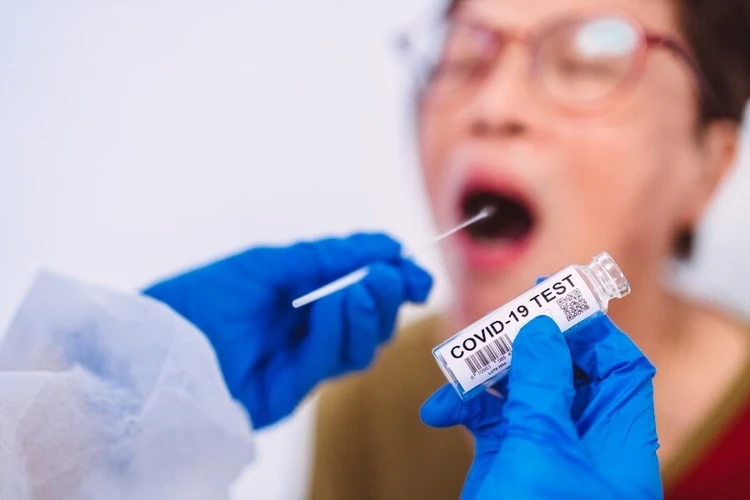

Article Image

Coronavirus update: Researchers say vaccines offer limited protection against Omicron variant

COVID-19 ‌tally‌ ‌as‌ ‌‌compiled‌‌ ‌by‌ ‌Johns‌ ‌Hopkins‌ ‌University.‌ ‌(Previous‌ ‌numbers‌ ‌in‌ ‌parentheses.)‌

Total‌ ‌U.S.‌ ‌confirmed‌ ‌cases:‌ 79,154,499 (79,092,912)

Total‌ ‌U.S.‌ ‌deaths:‌ 954,893 (952,518)

Total‌ ‌global‌ ‌cases:‌ 441,563,391 (438,982,432)

Total ‌global‌ ‌deaths:‌ 5,979,222 (5,967,756)‌

Study finds vaccines offer limited protection against Omicron

Scientists writing in the New England Journal of Medicine report that the mRNA vaccines are more effective against the Delta variant of COVID-19 than the Omicron variant. They say that’s why so many vaccinated people tested positive for Omicron in December and January.

But while two doses of the Pfizer or Moderna vaccine provided little protection against symptomatic Omicron, the researchers noted that people who also had a booster were significantly better protected, though the protection decreased over time.

The scientists began the study in January after doctors became concerned that the Omicron variant was rapidly spreading across the globe, even among those who were fully vaccinated.

CDC drops contact tracing recommendation

In another sign that federal health officials are joining states in reducing COVID-19 requirements, the Centers for Disease Control and Prevention (CDC) has revised its guidelines and no longer recommends universal COVID-19 case investigation and contact tracing.

The guidance, which was updated this week, now encourages health departments to prioritize tracing efforts for only high-risk situations. In 2020, the CDC enlisted 100,000 people to carry out contact tracing in an effort to slow the spread of the virus. The CDC is now encouraging health departments to deploy their resources in high-risk settings, such as long-term care facilities, correctional institutions, and shelters. 

"The updated guidance is in response to changes in the nature of the pandemic and the increasing availability of new tools to prevent transmission and mitigate illness," said Kristen Nordlund, a spokesperson for the CDC.

FDA begins releasing documents on vaccine approval process

After losing a court case in Texas, the U.S. Food and Drug Administration (FDA) is beginning the process of releasing hundreds of thousands of documents that shed light on how the agency approved Pfizer’s COVID-19 vaccine.

A non-profit group, Public Health and Medical Professionals for Transparency, sued to obtain the documents and has already begun releasing them on its website.

Medical professionals who have begun reviewing the documents say it’s unclear if they will provide any new insight into the vaccine’s safety or efficacy, especially since there is real-world data on the vaccine that’s already been published in major medical journals.

Around the nation

  • Iowa: Gov. Kim Reynolds must return nearly $450,000 in federal coronavirus relief funds that were used to pay for 21 governor's office staff members for three months in 2020. That’s the ruling from State Auditor Rob Sand, a Democrat, who ruled that the funds were used improperly.

  • Georgia: It’s taken some time, but Georgia’s COVID-19 positivity rate is nearing the levels recommended by federal health agencies. As of this week, Georgia's COVID-19 testing positivity rate has dropped to between 3% and 5%.

  • New Mexico: Cases and hospitalizations are dropping to the lowest levels seen in months in the state. Health officials say they are seeing improvements across the board. “That meteoric drop in case counts and even hospitalizations has persisted,” said New Mexico’s acting Department of Health secretary Dr. David Scrase. “Hospitalizations were in the five-hundreds (but) they’ve dropped by more than 50% and you can see improvement there.”

  • New York: Gov. Kathy Hochul says the COVID-19 pandemic has likely ended the traditional five-day workweek, at least as far as commuting to the office is concerned. But the governor said she hoped offices would be occupied at least three days a week to maintain economic recovery.

  • Idaho: Two state legislators have offered a bill that would lead to the termination of the COVID-19 emergency declaration that Gov. Brad Little established nearly two years ago. House Concurrent Resolution 40 would end Little’s disaster emergency declaration if it is adopted by the Idaho Legislature. 

Article Image

Consumers with long-COVID may have nerve damage, study finds

A new study conducted by researchers from Massachusetts General Hospital explored one of the potential side effects of long-COVID. According to their findings, long-term nerve damage may be one of the symptoms associated with a long COVID-19 infection. 

“This is one of the early papers looking into causes of long-COVID, which will steadily increase in importance as acute COVID wanes,” said researcher Dr. Anne Louise Oaklander. “Our findings suggest that some long-COVID patients had damage to their peripheral nerve fibers, and that damage to the small-fiber type of nerve cell may be prominent.” 

Immune system issues lead to nerve damage

The researchers had 17 participants involved in the study who had long-COVID. The team analyzed and tracked their health outcomes for over a year, including neurodiagnostic test results, general symptoms, and medical exams. 

The study found that nearly 60% of the patients had symptoms related to peripheral neuropathy. This can manifest as pain in the hands and feet, weakness, fatigue, and sensory changes. The researchers believe that this neuropathy is related to long-term immune system dysfunction rather than long-term symptoms from the initial infection. 

In terms of treatment and recovery, the team found that more than 50% of the participants noted improvements in their symptoms; however, no one in the group fully recovered during the study period. Many of the participants responded well to current immunotherapies, including corticosteroids and IV immunoglobulin. 

The researchers hope these findings highlight some of the lesser-known risks associated with long-COVID. 

“Research from our team and others is clarifying what the different types of post-COVID neuropathy are, and how best to diagnose and treat them,” Dr. Oaklander said. “Most long-COVID neuropathies described so far appear to reflect immune responses to the virus that went off course. And some patients seem to improve from standard treatments for other immune-related neuropathies.” 

Article Image

Coronavirus update: Government offers more free COVID-19 tests

COVID-19 ‌tally‌ ‌as‌ ‌‌compiled‌‌ ‌by‌ ‌Johns‌ ‌Hopkins‌ ‌University.‌ ‌(Previous‌ ‌numbers‌ ‌in‌ ‌parentheses.)‌

Total‌ ‌U.S.‌ ‌confirmed‌ ‌cases:‌ 79,099,412 (79,048,702)

Total‌ ‌U.S.‌ ‌deaths:‌ 952,759 (950,684)

Total‌ ‌global‌ ‌cases:‌ 439,214,303 (437,422,661)

Total ‌global‌ ‌deaths:‌ 5,968,316 (5,959,306)‌

Government offers more free tests

Learning to live with COVID-19 may mean more frequent tests to confirm whether those sniffles are a common cold or the virus. President Biden used last night’s State of the Union Address to announce that Americans can order more free tests starting next week.

"Even if you already ordered free tests, tonight, I am announcing that you can order more from covidtests.gov starting next week," Biden said. He reported that the government has already made hundreds of millions of tests available for free.

When distribution began in January, households were limited to four free tests. Under the expansion, households will be able to order four additional tests.

Many hospitals still struggle despite declining cases

New cases of COVID-19 are declining in nearly every part of the country, but that hasn’t let hospitals off the hook; many still struggle under large caseloads.

“I think people are under the misconception that because COVID has peaked and it’s on the downturn that staffing issues will go away,” Louise Dobbins, director of capacity management for Allegheny Health Network in Pittsburgh, told the Wall Street Journal. “I don’t think that’s going to happen.”

Much of the problem is caused by staff shortages. A third or more of hospitals in 15 states reported a critical staffing shortage last month, according to the American Hospital Association.

CDC estimates 140 million infections in the U.S.

The Centers for Disease Control and Prevention (CDC) has issued an estimate stating that it believes there have been 140 million COVID-19 infections in the U.S. since the start of the pandemic. That’s considerably higher than the unofficial count maintained by Johns Hopkins University.

The estimate stems from an analysis of blood samples that track coronavirus antibodies produced by an infection rather than a vaccination. It says the higher number is not a surprise since many mild and asymptomatic cases go unreported.

By the CDC’s estimate, about 43% of the U.S. population has had the virus as of late January, including almost 60% of children up to age 18. The largest percentage of cases likely occurred among Americans between the ages of 18 and 49. 

Around the nation

  • Louisiana: The streets of the French Quarter were jammed Tuesday as New Orleans celebrated Mardi Gras, the first full-tilt celebration since the pandemic began. The celebrations were scaled back somewhat in 2020, but the city suffered a COVID-19 outbreak anyway. The celebration was modified last year, with no spectators on the parade routes.

  • Utah: COVID-19 case numbers are falling across the state, but Dr. Angela Dunn, executive director of the Salt Lake County Health Department, stated that residents should still mask up in some situations. “If you enter a business and they require or recommend masks, please respect this and wear a mask; they may have a colleague at high risk who needs that additional protection,” Dunn said. 

  • Virginia: As he released an updated action plan, Gov. Glenn Youngkin said his state will continue to offer vaccination events. However, he noted that things need to start getting back to normal. “As we have learned to live with the coronavirus pandemic over the past two years, we know that we can protect lives and livelihoods,” he said. “With increased immunity to Omicron, and a decline in cases and hospitalizations, now is the time to chart a path to normalcy.”

  • Michigan: Little by little, the state has reduced or eliminated COVID-19 restrictions. Starting Thursday, most state employees will no longer be required to mask up while at work. The exceptions are employees working in health care and in corrections.

  • California: State officials say rules requiring indoor masking at California schools and child care facilities will expire Friday, March 11, a move that comes as the state continues its emergence from the Omicron wave of the COVID-19 coronavirus. Individual school districts may continue the mandate, however.

Article Image

Coronavirus update: Study finds vaccine offers weak protection for young children

COVID-19 ‌tally‌ ‌as‌ ‌‌compiled‌‌ ‌by‌ ‌Johns‌ ‌Hopkins‌ ‌University.‌ ‌(Previous‌ ‌numbers‌ ‌in‌ ‌parentheses.)‌

Total‌ ‌U.S.‌ ‌confirmed‌ ‌cases:‌ 79,059,632 (78,940,748)

Total‌ ‌U.S.‌ ‌deaths:‌ 951,315 (948,438)

Total‌ ‌global‌ ‌cases:‌ 437,753,703 (435,623,857)

otal ‌global‌ ‌deaths:‌ 5,961,126 (5,950,866)‌

Vaccine failed to protect young children, study finds

A study conducted by the New York State Department of Health found that the COVID-19 vaccine developed by Pfizer and BioNTech provided very little protection for children between the ages of five and 11. In particular, researchers said it provided little help against the Omicron variant.

The researchers said the effectiveness of Pfizer’s vaccine against the virus dropped from 68% to 12% for children in that age group. The children were monitored from Dec. 13 through Jan. 24, when the Omicron variant was spreading quickly across the state.

The researchers conclude that there could be many reasons for the drop in effectiveness. Most likely, they say it is because of the much smaller dose of the vaccine that very young children receive.

Some test kits may contain toxic chemical

Poison control centers around the country are warning consumers that some COVID-19 test kits might contain a toxic chemical.

The Cincinnati Children's Hospital Medical Center's Drug and Poison Information Center reports that there has been a sharp increase in calls about exposure to sodium azide, a substance reportedly found in some at-home test kids. Authorities say about 50 million U.S. households are believed to have received one of the kits.

According to White House officials, the U.S. government has sent about 200 million of the kits to U.S. homes, though it’s not clear how many of the kits contained the chemical.

The nose knows

One of the reported symptoms of COVID-19 is loss of smell. Scientists say their research suggests that it’s one of the first symptoms to appear and is an indicator that the patient is infected with the virus.

The Swedish research team says that finding is important because an early warning might prompt the patient to isolate earlier and therefore check the spread of the virus. A cough and cold-like symptoms were also identified as early predictors of COVID-19.

The researchers found that, on average, test subjects who tested positive for the virus showed a decline in their ability to detect odors about six days prior to the test result date. This confirmed that a decline in odor perception is an early indicator of COVID-19, the researchers concluded.

Around the nation

  • Colorado: Colorado is moving on from COVID-19. During a press conference, Gov. Jared Polis said the health emergency is over and encouraged residents who are vaccinated to move into what he repeatedly referred to as "the next chapter."

  • Illinois: Sports fans attending Chicago Bulls games won’t have to mask up. The United Center is easing its in-arena COVID-19 guidelines in the wake of the city of Chicago’s move to ease restrictions. The city has lifted its mask and proof-of-vaccination mandates for restaurants, bars, and other indoor establishments.

  • Texas: Doctors in West Texas report that new cases of COVID-19 have fallen sharply in recent weeks. They told NewsWest9 that about 40% of people taking a COVID-19 test had a positive result a month ago. Today, they say that number is down to about 10%.

  • Connecticut: A statewide mandate for masks in schools has expired. Gov. Ned Lamont says it will be up to local school districts to decide whether students and teachers will need to continue masking up. "Connecticut is seeing a dramatic decline in cases caused by the omicron variant, and children over the age of 5 have had the ability to get vaccinated for more than three months now," Lamont said.

  • Maryland: The University of Maryland lifted an indoor mask mandate on campus for all faculty, staff, students, and visitors this week. That means fans attending University of Maryland home games will not be required to wear masks or show proof of vaccination. Unvaccinated fans are encouraged to continue wearing masks.

Article Image

Coronavirus update: Omicron variants reportedly bolster immunity

COVID-19 ‌tally‌ ‌as‌ ‌‌compiled‌‌ ‌by‌ ‌Johns‌ ‌Hopkins‌ ‌University.‌ ‌(Previous‌ ‌numbers‌ ‌in‌ ‌parentheses.)‌

Total‌ ‌U.S.‌ ‌confirmed‌ ‌cases:‌ 78,940,748 (78,933,931)

Total‌ ‌U.S.‌ ‌deaths:‌ 948,438 (948,035)

Total‌ ‌global‌ ‌cases:‌ 435,623,857 (434,675,681)

Total ‌global‌ ‌deaths:‌ 5,950,866 (5,946,539)‌

Omicron infection protects against subvariant, study finds

A new study shows that people who have been infected with the Omicron variant of COVID-19 are protected, at least temporarily, from infection by its subvariant, known as BA.2. The analysis projects that the protection level is as high as 95%.

The reverse also appears to be true. The research team analyzed data from around 100,000 people who had been infected with the BA.2 subvariant and determined that it provided around 85% protection against the Omicron variant (BQA.1) 35 to 40 days later.

The Omicron variant, which began showing up in the U.S. in November, has been primarily responsible for the most recent wave of the coronavirus. But now scientists believe the subvariant, BA.2, is rising to dominance.

Health care workers see few pay raises

Doctors, nurses, and other health care workers have been on the front lines of managing the COVID-19 pandemic for nearly two years. But a joint study has found that, despite their hard work, they haven’t seen much in the way of pay raises.

The analysis -- from Indiana University, the nonprofit Rand Corp., and the University of Michigan -- monitored workforce changes during the COVID-19 pandemic and found that the average wages for U.S. health care workers rose less than wages in other industries during 2020 and the first six months of 2021. 

"While there has been extensive media coverage of the considerable employment declines in the health care sector, evidence from complete national employment and wages was scarce," said Kosali Simon, one of the study's co-authors. "These findings provide a data-driven picture of employment levels by various health care settings and can help guide decision-making not only around the current health care shortage but also during a future crisis."

Cases are falling but remain high in children

A report from the American Academy of Pediatrics and the Children’s Hospital Association shows that children continue to be infected with COVID-19 at a fairly high rate as cases generally decline across the U.S. Reported COVID-19 cases among children spiked dramatically in 2022 during the Omicron variant surge, with over 4.6 million child cases being reported since the beginning of January. 

However, the researchers say pediatric cases are starting to trend lower. For the week ending February 17th, nearly 175,000 additional child COVID-19 cases were reported, down substantially from the peak level of 1,150,000 reported the week ending January 20th. 

The researchers reported that child cases this week remained “very high,” slightly less than the peak level of the Delta surge in 2021. Around 15% of all childhood cases during the pandemic have been diagnosed in just the last four weeks.

Around the nation

  • New York: Gov. Kathy Hochul announced Sunday that the statewide mask mandate for public schools will end on Wednesday. Hochul, who has been under pressure from parents to take this action, cited the latest data from the Centers for Disease Control and Prevention (CDC).

  • Oregon:  Gov. Kate Brown has announced that she will lift her statewide COVID-19 emergency declaration on April 1. But she sounded a note of caution. “Lifting Oregon’s COVID-19 emergency declaration today does not mean that the pandemic is over, or that COVID-19 is no longer a significant concern,” Brown said.

  • Ohio: Case numbers have dropped dramatically across the state, but a top health official says it’s all relative. Ohio Department of Health Director Dr. Bruce Vanderhoff notes that the CDC considers 50 cases per 100,000 residents to be "substantial" community transmission. He points out that all 88 Ohio counties remain above that level.

  • Arkansas: Arkansas is one of the few states where COVID-19 cases are still rising, but Gov. Asa Hutchinson believes it’s time to begin returning to normal. “I think we’re to the point that everyone knows what to do and they know how to protect themselves,” Hutchinson said.

  • Alaska: Some pediatricians say misinformation about COVID-19 vaccines is holding back parents from vaccinating their children. The state health department reports that vaccination rates for Alaska children lag far behind the rates for older kids and adults.

Article Image

Coronavirus update: CDC updates its mask guidelines

COVID-19 ‌tally‌ ‌as‌ ‌‌compiled‌‌ ‌by‌ ‌Johns‌ ‌Hopkins‌ ‌University.‌ ‌(Previous‌ ‌numbers‌ ‌in‌ ‌parentheses.)‌

Total‌ ‌U.S.‌ ‌confirmed‌ ‌cases:‌ 78,800,469 (78,732,363)

Total‌ ‌U.S.‌ ‌deaths:‌ 944,849 (941,962)

Total‌ ‌global‌ ‌cases:‌ 431,877,721 (430,270,835)

Total ‌global‌ ‌deaths:‌ 5,931,056 (5,920,665)‌

CDC tweaking mask guidelines

The Centers for Disease Control and Prevention (CDC) is revising its guidelines for the use of masks to prevent the spread of COVID-19. The agency in recent weeks has found itself behind many states, including those controlled by Democrats, that have unilaterally ended mask mandates for indoor public spaces.

The Wall Street Journal reports that the updated guidelines from the CDC will include new ways to measure the threat from the virus to help communities set their policies. The metrics will include how many people are in hospitals and the number of hospital beds in a community, one official told the Journal.

According to current guidelines, based on transmission levels, the CDC recommends masks be worn in just about every part of the country. But most states have dropped those mandates or plan to do so on Monday.

After two years, the virus has taken a toll on children

Children may not suffer the worst health effects of COVID-19, but new research shows just how much they have been affected in other ways. Researchers at the CDC estimate that 5.2 million children worldwide have lost a relative or caregiver to the coronavirus. More than 3 million lost a parent.

Three out of four parents lost in the pandemic were fathers, according to the analysis of international data. Children between the ages of 10 and 17 were the most likely to have lost a parent. In the U.S., there have been instances where both parents died from COVID-19, leaving children behind.

CDC researchers, who led the study, said the estimate of the number of children affected by the pandemic is probably low since many counties included in the analysis lack a strong system for counting deaths.

Scientists look more closely at COVID-19 and dementia

Millions of Americans have been infected with COVID-19 and recovered quickly, suffering few if any lingering effects. Others have experienced prolonged symptoms, known as “long COVID.”

Scientists are also looking more closely at another aftereffect of the virus that some patients appear to be experiencing – a decline in brain function. Symptoms have been described as "brain fog," a reduced ability to think clearly, anxiety, and difficulties with memory and concentration.

According to Medical News Today, research is underway to see if these conditions are a precursor to dementia. Early research has pointed to the infection of cells within the central nervous system.

Around the nation

  • Massachusetts: The state is losing teachers at a rapid rate, and some are blaming COVID-19. Specifically, the head of the Massachusetts Teachers Association blamed Gov. Charlie Baker and Education Commissioner Jeffrey Riley for what they called “rock-bottom morale” that is causing many teachers to quit.

  • Tennessee: New cases of the virus have fallen sharply across the state, but especially in Nashville. City health officials have confirmed an average of 185 new cases per day over the seven days ending on Feb. 19. It's a 48% drop in new cases compared to the previous week.

  • New Jersey: In another sign that things are beginning to return to normal, Gov. Phil Murphy has announced an end to the daily COVID-19 briefings that have been a fixture for nearly two years. Murphy pointed to declining case counts and hospitalizations, as well as the state’s high vaccination rate.

  • Florida: Gov. Ron DeSantis continues to make distinctions between how his state and the rest of the country are dealing with COVID-19, announcing an additional relaxation of pandemic protocols. "People want to live freely in Florida, without corporate masking creating a two-tier society and without overbearing isolation for children," DeSantis said.

  • Montana: Money allocated to the state to protect prison inmates and staff from COVID-19 has reportedly not been spent. Kaiser Health News reports that none of the $2.5 million has been spent, despite the Omicron surge that led to a new outbreak of COVID-19 cases among Montana State Prison inmates in January.

Article Image

Coronavirus update: Omicron subvariant spreads quickly, study finds

COVID-19 ‌tally‌ ‌as‌ ‌‌compiled‌‌ ‌by‌ ‌Johns‌ ‌Hopkins‌ ‌University.‌ ‌(Previous‌ ‌numbers‌ ‌in‌ ‌parentheses.)‌

Total‌ ‌U.S.‌ ‌confirmed‌ ‌cases:‌ 78,744,318 (78,651,396)

Total‌ ‌U.S.‌ ‌deaths:‌ 942,487 (939,216)

Total‌ ‌global‌ ‌cases:‌ 430,507,279 (428,310,991)

Total ‌global‌ ‌deaths:‌ 5,922,220 (5,910,063)‌

New studies shed more light on Omicron subvariant

A subvariant of the Omicron variant of COVID-19 has begun to spread around the U.S., but scientists aren’t sure whether it’s better or worse than the original. On one hand, a study suggests that it may be capable of causing more serious symptoms.

But two new studies show that the human immune system is already adapting to defend against the subvariant, codenamed BA.2. But the subvariant appears to be about 30% more transmissible than BA.1.

"As of now, I don't think that we need to sound a global alarm. But I do think that we need to pay attention to BA.2 because it does appear to have a growth advantage over BA.1," Dr. Dan Barouch, director of the Center for Virology and Vaccine Research at Beth Israel Deaconess Medical Center in Boston, told CNN.

Vaccinations help against Omicron, another study finds

The surge in COVID-19 cases caused by the highly contagious Omicron variant coincided with a rise in hospitalizations of patients with COVID-19. But an analysis of those serious cases found that vaccinated adults who got infected were much less likely to require hospital treatment.

"Overall, the Omicron-period group had a lower likelihood of being admitted to the intensive care unit (ICU) and were also less likely to require invasive mechanical ventilation compared with the delta-period group,” said Dr. Matthew Modes, a pulmonologist at Cedars-Sinai and co-first author of the paper.

The study was conducted jointly by Cedars-Sinai Hospital and the Centers for Disease Control and Prevention. Its findings line up with previous studies that suggest vaccinations help prevent serious COVID-19 infections.

Americans’ blood pressure rose during the pandemic

Even if you were never infected with COVID-19 over the last two years, the pandemic may have negatively affected your health. Americans’ blood pressure rose moderately during the early months of the pandemic, according to a UT Southwestern study of patients who monitored themselves at home. Doctors say the results aren’t all that surprising.

“People were less active, ate more, and drank more during the pandemic, all of which led to higher blood pressure,” said Dr. Eric Peterson, lead author of the study. "COVID made it challenging for people to see their doctors and have their medications adjusted.” 

The study, published in the American Heart Journal, found that rates of uncontrolled high blood pressure went from 15% to 19%, though only 5% of participants had severely uncontrolled blood pressure, which is defined as systolic blood pressure greater than 160 mm/hg. 

Around the nation

  • Florida: With a sharp decline in COVID-19 cases, Broward Health has announced that it is now in the green phase, which means a return pre-pandemic visitation policies. The change means more friends and family members will be allowed inside to visit loved ones who are being treated.

  • New Jersey: State health officials report that there are now fewer than 1,000 people being treated for COVID-19 in New Jersey hospitals. That’s the lowest number in over three months. That was just before a surge in new cases caused by the Omicron variant.

  • Michigan: The Michigan House of Representatives has approved a “right to try” bill that would allow dying COVID-19 patients to take medication that hasn’t been approved for the treatment of the virus. “I think we should truly respect the decision between a patient and a doctor with a willing manufacturer and get politics and government out of that relationship,” said State House Rep. Mary Whiteford, the bill’s sponsor.

  • Colorado: Colorado is now eyeing a post-coronavirus world, as the number of daily cases this week fell below 1,000 for the first time since early August. Hospitalizations also dropped to levels last seen in August.

  • Alaska: The Alaska Legislative Council voted this week to eliminate some COVID-19 mandates. As a result of the vote, lawmakers and others who work in the Alaska State Capitol are no longer required to wear masks and be tested for the coronavirus.

Article Image

Coronavirus update: CDC reportedly withholds data

COVID-19 ‌tally‌ ‌as‌ ‌‌compiled‌‌ ‌by‌ ‌Johns‌ ‌Hopkins‌ ‌University.‌ ‌(Previous‌ ‌numbers‌ ‌in‌ ‌parentheses.)‌

Total‌ ‌U.S.‌ ‌confirmed‌ ‌cases:‌ 78,662,631 (78,532,101)

Total‌ ‌U.S.‌ ‌deaths:‌ 939,788 (935,992)

Total‌ ‌global‌ ‌cases:‌ 428,641,858 (426,551,362)

Total ‌global‌ ‌deaths:‌ 5,912,478 (5,897,875)‌

CDC withholds significant amounts of data, report says

The Centers for Disease Control and Prevention (CDC) has published a lot of information about COVID-19 over the last two years, but a report in the New York Times says the health agency is sitting on a lot of unpublished data.

As an example, the Times said the CDC published information about the effectiveness of vaccine booster shots for people under age 65 earlier this month. However, the report notes that the agency did not release data about people between the ages of 18 and 49, the age group least likely to benefit from boosters.

Health experts told the newspaper that releasing all available data could have helped local and state health authorities respond during different stages of the pandemic and make better decisions about how to protect people. 

Obesity creates severe symptoms in young people

Many young adults have passed up a COVID-19 vaccination by arguing that young people have less to fear from the virus. While that may be true in many cases, a new study found that young people who are obese or overweight are highly vulnerable.

The study, published in the journal Obesity, showed that men with a high body mass index (BMI) when they were in their late teens had an elevated risk of severe COVID-19 that required hospitalization later in life.

“For those with teenage obesity, the risk of admission to an intensive care unit is more than twice as high as for those with a BMI of 18.5–20,” said Josefina Robertson, a researcher at the Sahlgrenska Academy of the University of Gothenburg.

Aaron Rodgers regrets COVID-19 vaccination controversy

Now that COVID-19 cases are in sharp decline across wide areas of the country, some of the heat is dissipating from arguments about vaccination mandates. Green Bay Packers Aaron Rodgers took the opportunity this week to express regret at his involvement in one such case.

Rodgers was roundly criticized in November when he missed a game because of COVID-19 after saying he was “immunized” against the virus. He later confirmed that he had not been vaccinated.

"One thing that I am sad about and definitely apologetic is I didn't realize in the midst of the Covid conversations how much my situation was affecting my loved ones and my people," Rodgers said on the Pat McAfee Show. 

Around the nation

  • New York: State health officials now say they will not enforce the state’s COVID-19 vaccine booster mandate for health care workers. New cases of the virus are in decline while hospitals continue to grapple with staffing shortages. 

  • North Carolina: North Carolina State University is updating its COVID-19 policies. Because cases of the virus are falling rapidly, the university is dropping its mask requirement in indoor spaces on campus except for high-density areas.

  • Maine: The U.S. Supreme Court has dismissed a challenge to Maine’s vaccination mandate for health care workers. It was the second time the court rejected a suit by a group of hospital workers who were trying to get a religious exemption.

  • Texas: Gov. Greg Abbott has resisted mask and vaccination mandates, but that doesn’t mean he doesn’t want tools at his disposal to counter COVID-19 if the virus makes a resurgence. Abbott this week renewed the disaster declaration imposed at the start of the pandemic in March 2020.

  • Iowa: The Iowa Supreme Court heard oral arguments this week in the case of a Des Moines restaurant that is suing its insurance company because it refused to pay loss-of-business damages when the restaurant was forced to close. The insurance company argued that the policy had an exclusion for viruses causing a closing.

Article Image

Coronavirus update: Study finds vaccine protection lasts for at least six months

COVID-19 ‌tally‌ ‌as‌ ‌‌compiled‌‌ ‌by‌ ‌Johns‌ ‌Hopkins‌ ‌University.‌ ‌(Previous‌ ‌numbers‌ ‌in‌ ‌parentheses.)‌

Total‌ ‌U.S.‌ ‌confirmed‌ ‌cases:‌ 78,532,101 (78,312,881)

Total‌ ‌U.S.‌ ‌deaths:‌ 935,992 (934,796)

Total‌ ‌global‌ ‌cases:‌ 426,551,362 (425,430,279)

Total ‌global‌ ‌deaths:‌ 5,898,442 (5,892,174)‌

Research suggests vaccine protection still strong at six months

Researchers who have analyzed various COVID-19 studies found that while COVID-19 vaccines lose some effectiveness in preventing SARS-CoV-2 infection, the vaccines retain nearly all of their ability to prevent severe disease up to six months after full vaccination. 

The study, which appears online on in The Lancet, was a joint effort by researchers at the Johns Hopkins Bloomberg School of Public Health and the World Health Organization. It examined research conducted before the Omicron variant showed up in late 2021.

“There is an indication here of waning vaccine effectiveness over time, though it is encouraging that protection from severe disease, the most worrisome outcome, seems to hold up well,” said Melissa Higdon, the study’s co-first author.

Children have better innate immunity than adults

Since the start of the pandemic, children infected with the COVID-19 virus have generally fared better than adults who get the disease. Doctors haven’t known why.

But in a new study, Yale University scientists found that children are better at managing the first line of defense known as the innate immune system than adults. That’s not to say that some children don't get very sick and even die from the virus, but most of them have very mild symptoms if they have symptoms at all.

Scientists say innate immunity serves to coordinate the first response when a patient is infected with the virus. It’s different than adaptive immunity, which develops more slowly and usually targets a specific disease or ailment. 

Health expert sees little threat from Omicron subvariant

Health officials expressed concerns earlier this month when a subvariant of the Omicron COVID-19 variant, called BA.2, began to appear. But now one health expert says it doesn’t appear that the new subvariant is going to be much of a threat.

“I think it’s important to note that while case numbers of BA.2 are increasing, they’re not increasing anywhere close to the way that the BA.1 cases increased,” Dr. Andy Pekosz, professor at Johns Hopkins’ Bloomberg School of Public Health, told WTOP Radio in Washington.

While the Omicron variant spreads very easily, that doesn’t appear to be the case with the subvariant. Pekosz said early evidence suggests that BA.2 may not be as efficient when it comes to how it spreads.

Around the nation

  • Connecticut: Gov. Ned Lamont has released a COVID-19 update that underscores the progress the state has made in the last two weeks. The report shows that the rate of positive tests has dropped to 3%, about the same as it was in the early days of the pandemic.

  • Louisiana: In a sign that things are getting back to normal in New Orleans, organizers say the French Quarter Festival will go on. The event had been canceled for the last two years because of the pandemic. The event will serve as the lead-in to three weeks of music, including the annual New Orleans Jazz and Heritage Festival in March.

  • New Mexico: Gov. Michelle Lujan Grisham has lifted the statewide requirement for face coverings to be worn in most indoor spaces, effective immediately. The governor says the state appears to have turned the corner. “I want to express my gratitude to every New Mexican who has steadfastly worn a mask, gotten vaccinated, and done everything in their power to protect their neighbors,” Grisham said.

  • Illinois: State officials say they are on track to lift the statewide mask mandate on Feb. 28, but Chicago remains on the fence. However, city health officials now hint that they may follow suit. Chicago Department of Public Health Commissioner Dr. Allison Arwady said she is "feeling optimistic" and could make a formal announcement this week.

  • Nebraska: Nebraska has suddenly gotten a lot healthier. The state’s 81% drop in cases over the past two weeks is the nation’s largest. Nebraska’s infection rate is down 94% from when the wave caused by the highly contagious Omicron variant peaked a month ago.

Article Image

Coronavirus update: California downgrades to ‘endemic’

COVID-19 ‌tally‌ ‌as‌ ‌‌compiled‌‌ ‌by‌ ‌Johns‌ ‌Hopkins‌ ‌University.‌ ‌(Previous‌ ‌numbers‌ ‌in‌ ‌parentheses.)‌

Total‌ ‌U.S.‌ ‌confirmed‌ ‌cases:‌ 78,273,884 (78,177,264)

Total‌ ‌U.S.‌ ‌deaths:‌ 931,769 (928,548)

Total‌ ‌global‌ ‌cases:‌ 420,299,365 (418,412,011)

Total ‌global‌ ‌deaths:‌ 5,865,864 (5,853,743)‌

In California, the pandemic has become an ‘endemic’

Things often happen first in California. The state has become the first in the nation to formally drop the pandemic classification of COVID-19 and switch it to “endemic” status.

What’s the difference? In short, the government response is shifting from mandated masking and business shutdowns to an emphasis on speedy reactions when there is a flare-up of infections.

"We are moving past the crisis phase into a phase where we will work to live with this virus," said California Gov. Gavin Newsom.

COVID-19 can affect mental health, study finds

A study published by The British Medical Journal (BMJ) suggests that COVID-19 may lead to an increased risk of mental health disorders, including anxiety, depression, substance abuse, and sleep disorders. The researchers found that this risk persists up to one year after initial infection.

The researchers conclude that tackling mental health disorders among survivors of COVID-19 should be a priority.

While previous research has found some links between the virus and mental health issues, most have been limited studies. The scientists say their study is the first comprehensive assessment of the mental health manifestations in people with COVID-19 at one year.

COVID-19 still rages behind bars

All across the U.S., it seems that the coronavirus is in retreat. Data collected by Johns Hopkins University shows that the number of new cases is down in most areas of the country, with one exception.

Cases – and deaths – remain elevated in the nation’s prisons. Three inmates recently died from COVID-19 at a federal women’s prison in West Virginia. CNN reports that the prison, and others like it, are plagued by understaffing and less-than-adequate medical care.

In January, the Arkansas correctional system implemented lockdowns to contain a surge in COVID-19 cases. State officials say those cases have lately been in decline.

Around the nation

  • Vermont: State corrections officials report that there is a new COVID-19 outbreak at the Valley Regional Correctional Facility (MVRCF) in Rutland. Doctors there say 15 prisoners and one staff member have tested positive since Feb. 10. There were eight positive test results on Monday.

  • Wisconsin: A number of school districts in the state have lifted COVID-19 restrictions. However, other districts that are still seeing elevated cases have not yet acted. "I think it's actually good that we have to have this conversation because what that means is things are looking good enough, where we can entertain the idea of potentially having kids going to school without a mask," Dr. Jeff Pothof, of University of Wisconsin Health, told WKOW-TV.

  • Virginia: State health officials are tamping down concerns that removing the school mask mandate on March 1 will lead to a spike in new cases of COVID-19. Dr. Scott Spillmann, Pittsylvania-Danville Virginia Department of Health Director, says officials don’t expect to see a major surge.

  • Washington: The state attorney general’s office has gone to court to block an Illinois COVID-19 testing company from operating in the state. "The company’s unlawful practices included storing tests in garbage bags for over a week rather than properly refrigerating them, and backdating sample collection dates so that stale samples would still be processed," the state said in a lawsuit.

  • Indiana: State health officials are loosening COVID-19 rules for schools. Beginning next week, schools will no longer be required to conduct contact tracing or report positive cases to the state health department. Schools will also no longer need to quarantine students who are exposed to COVID-19, regardless of vaccination status or whether the school requires masks.

Article Image

Coronavirus update: CDC to consider changing mask policy

COVID-19 ‌tally‌ ‌as‌ ‌‌compiled‌‌ ‌by‌ ‌Johns‌ ‌Hopkins‌ ‌University.‌ ‌(Previous‌ ‌numbers‌ ‌in‌ ‌parentheses.)‌

Total‌ ‌U.S.‌ ‌confirmed‌ ‌cases:‌ 78,177,264 (78,039,888)

Total‌ ‌U.S.‌ ‌deaths:‌ 928,548 (925,560)

Total‌ ‌global‌ ‌cases:‌ 418,412,011 (415,769,578)

Total ‌global‌ ‌deaths:‌ 5,853,743 (5,839,809)‌

CDC sounds a note of optimism

There have been more signs this week that the U.S., and perhaps the world, could be approaching the end of the COVID-19 pandemic. In a briefing Wednesday,  Dr. Rochelle Walensky, director of the Centers for Disease Control and Prevention (CDC), suggested that the country is no longer in “crisis” mode as the number of cases falls.

“We all share the same goal, to get to a point where COVID-19 is no longer disrupting our daily lives, a time when it won’t be a constant crisis – rather something we can prevent, protect against, and treat,” Walensky said.

Walensky said if the trend continues, the CDC would reconsider its mask guidance, which recommends wearing masks in indoor spaces. However, an increasing number of states have already taken that step.

Unvaccinated most likely to develop ‘long COVID'

Some people who are infected with COVID-19 suffer severe, lingering symptoms, a condition known as “long COVID.” Doctors in Utah say they think they know why.

“I have yet to see somebody with long COVID who was vaccinated,” said Dr. Ellie Hirshberg, a critical care physician at Intermountain Healthcare. “I’ve seen patients who had long COVID and then got vaccinated and are still trying to get rid of some of their symptoms. But I have yet to see somebody with long COVID who was vaccinated first.”

While many COVID-19 patients have said some symptoms persist for a few weeks after recovery, long COVID is generally thought to be more severe. In addition to fatigue, long COVID patients describe “brain fog,” along with heart and lung problems.

Investor Charlie Munger ‘appalled’ at vaccination fear

Charlie Munger, a 98-year-old investing legend, is known for speaking his mind. When Yahoo Finance asked him about Americans who refuse to be vaccinated against the coronavirus, he didn’t hold back.

“I have been appalled by the fear of vaccination by a big chunk of the nation,” Munger said. “Speaking for myself, I couldn’t wait to be vaccinated. And I think the risks of being vaccinated are way less than the risk of not being vaccinated."

Doubling down on his point, Munger told his interviewer that he believes it is “massively stupid” not to welcome a vaccination. “We probably have 30% of the people in the country that think vaccination is evil and [is] coming after them like the hobgoblins,” he said. “It’s not good that there’s that much ignorance left.”

Around the nation

  • New Jersey: New Jersey, which has dropped its statewide mask mandate, has now embarked on a public service campaign to urge vaccinated people to get a booster shot. The state will launch "Boost NJ2 Week" beginning next week in cooperation with 177 vaccine providers, including Walmart. 

  • Utah: The state legislature is once again considering measures to limit COVID-19 vaccination requirements. One bill introduced in the state senate prohibits businesses and the government from mandating proof of vaccination for service or employment.

  • Michigan: The state health department has updated its mask guidance for public spaces as cases of COVID-19 continue to decline. Health officials say people who have a high risk of infection or are in a high-risk environment should continue wearing a face mask. Everyone else is encouraged to wear a mask if they choose to, but it’s not required.

  • Maryland: Gov. Larry Hogan has announced that the requirement for masks and face coverings to be worn in state buildings will end next week. “Given the dramatic declines in our health metrics, we are now able to take another step toward normalcy in state operations,” Hogan said.

  • Florida: State tourism officials may have a new slogan. While many states are dropping COVID-19 restrictions, Gov. Ron DeSantis says his state never had many to start with. “So many people over the last year and a half have said, OK, I need to escape from the burdens of wherever I’m at, with the mandates and the lockdowns, and just come to Florida for, yes, sunshine, yes, beaches, theme parks, all these things, but I want to experience freedom and be able to be treated like a free individual,” DeSantis said.

Article Image

COVID-19 vaccines may improve consumers' mental health, study finds

The COVID-19 pandemic has taken a significant toll on consumers’ mental health. Now, a new study is exploring how the vaccine may actually help mental health struggles. 

The findings showed that getting at least one dose of the COVID-19 vaccine improved feelings of psychological distress and reduced study participants’ perceived risk of infection. 

“Our study documents important psychological benefits of vaccination beyond reducing the risk of severe illness and death associated with COVID-19,” said researcher Jonathan Koltai, Ph.D. 

Improving mental health

For the study, the researchers analyzed interview responses from more than 8,000 adults enrolled in the Understanding America Study. Participants were interviewed on a regular basis between March 2020, and June 2021. They answered questions about their overall mental health, their vaccination status, and their views regarding the risks of COVID-19. 

The researchers learned that getting vaccinated to protect against COVID-19 was associated with improvements to the participants’ mental health in several key areas. Overall, the COVID-19 vaccine helped the participants feel less at risk when it came to the virus. The participants’ fear about infection dropped by nearly 8%, their perceived risk of being hospitalized dropped by nearly 7%, and worries related to mortality declined nearly 5% after getting vaccinated. 

When looking at the bigger picture of mental health, the COVID-19 vaccine also helped the participants feel less distress. Compared to pre-vaccination, the group’s feelings of psychological distress dropped 7% post-vaccination. 

The researchers explained that these findings are important because it was clear that there were mental health differences in those who were vaccinated versus those who were unvaccinated. Because the interviews were conducted prior to the vaccines being released, the responses indicated that the participants faced many of the same mental health struggles. However, once vaccines became available, participants who were inoculated experienced improvements to their mental health that didn’t translate to those who hadn’t been vaccinated. 

Moving forward, the team hopes these findings encourage more consumers to understand the physical and mental health benefits linked with COVID-19 vaccines. 

“To ensure these benefits are widely shared, efforts to increase vaccination and booster rates in early 2022 need to prioritize equitable distribution and access to vaccines,” said Dr. Koltai. 

Article Image

Coronavirus update: Moderna CEO believes we could be in the final stages of the pandemic

COVID-19 ‌tally‌ ‌as‌ ‌‌compiled‌‌ ‌by‌ ‌Johns‌ ‌Hopkins‌ ‌University.‌ ‌(Previous‌ ‌numbers‌ ‌in‌ ‌parentheses.)‌

Total‌ ‌U.S.‌ ‌confirmed‌ ‌cases:‌ 78,073,202 (77,919,052)

Total‌ ‌U.S.‌ ‌deaths:‌ 925,815 (922,473)

Total‌ ‌global‌ ‌cases:‌ 416,408,910 (413,746,208)

Total ‌global‌ ‌deaths:‌ 5,842,248 (5,827,947)‌

Moderna CEO says pandemic may be ending

Moderna CEO Stephane Bancel definitely sees light at the end of the pandemic tunnel. In an interview with CNBC’s “Squawk Box Asia” today, Bancel said it’s “reasonable” to assume that we may be approaching the final stages of the pandemic.

“There’s an 80% chance that as Omicron evolves or SarsCov-2 virus evolves, we are going to see less and less virulent viruses,” he said.

However, Bancel – who leads a company that developed one of three COVID-19 vaccines used in the U.S. – said there is a 20% chance that the next mutation of the virus could be worse than the Omicron variant.

CDC relaxes cruise ship guidance

With COVID-19 seemingly in retreat, the Centers for Disease Control and Prevention (CDC) has relaxed some of its guidance for cruise ships. Admittedly, it’s a very slight change.

The health agency lowered its cruise travel warning to Level 3 from Level 4, the highest such level. The Cruise Line Industry Association (CLIA) called it a step in the right direction.

"Cruise ships have medical, isolation, and quarantine facilities on-site, implement extensive response plans using private shoreside resources, and have created an environment where almost every single person is fully vaccinated,” the trade group said in a statement. “As a result, cases of COVID-19 are very low with the vast majority mild or asymptomatic—making cruise unequaled in its multi-layered approach to effectively mitigating COVID-19." 

Some teens go behind parents’ backs to get vaccinated

Teenage years are often filled with rebellion, but it’s taking a strange form in the latter stages of the pandemic. While some adults adamantly oppose COVID-19 vaccines, NPR reports that some children are quietly getting vaccinated without telling their parents.

According to the report, Philadelphia has a little-known city regulation that permits children over age 11 to be vaccinated without parental consent. Sixteen-year-old Nicolas Montero told the network he went there to get vaccinated because his parents refused to give their consent. Montero says his parents’ opposition stems from social media.

"The thing about these beliefs is that they alternate by the day," said Montero. "It's not one solid thing that they're going with, so it's just really baseless. It's like one thing they see on Facebook, and then they completely believe it."

Around the nation

  • Pennsylvania: According to the Philadelphia Inquirer, Philadelphia’s vaccine mandate for indoor dining could expire this week. The newspaper quotes sources who also said the mask mandate could end later if cases continue their downward trend.

  • Nebraska: State lawmakers are expected to vote later today on a compromise bill that would allow workers to claim medical and religious exemptions from workplace COVID-19 vaccine mandates. The measure survived after senators defeated one amendment and a second one was withdrawn.

  • California: Students in Roseville Joint Unified High School District can put away their masks. Despite a statewide mask mandate that's still in force for schools, the school board voted unanimously to make masks in classrooms optional.

  • Illinois: Gov. J.B. Pritzker is lifting the statewide mask mandate at the end of the month because COVID-19 cases are declining, but Chicago Mayor Lori Lightfoot said masks may still be required in the city. "I don't want to put an artificial date on when this is going to happen when we still see some danger signs in the data," Lightfoot said.

  • Arkansas: Arkansas is one of only a handful of states where the coronavirus is not in retreat. New cases of COVID-19 increased by 1,685 on Tuesday. At the same time, the number of people treated for the virus in hospitals fell by 32.

Article Image

COVID-19 vaccines may improve quality of antibodies over time, study finds

A new study conducted by researchers from the University School of Medicine explored how COVID-19 vaccines impact consumers’ antibody response to the coronavirus. According to their findings, the vaccine was responsible for improving the quality of antibodies over the course of the first six months post-vaccination. 

“If the virus didn’t change, most people who got two doses of this vaccine would be in a very good place,” said researcher Ali Ellebedy, Ph.D. “The antibody response we saw is exactly what we’d expect from a robust immune response. We never thought that six months following that second injection, many people would still be actively improving the quality of their antibodies. To me, that is remarkable.

"The problem is that this virus keeps evolving and producing new variants. So, the antibodies are getting better at recognizing the original strain, but unfortunately the target keeps changing.” 

Tracking the antibody response

For the study, the researchers collected blood samples, lymph node samples, and bone marrow samples from different groups of participants; none of the participants had tested positive for COVID-19. Blood tests and lymph node samples were collected prior to the first dose of the COVID-19 vaccine, as well as at six checkpoints after getting the vaccine; bone marrow samples were collected at about four months and six months post-vaccination. 

The researchers learned that the strength and quality of the antibodies improved over time. This was first evidenced after analyzing how the antibodies interacted with germinal centers in the body; germinal centers are where immune cells get stronger to provide protection against infection. Antibodies improve in quality the longer they stay in germinal centers. 

This study showed that at the six-month mark, the majority of participants still had antibodies in their germinal centers, which is a key indicator of strong protection against COVID-19.

The researchers were surprised by this discovery after six months because there has been anecdotal evidence that consumers have a weaker immune response to COVID-19 over time. However, this might be due to there being fewer antibodies, not weaker ones.

“When you look at antibodies, quantity should not be your only concern,” Ellebedy said. “The antibodies at six months might be less in quantity, but they are much better in quality. And that refinement of the antibody response happens on its own. You get your shot, maybe your arm hurts for a day, and then you forget about it. But six months later your germinal centers are still ongoing and your antibodies are still getting better and better.” 

After analyzing the blood samples, the researchers found similar results. Over time, the antibodies got stronger and were more likely to protect participants from infection. In the early weeks after vaccination, the antibodies were 20% likely to be bound to a COVID-19 protein; by six months after vaccination, that figure jumped to 80%. 

While these findings are positive in terms of long-term virus protection, the researchers explained that mutations to the COVID-19 virus may put these findings into question. 

“Everything changes when a new variant comes,” Ellebedy said. “You have to retrain your immune system. It’s like updating your anti-malware software to make sure it matches the newest computer viruses that are going around. It doesn’t mean the old software was bad. It just means it no longer completely matches the viruses it is going to encounter.” 

Article Image

Coronavirus update: Pandemic sends producer prices higher

COVID-19 ‌tally‌ ‌as‌ ‌‌compiled‌‌ ‌by‌ ‌Johns‌ ‌Hopkins‌ ‌University.‌ ‌(Previous‌ ‌numbers‌ ‌in‌ ‌parentheses.)‌

Total‌ ‌U.S.‌ ‌confirmed‌ ‌cases:‌ 77,919,052 (77,740,239)

Total‌ ‌U.S.‌ ‌deaths:‌ 922,473 (919,694)

Total‌ ‌global‌ ‌cases:‌ 413,746,208 (412,262,713)

Total ‌global‌ ‌deaths:‌ 5,827,947 (5,818,207)‌

Pandemic-related supply issues raise producer costs last month

Inflation is getting worse, largely because persistent supply chain bottlenecks caused by the COVID-19 pandemic are creating shortages. The Labor Department reports that producer prices, the measure of costs at the wholesale level, rose a full percentage point in January.

It was the biggest increase in the Producer Price Index (PPI) since last May. Producer costs have risen 9.7% over the last 12 months and are almost certain to be passed on to consumers.

Economists say the latest report shows that price increases are spread broadly throughout the production system, suggesting inflation could persist even after supply chain problems ease.

CDC study makes a case for vaccinations

The debate and controversy over COVID-19 vaccines could well last longer than the pandemic itself. Meanwhile, the Centers for Disease Control and Prevention (CDC) has issued another report that makes a case for getting the jab.

The study found that, in January, COVID-19 incidence and hospitalization rates in Los Angeles County among unvaccinated persons were 3.6 times and 23.0 times higher, respectively, than the rates for fully vaccinated people with a booster. During both Delta and Omicron predominance, incidence and hospitalization rates were highest among unvaccinated people and lowest among vaccinated people who received a booster.

“COVID-19 vaccines are effective at preventing infection with SARS-CoV-2, the virus that causes COVID-19, as well as severe COVID-19–associated outcomes in real-world conditions,” the authors concluded. “The risks for SARS-CoV-2 infection and COVID-19–associated hospitalization are lower among fully vaccinated than among unvaccinated persons; this reduction is even more pronounced among those who have received additional or booster doses."

Study: Antibodies improve months after vaccination

Researchers at Washington University School of Medicine in St. Louis have found that antibodies produced by immune cells become steadily stronger and more precisely targeted against COVID-19 for at least six months after COVID-19 vaccination. Earlier research suggested that the protection from the virus declines over time.

While it’s true that antibodies decrease in number, the researchers say those that remain are of a higher quality. The study suggests that declining antibody levels in the months after vaccination primarily represent a shift to a sustainable immune response. 

“The antibody response we saw is exactly what we’d expect from a robust immune response,” said Senior Author Ali Ellebedy. “We never thought that six months following that second injection, many people would still be actively improving the quality of their antibodies. To me, that is remarkable.” 

Around the nation

  • New York: New cases of the coronavirus have dropped sharply across the state. State health officials report that there were 33,811 new cases in the week ending Sunday, a decline of 38% from the previous week. Gov. Kathy Hochul ended the statewide mask mandate late last week.

  • Minnesota: Mayo Clinic's COVID-19 tracking model currently shows that the rate of average daily cases per 100,000 people is still pretty high in most areas of the state. However, they're down considerably from January. The clinic’s 14-day outlook predicts an even steeper decline.

  • Georgia: Gov. Brian Kemp has sent a bill to the legislature that would allow parents to opt out of a requirement that their children wear masks at school. The measure would be in force until June 2023. “We got to continue to move back to more normal operations,” Kemp said.

  • California: State health officials say they will reassess the COVID-19 situation in schools at the end of the month. At that time, officials say they may lift the mask mandate that has been removed for other indoor public spaces. The decision for schools will be based on factors such as pediatric COVID-19 related hospitalizations, hospital admissions, and test positivity rates.

  • Alaska: Officials say the COVID-19 pandemic has taken a toll on children in the state’s overburdened foster home system. “Children are sleeping in offices, in OCS offices, because they test positive for COVID, and there’s no one available to take them,” said Amanda Metivier, interim director of the Child Welfare Academy.

Article Image

Exercising after receiving a COVID-19 vaccine may boost antibody response, study finds

A new study conducted by researchers from Iowa State University explored how staying active can benefit consumers after getting a COVID-19 vaccine. According to their findings, consumers who exercised within the first hour of receiving a vaccine are more likely to get a boost of antibodies that wasn’t seen in more sedentary vaccine recipients. 

“Our preliminary results are the first to demonstrate a specific amount of time can enhance the body’s antibody response to the Pfizer-BioNtech COVID-19 vaccine and two vaccines for influenza,” said researcher Marian Kohut. 

Benefits of staying active

For the study, the researchers conducted two trials – one on humans and one on mice. In the human-based study, a group of participants walked or cycled on a stationary bike for 90 minutes after receiving one of three vaccines: the COVID-19 vaccine, the seasonal flu shot, and the H1N1 flu shot. The team then tracked the participants' antibody response for the first four weeks after receiving their shot and compared the outcomes with those who had received the vaccines but hadn’t exercised. 

Ultimately, exercise proved to be beneficial for the participants. The researchers found that those who exercised after getting their shot had higher levels of antibodies through the four weeks. 

The team modeled a similar study on mice in which subjects ran on a treadmill after receiving a vaccine. The results held up in the mice trial, indicating that exercise had a positive effect on the antibody response.

However, this correlation between exercise and antibodies wasn’t consistent when the participants’ workouts were shorter. Compared to the 90-minute exercise, working out for even half as long wasn’t effective at producing the same boost in antibody levels. 

The researchers want to better understand why exercise has such a powerful effect on antibody response after a vaccine. They hypothesize that physical activity helps improve blood flow, which allows immune cells to circulate better throughout the body. However, they explained that many factors can come into play.

“...A lot more research is needed to answer the why and how,” Kohut said. “There are so many changes that take place when we exercise – metabolic, biochemical, neuroendocrine, circulatory. So, there’s probably a combination of factors that contribute to the antibody response we found in our study.”

Article Image

Coronavirus update: New antibody treatment gets green light

COVID-19 ‌tally‌ ‌as‌ ‌‌compiled‌‌ ‌by‌ ‌Johns‌ ‌Hopkins‌ ‌University.‌ ‌(Previous‌ ‌numbers‌ ‌in‌ ‌parentheses.)‌

Total‌ ‌U.S.‌ ‌confirmed‌ ‌cases:‌ 77,740,239 (77,707,694)

Total‌ ‌U.S.‌ ‌deaths:‌ 919,694 (919,260)

Total‌ ‌global‌ ‌cases:‌ 412,262,713 (409,654,864)

Total ‌global‌ ‌deaths:‌ 5,818,207 (5,811,876)‌

FDA approves new antibody treatment

Doctors have a newly approved treatment against the coronavirus. The U.S. Food and Drug Administration (FDA) has granted emergency use authorization (EUA) for a new monoclonal antibody for the treatment of COVID-19 that is reportedly effective in treating the Omicron variant.

The treatment – bebtelovimab – is approved for mild to moderate COVID-19 in adults and pediatric patients who are at least 12 years old. Bebtelovimab is not authorized for patients who are hospitalized due to COVID-19 or who require oxygen therapy.

"Today's action makes available another monoclonal antibody that shows activity against omicron, at a time when we are seeking to further increase supply," said Dr. Patrizia Cavazzoni, director of the FDA's Center for Drug Evaluation and Research. "This authorization is an important step in meeting the need for more tools to treat patients as new variants of the virus continue to emerge."

U.S. approaching end of pandemic, Fauci says

Dr. Anthony Fauci, director of the National Institute for Allergy and Infectious Disease (NIAID), has always been the voice of caution, urging Americans not to let down their guard against the coronavirus. So it is worth noting when he sounds optimistic.

In an interview with the Financial Times, Fauci said the U.S. could be reaching the end of a “full-blown” pandemic. He notes that cases have fallen dramatically in recent weeks and that many states have begun to loosen restrictions.

"As we get out of the full-blown pandemic phase of COVID-19, which we are certainly heading out of, these decisions will increasingly be made on a local level rather than centrally decided or mandated," Fauci told the publication. "There will also be more people making their own decisions on how they want to deal with the virus."

Doctor fears pandemic has permanently set back cancer screening

Since the beginning of the COVID-19 pandemic, many other types of medical issues were put on the back burner, including cancer screenings. Now, a California doctor worries we are about to see negative repercussions.

Steve Serrao, chief of gastroenterology at a hospital in Moreno Valley, California, told Vox that he fears the delayed diagnoses of various cancers and other chronic, life-threatening illnesses could result in its own epidemic. 

“Our next surge will be advanced chronic disease,” Serrao said in an interview with the website. “That’s going to be the next surge of patients who overwhelm our system. I don’t think our systems are ready.”

Around the nation

  • Massachusetts: A small group of protesters made their way inside the State House, demanding to see Gov. Charlie Baker. The members of the group said they wanted to tell Baker to end the mask and vaccination mandates. State police allowed the group to stage their protest and leave without being arrested.

  • Utah: State health officials say they stopped using the GenBody brand of rapid antigen tests last week. They report that about two-thirds of the test results came back with results different from the final PCR tests and were likely to produce false-negative results. In statements to the media, GenBody defended the accuracy of its test.

  • Maryland: Gov. Larry Hogan is asking the Maryland Board of Education to withdraw its school masking mandate because of improving health metrics across the state. The governor cited the widespread availability of vaccines and improvements in the state’s COVID-19 health data this month.

  • Louisiana: While some areas of the state are relaxing COVID-19 rules, the City of New Orleans will retain its mask and vaccination mandates through Mardi Gras. The Louisiana Supreme Court dismissed a lawsuit brought by 100 plaintiffs seeking to remove the restrictions.

  • Rhode Island:  Gov. Dan McKee ended the state’s indoor mask mandate on Friday, but he said students and teachers will continue to wear masks at school until March 4. McKee said he can loosen restrictions because of the improving COVID-19 numbers in his state.

Article Image

Coronavirus update: Unvaccinated New York City workers to be terminated

COVID-19 ‌tally‌ ‌as‌ ‌‌compiled‌‌ ‌by‌ ‌Johns‌ ‌Hopkins‌ ‌University.‌ ‌(Previous‌ ‌numbers‌ ‌in‌ ‌parentheses.)‌

Total‌ ‌U.S.‌ ‌confirmed‌ ‌cases:‌ 77,439,456 (77,268,991)

Total‌ ‌U.S.‌ ‌deaths:‌ 915,651 (912,260)

Total‌ ‌global‌ ‌cases:‌ 406,809,841 (404,161,627)

Total ‌global‌ ‌deaths:‌ 5,793,530 (5,780,644)‌

Unvaccinated New York workers get pink slips

About 3,000 New York City employees face termination today if they have not received a COVID-19 vaccination. The mandate was imposed by former Mayor Bill de Blasio, but incumbent Mayor Eric Adams has said he plans to enforce it.

Termination notices went in the mail early in the week and take effect today. Adams said those who aren’t in compliance have essentially quit their jobs.

“We have to be very clear – people must be vaccinated if they are New York City employees,” Adams said. “Everyone understood that.” 

U.S. death toll questioned

As the official U.S. COVID-19 death toll approaches 1 million, some health experts have begun to question its accuracy. They point out that deaths from other causes are sometimes counted as COVID-19 fatalities because the patient also had the virus.

Dr. William Schaffner, professor of infectious diseases at the Vanderbilt University Medical Center, says it’s often up to the attending physician to make the call, especially in cases where the cause is not that clear. But he doubts that the death toll is inflated.

“Early on, there was not widespread testing, so we underestimated the deaths,” Schaffner told Medical News Today. “Now, the death data are more reliable. There may be some plus or minus, but death data are pretty accurate.”

California considers financial aid to COVID-19 orphans

Among the nearly 1 million COVID-19 deaths recorded in the U.S. are parents who have left children behind. Now, California lawmakers are considering legislation to provide financial support for these children.

The bill – the Hope, Opportunity, Perseverance, and Empowerment (HOPE) for Children Act – would support children who lost a parent or caregiver to COVID-19 and are in the state's foster care system or a low-income household. 

According to the Centers for Disease Control and Prevention (CDC), over 200,000 Americans under the age of 18 have lost a parent or adult caregiver to COVID-19. That’s an increase of 60,000 since October.

Around the nation

  • Maine: Doctors and nurses are breathing a sigh of relief after being pushed to the brink by rising cases of the Omicron variant. State health officials report that the number of people who are hospitalized for COVID-19 has declined nearly 30% since setting a record high of 436 on Jan. 13.

  • Florida: The state legislature has approved a bill that extends liability protection for health care providers, shielding them from COVID-19-related lawsuits. The measure, originally passed in the early days of the pandemic, is expected to be signed into law.

  • Nevada: From now on, gamblers won’t have to wear a mask while visiting Nevada’s casinos. Gov. Steve Sisolak has announced that the statewide indoor mask mandate is being lifted effective immediately. The number of new cases in Nevada has fallen sharply.

  • Arkansas: Gov. Asa Hutchinson is citing progress in the state’s effort to deal with the pandemic. The number of cases rose by 1,825, an increase that was less than half the size of the one that previously occurred on Thursday.

  • Idaho: While many states have dropped their mask mandates, lawmakers in Idaho want to outlaw mask mandates in the future. A bill that would make it illegal to require people to wear masks in public places is headed for a vote in the state House of Representatives.

Article Image

Infants have high COVID-19 antibody levels when mothers are vaccinated during pregnancy

A new study conducted by researchers from Massachusetts General Hospital explored how getting a COVID-19 vaccine during pregnancy may impact infants’ infection risk.

According to their findings, infants had higher levels of COVID-19 antibody levels at six months old when their mothers were vaccinated during pregnancy. Conversely, infants had lower levels of these antibodies when their mothers were unvaccinated but had been infected with COVID-19.

“While it’s still unclear just how high the [antibody levels] need to be to completely protect an infant from COVID, we know anti-spike IgG levels correlate with protection from serious illness,” said researcher Dr. Andrea Edlow. “The durability of the antibody response here shows vaccination not only provides lasting protection for mothers, but also antibodies that persist in a majority of infants to at least six months of age.”

Protecting infants’ health

The researchers had 77 vaccinated mothers and 12 unvaccinated mothers who had tested positive for COVID-19 during pregnancy participate in the study; the women had either received the vaccine or tested positive for COVID-19 between weeks 20 and 32 of pregnancy. The researchers followed up with the infants after birth to test their antibody levels when they reached two months old and six months old. 

The study showed that antibody levels were the highest for infants born to mothers who were vaccinated as opposed to mothers who had tested positive for COVID-19. By the time the infants were two months old, 98% of those born to vaccinated mothers had high levels of the immunoglobulin G (IgG) antibody associated with COVID-19. 

At the six-month mark, the differences between the two groups became more apparent. Compared to less than 10% of infants born to unvaccinated mothers who had detectable antibody levels at six months, nearly 60% of infants born to vaccinated mothers had detectable antibody levels at six months old. 

The researchers hope these findings shed light on how COVID-19 vaccines can protect both mothers and infants from infection. Moving forward, they hope these results encourage more pregnant women to receive a COVID-19 vaccine. 

“Many interested parties from parents to pediatricians want to know how long maternal antibodies persist in infants after vaccination, and now we can provide some answers,” said Dr. Edlow. “We hope these findings will provide further incentive for pregnant people to get vaccinated, especially with the emergence of new variants of concern like Omicron.” 

Article Image

Coronavirus update: Officials say COVID-19 restrictions could end soon

COVID-19 ‌tally‌ ‌as‌ ‌‌compiled‌‌ ‌by‌ ‌Johns‌ ‌Hopkins‌ ‌University.‌ ‌(Previous‌ ‌numbers‌ ‌in‌ ‌parentheses.)‌

Total‌ ‌U.S.‌ ‌confirmed‌ ‌cases:‌ 77,284,578 (77,058,413)

Total‌ ‌U.S.‌ ‌deaths:‌ 912,549 (909,070)

Total‌ ‌global‌ ‌cases:‌ 404,498,492 (401,536,661)

Total ‌global‌ ‌deaths:‌ 5,781,589 (5,767,326)‌

Feds may be ready to phase out restrictions

The White House is still following guidance from the Centers for Disease Control and Prevention (CDC), but a number of states, including Democrat-controlled states like New York, are dropping mask mandates. However, there are signs that the federal government may be ready to make a shift.

White House medical adviser Dr. Anthony Fauci told the Financial Times this week that he thinks national COVID-19 restrictions could end soon.

"I hope we are looking at a time when we have enough people vaccinated and enough people with protection from previous infection that the COVID restrictions will soon be a thing of the past," Fauci said.

Supply chain issues send inflation soaring

The cost of living rose faster than expected in January, which is largely a product of an overburdened supply chain that has persisted throughout the pandemic. The Labor Department reports that the Consumer Price Index rose 0.6% from December and was up 7.5% over the last 12 months.

The cost of food, electricity, and shelter were the biggest drivers of inflation in the last month. The food index rose 0.9% in January following a 0.5% increase in December. The energy index also increased 0.9% over the month, with an increase in the electricity index being partially offset by declines in the gasoline index and the natural gas index.

New car prices proved to be one of the few bright spots in the report. After months of rising new car prices, the increases leveled off last month. Prices charged by hotels and wireless companies declined slightly.

Navy discharges sailors over vaccine refusal

Vaccine mandates continue to be highly controversial. The U.S. Navy said it has discharged 240 service personnel for not being vaccinated against COVID-19.

Most of the personnel – 217 – were listed as being on active duty. One was listed as a member of the U.S. Navy Reserve.

According to the Defense Department, all of those service members received honorable characterizations for their discharges from service, meaning they are still eligible to receive veteran benefits.

Around the nation

  • New Jersey: While some states are retaining their mask mandates for schools, New Jersey will end its mandate for students and teachers on March 7. “Balancing public health with getting back to some semblance of normalcy is not easy. But we can responsibly take this step due to declining COVID numbers and growth in vaccinations,” Gov. Phil Murphy said in a Twitter post.

  • Maryland: State health officials have established a new lottery to persuade people to get a booster shot. The lottery will award $2 million in cash prizes to 12 residents who have received their booster shot.

  • Tennessee: The numbers appear to be trending in the right direction, as state health officials report significant drops in new COVID-19 cases. But the exception, they say, is a handful of rural communities of the state where caseloads remain stubbornly high.

  • Vermont: Gov. Phil Scott said his state continues to make progress in halting the spread of COVID-19 and that his administration will consider rescinding school masking guidelines in the coming days. One official said Vermont’s Omicron variant picture continues to look better by the day. 

  • Hawaii: Gov. David Ige has announced that Hawaii’s Safe Travels program will continue on its present course. That means domestic travelers will not be required to include proof of COVID-19 booster shots. Proof of vaccination or an acceptable negative test will exempt travelers from the mandatory five-day quarantine.

Article Image

Coronavirus update: New York drops its mask mandate

COVID-19 ‌tally‌ ‌as‌ ‌‌compiled‌‌ ‌by‌ ‌Johns‌ ‌Hopkins‌ ‌University.‌ ‌(Previous‌ ‌numbers‌ ‌in‌ ‌parentheses.)‌

Total‌ ‌U.S.‌ ‌confirmed‌ ‌cases:‌ 77,058,413 (76,855,298)

Total‌ ‌U.S.‌ ‌deaths:‌ 909,070 (905,568)

Total‌ ‌global‌ ‌cases:‌ 401,536,661 (398,153,499)

Total ‌global‌ ‌deaths:‌ 5,767,326 (5,753,698)‌

New York dropping mask mandate

Gov. Kathy Hochul is dropping New York’s stringent indoor mask mandate, according to the New York Times. The newspaper reports that the state will end a requirement that businesses ask customers for proof of full vaccination or require mask-wearing at all times.

Quoting three people with knowledge of the move, the Times says the decision will eliminate a major source of friction among residents of the state, especially in more conservative areas of New York.

The report says the governor will let the mask mandate lapse since the rise in COVID-19 cases appears to have peaked. However, there's less certainty over whether Hochul will drop a separate mask mandate in New York schools that is set to expire in two weeks.

FDA issues warning about some COVID-19 tests

The U.S. Food and Drug Administration (FDA) is warning people not to use the E25Bio COVID-19 Direct Antigen Rapid Test. The agency said the test has not been authorized, cleared, or approved by the FDA for distribution for use in the United States, and it may include false labeling representing that the test is authorized by the FDA. 

The E25Bio COVID-19 Direct Antigen Rapid Test may also be sold under the trade name E25Bio SARS-CoV-2 Antigen Test Kit.

“The FDA is concerned about the risk of false results when using this test because E25Bio has not provided the FDA with adequate data demonstrating that the test's performance is accurate,” the FDA said in an update.

Johnson & Johnson reportedly halts vaccine production

Published reports state that Johnson & Johnson is stopping the production of its single-dose COVID-19 vaccine. The reports follow the company’s decision late last year to end production of the vaccine at a plant in Leiden, Netherlands.

The company did not comment on the plant closure reports, but it said in a statement to CBS News that it has "millions of doses of our COVID-19 vaccine in inventory" and "we continue to fulfill our contractual obligations.”

The vaccine is widely used overseas, especially in developing nations, where officials prefer a one-shot vaccine over AstraZeneca’s two-shot requirement. 

Around the nation

  • Texas: Officials in McLennan County report that new cases of COVID-19 have dropped drastically across Central Texas. They say they’re cautiously optimistic that things are improving. "We're excited to see our numbers decreasing, but it's still a little too early to say if we are out of the woods," Lashonda Malrey-Horne, director of the McLennan County Health District, told 25 News.

  • Colorado: Deaths from COVID-19 remain elevated nationwide, but Colorado is an exception. The state has one of the lowest overall COVID-19 death rates in the country. With 195 deaths per 100,000 residents, Colorado ranks 41st overall, in between the rates of Virginia and Nebraska.

  • Connecticut: Gov. Ned Lamont is recommending that the statewide mask mandate for schools and daycare centers be discontinued at the end of February. However, he said masking requirements will be left up to local officials and schools boards after Feb. 28.

  • Minnesota: The University of Minnesota athletic department has announced that there will be no extension of its vaccination mandate for fans to attend the school’s sports events. Since Jan. 26, fans have been required to show proof of vaccination or a negative COVID-19 test to attend events with more than 200 spectators.

  • Virginia: The Virginia Beach School Board resumed a debate this week over masking guidelines, with some teachers pushing for tighter restrictions. Currently, the board allows parents to “opt out” of the rule that requires students to mask up in class.

Article Image

Virtual mental health services continue to be beneficial for consumers in rural areas

Studies conducted throughout the COVID-19 pandemic have highlighted the benefits associated with virtual mental health services. Now, researchers from Michigan Medicine have found that telehealth options, especially for mental health, are important and beneficial for consumers living in rural areas. 

“The study started at a time where clinicians had reservations about treating psychiatrically complex patients with telehealth or integrated care models,” said researcher Dr. Jennifer Severe.

“Understandably, engagement in care was one of the many concerns. This study showed that patients with multiple psychiatric conditions and who also struggle with several chronic physical health problems can engage well in mental health treatment with their primary care doctors or remote mental health specialists.”  

Teletherapy continues to be useful for consumers

For the study, the researchers analyzed data from over 1,000 participants enrolled in the Study to Promote Innovation in Rural Integrated Telepsychiatry (SPIRIT). The participants were struggling with bipolar disorder, post-traumatic stress disorder (PTSD), or both. 

The team put two virtual therapy options to the test: telepsychiatry collaborative care and telepsychiatry enhanced referral. The first method involves collaboration from both virtual and in-person health care professionals; a virtual therapist provides a diagnosis, and then an in-person physician and clinic team works with the patient and the virtual therapist to provide medication and in-person counseling. Enhanced referral requires a psychiatrist to prescribe medication and handle the diagnosis in-person, and then the patient will receive virtual counseling. 

Ultimately, the researchers learned that both forms of teletherapy were effective for the participants. The combination of medication and talk therapy proved to be beneficial for patients with PTSD, regardless of the severity of the symptoms, and bipolar disorder.

The researchers found that participants who were able to connect in-person with a local mental health professional were more diligent about attending their therapy appointments. Compared to those who had primarily video sessions, those who went to in-person therapy sessions went to 60% more of their scheduled sessions. 

The study also looked at specific factors that could impact the participants’ willingness to engage in therapy or follow through with medical treatment plans. Participants with higher levels of mania were less likely to begin therapy, regardless of which telehealth program they were involved in. Conversely, participants struggling with other physical health conditions were more likely to be consistent with their mental health treatments. 

“Both tele-integrated and tele-referral care offer an opportunity to treat patients with complex psychiatric conditions,” the researchers wrote. “While there was no difference in clinical characteristics predicting engagement, onsite care managers engaged patients in more psychotherapy sessions than remote therapists.” 

Article Image

Coronavirus update: Vitamin D helps prevent serious illness, study finds

COVID-19 ‌tally‌ ‌as‌ ‌‌compiled‌‌ ‌by‌ ‌Johns‌ ‌Hopkins‌ ‌University.‌ ‌(Previous‌ ‌numbers‌ ‌in‌ ‌parentheses.)‌

Total‌ ‌U.S.‌ ‌confirmed‌ ‌cases:‌ 76,873,870 (76,513,221)

Total‌ ‌U.S.‌ ‌deaths:‌ 906,036 (902,650)

Total‌ ‌global‌ ‌cases:‌ 399,282,878 (395,776,507)

Total ‌global‌ ‌deaths:‌ 5,755,766 (5,742,302)‌

Vitamin D helpful in fighting virus, study finds

Getting enough vitamin D in your diet may be important to protect yourself against a severe case of COVID-19. Several studies have previously suggested that, and the latest one is by Israeli scientists who published their findings in PLOS One.

The study concluded that there are "striking" differences in the chances of getting seriously ill between patients who have strong levels of vitamin D in their bodies before getting infected and those who are deficient in the nutrient.

The difference between the previous vitamin D studies and this one, the researchers say, is that the latest study is the first to examine patients who had robust levels of vitamin D before getting infected.

Long COVID sufferers face struggles

Many cases of the coronavirus are milder than those caused by earlier variants, but that doesn’t mean it’s a walk in the park. Some people continue to suffer some symptoms for months after recovering, a condition known as “long COVID.”

One 61-year-old patient told CNBC that she became infected more than a year ago but still has lingering after-effects, mainly fatigue. She also reported some minor cognitive issues.

The virus has also created a financial burden. The patient, who asked to remain anonymous, said her symptoms have prevented her from working for the last 14 months.

Canadian trucker protest now affects the U.S.

Commercial truck drivers in Canada have staged protests in Ottawa for weeks to protest Canada’s strict COVID-19 rules that they contend are destroying their businesses. The most recent protest is being felt in the U.S.

This week, the trucks blocked traffic at Ambassador Bridge, linking Windsor, Ontario with Detroit. U.S. traffic bound for Canada was halted until early today.

The Royal Canadian Mounted Police also reported that Canadian truckers blocked traffic Monday at an access point between Alberta and Montana, raising concerns of more supply chain disruptions.  

Around the nation

  • New York: This week’s update on COVID-19 shows that cases have plunged 43% across the state last week, renewing pressure on Gov. Kathy Hochul to lift some pandemic restrictions. The state went from 96,271 cases the previous week to 54,466 cases last week

  • Florida: State health officials have detected a handful of COVID-19 cases in South Florida that were caused by a subvariant of Omicron. Infectious disease expert Dr. Larry Bush of Palm Beach County told WPBF-TV that the subvariant is more contagious but does not create more severe symptoms than the main Omicron variant.

  • Arizona: The coronavirus continues to disrupt the college basketball schedule, but the Arizona Wildcats now have a full schedule of make-up games. The last postponed game, with USC, has been rescheduled for March 1.

  • Wyoming: The Department of Corrections reports that cases of COVID-19 among prisoners in the state fell by 50% week-over-week. In the last round of testing, 130 inmates at the state penitentiary tested positive. That means about 30% of its population has reported an infection in the last two weeks.

  • Illinois: COVID-19 cases have registered a sharp decline, but the statewide mask mandate remains in place. Gov. J.B. Pritzker said he has no schedule for lifting the requirement to mask up indoors, saying it will depend on the state's hospitalization rate.

Article Image

COVID-19 vaccine helps protect against severe infection long-term, study finds

A new study conducted by researchers from Umea University explored the efficacy of the COVID-19 vaccine long-term. They learned that while protection from the virus may start to wane at around seven months post-vaccination, the shot was effective at protecting consumers from serious infection. 

“The bad news is that the protection against infection seems to be diminished by seven months after the second dose of the vaccine,” said researcher Peter Nordström. “The good news, however, is that the protection against severe infection that leads to hospitalization or death seems to be better maintained. Vaccination is therefore very wise and important.” 

Preventing serious infection

For the study, the researchers analyzed data from people enrolled in the Public Health Agency of Sweden. They looked at those who had received the Pfizer, Moderna, and AstraZeneca COVID-19 vaccines and compared their infection status up to nine months after full vaccination with those who hadn’t been vaccinated against COVID-19. In a second analysis, they evaluated the severity of COVID-19 infections related to vaccination status. 

Overall, the study showed that protection against COVID-19 got weaker over time. However, it varied with each vaccine type. Six months after the second dose of Moderna, participants were roughly 60% protected from infection; they were nearly 30% protected six months after the second dose of Pfizer. 

More importantly, the vaccines proved to be more effective at preventing severe cases of COVID-19. Participants were nearly 90% less likely to contract severe cases of COVID-19 within one month of vaccination and nearly 65% less likely to develop a severe infection between four and nine months post-vaccination.

The researchers also learned that older consumers may be more vulnerable to infection, regardless of what type of vaccination they received or how much time had passed since vaccination. 

“The results underscore and support the decision to offer a third dose,” said researcher Marcel Ballin. “In particular, the results show that it was correct to prioritize the oldest and frailest individuals.” 

Moving forward, the researchers hope their findings will influence public health strategies regarding the booster shot – especially for those who have the highest risk of contracting COVID-19. 

Article Image

Coronavirus update: U.S. death toll exceeds 900,000

COVID-19 ‌tally‌ ‌as‌ ‌‌compiled‌‌ ‌by‌ ‌Johns‌ ‌Hopkins‌ ‌University.‌ ‌(Previous‌ ‌numbers‌ ‌in‌ ‌parentheses.)‌

Total‌ ‌U.S.‌ ‌confirmed‌ ‌cases:‌ 76,513,221 (76,458,453)

Total‌ ‌U.S.‌ ‌deaths:‌ 902,650 (901,866)

Total‌ ‌global‌ ‌cases:‌ 395,952,252 (393,694,501)

Total ‌global‌ ‌deaths:‌ 5,742,302 (5,735,852)‌

U.S. death toll passes another milestone

Over the weekend, the U.S. death toll from the coronavirus passed the 900,000 mark, according to records kept by Johns Hopkins University. The number of confirmed U.S. cases in the last two years now exceeds 76 million.

But the last few days have also seen some good news. State health officials in New York reported a sharp drop in the percentage of positive test results. In fact, the state's 3.52% positivity rate is the lowest since the Omicron variant appeared in November.

Former U.S. Food and Drug Administration (FDA) Commissioner Dr. Scott Gottlieb, appearing on CBS’ Face The Nation Sunday, said he expects schools will begin to resume normal operations soon. “We can start to lean forward and take a little bit more risk and try to at least make sure that students in schools have some semblance of normalcy for this spring term,” he said.

COVID-19 could alter some Olympic outcomes

American men’s figure skater Vincent Zhou is one of the favorites in that category, but he tested positive for COVID-19 on Sunday, putting his status at the games in doubt. He was scheduled to begin competing Monday night at the Winter Olympics in Beijing. 

Zhou is undergoing additional testing in the hopes of posting a negative result. U.S. Skating said in a statement that if the results are negative, Zhou will be able to compete in the men’s short program.

According to Reuters, many Olympic athletes are complaining about isolation conditions and protocols in Beijing. They're also complaining about the food, their mental health, testing, and confusing procedures around being allowed to leave.

Hospitalization increases risk of COVID-19 death, study finds

People who get COVID-19 but manage to stay out of a hospital have a much smaller risk of death from the virus, according to a new study. Researchers at the London School of Hygiene & Tropical Medicine say hospitalization is usually a sign that the patient is highly vulnerable to the effects of the virus.

In fact, the study found that the highest risk of death after a COVID-19 hospitalization was among patients with dementia. They found the risk of death from any cause is four to five times greater for people who are hospitalized with COVID-19 than the general population.

The study also found that people who are hospitalized with COVID-19 have a significant chance of being hospitalized again. Compared to the general population, they are more than twice as likely to require another round of hospital treatment.

Around the nation

  • Iowa: The Filipino-American Society of Iowa has conducted a vaccine clinic to offer vaccine assistance to the state’s Asian American and Pacific Islander communities. Interpreters helped answer questions and provide information about COVID-19 vaccines.

  • California: California is among a handful of states that are considering financial support for people who miss work because of COVID-19 now that federal benefits have expired. The state legislature may vote this week on a temporary paid leave proposal pushed by Gov. Gavin Newsom.

  • Missouri: Washington University in St. Louis has developed an app that answers the question, “Have I been exposed to COVID-19?” The app, called MO/Notify, is available for Apple and Android users. 

  • New Jersey: Gov. Phil Murphy is poised to lift the state’s requirement that students and staff wear masks while in school, according to the New York Times. Murphy reimposed the mandate at the start of the school year in response to an increase in COVID-19 cases caused by the Delta variant.

  • Michigan: State officials say they have received hundreds of reports from people who say they were fired from their jobs after testing positive for COVID-19 and quarantining for the recommended length of time. A Michigan law states that employees cannot be disciplined for coronavirus-related absences.

Article Image

Coronavirus update: New cases continue a downward spiral

COVID-19 ‌tally‌ ‌as‌ ‌‌compiled‌‌ ‌by‌ ‌Johns‌ ‌Hopkins‌ ‌University.‌ ‌(Previous‌ ‌numbers‌ ‌in‌ ‌parentheses.)‌

Total‌ ‌U.S.‌ ‌confirmed‌ ‌cases:‌ 76,008,495 (75,682,712)

Total‌ ‌U.S.‌ ‌deaths:‌ 897,586 (894,334)

Total‌ ‌global‌ ‌cases:‌ 389,158,188 (385,782,566)

Total ‌global‌ ‌deaths:‌ 5,716,459 (5,703,607)‌

U.S. cases dropped sharply this week

New cases of COVID-19 are in a significant decline across much of the U.S. this week. Health officials say the January surge caused by the Omicron variant is declining at a rapid pace.

On Thursday, the U.S. counted 330,128 new COVID-19 cases and 3,546 deaths. An analysis of data from the Johns Hopkins COVID-19 tracker shows that the seven-day average of new daily cases is 385,425, with 2,658 daily deaths.

But there are areas of the country where the virus is not in retreat. Fourteen states are struggling with intensive care unit (ICU) capacity of 15% or less, according to ABC News. Those states include Alabama, Arkansas, Georgia, Indiana, Kentucky, Louisiana, Mississippi, Missouri, Nevada, New Hampshire, New Mexico, North Carolina, Oklahoma, and Texas.

U.S. added 467,000 jobs in January

A surge in COVID-19 cases last month, fed by the Omicron variant, did nothing to dampen hiring activity. In a pleasant surprise for economists, the Labor Department reports that the economy added 467,000 jobs in January.

Leisure and hospitality led the way, adding 151,000 jobs during the month. Employment in transportation and warehousing increased by 54,000 in January, providing hope for a beleaguered supply chain. Jobs in that sector total 542,000 more than in February 2020, just before the start of the pandemic.

In more good news, the labor participation rate rose three-tenths of a percent as more people entered the labor force. Because more people were seeking jobs last month, the nation’s unemployment rate edged up to 4%.

CDC: Too soon to toss the mask

With the second anniversary of the start of the COVID-19 pandemic approaching and new cases declining in most areas, many people may be wondering if they still need to wear a mask in indoor public settings. They do, health officials say.

Guidance from the Centers for Disease Control and Prevention (CDC) has not changed. It recommends indoor masking for areas with either an average of 50 COVID-19 cases per 100,000 residents or a test positivity rate of at least 8%.

According to NBC News, 99.9 percent of U.S. counties still meet that criteria for indoor masking.

Around the nation

  • Minnesota: In its first action of the 2022 session, the state legislature has passed the “COVID-19 presumption law.” It states that if a health care worker or first responder is infected with COVID-19, it is presumed that they contracted the virus while on the job and are covered by workers' compensation.

  • Florida: Two people have been sentenced to federal prison after being convicted of fraud relating to the 2020 Paycheck Protection Program (PPP), which was designed to protect jobs at the beginning of the pandemic. The jury found the pair guilty of seeking $3.3 million in fraudulent PPP loans and obtaining nearly $2 million in PPP loan proceeds.

  • Washington: COVID-19 cases are declining on a statewide basis, but there are exceptions. Franklin, Benton, and Whitman counties reportedly have some of the worst COVID-19 infection rates in the nation, according to an independent analysis of government health data.

  • Indiana: State health officials have announced that all COVID-19 testing and vaccination sites around the state will be closed today as a major winter storm dumps snow and freezing rain on the region. The sites were also closed on Thursday.

  • Arkansas: Stephen Walker of Conway was diagnosed with COVID-19 on Sept. 1 and entered the hospital two days later. He stayed there until this week, when he was finally discharged. Doctors say his survival was a miracle. “He came in respiratory failure ended up having to be intubated, required a trach, went into kidney failure, organ failure, on dialysis. Just about everything bad that could happen to him, happened to him,” Baptist Health’s Dr. Jamie Pinto told KARK-TV.

Article Image

Coronavirus update: Hospitalizations have fallen sharply

COVID-19 ‌tally‌ ‌as‌ ‌‌compiled‌‌ ‌by‌ ‌Johns‌ ‌Hopkins‌ ‌University.‌ ‌(Previous‌ ‌numbers‌ ‌in‌ ‌parentheses.)‌

Total‌ ‌U.S.‌ ‌confirmed‌ ‌cases:‌ 75,907,127 (75,355,265)

Total‌ ‌U.S.‌ ‌deaths:‌ 896,238 (890,936)

Total‌ ‌global‌ ‌cases:‌ 387,019,718 (382,542,649)

Total ‌global‌ ‌deaths:‌ 5,708,026 (5,691,289)‌

Hospitalizations drop 16% from last month’s high

There’s more evidence that the spread of the Omicron variant of COVID-19, which pushed the nation’s hospitals to the breaking point last month, is easing. The U.S. Department of Health and Human Services (HHS) reports that hospitalizations are down 16% from their Jan. 20 high.

Data from Johns Hopkins University show the number of COVID-19 deaths is still rising, but scientists note that deaths are the last thing to decline once a wave of the virus has peaked. 

Hospitalizations surged more in some states than others last month. Some states, including Idaho, Ohio, New York, and Vermont, activated National Guard personnel to relieve some of the strain on hospitals.

Infection temporarily reduces male fertility, study finds

Scientists continue to learn about the lingering effects of a COVID-19 infection. A new study by researchers in the U.S. and Canada has determined that a male who gets COVID-19 sometimes experiences an 18% reduction in fertility.

On the other hand, getting a vaccination had no effect on fertility. Dr. Anthony Fauci, the White House’s chief medical advisor, said the study, published in the American Journal Epidemiology, is another reason to get the shot.

“The data are clear: COVID-19 vaccination in male or female partners did not affect the likelihood of conception," Fauci said at a news conference.

Why do some people get COVID-19 and others don’t?

For nearly two years, medical researchers have tried to discover why some people who are exposed to COVID-19 get infected while others who are equally exposed do not. 

Researchers at Imperial College London have suggested that higher levels of T cells, which reside in the immune system, could be a reason. Those cells, built up from recovering from a common cold, may offer protection against SARS-CoV-2, the virus that causes COVID-19.

Dr. Andrew Freedman, an academic in infectious diseases at Cardiff University Medical School, told CNBC this week that doctors have long recognized the fact that some people appear to be immune to the virus. He called it a “well-recognized phenomenon and presumably relates to immunity from vaccination, previous infection or both.” 

Around the nation

  • New York: The mask mandate is still in force. It will remain in place while the state appeals a ruling from a lower court judge overturning it. An appeals court ruling this week followed a judge's decision last week that temporarily restored it the day after the initial ruling overturned it. Regardless of the outcome, it expires Feb. 10.

  • Arizona: Sen. Mark Kelly is asking the state’s National Guard to activate medical personnel to help relieve some of the COVID-19 stress on hospitals. Kelly and fellow Arizona Sen. Kyrsten Sinema wrote Gov. Doug Ducey this week to make the request, citing a spike in cases of the virus.

  • Wisconsin: Doctors continue to battle a rising number of cases of COVID-19 in the state. The Wisconsin Department of Health Services reports that the spread of the COVID-19 virus is “critically high” in all 72 counties for an unprecedented fourth week in a row.

  • Illinois: Chicago Public Health Commissioner Dr. Allison Arwady is optimistic that life could be returning to normal in the near future as the number of cases of the virus recedes. She said the city’s vaccine mandate for bar and restaurant patrons could be rescinded “quite soon” if the present trend continues.

  • Texas: State health officials say January was an awful month for COVID-19 cases, but February has started with more promise. This week, the number of COVID-19 cases requiring hospital treatment fell to its lowest number in about three weeks. The hard-hit metros of Austin and Houston showed the sharpest improvement.

Article Image

'Fitting hacks' for KN95 face masks may make them less comfortable, study finds

As the COVID-19 pandemic continues on and mask mandates are still in effect, it’s been difficult for consumers to find masks that fit properly and also keep them protected from infection. As a result, many consumers have tried different fitting hacks with their face masks. 

In a new study conducted by researchers from the University of Cambridge, the team put these fitting hacks to the test. Ultimately, they learned that while many of them are effective at getting consumers a better fit, they may lack comfort. 

“In order to provide the advertised protection, a mask needs to be fit tightly to the face – there should be no visible gaps around the edge of the mask,” said researcher Eugenia O’Kelly. “We’ve seen lots of anecdotal evidence of people hacking their masks to better fit the shape of their face, but we wanted to validate whether any of these hacks actually work, as very little research has been done in this area.”  

Finding the right mask fit

For the study, the researchers put six fitting hacks to the test on four participants wearing KN95 masks and surgical masks: knotting the ear loops, sealing the edges with tape, pressing the mask to the face with tights, binding the mask to the face with gauze, using rubber bands to create a brace, stuffing the gaps with first aid gauze. The team also conducted one trial with no adjustments to the mask. Each of the fitting hacks were subjected to two assessments: the first involved spraying a flavored substance and seeing if the participants tasted it while wearing the mask; the second measured the level of particles both inside and outside the mask. 

Ultimately, the researchers learned that comfort was the biggest detriment to these different mask-fitting hacks. From a safety perspective, the tights proved to have the biggest effect on improving the fit of the mask, for both the KN95 mask and the surgical mask. However, they also created the tightest fit, which, while protective, proved to be uncomfortable for the participants. 

“For most of the hacks, comfort was a big issue,” O’Kelly said. “The rubber bands, for example, tended to put painful pressure on the ears and face, to the point where they hindered circulation to the ears. However, using an effective but uncomfortable hack may make good sense in some high-risk situations, where the discomfort is worth it for the added protection, but it would be harder to wear these hacks day in and day out.” 

The study showed that sealing the edges of the mask with cloth tape was effective at improving the overall fit of the mask; however, the participants expressed extreme discomfort when having to remove the tape. While the other interventions were mildly effective at improving the fit, none did so as well as using the tights or the cloth tape. 

The researchers explained that many face mask fitting issues come from the fact that everyone has a different face shape, but masks are developed with few variations. Moving forward, they hope these findings are used to improve the development of face masks. 

“We hope that these results can be used in the design of future masks in order to ensure that they are as tight to the face as possible, for as many wearers as possible, without making them uncomfortable,” said O’Kelly. 

Article Image

Coronavirus update: FDA considers shots for kids under five

COVID-19 ‌tally‌ ‌as‌ ‌‌compiled‌‌ ‌by‌ ‌Johns‌ ‌Hopkins‌ ‌University.‌ ‌(Previous‌ ‌numbers‌ ‌in‌ ‌parentheses.)‌

Total‌ ‌U.S.‌ ‌confirmed‌ ‌cases:‌ 75,355,265 (74,943,050)

Total‌ ‌U.S.‌ ‌deaths:‌ 890,939 (886,691)

Total‌ ‌global‌ ‌cases:‌ 382,621,812 (378,888,710)

Total ‌global‌ ‌deaths:‌ 5,691,323 (5,675,902)‌

Vaccine makers seek approval for vaccinating kids under five

Pfizer and BioNTech, makers of the first approved COVID-19 vaccine, are asking the U.S. Food and Drug Administration (FDA) for approval to administer their vaccine to children under the age of five. If approved, tiny doses of the vaccine could be administered to children as young as six months by next month.

"Since the start of the pandemic, more than 10.6 million children have tested positive for COVID-19 in the U.S., with children under four accounting for more than 1.6 million of those cases,” the companies said. COVID-19 cases and related hospitalization among children have spiked dramatically across the United States during the Omicron variant surge. 

The companies said their request to amend the emergency use authorization (EUA) is based on the totality of data on the safety, tolerability, immunogenicity, and available efficacy of two doses of the Pfizer-BioNTech COVID-19 Vaccine. 

Lockdowns failed to halt COVID-19 deaths, study finds

In a new study, researchers at Johns Hopkins University analyzed the early pandemic lockdowns in the U.S. and Europe and concluded that they had little or no effect on the virus’ mortality rate.

The researchers defined lockdowns as “ any government mandate that directly restrict peoples’ possibilities, such as policies that limit internal movement, close schools and businesses, and ban international travel.” The study used a systematic search and screening procedure in which 18,590 studies were identified that could potentially address the belief posed.

“We find no evidence that lockdowns, school closures, border closures, and limiting gatherings have had a noticeable effect on COVID-19 mortality,” the researchers concluded.

About those free masks…

President Biden announced early last month that the U.S. government would purchase 500 million N95 masks and give them away at pharmacies and retail locations across the country. But according to various media reports, the masks are hard to find.

WPTV-TV in West Palm Beach, Fla., reports that many area stores have posted signs telling consumers the masks are not yet available. Walmart has told shoppers that its stores may not have masks until the middle of this month.

Stores around the country that have received limited quantities of the masks report that there are long lines of consumers waiting to get one. Medical experts say people should continue using any kind of mask while they wait to receive an N95 mask.

Around the nation

  • California: State officials are seeking an agreement to reactivate California’s COVID-19 Supplemental Paid Sick Leave law that would cover January 1, 2022, to September 30, 2022. Legal analysts say California employers should assume this agreement will become law in some form.

  • Minnesota: Minnesota is the latest state to report a drop in COVID-19 hospitalizations. Tuesday's report from state health officials showed 1,370 patients in the hospital for COVID-19, down from 1,455 in the previous daily report.

  • Connecticut: Connecticut reached a grim COVID-19 milestone this week after recording 10,000 total deaths from the virus. According to federal data, the state currently has a positive test rate of 8.6% and 995 hospitalized COVID-19 patients.

  • Pennsylvania: The surge in cases of COVID-19 that strained hospitals across the state last month appears to be easing. Health officials say cases of the virus dropped by more than 26% last week. However, that’s slightly behind the national average of 30% fewer cases.

  • Nevada: Some states are loosening COVID-19 restrictions, but Nevada isn’t one of them. Nevada Health Response reports that all counties in the state have a high transmission rate and, therefore, will maintain a statewide mandate to wear a mask in indoor settings.

Article Image

Coronavirus update: Moderna vaccine gets full FDA approval

COVID-19 ‌tally‌ ‌as‌ ‌‌compiled‌‌ ‌by‌ ‌Johns‌ ‌Hopkins‌ ‌University.‌ ‌(Previous‌ ‌numbers‌ ‌in‌ ‌parentheses.)‌

Total‌ ‌U.S.‌ ‌confirmed‌ ‌cases:‌ 74,943,410 (73,429,392)

Total‌ ‌U.S.‌ ‌deaths:‌ 887,408 (884,265)

Total‌ ‌global‌ ‌cases:‌ 379,460,051 (375,465,073)

Total ‌global‌ ‌deaths:‌ 5,677,734 (5,665,888)‌

FDA fully approves Moderna vaccine

The U.S. Food and Drug Administration (FDA), after reviewing data, has granted full approval to Moderna’s mRNA vaccine against COVID-19. It joins the vaccine produced by Pfizer and BioNTech as the two FDA-approved vaccines.

Previously, both vaccines were administered under the FDA’s emergency use authorization (EAU). The Moderna vaccine will be marketed under the brand name Spikevax.

“The FDA’s approval of Spikevax is a significant step in the fight against the COVID-19 pandemic, marking the second vaccine approved to prevent COVID-19,” said Acting FDA Commissioner Dr. Janet Woodcock. “The public can be assured that Spikevax meets the FDA’s high standards for safety, effectiveness and manufacturing quality required of any vaccine approved for use in the United States.” 

COVID-19 shows up at the Winter Olympics

The coronavirus had an impact on last summer’s Olympic Games in Japan and promises to do the same at the Winter Olympics in Beijing. A third member of the U.S. bobsled team has tested positive for COVID-19.

Elana Meyers Taylor announced on Twitter that she tested positive for COVID-19 two days after arriving in the Chinese capital. Josh Williamson, another U.S. bobsledder, announced that he also tested positive for the virus last week.

A spokesperson for the team said one other unidentified team member has also tested positive, but team officials expect all three will be able to compete during the games when they get underway later this week.

Former CDC chief optimistic about pandemic’s end

January was a rough month for COVID-19, mainly because of the easily spread Omicron variant. But the wave appears to have peaked at the start of February. Dr. Tom Frieden, former director of the Centers for Disease Control and Prevention (CDC), says he is increasingly optimistic that the end is in sight.

“Despite growing pandemic fatigue and rough weeks ahead as the Omicron tsunami recedes, we're better defended against COVID than ever,” Frieden wrote in an editorial on CNN.com. “Vaccines and prior infection have steadily strengthened our collective immune defenses. We have now built up a wall of immunity -- although we have lost far, far too many people along the way to get here.”

Frieden says an analysis of blood donations in November showed that about 94% of donors had at least some immunity against the virus. He also notes that the rate of coronavirus-associated hospitalization was 16 times higher in unvaccinated adults than among adults who were up to date on vaccination in December.

Around the nation

  • Louisiana: New Orleans will be the nation’s first major school district to require COVID-19 vaccinations. The regulations mandate COVID-19 vaccinations for children age five and up, but they also make it easy for parents to opt out.

  • Nebraska: Hospitals in Lincoln recorded six deaths on Monday. The deaths include two men in their 60s who were vaccinated, one man in his 60s who was unvaccinated, one man in his 70s who was unvaccinated, and two men in their 80s who were unvaccinated. 

  • Massachusetts: State health and education officials are urging colleges in the state to consider loosening COVID-19 restrictions. After two years of social isolation, the officials say there is greater concern now about students’ mental health than their exposure to the virus.

  • Colorado: After being battered by the Omicron variant, Colorado health officials say the state is seeing new cases rapidly decline. Hospitalizations of confirmed coronavirus patients fell to 1,300 on Monday. That's the lowest number in almost a month, officials say.

  • New Jersey: State health officials say they saw the most COVID-19 deaths since the early weeks of the pandemic in January. The state recorded 2,380 confirmed deaths last month, the most since May 2020.

Article Image

Pfizer to seek authorization to use its COVID-19 vaccine on children aged 5 and under

Reports are circulating that Pfizer and BioNTech are on the verge of seeking emergency use authorization (EUA) for their COVID-19 vaccine so that it can be used on children younger than five years old.

If those reports are accurate, the companies will ask the U.S. Food and Drug Administration (FDA) to grant EUA for a two-dose regimen of their vaccine as it continues testing three doses in that age group.

The reason why the company is taking two separate steps, the sources said, was because federal regulators might be more likely to approve authorization for two doses sometime this month. However, going for a three-dose regimen approval might push the authorization back until March.

Why a three-shot regimen

The company’s reason for pursuing a three-shot regimen likely stems from a trial it performed on younger children in December. In that trial, two child-sized doses of the vaccine failed to produce the expected immunity in the 2- to 5-year-old age group. However, it did meet expectations for babies up to two years old. At the time, the company said it would "amend" the clinical trial to add a third dose two months after the second one. 

Speaking on CBS’ “Face the Nation,” former FDA commissioner and current Pfizer board member Dr. Scott Gottlieb said Pfizer would have better luck going for a two-dose authorization rather than a three-dose authorization. 

"I'm hopeful that you could see some movement on trying to entertain that application earlier," Gottlieb said, "Ultimately the decision resides with the FDA, but there is some indication that there may be an earlier action on that application.”

Gottleib said if the goal of the vaccine is to give 2- to 5-year olds baseline immunity and “prevent really bad outcomes," then two doses would do the trick.

"I think that may be why federal health officials are rethinking this. If in fact, they decide to authorize this on the basis of two doses, it could be out much sooner, perhaps as early as early March," he stated.

Moderna has vaccine news of its own

Moderna also announced Tuesday that the FDA has approved its application for SPIKEVAX, another COVID-19 vaccine designed to prevent the disease in individuals 18 years of age and older.

The vaccine’s proof of performance is impressive. Beginning two weeks after the second dose, clinical trials in Canada showed that SPIKEVAX was 94.1% effective in protecting trial participants aged 18 and above against COVID-19. It was also 100% effective in trial participants 12 to 17 years old.

Article Image

Nurses struggle with quality sleep during the COVID-19 pandemic, study finds

A new study conducted by researchers from New York University explored another way that nurses have been impacted by the COVID-19 pandemic. According to their findings, nurses have been more likely to struggle with quality sleep over the course of the pandemic; experts say this lack of sleep increases the risk for mental health concerns. 

“Nurses are already at risk for higher rates of depression and insufficient sleep compared to other professions, thanks to the stress of patient care and the nature of shift work,” said researcher Dr. Amy Witkoski Stimpfel. “The pandemic seems to have further exacerbated these issues to the detriment of nurses’ well-being.” 

Mental health risks related to poor sleep

The researchers had a group of nearly 700 nurses involved in the study. Some participants were surveyed about their time working in the early months of the COVID-19 pandemic; others were interviewed about their experiences. 

The researchers learned that the nurses were deeply impacted by their time working on the front lines during the pandemic. Difficulties with sleep proved to be a significant issue, as 55% of the group reported issues with insomnia in the early months of the pandemic. The study showed that these symptoms were likely to increase the risk of mental health issues.

The researchers learned that mental health struggles and sleeping difficulties were closely linked for many of the nurses in the study. Overall, anxiety affected more than 50% of the nurses involved in the study. Many of the stressors related to their jobs during the pandemic, which ranged from a lack of proper protective equipment to general staffing issues, contributed to frequently waking up in the middle of the night or struggles with falling asleep. 

“We found that sleep problems were interwoven with anxiety and depressive symptoms,” said Dr. Witkoski Stimpfel. “Prior research supports this bidirectional relationship between sleep and mental health. We know that getting sufficient sleep fosters mental and emotional resilience, while not getting enough sleep predisposes the brain to negative thinking and emotional vulnerability.” 

As nurses continue to experience high levels of stress that are related to the pandemic, the researchers hope these findings encourage hospitals to prioritize the mental health and well-being of their staff. 

“Our findings help us better understand the difficulty nurses are facing – and why some nurses are leaving their jobs or the field altogether – but also reveal opportunities for hospitals and other employers to support this critical workforce,” said Dr. Witkoski Stimpfel.

Article Image

Coronavirus update: Studies predict who will get ‘long COVID’

COVID-19 ‌tally‌ ‌as‌ ‌‌compiled‌‌ ‌by‌ ‌Johns‌ ‌Hopkins‌ ‌University.‌ ‌(Previous‌ ‌numbers‌ ‌in‌ ‌parentheses.)‌

Total‌ ‌U.S.‌ ‌confirmed‌ ‌cases:‌ 74,333,528 (73,429,392)

Total‌ ‌U.S.‌ ‌deaths:‌ 884,265 (881,472)

Total‌ ‌global‌ ‌cases:‌ 375,465,073 (371,974,484)

Total ‌global‌ ‌deaths:‌ 5,665,888 (5,659,818)‌

Studies predict who will get ‘long COVID’

Many people have mild cases of COVID-19, especially infections caused by the Omicron variant. But some of these people find that their symptoms linger for weeks in what is known as “long COVID.”

Recent studies have tried to predict who will suffer from the lasting symptoms and who won’t. Common factors that researchers cite include asthma, certain unhealthy gut bacteria, and autoantibodies, which are elements often associated with autoimmune conditions.

The latter may be the most significant. According to scientists,  autoantibodies are present in about 60% of the people who develop long COVID.

Is the U.S. ready to get back to normal?

As we reported last week, Denmark is dropping nearly all of its COVID-19 restrictions beginning Tuesday. The country’s leader says it’s time to get back to normal.

With Omicron variant cases still spreading rapidly, how close is the U.S. to making a similar decision? According to ABC News, many health experts believe 2022 is the year that the U.S. learns to live with the virus.

Dr. Anthony Fauci, head of the National Institute for Allergy and Infectious Disease (NIAID), said last week that the U.S. can get "sufficient control" over the virus so it "does not disrupt us in society, does not dominate our lives, nor prevent us [from doing] the things that we generally do under normal existence."

Spotify to add disclaimer to Joe Rogan podcast

Podcaster Joe Rogan issued a statement over the weekend saying he is happy for Spotify to add a content disclaimer to his show when he interviews people with controversial views. His statement came in response to a social media storm, led by musicians Neil Young and Joni Mitchell, who threatened to pull their songs from the platform.

Rogan, known for booking controversial guests, set off the aging rockers when he interviewed Robert Malone, an infectious disease specialist whose views on COVID-19 have been branded as “misinformation.” 

Rogan also said that going forward, when he interviews someone with controversial views, he will try to follow up with guests who hold opposing views.

Around the nation

  • Texas: Some students at Houston-area William B. Travis High School are organizing petition drives and protests after the school relaxed some COVID-19 restrictions. The school does not have a mask mandate and has ended its virtual learning program for students at medical risk.

  • Virginia: Attorney General Jason S. Miyares has issued an opinion, saying the state’s colleges don’t have the legal authority to require COVID-19 vaccinations. It follows Gov. Glenn Youngkin’s order that prohibits vaccination requirements for state employees.

  • California: A Northern California man has been arrested and charged with multiple counts of identity theft. He allegedly used the stolen identities to steal more than $1 million in COVID-19 relief funds from the government. He was charged with three counts of fraud in federal court.

  • Iowa: The University of Iowa has taken steps to expand COVID-19 testing access for students. The university has purchased thousands of at-home tests and is distributing them on campus. Students may pick up a free test at the welcome center in the Iowa Memorial Union, at Student Health locations in the IMU and at Westlawn, or at the front desk of their residence hall.

  • Ohio: An analysis of OSHA inspection records shows that Ohio is third in the nation in workplace COVID-19 rule violations. In nearly two years, the records show there were 60 violations recorded during 2,718 inspections.

Article Image

Wearing masks in school reduces COVID-19-related school closures, study finds

A new study conducted by researchers from Yale University explored how certain safety measures may help limit school closures related to COVID-19. According to their findings, schools were between 13% and 14% less likely to close when kids wore masks in school. 

“We have been seeing increasing numbers of children, especially young children not yet able to be vaccinated against COVID-19, admitted to our children’s hospital,” said researcher Thomas Murray. “It is heartening to know that following child masking recommendations for children two years and older may be an effective means for keeping young children in child care programs and potentially lowering their risk for COVID-19.” 

Keeping schools open safely

For the study, the researchers surveyed over 6,600 child care professionals who worked in either center-based or home-based child care programs. The participants answered questions twice – once in May 2020, and again in May 2021 – about how often their programs were closed due to COVID-19 infection or exposure, their mask-wearing policies for children, and other safety strategies that were being employed. 

The participants reported that 43% of their programs were forced to close temporarily at some point between May 2020, and May 2021, because of COVID-19. However, after evaluating several different safety measures that these programs had employed, the researchers learned that kids wearing masks was the most effective at keeping schools open. 

Mask-wearing was associated with a 13% to 14% lower risk of school closures related to COVID-19. For comparison, the study showed that social distancing by itself was linked with only a 7% lower risk of COVID-19 school closures. 

At the beginning of the study, just 9% of the child care facilities required children two years and older to wear face masks. By the summer of 2021, that figure jumped to 33%.

The researchers explained that keeping kids in school is of the utmost importance. Ensuring that children have safe, healthy places to learn and develop social skills is crucial to their overall well-being. 

“We know that children benefit from in-person learning opportunities, and that includes young children, and we know that many parents rely on child care in order to go to work,” said researcher Walter Gilliam. “Child masking will not eliminate all child care closures, but it may help reduce some of them, keeping our young children with caring adults who support their learning and development.” 

Article Image

Coronavirus update: Booster sharply reduces Omicron death risk, study finds

COVID-19 ‌tally‌ ‌as‌ ‌‌compiled‌‌ ‌by‌ ‌Johns‌ ‌Hopkins‌ ‌University.‌ ‌(Previous‌ ‌numbers‌ ‌in‌ ‌parentheses.)‌

Total‌ ‌U.S.‌ ‌confirmed‌ ‌cases:‌ 73,429,392 (72,912,405)

Total‌ ‌U.S.‌ ‌deaths:‌ 878,472 (876,078)

Total‌ ‌global‌ ‌cases:‌ 366,974,484 (363,316,221)

Total ‌global‌ ‌deaths:‌ 5,639,818 (5,628,898)‌

Booster reduces Omicron death risk by 95%

Previous research has shown that there is a lower risk of death from the Omicron variant for most people. But a new study found that getting a vaccine booster reduced the risk even more.

The study, which was conducted by scientists in the U.K., specifically looked at how older people fared against the Omicron variant. According to the findings, three shots of an mRNA vaccine in people aged 50 and older reduced the risk of death by 95%.

The researchers say their findings are important because the Omicron variant tends to be less vulnerable to the immunity created by vaccines. But they say the booster restores enough of those defenses to cut the risk of serious illness, especially in the older population.

Scientists identify new Omicron variant

Can a COVID-19 variant have its own variant? Apparently so. Researchers have discovered a “sub-variant” of Omicron they call BA.2.

"You could say they're like brothers in the same family," Duke University infectious diseases expert Cameron Wolfe told NBC News. "There are some subtle differences, but most of the genetics are the same in both."

Scientists don’t yet know much about BA.2 or how it behaves. So far, they say it has many of Omicron’s characteristics, such as high transmission levels and milder symptoms.

COVID-19 claims actor Vachik Mangassarian

Vachik Mangassarian, a popular character actor in Hollywood, has died of COVID-19 complications, according to his manager. He was 78.

Mangassarian, who was vaccinated, made regular appearances on N.C.I.S. Los Angeles, Curb Your Enthusiasm, and The Mentalist. He was currently working on a new movie with actresses Lily Tomlin and Jane Fonda.

Mangassarian joins a long list of celebrities who have died of COVID-19, including Cloris Leachman, Dawn Wells, Charlie Pride, Tom Seaver, and John Prine.

Around the nation

  • New York: New York’s on-again, off-again mask mandate is back on again. This week, a state court judge overturned Gov. Kathy Hochul’s requirement to wear masks in public indoor spaces. Twelve hours later, a second judge ruled that the mandate will stand while the courts figure out its future.

  • Vermont: Hospitals across the state are still under heavy COVID-19 caseloads, so the Vermont National Guard is being deployed to help. The Guard’s duties will range from distributing meals to providing test kits and personal protective items to medical facilities and schools.

  • Oregon: The Oregon Department of Education has disclosed that the Alsea School District is losing its federal funding because it has ended its mask mandate for students and staff. The school board passed a resolution that makes wearing masks optional for staff, teachers, and students, except while riding buses. 

  • South Carolina: States across the country have faced delays while trying to process a huge increase in COVID-19. South Carolina health officials report that they are now back on schedule after falling behind. Private labs and testing vendors have reported that all backlogs have been cleared.

  • South Dakota: Gov. Kristi Noem has announced support for a bill to allow for religious, medical, and natural immunity exemptions to COVID-19 vaccine mandates. “This bill will specifically guarantee people in South Dakota the ability to declare a medical exemption based on a signature from a doctor saying that’s the appropriate action to be taking,” Noem said at a press briefing.

Article Image

Coronavirus update: Omicron variant creates drag on economic growth

COVID-19 ‌tally‌ ‌as‌ ‌‌compiled‌‌ ‌by‌ ‌Johns‌ ‌Hopkins‌ ‌University.‌ ‌(Previous‌ ‌numbers‌ ‌in‌ ‌parentheses.)‌

Total‌ ‌U.S.‌ ‌confirmed‌ ‌cases:‌ 72,912,405 (72,179,527)

Total‌ ‌U.S.‌ ‌deaths:‌ 876,078 (872,128)

Total‌ ‌global‌ ‌cases:‌ 363,316,221 (359,300,717)

Total ‌global‌ ‌deaths:‌ 5,628,898 (5,618,434)‌

Omicron variant hurt fourth-quarter economy

The U.S. Commerce Department reports that the nation’s economy grew at a 6.9% rate in the fourth quarter of 2021 as it bounced back from the economic toll of the COVID-19 pandemic. But the fast-spreading Omicron variant kept it from growing even faster, economists say.

The variant proved to be a drag on growth in several ways. It limited gains by some businesses, such as restaurants. It also caused illnesses among workers, making supply chain problems worse.

But Jonathon Silver, CEO of data-tracking firm Affinity Solutions, told the Wall Street Journal that U.S. consumers appear to remain in a strong position, which bodes well for the future. “They’re not viewing Omicron as much of a threat,” Silver said. “They’re willing to spend.” 

FDA limits two COVID-19 treatments

The U.S. Food and Drug Administration (FDA) issued new guidance this week that limits the use of two monoclonal antibody treatments – bamlanivimab and etesevimab (administered together) and REGEN-COV (casirivimab and imdevimab) – to COVID-19 patients who are not infected with the Omicron variant. The agency said the data it reviewed shows that the treatments are unlikely to be effective against the Omicron variant.

“In the future, if patients in certain geographic regions are likely to be infected or exposed to a variant that is susceptible to these treatments, then use of these treatments may be authorized in these regions,” the agency said in a statement.

Florida Governor Ron DeSantis attacked the decision, accusing the agency of “medical authoritarianism” that limits the options of those infected with COVID-19.

Denmark ‘declares victory’ over COVID-19

Cases of the coronavirus have dropped sharply in Europe over the last couple of weeks. As a result, Denmark has dropped most of its COVID-19 restrictions and is returning to life as it was before the pandemic.

Prime Minister Mette Frederiksen announced that his country would discontinue most of the COVID-19 pandemic restrictions, including mask mandates, on February 1. However, masks will still be required in health care facilities.

"We say goodbye to the restrictions and welcome the life we knew before," Frederiksen said. "As of Feb. 1, Denmark will be open."

Around the nation

  • Kentucky: Will Beshear, the 12-year-old son of Gov. Andy Beshear, has tested positive for COVID-19, the governor announced. Beshear said his son was "generally asymptomatic" and is fully vaccinated and boosted. The rest of the family tested negative.

  • New Jersey: New cases have fallen sharply in the state, but Gov. Phil Murphy is not letting up on his pleas for citizens to get vaccinated. He went a step further this week, telling a media briefing that he thinks people who refuse to be vaccinated are “selfish” and akin to drunk drivers.

  • Texas: Elton John, who has just recovered from COVID-19, has canceled two dates in Dallas on his Farewell Tour. "It's always a massive disappointment to move shows and I'm so sorry to anyone who's been inconvenienced by this but I want to keep myself and my team safe," he announced on Instagram.

  • New Mexico: Even with COVID-19 cases rising, health officials are no longer using the state’s Rapid Response COVID-19 Watchlist to close businesses. “We haven’t looked toward closure of a business really since the early part of 2021,” said Bob Genoway, bureau chief of New Mexico Environment Department‘s OSHA Bureau. “Our efforts, instead of broad spread closure, we’ve decided to focus more on engaging employers where necessary.”

  • Illinois: Illinois is one state where serious cases of COVID-19 are down but deaths are rising. The Illinois Department of Public Health reports that the state has averaged 132 COVID-related deaths per day over the last week. That number is the highest that Illinois has seen since Dec. 2020.

Article Image

Coronavirus update: Biden drops vaccination mandate for now

COVID-19 ‌tally‌ ‌as‌ ‌‌compiled‌‌ ‌by‌ ‌Johns‌ ‌Hopkins‌ ‌University.‌ ‌(Previous‌ ‌numbers‌ ‌in‌ ‌parentheses.)‌

Total‌ ‌U.S.‌ ‌confirmed‌ ‌cases:‌ 72,195,617 (71,711,514)

Total‌ ‌U.S.‌ ‌deaths:‌ 872,370 (868,530)

Total‌ ‌global‌ ‌cases:‌ 359,362,908 (355,591,211)

Total‌ ‌global‌ ‌deaths:‌ 5,619,931 (5,606,929)‌

Biden drops plan to pursue vaccination mandate

The Biden administration said it does not plan to try to force large, private businesses to require employees to be vaccinated against COVID-19. Earlier this month, the U.S. Supreme Court blocked the administration’s emergency temporary standard that was part of a private employer mandate.

In a statement, officials at the Occupational Safety and Health Administration (OSHA) said the mandate is being abandoned, at least for the time being.

“Although OSHA is withdrawing the vaccination and testing ETS as an enforceable emergency temporary standard, the agency is not withdrawing the ETS as a proposed rule,” the statement said. “The agency is prioritizing its resources to focus on finalizing a permanent COVID-19 Healthcare Standard.”

Omicron deaths are rising in the U.S.

Hospitalizations have begun to fall, along with new cases of COVID-19 in some areas. However, nationwide deaths from the Omicron variant have now exceeded the number of lives claimed by the Delta variant.

Health experts say it’s a numbers game. While it’s true that Omicron symptoms tend to be milder than Delta symptoms, it’s more transmissible, meaning many more people are getting it. If those people are unvaccinated or have chronic health issues, Omicron can be just as serious as Delta.

Doctors also point out that deaths from COVID-19 have always been a lagging indicator of the virus’ spread. They say deaths usually continue to rise after new cases have peaked.

Researchers say there are two paths to ‘super-immunity’

There’s been a lot of debate about whether vaccination or recovering from the coronavirus offers the best protection. Scientists at Oregon Science and Health University (OHSU) say they’re both pretty effective, as long as the recovered patient then gets vaccinated.

Their study finds that two forms of immunity – breakthrough infections following vaccination or natural infection followed by vaccination – provide roughly equal levels of enhanced immune protection.

“It makes no difference whether you get infected-and-then-vaccinated, or if you get vaccinated-and-then-a-breakthrough infection,” said co-senior author Fikadu Tafesse, assistant professor of molecular microbiology and immunology in the OHSU School of Medicine. “In either case, you will get a really, really robust immune response – amazingly high.”

Around the nation

  • Massachusetts: Sen. Elizabeth Warren (D-Mass.) joined a group of restaurant owners for a roundtable discussion to hear firsthand the problems they face in the continuing pandemic. It mostly boiled down to lost business. "I would say I'm going deeper into debt. I'm already into debt. I owe so much money it’s unbelievable,” restaurant owner Steve Postal said.

  • Arizona: New cases of COVID-19 are on the decline in many areas of the U.S., but not in Arizona. The state set a new record for positive tests the last two weeks, with 33% of those being tested shown to have COVID-19.

  • Virginia: State health officials are seeing a light at the end of the tunnel. City of Richmond and Henrico Health Districts Director Dr. Danny Avula said reaching an Omicron variant peak may be close. “Virginia, we’re either at the peak or will be in the next couple of days,” he said.

  • Florida: Today is the last day for health care workers to get vaccinated. The mandate requiring all health care workers to be vaccinated takes effect Thursday. Florida shelved plans to challenge the mandate in court after the U.S. Supreme Court allowed it to go into effect.

  • Ohio: State regulators are reportedly investigating alleged violations of COVID-19 rules at 13 hospitals and nursing facilities across the state. Alleged violations include allowing infected nurses to report for work and placing infected and non-infected patients in the same room.

Article Image

Consumers struggle to access vital health care services during the COVID-19 pandemic

A new study conducted by researchers from the University of California Los Angeles explored some of the disparities in health care that have emerged throughout the COVID-19 pandemic. According to their findings, many consumers – predominantly those who are socioeconomically disadvantaged – have struggled to access vital health care services during the pandemic. 

“The worsening access to care we observed among socioeconomically disadvantaged Americans is particularly concerning, because it suggests that the pandemic is widening inequities in access to vital health services, such as emergency care, preventive screening, and behavioral health services,” said researcher Dr. John Mafi. 

Identifying disparities in health care

The researchers focused their study on the frequency that consumers received six important health care services between 2018 and 2021: colonoscopy screenings, doctor's office visits, HIV screenings, mammograms, contraception counseling, and behavioral health services. They also looked at how consumers’ health care coverage -- including Medicare Advantage, Medicare fee-for-service insurance, Medicaid, or private insurance -- impacted their decision to receive these services. 

The researchers found that surges in the COVID-19 pandemic affected the likelihood with which consumers sought out these health care services. In the initial spike between March 2020, and April 2020, the study showed that the use of these services dropped to nearly 70% of what they were expected to be pre-pandemic. Similarly, from January 2021, to February 2021, rates again dropped to more than 85% of what they were expected to be. 

The researchers also learned that when infection rates weren’t as high, consumers went back to using these health care services as they normally would. However, some disparities remained. For consumers from low-income backgrounds, utilization rates of these vital health care services remained low. By the end of the study, those who were dual eligible for Medicare-Medicaid were had just a 73% utilization rate for these services; comparatively, those with private insurance had reached over a 90% utilization rate. 

Other factors did come into play. Many hospitals were under orders to delay health care services that weren’t deemed emergencies, and consumers decided to push back their own appointments to avoid COVID exposures. However, it’s important for public health officials to now work to ensure that consumers are making up any health care services they may have neglected over the course of the pandemic. 

“Policymakers, health system leaders, clinicians, and patients should proactively develop rapid and effective ‘catch-up’ strategies to avoid harm that could result from missed opportunities for care during the pandemic,” said researcher Dr. Katherine Khan. “Patients at high risk for adverse health outcomes associated with missed care during the pandemic or during the period leading up to it may need additional efforts to overcome barriers to accessing ambulatory care.”

Article Image

Coronavirus update: Hospitalizations finally begin to fall

Coronavirus (COVID-19) ‌tally‌ ‌as‌ ‌‌compiled‌‌ ‌by‌ ‌Johns‌ ‌Hopkins‌ ‌University.‌ ‌(Previous‌ ‌numbers‌ ‌in‌ ‌parentheses.)‌

Total‌ ‌U.S.‌ ‌confirmed‌ ‌cases:‌ 71,720,055 (70,700,678)

Total‌ ‌U.S.‌ ‌deaths:‌ 869,250 (866,541)

Total‌ ‌global‌ ‌cases:‌ 356,366,271 (352,095,412)

Total‌ ‌global‌ ‌deaths:‌ 5,607,895 (5,598,349)‌

U.S. hospitalizations continue to fall

The number of Americans requiring hospital treatment for their COVID-19 symptoms continues to go down, according to federal health officials. The trend line for new cases of the virus also appears to be on a downward trajectory.

Statistics compiled by the U.S. Department of Health and Human Services (HHS) show that the seven-day average of COVID-19 patients in the nation’s hospitals fell for a fourth straight day on Monday.

However, the decline is not evenly distributed across the nation. Some areas that were hit hard by the Omicron variant in early January have recovered the most. Meanwhile, serious cases are rising in a handful of states.

Omicron vaccine tested on humans

Pfizer and BioNTech, the companies that produced the first coronavirus vaccine, have begun a clinical trial testing their new Omicron vaccine on human subjects. They’ve begun enrolling people between the ages of 18 and 55 to take the vaccine.

The trial will test the vaccine for safety, tolerability, and immune response. It is being given both as a primary vaccine to subjects who have not been vaccinated and as a booster to those who have. 

“While current research and real-world data show that boosters continue to provide a high level of protection against severe disease and hospitalization with Omicron, we recognize the need to be prepared in the event this protection wanes over time and to potentially help address Omicron and new variants in the future,” said Kathrin Jansen, senior vice president and head of Vaccine Research & Development at Pfizer. 

Scientists create new, cheaper COVID-19 test

With the rapid spread of the Omicron variant, the demand for tests to detect the virus is off the charts. In some areas, at-home antigen tests are in short supply. The backlog of PCR tests at laboratories is also growing.

Enter researchers from the University of Washington. They’ve developed a new COVID-19 test that they say is cheaper and, in some cases, faster than what’s available now.

“We designed the test to be low-cost and simple enough that it could be used anywhere,” said Barry Lutz, a UW associate professor of bioengineering. “We hope that the low cost will make high-performance testing more accessible locally and around the world.”

Around the nation

  • New York: It’s been a tumultuous month in New York. After hospitalizations surged with the rapid spread of the Omicron variant, cases have fallen sharply in the last seven days. State health officials report that hospitalizations have dropped below 10,000, as the numbers are now moving in the right direction.

  • Indiana:  State health officials have eased COVID-19 quarantine rules for Indiana schools that require students and staff to wear masks. The health department says schools with mask mandates in place will be asked to self-monitor for symptoms instead of quarantining. 

  • Missouri: Attorney General Eric Schmitt is suing nine more school districts in an effort to overturn their mask mandates. “As we’ve made clear from the beginning, the power to make health decisions for their children should be in the hands of parents, not bureaucrats, Schmitt said.

  • California: State Sen. Richard Pan is introducing a bill that adds COVID-19 vaccines to California’s list of required inoculations for attending school. “We need to make sure schools are safe so that all parents are comfortable sending their children to school,” said Pan. 

  • Arkansas: The University of Arkansas has issued guidelines for COVID-19 testing. The university is “strongly encouraging” anyone that may be experiencing COVID-like symptoms, or may have come in close contact with anyone who has tested positive, to get tested for COVID-19 as soon as possible and to isolate or quarantine accordingly. It has provided two places on campus to get tested.

Article Image

Coronavirus update: FDA expands use of remdesivir

Coronavirus (COVID-19) ‌tally‌ ‌as‌ ‌‌compiled‌‌ ‌by‌ ‌Johns‌ ‌Hopkins‌ ‌University.‌ ‌(Previous‌ ‌numbers‌ ‌in‌ ‌parentheses.)‌

Total‌ ‌U.S.‌ ‌confirmed‌ ‌cases:‌ 70,716,716 (69,495,875)

Total‌ ‌U.S.‌ ‌deaths:‌ 866,621 (865,969)

Total‌ ‌global‌ ‌cases:‌ 352,266,210 (349,507,365)

Total‌ ‌global‌ ‌deaths:‌ 5,598,651 (5,592,934)‌

FDA expands use of treatment drug

The U.S. Food and Drug Administration (FDA) has taken two actions to expand the use of the antiviral drug remdesivir for some adults and pediatric patients for the treatment of mild-to-moderate COVID-19. The agency said it acted to reduce the risk of hospitalization. 

"On the heels of the FDA's recent authorization of two oral antiviral drugs, today's actions bolster the arsenal of therapeutics to treat COVID-19 and respond to the surge of the omicron variant," said Dr. Patrizia Cavazzoni, director of the FDA's Center for Drug Evaluation and Research. 

The FDA said remdesivir, one of the first treatments approved in the early days of the pandemic, is not a substitute for vaccination. Officials repeated their pleas for people to get a vaccination and booster shot. 

Pandemic is affecting food shipments

Empty spaces on grocery store shelves have appeared once again, and economists say the Omicron variant of COVID-19 is to blame. Employee illnesses at production centers, transportation companies, and supermarkets have reduced the workforce.

In Arizona, the Wall Street Journal reports that one in 10 processing plant and distribution workers at a major produce company were off the job because of illness in recent days. In Massachusetts, supermarkets and restaurants have fewer fish because of illnesses in that supply chain.

Unlike shortages early in the pandemic that were mostly caused by hoarding, economists say empty shelves now are the result of not enough workers. They say the situation is likely to continue for a while.

Nurses say they are facing burnout

Food industry workers are not the only ones feeling the stress from COVID-19. In hospitals across America, nurses on the front lines of the pandemic say they are facing burnout and need their employers to do more to help them cope.

Erin Williams is among 39 respiratory therapists at Allegheny General Hospital in Pittsburgh. She told the Wall Street Journal her team had about 64 workers before the pandemic. The smaller team, she says, is dealing with double its normal case load.

“It’s an overwhelmed, heartbreak feeling,” Williams told the newspaper. “You know that you’re not able to give all the time that you want to and that just eats away at you as a caregiver.”

Around the nation

  • Texas: The Texas Health Department has released data that it says makes a convincing case for people to be vaccinated. A new department webpage shows that unvaccinated Texans are 16 times more likely to die from coronavirus-related illnesses than people who are fully vaccinated.

  • Maine: State health officials say the backlog of unprocessed COVID-19 tests is giving Maine an artificially low case count. They say that’s a problem because the low official numbers mean federal authorities have reduced the state’s allotment of a life-saving drug to treat the virus in high-risk patients.

  • Tennessee: Schools in Bristol are closed today and for the next two Mondays as a way to slow the spread of the coronavirus in the Northeastern part of the state. “By closing on Mondays, part-time educational assistants will work full days on Tuesdays-Fridays of these weeks,” the school system said in an announcement.

  • Utah: State lawmakers have done an about-face, reversing the statewide “test to stay” program for public schools. The program would have required all students at a school to be tested for COVID-19 if a certain number of students contracted the virus. Under the new law, individual schools are free to implement “test to stay” rules.

  • Georgia: At least sixty teachers and school staff members across the state have died of COVID-19 since the start of the 2021-2022 school year, according to a report by WSB-TV in Atlanta. The youngest was 24-years-old.

Article Image

Children hospitalized with COVID-19 have higher risk of neurological symptoms, study finds

A new study conducted by researchers from the University of Pittsburgh explored how children can be affected by COVID-19. Their findings showed that when children are hospitalized with the virus, they may have an increased risk of neurological symptoms, including headaches or seizures. 

“The SARS-CoV-2 virus can affect pediatric patients in different ways: it can cause acute disease, where symptomatic illness comes on soon after infection, or children may develop an inflammatory condition called MIS-C weeks after clearing the virus,” explained researcher Dr. Ericka Fink.

Children’s neurological risks

For the study, the researchers analyzed data from nearly 1,500 children who were hospitalized with COVID-19 in 30 hospitals across the country. The team evaluated the children’s medical records to better understand how the virus affected them. 

They learned that 44% of the children developed at least one neurological-related symptom as a result of COVID-19. Another 14% of the children were also diagnosed with multisystem inflammatory syndrome in children (MIS-C) after becoming infected with the virus. Headaches and acute encephalopathy were the two most common neurological symptoms for all of the children involved in the study. 

Children who developed MIS-C had a higher risk of neurological symptoms, and they were more likely than other children to develop multiple neurological symptoms. 

“Thankfully, mortality rates in children are low for both acute SARS-CoV-2 and MIS-C,” Dr. Fink said. “But this study shows that the frequency of neurological manifestations is high – and it may actually be higher than what we found because these symptoms are not always documented in the medical record or assessable. For example, we can’t know if a baby is having a headache.” 
The team hopes to do more work in this area to better understand if these neurological symptoms are likely to impact children long-term. 

“Another long-term goal of this study is to build a database that tracks neurological manifestations over time – not just for SARS-CoV-2, but for other types of infections as well,” said Dr. Fink. “Some countries have excellent databases that allow them to easily track and compare children who are hospitalized, but we don’t have such a resource in the U.S.” 

Article Image

Coronavirus update: Report suggests new cases are declining

Coronavirus (COVID-19) ‌tally‌ ‌as‌ ‌‌compiled‌‌ ‌by‌ ‌Johns‌ ‌Hopkins‌ ‌University.‌ ‌(Previous‌ ‌numbers‌ ‌in‌ ‌parentheses.)‌

Total‌ ‌U.S.‌ ‌confirmed‌ ‌cases:‌ 69,366,460 (68,578,066)

Total‌ ‌U.S.‌ ‌deaths:‌ 860,564 (857,781)

Total‌ ‌global‌ ‌cases:‌ 343,385,893 (338,375,610)

Total‌ ‌global‌ ‌deaths:‌ 5,577,111 (5,567,534)‌

Analysis suggests COVID-19 cases are declining

After a month-long surge, new cases of COVID-19 are in decline over wide stretches of the U.S. that were hardest hit by the highly-transmissible Omicron variant. An analysis conducted by Reuters suggests that the virus, at least for now, could be fading out.

The analysis shows that new cases of COVID-19 have fallen in 15 states, Washington, D.C., and Puerto Rico. In Northeastern states, new cases are down 36% compared to last week. For the first time in weeks, health professionals are expressing some optimism.

"Certainly it bodes well for us in terms of the trajectory of Omicron," said Wafaa El-Sadr, a professor of epidemiology and medicine at Columbia University in New York City.

Getting reimbursed for COVID-19 tests not easy, some consumers say

The federal government is requiring private health insurance providers to reimburse policyholders for the purchase of COVID-19 tests. Some policyholders say it’s a complicated process.

According to a report by Vox, which analyzed social media comments, many Americans are baffled by the process, especially if they are required to print a piece of paper that resembles an IRS form, fill it out, and then either send it to their insurer through the mail or by fax.

“Our health care system is mind-numbingly complex,” Larry Levitt, executive vice president at the Kaiser Family Foundation, told Vox. “That complexity takes its toll on patients in terms of time, access, and affordability.”

Drug company ramping up Omicron treatment

GlaxoSmithKline, working with its partner Vir Biotechnology, is working overtime to meet the increasing demand for a COVID-19 antibody drug. The reason? The drug, sotrovimab, appears to be in a class by itself. It’s the only approved U.S. drug that works against the Omicron variant.

The two drug firms say they have taken steps to ramp up the production of sotrovimab. They hope to double the number of doses they can deliver in the first three months of the year to 600,000.

Even before they are produced, those doses have already been allotted. The U.S. government has agreed to purchase all 600,000 doses and distribute them to state health agencies based on need.

Around the nation

  • Alabama: It’s been a rough week for children with COVID-19. State health officials say 97 Alabama children were hospitalized with the coronavirus this week. Fourteen of the young patients were in the intensive care unit (ICU) and four were on ventilators.

  • South Carolina: The South Carolina Department of Health and Environmental Control (DHEC) is sounding the alarm over the pace of test results in the state. Officials say some people are waiting more than a week for results due to the increasing number of tests being performed. DHEC calls the delays “unacceptable.”

  • Connecticut: Gov. Ned Lamont has issued an executive order directing all nursing homes in the state to require visitors to either show proof that they have been fully vaccinated against COVID-19 or have recently tested negative for the virus in order to enter. “We know that some of the people who are most vulnerable to the impacts of COVID-19 include those who live in nursing homes, which is why we need to be doing everything we can to protect them from this virus,” Lamont said. 

  • Iowa: The Iowa Restaurant Association is sending up a distress signal by reporting that last year’s aid for eateries impacted by COVID-19 wasn’t enough. The group is asking the state’s congressional delegation to replenish the Restaurant Revitalization Fund.

  • Florida: Orange County Health Director Dr. Raul Pino has been placed on administrative leave after he sent out an email urging staff members to get vaccinated. “I have a hard time understanding how we can be in public health and not practice it!” he wrote.

Article Image

Cancer treatments affect consumers' immune response to the COVID-19 vaccine, study finds

A new study conducted by researchers from the Mayo Clinic explored some of the health risks that cancer patients face when receiving a COVID-19 vaccine.

According to their findings, certain cancer treatments, including chemotherapy, CDK 4/6 inhibitors, and treatments targeted at B cells, may weaken the immune response to the COVID-19 vaccine and increase the risk of infection. 

“It is important for patients with cancer who are receiving chemotherapy to receive a COVID-19 vaccine,” said researcher Dr. Saranya Chumsri.  

Paying attention to antibody levels

The researchers analyzed the antibody response of over 200 cancer patients after they received each dose of one of the mRNA COVID-19 vaccines. The study focused on patients receiving chemotherapy, CDK 4/6 inhibitors, and treatments that targeted B cells. 

The study showed that chemotherapy posed a significant risk to the patients’ immune response to the COVID-19 vaccine. Patients receiving CDK 4/6 inhibitors, which typically aren’t supposed to be as aggressive on the immune system as chemotherapy, experienced similar results. 

The researchers learned that despite receiving both rounds of the mRNA vaccine, many of the patients struggled to produce adequate levels of antibodies that would protect them from the virus. Two fully vaccinated participants also tested positive for COVID-19 throughout the study. 

Moving forward, the researchers hope more health care providers are closely monitoring their cancer patients’ antibody levels. This can help identify patients who may have a higher risk of infection, as well as those who may be ideal candidates for a booster shot. 

Article Image

Coronavirus update: Infection boosts immunity, study finds

Coronavirus (COVID-19) ‌tally‌ ‌as‌ ‌‌compiled‌‌ ‌by‌ ‌Johns‌ ‌Hopkins‌ ‌University.‌ ‌(Previous‌ ‌numbers‌ ‌in‌ ‌parentheses.)‌

Total‌ ‌U.S.‌ ‌confirmed‌ ‌cases:‌ 68,636,638 (67,617,789)

Total‌ ‌U.S.‌ ‌deaths:‌ 858,118 (854,292)

Total‌ ‌global‌ ‌cases:‌ 338,375,610 (334,699,140)

Total‌ ‌global‌ ‌deaths:‌ 5,567,534 (5,558,316)‌

Surviving COVID-19 makes reinfection less likely, study shows

A study released by state health agencies in New York and California found that people who had been infected with COVID-19 and recovered during the Delta variant wave had as much or more immunity than those who had only been vaccinated.

However, officials say that is no reason to skip a vaccination or booster. They say the study provides a number of caveats. The study was conducted over a short period of time before boosters were widely available and before the surge of cases caused by the Omicron variant.

“We know that vaccination remains the safest strategy for protecting against COVID-19,” said Benjamin Silk, an epidemiologist with the Centers for Disease Control and Prevention (CDC).

Gallup Poll finds growing pessimism about COVID-19

Call it pandemic fatigue. After nearly two years, a new Gallup Poll finds that Americans are growing more pessimistic about when the COVID-19 pandemic will end.

Conducted during the first two weeks of January, the poll found optimism about the future of the pandemic in the U.S. had fallen sharply, with an increase in the number of people worrying about getting sick. To compensate, more Americans are socially distancing and wearing masks in public.

The poll found that only 20% of the public thinks pandemic conditions are improving. Twenty-two percent think it is staying the same and 58% believe things are getting worse.

Layoffs took a surprising turn higher last week

Economists were taken by surprise today when the Labor Department reported an increase in the number of people seeking jobless benefits. Initial claims for unemployment benefits rose to 286,000 last week – about the same as before the pandemic.

But many economists expected a lower number, pointing out the need for more workers. Nela Richardson, an economist at the human-resources software firm Automatic Data Processing, told the Wall Street Journal that very few firms are laying off workers.

“Someone who’s dependable, who’s been on the job for a year and doesn’t need to learn the ropes—you don’t want to lay that person off when you’re expecting a spring thaw in economic activity,” Richardson said.

Around the nation

  • New Jersey: State officials have tightened COVID-19 rules for health care workers. Gov. Phil Murphy has removed the testing option and is now requiring workers to be vaccinated. “We are no longer going to look past those who continue to put their colleagues and perhaps, I think even more importantly, those who are their responsibility, in danger of COVID,” Murphy said.

  • Michigan: Counties across the state with the highest rates of vaccination reported the lowest number of deaths over a six-month period last year. An analysis by Michigan Live found that for every additional 10 percentage points a county was vaccinated, it had 0.9 fewer deaths per 10,000 residents between July and December.

  • Utah: The new session of the state legislature got off to an uncertain start this week when the president of the state senate tested positive for the coronavirus. But Utah Senate President Stuart Adams was at his post for the start of the session, sometimes wearing a mask, sometimes not.

  • Oklahoma: The Omicron variant has swept through Oklahoma public schools, creating a shortage of substitute teachers. Gov. Kevin Stitt has signed an executive order enlisting state employees to work as teachers, vowing to keep classrooms open. 

  • Virginia: After newly sworn-in Gov. Glenn Youngkin signed an executive order ending the vaccine mandate for state employees, three state universities softened their COVID-19 policies. George Mason University, James Madison University, and Virginia Commonwealth University now “strongly encourage” vaccinations but don’t require them.

Article Image

Measuring antibodies quickly after COVID-19 infection may predict severity, study finds

A new study conducted by researchers from Stanford Medicine explored one way to identify the severity of COVID-19 cases. According to their work, analyzing patients’ antibodies shortly after the onset of symptoms may indicate whether their case will be mild or severe. 

“We’ve identified an early biomarker of risk for progression to severe symptoms,” said researcher Dr. Taia Wang. “And we found that antibodies elicited by an mRNA vaccine – in this case, Pfizer’s – differ in important, beneficial ways from those in infected people with SARS-CoV-2 who later progress to severe symptoms.”  

Antibodies highlight differences in infection severity 

For the study, the researchers collected blood samples from nearly 180 adults who tested positive for COVID-19. The team analyzed the participants’ antibodies the day they tested positive and then again 28 days later. When the study began, all of the participants had mild symptoms. 

Ultimately, the researchers identified two major differences in antibodies between participants who had mild cases of COVID-19 and those with severe cases. For starters, they explained that neutralizing antibodies are the cells that are most effective at stopping pathogens from inciting more serious infections. Neutralizing antibodies played an important role here, as participants who developed severe cases of COVID-19 started the trial with very low levels of neutralizing antibodies. Conversely, participants with healthy levels of neutralizing antibodies tended to have mild symptoms. 

The second difference was in the way that the antibodies were able to create chains that contain sugars that are important for immunity. These sugar fucose cells work with the antibodies to ensure inflammatory levels stay at a healthy place. However, the study showed that patients who went on to develop severe symptoms lacked these fucose cells, and their bodies were producing inflammatory cells at a much faster rate. 

“Some inflammation is absolutely necessary to an effective immune response,” Wang said. “But too much can cause trouble, as in the massive inflammation we see in the lungs of people whose immune systems have failed to block SARS-CoV-2 quickly upon getting infected. 

Understanding the vaccine response

The researchers also looked at how Pfizer’s COVID-19 vaccine affected participants’ antibody response. They compared the antibody blood samples of 29 adults who had received both doses of the vaccine with participants who developed severe cases of infection and those who had mild cases. 

The findings from the first round of testing held up. Participants who were vaccinated showed higher levels of neutralizing antibodies and higher antibody fucose levels, both of which were linked with more mild cases of COVID-19. 

The researchers concluded that the makeup of consumers’ antibodies is likely to predict the severity of their COVID-19 infection. 

Article Image

Coronavirus update: White House plans to provide free N95 masks

Coronavirus (COVID-19) ‌tally‌ ‌as‌ ‌‌compiled‌‌ ‌by‌ ‌Johns‌ ‌Hopkins‌ ‌University.‌ ‌(Previous‌ ‌numbers‌ ‌in‌ ‌parentheses.)‌

Total‌ ‌U.S.‌ ‌confirmed‌ ‌cases:‌ 67,617,789 (66,700,210)

Total‌ ‌U.S.‌ ‌deaths:‌ 854,292 (852,601)

Total‌ ‌global‌ ‌cases:‌ 334,699,140 (331,350,251)

Total‌ ‌global‌ ‌deaths:‌ 5,558,316 (5,540,981)‌

White House to provide free masks, officials say

A day after announcing a website where Americans can order a free COVID-19 test, White House officials say they expect more help for people to avoid getting sick. Officials say the government is preparing to provide free N95 masks at retail pharmacies across the nation.

The Wall Street Journal quotes a White House official as saying nonsurgical N95 masks will begin appearing at distribution centers late next week. The program is expected to be fully operational by early February.

According to the official, the program will be “ the largest deployment of personal protective equipment in U.S. history.”

WHO warns the pandemic isn’t over

After a post-holiday spike in COVID-19 cases, mostly caused by the Omicron variant, the number of new cases is falling. But a top official of the World Health Organization (WHO) cautions that the pandemic is “nowhere near over.”
“In some countries, cases seem to have peaked, which gives hope that the worst of this latest wave is done with,” said Tedros Adhanom Ghebreyesus, the WHO’s director. “But no country is out of the woods yet. I remain particularly concerned about countries with low vaccination rates.”
Ghebreyesus said the evidence suggests that Omicron infections are less severe. However, he says it is wrong to assume that all cases of the variant of the virus are mild.

Couple’s first date leads to engagement after COVID-19 lockdown

Zhao Xiaoqing, a 28-year-old woman from northern China's Shaanxi province, agreed to a blind date arranged by her family. But after visiting her date’s parents’ home, she had to stay for weeks because the government decreed a lockdown.

"I never thought about staying the night, because it's pretty awkward," Zhao Xiaoqing, who was meeting her date for only the second time, told local media Jimu News.

The relationship was reportedly awkward at the beginning, but apparently, nature began to take its course. “We get along very well," Zhao Xiaoqing said, confirming they are now engaged.

Around the nation

  • New York: Add New York to the list of East Coast states that appear to be getting a grip on the latest COVID-19 outbreak. Gov. Kathy Hochul says the number of positive test results dropped by 75% over the last two weeks. The positivity rate is now down to 12.48%.

  • Louisiana: State health officials report that many of the new COVID-19 cases in the state are occurring in nursing homes, infecting both residents and staff. "It's very difficult on staffing," Lisa Gardner of CommCare, which operates 14 homes around the state, told NOLA.com.

  • New Hampshire: Colleges across the state are preparing to resume classes for the spring semester and attempting to navigate the recent increase in COVID-19 cases. “We've had a lot of practice managing through this pandemic, the various surges and so a lot of protocols we've had in place for now going on two years will remain in place,” said Paul Pronovost, a Saint Anselm College spokesperson.
  • Nevada: With Las Vegas beckoning travelers from around the world, Nevada has struggled to keep infection rates low, even in rural areas far from the strip. This week, the rural regions of Storey, Eureka, and White Pine counties joined the rest of the state in resuming a mask mandate. 

  • Oregon: The coronavirus has taken a toll on one of the Oregon Coast’s major events. Newport's visitor center and the Chamber of Commerce have announced the cancellation of the annual Newport Seafood and Wine Festival for the second year in a row. The event had been scheduled for the end of February.

Article Image

Screen time and social media have helped teens during the COVID-19 pandemic, researchers say

A new study conducted by researchers from the University of Colorado Anschutz Medical Campus explored the ways that the COVID-19 pandemic has affected how teens use and think about social media. Although the pandemic has forced all consumers to be in front of screens more often, the team found that there are healthy ways to be on social media, and not all screen time should be a cause for concern. 

“I know a lot of parents were very worried about, ‘Oh, my gosh, my kid has so much screen time now,’ but what the research was finding is that children being online was not the important thing,” said researcher Jenna Glover, Ph.D. “It was the way they were engaging with being online. 

“For example, we know that active use can be helpful for a child’s mental health, and it certainly was during the pandemic. If you are creating content, like creating YouTube videos, or if you’re gaming with a friend, and talking with them while you’re doing it, you’re doing something active. That’s super helpful. If you’re passively scrolling TikTok or passively viewing YouTube videos for three or four hours, that’s toxic for your mental health.”

Social media is a source of connection

The team analyzed recent studies that looked at children and teens’ social media use and their mental health, including how much time they spend on their phones and how they use different social media platforms. 

Perhaps the biggest takeaway from the study was that not all screen time and time spent on social media is problematic for teens’ mental health. In many cases, young people see social media as part of their lives and as a way for them to express themselves and connect with their friends and family. These platforms can be incredibly beneficial, especially during pandemic lockdown orders when in-person connections aren't happening. 

“There was a huge benefit, during the pandemic, to still being able to interact with peers, see family members, and still have those relationships and build those relationships,” Glover said. “There were certainly major benefits of social media that were really helpful for a child’s resiliency.” 

However, social media habits can become problematic when the intention shifts from connecting with others to a more passive approach. The researchers explained that when teens are mindlessly scrolling through apps, there’s no mental health or developmental benefit.

“...With the passive use, you’re not interacting with somebody; you’re not exploring aspects of your identity,” Glover said. “One of the things we compared it to is calories. Not all calories are created equal. There’s good nutrition and there’s bad nutrition, and technology is the same way. That passive use tends to be more like junk food. It fills children up, but there’s nothing helpful or substantive for their growth in it.” 

Making social media part of a healthy life

While the researchers don’t anticipate these screen time or social media habits changing anytime soon, they do encourage parents to talk to their kids about their time online and how it makes them feel. They also explained that rather than putting limits on hours spent on social media, parents should instead consider how their children are spending their time throughout the entirety of the day. 

“If children are sleeping, eating, doing chores and homework, and interacting with peers and family, then the amount of screen time is not that important,” Glover said. “It’s when those things get disrupted that screen time needs to be looked at to see if that’s what’s disrupting those activities. That’s a real shift in the literature. And it’s a shift in our social consciousness that it’s not about hours; it’s more about healthy activities as the foundation and making sure screen time is supporting those things, not taking away from them.” 

Article Image

U.S. government opens website for consumers to order free COVID-19 tests

Back in December, senior Biden administration officials stated their desire to create a website so that Americans could order free COVID-19 tests. It looks like that goal has now been realized.

White House press secretary Jen Psaki announced Tuesday that the website is now open to the public in its "beta phase" ahead of a full rollout on Wednesday.

The early launch is meant to ensure that the site is fully operational so that consumers can use it without any issues. CNN quotes a senior White House official as saying that the site is currently operating at a limited capacity. 

"This is standard practice to address troubleshooting and ensure as smooth of an official launch tomorrow as possible. We expect the website to officially launch mid-morning tomorrow," they stated.

Four free tests 

According to information found on the new website, every U.S. household will be able to order four free at-home COVID-19 tests at no charge. The orders should ship within 7-12 days.

The site also offers other resources for consumers who need COVID-19 tests more quickly than the shipping schedule. It also includes information on insurance reimbursement, free testing sites, and retailers and pharmacies that offer at-home tests.

The new site should provide the Biden administration with an opportunity to help meet its goal of buying 1 billion COVID-19 tests to give to Americans for free. The tests have recently been in short supply due to a spike in new cases related to the Omicron variant. 

Article Image

Coronavirus update: Scientists find genetic link to loss of smell

Coronavirus (COVID-19) ‌tally‌ ‌as‌ ‌‌compiled‌‌ ‌by‌ ‌Johns‌ ‌Hopkins‌ ‌University.‌ ‌(Previous‌ ‌numbers‌ ‌in‌ ‌parentheses.)‌

Total‌ ‌U.S.‌ ‌confirmed‌ ‌cases:‌ 66,457,054 (65,700,210)

Total‌ ‌U.S.‌ ‌deaths:‌ 851,732 (850,601)

Total‌ ‌global‌ ‌cases:‌ 331,313,694 (328,350,251)

Total‌ ‌global‌ ‌deaths:‌ 5,548,119 (5,540,981)‌

Loss of smell could be genetic, scientists say

Scientists are closing in on the reason why some people infected with COVID-19 lose their ability to smell. They think they have found a genetic reason that explains why some patients are affected that way and others aren’t.

A study published this week in the journal Nature Genetics found a genetic risk factor associated with the loss of smell after a coronavirus infection. Scientists say the discovery brings researchers closer to understanding the pattern and could possibly lead to effective treatments. 

Researchers estimate that as many as 1.6 million Americans are unable to smell six months after contracting the virus. The precise cause of sensory loss, however, is still a mystery.

Study finds COVID-19 brain damage similar to Alzheimer's

Older COVID-19 patients may face added risk from the virus. A new study finds that older patients can suffer brain damage that is more extensive than what is caused by Alzheimer’s disease.

Researchers at the NYU Grossman School of Medicine found higher levels of seven markers of brain damage in patients with COVID-19 with neurological symptoms than those without them. The excess markers are also found in the blood of patients who died in the hospital rather than in those discharged and sent home.

The study found 251 people who had no record or symptoms of cognitive decline or dementia before being hospitalized for COVID-19. Those with higher levels of the seven markets were more likely to die from the virus.

CDC director makes some COVID-19 course corrections

The Biden administration’s policies to handle the coronavirus pandemic have been called into question lately, culminating in the Supreme Court’s rejection of the vaccination mandate for private businesses. Dr. Rochelle Walensky, director of the Centers for Disease Control and Prevention, is hitting the reset button.

In an interview with the Wall Street Journal, Walensky said the pandemic has made twists and turns that have kept medical experts off balance. She says she should have said from the beginning that there is a lot about the disease that she and other experts just don’t know.

“I think what I have not conveyed is the uncertainty in a lot of these situations,” Walensky said. 

Around the nation

  • Arizona: Two major hospital systems in Southern Arizona will allow employees to work, even if they test positive for COVID-19. Both Banner Health and Tucson Medical Center said they are following guidance from the CDC. “Team members who return under these guidelines will be required to wear N95/KN95 masks for 10 days after a positive test,” Banner Health said in a statement

  • Maryland: After battling a surge in cases of the Omicron variant for weeks, state officials say COVID-19 numbers have begun moving lower. Even though the seven-day rate of cases is still well above the target range of 5%, it is sharply lower from Jan. 10’s average of 27.98%.

  • Massachusetts: Hospitals across the state had already postponed most elective surgeries because of COVID-19. Now they are including many non-elective operations. "We are deferring surgeries for what we consider to be benign tumors or masses. But some of those of course turn out to be cancer," Dr. Ron Walls, COO of Mass. General Brigham, told ABC News.

  • California: The state’s new COVID-19 workplace rules have taken effect. In the event of an outbreak, the rules require employers to make FDA-approved COVID-19 tests available to all exposed employees at no cost, during work hours.

  • Colorado: Emergency room (ER) doctors are appealing to Gov. Jared Polis for help in handling the influence of COVID-19 patients arriving daily at the ER. The leaders of the Colorado chapter of the American College of Emergency Physicians say ERs are trying to deal with a greater number of patients but lack the staffing and resources to do so.

Article Image

Coronavirus update: Supreme Court overturns vaccine mandate for businesses

Coronavirus (COVID-19) ‌tally‌ ‌as‌ ‌‌compiled‌‌ ‌by‌ ‌Johns‌ ‌Hopkins‌ ‌University.‌ ‌(Previous‌ ‌numbers‌ ‌in‌ ‌parentheses.)‌

Total‌ ‌U.S.‌ ‌confirmed‌ ‌cases:‌ 64,084,673 (63,232,336)

Total‌ ‌U.S.‌ ‌deaths:‌ 846,506 (844,631)

Total‌ ‌global‌ ‌cases:‌ 320,852,830 (317,485,959)

Total‌ ‌global‌ ‌deaths:‌ 5,523,313 (5,516,175)‌

Supreme Court blocks mandate for businesses

The U.S. Supreme Court, on a six to three vote, has blocked the Biden administration’s COVID-19 mandate for private businesses. Known as “vaccine-or-testing rules,” the mandate required large employers to vaccinate employees or test unvaccinated employees on a regular basis.

At the same time, the justices did allow the administration to require vaccinations for health care workers if their facilities accept Medicare and Medicaid. That edict covers an estimated 10 million employees.

The court’s majority ruled that the Biden administration probably did not have the unilateral power to impose a mandate that employers ensure their workers were vaccinated or tested every week for COVID-19. Biden celebrated the partial victory, declaring that the mandate for health care workers will save lives.

Some pharmacies closing on weekends

If you need a prescription filled, you might have to wait until Monday. Some pharmacies, including CVS and Walgreens, are reportedly closing on weekends because of COVID-19 induced staff shortages.

"It's been bad before, but right now there's pharmacies closing because everybody in the pharmacy's got COVID," Gallipot Pharmacy pharmacist Mark Villines told KTEN-TV in Denison, Texas.

CVS said a few of its 10,000 stores are curtailing hours, including closing on either a Saturday or Sunday, to maintain efficient operations due to illness among staff.

Polish scientists find genetic link to COVID-19 deaths

Why do some people have mild or no COVID-19 symptoms while others die? Polish scientists report that their findings point to a genetic link.

Researchers at the Medical University of Bialystok estimate that the gene could be present in about 14% of the Polish population. They say the presence of the gene is the fourth most important factor when it comes to determining the severity of the illness after age, weight, and gender.

Marcin Moniuszko, a professor in charge of the study, suggests a genetic test "may help to better identify people who, in the event of an infection, may be at risk of an acute disease, even before the infection develops." 

Around the nation

  • Texas: Officials in Austin-Travis County have issued new orders for businesses. The orders authorize businesses to impose health and safety requirements, provide notice of the protections that are being provided, and display signs requiring customers to wear masks.

  • Ohio: State Attorney General Dave Yost is defending his lawsuit that resulted in the Supreme Court’s overturning of President Biden’s vaccination mandate for private businesses. Yost said it wasn’t about whether vaccines work or if a mandate is a good idea, but that a mandate must be enacted by Congress, not an agency or the Biden administration.

  • Connecticut: With hospitals throughout the state loaded with COVID-19 patients, the  Connecticut Department of Public Health is asking skilled nursing facilities, long-term care hospitals, inpatient rehabilitation facilities, and home health agencies to accept hospital transfer patients with COVID-19. 

  • Michigan: Michigan is dealing with a sharp increase in COVID-19 cases, but Gov. Gretchen Whitmer has stopped short of implementing stringent mitigation measures, as she did early in the pandemic. She said those measures aren’t necessary now because vaccines are readily available.

  • Arkansas: Schools across the state are dealing with a rising number of COVID-19 cases among students. The Arkansas Center for Health Improvement (ACHI) reported Thursday that 97% of the state’s school districts have 50 or more new known infections per 10,000 district residents over a 14-day period. 

Article Image

Coronavirus update: Hospitals are being pushed to the brink by staffing crisis

Coronavirus (COVID-19) ‌tally‌ ‌as‌ ‌‌compiled‌‌ ‌by‌ ‌Johns‌ ‌Hopkins‌ ‌University.‌ ‌(Previous‌ ‌numbers‌ ‌in‌ ‌parentheses.)‌

Total‌ ‌U.S.‌ ‌confirmed‌ ‌cases:‌ 63,232,336 (62,712,731)‌

Total‌ ‌U.S.‌ ‌deaths:‌ 844,631 (843,590)

Total‌ ‌global‌ ‌cases:‌ 317,485,959 (315,350,735)

Total‌ ‌global‌ ‌deaths:‌ 5,516,175 (5,510,252)‌

U.S. hospitals face COVID-19 crisis

In city after city and state after state, hospitals are filling up with COVID-19 patients. U.S. health officials say the number of pandemic-related hospitalizations is at an all-time high, pushing medical staff to the brink.

Some states have mobilized the national guard to provide some relief. The Biden administration is ready to deploy 1,000 U.S. military medical personnel at the hardest-hit health care facilities around the country.

"The sudden and steep rise in cases due to Omicron is resulting in unprecedented daily case counts, sickness, absenteeism, and strains on our health care system," said Dr. Rochelle Walensky, director of the Centers for Disease Control and Prevention (CDC).

Americans are flocking to testing sites

Hospitals aren’t the only institutions that are being nearly overwhelmed by the coronavirus. Sites around the country that administer COVID-19 tests are also seeing long lines of people.

People who aren’t lining up at test centers are often going from drug store to drug store to look for an at-home test kit, which has been hard to find since the Omicron variant quickly spread across the nation.

"About every fourth person walking into the store is trying to find a kit," Asa Wooten, a Drug Emporium pharmacy technician in Lubbock, Texas, told Reuters. "Within the first hour of being open today I had 10 people come up here and ask me about kits, and we have people calling all the time."

Hemp may block COVID-19, researchers say

Researchers at Oregon State University (OSU) report that chemicals in hemp may have the ability to prevent the virus that causes COVID-19 from entering human cells.

The scientists say they found that a pair of cannabinoid acids can bind to the SARS-CoV-2 spike protein, blocking a critical step in the process that the virus uses to infect people. The findings were published in the Journal of Nature Products. 

“These cannabinoid acids are abundant in hemp and in many hemp extracts,” said Richard van Breemen, one of the researchers. “They are not controlled substances like THC, the psychoactive ingredient in marijuana, and have a good safety profile in humans.”

Around the nation

  • Tennessee: The Tennessee Housing Development Agency has initiated a program aimed at helping those who have faced financial hardships due to the pandemic. Applicants could receive up to $40,000 to help pay for housing costs, including past-due mortgage payments.

  • Minnesota: Gov. Tim Walz is proposing additional financial aid for Minnesota hospitals that are trying to cope with the latest COVID-19 surge. The governor has requested $40 million from the American Rescue Plan to be allocated to pay additional health care providers.

  • Utah: Education officials have implemented a "Test to Stay" protocol that requires students to test negative before they can attend in-person classes. The protocols take effect when schools with 1,500 or more students have 2% of their students test positive for COVID-19.

  • Illinois: State health officials report that 90% of the state’s intensive care unit (ICU) beds are filled, mostly with COVID-19 patients. Meanwhile, Chicago nurses say they will hold a rally today to demand safe staffing and improved protection for nurses.

  • Wisconsin: The Wisconsin Department of Health Services has placed all 72 counties in the state in the “critically high” category for the spread of COVID-19. Milwaukee, Ozaukee, and Washington are the only counties where case numbers have declined, but all three remain at critically high levels.

Article Image

Coronavirus update: Pandemic sends inflation soaring

Coronavirus (COVID-19) ‌tally‌ ‌as‌ ‌‌compiled‌‌ ‌by‌ ‌Johns‌ ‌Hopkins‌ ‌University.‌ ‌(Previous‌ ‌numbers‌ ‌in‌ ‌parentheses.)‌

Total‌ ‌U.S.‌ ‌confirmed‌ ‌cases:‌ 62,712,731 (61,652,393)‌

Total‌ ‌U.S.‌ ‌deaths:‌ 843,590 (839,936)

Total‌ ‌global‌ ‌cases:‌ 315,350,735 (310,981,515)

Total‌ ‌global‌ ‌deaths:‌ 5,510,252 (5,498,118)‌

Pandemic sends inflation to highest level since 1982

Since the COVID-19 pandemic tangled supply chains, created shortages, and pumped trillions of relief dollars into the economy, inflation has soared. The Labor Department reports that the Consumer Price Index (CPI) in December hit its highest level since 1982, rising 7% from December 2020.

The only good news for consumers is that the pace of rising prices appears to be slowing. Consumer prices rose 0.5% from November, which was a smaller increase than from October to November.

Economists say shortages of manufactured goods, including food products, are driving prices higher. However, they also note that consumers aren’t hesitating to pay higher prices for the things they want.

Airlines struggle to stay aloft in latest COVID-19 wave

United Airlines reports that about 3,000 U.S. employees – or approximately 4% of its workforce – have tested positive for COVID-19, making it difficult to assemble flight crews. The airline canceled 149 flights on Tuesday.

According to Reuters, U.S. airlines have canceled around 30,000 flights since late December. While sick employees caused most of the cancellations, bad weather also played a role.

"I expect January is going to be a tough month for not just air travel but the entire country," Brett Snyder, president of Cranky Concierge travel assistance and a former airline employee, told KABC-TV in Los Angeles. "Even if the cases are mostly mild, especially for the vaccinated, that still requires people to stay away from work for a period of time, and that will disrupt flights if enough crewmembers get sick at any given time."

FDA chief predicts everyone will get COVID-19

If you have not yet been infected with COVID-19, you probably will be at some point. That’s the conclusion of Dr. Janet Woodcock, acting director of the U.S. Food and Drug Administration (FDA).

At a Senate hearing this week, Woodcock said the Omicron variant is spreading so quickly that it will eventually infect just about everyone in the U.S. “I think it’s hard to process what’s actually happening right now, which is most people are going to get [COVID-19],” she said.

The unofficial tally compiled by Johns Hopkins University shows 1.4 million new cases on Monday alone. That doesn’t count the people who test positive on rapid tests taken at home and are not always reported to local health departments. 

Around the nation

  • West Virginia: Gov. Jim Justice’s office has announced that the governor has tested positive for COVID-19. Justice, who is fully vaccinated and boosted, is said to be feeling “extremely unwell” and is isolating at home.

  • New Jersey: Gov. Phil Murphy has reinstated a Public Health Emergency in the state, effective immediately, to help officials curb the spread of the virus. “COVID-19 remains a significant threat to our State and we must commit every resource available to beating back the wave caused by the Omicron variant,” Murphy said.

  • Iowa: Two school districts in the state have backtracked from previous vaccine mandates. The Ankeny school board and the Pella school board have both voted not to require employees to follow the federal COVID-19 vaccine mandate.

  • California: Many patients who scheduled minor surgeries have had those operations canceled due to hospital staff shortages. With COVID-19 cases at record highs in the state, the California Department of Public Health is deciding whether to issue an order to hospitals statewide to suspend elective surgeries in cases that would not negatively threaten a patients’ health.

  • Vermont: Gov. Phil Scott has announced that Vermont will be a test market for the federal government's plan to distribute free COVID-19 test kits. Under the pilot program, the state and its partners will ship up to 250,000 test kits to consumers. The program will assess how well online ordering and delivery works.

Article Image

Coronavirus update: U.S. hospitalizations hit record high

Coronavirus (COVID-19) ‌tally‌ ‌as‌ ‌‌compiled‌‌ ‌by‌ ‌Johns‌ ‌Hopkins‌ ‌University.‌ ‌(Previous‌ ‌numbers‌ ‌in‌ ‌parentheses.)‌

Total‌ ‌U.S.‌ ‌confirmed‌ ‌cases:‌ 61,652,393 (60,138,842)‌

Total‌ ‌U.S.‌ ‌deaths:‌ 839,936 (837,773)

Total‌ ‌global‌ ‌cases:‌ 310,981,515 (307,589,090)

Total‌ ‌global‌ ‌deaths:‌ 5,498,118 (5,490,655)‌

U.S. sets hospitalization record

Not only is the Omicron variant causing cases of COVID-19 to increase at a record rate, but it has also sent hospitalizations to a record high. The U.S. reported more than 142,000 patients being treated for the virus in hospitals on Monday, the most at any time during the pandemic.

Some health experts said the record number of patients suggests that the Omicron variant is not less severe than other variants, at least when it infects people who have not been vaccinated. 

“I think people have fixated on this idea that it’s mild,” New York University epidemiologist Céline Gounder told New York magazine. “Mild means mild — relatively mild — for the individual who’s infected. But it does not necessarily mean mild at a population level.”

Insurance companies order to pay for COVID-19 tests

The Biden administration has ordered health insurance providers to cover the cost of up to eight at-home COVID-19 tests per person, its latest effort to increase Americans’ access to testing.

It wasn’t immediately clear whether that plan was connected to the administration's earlier pledge to make 500 million tests available to the public at no charge. The White House said the first contracts have been signed with the test manufacturers.

Under the insurance provider mandate, the White House said health insurance companies will be required to reimburse consumers who purchase a COVID-19 test outside their network for as much as $12 per test.

Pfizer’s Omicron vaccine to be ready in March

As the Omicron variant of COVID-19 rapidly spreads across the country, Pfizer is in the final stages of testing a vaccine specifically designed to prevent infection by the variant. In an interview with CNBC, Pfizer CEO Albert Bourla said the vaccine would be ready in two months.

“This vaccine will be ready in March,” Bourla told CNBC. “We [are] already starting manufacturing some of these quantities at risk.”

Bourla said the vaccine, which will be evaluated by the U.S. Food and Drug Administration (FDA) before it can be administered, will be effective against the other variants that are circulating. Bourla also said scientists will need to determine whether the vaccine is needed.

Around the nation

  • Massachusetts: State officials have provided a way for residents to show their vaccination status. Gov. Charlie Baker’s administration has issued a scannable code that links directly to the user’s documented vaccine history. The City of Boston plans to announce its own system later this week.

  • Missouri: Missouri is one of the states dealing with a dramatic increase in COVID-19 cases caused by the Omicron variant. State officials say the state could record more than a quarter-million COVID-19 cases in January, more than doubling the previous one-month record.

  • Nebraska: In Douglas County, 30% of people who took a COVID-19 test last week tested positive, the highest percentage during the pandemic. At the same time, Omaha Mayor Jean Stothert rejected a proposed mask mandate for the city while noting that the surrounding counties do not have one.

  • Nevada: Officials have suspended visits to state prisons because of a spike in COVID-19 infections among inmates. Corrections officials report that 210 staff members and 209 inmates have tested positive so far this month, compared to 29 staff and 48 inmate cases in November.

  • New Hampshire: Fifty-five-year-old Fred Rutherford is the latest vaccine skeptic to change his mind after being hospitalized with the virus. “Get vaccinated, it's the only way to go. Only way to live,” Rutherford said.

Article Image

White House to require health insurers to cover COVID-19 tests

The White House is adding another preventative measure to its crusade against the spread of COVID-19. Beginning Saturday, Jan. 15, private health insurers will be required to cover the cost of up to eight in-home coronavirus tests per month, per person. The initiative allows Americans to either buy the test kits and get reimbursed for the purchase or get the kits for free. 

Previously, the White House mandated that any and all PCR and rapid tests ordered by a health care provider also be covered.

“This is all part of our overall strategy to ramp up access to easy-to-use, at-home tests at no cost,” Xavier Becerra, the Health and Human Services Secretary, said in a statement. “By requiring private health plans to cover people’s at-home tests, we are further expanding Americans’ ability to get tests for free when they need them.”

How the plan works

The Biden team’s plan is pretty straightforward. The government will make the at-home tests available to the public via a website that it is constructing. When it’s up and running, that site will kick off its campaign by offering 500 million test kits that will be available by mail. 

If things start to turn ugly with COVID-19 again, the White House said it will also set up emergency test sites in areas experiencing spikes in positive cases.

As for the insurance coverage component, anyone who has a traditional private insurance plan should have the price of the kit fully covered. If anyone has to pay for a kit because the purchase is out-of-network or their insurance company doesn’t have a system in place to cover the cost, Biden’s plan will require insurers to reimburse the buyer up to $12 per test. 

In reviewing the features, ConsumerAffairs found only three wrinkles. One is the effective date. If someone purchases a kit prior to Jan. 15, there’s no guarantee that the price of that will be covered. Another is that the cost of the tests is not reimbursable for people on Medicare. However, both the Children’s Health Insurance Program and Medicaid plans are required to fully cover those costs. Lastly, if someone doesn’t have health insurance at all, they can get a free test either by signing up on the new website or by going to a local pharmacy such as CVS or a local community center that offers free screening.

Article Image

Coronavirus update: Hospitals struggling amid staff shortages

Coronavirus (COVID-19) ‌tally‌ ‌as‌ ‌‌compiled‌‌ ‌by‌ ‌Johns‌ ‌Hopkins‌ ‌University.‌ ‌(Previous‌ ‌numbers‌ ‌in‌ ‌parentheses.)‌

Total‌ ‌U.S.‌ ‌confirmed‌ ‌cases:‌ 60,138,842 (59,928,712)‌

Total‌ ‌U.S.‌ ‌deaths:‌ 837,773 (837,407)

Total‌ ‌global‌ ‌cases:‌ 307,589,090 (306,139,610)

Total‌ ‌global‌ ‌deaths:‌ 5,490,655 (5,487,422)‌

COVID-19 outbreak among nurses hits hospitals hard

As the latest outbreak of COVID-19 sends scores of patients to the nation’s hospitals, a record number of nurses are testing positive for the virus, making a bad staffing situation even worse. 

The Wall Street Journal reports that hospitals are coping by limiting admissions. According to the report, Mass General Brigham Hospital system in Boston kept 83 beds empty on Friday. The University Hospitals system in Ohio is limiting intensive care unit (ICU) admissions, and the Parkland Health & Hospital System in Dallas has removed 30 of 900 beds.

“It’s definitely a brutal situation,” Dr. Joseph Chang, chief medical officer at Parkland, told the Journal. Chang said 500 staffers called in sick on one day last week.

Omicron symptoms milder than Delta, researchers conclude

From the beginning of its emergence in South Africa, the Omicron variant was consistently described by doctors as having milder symptoms than the Delta variant of COVID-19. Now, scientific studies have confirmed that finding.

Researchers at Case Western Reserve University compared data from patients who tested positive between September and December and those who were infected with the Omicron variant in December.

The study concluded that COVID-19 infections from the Omicron variant are associated with significantly less severe outcomes when compared to infections from the Delta variant. The researchers found that the Omicron variant usually infects the upper respiratory system and not the lungs.

COVID-19 can cause hair loss

It’s well known that one of the symptoms of COVID-19 can be the loss of taste and smell. What’s less well-known is that the virus can cause hair loss.

“The hair loss that occurs after COVID-19 infection occurs because of overactive inflammation in the body," said dermatologist Dr. Alexis Young, M.D. “The inflammation can cause a shift in the hair cycle.”

Doctors say hair loss typically occurs in patients with “long COVID.” They say it usually begins anywhere from several weeks to three months after infection. It’s not a permanent condition but can last as long as nine months.

Around the nation

  • New York: State health officials are hopeful that they have seen the worst of the latest COVID-19 surge. They report that the number of patients requiring hospital treatment has dropped for the first time in three weeks, after straining health care resources.

  • Colorado: The Colorado Department of public health has updated its COVID-19 isolation guidance for public schools. Students and teachers with only mild symptoms can stop isolating after five days if symptoms improve and they do not have a fever for at least 24 hours. 

  • Illinois: State officials are doing away with appointments and red tape in order to get more residents vaccinated. A health clinic in Edwardsville Sunday began administering COVID-19 vaccinations on a walk-in basis to counter the sudden rise in new cases of the virus.

  • Arizona: St. Joseph Hospital in Phoenix has changed its COVID-19 isolation policy to cope with what it says is a “critical staff shortage.” Staff who test positive won’t have to isolate if they are improving, mildly symptomatic, or asymptomatic. They will be required to wear N95 masks for up to 10 days of positive symptoms or testing. 

  • Louisiana: The Louisiana Supreme Court has ruled in favor of Ochsner Health, the state's largest hospital operator, declaring it can mandate coronavirus vaccines for employees. The mandate had been challenged by hospital employees.

Article Image

Coronavirus update: Pandemic limits job growth

Coronavirus (COVID-19) ‌tally‌ ‌as‌ ‌‌compiled‌‌ ‌by‌ ‌Johns‌ ‌Hopkins‌ ‌University.‌ ‌(Previous‌ ‌numbers‌ ‌in‌ ‌parentheses.)‌

Total‌ ‌U.S.‌ ‌confirmed‌ ‌cases:‌ 58,489,268 (57,779,286)‌

Total‌ ‌U.S.‌ ‌deaths:‌ 833,996 (832,169)

Total‌ ‌global‌ ‌cases:‌ 300,616,122 (298,139,610)

Total‌ ‌global‌ ‌deaths:‌ 5,474,752 (5,468,069)‌

Pandemic slams job growth

Economists have once again been taken by surprise by lackluster growth in the job market, and the blitzkrieg spread of the Omicron variant may be responsible. Instead of the nearly half-million new jobs economists expected in December, the Labor Department reports that the economy produced only 199,000.

That’s even below November’s surprisingly low number. Analysts point out that the jobs survey ended in mid-December, before Omicron’s spread picked up lightning speed. The unemployment rate, however, declined to 3.9%.

Sectors showing the biggest job gains last month were leisure and hospitality, business and professional services, and manufacturing. There was little to no change in retail trade, information, financial activities, health care, and government. 

Fourth shot may be needed, Moderna CEO says

Moderna CEO Stephane Bancel says COVID-19 boosters are effective but that their effectiveness may not last forever. He says people may need a fourth shot later this year to increase their protection.

Speaking at a health care CEO conference, Bancel expressed confidence that people who have already received a booster have enough protection to last through this winter. But he said health officials should be thinking now about providing additional shots in the fall.

“I will be surprised when we get that data in the coming weeks that it’s holding nicely over time, Bancel said. “I would expect that it’s not going to hold great.”

White House readies launch of free test program

The Biden administration is reportedly getting ready to launch its program to provide free rapid COVID-19 tests to Americans who request one. The program was announced late last year before the Omicron variant led to an increase in demand for testing.

The plan calls for the government to purchase up to 500 million of the test kits and make them available to people who request one. Under the preliminary plan, the government would send the tests to consumers by U.S. Mail.

“As soon as there are more details to report, we will let you all know,” said White House News Secretary Jan Psaki said. “That’s what we’re working on right now. We don’t want to put the website up before we know we can provide – even through pre-orders – tests, as people want to request them.”

Around the nation

  • Ohio: One health expert believes the state is getting close to “herd immunity.” The statement was made in spite of the spreading Omicron variant – or perhaps because of it. “In the aftermath of a lot of Omicron, also in the context of people being vaccinated and receiving boosters, we’re going to be ending up with much more significant part of our population with immunity,” said Ohio Health Infectious Disease Specialist Dr. Joseph Gastaldo.

  • Texas: Officials say the rapid spread of the Omicron variant is causing problems for businesses in Central Texas. Stores have reduced services and hours because of staff shortages. Southwest Airlines, based in Dallas, canceled 20% of its flights on Thursday.

  • Maryland: Gov. Larry Hogan has announced that the state will open 10 new COVID-19 testing sites at hospitals across the state as demand for tests rises and supplies continue to fall. Hogan said he expects all 10 sites to be operational by the end of next week.

  • Washington: State health officials have released a study of COVID-19 reinfection rates across the state, finding that 4,404 people out of more than a quarter-million people have gotten COVID-19 a second time. Of those, about 5% required hospital treatment.

  • Missouri: The Missouri Department of Health and Senior Services (DHSS) has temporarily suspended its program of handing out free COVID-19 tests because demand has exceeded supply. "In order to improve the ordering system and allow our contractor to continue shipping kits in a timely manner, DHSS will be making a limited supply available each day through January," the agency said in a press release.

Article Image

Virtual reality may help consumers feel more comfortable in therapy, study finds

Since the start of the COVID-19 pandemic, virtual therapy visits have gained popularity. While experts expect consumers to stick to this trend moving forward, a new study explored how other virtual features may improve therapy for some patients. 

According to researchers from Edith Cowan University, virtual reality (VR) avatars may help patients who are nervous discussing certain topics feel more comfortable sharing them. 

“Overall, people rated VR social interaction as similar to face-to-face interaction, with the exception of closeness, where people tended to feel a little closer with each other when face-to-face,” said researcher Dr. Shane Rogers. “This technology has the potential for broad application across a number of areas such as casual conversation, business, tourism, education, and therapy.” 

Making conversations more comfortable

The researchers had 52 graduate psychology students participate in two trials for the study. In one session, the participants had a face-to-face conversation with a person. In another session, they talked with a VR avatar in the second trial. The participants reported on how they felt about each conversation based on comfort, enjoyment, awkwardness, perceived understanding, and how much they believed they shared about themselves. 

The study showed that the participants rated in-person interactions very similarly to how they rated interactions with the VR avatar in most of the categories. However, there were a couple of disparities. In-person conversations won out in terms of feeling understood, while VR interactions were ranked higher in terms of sharing things that were considered to be negative. 

“The study found that 30% of people preferred disclosing negative experiences via VR,” Dr. Rogers said. “This means that therapy might be opened up to new people who don’t feel comfortable with face-to-face interventions. It might also enable therapists to conduct therapy more effectively at a distance, as a person can be in the therapist room (in virtual reality) while seated in their own home.” 

While the researchers plan to further investigate how VR avatars can be beneficial in therapy settings, and they believe this trend is likely to take off in the coming years. 

“More powerful computers are becoming more affordable, VR headsets and peripherals are continuing to develop, and more user-friendly VR interaction software platforms are becoming available and being updated,” Dr. Rogers said. 

Article Image

Coronavirus update: Feds back boosters for adolescents

Coronavirus (COVID-19) ‌tally‌ ‌as‌ ‌‌compiled‌‌ ‌by‌ ‌Johns‌ ‌Hopkins‌ ‌University.‌ ‌(Previous‌ ‌numbers‌ ‌in‌ ‌parentheses.)‌

Total‌ ‌U.S.‌ ‌confirmed‌ ‌cases:‌ 57,779,286 (57,341,310)‌

Total‌ ‌U.S.‌ ‌deaths:‌ 832,169 (831,096)

Total‌ ‌global‌ ‌cases:‌ 298,139,610 (296,374,195)

Total‌ ‌global‌ ‌deaths:‌ 5,468,069 (5,462,426)‌

CDC recommends boosters for adolescents

The U.S. Centers for Disease Control and Prevention (CDC) has recommended that children aged 12 to 17 get a Pfizer booster shot five months after becoming fully vaccinated. It’s the latest updated guidance from the health agency, which is trying to curb the explosive growth of the Omicron variant.

"It is critical that we protect our children and teens from COVID-19 infection and the complications of severe disease," CDC Director Dr. Rochelle Walensky said in a statement. 

Walensky acted after a CDC advisory panel voted 13-1 Wednesday in favor of the policy shift. The CDC director said the booster dose will provide “optimized protection against COVID-19 and the Omicron variant.”

Biden reportedly preparing country to ‘live with’ the virus

When he took office a year ago, President Biden declared war on COVID-19 and pledged the resources of the U.S. government to eradicate it. Twelve months later, the Wall Street Journal reports that the administration is ready to tell the American people they’ll have to live with the virus for the foreseeable future.

The move would come during an unprecedented surge in new cases, fed primarily by the Omicron variant. This week, a number of school districts across the U.S. returned to virtual learning, businesses have been strained by staff shortages, and airlines have canceled hundreds of flights.

Meanwhile, Biden renewed his plea for unvaccinated Americans to get the shot, saying the Omicron variant is much less threatening if you are vaccinated. “You can control how big an impact Omicron is going to have on your health,” Biden said.

Unemployment claims rise

Despite staff shortages at many businesses, job losses are apparently continuing. The Labor Department reported today that initial claims for unemployment benefits rose unexpectedly, increasing by 7,000 in the last week.

However, the total number of new claims – 207,000 – is sharply lower than just before the pandemic forced the economy to shut down in March 2020.

Bankrate surveyed a group of economists on the labor market outlook. The consensus opinion was that the market could be uncertain in the weeks ahead. Many said the Omicron variant is a wild card and could slow job growth in the first quarter.

Around the nation

  • Wisconsin: Test results are one way to track COVID-19; another is to analyze wastewater. State health officials say up to 10 times the amount of COVID-19 is being detected in wastewater in communities in Wisconsin over the amounts detected in August.

  • Connecticut: Gov. Ned Lamont is making it clear: Public schools across the state will remain open despite the record surge in COVID infections that have stressed the public school system. Lamont said the state has the tools in place to keep both teachers and students safe.

  • Florida: Gov. Ron DeSantis said he will prioritize at-home COVID-19 tests that the state has secured for long-term care facilities. “I don’t want somebody who is 75 to have to wait in line for an hour,” DeSantis said. The governor also backed the state surgeon general’s guidance that people without symptoms don’t need to be tested.

  • Arkansas: Public schools in Little Rock have moved to virtual learning for the rest of the week as doctors and public health officials emphasize safety measures amid surging COVID-19 cases in schools. "We are going to shift for the next two days to be in a virtual delivery for instruction," Little Rock School District Superintendent Poore said.

  • Oregon: COVID-19 tests are in short supply nearly everywhere, but maybe not in Oregon. The state has received nearly 200,000 at-home COVID-19 test kits that will be distributed to health care workers and K-12 schools as soon as Friday, according to the Oregon Health Authority. 

Article Image

Babies born during the COVID-19 pandemic may have poorer development, study finds

A new study conducted by researchers from Columbia University Irving Medical Center explored how the COVID-19 pandemic has affected infants’ development. Their work showed that babies born during the first year of the pandemic were more likely to score lower on developmental tests. They say this is likely due to the stress that women are experiencing during the pandemic. 

“Infants born to mothers who have viral infections during pregnancy have a higher risk of neurodevelopmental deficits, so we thought we would find some changes in the neurodevelopment of babies whose mothers had COVID during pregnancy,” said researcher Dr. Dani Dumitriu. 

“We were surprised to find absolutely no signal suggesting that exposure to COVID while in utero was linked to neurodevelopmental deficits. Rather, being in the womb of a mother experiencing the pandemic was associated with slightly lower scores in areas such as motor and social skills, though not in others, such as communication or problem-solving skills. The results suggest that the huge amount of stress felt by pregnant mothers during these unprecedented times may have played a role.” 

How maternal stress affects infants’ development

The researchers analyzed infants from over 500 women who were enrolled in the COVID-19 Mother Baby Outcomes Initiative at Columbia University Irving Medical Center. They used the Ages & Stages Questionnaire to assess the infants’ neurodevelopment at six months old and compared their findings with results from the same assessment of infants born before the pandemic. 

The study showed that infants born during the COVID-19 pandemic showed lower neurodevelopment scores than infants born prior to the pandemic. This was true regardless of whether or not their mothers tested positive for COVID-19 during pregnancy. The team noted differences in social skills, gross motor skills, and fine motor skills. 

The researchers say the disparity likely exists because of the high stress levels that many women were experiencing during the pandemic. Though maternal stress wasn’t measured in this study, the team believes it can contribute to poorer infant development. Luckily, they believe these findings shouldn’t pose a risk to long-term developmental outcomes. 

“We want parents to know that the findings in our small study do not necessarily mean that this generation will be impaired later in life,” Dr. Dumitriu said. “This is still a very early developmental stage with lots of opportunities to intervene and get these babies on the right developmental trajectory.”

Moving forward, the team hopes more work is done in this area to better understand how the stress of the pandemic may impact infants’ cognitive health. 

“The developmental trajectory of an infant begins before birth,” said Dr. Dumitriu. “With potentially millions of infants who may have been exposed to COVID in utero, and even more mothers just living through the stress of the pandemic of the pandemic, there is a critical need to understand the neurodevelopmental effects of the pandemic on future generations.” 

Article Image

Coronavirus update: CDC amends isolation guidance again

Coronavirus (COVID-19) ‌tally‌ ‌as‌ ‌‌compiled‌‌ ‌by‌ ‌Johns‌ ‌Hopkins‌ ‌University.‌ ‌(Previous‌ ‌numbers‌ ‌in‌ ‌parentheses.)‌

Total‌ ‌U.S.‌ ‌confirmed‌ ‌cases:‌ 57,341,310 (56,278,085)‌

Total‌ ‌U.S.‌ ‌deaths:‌ 831,096 (827,937)

Total‌ ‌global‌ ‌cases:‌ 296,374,195 (292,919,609)

Total‌ ‌global‌ ‌deaths:‌ 5,462,426 (5,451,900)‌

CDC updates isolation guidance to recommend a test

The U.S. Centers for Disease Control and Prevention (CDC) has updated guidance on the recommended isolation period for people testing positive for COVID-19. The CDC guidance recommends people take a COVID-19 test toward the end of their shortened five-day isolation period.

The agency’s guidance has been controversial in some quarters since it was released. Some medical experts said the agency should have included a testing requirement in its new shortened isolation period.

But with the sudden increase in Omicron cases, tests have been in short supply. The new guidance recommends a test only if one is available.

COVID-19 tests are getting more expensive

Not only are COVID-19 test kits harder to find, but they are also more expensive when you do find them on store shelves. Walmart, Kroger, and Amazon have already raised prices.

Under an Agreement with the Biden administration, retailers have sold the kits at cost for a 100-day period. Though the period expired in mid-December, Walmart told USA Today that it continued to sell the kits at cost through the end of the year. Other retailers followed that example.

“We fulfilled our commitment to the Biden Administration to sell at cost for 100 days and that pricing program has now phased out and retail pricing has been reinstated,” Kroger said in a statement to USA Today.

Chicago cancels schools after teachers oppose classroom learning

Chicago children are going back to school online after the holiday break. Public schools were closed today after a teachers union voted Tuesday to stop providing in-person instruction. The teachers pointed to the recent increase in COVID-19 cases as their reason.

But the union is getting strong pushback from the city. Officials called the union vote an illegal job action and said teachers who fail to report to their classroom won’t get a paycheck.

This isn’t the first time that the teachers and city officials have butted heads over the schools’ COVID-19 policies. Chicago schools provided online classes for the first year of the pandemic, and the union strongly objected when classrooms were reopened last fall.

Around the nation

  • Arizona: Gov. Doug Ducey has announced a plan to provide money to families affected by a school closure due to COVID-19. The state will provide up to $7,000 in child care, transportation, or online tutoring needs for families affected by a school closure.

  • Michigan: Dr. Natasha Bagdasarian, Michigan’s top public health official, warns that the state could see a 1,000% increase in COVID-19 cases that will overwhelm hospitals.  “We are in a very difficult position right now,” Bagdasarian told WXYZ-TV in Detroit.

  • Colorado: The chief medical officer at Children’s Hospital Colorado says hospital emergency rooms are treating a significant number of children for mental health issues triggered by the pandemic. Dr. David Brumbaugh told CBS4 Denver that his hospital was seeing between 25 and 40 children each day, in late 2021, who were coming to the ER with acute behavioral health crises.

  • New Jersey: New Jersey first lady Tammy Murphy tested positive for COVID-19 after the family's holiday trip to Costa Rica. The governor and the couple’s four children all tested negative. 

  • Iowa: Despite a surge in COVID-19 infections, Republicans in the state legislature this week introduced a bill to limit businesses’ ability to screen for vaccination status. Iowa businesses would not be able to ask about or maintain records of a person's medical treatment status –  including vaccinations – if the bill passes and is signed into law.

Article Image

COVID-19 vaccines do not increase risk for preterm birth, study finds

A new study conducted by researchers from Yale University explored the safety of COVID-19 vaccines for pregnant women. According to their findings, the vaccines were not linked with a higher risk of preterm birth, regardless of when in the pregnancy women received the vaccination. 

“COVID-19 vaccines are recommended during pregnancy to prevent severe maternal morbidity and adverse birth outcomes; however, vaccination coverage among pregnant women has been low,” the researchers wrote. “The findings from this retrospective, multisite cohort of a large and diverse population with comprehensive data on vaccination, comorbidities, and birth outcomes add to the evidence supporting the safety of the COVID-19 during pregnancy.” 

Preterm birth isn’t likely to be a risk

For the study, the researchers analyzed data from more than 40,000 pregnant women receiving care at eight health organizations participating in the Vaccine Safety Datalink. In addition to tracking the women’s vaccination status, the team paid close attention to two primary health care outcomes: preterm birth and low birth weight. 

Ultimately, around 22% of the women had received at least one dose of the COVID-19 vaccine while pregnant. The majority received the shot during their second or third trimesters. 

In terms of pregnancy-related risks, the researchers learned that both vaccinated and unvaccinated women had similar outcomes when it came to preterm birth and low birth weight. The vaccine wasn’t associated with a greater chance of either risk. This was true regardless of when in pregnancy the women were vaccinated or how many doses of the vaccine they received. 

The researchers hope these findings help make pregnant women more comfortable with the idea of getting the COVID-19 vaccine, as it has been found to be safe for the health of both women and their babies. 

“Getting vaccinated against COVID-19 is important for preventing severe illness in pregnant people,” said researcher Heather Lipkind. “With the increasing rates of COVID-19 in our community, we are encouraging pregnant people to get vaccinated.” 

Article Image

Coronavirus update: One million new cases on Monday

Coronavirus (COVID-19) ‌tally‌ ‌as‌ ‌‌compiled‌‌ ‌by‌ ‌Johns‌ ‌Hopkins‌ ‌University.‌ ‌(Previous‌ ‌numbers‌ ‌in‌ ‌parentheses.)‌

Total‌ ‌U.S.‌ ‌confirmed‌ ‌cases:‌ 56,278,085 (53,715,547)‌

Total‌ ‌U.S.‌ ‌deaths:‌ 827,937 (823,115)

Total‌ ‌global‌ ‌cases:‌ 292,919,609 (284,807,611)

Total‌ ‌global‌ ‌deaths:‌ 5,451,900 (5,425,516)‌

U.S. reports 1 million new cases in one day

In a sign that the Omicron variant is spreading unchecked throughout the country, the U.S. recorded more than 1 million new cases of COVID-19 on Monday. That stands as a single-day record.

With Monday’s spike, the U.S. has now reported more than 56 million cases of COVID-19 since the start of the pandemic. Officials say the big increase is likely a result of large holiday gatherings.

The death rate from the virus remains well below its pandemic high. In the last seven days, the country has reported an average of about 1,200 daily COVID-19 deaths for the week ending Jan. 3. A year ago, when vaccines were not readily available, about 3,000 Americans were dying each day from the virus.

Children are driving up hospitalization rates

The number of Americans hospitalized with severe COVID-19 symptoms continues to rise, and an increasing number of the patients are children. 

An NBC News analysis shows that nine states –  Connecticut, Georgia, Illinois, Kentucky, Massachusetts, Maine, Missouri, Ohio, and Pennsylvania, along with Washington, D.C. – have logged a record number of children who require hospital treatment.

"It seems like people have tried to downplay the significance of the disease in children," Dr. Mark Kline, the physician-in-chief at Children's Hospital New Orleans, told NBC. "We've spent two years rebutting myths pertaining to COVID and children, that it's 'harmless' for children. It's not."

FDA expands use of Pfizer vaccine

The U.S. Food and Drug Administration (FDA) has taken several steps to expand the use of the  Pfizer-BioNTech COVID-19 vaccine. The agency has amended the emergency use authorization (EUA) for the vaccine to include booster shots for adolescents 12 through 15 years of age.

The FDA has also shortened the time between the completion of primary vaccination and a booster dose to at least five months. It also allows for a third primary series dose for certain immunocompromised children five through 11 years of age.

“With the current wave of the Omicron variant, it’s critical that we continue to take effective, life-saving preventative measures such as primary vaccination and boosters, mask-wearing, and social distancing in order to effectively fight COVID-19,” said Acting FDA Commissioner Dr. Janet Woodcock.

Around the nation

  • New York: As students head back to campus, Gov. Kathy Hochul has announced that COVID-19 tests will never be far away. The governor says 10 college and university campuses in New York will host COVID-19 testing sites starting this week.

  • Missouri: The University of Missouri basketball game against Mississippi State that was scheduled for Wednesday has been canceled because of the coronavirus. In a statement, the Southeastern Conference attributed the postponement to COVID-19 issues within Missouri’s basketball program.

  • California: Health officials in Southern California say young people are primarily responsible for the current surge in COVID-19 cases. The state ended 2021 with 27,000 new cases. Doctors say about 25% of Californians tested for the virus are testing positive.

  • Tennessee: Shelby County schools are stepping up COVID-19 testing as the Memphis area sees an increase in new cases of the virus. Starting Jan. 17, the school system will test students and faculty once a week, increasing the rate from once every two weeks.

  • Maine: The Maine Medical Association has issued a statement criticizing what it called a “small minority” of physicians in the state that are allegedly spreading COVID-19 misinformation. The statement is in reaction to a briefing for state lawmakers that only included doctors who are critical of the state’s vaccination mandate for health care workers.

Article Image

FDA approves use of Pfizer vaccine for those between 12 and 15 years old

The U.S. Food and Drug Administration (FDA) continues to be aggressive in the nation’s fight against the spread of the Omicron variant of COVID-19. With the number of positive cases more than doubling between Dec. 26 and Jan. 2, the agency is entering 2022 by taking these three giant steps: 

  • Amending the emergency use authorization (EUA) for the Pfizer-BioNTech vaccine to 12-15-year-olds.

  • Shortening the time between a primary vaccination of the Pfizer vaccine and a booster dose to five months.

  • Allowing for a third primary series dose for certain immunocompromised children 5-11 years of age.

If you’re looking for the biggest reason the FDA is pushing booster vaccinations now, the director of the FDA’s Center for Biologics Evaluation and Research said you don’t have to look any further than the Omicron variant. 

“The omicron variant appears to be more resistant to the antibody levels produced in response to the primary series doses from the current vaccines,” said Dr. Peter Marks, adding that a third protective dose is beneficial for “some of our youngest and most vulnerable individuals.”

Vaccine expert agrees with FDA changes

ConsumerAffairs reached out to a vaccine expert Mark Cameron, an associate professor at the Case Western Reserve University School of Medicine, to get his take on the FDA’s changes. 

“I’m encouraged by this announcement for several reasons, not the least of which is because it’s not a single bandaid solution, it’s more of a patch across multiple leaks in the proverbial omicron dam,” he said.

"But also, it drives home the point that the FDA can react relatively quickly to real-time changes in this pandemic by looking at the wide variety of data sources available to it, including previous approvals, peer-reviewed studies, and perhaps most importantly, high-quality real-world data reflecting the moment we are in fighting this ever-changing virus."

What people need to know

The new FDA advisory comes with several things people should take into account regarding booster shots and vaccinations for younger people. Those include:

Boosters are now authorized for everyone 12 years of age and older. The agency said it reviewed real-world data from more than 6,000 adolescents in Israel who received a booster over the same time frame and determined that the protective health benefits of the Pfizer-BioNTech booster provides “continued protection” against not only COVID-19 itself, but any related serious consequences that can occur such as hospitalization and death.

At this time, only the Pfizer-BioNTech COVID-19 vaccine is authorized and recommended for children aged 5-11. There are no changes for people who have received the Johnson & Johnson or the Moderna vaccine. The booster interval recommendations for those remain the same: two months for Johnson & Johnson and six months for Moderna.

No changes for young children who are fully vaccinated and not immunocompromised. The FDA said children aged 5 through 11 who fit that definition do not need a third dose at this time, but officials said they would continue to review the situation and let the public know if data emerges suggesting booster doses are needed for that group.

No new side effects. While myocarditis and pericarditis were previously listed as potential risks, the agency says no new cases were reported in the Israeli study.

Article Image

Fewer teens meet physical activity recommendations during the COVID-19 pandemic

A new study conducted by researchers from the University of Toronto explored how the COVID-19 pandemic has affected teens’ exercise habits. According to their findings, less than 10% of teens are meeting physical activity recommendations during the pandemic; that number was at 16% prior to the pandemic. 

“The pandemic led to the cancellation of in-person physical education classes and organized sports, gym, and recreational facility closures, and rises in screen use, which all contributed to lower physical activity for teens,” said researcher Dr. Jason Nagata. 

“Physical activity can support young people’s physical and mental health,” he added. “We found that teens who were more active during the pandemic reported stronger emotional well-being and felt more socially connected to others.” 

Physical and mental impacts of less exercise

For the study, the researchers analyzed data from over 5,100 teens enrolled in the Adolescent Brain Cognitive Development (ABCD) Study. They looked at teens’ survey responses about physical activity, screen time, and mental health during the COVID-19 pandemic. 

The researchers learned that nearly half as many teens were completing 60 minutes of exercise per day during the COVID-19 pandemic when compared to before the pandemic. Just under nine percent of teens were meeting this goal in 2020, while over 16% were doing so before the pandemic.

Not being as physically active during the pandemic affected the teens’ mental health. The researchers learned that those who were the least active were more likely to struggle with their mental health, including heightened anxiety about COVID-19 and higher stress levels. Conversely, those who were consistent with their exercise reported better social support and experienced less anxiety. 

The researchers hope these findings inspire parents to be more active with their children so that they take time to exercise regularly.

“Parents should encourage their children to move more and sit less,” said Dr. Nagata. “Despite disruptions from the pandemic, consider doing activities as a family, going outdoors, or participating in virtual exercise classes.”