2022 Food and Beverage Industry Trends

Article Image

When it comes to takeout, what restaurants rate best with consumers on quality of food?

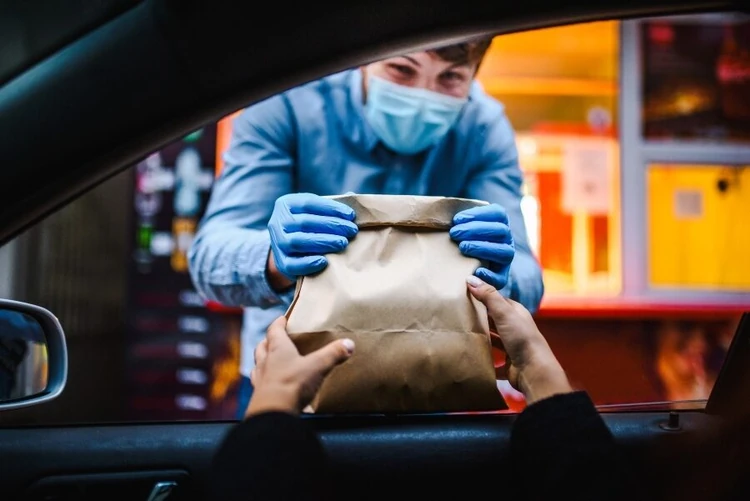
If the pandemic was extra kind to a consumer segment, it had to be the food takeout category. A recent Gloria Food’s study found that 86% of Americans do takeout at least once a month – a metric that has forced restaurant operators to prove that their food will be just as fresh and taste just as good when it reaches someone’s doorsteps than it would if those customers were eating in.

Market research firm Datassential polled consumers as to what chains were meeting that mark. Nation’s Restaurant News (NRN) reported that half of this year’s winners made their first appearance in the rankings. 

“More than two and a half years into the pandemic, off-premises options remain vital to restaurant chains’ success,” NRN said, emphasizing that the chefs at those chains have had to get creative to create menu items that a customer can easily pick up and take home without losing quality.

Here’s the top 10, along with the percentage of respondents that rated the chain “best in class” or “above average” on quality of takeout food:

10 (a tie): Jimmy John’s, McAlister’s, MOD Pizza, Jason’s Deli, and Krispy Kreme: 70%

9: Blaze Fast-Fire’d Pizzas: 71%

8: Culver’s: 72%

7: Maggiano’s Little Italy: 73%

6: Jet’s Pizza: 73%

5: In-N-Out Burger: 74%

4: Firehouse Subs: 74%

3: Jersey Mike’s: 75%

1. (a tie): Papa Murphy’s and Chick-fil-A: 77%

Article Image

All of a sudden, chicken breasts are a huge bargain

There’s potentially good news for chicken lovers. Prices for chicken breasts across the country have plunged nearly 70% since early June, according to market research firm Urner Barry.

Consumers can only hope the restaurants that have raised prices on chicken items will reverse course on price-jacking and give some of that 70% price drop back to the consumer.

The parts of chickens that American consumers love most – wings and tenders -- have gotten cheaper, too, and poultry producers have moved production into high gear, Urner Barry said, quoting chicken industry analysts and executives.

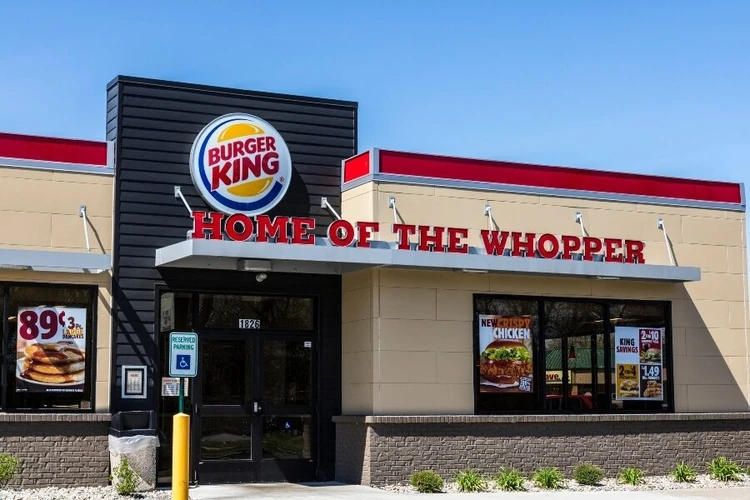
Popeye’s, Wingstop, Wendy’s, and Burger King are all over the opportunity, rolling out new chicken sandwiches and wing deals trying to get consumers looking for food that’s a match for their ever-shrinking wallet.

Wendy’s is adding a new Italian Mozzarella Chicken Sandwich to its winter menu, Popeye’s is offering a new blackened chicken sandwich, and Burger King is putting an Italian version on its menu board.

So why have chicken prices suddenly reversed? According to Tyson Food, more active roosters in the henhouse have literally made the difference.

Eggs, however, aren’t rolling in the same direction

You would think that if the meat parts of a chicken go down in price, the rest of the chicken would follow. Wrong.

And if you heard somewhere that a dozen eggs would break the $12 price barrier, that’s wrong, too. That $12/doz. myth may have been debunked, but the forecast for egg prices still isn’t as rosy as you might expect.

Breaking down the egg conundrum for the grocery shopper, Trading Economics predicts that U.S. eggs are expected to trade at $4.28 a dozen by the end of the fourth quarter of 2022 and at $5.39 in 12 months' time.

Article Image

Subway sandwiches may be available everywhere, thanks to 'smart fridges'

Subway is convinced that there’s a whole bunch of hungry consumers not even close to one of its restaurants who would still like one of its signature subs wherever and whenever they want.

The sub chain is so convinced that it’s adding to its 400 Grab & Go locations by unveiling a new smart fridge format it thinks will help tap customers in places like airports, college campuses, hospitals, and truck stops.

There’s lots of money to be made at those places, too. Locations that were hit hardest by COVID-19 restrictions, such as airports, college campuses and hospitals, experienced an average 22% sales increase for the first three quarters of 2022, indicating a strong recovery in 2022 across channels impacted by the pandemic.

“Hey, Subway, is there mayo on that roast beef sub?”

The refrigerators won’t have just subs, but also drinks and chips. The machines will also have more technology than your typical vending machine, too.

For example, in Alexa- and Hey Google-like fashion, consumers can ask the machine questions about the selections inside and the unit’s weight-sensing shelves can also alert the fridge how much to charge. 

And, for the credit card users and clean freaks of the world, not to worry – the whole thing is a completely contactless and cashless transaction, and UV-C light sanitation after every purchase helps guests stay assured about the quality of their food.

"Subway Grab & Go has quickly gained traction as consumers are drawn to sandwiches made fresh daily from a brand they know and love, versus competitor items that rely on a 14-day plus shelf life," said Karla Martinez, director of innovation for non-traditional development.

"As Subway continues to expand off-premises concepts, guests can expect to find Subway Grab & Go and smart fridges in more convenient everyday places like airports, college campuses, and hospitals."

Article Image

Who's got the cheapest eats? A new study lists the top 10 restaurant chains with the best deals

The restaurant world – both dine-in and drive-thru categories – is in full give-the-consumer-what-they-want mode. 

And it’s a pretty wild scene, too. McDonald’s is among those trying out new menu twists by test-selling Krispy Kreme donuts, and restaurants giving customers the option to customize their menu choices are starting to emerge.

Just recently, IHOP introduced a new Choice menu, designed to give consumers more choices throughout the day as opposed to breakfast, lunch, and dinner segments.

Choices are good, but deals rule

The overriding thing that consumers are looking for at restaurants, though, are deals that save them money. According to a new study by Yelp, diners across the U.S. are looking for budget options wherever they can find them.

"While U.S. inflation doesn't appear to be slowing down, Yelp's data shows consumers are increasingly looking for more affordable options to counter this uncertainty," said Pria Mudan, data science leader at Yelp. 

"It's clear consumers are mindful of their wallets with Yelp searches related to affordable groceries and fast food concepts noticeably up from last year."

What restaurants have the best deals?

In a new study by Datassential, the 10 restaurant chains that scored best with consumers who rated them “best in class” or “above average” on value for the dollar break out like this:

10. Togo's

9. Hwy 55 Burgers, Shakes & Fries

8. Golden Corral

7. Flame Broiler

6. Cook Out

5. In-N-Out Burger

4. Del Taco

3. Cicis Pizza

2. Papa Murphy's

And, drum roll, please…

1. Little Caesars, with an impressive 71% of consumers rating them “best in class” or “above average” when it comes to the best bang for a buck. 

Article Image

Here's why you should do the drive-thru at fast-food restaurants

What fast food restaurants meet consumer expectations the best when it comes to drive-thrus? The findings of Intouch Insight Ltd.’s 22nd Annual Drive-Thru Study might surprise you.

After setting up data collection at over 1,500 drive-thru mystery shops across the country, measurements were taken on everything from the average time it takes to get in and out to the friendliness of the restaurant workers consumers interact with.

The good news is that fast food restaurants seem to have gotten their post-pandemic act together again when it comes to speed. The average total time in the drive-thru line is nearly 10 seconds faster compared to last year. 

Meanwhile, most chains continue to struggle to staff the inside dining area, resulting in slower service. The restaurant industry as a whole is still down 750,000 jobs from pre-pandemic levels as of May, according to the National Restaurant Association.

The bad news is that friendliness continues to go south. Perceived friendliness is down 7% from 2019, currently sitting at 72% –  a factor the analysts say is costing restaurants over $180,000 in losses annually per store.

“We’ve all heard that a smile goes a long way, and in quick service that certainly rings true. While it stands to logic that happier associates lead to better customer experiences, the true financial and operational impact of unfriendly service is staggering,” said Laura Livers, Head of Strategic Growth at Intouch Insight. 

“With friendliness having declined in the industry, brands that can crack the code on employee satisfaction and training will be able to drive better customer service with diner experience, order accuracy, and speed.”

Who’s first and who’s worst?

Breaking down the results by category, the winners and losers include:

Average Total Time: Dividing the total time by the average number of cars in line, KFC won at a smidge over five minutes. Chick-fil-A came in last at over 8 minutes. If McDonald’s takes the study results to heart, it’s possible things could pick up there by the time the next study comes around, but in the meantime, it’s taking an average of nearly 7 minutes for a customer to get in and out of the drive-thru.

Order Accuracy: Arby’s and McDonald’s (tied for first) with 89%. Trailing everyone else is Wendy’s at 79%. 

Satisfaction of Service: Chick-fil-A and Carl’s Jr. get the prize here, tying for first. Tying for third place were Arby’s, Dunkin’, and Hardee’s.

Friendliness: As far as please-and-thank-you are concerned, the customers surveyed liked four of the five Satisfaction leaders the best: Chick-fil-A, Hardee’s, Arby’s, and Carl’s Jr. 

Food Quality: Time and friendliness don’t matter much if the food’s not any good and Chick-fil-A and Taco Bell worked the hardest on this aspect and tied for first place. Tied for third were Arby’s, Dunkin,’ and Wendy’s.

Apps are changing things for fast-food chains

The number one thing consumers are finding they can do to save time at fast food restaurants is ordering using the chain's app. Not only can apps cut waiting time significantly, but there are tons of deals that are in-app only.

"Apps of fast food brands are growing much more than their industry peers through a combination of running more 'food for download' promotions and current economic conditions, where consumers expect lower prices compared with other meal options," Adam Blacker, the VP of Insights at Apptopia said in an email to ConsumerAffairs.

That factor hasn't been lost on McDonald's or Chick-fil-A for sure. McDonald's sits in first place and Chick-fil-A is up three notches to 5th among food apps on Apptopia's iPhone charts.

Combined, both of those chains are putting the squeeze on DoorDash and UberEats. And the slowdown of food delivery apps could continue. Apptopia said that installs have fallen for that segment for two consecutive quarters and are down 11.6% year-over-year.

"Food delivery is typically more expensive than ordering ahead from a brand's app because of the delivery fees, tipping, and many times the individual menu items are priced higher," Blacker wrote.
Article Image

Brace yourself – there’s no such thing as cheap food anymore

If you’re headed to the grocery store anytime soon, you better stock up – high prices are predicted to stay. The latest USDA consumer price index for food shows that while a few foodstuffs slowed down on price from July to August, there is zero promise for food prices to retreat for the rest of 2022, but price roar is predicted to head toward more of a whimper in 2023.

And the Bureau of Labor Statistics (BLS) mirrors the USDA research, too. The BLS lists the cost of food-at-home as up substantially – 13.5% higher than a year ago – while food-away-from-home is up only 8%.

Aisle by aisle

Meats: In the meat section, consumers saved a few pennies on the price of beef, pork, and seafood from July to August. Overall, prices softened 0.2%, which basically equates to a pound of pork boneless half loin dropping about 10 cents. Still, Americans are still paying 8.9% more for meat than they did a year ago and that is expected to finish out the year at a 10.5% price hike. By 2023, the agency predicts the price of meat will grow somewhere between 2-3%.

Eggs: No one knows who made the chickens mad, but they’re holding back on egg production. Overall, the price of a dozen eggs has risen nearly 40% in the last year, although only 2.9% from July to August. The USDA says by the end of 2022, egg prices will likely climb to a 27% increase from the beginning of the year, but next year are predicted to flatten out.

Dairy products: Year over year, dairy products are up 16.2%, rising 0.7% from July to August. The USDA prediction for the year-end rise is 12-13% and up as much as 2.5% for 2023.

Fruits and vegetables: Since summer production is usually pretty robust for fruits and veggies, the prices for those products barely moved the needle. Prices were up 0.4% from July to August, and the rest of year should shake out at an overall 7-8% increase. Fruits and vegetables are the brightest hope of any aisle for 2023, too, with prices predicted to rise somewhere between 0.0% and 1%.

However, “processed” vegetables and fruits (such as salad kits, bags of cut baby carrots, pre-washed and chopped lettuce, containers of fresh sliced pineapple, canned corn, etc.) are likely to be a price concern for consumers. Overall, that category is up 14.2% year over year and predicted to finish up 2022 at an 11% bump, with another 2-3% hike in 2023.

Ukraine, Russia… and now, India

The war between Russia and Ukraine continues to impact American grocery shoppers. For example, fats and oils. From August 2021 to August 2022, the price of fats and oils has skyrocketed by 21%. 

There are also other countries that are higher in the pecking order for Russia and Ukraine than the U.S. is. Ukraine and Russia export agricultural and chemical products to many trading partners around the globe. Take corn exports – more than a third of Ukraine’s corn exports are destined for China. 

When it comes to wheat, the dominant force is Russia which sends 40% of its wheat to Egypt and Turkey. In the past when wheat production was an issue, the U.S. (and other countries) were able to count on India to fill in the gap. Unfortunately, a heat wave late in the growing season reduced India’s wheat production, leading its government to impose an export ban to ensure sufficient supplies were available to satisfy demand inside the country.

Article Image

Meijer to open new grocery stores that focus on convenience and fresh foods

Meijer, the superstore chain that’s primarily found in the Midwest, announced that it will be opening a new type of store in 2023. Dubbed “Meijer Grocery,” the new facilities will focus on making fresh foods more accessible to consumers at reasonable prices, while also transforming the shopping experience to make it more efficient. 

The stores are being designed with parking spots centrally located in one corner entrance of the store. This will create more spots closer to the entrance, and help shoppers get in and out of the store faster. 

Rather than carrying everything from electronics, gardening supplies, and clothes, Meijer Grocery will scale back a bit to focus specifically on making grocery shopping easier and faster for shoppers. The new stores will feature fresh produce, a pharmacy, a bakery, party decorations, dry grocery goods, a floral department, a fresh meat counter, health and beauty items, a full-service deli, pet goods, and baby items. 

“We’re excited to provide our customers with yet another way to shop,” said Don Sanderson, group vice president of foods at Meijer. “This new concept store will not only provide our customers with everything they need on their weekly shopping trip but also a quick and easy solution for when they realize they left the key ingredient off their list while cooking dinner.” 

Currently, two Meijer Grocery stores are scheduled to open in Michigan in 2023 – one in Macomb Township and the other in Orion Township. Shoppers will have the same perks in Meijer Grocery as they do in the traditional Meijer stores, including delivery and pickup services, mPerks, and Shop and Scan. 

Meijer pharmacies to start administering updated COVID-19 boosters

Recently, the U.S. Food and Drug Administration (FDA) approved an updated COVID-19 vaccine to be used for boosters – Moderna and Pfizer’s bivalent vaccines. The bivalent vaccines are expected to provide greater protection against the virus, as they contain mRNA components from both the BA.4 and BA.5 strains of the omicron variant and the original strain of the virus. 

Meijer has since announced that its pharmacies are fully equipped to administer the new booster shots to patients. The company says that patients can also go to their pharmacies for vaccines for the flu, shingles, meningitis, pneumonia, tetanus, whooping cough, and others. 

“The pace of our household routines began to increase with the return to school and will extend through the holidays into the new year,” said Jackie Morse, vice president of pharmacy at Meijer. “Combining your flu and other vaccinations when receiving your updated COVID-19 booster not only saves time but can have real benefit as we look forward to spending time with friends or attending concerts, sporting events, and family gatherings.” 

Article Image

Once a luxury, dining out may be a way to escape food inflation

Food costs are rising, but an industry group says they're rising faster at the supermarket than at restaurants.

This was one of the key takeaways from the Labor Department’s recent May Consumer Price Index (CPI). It showed that the cost of food away from home rose 7.4% for the 12 months that ended in April. By contrast, the cost of food prepared and consumed at home grew 11.9% in price for the 12 months that ended in May.

Even though restaurants come with higher costs — such as labor and rent — they also have some advantages over supermarkets, according to Nick Cole, head of Restaurant Finance at Mitsubishi UFJ Financial Group (MUFG).

"Restaurant chains have been able to achieve lower food-price increases and delay the effect of inflation thanks to a number of advantages they enjoy," Cole told Food Market News.

Among the advantages are access to ingredients at wholesale prices and economies of scale. Restaurants also have the ability to lock in lower prices through future contracts and other hedging strategies.

Modest price increases

Cole says a large number of restaurants have also been able to remain profitable by raising their menu prices at agreeable levels to offset the higher input costs of labor, utilities, construction, and food commodities. At the same time, their price increases have been much more moderate than those of supermarkets, some of which have raised prices by 30% for certain items.

How long restaurants can hold the line of prices remains to be seen.  Kraft Heinz and McDonald's, which are among the country’s largest food suppliers, have signaled price hikes because of sharply rising production costs.

Kraft Heinz recently notified retailer customers that prices will rise in August on several products, including Miracle Whip, Classico pasta sauce, Maxwell House coffee, and some deli meat.

While we can expect to see higher menu prices as the summer progresses, industry experts believe it’s very possible that prices won’t rise quite as quickly as at the supermarket.

Article Image

Consumers face rising prices and smaller portions at restaurants

If you’ve eaten out at a restaurant lately, you may have noticed that there have been some menu changes – particularly with the prices of your favorite foods.

What began with a chicken shortage that came into play when the COVID-19 pandemic hit the U.S. has continued to shift over the last two years. Diners have seen everything from changes to food delivery to growing inflation and supply shortages caused by the war between Russia and Ukraine.

Restaurant Business reports that menu price inflation is at its highest point in 40 years, and it's consumers who are paying the price. According to Mazars’ Food and Beverage Industry Outlook, 78% of companies have passed at least some of their inflation costs on to customers, and 2% were able to pass on 100% or more.

Changing prices and portion sizes

In addition to higher menu prices, consumers are also getting less to eat when they dine out due to smaller portion sizes. For example, the U.S.’ biggest Burger King franchisee has reportedly cut down its portion sizes due to higher costs related to inflation.

“In some cases, restaurants are decreasing the portion size and trying to keep the price the same hoping they can hold out long enough until inflation starts to come back down. Other restaurant groups I’m aware of are just opting to break even or even lose money in the short term hoping that inflation comes back down,” James Philip, founder of growth strategies consultancy firm Daggerfinn, told ConsumerAffairs.

“It’s very tough out there right now. If you’re in the hospitality sector, you’re trying to figure out what to do over the next 6 to 12 months to not go bankrupt while also keeping hold of the customer base that you might’ve spent five or 10 years building,” Philip said.

Article Image

Russia's invasion of Ukraine may have a big impact on food prices in the U.S.

It’s not something the average grocery shopper would think about, but there’s a connection between what’s going on in Ukraine and the price increases Americans will likely pay in the near future. According to FoodDive, key food commodity prices hit their highest point in nearly a decade after Russia began its invasion into Ukraine on Thursday. 

Those two countries have a lot of the essential ingredients that power the things Americans eat. Combined, Russia and Ukraine produced 80% of the exports of sunflower seed oil – one of the most used oils at restaurants and at home – 29% of global wheat production, and 19% of corn.

Russia could also hold farmers hostage to a certain degree because it's one of the largest exporters of nitrogen products that are used to fertilize crops.

Where things are headed

In laying out several scenarios on how the conflict could play out, Rabobank – a Dutch multinational banking and financial services company that focuses on food and agribusiness – projected a 30% rise in wheat prices and a 20% in corn prices if an all-out war develops.

The company says things could be made even worse in a scenario that combines effective sanctions with war. 

“Russian wheat and barley have also been 2/3 exported this season, but Russia and Ukraine account for 30% of world wheat exports, which would drive global prices up 30% if removed,” Rabobank analysts said.

If that scenario is still in place by July, when harvesting of the next crop begins, it would cut deeply into global grain availability. At that point, the price of wheat would then double and corn costs would rise by 30%. Rabobank said vegetable oil prices would also most likely go up 20% in that scenario.

Cupcakes, cookies, and English muffins

The Consumer Price Index for cookies, cakes, cupcakes, and bread has already risen 6% year-over-year, and the prices on those products could go even higher if the conflict between Russia and Ukraine becomes more protracted.

“For food manufacturers that rely on wheat and flour as key ingredients, the Ukraine conflict is yet another element for them to weigh as they attempt to control price increases,” FoodDive noted.

When one analyst asked CEO Daniel Servitje of Grupo Bimbo – the owner of Sara Lee and Thomas’ English muffins, which has plants in both Russia and Ukraine – if he would have to raise the prices on those products, he said the impact would depend on how long a conflict lasts. 

"We're hedged for some months ahead, but not necessarily for the full year," Servitje said. 

Grupo Bimbo CFO Diego Gaxiola added that the company finished out 2021 with hedges covering about 70% of its commodity needs for the full year.

"Now this doesn't mean that we will not see any impact, because at the end we will continue to do the hedging strategy," he said. "And as wheat goes up, we will start to face inflation, probably more an additional inflation, towards the end of the year and 2023."

Article Image

Burger King takes its Whopper off the value meal menu

Burger King says it’s taking the two-for-$5 Whopper deal off its discount menu and raising prices in an effort to offset higher costs. As the chain’s chief consumer icon, the Whopper’s price history over the years has gone from 37 cents to around $4.25. 

Burger King's Whopper had apparently run its course as a discount menu item. The item had “been on this core discount platform for too long," Restaurant Brands Chief Executive Officer Jose Cil told Reuters in an interview. However, he hedged that statement by predicting that good deals on Whoppers would return from time to time.

The fast-food chain said it also would stop selling less popular menu items like chocolate milk, sundaes, and small beverages that are intended for kids.

More menu cuts ahead

The Whopper won’t be the last menu item headed for the guillotine. Tom Curtis, president of Burger King’s North America operations, said in an interview that the company has a second – and larger – “wave” of menu cuts planned. 

According to Restaurant Business Online, one of those items might be the chicken sandwich. When the chicken wars heated up, Burger King decided it should have a piece of that action, but its sandwich didn't find as much success as some of its competitors' offerings.

Curtis said it’s possible that a menu switch might be in the works – one that “celebrates our original chicken sandwich, and offers a fun new approach to our unique fan favorite Chicken Fries.”

Burger King isn’t the only one raising prices

Burger King isn’t the only one feeling the pinch brought about by rising labor costs, shipping price increases, and spikes in the cost of ingredients like chicken.

McDonald’s is also expected to raise menu prices this year. Taco Bell already raised prices 10%, and Dunkin’ hiked its own prices by 8%. Chick-fil-A took a slightly different approach; instead of raising menu prices, the company reportedly reduced the size of its food. The chain has also been accused of raising prices on delivery items to try padding its bottom line.

Article Image

Fast-food restaurants strengthened consumer bonds during the pandemic

The last 23 months of the COVID-19 pandemic have been a game-changer for many brands. Some lost ground while some, such as delivery services and online retailers, strengthened their bonds with consumers.

With most full-service restaurants closed during the early days of the pandemic, consumers relied more on fast-food establishments. In the just-released MBLM Brand Intimacy COVID Study, which analyzes brands based on emotional connections during the pandemic, the fast-food industry maintained its sixth-place ranking, increasing its performance by 8% over 2020.

Consumers are backing that sentiment with their wallets, the study found. When asked if they are willing to pay 20% more for their favorite fast food, 43% more respondents than last year replied that they would.

Chick-fil-A leads for a second year

Within the category, the study found that consumers have bonded with some brands more than others. For the second year in a row, Chick-fil-A held the top spot as the fast-food company with the strongest levels of “brand intimacy,” which is defined as the emotional science behind the bonds consumers form with the brands they use and love. 

Jillian, a Chick-Fil-A fan from Cypress, Texas, tells us there are many aspects of the brand that make it unique.

“The incredibly fast drive-thru, the service, the respect their employees have for their customers, and the fact that they are closed on Sundays as a day to rest and worship,” Jillian wrote in a ConsumerAffairs review. “They are consistently respectful to their customers and always make everyone feel welcomed. Their food is always warm and ready to eat and they have a lot of options.” 

‘Drawn consumers closer’

Starbucks and Dunkin' – two brands competing for coffee supremacy – ranked second and third, respectively. The other fast-food brands in the top 10 are McDonald's, Taco Bell, KFC, Pizza Hut, Dominos, Wendy's, and Subway.

"Despite having to shut down at some points and weather significant supply chain challenges recently, the fast-food industry has drawn consumers closer and created stronger emotional bonds over the last year," said Mario Natarelli, managing partner at MBLM.

The study found that fast-food restaurants were quick to adapt to the pandemic by capitalizing on mobile ordering and digital drive-through lanes. 

“This has created a new reality within which fast-food brands provide even more comfort and convenience to stressed consumers – a position they can effectively continue to reference as we increasingly return to 'normal life' in the year ahead," Natarelli said.

Article Image

Domino’s to start tipping consumers $3 to pick up their own orders

Every great delivery driver deserves a tip, and Domino's says its customers can earn one when they carry out their order. The company announced that it will tip customers $3 to use on their next online carryout order if they come to a restaurant to pick up their order in person.

With the restaurant industry looking far and wide to find employees, and other business segments ramping up in the hiring of drivers, the idea seems to make sense. Plus, there’s Super Bowl Sunday looming large. During the 2020 Super Bowl, it was estimated that Domino’s sold about 2 million pizzas on a normal Super Bowl Sunday, a 30% increase over a typical Sunday.

"Domino's carryout tips come just in time for the biggest football game of the year, which is also one of the busiest days of the year for pizza," said Art D'Elia, Domino's executive president. "Domino's typically sells about 2 million pizzas on football's favorite Sunday, so if you're throwing a party and feeding hungry fans, make it a carryout order and get tipped! Then you can treat yourself to a delicious pizza with a great deal the week after."

While it might be a nice permanent perk for pizza lovers, Domino’s said the deal will last only through May 22, 2022. There are a couple of other things that consumers should note.

The most important one is that orders have to be placed online to claim the $3 coupon code, which is redeemable for another online carryout order placed the following week (with a minimum purchase of $5 before tax and gratuity). 

Article Image

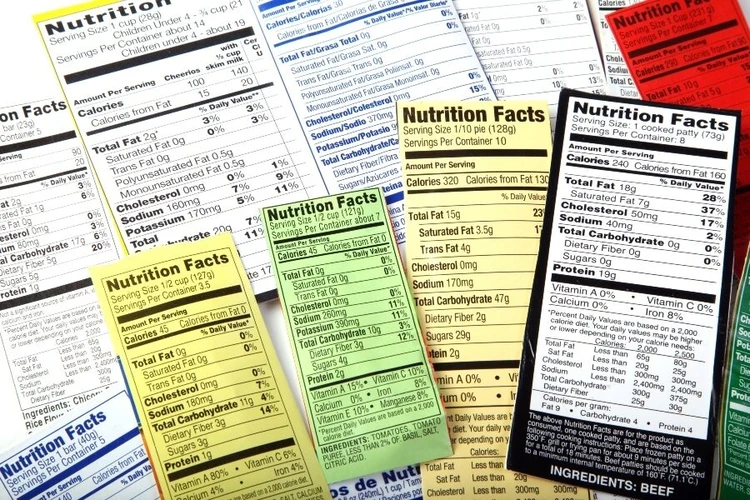
Online grocery stores struggle with consistent food labeling, study finds

A new study conducted by researchers from New York University explored a unique trend that’s been occurring among online grocery retailers. Their findings showed that many online stores aren’t consistent with showing consumers food labels. 

“Our study shows that the online food shopping environment today is a bit of a ‘Wild West,’ with incomplete and inconsistent provision of required nutrition information to consumers,” said researcher Dariush Mozaffarian.

“Online shopping will only continue to grow, and this creates an excellent opportunity to positively influence consumers to make healthy and safe choices. We need to leverage this change to help make progress against the nutrition-related health crisis in this country.” 

Gaps in nutrition labeling

To better understand what nutritional information is available to consumers from online retailers, the researchers analyzed information available from nine major online grocers on 10 different food products. Most of the items involved in the study were packaged goods, which typically are required to have an ingredients list, a full nutrition breakdown, and a common allergy warning. 

Ultimately, the researchers learned that there were a lot of inconsistencies with these food labels. Overall, nutrition facts were only found on roughly 46% of all the items assessed, while ingredient lists were found on more than 54% of the items involved in the study. 

However, on average, this information was only consistent across the different stores and food items 36.5% of the time. The researchers found that allergy warnings only appeared on just over 11% of the items involved in the study. 

“Our findings highlight the current failure of both regulations and industry practice to provide a consistent environment in which online consumers can access information that is required in conventional stores,” said researcher Sean Cash. “With the expectation that online grocery sales could top $100 billion for 2021, the requirements to provide consumers with information need to keep up with the evolving marketplace.” 

Helping consumers make smart decisions

The researchers also looked at what regulations exist when it comes to food labeling and what can be done to help consumers make the best food choices for their health and wellness. They found that the FDA, FTC, and USDA can all work to make food labeling more consistent among online grocery retailers.

This is particularly important when thinking about consumers who rely on these labels for important nutrition information, like allergy warnings or sugar or carb levels. 

“Labeling requirements are intended to protect consumers who are largely unable to protect themselves,” said researcher Jennifer Pomeranz. “This is even more salient for online where consumers cannot directly inspect products. At a minimum, the entire required nutritional information panel should be made visible and legible for consumers shopping for their groceries online.”