2021 Education Research and Classroom Strategies

Article Image

School uniforms may not improve kids' behavior, study suggests

A new study conducted by researchers from Ohio State University explored the impact that school uniforms have on kids’ behavior in school. 

Though many schools think uniforms will help students maintain good behavior and create a sense of community, their findings suggest that this isn’t actually the case. In fact, the researchers learned that uniforms had no impact on kids’ behavior and made them feel more isolated at school.

“A lot of the core arguments about why school uniforms are good for student behavior don’t hold up in our sample,” said researcher Arya Ansari. “We didn’t see much difference in our behavior measures, regardless of whether the schools had a uniform policy or not.” 

Uniforms aren’t affecting kids’ behavior

For the study, the researchers analyzed data from over 6,300 children enrolled in the Early Childhood Longitudinal Study. Their work followed the kids from kindergarten through fifth grade. Each year, teachers reported on the kids’ internal and external behavior problems, their social skills, and their attendance. When the students reached fifth grade, they reported on their experiences with bullying and their sense of community and belonging in school. 

Ultimately, the researchers learned that school uniforms weren’t associated with any changes in the students’ behavior. Wearing a uniform wasn’t linked with any major differences when it came to outcomes like aggression, anxiety, or general social well-being. 

However, the study also showed that wearing uniforms didn’t contribute to the students’ sense of belonging at school. The researchers explained that the reasoning behind requiring uniforms is that they’re believed to help build a school community. However, this wasn’t the case among the students surveyed in this study. 

“Fashion is one way that students express themselves, and that may be an important part of the school experience,” Ansari said. “When students can’t show their individuality, they may not feel like they belong as much.” 

With uniforms becoming more popular at public and private schools in recent years, the researchers hope these findings provide some insight for school officials.

“There hasn’t been much research done on the value of school uniforms in the past 20 years or so, especially given how much their use has increased,” Ansari said. “School uniforms may not be the most effective way to improve student behavior and engagement.” 
Article Image

Kids who repeat a grade may be more likely to get bullied, study finds

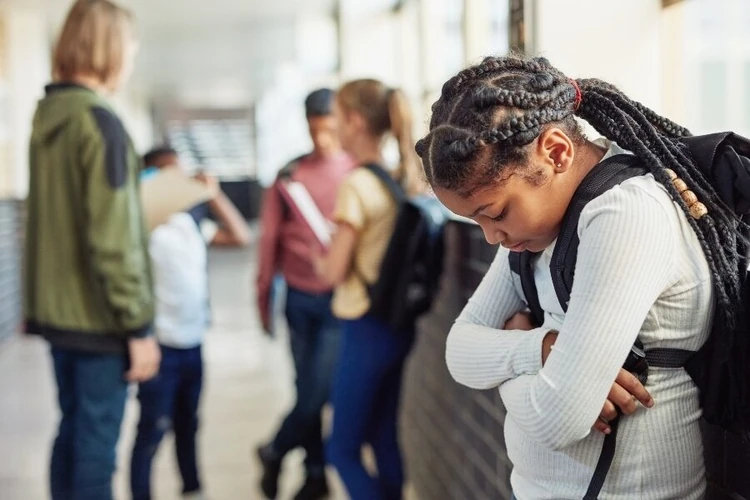
A new global study explored how repeating a grade may affect kids from a social perspective. According to researchers, having this experience may make kids more susceptible to bullying by their peers who were promoted. 

“Grade repetition is practiced worldwide and varies considerably across the globe,” the researchers wrote. “Although a large body of research has documented grade repetition’s academic and nonacademic effects, the limited evidence on associations between grade repetition and school bullying is inconsistent and ambiguous. This study aimed to investigate the global association of grade repetition with bully victimization in a large-scale school-based cross-sectional study.” 

Kids can get bullied when they’re held back

For the study, the researchers analyzed data from over 465,000 students from 74 countries enrolled in the Program for International Student Assessment (PIA). Students answered questions about their experience repeating a grade, including any instances of bullying over the previous 12 months. 

The researchers learned that students who repeated a grade were more likely than their classmates who were promoted to experience bullying. Overall, more than 12% of participants were held back a grade, and more than 30% of those students were bullied by their classmates who moved on to the next grade. Bullying included being made fun of, being threatened, having possessions taken away, being physically abused, and being the subject of rumors. 

The study showed that this trend was more prevalent among female students who repeated a grade than male students. The researchers hope these findings highlight the ways that repeating a grade can impact kids on a social level. 

“These results are of great concern for parents, teachers, principals, and policymakers at different levels, especially in countries where grade repetition is particularly prevalent,” the researchers wrote. “Grade repetition is associated with bullying victimization in both boys and girls.” 

Article Image

Identifying as being multilingual may help kids perform better in school

A new study from the University of Cambridge explored how students’ relationship to different languages may impact their performance in school. According to the team’s findings, those who identify as being multilingual are more likely to receive better scores on exams.

“Too often we think about other languages as something that we don’t need to know, or as difficult to learn,” said researcher Dr. Linda Fisher. “These findings suggest that if pupils were encouraged to see themselves as active and capable language learners, it could have a really positive impact on the wider progress at school.” 

Being multilingual helped improve exam scores

For the study, the researchers asked over 800 eleventh graders in England to report on their language identity. The team had the students determine between 0 and 100 where they fell on the spectrum of monolingual to multilingual, with 0 representing speaking one language and 100 representing speaking multiple languages. 

The team then analyzed the participants’ grades from nine subjects on nationwide exams and collected information on whether or not the students were registered as English as a Second Language (EAL) learners. 

The findings showed that there were discrepancies among students who were registered as EAL at their schools and those who viewed themselves as multilingual; students who spoke multiple languages at home didn’t always identify themselves as being multilingual. 

“The fact that these terms didn’t correlate more closely is surprising considering that they are all supposedly meaning the same thing,” said researcher Dr. Dee Rutgers. “Just having experience of other languages clearly doesn’t necessarily translate into a multilingual identity because the experience may not be valued by the student.” 

When students viewed themselves as knowing more than one language, they performed better on the General Certificate of Secondary Education (GCSE) exams and in school overall. GCSE exams are qualification tests given to students in England, Wales, and Northern Ireland in specific subject areas. 

Each additional point the students ranked themselves on the multilingual scale was linked with an increase in scores on exams. However, there was no effect on test scores for students who were registered as EAL at school. 

“The evidence suggests that the more multilingual you consider yourself to be, the higher your GCSE scores,” Dr. Rutgers said. “While we need to understand more about why this relationship exists, it may be that children who see themselves as multilingual have a sort of ‘growth mindset’ which impacts on wider attainment.” 

Adding range through language

The researchers believe that fostering a stronger understanding of languages may help students latch onto them more, which could impact how they view themselves and improve their school performance. 

“There could be a strong case for helping children who think that they can’t ‘do’ languages to recognize that we all use a range of communication tools, and that learning a language is simply adding to that range,” said Dr. Fisher. “This may influence attitude and self-belief, which is directly relevant to learning at school. In other words, what you think you are may be more important than what others say you are.” 

Article Image

Sleep deprivation hurts college students' mental health, study finds

A new study conducted by researchers from the Taylor & Francis Group explored how students’ mental health may be affected by their sleeping patterns. According to their findings, sleep deprivation could be linked to mental health struggles for college students.

“Sleep disorders are especially harmful for college students because they’re associated with several negative effects on academic life. These include failures in attention and perception, high absenteeism rate, and sometimes dropping out of the course,” said researcher Dr. Paulo Rodrigues.

“The university environment offers greater exposure to factors that may compromise sleep habits such as academic stress and social life. It’s crucial to evaluate and monitor sleep habits, mental health, and the quality of life of students to reduce the risk of developing other chronic diseases.” 

How does sleep impact mental health?

For the study, the researchers surveyed over 1,100 students between the ages of 16 and 25 from the Federal University of Mato Grosso in Brazil. The group reported on everything from their socioeconomic status and body mass indices to their sleeping habits and excessive daytime sleepiness. 

The researchers found a connection between students who had poor sleeping habits and those who struggled with depression-related symptoms and higher stress levels. It was unclear if sleep impacted mental health or vice versa, but the relationship between the two was strong. 

The team also found that what the students were studying and their gender could have a greater impact on their sleep and mental health. Students in health or science fields and female students were more likely to struggle with mental health and sleep. 

The researchers explained that there could be several factors that prevent college students from getting quality sleep on a consistent basis. They noted that college students are typically on a very inconsistent schedule that often keeps them awake into the night. They also tend to consume caffeine and use other stimulants, which can have an impact on healthy sleeping patterns.

Moving forward, the researchers are calling on universities to step in and do their part to help prioritize the importance of healthy sleeping habits among college students. 

“University managers should plan the implementation of institutional actions and policies,” Rodrigues said. “This is to stimulate the development of activities that promote good sleep habits and benefit students’ mental health.”

Article Image

Active learning leads to better outcomes in the classroom, study finds

A new study conducted by researchers from Carnegie Mellon University explored which teaching styles are the most effective in the classroom. 

According to the researchers, teachers who adopt an active learning approach by incorporating the latest technology, group discussions, and interactive activities are likely to get the most out of their students. Conversely, lecturing was found to be less effective when it came to students’ academic performance.

“We wanted to see what we learned from teaching and learning during COVID and what could be brought back into the classroom,” said researcher Nesra Yannier. “COVID forced educators to engage students in novel ways, and teachers were experimenting with new technology.” 

Keeping students engaged

The researchers analyzed data from previous studies that collected information on learning styles across all age groups -- from elementary-aged students to college students. They looked at different ways teachers can deliver lessons and which methods were the most effective at keeping kids engaged and involved in the subject matter. The team also examined how artificial intelligence (AI) plays a role in students’ learning outcomes. 

The researchers learned that keeping students involved and active during class is the best way to keep them engaged and produce the greatest academic achievement. One study found that when students are physically active during a lesson, they’re more likely to retain the information down the road. 

Aside from grades, active learning was associated with a better understanding of the material. The study showed that when students are actively engaged, they’re better able to discuss the topic with others, which shows a deeper comprehension. 

In their trial with AI, the researchers learned that virtual helpers are beneficial to both students and teachers. They’re able to answer students’ questions during lessons, which can help teachers with the flow of their plans. From a student standpoint, AI was used to conduct various hands-on experiments in the classroom, prompting the students to talk with each other more, stay invested in the lesson, and ask more questions. 

The researchers hope these findings highlight the benefits associated with active learning in the classroom. It ultimately helps to keep students participating and involved in the lesson -- even if that means getting them physically moving. 

“It’s quite clear in this collection that even among like-minded folks there are seven or more applications of active learning that work and sometimes they work in contradictory ways,” said researcher Ken Koedinger. “There is so much richness in this field that we can continually make improvements to make it more effective and enjoyable for a long, long time.” 

Article Image

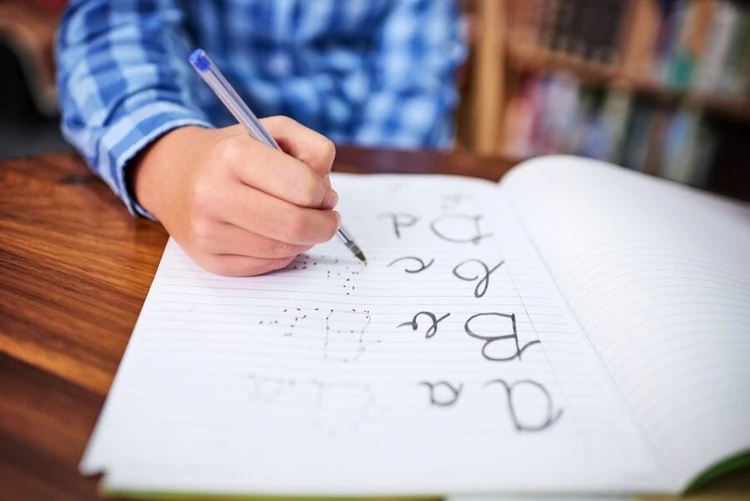
Practicing handwriting is better than videos or typing for kids learning to read, study suggests

A new study conducted by researchers from Johns Hopkins University suggests that practicing handwriting is an important skill that helps kids learn how to read. 

Although writing on paper may seem unnecessary now that computers and other devices have become so much more mainstream, researchers say practicing handwriting leads to better reading development than either watching videos or reading typed words.

“The question out there for parents and educators is why should our kids spend any time doing handwriting,” said researcher Brenda Rapp. “Obviously, you’re going to be a better hand-writer if you practice it. But since people are handwriting less then maybe who cares? The real question is: Are there other benefits to handwriting that have to do with reading and spelling and understanding? We find there most definitely are.” 

The benefits of writing by hand

For the study, the researchers divided over 40 participants into three groups to learn the Arabic alphabet. Participants either watched videos, typed the letters, or wrote them out by hand, and the researchers determined how well each group retained the information they were taught. 

In assessing various skills, the team learned that the participants that were writing by hand were the most proficient in the Arabic alphabet, and they became proficient much faster than participants in any of the other two groups. The handwriting group excelled in writing new words, recognizing letters, and decoding the most difficult words. 

“The main lesson is that even though they were all good at recognizing letters, the writing training was the best at every other measure,” said researcher Robert Wiley. “And they required less time to get there. With writing, you’re getting a stronger representation in your mind that lets you scaffold toward these other types of tasks that don’t in any way involve handwriting.” 

Though the study included adults learning a new language, the researchers believe that the findings would translate to children learning to read. The team hopes these findings can inform educators so that language education through handwriting can continue.

Article Image

Short breaks may be the key to learning new skills, study finds

A new study conducted by researchers from the National Institutes of Health explored the best way for consumers to go about learning a new skill. 

According to their findings, stepping away from practice for a little while might be the answer. They explained that taking short breaks from a lesson or practice session can be an effective way to perform better later on. 

“Our results support the idea that wakeful rest plays just as important a role as practice in learning a new skill,” said researcher Dr. Leonardo G. Cohen. “It appears to be the period when our brains compress and consolidate memories of what we just practiced. Understanding this role of neural replay may not only shape how we learn new skills, but also how we help patients recover skills after neurological injury like stroke.” 

Sharpening our skills

For the study, the researchers had 33 right-handed participants complete an experiment. The group was given a five-digit code, and their goal was to type the code into a computer with their left hand as many times as they could for 10 seconds. They conducted 35 trials, alternating between 10 seconds of the test and 10 seconds of rest. During these trials, the researchers monitored the participants’ brain waves and used a comprehensive computer program to translate their brain activity. 

“We wanted to explore the mechanisms behind memory strengthening seen during wakeful rest,” said researcher Ethan R. Buch, Ph.D. “Several forms of memory appear to rely on the replaying of neural activity, so we decided to test this idea out for procedural skill learning.” 

The researchers learned that during the designated rest periods, the participants’ brains replayed the five-digit code at a rapid pace. Then, when they went to go back in for the experiment, they were often faster and more accurate at punching in the code with their left hands. The team explained that the more times the brain replayed the code during the rest periods, the better the participants performed during the trial. 

“During the early part of the learning curve, we saw that wakeful rest replay was compressed in time, frequent, and a good predictor of variability in learning a new skill across individuals,” said Dr. Buch. “This suggests that during wakeful rest, the brain binds together the memories required to learn a new skill.” 

“Overall, our results support the idea that manipulating replay activity during waking rest may be a powerful tool that researchers can use to help individuals learn new skills faster and possibly facilitate rehabilitation from stroke,” added Cohen. 

Article Image

The ideal student excels in more than just academics, study finds

Many students stress about getting good grades, but findings from a new study suggest that there are other important aspects when it comes to being a good student. 

According to a new report from the Taylor & Francis Group, faculty and students in higher education believe the ideal student excels in more than just academics. The researchers explained that factors like punctuality, organization, and mindset are just as important.

“Marketisation has directed higher education institutions and policies to focus on student support and provisions that promote better experience and value,” the researchers wrote. “By contrast, expectations of university students are under-researched and understated, with less attention placed on what and how students should perform in higher education. 

“This paper further develops the contrast of the ideal student at university, which aims to promote transparency and explicitness about what is expected of students, and potentially alleviate inequalities driven by implicit and unspoken rules of higher education.” 

What is an ideal student?

The researchers conducted surveys and let focus groups that included data on over 1,100 students and faculty members across British schools. Participants wrote down their most and least important qualities associated with the ideal student, and then they voted on the ones that they considered most important.

Ultimately, the researchers narrowed down the list to the top eight most important qualities of an ideal student. They include:

  • Diligence and engagement 

  • Organization and discipline

  • Reflection and innovation

  • Positive and confident outlook 

  • Support of others

  • Academic skills

  • Employability skills

  • Intelligence

“Being intelligent and strategic do not appear to be important for staff and only moderately more importantly for students,” said researcher Dr. Billy Wong. “This is surprising, given the extent to which graduates are often judged on their degree results. Universities are also increasingly measured, advertised, and ranked by the employment statistics of their graduates, so it is interesting to see that employment skills feature towards the bottom of the ideal list of attributes.”  

Not all about grades

These findings are important because they show that academic performance isn’t the number one quality that university students or faculty members consider to be important when thinking of what makes an ideal student. However, the team learned that students and staff members had differing opinions about what the most important qualities were. 

Overall, having a positive mindset and better general mental health were more important qualities to students. On the other hand, staff members viewed employability as a more prominent skill. The researchers hope that these findings highlight the role that mental health plays in college students’ success. By knowing how highly college students rank mindset, universities have a chance to do their part to ensure that students feel encouraged and supported in and out of the classroom. 

“The importance of student happiness and confidence is crucial in efforts to promote better student mental health and well-being, especially as demands for university mental health services and counseling have reportedly increased in recent years,” Dr. Wong said. 

Article Image

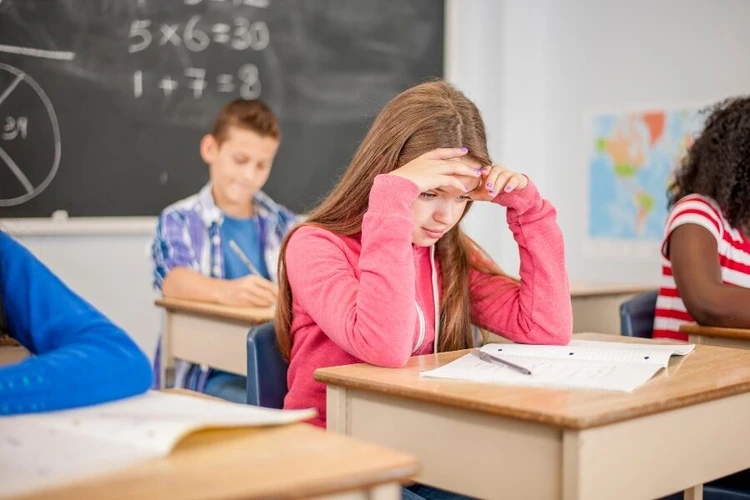
Test anxiety may be linked to poor sleep and academic outcomes for college students, study finds

Several recent studies have looked at the increasing prevalence of stress and anxiety among college students. Now, researchers from the University of Kansas explored a link between college students’ test anxiety, sleeping habits, and academic performance. 

According to their findings, all three of these factors are related. Many college students experience anxiety over big exams or projects. This anxiety often leads to poor sleep and worse academic performance. 

“We looked at test anxiety to determine whether that did predict who passed, and it was a predictor,” said researcher Nancy Hamilton. “It was a predictor even after controlling for students’ past performance and increased the likelihood of students failing in class. When you look at students who are especially anxious, it was almost a five-point difference in their score over students who had average levels of anxiety. This is not small potatoes. It’s the difference between a C-minus and a D. It’s the difference between B-plus and an A-minus. It’s real.” 

The long-term effects of test anxiety

The researchers had nearly 170 college students enrolled in a statistics class at the University of Kansas participate in the study. The students completed Sleep Mood Study Diaries in the days leading up to statistics exams, and the researchers compared those responses with the students’ exam scores. 

Ultimately, the link between test anxiety, sleep issues, and poor academic performance was strong. The researchers learned that those with the highest test anxiety in the days before an exam were also likely to have the worst sleep and then perform poorly on their exams. While this trend alone is concerning, the team was also worried about how these influences may impact students’ health and wellness outside of the classroom. 

“Studies have shown students tend to cope with anxiety through health behaviors,” Hamilton said. “Students may use more caffeine to combat sleep problems associated with anxiety, and caffeine can actually enhance sleep problems, specifically if you’re using caffeine in the afternoon or evening. Students sometimes self-medicate for anxiety by using alcohol or other sedating drugs. Those are things that we know are related.” 

What role can teachers play?

Though this trend primarily impacts college students, the researchers learned that it can also impact professors. Hamilton teaches at the University of Kansas and explained that her goal when giving tests is to measure how much her students are learning; however, if their scores are impacted by their anxiety and lack of sleep, that’s not an accurate measure of what they’re absorbing from her class. 

To help combat this issue and encourage health and wellness among college students, Hamilton recommends that universities take a more proactive approach to address test anxiety and the associated risk factors. 

“What would be really helpful for a university to do is to talk about testing anxiety and to talk about the fact that it’s very common and that there are things that can be done for students who have test anxiety,” Hamilton said. “A university can also talk to instructors about doing things that they can do to help minimize the effect of testing anxiety.” 

Article Image

USDA to give added flexibility for school and day care meals

When students return to classrooms this fall, parents will be happy to know that schools and child care centers across the U.S. will return to serving healthy meals free of charge.

As part of the Biden administration’s school reopening plan, the Department of Agriculture (USDA) announced Tuesday that it will allow school meal programs flexibility that enables social distancing. The waiver will extend through June 30, 2022. 

“USDA will remain relentless in ensuring our nation’s children get the critical nutrition they need,” said Agriculture Secretary Tom Vilsack. “States and districts wanted waivers extended to plan for safe reopening in the fall. USDA answered the call to help America’s schools and child care institutions serve high quality meals while being responsive to their needs as children safely return to their regular routines. This action also increases the reimbursement rate to school meal operators so they can serve healthy foods to our kids.”

Everyone wins

Before the COVID-19 pandemic, free school lunches for more than a million children were at risk because of cuts to the SNAP program. Then, when the pandemic hit and schools were closed, the USDA quickly put together the Families First Coronavirus Response Act (FFCRA) to issue waivers and make it as easy as possible for children to receive meals. 

Vilsack called the waiver extension a win-win-win for kids, parents, and schools. It will give up to three healthy meals per day to nearly 12 million children who depend on assistance. 

Schools will be allowed to serve meals through the USDA’s National School Lunch Program Seamless Summer Option (SSO), a program typically only available during summer vacation. SSO has the same nutrition standards as the standard school meal programs – fruits and vegetables, milk, whole grains, and sensible calorie levels. Schools that choose this option will receive higher-than-normal meal reimbursements for every meal they serve without having to worry about increased costs related to pandemic-related operational and supply chain challenges. 

One of the advantages for parents is how the program will adapt to meals and snacks at flexible meal times. Caregivers will also have the option to pick up “grab-and-go” meals for their children when programs are not operating normally, even if they do not have a child present.

The USDA has put together a list of child nutrition program information, including COVID-19 waivers by state, available meal pickup points when schools are closed, and how to participate in the Seamless Summer Option and Summer Food Service Program.

Article Image

Kids' physical fitness may impact their classroom performance, study finds

Several studies have highlighted the importance of kids regularly engaging in physical activity. Now, a new study conducted by researchers from the University of Geneva explored how kids’ fitness may impact their cognitive and academic abilities. 

According to their findings, kids who had the highest cardiorespiratory fitness levels academically outperformed those with lower fitness levels. The results suggest that there may be a relationship between improved fitness and stronger cognitive abilities. 

Benefits of consistent physical activity

The researchers conducted a series of tests involving nearly 200 children between the ages of eight and 12. They focused on the three primary executive functions: memory, self-control, and multitasking. The team also evaluated the participants’ physical fitness abilities with a timed running test and compared all of these results with their academic outcomes in several different subjects. 

The researchers learned that students who had the highest cardiorespiratory fitness levels performed better academically than those who were weaker in this area. Two subject areas with noted improvements due to higher physical fitness were foreign language and math. 

After fully analyzing the results, the researchers determined that the relationship between physical fitness and academics was indirect. They said fitness was most closely related to executive functions like cognitive flexibility, which may be able to help students understand new subjects. 

To ensure that kids are at their best both mentally and physically, the researchers recommend that parents and caregivers encourage physical activity among their young ones whenever possible. 

“By demonstrating the link between physical capabilities, such as cardiorespiratory capacity, cognitive abilities, and grades, it underlines the importance of not reducing physical activity (and in particular physical education hours) in favor of other subjects, as this could ultimately have an impact on the development of the child as a whole,” said researcher Marc Yangüez. 

Article Image

Teaching kids empathy can improve their creative abilities, study finds

A new study conducted by researchers from the University of Cambridge has found that teaching kids about empathy can benefit them creatively. 

According to their findings, kids’ creative and intellectual abilities improved when empathy was a focus point in school. This shows that addressing students’ needs beyond the scope of the curriculum can be beneficial to them both in the classroom and in everyday life. 

“We clearly awakened something in these pupils by encouraging them to think about the thoughts and feelings of others,” said researcher Dr. Helen Demetriou. “The research shows not only that it is possible to teach empathy, but that by doing so, we support the development of children’s creativity and their wider learning.” 

The benefits of prioritizing empathy

To better understand the importance of teaching kids how to be empathetic, the researchers conducted a year-long study that included 13- and 14-year-olds in a Design and Technology (D&T) program at two London schools. One school integrated lessons about empathy into the curriculum, and all of the students were assessed for creativity at the start and conclusion of the school year. 

Ultimately, learning about empathy was an important component of bolstering kids’ creativity and their overall engagement with academics. The researchers found that the students who had learned about empathy in school had stronger creative pursuits, and they were also more likely to be open-minded when compare to the students who had received more standard, curriculum-based lessons. 

Interestingly, the researchers learned that male and female students responded a little differently to the empathy lessons. Young girls had improved by more than 60 percent when it came to understanding others’ perspectives, while the boys who had empathy training were nearly 65 percent better at expressing their emotions. 

“When I taught Design and Technology, I didn’t see children as potential engineers who would one day contribute to the economy; they were people who needed to be ready to go into the world at 18,” said researcher Bill Nicholl. “Teaching children to empathize is about building a society where we appreciate other’s perspectives. Surely that is something we want education to do.” 

Surge in creativity

It’s also important to note that the children who received the empathy interventions had scored 11 percent lower on the creativity assessments at the start of the study; however, after learning more about emotions, thoughts, and feelings, the students’ creativity scores surged to be nearly 80 percent higher than the other group. 

Moving forward, the researchers hope that more educational leaders take these findings into consideration. Instilling students with empathy skills has been found to help them become more well-rounded human beings, which is invaluable to the growth and development process. 

“This is something that we must think about as curricula, in general, becomes increasingly exam-based,” said Dr. Demetriou. “Good grades matter, but for society to thrive, creative, communicative, and empathic individuals matter too.” 

Article Image

CDC gives returning to the classroom a vote of confidence

The Centers for Disease Control and Prevention (CDC) has given a return to school classrooms the green light. In an article in JAMA published on Tuesday, agency officials said a “preponderance of available evidence” shows that in-person learning can be carried out safely as long as students and teachers mask-up and maintain social distancing. 

The key word in the CDC’s clearance is classrooms -- not gyms, group sports, or cafeterias. The agency said that school administrators must bridle activities that could be risky. 

“It’s not going to be safe to have a pizza party with a group of students,” Margaret Honein, a member of the C.D.C.’s COVID-19 emergency response team and one of the article’s writers, told the New York Times. “But outdoor cross-country, where distance can be maintained, might be fine to continue.”

Benefits outweigh the downsides

As many parents know, tele-education has proven to be stressful for everyone involved. However, CDC officials said there wasn’t really a safe option during the early stages of the pandemic. 

“Planning for the 2020/2021 school year included much uncertainty about the risk of transmission in school settings. While the benefits of in-person school attendance were well understood, the appropriate evaluation of its risks vs benefits was hampered by limited information about transmission risk in classroom settings,” the CDC officials wrote.

“Closing schools could adversely affect students’ academic progress, mental health, and access to essential services; however, if SARS-CoV-2 rapidly spread in classrooms, opening schools might accelerate community transmission of the virus. There were no simple decisions for parents, teachers, administrators, or public officials.”

The proof speaks for itself

Now that the world is starting to understand COVID-19 better, vaccines are being distributed, and there’s research to back up the CDC’s guidance, schools are able to reopen with more safety than before. While there have been some actual school-related cases of COVID-19 reported, the officials say there has been little evidence that schools have “contributed meaningfully to increased community transmission.”

In fact, being inside of a classroom has proven to be safer than being in a circle of friends and family. Citing a controlled study in Mississippi with children aged 0 through 18 years, the study showed that attending gatherings and social functions outside the home, as well as having visitors in the home, was associated with increased risk of infection; however, in-person school attendance during the 14 days prior to diagnosis was not. 

The success of the Mississippi study was also repeated in rural Wisconsin and 11 school districts in North Carolina.