2024 Credit cards

Article Image

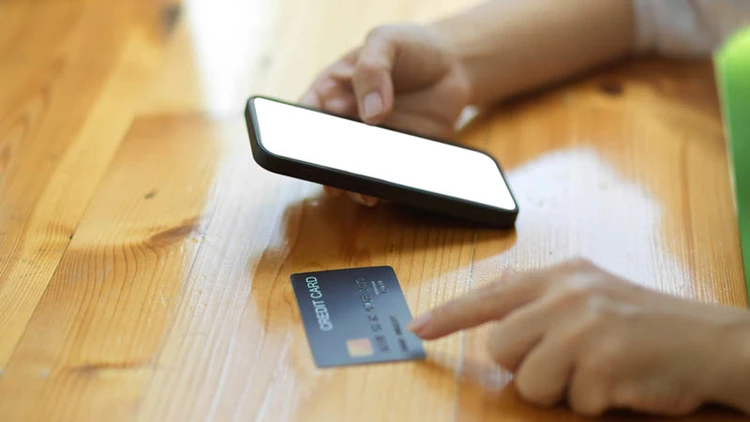
Regulators warn credit card lenders against cutting back on rewards

The Consumer Financial Protection Bureau has turned its attention to credit card rewards, which some consumers say are less rewarding these days.

In a policy circular, the CFPB warned that credit card lenders that water down or even cancel their rewards may be in violation of the law.

There are many different types of credit card rewards. Travel cards generally offer rewards based on miles that can be used to pay for future travel. But among the most popular rewards is cash back, with the lender giving the consumer anywhere from 1% to 5% of their purchases.

While cash-back rewards are fairly straightforward, travel rewards can be a little vague.

The CFPB said many consumers apply for cards based on the specific rewards they offer. The bureau says current law prohibits unfair, deceptive and abusive practices in administering rewards. Currently, the bureau says nearly 75% of credit cards offer some type of reward.

Putting a price on rewards

As ConsumerAffairs reported in 2023, credit card rewards are not what they used to be. At the time, hoteliers Marriott, Hilton, and Radisson points were valued at less than a penny while others like Hyatt valued theirs at 1.7 cents each. 

The Points Guy, a travel rewards website, publishes a monthly valuation of credit card travel rewards. In its December valuation, it breaks it down this way:

ProgramReward in cents
American Express Membership Rewards   2.0
Bilt Rewards 2.05
Capital One1.85
Chase Ultimate Rewards2.05
Citi Thank You Rewards1.8
Wells Fargo Rewards1.6
Article Image

Why you should never place a sports bet using a credit card

As sports gambling continues to expand across the United States, with online sports betting now legal in 38 states, consumers are increasingly encountering unexpected financial pitfalls, especially if they are putting their wagers on a credit card.

Last year alone, nearly $120 billion was wagered on sports, but many bettors are facing steep "cash advance" fees when using credit cards for these transactions. The Consumer Financial Protection Bureau (CFPB) has highlighted the financial implications of using credit cards for sports betting, showing that lenders often treat these transactions as cash advances, leading to significant fees and interest charges.

In a recent analysis, the CFPB examined credit card agreements from major issuers, consumer complaints, and data from states like Kansas and Ohio, where sports betting was recently legalized. 

The findings indicate that most credit card companies, including Chase, Discover, and American Express, classify online gambling transactions as cash advances. This classification triggers high fees and interest rates, which can catch consumers off guard.

Cash advance fees are not cheap

Cash advances typically incur fees that are either a flat rate or a percentage of the transaction, whichever is greater. For example, a $20 sports wager could incur the same $10 fee as a $200 cash advance withdrawal from an ATM.

Additionally, cash advances begin accruing interest immediately at rates often around 30%, significantly higher than regular purchase rates. This means that even small bets can quickly become costly, with fees and interest accumulating rapidly.

The CFPB's analysis of credit card use in Kansas and Ohio showed a spike in cash advance fees following the legalization of sports betting. The Bureau suggests that many consumers are unaware of the financial consequences of using credit cards for gambling, as disclosures about these fees are often unclear or inconsistent. Complaints from cardholders indicate a lack of transparency from both sportsbooks and credit card issuers, leading to confusion and unexpected charges.

Also, you could lose

And of course, the bettor could lose. They don’t lose their own money, they lose money they don’t have, but will have to pay back, along with the fees.

To their credit, not all credit cards allow sports betting. Some issuers, like Bank of America and Wells Fargo, state they "may" decline internet gambling transactions, relying on merchant categorizations set by networks like Visa and Mastercard. 

However, mobile sportsbooks continue to accept credit cards, with a significant portion of bettors preferring this payment method.

The CFPB said its findings underscore the need for greater transparency and consumer awareness regarding the financial implications of using credit cards for sports betting. As the industry grows, both regulators and consumers must navigate the complex landscape of fees and interest rates to avoid unexpected financial burdens.

Article Image

Holiday credit card spending can have a financial impact for months

An unfortunate fact of life during the holidays is that millions of consumers add to their credit card balances. They may have every intention of paying them off but all to often those charges are still on the account when the next holiday season rolls around.

A  new study by LendingClub Corporation documents the problem, showing that a significant portion of Americans find themselves ensnared in unintentional credit card debt, leading to financial instability and mental distress. 

Despite initial intentions to use credit cards for convenience, credit building, or rewards, nearly half of cardholders end up carrying a balance, often unaware of the high interest rates they are paying.

The research highlights another troubling trend: many consumers do not view credit cards as loans, which leads them to overlook interest rates and terms. This oversight has resulted in 47.3% of Americans accumulating revolving credit card debt, exacerbated by inflation and rising living costs, particularly in food and groceries.

Conflicting realities

Part of the problem may be consumers find themselves in conflicting realities. Nearly 66% of Americans say they can manage their finances without credit cards, 60.3% use them weekly. This dependency can lead to significant financial burdens if balances are not paid in full each month. Nearly 27% of Americans dedicate as much as 40% of their paycheck to credit card debt, a cycle that is difficult to escape.

"No one intends to carry credit card debt, and that's part of the problem," said Mark Elliot, chief customer officer at LendingClub. 

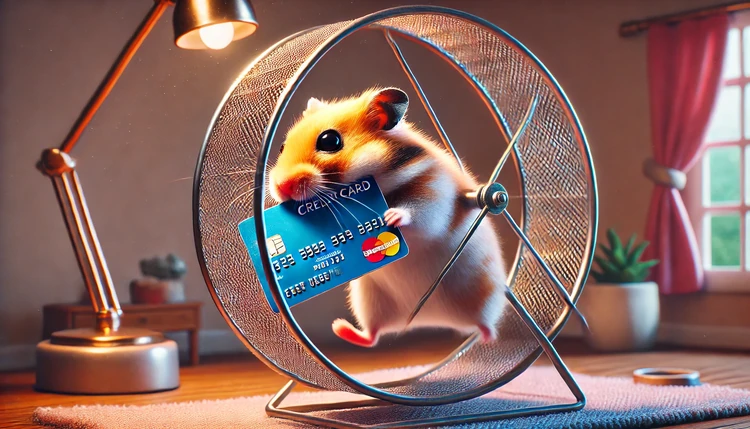
"Cards are great for convenience, to build credit, or to earn rewards, but if you use them as a loan, you need to know how to pay down that high-interest loan as quickly as possible. If you can't, your debt can grow exponentially and you can find yourself on a hamster wheel of credit card debt. Once you're on that wheel, it can be really hard to get off, and that's why credit cards are so lucrative for issuers."

Emotional toll

The emotional toll of this debt is profound, with 75% of Americans frequently thinking about their debt and 40% experiencing negative emotions such as anxiety and frustration. 

Managing credit card debt can be complicated by having multiple balances, fluctuating interest rates, and varying payment schedules. Despite efforts to manage these debts, many Americans lack effective tools, with 22% indicating they lack proper monitoring resources and 28.7% seeking advice from informal sources like family or social media.

Strategies such as the debt snowball or avalanche methods are common but can be slow and costly due to interest charges. Only 10.4% of respondents opt for consolidating debt into a personal loan, which could offer lower interest rates and a structured repayment plan.

As the holiday season approaches, Elliot advises consumers to monitor their credit card debt and plan for repayment.

Article Image

The one thing that you – as a consumer – keep getting wrong

Do the “7 Deadly Sins” apply to being a consumer? Yeah, in a way.

It's like gluttony and the overconsumption of goods, or pride when it comes to buying things solely to project a certain image or social status, neglecting actual need or value and exceeding what is truly needed or used. 

But let’s get out of the psychology of consumerism and think about the mistakes consumers make. The common pitfalls we all make are not comparing prices and features, falling prey to marketing tactics, not reading reviews and fine print, not negotiating or using available discounts and not taking advantage of return policies. 

Everyone can raise a hand on at least one of those, right?

But, the most important thing we tend to get wrong is leaving the accuracy of our credit reports to someone else. 

403,552 of you

In a new ConsumerAffairs review of complaints made to the Consumer Financial Protection Bureau (CFPB), the number of disputes about “incorrect information” in credit reports from TransUnion, Experian, and Equifax, rose from 200,273 in 2022 to 403,552 matches in 2023. 

And things are looking even sadder for 2024. So far – through Feb 26, 2024 – there have been 101,516 gripes filed about mistakes on consumers’ credit reports. At that rate, we could be looking down the barrel of more than 600,000 complaints by the end of this year.

All sorts of complaints

Credit reports have never been perfect, but with Americans buying things and taking out credit like crazy, more stuff is hitting the proverbial fan than ever before.

“The credit bureaus stated my [report] was properly investigated but how is that possible if the open date is inaccurate, the date last active is inaccurate, and the date last reported is not accurate,” complained one consumer.

Is it time for you to take another look at your credit reports?

If your credit score is decent – say above 600 – you probably don’t worry too much about what’s being reported.

But maybe you should. There are three frequent mistakes consumers make regarding their credit reports and with just a little effort, that 600’ish score could go up just enough to lower your credit card interest rate or your mortgage the next time you apply for one.

The most common mistakes on credit reports are:

  • Personal information mistakes: And this is quite a catch-all, too – anything from a misspelling of your name or address to an incorrect date of birth or your Social Security number. 

  • Account reporting errors: This is a more difficult can of worms because these involve inaccuracies related to individual accounts listed on your report, such as:

    • An account reported by someone as closed that might really be open, or vice versa.

    • Missed or late payments might be incorrectly reported, too, even if you made payments on time.

    • Incorrect credit limits, balances, or dates opened/closed can appear, as well.

  • Identity theft: Fraudulent accounts opened in your name are showing up more and more, so stay vigilant.

  • Duplicate accounts: Because of reporting inconsistencies between the credit bureaus, your account information might be listed multiple times on a report, so correct that, too.

Earn bonus points!

We’ve covered the basic mistakes consumers make with credit reports, but there are some reporting errors that you might find if you look a little deeper or you take care of them quicker.

The first one is not disputing errors promptly. The faster you dispute an error, the sooner it gets corrected and the sooner your credit score benefits. Leave a mistake on there too long and it’ll just make matters worse. 

Another is closing old accounts in good standing. Sometimes, we pay off credit cards and just leave things at that, but if we don’t close them completely, they still hang out there as active and can lower your score. 

Article Image

Capital One is buying Discover Financial Services

Capital One is acquiring Discover Financial Services, in a deal that would expand the footprint of both credit card companies.

While a smaller player among credit card customers, Discover has its own payment network, which could be one reason Capital One pursued the deal. In the announcement of the deal, Capital One said it would move some of its credit cards to the Discover network.

Capital One founder and CEO Richard Fairbank believes the acquisition will provide a successful synergy.

“Our acquisition of Discover is a singular opportunity to bring together two very successful companies with complementary capabilities and franchises, and to build a payments network that can compete with the largest payments networks and payments companies," Fairbank said. "Through this combination, we're creating a company that is exceptionally well-positioned to create significant value for consumers, small businesses, merchants, and shareholders as technology continues to transform the payments and banking marketplace."

Different terms

Capital One and Discover credit cards have different terms and the announcement did not say whether Discover’s terms will stay intact. Maggie, of Winona, Minn., is one Discover cardholder who hopes Discover stays pretty much the same.

“I often find myself feeling unsatisfied with a lot of customer service experiences from companies…but every time I’ve contacted Discover I’ve had an amazing experience, always so helpful and nice I love it,” Maggie wrote in a ConsumerAffairs review. “I always feel understood and valued everytime I call and they seem like they genuinely care about their customers rather than just being there to solve your problem and hang up.”

Capital One said it plans to keep the Discover brand for current Discover accounts. Although it’s the smallest credit card company, Discover has a global payments network with 70 million merchant acceptance points in more than 200 countries and territories. 

Article Image

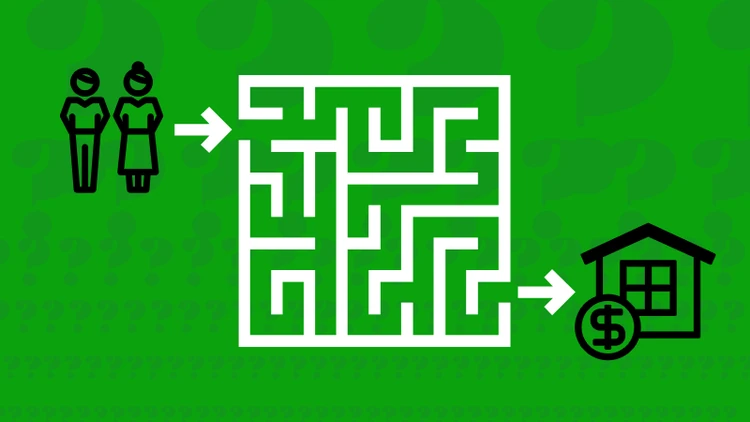
Can renters get the same credit score benefits as homeowners?

In 2023, first-time homebuyers drove home sales, led by millennials.

However, a number of people in that generation soon discovered that their money didn’t go nearly as far as it used to because of rising mortgage rates, which was the likely reason why more than 17 million millennials and 4.5 million Gen Z’ers decided to call a rental unit their home and lose out on the benefits of home ownership.

Specifically, they lost out on the benefit of raising their credit score by paying mortgages on time. But have they?

Since rents are rising faster than home prices, shouldn’t those people have the same advantage? That question is starting to surface. It’s not well-publicized – nor is it always easy – but it is doable. 

Not easy vs. doable

The “not easy” side is that currently, renters can’t submit their payments directly to the credit bureaus for one thing. For another, some landlords and property managers do not report rent payments to credit bureaus.

“However, renters have the option to avail themselves of several free and paid services that will report rent payments to the credit bureaus on their behalf,” Severine Bryan, founder of Bryan Financial Empowerment LLC, told ConsumerAffairs.

“Free services include Self which reports to all three bureaus. Renters do not have to go through their landlord to use Self. It does have a paid tier that includes reporting utility and phone payments to the bureaus but those additional payments only report to TransUnion.”

Bryan offered two other “free” suggestions:

  • Pinata, which only reports to TransUnion through this method,  but which landlords can use and report to all three bureaus.

  • PayYourRent is also free to tenants and reports to all three bureaus. But, landlords might shy away from this since they pay any fees charged by PayYourRent.

As for paid rental payment credit reporting services, there’s Boom Pay, RentReporters and Rental Kharma.

Paid services that report to all three bureaus include Boom Pay. Bryan says the beauty of Boom Pay is that for an additional small fee, it will capture and report up to 24 months of payments before signing up. Rental Kharma, on the other hand, only reports to TransUnion and Equifax.

“Before signing up for any of these services, tenants should verify which bureau they report to,” Bryan cautions.

“This is especially important if they are in the market for a loan and the loan servicer uses one bureau over the others. They should also verify if the loan servicer includes rent payments in their loan processes.”

A credit card solution?

Some credit experts poo-poo using credit cards to pay rent, but Sebastian Jania of Ontario Property Buyers suggests that one of the more atypical credit card benefits being offered is a way that renters can use their rental payments to up their credit score. 

Jania alerted ConsumerAffairs to Plastiq, a company that will pay the landlord on or before the day that rent is due, and the owner of the credit card will have that balance along with a small fee added to their credit card for payment the next month. 

“By doing this one is able to use a credit card and show the credit card company that they are able to use this card responsibly and have it paid every month which will result in improving their credit score over time,” Jania told us.

“Further, as the credit card company sees that they are making consistent payments, they may offer them additional credit products or an increase in credit limit which will reduce credit utilization and ultimately result in an increased credit score.”