2023 Consumer Product Lawsuits and Safety Alerts

Article Image

A check for $12 to $50 is yours if you use certain 'recycling bags'

If you use recycling bags – especially Hefty or Great Value (Walmart) brand recycling bags – you could qualify for as much as a $50 settlement payment.

As a result of a class action settlement, Reynolds Consumer Products, the bag manufacturer, agreed to pay $3 million to settle claims that it wrongfully marketed its trash bags as “recycling” bags despite their inability to actually be recycled at numerous solid waste disposal facilities.

Reynolds disputed the allegations and the court has not made any determination about who is right, but Reynolds apparently felt it was better to fork over the $3 million and be done with this once and for all.

Proof of purchase? $50! No proof? $12

The settlement benefits consumers who purchased Hefty and/or Great Value brand recycling bags between July 20, 2018, and Aug. 30, 2023.

Under the provisions of the settlement, anyone who filed to be a class member can receive $2 per purchased product. With proof of purchase, consumers can claim up to 25 products, for a $50 maximum payment. But get this -- even those without proof of purchase, win too. They can claim up to six products, for a maximum payment of $12.

A full list of the Hefty and Great Value brand Recycling bags included in the Settlement can be found here.

All that’s required to receive a settlement check is to file a request either online or via mail by no later than December 13, 2023. You can find those details here and answers to any questions about the lawsuit and claim process here.

Article Image

Lawsuit claims school uniforms from The Children's Place contain 'forever chemicals’

If you’re a parent who has purchased school uniform pieces from The Children’s Place, you may want to get rid of them sooner than later.

A new class action lawsuit, filed by Angala Garland, found that the clothing store was selling and marketing these items to parents, though they contained dangerous chemicals – per- and polyfluorinated alkyl substances (PFAS), or “forever chemicals.” 

PFAS got the name “forever chemicals” because they never degrade in the environment – they contaminate drinking water, soil, air, food, and just about everything. This exposure becomes problematic for consumers’ health – especially young kids. 

A lower price could come with health risks

Garland brought the case to Bradley/Gombacher LLP after purchasing the uniform for her child at The Children’s Place. The pieces are available in-store, online, and on the company’s Amazon storefront. 

In 2022, she purchased: two multi-packs of boys uniform polos, one multi-pack of boys uniform long-sleeve polos, two multi-packs of boys pull-on chino uniform cargo pants, one multi-pack of boys boys uniform chino shorts, a boys uniform stretch chino pant, a boys uniform zip-up mock neck sweater, two multi-packs of boys uniform active fleece joggers and two boys uniform zip-up hoodies. 

Garland went with The Children’s Place because they were offering uniform pieces at a good price. She read through all of the tags and labeling, read through the company’s website, and never saw any disclosures related to PFAS or other dangerous chemicals.

After her four-year-old child wore the uniforms through the 2022-2023 school year, she had the items tested at a third-party lab to confirm the presence of PFAS. Ultimately, the results showed that the clothes contained some amount of the chemicals. 

Now, Garland is seeking restitution from The Children’s Place for herself, as well as any other parents across the country who have purchased these items. 

Kids are at a higher risk 

According to the official complaint, children wear these uniforms five days a week for 40 hours a week. The complaint says this is consistent exposure to these chemicals that come with a number of related health risks. 

“The young children who wear [these] school uniforms are uniquely vulnerable and susceptible to the adverse health incomes associated with PFAS due to their low body weight, sensitive development, prolonged periods of wear during the school week, and direct oral exposure due to frequent hand-to-mouth behaviors,” the complaint reads. “The levels of PFAS in the school uniforms pose a greater body burden and higher health dangers to children than to adults exposed to the same levels of PFAS.” 

The lawsuit alleges that The Children’s Place was aware of the presence of chemicals in the uniforms, and hasn’t stopped selling them or made any changes. 

Long-term dangers from PFAS

PFAS are found in everything from fast food packaging, water- and stain-resistant children’s products, and many personal care products.

PFAS have been found to significantly affect consumers’ hormone levels, which can have an effect on women’s reproductive health or developmental concerns in children. Long-term, there is also a higher risk of obesity, high cholesterol, cancer, and a compromised immune system.

Article Image

If you play video games or bought XTEND power drinks, you may have some money coming

Some video game players stand to benefit from a class action lawsuit settlement. DoubleDown Interactive has agreed to pay $415 million to end litigation that accused the company of violating Washington’s gambling laws.

According to Top Class Actions, the settlement benefits consumers who played DoubleDown Casino, DoubleDown Fort Knox, DoubleDown Classic and or Ellen’s Road to Riches before Nov. 14, 2022.

The plaintiffs sued because the games require the use of in-game “chips.” The chips are free when consumers download the game but the plaintiffs claimed in their suit that they were forced to buy additional chips using actual cash.

“Defendants’ online casino games have thrived and thousands of consumers have spent millions of dollars unwittingly playing Defendants’ unlawful games of chance,” the suit claims.

After the lawyers and court costs are paid, consumers who participate in the class will divide what’s left of the $415 million. There’s a special webpage, found here, where participants can estimate what they will receive.

XTEND powder drinks

Woodbolt has settled a lawsuit by agreeing to pay $3 million to end litigation that accused it of falsely advertising its XTEND workout powder as having zero calories. The settlement will benefit people who paid for some XTEND workout powder products between July 28, 2014, and Jan. 24, 2023. 

Seventy-five products are covered by the settlement. You can find the complete list here. Under the settlement, consumers who are included in the class can receive 50 cents for every package of the product they purchased. Proof of purchase is not required.

Affected consumers who believe they are eligible for compensation must make a claim to join the settlement by April 24. Consumers can file a claim here.

Hospital data breach

Rehoboth McKinley Christian Health Care Services has agreed to pay an undisclosed amount of money to resolve a lawsuit stemming from its 2021 data breach. The company has not admitted to any wrongdoing.

The settlement covers people who were informed of a data breach at the facility around May 2021. The breach was discovered in February of that year.

The suit alleged that the breach revealed names, addresses, contact information, Social Security numbers, driver’s license, passport numbers, health insurance data and financial account information.

Attorneys for the plaintiffs say members of the class can receive up to $500 for what are called “ordinary” data breach losses. They include bank fees, communication expenses, credit-related costs and up to four hours of lost time at a rate of $15 per hour. 

The deadline for filing is April 10. You can file it here.

Article Image

A new lawsuit claims one of the biggest liquor brands in the U.S. is misleading the public

One of the world’s largest liquor companies is facing a new lawsuit claiming that a version of its biggest-selling product is being offered to consumers pretending to have alcohol when it actually doesn’t.

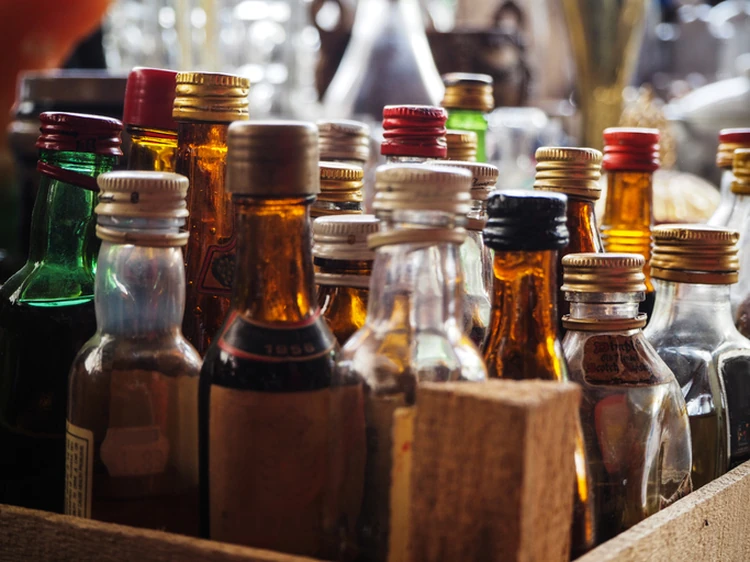
The lawsuit alleges that Sazerac – makers of spirits favorites like Pappy Van Winkle and Buffalo Trace – is committing fraud by marketing similar-looking mini bottles of malt-based “Fireball Cinnamon” in supermarkets and conveniences stores in an attempt to make “Fireball Cinnamon Whisky” lovers think they’re getting the same alcohol-based version they buy at liquor stores. And at $.99 a pop, Fireball has done so well, it’s reportedly become Sazerac’s biggest-selling product by volume and revenue.

"People associate the Fireball Cinnamon with whisky… by selling [a] Fireball Cinnamon product that is a malt-based beverage with a drop of whiskey flavor, that's deceptive," Spencer Sheehan, a lawyer with Sheehan & Associates, P.C, the firm handling the case, told FOX Business. 

When is an “alcoholic beverage” an actual alcoholic beverage?

If intentional, creating marketing confusion is a crafty move hoisted on consumers who don’t think twice about reading the ingredients or asking why they can buy “alcoholic beverages” in places where those products shouldn’t be legally available in, like a gas station. 

However, there’s gold in those added distribution points and companies are incubating a bumper crop of brand and malt-based marriages to try and get brand variations past states’ restrictions on retailing liquor. 

As with shrinkflation that consumers are facing these days, you have to pick up a product and take a hard look at the label because in those details is where the devil is.

To start with, the difference between the two Fireballs can be found in the ABV (alcohol by volume). The original weighs in at 66 proof (33% alcohol), and its offspring at 33 proof (16.5% alcohol).

Sticking with the labeling issue, the lawsuit further argues that the “non-whisky” bottles appear identical but for the word “Whisky” on the front label, “which most purchasers seeking alcohol will not even detect,” the plaintiffs allege. Then, there’s the small print on the label that says it has “natural whisky and other flavors and caramel color.”

It’s evident that attorneys suing Sazarec are looking at this situation from the consumer’s point of view. They claim that using the words “With Natural Whisky & Other Flavors” is a clever way of pitching the product because if a consumer goes to the trouble to try and decipher how “Natural Whisky” is distinct from “Other Flavors,” they will think Fireball Cinnamon is a malt beverage with added natural whisky and other flavors.

“What the label means to say is that the Product contains ‘Natural Whisky Flavors & Other Flavors,’ but by not including the word ‘Flavors’ after ‘Natural Whisky,’ purchasers who look closely will expect the distilled spirit of whisky was added as a separate ingredient,” the suit charges.